
Garlic
Allium sativum
Plant Family
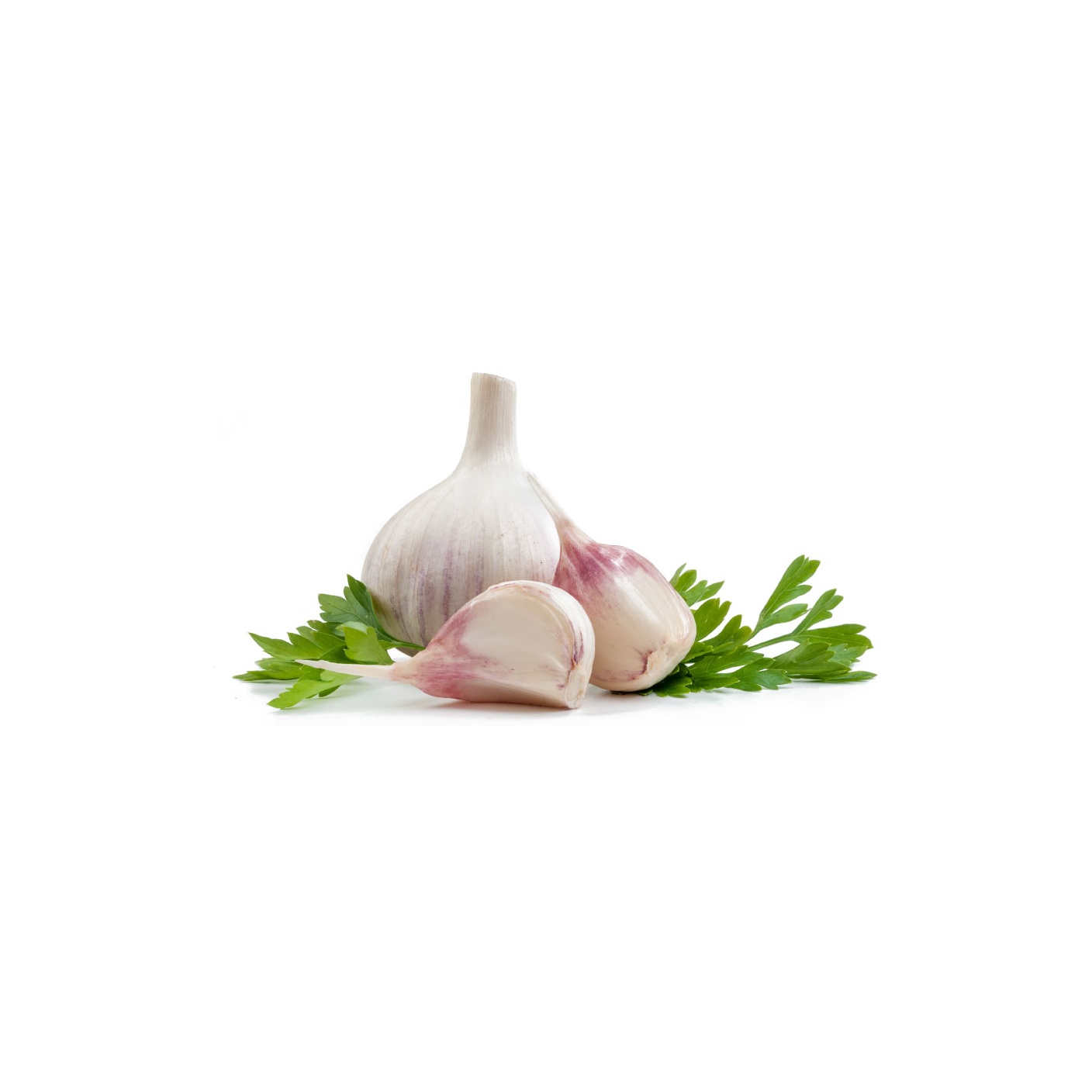
Pictured: Garlic
Amaryllis / onion family
Bulbous plants split between the sulfur-rich alliums and the alkaloid-bearing amaryllids — the first gives us garlic, the second galantamine.
1 Herb // 14 Constituents // 7 Notable Members
Overview
Around 75 genera and 1,600 species of bulbous perennials, worldwide in distribution. Modern classification folds the old onion family (Alliaceae) into Amaryllidaceae as the subfamily Allioideae, which is why one family now spans two very different chemistries: the sulfur-rich alliums and the alkaloid-bearing amaryllids.
Shared Traits
In Practice
Garlic (Allium sativum) is among the most researched medicinal plants in existence, and its chemistry is genuinely unusual. Intact garlic contains alliin, which is odourless and inert; crushing the clove releases the enzyme alliinase, which converts it within seconds into allicin — the compound responsible for the smell, the taste, and much of the activity. Allicin is itself unstable, decomposing into ajoene, vinyldithiins and sulfides. This is why preparation determines pharmacology: raw crushed garlic, aged extract, oil macerate and enteric tablet are chemically different medicines, and evidence for one does not transfer to another.
The best-supported claims are cardiovascular — modest but real reductions in blood pressure, and smaller effects on lipids. The antimicrobial literature is broad in vitro and much weaker in vivo, constrained by allicin’s instability and poor systemic availability. Anticancer epidemiology is suggestive and not causal.
Safety is dominated by antiplatelet activity: garlic inhibits platelet aggregation, which matters with anticoagulants and before surgery. It also induces some CYP enzymes.
The amaryllid half of the family is pharmacologically distinct. Galanthus (snowdrop) and Narcissus yield galantamine, an acetylcholinesterase inhibitor and nicotinic modulator licensed as a prescription drug for Alzheimer’s disease — one of the clearest cases of a plant alkaloid becoming mainstream medicine. Those bulbs are also toxic, and daffodil bulbs are a common accidental poisoning through confusion with onions.
Materia Medica
The monograph in the database whose Amaryllidaceae membership is recorded on the herb itself — so this list keeps itself current as new herbs land.
Allium sativum
Phytochemistry
Two distinct systems: organosulfur compounds (alliin, allicin, ajoene, S-allyl cysteine) in the alliums, and Amaryllidaceae alkaloids (galantamine, lycorine, narciclasine) in the rest. Steroidal saponins and fructans occur across both.
The compounds recorded for this family's single member, grouped by class.
Isolates
Sold as isolated compounds that occur in the herbs above.
Beyond the Database
Notable members without a monograph yet.
Keep Exploring