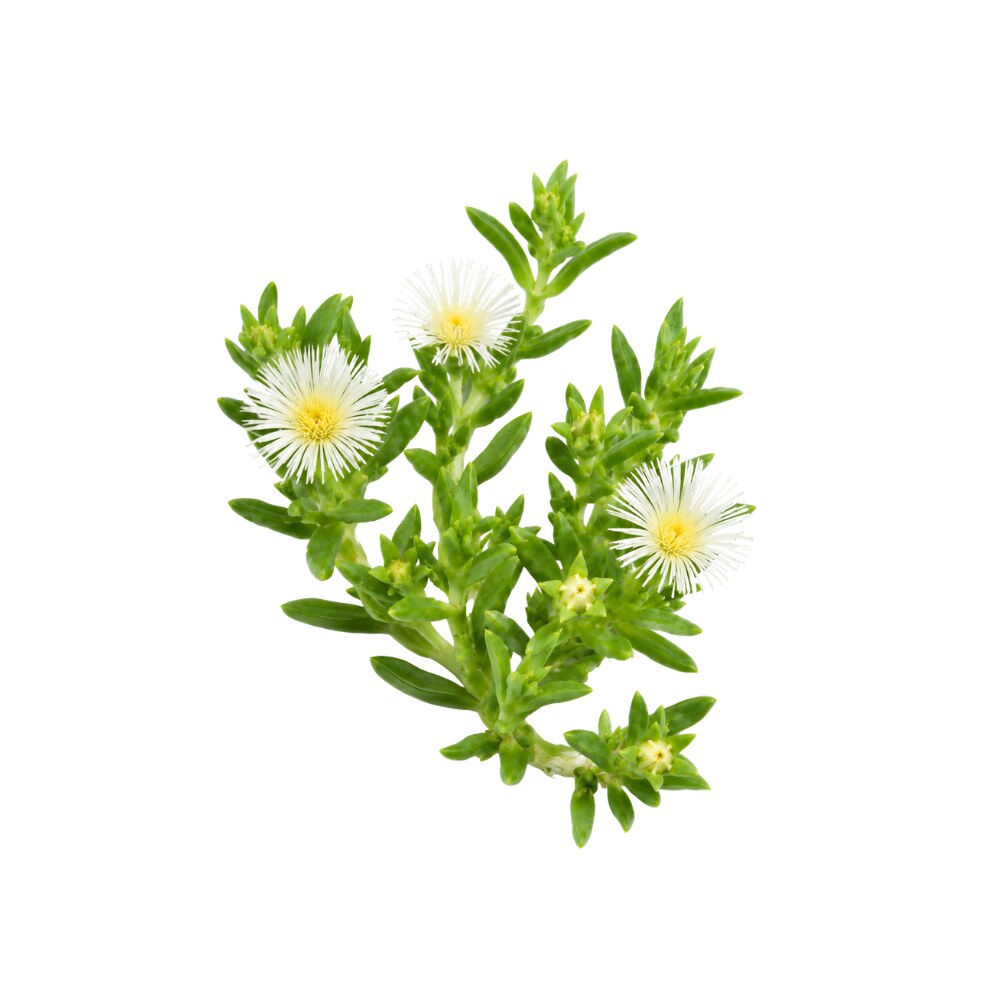
Ice Plant
Delosperma spp.
Plant Family
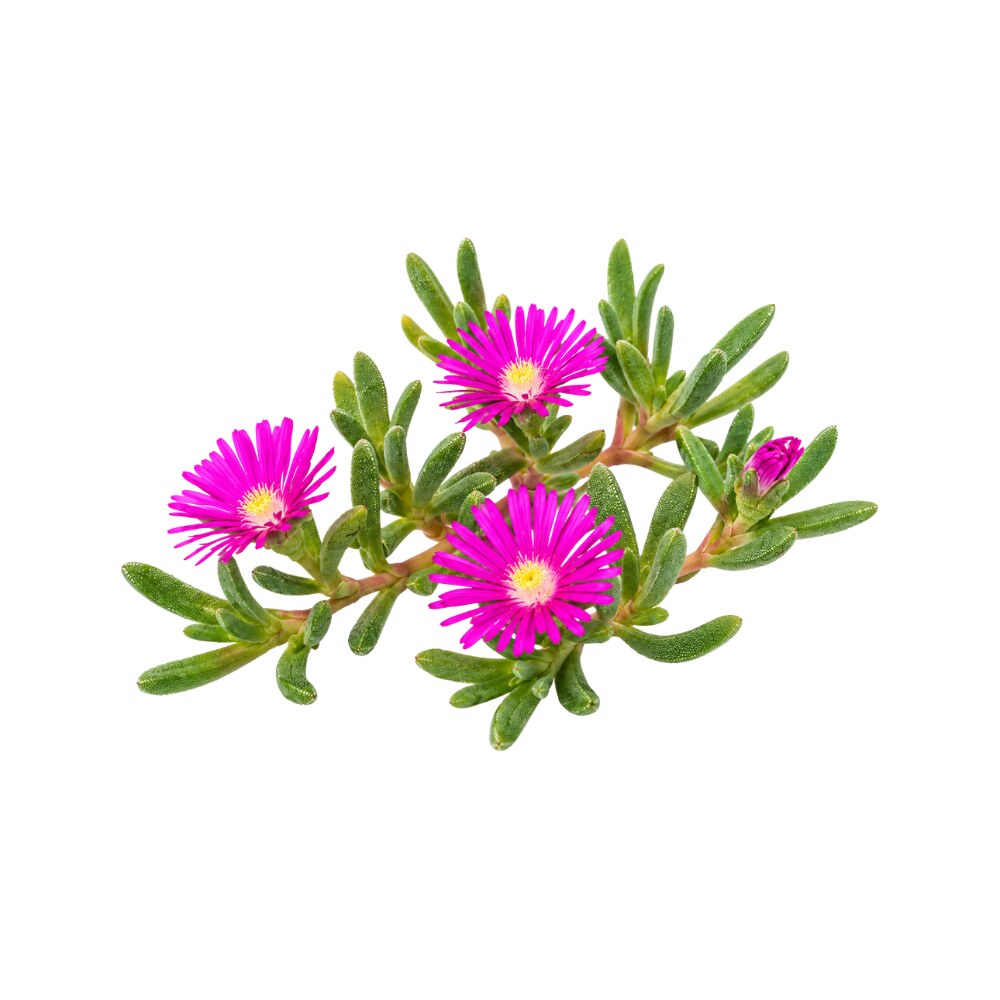
Pictured: Ice Plant
Ice plant / mesemb family
Leaf-succulent plants of arid southern Africa, remarkable for water-storing bladder cells and, in Sceletium, for a serotonin-reuptake-inhibiting alkaloid series unique to the family.
2 Herbs // 4 Constituents // 5 Notable Members
Overview
Roughly 135 genera and 1,800 species of leaf succulents, overwhelmingly concentrated in the arid southwest of southern Africa — the Succulent Karoo, one of the world’s great centres of succulent diversity. The common name comes from the glistening bladder cells covering the leaf surface of many species, which store water and refract light like frost. The family includes some of the most extreme plant forms in existence, from the stone-mimicking Lithops to sprawling coastal mats.
Shared Traits
In Practice
Aizoaceae contributes one genuinely important medicinal plant, and it is pharmacologically unlike anything else here.
Kanna (Sceletium tortuosum) has been chewed and fermented by San and Khoikhoi peoples of the Cape for centuries as a mood-lifter, thirst and hunger suppressant, and social relaxant. Its alkaloids — mesembrine, mesembrenone, mesembrenol — are potent serotonin reuptake inhibitors, with mesembrenone adding PDE4 inhibition. That combination is unusual: it is the only widely used traditional plant whose principal mechanism is essentially the same as a modern SSRI’s, arrived at independently.
The human evidence is early but not absent — small randomised trials of standardised extract report effects on anxiety measures and on amygdala reactivity, with reasonable tolerability at studied doses. It remains a small literature.
The interaction risk is the headline. Because kanna inhibits serotonin reuptake, combining it with SSRIs, SNRIs, MAOIs, triptans, tramadol or other serotonergic agents carries a real risk of serotonin syndrome. This is not a theoretical caution derived from chemistry — it follows directly from the demonstrated mechanism, and it makes kanna one of the herbs where a full medication review matters before use.
Ice plant (Delosperma spp.) is a related but distinct case: some species carry tryptamines rather than mesembrine-type alkaloids, and the ethnobotany is far thinner.
Materia Medica
The 2 monographs in the database whose Aizoaceae membership is recorded on the herb itself — so this list keeps itself current as new herbs land.
Phytochemistry
The mesembrine-type alkaloids are the family marker and are essentially restricted to Sceletium — a 3a-aryl-cis-octahydroindole skeleton found almost nowhere else. Some Delosperma species accumulate DMT and 5-MeO-DMT. More broadly the family carries betalain pigments (rather than anthocyanins), flavonoids, and the osmolytes characteristic of succulent, salt-tolerant plants.
Compounds recorded in two or more of the 2 herbs above — the chemistry this family holds in common, grouped by class. A further 3 appear in only one member and are listed on that herb's own page.
Beyond the Database
Notable members without a monograph yet.
Keep Exploring