
Black Truffle
Tuber melanosporum
Plant Family
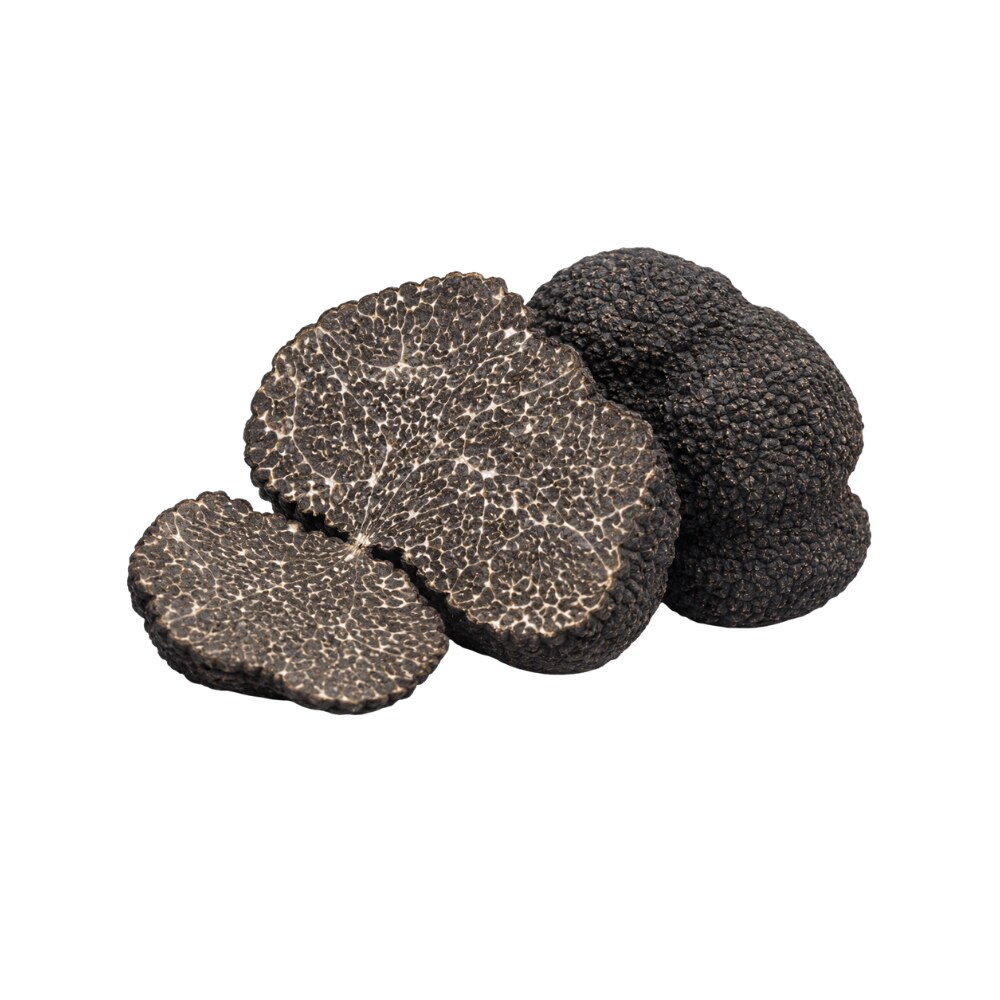
Pictured: Black Truffle
Truffle family
Underground fruiting ectomycorrhizal fungi that rely on animals for spore dispersal; culinary rather than medicinal, though their volatiles include a mammalian pheromone.
1 Herb // 4 Constituents // 4 Notable Members
Overview
Ascomycete fungi that fruit underground. Because a subterranean fruiting body cannot release spores to the wind, truffles solved the dispersal problem chemically: they produce intense volatile aromas that attract mammals to dig them up and eat them, dispersing the spores in the process. This is why they are hunted with dogs and, formerly, pigs — and why they smell the way they do.
All species are obligate ectomycorrhizal symbionts, forming sheaths around the fine roots of oak, hazel, beech and related trees. They cannot be grown without a host, which is why cultivation means inoculating tree seedlings and waiting the better part of a decade.
Shared Traits
In Practice
Black truffle (Tuber melanosporum) is culinary rather than medicinal, and it is worth saying so plainly — its presence in a herbal database is a matter of ethnobotanical and chemical interest, not therapeutic evidence.
The aphrodisiac reputation is ancient and persistent, running from Pliny through the medieval Arab physicians to Brillat-Savarin. It has a genuinely intriguing chemical hook: truffle volatiles include androstenol (5α-androst-16-en-3α-ol), a steroid also found in boar saliva and human axillary secretions, and one of the reasons sows were historically such effective truffle hunters. The leap from “contains a mammalian pheromone-like steroid” to “acts as a human aphrodisiac” is, however, entirely unsupported — there is no clinical evidence, the quantities are minute, and human pheromone signalling itself remains contested. The honest verdict is a good story with no pharmacology behind it.
More defensibly, truffles contain ergosterol (a vitamin D2 precursor), beta-glucans, and a notable range of phenolics and terpenes, and some antioxidant and antimicrobial activity is reported in vitro — findings that apply to most edible fungi and do not single truffles out.
The dominant practical issue with truffles is authenticity: the market is heavily adulterated, and most “truffle oil” contains synthetic 2,4-dithiapentane rather than any truffle at all.
Materia Medica
The monograph in the database whose Tuberaceae membership is recorded on the herb itself — so this list keeps itself current as new herbs land.
Tuber melanosporum
Phytochemistry
Volatile sulfur compounds define the family — dimethyl sulfide, bis(methylthio)methane (2,4-dithiapentane) — alongside androstenol, ergosterol, beta-glucans, and phenolic acids.
The compounds recorded for this family's single member, grouped by class.
Beyond the Database
Notable members without a monograph yet.
Keep Exploring