
Compound Monograph
Epigoitrin
Epigoitrin — (R)-goitrin, the cyclised breakdown product of the glucosinolate epiprogoitrin and the official Chinese Pharmacopoeia marker for the antiviral root Ban Lan Gen. A marker chosen because it is easy to measure is not the same thing as an active principle, and its chemical family's most famous pharmacology is antithyroid.

Sources · 4
Where Does It Come From?
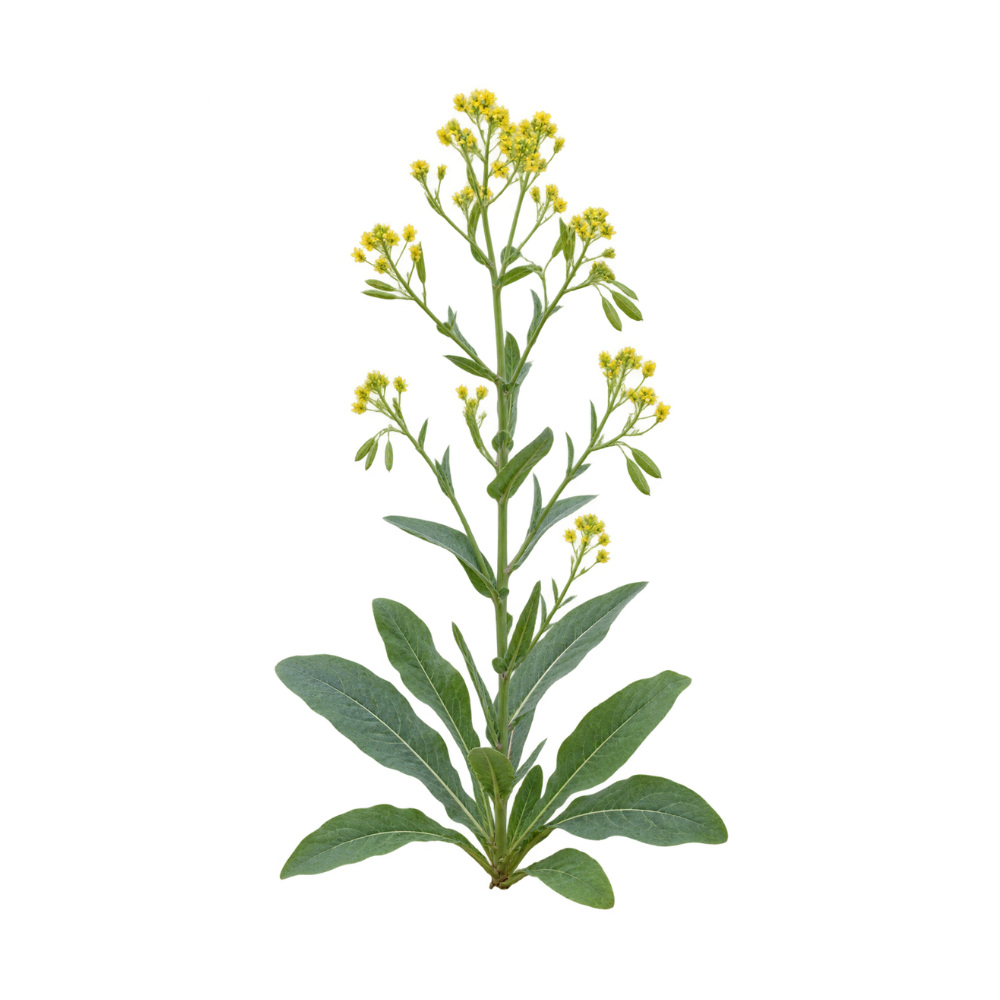
Epigoitrin is a naturally occurring oxazolidine-2-thione (glucosinolate breakdown product; the (r)-enantiomer of goitrin), found in Isatis and 3 other sources. It is flagged as moderately toxic.
Concentration
Content by Source
Reported concentrations across the plants that contain epigoitrin — the bar marks the typical level, the line shows the reported range.
Literature figures for varying plant parts and preparations. Read them as a comparative guide, not exact assays.
Epigoitrin at a Glance
Epigoitrin is (R)-goitrin — a small sulfur-containing ring compound (an oxazolidine-2-thione) that does not pre-exist in the intact plant. It is formed when the stored glucosinolate epiprogoitrin is cut by the enzyme myrosinase and the resulting unstable isothiocyanate curls up on itself 6,
Its significance is mostly regulatory. Since 2010 the Chinese Pharmacopoeia has used (R,S)-goitrin as the official assay marker for Isatidis Radix — Ban Lan Gen, the root of isatis and one of the most widely taken herbal antivirals in China 8,
The honest position is this. Epigoitrin has a real but thin pharmacology of its own: influenza inhibition in cell culture and in eggs, one in-vivo mouse model where it restores stress-suppressed antiviral signalling, and single papers on glutamate release and on high-fat-diet metabolism — all isolate work, none of it human 1,
The Pharmacopoeial Marker Story
Isatidis Radix contains roughly 300 reported compounds 10Reference 10Systematic reviewIsatidis Radix and Isatidis Folium: a systematic review on ethnopharmacology, phytochemistry and pharmacologyView study →. Choosing one to assay is a practical decision about chromatography, stability and availability of a reference standard — not a verdict on pharmacology. The 2010, 2015 and 2020 editions of the Chinese Pharmacopoeia all settle on (R,S)-goitrin, the (R)+(S) mixture, as the quality marker for Ban Lan Gen; indirubin plays the same role for the leaf drug, Da Qing Ye 9,
The marker does its job well as an identity test. A 2025 survey of eighteen Ban Lan Gen samples from Hong Kong retailers found that only one was genuine Isatis; the other seventeen were Strobilanthes species (Nan Ban Lan Gen), and those substitutes contained no epigoitrin at all — completely different chromatograms 11Reference 11Quality assessment of medicinal material Daqingye and Banlangen from Isatis tinctoria Fort. reveals widespread substitution with Strobilanthes speciesView study →. The one authentic sample assayed at 0.023% epigoitrin, clearing the pharmacopoeial floor of 0.020% but falling short of the stricter Hong Kong Chinese Materia Medica Standard of 0.029% 11Reference 11Quality assessment of medicinal material Daqingye and Banlangen from Isatis tinctoria Fort. reveals widespread substitution with Strobilanthes speciesView study →. As a “is this the right plant?” question, the marker is doing real work.
Where it over-reaches is the slide from marker to active principle. Three things should keep that slide honest:
- The marker is a processing artefact. What the plant stores is epiprogoitrin; epigoitrin appears during post-harvest handling, when tissue damage lets myrosinase reach its substrate 6Reference 6Biotransformation of glucosinolates epiprogoitrin and progoitrin to (R)- and (S)-goitrin in Radix isatidisView study →. Two batches of the same root can differ enormously depending on how they were dried.
- Content collapses through manufacture. Across 37 commercial samples, the four main glucosinolates totalled 0.77–17.54 mg/g in crude drugs but only 0.03–0.87 mg/g in the finished granules — a more than twentyfold drop, in the very products most people actually take 24Reference 24Separation and quantification of four main chiral glucosinolates in Radix Isatidis and its granules using HPLC/DAD coupled with circular dichroism detectionView study →.
- Nobody has shown the marker carries the effect. No trial has linked (R,S)-goitrin content to any clinical outcome of Ban Lan Gen. The herb’s antiviral reputation is spread across a lignan (clemastanin B), indole alkaloids (tryptanthrin, indirubin, indigo) and polysaccharides as well 10Reference 10Systematic reviewIsatidis Radix and Isatidis Folium: a systematic review on ethnopharmacology, phytochemistry and pharmacologyView study →.
From Glucosinolate to Goitrin — The Breakdown Chemistry
Glucosinolates are stored inert, physically separated from myrosinase. Damage the tissue — chewing, chopping, crushing, drying — and the two meet, the sugar is cleaved, and the aglycone rearranges. Which product you get is not fixed by the glucosinolate alone; it is set by pH, iron, and whether specifier proteins are present 7,
For the 2-hydroxy-3-butenyl glucosinolates (progoitrin and its epimer epiprogoitrin), three fates compete:
| Product | Formed when | Note |
|---|---|---|
| Goitrin / epigoitrin (oxazolidine-2-thione) | near-neutral pH (~6.5), no epithiospecifier protein | the free hydroxyl at C2 attacks the isothiocyanate carbon, closing the five-membered ring spontaneously — the isothiocyanate is never isolable |
| Crambene (1-cyano-2-hydroxy-3-butene) | acidic pH (<5.7), ferrous iron present | a nitrile, not a thione |
| Epithionitriles (e.g. 1-cyano-2-hydroxy-3,4-epithiobutane) | acidic pH with epithiospecifier protein | the branch that matters most for liver toxicity |
That pH switch is documented in detail for canola glucosinolates in pigs, where hindgut pH determines which degradation products the animal is actually exposed to 7Reference 7ReviewToxicity of canola-derived glucosinolate degradation products in pigs — a reviewView study →. It is also why the two nitrile products are not a footnote: given by gavage to rabbits, both crambene and the epithionitrile caused periportal to massive hepatic necrosis at doses only modestly above the subtoxic level 23Reference 23Hepatotoxicity of two progoitrin-derived nitriles in New Zealand White rabbitsView study →. Epigoitrin is the least alarming branch of this chemistry, which is worth remembering before treating “glucosinolate-derived” as a synonym for benign.
Two further constraints are specific to how Ban Lan Gen is actually used:
- Conversion is efficient but conditional. Under controlled hydrolysis, epiprogoitrin and progoitrin convert to (R)- and (S)-goitrin at about 70–80%, and the extraction solvent matters little 6Reference 6Biotransformation of glucosinolates epiprogoitrin and progoitrin to (R)- and (S)-goitrin in Radix isatidisView study →.
- Heat alone will not do it. A 2025 study found epiprogoitrin, progoitrin and neoglucobrassicin are stable only at 0–20 °C, degrade at 40 °C and are destroyed at 60 °C — but without myrosinase they do not convert to goitrin, and they were not converted by simulated gastric or intestinal fluid, rat liver microsomes or human gut flora either 16Reference 16In vitroThermal stability, and in vitro and in vivo metabolism of four main glucosinolates in Isatis indigotica rootsView study →. In other words, a boiling decoction destroys the precursor rather than activating it; the goitrin in a finished herb was made during drying, not in the pot.
Epigoitrin vs. Goitrin — The Stereochemistry
The two goitrins are mirror images that come from different parents:
- Progoitrin → (S)-goitrin, usually just called goitrin. This is Astwood’s antithyroid factor, the dominant form in Brassica crops 17Reference 17The antithyroid factor of yellow turnipView study →.
- Epiprogoitrin → (R)-goitrin, called epigoitrin. This is the form the Isatis literature is interested in 6,
19Reference 6Biotransformation of glucosinolates epiprogoitrin and progoitrin to (R)- and (S)-goitrin in Radix isatidisView study →Reference 19A new thioglucoside, (R)-2-hydroxy-3-butenylglucosinolate from Crambe abyssinica seedView study → .
Isatis root is unusual in carrying both epimers; across 37 commercial samples, R-goitrin ran at roughly twice the content of S-goitrin 24Reference 24Separation and quantification of four main chiral glucosinolates in Radix Isatidis and its granules using HPLC/DAD coupled with circular dichroism detectionView study →. Because the pharmacopoeial assay reports the pair as “(R,S)-goitrin”, resolving them requires a chiral column, supercritical-fluid chromatography, or circular-dichroism detection — a small analytical industry has grown up around exactly this separation 8,
The standard framing in that literature is tidy: (R)-goitrin is the antiviral one, (S)-goitrin is the antithyroid one 8Reference 8Stereospecific assay of (R)- and (S)-goitrin in commercial formulation of Radix Isatidis by reversed phase high-performance liquid chromatographyView study →. It is worth being sceptical of how tidy it is. The (R)/(S) split rests on which enantiomer each research community happened to test — the thyroid work of the 1940s–80s used the Brassica-derived (S) form, and the antiviral work of the 2010s used the Isatis-derived (R) form. In the one study that put all four related compounds side by side against influenza, the anti-influenza potency ranking was progoitrin > goitrin > epigoitrin > epiprogoitrin — that is, the (S) compound outperformed the (R) compound at the activity epigoitrin is supposedly the specialist in 1Reference 1In vitroAntiviral activity of Isatidis Radix derived glucosinolate isomers and their breakdown products against influenza A in vitro/ovo and mechanism of actionView study →. A clean enantioselectivity claim needs both enantiomers in the same assay, and for the thyroid endpoint that experiment does not appear to have been published.
The Antithyroid Question
Goitrin’s reputation is not vague folklore; it is well-characterised biochemistry. Astwood, Greer and Ettlinger isolated it in 1949 as the substance responsible for the goitre-producing effect of yellow turnip and Brassica seed 17Reference 17The antithyroid factor of yellow turnipView study →. It inhibits thyroid peroxidase, the enzyme that oxidises iodide and iodinates thyroglobulin: at 0.3 mM goitrin abolishes peroxidase-catalysed iodide oxidation, about nine times more potently than ricinine, and it is itself oxidised by the enzyme, consistent with acting as an alternative substrate 20Reference 20Inhibition of thyroid peroxidase (TPO) and lactoperoxidase (LPO) by goitrin and ricinineView study →.
The dose question is where the alarm softens considerably.
- In humans, thyroid radioiodine uptake was inhibited by 194 µmol of goitrin but not by 77 µmol — roughly 25 mg vs. 10 mg. Only collards, Brussels sprouts and some Russian kale reach amounts capable of touching iodine uptake in a normal serving; most Brassica oleracea vegetables deliver under 10 µmol per 100 g and are judged minimal risk 21Reference 21Concentrations of thiocyanate and goitrin in human plasma, their precursor concentrations in brassica vegetables, and associated potential risk for hypothyroidismView study →.
- A 2024 systematic review of 123 in-vitro, animal and human studies concluded that the antithyroid reputation of Brassica vegetables is largely not supported in people, and that ordinary dietary intake with adequate iodine does not harm thyroid function 22Reference 22Systematic reviewDo brassica vegetables affect thyroid function? — a comprehensive systematic reviewView study →.
- Cooking lowers goitrin further, at the cost of destroying the isothiocyanates people eat these vegetables for 25Reference 25Cooking methods for preserving isothiocyanates and reducing goitrin in Brassica vegetablesView study →.
Now put the herb in that frame. A pharmacopoeia-compliant 9–15 g dose of Ban Lan Gen carries about 1.8–3 mg of (R,S)-goitrin — around 14–23 µmol, well under the 77 µmol that failed to move radioiodine uptake, and that is before extraction losses 11,
Two caveats keep this from being an all-clear. First, the human threshold data are for goitrin, the (S) form; whether epigoitrin inhibits thyroid peroxidase at all — and if so how potently — has not been established 20Reference 20Inhibition of thyroid peroxidase (TPO) and lactoperoxidase (LPO) by goitrin and ricinineView study →. Second, the reassuring dietary reviews describe food-level, short-term, iodine-replete exposure; they say nothing about prolonged high-dose herbal use in iodine-deficient regions, and Ban Lan Gen is a herb people take repeatedly, sometimes preventively, through a viral season 22Reference 22Systematic reviewDo brassica vegetables affect thyroid function? — a comprehensive systematic reviewView study →.
What It's Used For
Everything below is preclinical and almost all of it is recent. Four applications have been studied for the isolate, on a total of roughly five primary papers — a thin evidence base by any standard, and one where a single study frequently carries an entire row.
Support is an experimental score — weighted by study type (human > animal > in vitro) and volume. A beta, not a validated metric. Every score here is capped hard by the absence of human data and by the fact that most rows rest on one paper.
The application epigoitrin is named for, and the one that needs reading carefully. Working with the four compounds isolated from Isatidis Radix by chiral separation (not synthetics), Nie and colleagues found all four inhibited H1N1 dose-dependently without cytotoxicity, ranked progoitrin > goitrin > epigoitrin > epiprogoitrin, with epigoitrin’s IC₅₀ reported at 0.36 µM against peramivir as comparator 1Reference 1In vitroAntiviral activity of Isatidis Radix derived glucosinolate isomers and their breakdown products against influenza A in vitro/ovo and mechanism of actionView study →.
But activity appeared only when compound and virus were pre-mixed — not when cells were pre-treated, nor when treatment came after infection — and both the haemagglutination-inhibition and neuraminidase assays were negative. The authors concluded the compounds attach to the viral envelope, a virucidal rather than antiviral mode; in embryonated eggs, full inhibition took 1.25 mg/mL 1Reference 1In vitroAntiviral activity of Isatidis Radix derived glucosinolate isomers and their breakdown products against influenza A in vitro/ovo and mechanism of actionView study →.
The stronger in-vivo evidence is different in kind: in restraint-stressed mice, isolated epigoitrin reduced mortality, lung inflammation and viral replication by lowering mitofusin-2 and thereby raising MAVS, IFN-β and IFITM3 2Reference 2In vitroEpigoitrin, an alkaloid from Isatis indigotica, reduces H1N1 infection in stress-induced susceptible model in vivo and in vitroView study →.
All isolate work — no whole-extract arm in either study.
Gap: the IC₅₀ and the in-ovo effective concentration disagree by ~27,000-fold, no binding study supports the envelope-attachment claim, and there is no human antiviral data for this molecule or for Ban Lan Gen as a whole.
A genuinely new direction, and the most mechanistically specific work on the isolate. In rat cortical synaptosomes epigoitrin reduced 4-aminopyridine-evoked glutamate release with an IC₅₀ of 3 µM; the effect vanished when extracellular Ca²⁺ was removed or P/Q-type calcium channels were blocked, but not with an N-type blocker — a clean presynaptic target 3Reference 3AnimalEpigoitrin decreases synaptosomal glutamate release and protects neurons from glutamate excitotoxicity in ratsView study →.
In vivo, pretreatment before kainic acid reduced cortical neuronal injury, glutamate elevation and the excitotoxicity proteins DAPK1 and GluN2B, alongside lower ROS, less glial activation, lower TNF-α/IL-1β/IL-6 and higher IL-10 3Reference 3AnimalEpigoitrin decreases synaptosomal glutamate release and protects neurons from glutamate excitotoxicity in ratsView study →.
Isolate, in rats, from a single group.
Gap: one paper, unreplicated, with no pharmacokinetic bridge showing that oral epigoitrin — let alone a decoction — reaches brain tissue at 3 µM.
Epigoitrin surfaced from a screen of 243 natural small molecules in a HepG2 fat-accumulation model, where it cut intracellular fat, raised short-chain acyl-CoA dehydrogenase activity and ATP production, improved glucose uptake and glycogen storage, lowered ROS and raised SOD 4Reference 4Epigoitrin alleviates lipid and glucose metabolic disorders induced by a high-fat dietView study →.
Added to a high-fat diet in mice it reduced fat deposition and improved glucose tolerance, insulin sensitivity and energy expenditure 4Reference 4Epigoitrin alleviates lipid and glucose metabolic disorders induced by a high-fat dietView study →.
Isolated compound throughout; no plant-extract comparison.
Gap: a single study, screen-derived, with no mechanistic anchor beyond a fatty-acid-oxidation enzyme and no dose–response translated to human exposure. Nothing about Ban Lan Gen’s traditional use points here.
Listed with an explicit enantiomer warning. (S)-goitrin — not epigoitrin — protected C57BL/6J mice against LPS-induced septic shock, improving survival, hypothermia and lung damage by inhibiting the caspase-11 non-canonical inflammasome (cleaved caspase-11 and GSDMD-NT) independently of TLR4 5Reference 5AnimalThe protective effects of goitrin on LPS-induced septic shock in C57BL/6J mice via caspase-11 non-canonical inflammasome inhibitionView study →.
That is a well-executed in-vivo result for a named pathway, and it is the strongest anti-inflammatory finding in the goitrin family — but it belongs to the mirror-image molecule.
Gap: epigoitrin itself has not been tested in this model. Assuming the (R) form does the same thing is exactly the wrong inference.
Mechanisms
| Target / pathway | Effect | Relevant to |
|---|---|---|
| Influenza A virion envelope | direct attachment inferred from virucidal (pre-mix-only) activity; no binding data | antiviral |
| Neuraminidase; haemagglutinin | not inhibited — both assays explicitly negative | antiviral (a negative result worth holding onto) |
| Mitofusin-2 → MAVS → IFN-β / IFITM3 | ↓MFN2, ↑MAVS, ↑IFN-β, ↑IFITM3 — restores antiviral signalling blunted by stress hormones | antiviralhost-directed |
| Presynaptic P/Q-type Ca²⁺ channels | ↓ evoked glutamate release from cortical synaptosomes, IC₅₀ ~3 µM, Ca²⁺-dependent | neuroprotection |
| DAPK1 / GluN2B; ROS; glial cytokines | ↓ excitotoxicity proteins, ↓TNF-α/IL-1β/IL-6, ↑IL-10 in kainate-treated cortex | neuroprotection |
| Short-chain acyl-CoA dehydrogenase; glucose uptake | ↑ fatty-acid oxidation, ↑ glycogen, ↓ROS, ↑SOD in hepatocytes; ↓ fat deposition in mice | metabolic |
| Caspase-11 non-canonical inflammasome / GSDMD | inhibited, TLR4-independent — demonstrated for (S)-goitrin | anti-inflammatorywith enantiomer caveat |
| Thyroid peroxidase | 0.3 mM goitrin abolishes peroxidase-catalysed iodide oxidation, ~9× more potent than ricinine — shown for goitrin, enantiomer unresolved | antithyroid / toxicity |
| Soil ammonia monooxygenase / hydroxylamine oxidoreductase | goitrin identified as a biological nitrification inhibitor of Nitrosomonas/Nitrosospira | plant and soil ecology |
The load-bearing point is the second row. A compound whose antiviral mechanism is “attaches to the envelope, does not inhibit either surface enzyme, only works when premixed” is behaving like a weak direct virucide — a category that rarely survives translation into a living host.
Pharmacokinetics
Better characterised than the pharmacology, and mostly reassuring about absorption. After oral Radix Isatidis extract in rats, (R,S)-goitrin showed dose-proportional Cmax and AUC across 0.1–1 g/kg, an oral bioavailability of 56.3%, no sex difference, low plasma protein binding (13–16.4% across species), wide distribution into immune tissue (adrenals, thymus, lymph nodes) as well as liver, spleen and gut, and 56% of the dose recovered in urine 13Reference 13AnimalAbsorption, distribution, metabolism, and excretion (ADME) of R,S-goitrin in Radix Isatidis in rats by LC-MS/MS determinationView study →. Metabolism is modest: six rat metabolites via demethylation, acetylation, glutathionylation and oxygenation 14Reference 14AnimalMetabolic profiles and pharmacokinetics of goitrin in rats through liquid chromatography combined with electrospray ionization-tandem mass spectrometryView study →.
One finding deserves attention because it cuts against reductionism. Given at an equal (R,S)-goitrin dose, the whole extract produced higher Cmax and AUC than the pure compound 13Reference 13AnimalAbsorption, distribution, metabolism, and excretion (ADME) of R,S-goitrin in Radix Isatidis in rats by LC-MS/MS determinationView study →. The plant matrix improves the marker’s own exposure — so even on the marker’s own terms, the herb is not the sum of the isolate.
The parent glucosinolates behave quite differently. Progoitrin’s oral bioavailability was 20.1–34.1%, about three times epiprogoitrin’s, with the epimers diverging sharply after intravenous dosing 15Reference 15AnimalStereoselective pharmacokinetic study of epiprogoitrin and progoitrin in rats with UHPLC-MS/MS methodView study →. A separate mouse study found intact glucosinolates undetectable in plasma, excreted largely unchanged in urine alongside a minor N-acetylcysteine conjugate — i.e. essentially unabsorbed 16Reference 16In vitroThermal stability, and in vitro and in vivo metabolism of four main glucosinolates in Isatis indigotica rootsView study →. These two results sit in tension and have not been reconciled. No human pharmacokinetic data exist for epigoitrin.
Clinical Trials
None. There is no completed, ongoing or registered human trial of isolated epigoitrin, and no whole-herb efficacy trial of Ban Lan Gen surfaced in the verified evidence either 10Reference 10Systematic reviewIsatidis Radix and Isatidis Folium: a systematic review on ethnopharmacology, phytochemistry and pharmacologyView study →. Everything here is cell culture, eggs, rodents or chemistry.
| Completed | Planned | Terminated | Preclinical |
|---|---|---|---|
| 0 | 0 | 0 | ~5(isolate) |
Last checked: July 2026.
Isolate vs. Plant Studies
Unusually for this database, the isolate is where nearly all the evidence sits — and that is not the strength it usually is. The influenza study used the four compounds purified from the root by chiral separation 1Reference 1In vitroAntiviral activity of Isatidis Radix derived glucosinolate isomers and their breakdown products against influenza A in vitro/ovo and mechanism of actionView study →; the MAVS study, the glutamate study and the metabolic study all dosed pure epigoitrin 2,
The consequence runs the opposite way from the usual caveat. Rather than “the isolate may not behave like the plant,” the risk here is attributing the plant’s reputation to the isolate. Ban Lan Gen’s standing rests on centuries of use and a preclinical literature spread across a lignan, several indole alkaloids and immunomodulatory polysaccharides 10Reference 10Systematic reviewIsatidis Radix and Isatidis Folium: a systematic review on ethnopharmacology, phytochemistry and pharmacologyView study →; epigoitrin’s contribution to that has never been isolated experimentally. The pharmacokinetic finding that the extract delivers more goitrin than the equivalent dose of pure goitrin points the same way 13Reference 13AnimalAbsorption, distribution, metabolism, and excretion (ADME) of R,S-goitrin in Radix Isatidis in rats by LC-MS/MS determinationView study →. On present evidence epigoitrin is best read as a useful chemical handle on the herb, not as its active principle.
Its Role in Plants
Epigoitrin is a weapon, not a metabolite the plant needs. The glucosinolate–myrosinase system is the Brassicaceae’s “mustard oil bomb”: the glucosinolate sits inert in one compartment and the enzyme in another, so a chewing insect triggers the reaction itself 27Reference 27Glucosinolates and their hydrolytic products — a love story of environmental, biological, and chemical conditionsView study →. Which weapon gets deployed depends on conditions the plant partly controls — pH, iron and epithiospecifier proteins decide whether the tissue produces the cyclic thione (goitrin/epigoitrin), the nitrile, or the epithionitrile 7,
In isatis root the chemistry is spatially organised: mass-spectrometry imaging of root cross-sections found both (R,S)-goitrin and the intact epiprogoitrin/progoitrin concentrated in the phloem 9Reference 9Desorption electrospray ionization mass spectrometry imaging illustrates the quality characters of Isatidis RadixView study →.
Beyond herbivore defence, goitrin turned out in 2025 to be a biological nitrification inhibitor, suppressing the soil ammonia-oxidising bacteria Nitrosomonas europaea and Nitrosospira multiformis — a plausible below-ground function for a Brassicaceae root compound, and an agricultural interest in its own right 26Reference 26High-throughput screening assay for nitrification inhibitors and the discovery of goitrin as a biological nitrification inhibitorView study →.
Prevalence in Nature
Epigoitrin is confined to plants that make its precursor, epiprogoitrin — which is to say, part of the Brassicaceae, and by no means all of it. The distinction between the epimers matters here: most Brassica crops accumulate progoitrin, so what forms in cabbage, kale, turnip, swede and rapeseed is predominantly (S)-goitrin 7,
Isatis is the notable medicinal source, and unusual in carrying both epimers, with R-goitrin roughly twice S-goitrin 24Reference 24Separation and quantification of four main chiral glucosinolates in Radix Isatidis and its granules using HPLC/DAD coupled with circular dichroism detectionView study →. Reported figures:
| Source | Material | Content |
|---|---|---|
| Isatis root (authenticated market sample) | dried root, Ban Lan Gen | 0.023% epigoitrin (ChP minimum 0.020%; HK standard 0.029%) 11Reference 11Quality assessment of medicinal material Daqingye and Banlangen from Isatis tinctoria Fort. reveals widespread substitution with Strobilanthes speciesView study → |
| Isatis, crude drugs (n = 15) | dried root | 0.77–17.54 mg/g total for the four main glucosinolates 24Reference 24Separation and quantification of four main chiral glucosinolates in Radix Isatidis and its granules using HPLC/DAD coupled with circular dichroism detectionView study → |
| Isatis, decoction pieces (n = 9) | processed root | 0.56–8.29 mg/g total 24Reference 24Separation and quantification of four main chiral glucosinolates in Radix Isatidis and its granules using HPLC/DAD coupled with circular dichroism detectionView study → |
| Isatis granules (n = 13) | finished product | 0.03–0.87 mg/g total 24Reference 24Separation and quantification of four main chiral glucosinolates in Radix Isatidis and its granules using HPLC/DAD coupled with circular dichroism detectionView study → |
| Chinese violet cress (Orychophragmus violaceus) | seed | 11.86 mg/g epigoitrin recovered (≈1.19%) by optimised microwave extraction 12Reference 12An efficient approach for simultaneously obtaining oil and epigoitrin from Orychophragmus violaceus seeds by microwave-mediated immiscible binary solvent extractionView study → |
Two cautions on that table. The multi-sample isatis figures are totals for four glucosinolates, not epigoitrin alone, and the Orychophragmus number is an extraction yield under optimised conditions rather than a native tissue content — so the bars are indicative, not strictly comparable. Content in any given sample also depends heavily on drying and processing, because the compound is made post-harvest 6,
Discovery & Synthesis
The molecule’s history begins with goitre, not with influenza. In 1949 Edwin Astwood, Monte Greer and Martin Ettlinger identified the antithyroid factor of yellow turnip and Brassica seed as l-5-vinyl-2-thiooxazolidone — the compound that became known as goitrin, a name built directly from goitre 17Reference 17The antithyroid factor of yellow turnipView study →. Ettlinger confirmed the structure by total synthesis the following year, publishing the route in 1950 18Reference 18Synthesis of the natural antithyroid factor l-5-vinyl-2-thiooxazolidoneView study →.
The (R)-series arrived sixteen years later, from an oilseed problem rather than a medical one: Daxenbichler, VanEtten and Wolff characterised a new thioglucoside — epiprogoitrin, the C2 epimer of progoitrin — in Crambe abyssinica seed in 1965, and it is this precursor that yields (R)-goitrin on hydrolysis 19Reference 19A new thioglucoside, (R)-2-hydroxy-3-butenylglucosinolate from Crambe abyssinica seedView study →. The name epigoitrin simply marks it as the epimeric partner of the 1949 compound.
Manufacture today is extraction, not synthesis. Epigoitrin is obtained from plant material and separated from its enantiomer chromatographically — the analytical literature is largely a record of that struggle, moving from normal-phase HPLC to chiral reversed-phase columns, supercritical-fluid chromatography and circular-dichroism detection 8,
Patents: not yet researched.
Toxicity & Safety
Epigoitrin carries a moderate flag — not because any study has shown the isolate to be harmful, but because of what it is and what has not been checked. It belongs to the one glucosinolate-derived family defined by an endocrine action, its own enantiomer-specific thyroid behaviour is unmeasured, and no repeat-dose, genotoxicity or reproductive-toxicity package exists for the pure compound. The antiviral studies report no cytotoxicity at active concentrations and no acute toxicity in the animal models used, which is where the badge stops short of higher 1,
- Herbal exposure is small. A pharmacopoeia-compliant 9–15 g Ban Lan Gen dose carries roughly 1.8–3 mg of (R,S)-goitrin — about 14–23 µmol, below the 77 µmol that did not affect human thyroid iodine uptake 11,
21Reference 11Quality assessment of medicinal material Daqingye and Banlangen from Isatis tinctoria Fort. reveals widespread substitution with Strobilanthes speciesView study →Reference 21Concentrations of thiocyanate and goitrin in human plasma, their precursor concentrations in brassica vegetables, and associated potential risk for hypothyroidismView study → . - Dietary goitrogen fears are overstated. A 2024 systematic review of 123 studies found ordinary Brassica intake with adequate iodine does not impair thyroid function 22Reference 22Systematic reviewDo brassica vegetables affect thyroid function? — a comprehensive systematic reviewView study →.
- The family’s defining action is antithyroid. Goitrin is a thyroid-peroxidase inhibitor; whether the (R) enantiomer shares that has never been established 17,
20Reference 17The antithyroid factor of yellow turnipView study →Reference 20Inhibition of thyroid peroxidase (TPO) and lactoperoxidase (LPO) by goitrin and ricinineView study → . - Iodine deficiency and prolonged use are the unstudied corner. The reassuring human data are food-level, short-term and iodine-replete; repeated or preventive dosing of the herb in an iodine-poor setting has not been assessed 21,
22Reference 21Concentrations of thiocyanate and goitrin in human plasma, their precursor concentrations in brassica vegetables, and associated potential risk for hypothyroidismView study →Reference 22Systematic reviewDo brassica vegetables affect thyroid function? — a comprehensive systematic reviewView study → . - No isolate safety package. No repeat-dose, genotoxicity, reproductive or interaction studies for pure epigoitrin; no human exposure data at all.
Full Safety & Interactions Detail
Thyroid. The concern is inherited from the chemical family rather than demonstrated for this molecule. Goitrin inhibits thyroid peroxidase, blocking the iodide oxidation step of hormone synthesis, and is itself oxidised by the enzyme 20Reference 20Inhibition of thyroid peroxidase (TPO) and lactoperoxidase (LPO) by goitrin and ricinineView study →. In humans, 194 µmol inhibited radioiodine uptake while 77 µmol did not, and only a few Brassica vegetables reach amounts capable of doing that in a normal serving 21Reference 21Concentrations of thiocyanate and goitrin in human plasma, their precursor concentrations in brassica vegetables, and associated potential risk for hypothyroidismView study →. Set against herbal exposure — single-digit milligrams of the goitrin pair per daily dose, before extraction losses — a short course of Ban Lan Gen is unlikely to be a thyroid insult 11Reference 11Quality assessment of medicinal material Daqingye and Banlangen from Isatis tinctoria Fort. reveals widespread substitution with Strobilanthes speciesView study →. Two genuine unknowns remain: the enantioselectivity of the thyroid effect, and what happens with prolonged or high-dose use where iodine intake is marginal. Anyone with existing thyroid disease, or taking thyroid medication, should treat sustained high-dose use of this herb as unstudied rather than cleared.
The other breakdown branch. Epigoitrin is not the only thing progoitrin-type glucosinolates make. Under acidic conditions with iron or epithiospecifier protein, the same precursors give crambene and epithionitriles 7Reference 7ReviewToxicity of canola-derived glucosinolate degradation products in pigs — a reviewView study →, and both were severely hepatotoxic to rabbits by gavage, producing periportal to massive hepatic necrosis, marked liver enzyme elevation and death within 24 hours at doses above 0.75 mmol/kg (crambene) and 0.25 mmol/kg (epithionitrile) 23Reference 23Hepatotoxicity of two progoitrin-derived nitriles in New Zealand White rabbitsView study →. These are suspected agents of brassica-associated liver disease in grazing cattle. This is not a claim about epigoitrin — it is a reason to be careful about extending “glucosinolate-derived, therefore safe” to a whole plant’s chemistry.
Interactions. Nothing is characterised. No CYP-isoform, P-glycoprotein or transporter study has been published for epigoitrin, so herb–drug interactions are unassessed rather than absent. Two theoretical directions are worth naming: additive antithyroid effect with thionamide drugs (methimazole, propylthiouracil, which act on the same enzyme), and the possibility that a compound distributing into adrenals, thymus and lymph nodes and modulating interferon signalling 2,
Quality and identity. The most concrete real-world risk with this molecule is that the product does not contain it. Seventeen of eighteen Hong Kong market Ban Lan Gen samples were Strobilanthes substitutes with no epigoitrin whatsoever and entirely different chemistry 11Reference 11Quality assessment of medicinal material Daqingye and Banlangen from Isatis tinctoria Fort. reveals widespread substitution with Strobilanthes speciesView study →. Whatever one concludes about epigoitrin’s pharmacology, its absence is a reliable signal that the herb is not Isatis.
Reproductive note (prose only). No reproductive or developmental toxicity dataset exists for isolated epigoitrin. Antithyroid exposure in pregnancy is a recognised concern at the drug level, which is a reason for caution by analogy rather than a finding for this compound. Pregnancy and lactation decisions belong to the herb or product page where intake is decided, not to a molecule page.
Dosage
There is no dose of isolated epigoitrin for human use, and no clinical trial has ever administered it. The figures below are the concentrations and exposures used in research, given so the scale is legible — they are not a recommendation.
| Context | Preparation | Dose / concentration |
|---|---|---|
| Influenza A (H1N1), MDCK cells | isolated epigoitrin | IC₅₀ 0.36 µM 1Reference 1In vitroAntiviral activity of Isatidis Radix derived glucosinolate isomers and their breakdown products against influenza A in vitro/ovo and mechanism of actionView study → |
| Influenza A, embryonated eggs (in ovo) | isolated epigoitrin | 1.25 mg/mL for 100% inhibition 1Reference 1In vitroAntiviral activity of Isatidis Radix derived glucosinolate isomers and their breakdown products against influenza A in vitro/ovo and mechanism of actionView study → |
| Glutamate release, rat cortical synaptosomes | isolated epigoitrin | IC₅₀ ~3 µM 3Reference 3AnimalEpigoitrin decreases synaptosomal glutamate release and protects neurons from glutamate excitotoxicity in ratsView study → |
| Thyroid peroxidase inhibition (family action) | goitrin, cell-free | 0.3 mM abolishes iodide oxidation 20Reference 20Inhibition of thyroid peroxidase (TPO) and lactoperoxidase (LPO) by goitrin and ricinineView study → |
| Human thyroid radioiodine uptake | goitrin, oral | 194 µmol inhibits; 77 µmol does not 21Reference 21Concentrations of thiocyanate and goitrin in human plasma, their precursor concentrations in brassica vegetables, and associated potential risk for hypothyroidismView study → |
| Herbal exposure | Ban Lan Gen decoction, 9–15 g | ~1.8–3 mg (R,S)-goitrin at the 0.020% pharmacopoeial minimum, ~two-thirds of it epigoitrin 11, |
The last row is the one that matters for anyone actually using the herb, and it deserves a caveat: that figure is a content calculation, not an absorbed dose. Extraction into a decoction is incomplete, prolonged boiling degrades the remaining glucosinolate precursors without converting them 16Reference 16In vitroThermal stability, and in vitro and in vivo metabolism of four main glucosinolates in Isatis indigotica rootsView study →, and finished granules assay far lower than crude drug 24Reference 24Separation and quantification of four main chiral glucosinolates in Radix Isatidis and its granules using HPLC/DAD coupled with circular dichroism detectionView study →. Traditional Ban Lan Gen dosing is discussed on the isatis monograph. These are doses studied in research and are not a personal recommendation.
References
- Nie LX, Wu YL, Dai Z, Ma SC (2020). Antiviral activity of Isatidis Radix derived glucosinolate isomers and their breakdown products against influenza A in vitro/ovo and mechanism of action. Journal of Ethnopharmacology, 251, 112550. https://pubmed.ncbi.nlm.nih.gov/31918015/
- Luo Z, Liu LF, Wang XH, et al. (2019). Epigoitrin, an alkaloid from Isatis indigotica, reduces H1N1 infection in stress-induced susceptible model in vivo and in vitro. Frontiers in Pharmacology, 10, 78. https://pubmed.ncbi.nlm.nih.gov/30792656/
- Chang Y, Pan WJ, Wang SJ (2025). Epigoitrin decreases synaptosomal glutamate release and protects neurons from glutamate excitotoxicity in rats. European Journal of Pharmacology, 998, 177654. https://pubmed.ncbi.nlm.nih.gov/40280263/
- Li M, Xiao Y, Xiao L, et al. (2022). Epigoitrin alleviates lipid and glucose metabolic disorders induced by a high-fat diet. Food & Function, 13(13), 7260–7273. https://pubmed.ncbi.nlm.nih.gov/35723416/
- Ruan D, Yang J, Luo Q, et al. (2023). The protective effects of goitrin on LPS-induced septic shock in C57BL/6J mice via caspase-11 non-canonical inflammasome inhibition. Molecules, 28(7), 2883. https://pubmed.ncbi.nlm.nih.gov/37049646/
- Xie Z, Shi Y, Wang Z, Wang R, Li Y (2011). Biotransformation of glucosinolates epiprogoitrin and progoitrin to (R)- and (S)-goitrin in Radix isatidis. Journal of Agricultural and Food Chemistry, 59(22), 12467–12472. https://pubmed.ncbi.nlm.nih.gov/22023255/
- Lee JW, Kim IH, Woyengo TA (2020). Toxicity of canola-derived glucosinolate degradation products in pigs — a review. Animals, 10(12), 2337. https://pubmed.ncbi.nlm.nih.gov/33316893/
- Nie L, Dai Z, Ma S (2017). Stereospecific assay of (R)- and (S)-goitrin in commercial formulation of Radix Isatidis by reversed phase high-performance liquid chromatography. Journal of Analytical Methods in Chemistry, 2017, 2810565. https://pubmed.ncbi.nlm.nih.gov/28894621/
- Nie LX, Huang LY, Wang XN, et al. (2022). Desorption electrospray ionization mass spectrometry imaging illustrates the quality characters of Isatidis Radix. Frontiers in Plant Science, 13, 897528. https://doi.org/10.3389/fpls.2022.897528
- Chen J, Zhu Z, Gao T, et al. (2022). Isatidis Radix and Isatidis Folium: a systematic review on ethnopharmacology, phytochemistry and pharmacology. Journal of Ethnopharmacology, 283, 114648. https://pubmed.ncbi.nlm.nih.gov/34543684/
- Ngai HL, Cheng SW, Tse TS, Lee HK, Shaw PC (2025). Quality assessment of medicinal material Daqingye and Banlangen from Isatis tinctoria Fort. reveals widespread substitution with Strobilanthes species. PLoS One, 20(5), e0323084. https://pubmed.ncbi.nlm.nih.gov/40334225/
- Zhao R, Yang X, Zhang A, Zhou T, Zhou Y, Yang L (2022). An efficient approach for simultaneously obtaining oil and epigoitrin from Orychophragmus violaceus seeds by microwave-mediated immiscible binary solvent extraction. Food Chemistry, 372, 131258. https://pubmed.ncbi.nlm.nih.gov/34627086/
- Tang J, Ye L, Wang B (2025). Absorption, distribution, metabolism, and excretion (ADME) of R,S-goitrin in Radix Isatidis in rats by LC-MS/MS determination. Fitoterapia, 183, 106514. https://pubmed.ncbi.nlm.nih.gov/40188993/
- Li J, Shi Y, Xu Y, et al. (2019). Metabolic profiles and pharmacokinetics of goitrin in rats through liquid chromatography combined with electrospray ionization-tandem mass spectrometry. Biomedical Chromatography, 33(10), e4606. https://pubmed.ncbi.nlm.nih.gov/31132308/
- Xu Y, Li J, Shi Y, et al. (2020). Stereoselective pharmacokinetic study of epiprogoitrin and progoitrin in rats with UHPLC-MS/MS method. Journal of Pharmaceutical and Biomedical Analysis, 187, 113356. https://pubmed.ncbi.nlm.nih.gov/32416341/
- Sun Y, Guo Q, Cheng Z (2025). Thermal stability, and in vitro and in vivo metabolism of four main glucosinolates in Isatis indigotica roots. Food Research International, 221(Pt 1), 117299. https://pubmed.ncbi.nlm.nih.gov/41606876/
- Astwood EB, Greer MA, Ettlinger MG (1949). The antithyroid factor of yellow turnip. Science, 109(2843), 631. https://pubmed.ncbi.nlm.nih.gov/17792403/
- Ettlinger MG (1950). Synthesis of the natural antithyroid factor l-5-vinyl-2-thiooxazolidone. Journal of the American Chemical Society, 72(10), 4792–4796. https://doi.org/10.1021/ja01166a126
- Daxenbichler ME, VanEtten CH, Wolff IA (1965). A new thioglucoside, (R)-2-hydroxy-3-butenylglucosinolate from Crambe abyssinica seed. Biochemistry, 4(2), 318–323. https://doi.org/10.1021/bi00878a021
- Alexander NM, Zenker N (1986). Inhibition of thyroid peroxidase (TPO) and lactoperoxidase (LPO) by goitrin and ricinine. In: Frontiers in Thyroidology. Springer US, 607–612. https://doi.org/10.1007/978-1-4684-5260-0_110
- Felker P, Bunch R, Leung AM (2016). Concentrations of thiocyanate and goitrin in human plasma, their precursor concentrations in brassica vegetables, and associated potential risk for hypothyroidism. Nutrition Reviews, 74(4), 248–258. https://pubmed.ncbi.nlm.nih.gov/26946249/
- Galanty A, Grudzińska M, Paździora W, Służały P, Paśko P (2024). Do brassica vegetables affect thyroid function? — a comprehensive systematic review. International Journal of Molecular Sciences, 25(7), 3988. https://pubmed.ncbi.nlm.nih.gov/38612798/
- Collett MG, Matthews ZM, Parton KH (2020). Hepatotoxicity of two progoitrin-derived nitriles in New Zealand White rabbits. Toxins, 12(11), 695. https://pubmed.ncbi.nlm.nih.gov/33147822/
- Shi Y, Zheng C, Li J, Yang L, Wang Z, Wang R (2018). Separation and quantification of four main chiral glucosinolates in Radix Isatidis and its granules using HPLC/DAD coupled with circular dichroism detection. Molecules, 23(6), 1305. https://pubmed.ncbi.nlm.nih.gov/29844266/
- Panduang T, Phucharoenrak P, Karnpanit W, Trachootham D (2023). Cooking methods for preserving isothiocyanates and reducing goitrin in Brassica vegetables. Foods, 12(19), 3647. https://pubmed.ncbi.nlm.nih.gov/37835300/
- Beeckman F, Drozdzecki A, De Knijf A, Audenaert D, Beeckman T, Motte H (2025). High-throughput screening assay for nitrification inhibitors and the discovery of goitrin as a biological nitrification inhibitor. Journal of Microbiological Methods, 236, 107201. https://pubmed.ncbi.nlm.nih.gov/40706639/
- Arora R (2024). Glucosinolates and their hydrolytic products — a love story of environmental, biological, and chemical conditions. Journal of AOAC International, 107(5), 867–875. https://pubmed.ncbi.nlm.nih.gov/38913875/



