
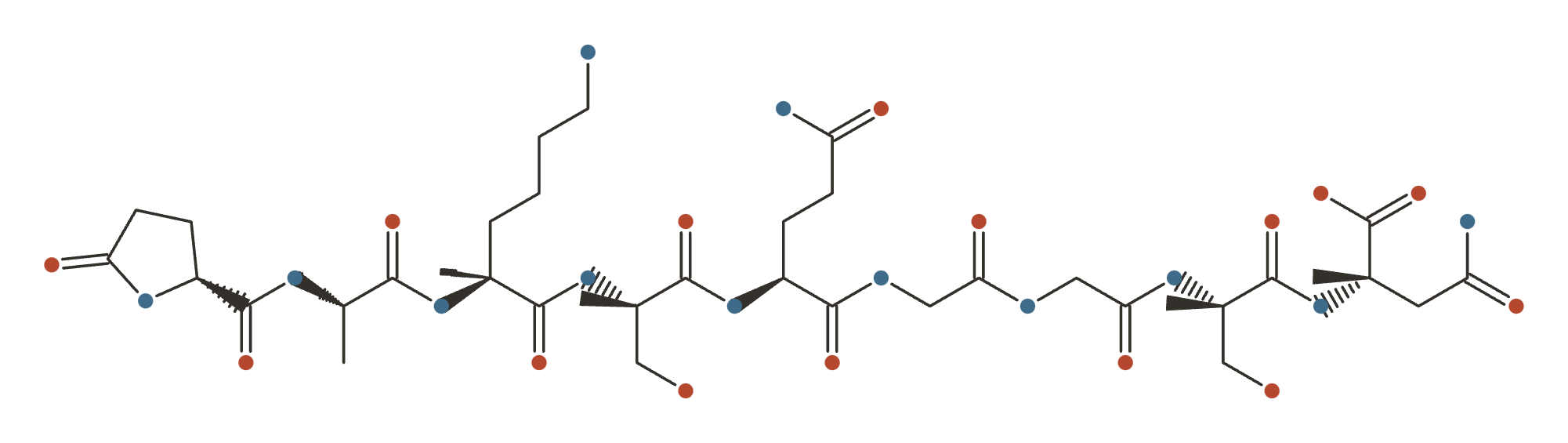
Thymalin
A calf-thymus polypeptide extract injected as an immune bioregulator — registered in Russia, unapproved in the West, not a single defined molecule.

Thymalin at a Glance
Thymalin is a polypeptide fraction extracted from calf thymus, developed in the Soviet Union as an immune bioregulator and registered as a medicine in Russia. Like Cerebrolysin it is an extract rather than a defined molecule, which makes its composition a manufacturing specification rather than a chemical formula. It is injected in courses for immune support and is claimed to have geroprotective effects. It has no approval outside Russia and its literature comes largely from a single research network.
History & Development
Thymalin is not a peptide. It is an extract of calf thymus - a mixture, registered as a medicine in Russia, and impossible to characterise the way a defined molecule can be.
| First described | Not established in the sources consulted for this section |
| Discovered / synthesised by | Not established in the sources consulted for this section |
| Institution | Not established in the sources consulted for this section |
| Origin | Calf-thymus polypeptide extract - a mixture, not a single defined molecule |
| Key patent | Not established in the sources consulted for this section |
| Assignee | Not established in the sources consulted for this section |
| Development status | Registered in Russia; unapproved in the West |
Discovery
The thymus trains T-cells and involutes with age, so extracting its factors to restore immune function is an old and reasonable idea. Thymalin is that idea as a product: purified calf thymus, prepared as a polypeptide extract and injected as an immune bioregulator.
It shares its central limitation with cerebrolysin: it is a mixture. There is no sequence, no molecular weight and no single receptor, so identity and consistency depend on the manufacturing process rather than on chemical definition. Two batches are the same thing because they were made the same way, not because they can be shown to be identical.
It belongs to the same Soviet “bioregulator” tradition as epitalon - glandular tissue extracts developed as restorative agents for age-related decline.
Development & ownership
Thymalin is registered in Russia, where the clinical literature uses short intramuscular courses of roughly 10 mg/day for 5-10 days, repeated periodically.
What does not exist is any of the infrastructure that would let a Western reader evaluate it: no independent pharmacovigilance, no Western safety data and no long-term follow-up. It is an injected animal-tissue product, which carries considerations a synthetic peptide does not - both for transmissible agents and for anyone avoiding bovine-derived material.
How it reached the market
Thymalin is a registered prescription product in Russia and unapproved everywhere else, sold in Western grey markets as an immune and longevity injectable on the strength of small Russian studies that no independent group has repeated.
What It's Used For
Thymalin is not a molecule — it is an extract. It is a mixture of low-molecular-weight polypeptides obtained by acid extraction of calf thymus, developed from the 1970s onward by Vladimir Khavinson’s group in Leningrad/St. Petersburg and given as an injectable “immune bioregulator” 7Reference 7ReviewNatural and synthetic thymic peptides as therapeutics for immune dysfunction — review + uncontrolled human clinical useView study →. That distinction is the spine of the whole account, and it is the same distinction that governs its sibling epitalon: epitalon is a defined synthetic tetrapeptide, whereas epithalamin is the pineal extract it was derived from, and the two are routinely conflated. Thymalin sits on the extract side of that pairing. Two short peptides isolated from it — Lys-Glu (KE) and Glu-Trp (EW) — were later developed as defined single-molecule drugs (Vilon and Thymogen respectively) 5,
The provenance problem is severe, and it has to be stated before any result. Of the 293 records PubMed returns for thymalin, roughly 250 are Russian-language, and the overwhelming majority of the positive human and mechanistic work comes from a single affiliated research network (Khavinson and Kuznik; St. Petersburg and Chita). Much of it is not verifiable in English-language indexes, was published without the methodological reporting a Western reader would expect, and has never been independently replicated. Only what could actually be verified is cited below; unverifiable Russian-language claims are left out rather than laundered into a numbered reference. One consequence is worth sitting with: the only in-vivo studies here from a group outside the Khavinson network are two 1989–91 papers from an East German institute in Jena, and both are null 11,
Route is load-bearing. Thymalin is a lyophilized powder reconstituted for intramuscular injection; as a mixture of protease-labile peptides it is not meaningfully orally active, so no oral or sublingual product can deliver what the injected courses were studied at. It is a registered prescription preparation in Russia and some neighboring states — which is not, and must not be read as, Western approval. It has no FDA or EMA authorization, and zero trials registered on ClinicalTrials.gov.
One more disambiguation, because it is the most common error in this area: thymalin is not thymosin alpha-1, thymosin beta-4, thymopentin or thymulin. Those are defined single molecules with their own (much better) literatures — thymosin alpha-1 is an approved drug in more than 30 countries, and thymosin beta-4 has run registered Phase 3 trials. Studies of those compounds are routinely mis-cited as thymalin evidence. None of their data appears here.
Support is an experimental score I’m building — a composite weighted by study type (human > animal > in vitro > review) and study volume. It’s a beta: a fast way to rank strength of evidence at a glance, not a validated metric. For thymalin the ceiling is deliberately low — nothing clears 40% — because essentially every positive finding traces to one research network, the pivotal COVID-19 trial is unindexed and unregistered, and there are no registered trials anywhere. Read the low scores carefully: for cancer adjunct the number is low because the compound was tested and did not work in two independent rodent models, while for bone repair and radiation cytogenetics it is low because the human study has simply never been done. Each application links down to its write-up.
The most-cited recent human result — and the one that most needs its provenance stated. A prospective, randomized, single-blind, placebo-controlled trial in older patients with severe COVID-19 (n=80; 36 given thymalin 10 mg IM daily for 10 days plus standard care, 44 given saline plus standard care) reported in-hospital mortality of 40.9% in controls versus 19.4% with thymalin (p=0.039), along with faster lymphopenia reversal and faster normalization of CRP, D-dimer, lymphocytes and NK cells, with no side effects reported. That study was published in Advances in Gerontology in 2021 (Kuznik, Khavinson, Shapovalov et al., 11(4):368–376, doi 10.1134/S2079057021040068). It is not indexed in PubMed — it has a PMC deposit and a DOI but no PMID — and it carries no trial registration, so it is attributed here in prose rather than given a reference number, and it cannot be treated as a verified indexed trial.
A separate, PubMed-indexed comparative study from the same group (control versus tocilizumab versus thymalin) reported hospital mortality of 40.9%, 28.4% and 20.6% respectively, with thymalin roughly doubling lymphocyte and monocyte counts and lowering fibrinogen, LDH and D-dimer 2Reference 2RCTMorphological composition and indicators of the blood clotting system in severe COVID-19 patients of middle and elderly age during treatment with tocilizumab and thymalin — human (comparative, non-randomised)View study →.
A further uncontrolled complex-therapy report described accelerated normalization of IL-6, CRP and D-dimer when thymalin was added to standard care 3Reference 3Results and prospects of using activator of hematopoietic stem cell differentiation in complex therapy for patients with COVID-19 — human (uncontrolled complex-therapy report)View study →.
The proposed mechanism — driving hematopoietic stem cells toward mature T lymphocytes, and damping the IL-6/TNF-α axis — is supported in human cells in vitro 4,
I checked all of these for retraction or Expression of Concern notices; none is flagged. The problem is not misconduct — it is that every positive human COVID-19 result for thymalin traces to a single affiliated group operating at one center in Chita, was conducted without registration, and has never been independently replicated. Pandemic-era single-group results warrant more scrutiny than usual, not less.
Gap: No independent, multi-center, or registered trial exists. The pivotal randomized study is unindexed and unregistered; the indexed comparative study 2Reference 2RCTMorphological composition and indicators of the blood clotting system in severe COVID-19 patients of middle and elderly age during treatment with tocilizumab and thymalin — human (comparative, non-randomised)View study → is not randomized. Nothing here has been replicated outside the originating network.
This is thymalin’s founding indication and its mechanistically strongest suit — but the strength is in vitro. In human hematopoietic stem cells, thymalin reduced the stem-cell markers CD44 and CD117 and increased the mature T-lymphocyte marker CD28 roughly 6.8-fold, consistent with pushing differentiation toward mature T cells 4Reference 4In vitroThymalin: activation of differentiation of human hematopoietic stem cells — in vitro (human cells)View study →.
In human peripheral-blood mononuclear cells from four donors under an LPS challenge, thymalin and its KE/EW dipeptides cut IL-1β, IL-6 and TNF-α by 1.4–6.0-fold 5Reference 5In vitroThe influence of KE and EW dipeptides in the composition of the thymalin drug on gene expression and protein synthesis involved in the pathogenesis of COVID-19 — in vitro (human PBMC) + in silicoView study →.
In the human THP-1 monocyte/macrophage line, thymalin (alongside other Khavinson peptides) induced TNF tolerance and lowered TNF and IL-6 6Reference 6In vitroPeptides regulating proliferative activity and inflammatory pathways in the monocyte/macrophage THP-1 cell line — in vitro (human cell line)View study →.
These three point the same way in three different human cell systems, which is more internal consistency than most compounds here manage.
The human side is much weaker. Thymalin has been used in Russian clinical practice as an “immunocorrector” for immune dysfunction since the 1980s–90s, described in a 1997 English-language review by the originators 7Reference 7ReviewNatural and synthetic thymic peptides as therapeutics for immune dysfunction — review + uncontrolled human clinical useView study →, but that is decades of largely uncontrolled clinical use, not controlled evidence. The one small controlled human study located is in women with chronic salpingitis/oophoritis, where thymalin improved clinical and immunological parameters when dosing was timed to lymphocyte enzyme reactivity 16Reference 16Clinical trialChrono- and immunocorrection of inflammatory disorders of internal reproductive organs in women of reproductive age — human (small clinical trial)View study → — an interesting chronotherapy result, but small, single-center and unreplicated.
Gap: The crisp dose-response mechanism is entirely cell-culture. There is no controlled human immunology trial with a hard clinical endpoint — no infection-rate, vaccine-response or immune-reconstitution RCT — and the clinical-use tradition it rests on was never controlled.
The signature longevity claim. In a study at the St. Petersburg Institute of Bioregulation and Gerontology with the Kiev Institute of Gerontology, 266 people over 60 were followed for 6–8 years, receiving thymic (thymalin) and/or pineal (epithalamin) peptide bioregulators during the first 2–3 years 1Reference 1Peptides of pineal gland and thymus prolong human life — human (long-term controlled study, 266 subjects, no reported randomisation or blinding)View study →.
It reported improved cardiovascular, endocrine, immune and metabolic indices, a 2.0–2.4-fold fall in acute respiratory disease incidence, and mortality reduced 2.0–2.1-fold in the thymalin group, 2.5-fold with thymalin plus epithalamin, and 4.1-fold in a subgroup given the combination annually for six years 1Reference 1Peptides of pineal gland and thymus prolong human life — human (long-term controlled study, 266 subjects, no reported randomisation or blinding)View study →.
Three things have to be said about it. First, the design is unclear: PubMed indexes the paper as a clinical trial, but the paper itself describes only that the effects were “clinically assessed” against a control — it reports no randomization method, no blinding, no allocation concealment and no protocol, so it cannot be read as an RCT regardless of how it is indexed. Second, the headline number is a combination: the 4.1-fold figure belongs to thymalin plus epithalamin, and cannot be attributed to thymalin alone. Third, it is from the originating institute and has never been reproduced by anyone else, in any language, in the twenty-plus years since. The finding is folded into the group’s broader “peptide theory of aging” review literature 8Reference 8ReviewPeptides and ageing — reviewView study →, which restates rather than independently tests it.
Gap: Unrandomized, unblinded, single-network, confounded by combination dosing, and unreplicated. This is a hypothesis-generating historical result, not established geroprotection — and it is precisely the claim gray-market vendors lean on hardest.
This application has negative data, and that is the point. The positive side: in outbred albino rats with transplanted sarcoma 45, thymalin at below-therapeutic doses produced tumor growth arrest or regression in more than half of animals and ~78% suppression in the rest, with increased thymic lymphoproliferative activity 9Reference 9AnimalEffect of Thymalin on the tumor and thymus under conditions of activation therapy in vivo — animal (rat, sarcoma 45)View study →. An uncontrolled human series added thymalin to complex treatment of endometrial cancer (35 treated within a 111-patient assessment) and reported positive effects on cell immunity 10Reference 10Application of thymic factor “Thymalin” in complex treatment of endometrial cancer patients — human (uncontrolled adjunct series)View study →.
Against that sit two null studies — and they are the only in-vivo work here from a group independent of the Khavinson network (the Institute of Microbiology and Experimental Therapy in Jena). In C57BL/6 mice inoculated with melanoma B16, thymalin was “practically without effect” on lung metastasis formation, while a different immunomodulator (Poly I:C) in the same experiment did reduce metastases 11Reference 11AnimalAge-dependent experimental tumor dissemination of murine melanoma B16 — animal (mouse); null result for thymalinView study →.
And in mice bearing P388 leukemia, combining thymalin with the antineoplastic ambazone failed to improve the antileukemic effect in either young or old animals 12Reference 12AnimalAge-dependent antileukemic action and suppression of immune response by ambazone in mice — animal (mouse); null result for thymalin combinationView study →.
Gap: No controlled human oncology trial exists; the human data are an uncontrolled adjunct series. The animal record is internally contradictory, and the contradiction runs along an uncomfortable line — the positive model is from within the originating network, the two nulls are from outside it. Do not read the low score here as “untested.”
Two 2024 papers from one Ukrainian group tested peri-defect thymalin injection in a rat mandible bone-defect model (48 WAG rats, four groups). Added to a hydroxyapatite-containing bone-graft material, thymalin was reported to stimulate reparative osteogenesis — faster clearance of necrotic tissue and increased osteoblast activity 14Reference 14AnimalReparative osteogenesis in mandible in cases of filling a bone defect with hydroxyapatite-containing osteotropic material and thymalin — animal (rat)View study → — with a companion paper describing a shift from M1 to M2 macrophages and increased local T- and B-lymphocytes in the regenerate 15Reference 15AnimalExpression features of T-lymphocytes, B-lymphocytes and macrophages in the post-traumatic regenerate of the mandible in rats treated with thymalin — animal (rat)View study →.
Gap: Rat only, one lab, one year, and the effect is entangled with a co-administered bone-graft material, so thymalin’s independent contribution is not isolated. There is no human dental or orthopedic data of any kind; the authors’ own suggestion of clinical use is not backed by a human study.
Work from the Ukrainian Chornobyl radiobiology program reported that thymalin — alongside inosine, ascorbic acid and caffeine — can modify radiation-induced chromosome aberrations in human peripheral-blood lymphocytes studied ex vivo. Crucially, the direction of effect is not fixed: thymalin was protective or sensitizing depending on concentration, cell radiosensitivity, radiation dose, and the radiation’s relative biological effectiveness 13Reference 13ReviewChornobyl catastrophe: cytogenetic effects of low dose ionizing radiation and their modification — ex vivo (human lymphocytes) + reviewView study →.
Gap: Ex-vivo human cells only, one group, no clinical radioprotection endpoint, and a bidirectional effect that undercuts any simple “radioprotectant” claim outright. A compound that can sensitize cells to radiation depending on concentration is not something to be described as protective.
Mechanisms
| Target / pathway | Effect | Relevant to |
|---|---|---|
| T-lymphocyte differentiation (CD28+ maturation) | ↑ (CD28 ~6.8× in human HSC, in vitro) | Immune restorationCOVID-19 |
| Hematopoietic stem-cell markers (CD44, CD117) | ↓ (driving differentiation rather than self-renewal) | Immune restorationCOVID-19 |
| Pro-inflammatory cytokines (IL-1β, IL-6, TNF-α) | ↓ 1.4–6.0× in human PBMC and THP-1 cells | InflammationCOVID-19 |
| Monocyte/macrophage TNF tolerance; M1→M2 shift | Modulated | Inflammationbone repair |
| ACE2 (in-silico docking of the EW dipeptide) | Proposed inhibition — hypothesis, not a measured effect | COVID-19 (mechanistic proposal) |
| Coagulation/inflammation markers (fibrinogen, D-dimer, LDH) | ↓ in treated patients | COVID-19 thrombo-inflammation |
| Thymic lymphoproliferative activity | ↑ (rat) | Cancer adjunct (rodent) |
Pharmacokinetics
Thymalin’s pharmacokinetics are best described as undefined, and undefinable in the usual sense — the same problem cerebrolysin has. Because it is a heterogeneous mixture of peptides rather than a single molecule, there is no single plasma half-life, no standardized potency or identity assay, and no published ADME dataset. Its two named active dipeptides (KE and EW) would be expected to clear rapidly, as short peptides do, but that is inference from class, not a measurement of the product.
What is clear is the route. Thymalin is supplied as a lyophilized powder reconstituted for intramuscular injection, and every clinical finding here rests on that route 1,
Clinical & regulatory status
Thymalin is a registered prescription preparation in Russia (Тималин) and has been used clinically there and in some neighboring states for decades under the Khavinson bioregulator program. It is not approved by the FDA or the EMA, is not an approved dietary supplement anywhere in the West, and holds no marketing authorization outside its region of origin. Russian registration is not Western approval and does not transfer — that distinction is the single most misrepresented fact about compounds in this cluster. Outside Russia and the CIS, any material circulates as unapproved gray-market product sold “for research use only.”
Registered-trial activity is absent: a ClinicalTrials.gov v2 API query for thymalin returns zero studies, and the pivotal COVID-19 randomized trial was published in a Russian gerontology journal without any trial registration and without PubMed indexing. The counts below reflect what is findable and verifiable in PubMed and English-language registries in this pass; the Russian-language literature is far larger (roughly 250 of the 293 PubMed records) but is not independently verifiable here, and is not counted as evidence.
| Completed | Ongoing | Terminated | Preclinical |
|---|---|---|---|
| 0registered. Unregistered human studies only: 1 long-term cohort 1Reference 1Peptides of pineal gland and thymus prolong human life — human (long-term controlled study, 266 subjects, no reported randomisation or blinding)View study →, 1 unindexed randomized COVID-19 trial (prose), 1 comparative study 2Reference 2RCTMorphological composition and indicators of the blood clotting system in severe COVID-19 patients of middle and elderly age during treatment with tocilizumab and thymalin — human (comparative, non-randomised)View study →, and a small number of uncontrolled series 3, | 0registered | 0 | Majority — ~293 PubMed records total, ~250 Russian-language, largely rodent/in-vitro |
Last checked: July 2026.
Sourcing, Route & Legal Status
Regulatory status — status before benefit. Thymalin is a registered prescription drug in Russia, dispensed there under medical supervision, and has been used in some CIS states on the same basis. It has never been approved by the FDA, the EMA, the TGA, or any comparable Western regulator, for any indication, and it is not a dietary supplement in the US, UK, EU or Australia. A registration in one country covers one product, one indication and one population under that country’s regulator; it confers nothing elsewhere, and the fact that thymalin is a real pharmacy medicine in Russia should not be allowed to imply Western legitimacy. Outside its region of registration it is an unapproved research chemical, sold “for research use only / not for human consumption.” It is not a scheduled or controlled substance, but “unscheduled” is not “approved” — marketing it for human use is unlawful in most Western jurisdictions precisely because it is unapproved.
How it’s supplied & administered. Pharmaceutical thymalin is a lyophilized (freeze-dried) powder — a mixture of low-molecular-weight calf-thymus polypeptides — reconstituted with sterile water or saline immediately before use and given by intramuscular injection in short courses. The gray market sells the same dosage form, lyophilized powder in vials for reconstitution, but community practice frequently shifts the route to subcutaneous injection by analogy with other research peptides. That is a real divergence worth naming: every clinical finding here used intramuscular dosing, and there is no bioequivalence, PK or efficacy data for subcutaneous thymalin at all. Any oral or sublingual product is pharmacologically inert regardless of the number on the label. The powder requires cold-chain storage; reconstituted material needs prompt use and sterile handling.
Sourcing reality (this is a safety issue, not a footnote). Outside Russia, thymalin reaches buyers through unregulated vendors with no manufacturing oversight, no pharmacopoeial standard, and no regulatory accountability. For this compound the identity problem is unusually acute, because thymalin is defined as a mixture, not a molecule: there is no single sequence to confirm by mass spectrometry, no potency assay, and therefore no meaningful way for a buyer — or a certificate of analysis — to establish that a vial contains thymalin at all, as opposed to some other peptide powder, a different thymic preparation, or nothing active. A COA that reports purity for a single peptide is answering the wrong question. Layered on top are the standard injectable risks: bacterial endotoxin and sterility failure, mislabeled or misdosed vials, and infection or abscess from non-sterile reconstitution. It also carries an animal-tissue origin — it is made from calf thymus, which raises theoretical transmissible-agent concerns that do not apply to synthetic peptides, and which pharmaceutical manufacture under regulatory inspection exists specifically to control. This page does not recommend, rank, or link any vendor; identity and purity in this market are unverifiable.
Safety
Thymalin is reported as well tolerated in the small Russian studies that exist, but absence of reported harm is not evidence of safety — those studies were not designed as safety trials, no independent pharmacovigilance exists anywhere, and outside Russia this is an injected animal-tissue extract whose composition cannot be verified.
- Contraindicated in pregnancy and breastfeeding by default. No reproductive data of any kind — see the box below.
- Unpredictable immune effects are mechanistically plausible. A concern with autoimmune disease, transplant or immune-active therapy, and never characterized in a controlled study.
- Procedural risks dominate the pharmacological ones. Injection-site reactions, abscess, endotoxin reaction and bloodborne infection from non-sterile powder.
- Interactions not assessed. No controlled interaction studies exist; treat risk as unknown with immunosuppressants, biologics or chemotherapy.
- Identity cannot be confirmed. As an extract rather than a defined molecule, it fails the testing that works for single-sequence peptides.
- No established dose ceiling. No dose-finding or dose-escalation study has been published.
Full Safety & Interactions Detail
Overall posture. In the small human studies that exist, thymalin was reported as well tolerated with no attributed adverse events 1,
Injection- and product-specific risks. Because thymalin is injected and, outside Russia, unregulated, the most concrete hazards are procedural rather than pharmacological: injection-site reactions, abscess, endotoxin reaction, and bloodborne infection from non-sterile powder or reconstitution. For a preparation whose composition cannot be verified, the risk of receiving something other than what the vial claims is not hypothetical.
Mechanism-based concerns (unstudied). Thymalin’s whole purpose is to modulate immune function. In anyone who is immunosuppressed, has an autoimmune disease, has had a transplant, or is taking immune-active therapy, an unpredictable immune effect is a mechanistically plausible concern — and it has never been characterized in a controlled study. The radiation-cytogenetics work is a caution in the same spirit: it found thymalin could be protective or sensitizing depending on conditions 13Reference 13ReviewChornobyl catastrophe: cytogenetic effects of low dose ionizing radiation and their modification — ex vivo (human lymphocytes) + reviewView study →, which is a reminder that “immunomodulator” is not a synonym for “immune booster” and that direction of effect is not guaranteed.
Dose-limiting effect. None established — no dose-finding or dose-escalation study has been published.
Interactions. Not assessed. No controlled drug-interaction studies exist. The only co-administration in the literature is with other Khavinson peptides (epithalamin, in the longevity study 1Reference 1Peptides of pineal gland and thymus prolong human life — human (long-term controlled study, 266 subjects, no reported randomisation or blinding)View study →) — a study-design choice, not an interaction assessment. Anyone on immunosuppressants, biologics, or chemotherapy should treat interaction risk as unknown; note that in the one experiment combining thymalin with a chemotherapeutic, the combination did not improve the drug’s effect 12Reference 12AnimalAge-dependent antileukemic action and suppression of immune response by ambazone in mice — animal (mouse); null result for thymalin combinationView study →.
Who should avoid it. Anyone who is pregnant, breastfeeding, or trying to conceive; anyone with autoimmune disease, a transplant, or on immunosuppressive or immune-modulating therapy; anyone with a known sensitivity to bovine-derived products; and anyone who cannot guarantee sterile sourcing and reconstitution — which, given the supply chain, is nearly everyone acquiring it outside Russia. The conservative position is that it should not be self-administered.
Scope disclosure (honesty, not a claim):
- Human data? Limited and single-network — one long-term cohort with no reported randomization, one unindexed and unregistered randomized COVID-19 trial, one indexed comparative study, and a few small uncontrolled series. No registered trial exists anywhere.
- Interactions assessed? No — no controlled interaction studies. Treat as unknown, especially with immune-active drugs.
- Pregnancy/lactation assessed? No — no data; avoid.
- Long-term safety established? No. Decades of Russian clinical use are reported as safe, but without independent long-term follow-up or any pharmacovigilance system.
- Product identity verifiable? No — and uniquely so. As an extract rather than a defined molecule, thymalin cannot be confirmed by the identity testing that works for single-sequence peptides.
Never imply safety from silence. Where thymalin has not been studied — interactions, pregnancy, long-term use, subcutaneous dosing, gray-market product identity — the correct statement is “not assessed,” not “safe.”
Not assessed / not established. There are no human pregnancy or lactation data and no adequate reproductive-toxicity studies in the accessible literature, and no label statement exists outside its region of origin. Treat as contraindicated by default in pregnancy and breastfeeding.
Dosage
There is no established Western human dose for thymalin, and none is recommended here. It has no Western approval, no registered trial, and no published dose-finding study; every figure below is reported study data given for context, not a protocol or a personal recommendation.
The Russian clinical literature dosed thymalin in short intramuscular courses rather than continuously. The COVID-19 trial described above used 10 mg IM daily for 10 days on top of standard care, and the long-term geroprotection study administered courses periodically over the first 2–3 years of follow-up 1Reference 1Peptides of pineal gland and thymus prolong human life — human (long-term controlled study, 266 subjects, no reported randomisation or blinding)View study →. That gives a practical picture of roughly 10 mg/day IM for 5–10 days, repeated at intervals — but it comes from unregistered studies at a single research network, and there is no dose-response work behind it, no comparison of course lengths, and no evidence that more is better.
Two specific cautions. First, the dose is expressed in milligrams of an extract, not of a defined active molecule, so “10 mg” only means something relative to a standardized preparation — which gray-market product is not. Second, the studied route is intramuscular; the subcutaneous dosing common in community practice has never been studied for this compound, so those figures cannot be assumed to transfer. There is no oral dose, because there is no oral route that works (see Pharmacokinetics). This entry is informational only.
References
- Khavinson VKh, Morozov VG. (2003). Peptides of pineal gland and thymus prolong human life — human (long-term controlled study, 266 subjects, no reported randomisation or blinding). Neuro Endocrinol Lett. https://pubmed.ncbi.nlm.nih.gov/14523363/
- Kuznik BI, et al. (2022). Morphological composition and indicators of the blood clotting system in severe COVID-19 patients of middle and elderly age during treatment with tocilizumab and thymalin — human (comparative, non-randomised). Adv Gerontol. https://pubmed.ncbi.nlm.nih.gov/36169363/
- Khavinson VK, et al. (2021). Results and prospects of using activator of hematopoietic stem cell differentiation in complex therapy for patients with COVID-19 — human (uncontrolled complex-therapy report). Stem Cell Rev Rep. https://pubmed.ncbi.nlm.nih.gov/33575961/
- Khavinson VK, et al. (2020). Thymalin: activation of differentiation of human hematopoietic stem cells — in vitro (human cells). Bull Exp Biol Med. https://pubmed.ncbi.nlm.nih.gov/33237528/
- Linkova N, et al. (2023). The influence of KE and EW dipeptides in the composition of the thymalin drug on gene expression and protein synthesis involved in the pathogenesis of COVID-19 — in vitro (human PBMC) + in silico. Int J Mol Sci. https://pubmed.ncbi.nlm.nih.gov/37686182/
- Avolio F, et al. (2022). Peptides regulating proliferative activity and inflammatory pathways in the monocyte/macrophage THP-1 cell line — in vitro (human cell line). Int J Mol Sci. https://pubmed.ncbi.nlm.nih.gov/35408963/
- Morozov VG, Khavinson VK. (1997). Natural and synthetic thymic peptides as therapeutics for immune dysfunction — review + uncontrolled human clinical use. Int J Immunopharmacol. https://pubmed.ncbi.nlm.nih.gov/9637345/
- Khavinson VKh. (2002). Peptides and ageing — review. Neuro Endocrinol Lett. https://pubmed.ncbi.nlm.nih.gov/12374906/
- Zhukova GV, et al. (2018). Effect of Thymalin on the tumor and thymus under conditions of activation therapy in vivo — animal (rat, sarcoma 45). Bull Exp Biol Med. https://pubmed.ncbi.nlm.nih.gov/29797130/
- Bakhidze EV, Bokhman JaV. (1990). Application of thymic factor “Thymalin” in complex treatment of endometrial cancer patients — human (uncontrolled adjunct series). Eur J Gynaecol Oncol. https://pubmed.ncbi.nlm.nih.gov/2245808/
- Baumgart J, Zippel D. (1991). Age-dependent experimental tumor dissemination of murine melanoma B16 — animal (mouse); null result for thymalin. Arch Immunol Ther Exp (Warsz). https://pubmed.ncbi.nlm.nih.gov/1841547/
- Baumgart J, et al. (1989). Age-dependent antileukemic action and suppression of immune response by ambazone in mice — animal (mouse); null result for thymalin combination. Neoplasma. https://pubmed.ncbi.nlm.nih.gov/2770926/
- Domina EA. (2016). Chornobyl catastrophe: cytogenetic effects of low dose ionizing radiation and their modification — ex vivo (human lymphocytes) + review. Exp Oncol. https://pubmed.ncbi.nlm.nih.gov/28230819/
- Boiko AA, Malanchuk VA, Myroshnychenko MS. (2024). Reparative osteogenesis in mandible in cases of filling a bone defect with hydroxyapatite-containing osteotropic material and thymalin — animal (rat). Wiad Lek. https://pubmed.ncbi.nlm.nih.gov/38431810/
- Boiko AA, et al. (2024). Expression features of T-lymphocytes, B-lymphocytes and macrophages in the post-traumatic regenerate of the mandible in rats treated with thymalin — animal (rat). Pol Merkur Lekarski. https://pubmed.ncbi.nlm.nih.gov/38642352/
- Litvinenko GI, et al. (2015). Chrono- and immunocorrection of inflammatory disorders of internal reproductive organs in women of reproductive age — human (small clinical trial). Bull Exp Biol Med. https://pubmed.ncbi.nlm.nih.gov/26033592/



