
Calamus
Acorus calamus
Plant Family
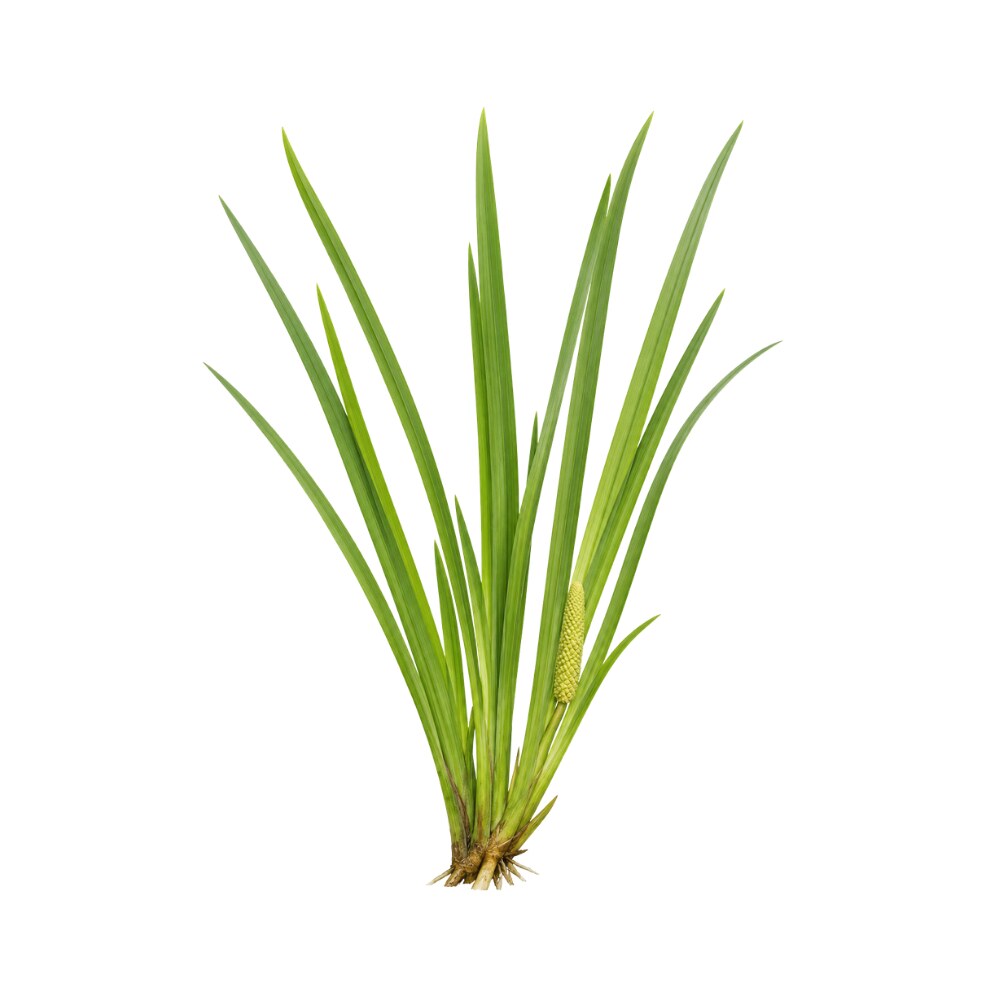
Pictured: Calamus
Sweet flag family
A tiny, ancient, single-genus family of aromatic wetland plants — the sole medicinal member is calamus, valued for its digestive and nootropic reputation but limited by beta-asarone.
1 Herb // 14 Constituents // 3 Notable Members
Overview
One of the smallest and most isolated families of flowering plants — a single genus, Acorus, with only a handful of species. Its position is remarkable: molecular work places Acoraceae as the sister group to all other monocots, making it the earliest surviving branch of that entire lineage. The plants are semi-aquatic, grass-like in appearance, with a thick creeping aromatic rhizome and an unusual lateral flower spike.
Shared Traits
In Practice
Calamus (Acorus calamus) is the family’s sole entry here and has one of the longest and widest medicinal records of any plant — Ayurvedic vacha, Chinese shi chang pu, European bitters, and North American chewing root all converge on the same rhizome.
The traditional indications are consistent across those traditions: digestive (carminative, bitter, antispasmodic) and cerebral (memory, clarity, speech). Ayurveda regards it as a medhya rasayana, a brain rejuvenative, and preclinical work does report neuroprotective, anticonvulsant and cognitive effects for the rhizome’s constituents. The human evidence is essentially absent — this is a herb whose reputation vastly outruns its trials.
The asarone problem is decisive and unusually clear-cut. Acorus calamus occurs as several cytotypes with very different chemistry. The tetraploid Indian type can exceed 80% beta-asarone in its volatile oil; the North American diploid variety (americanus) is essentially asarone-free. Beta-asarone is a phenylpropanoid that is genotoxic and hepatocarcinogenic in rodents, and on that basis calamus is banned as a food additive in the United States and restricted in Europe. The chemotype therefore determines whether the herb is defensible at all — a distinction that commercial material rarely makes clear. Treat unverified calamus as unsuitable for internal use.
Materia Medica
The monograph in the database whose Acoraceae membership is recorded on the herb itself — so this list keeps itself current as new herbs land.
Acorus calamus
Phytochemistry
The rhizome’s volatile oil carries the family signature: the phenylpropanoids alpha- and beta-asarone, plus sesquiterpenes (acorenone, shyobunone) and the bitter principle acorin. Asarone content varies with ploidy from near zero to dominant.
The compounds recorded for this family's single member, grouped by class.
Beyond the Database
Notable members without a monograph yet.
Keep Exploring