
Shatavari
Asparagus racemosus
Plant Family
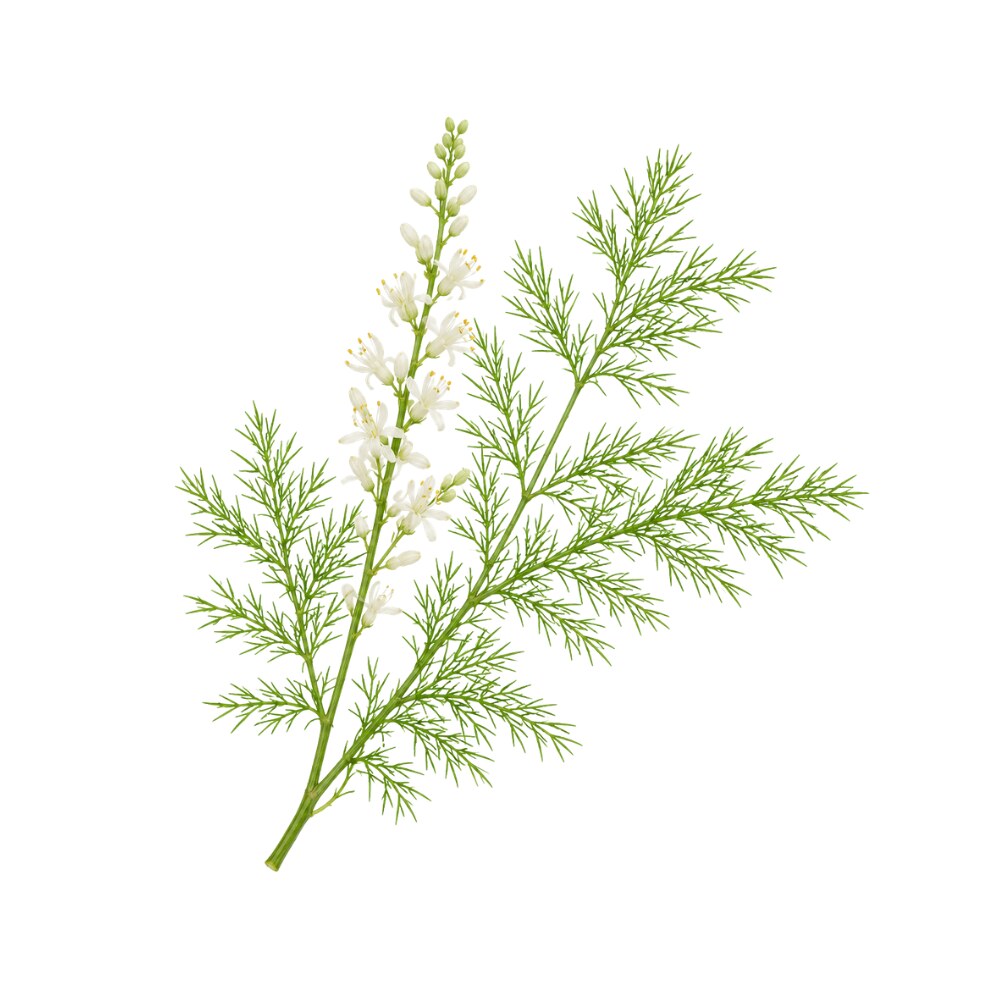
Pictured: Shatavari
Asparagus family
A broad monocot family united by steroidal saponins, whose medicinal centre of gravity is the moistening, hormonally active root of shatavari.
1 Herb // 8 Constituents // 7 Notable Members
Overview
A large and recently reorganised family — roughly 150 genera and 3,000 species — that absorbed several formerly separate families (Agavaceae, Ruscaceae, Hyacinthaceae) in modern classification. The result is morphologically diverse, running from soft woodland herbs to the massive rosettes of agave, but chemically coherent: steroidal saponins run through the whole group.
Shared Traits
In Practice
Shatavari (Asparagus racemosus) is the family’s principal medicinal plant and one of the most important herbs in Ayurveda, where its name — “she who possesses a hundred husbands” — records its reputation as a female reproductive tonic.
Its character is moistening and nourishing rather than stimulating: a rasayana used for depletion, dryness, and the perimenopausal transition, and traditionally as a galactagogue. The chemistry supports the demulcent part directly — the root is rich in mucilage alongside its shatavarins, a series of steroidal saponins. The hormonal claims are more contested: preclinical work reports oestrogenic and prolactin-raising effects, and small clinical studies on lactation are encouraging but underpowered. Adaptogenic and immunomodulatory activity is reported mainly in animal models.
Elsewhere in the family, steroidal saponins have a distinct industrial significance: they are the feedstock from which steroid hormones were first semi-synthesised, and yucca and agave saponins are used commercially as surfactants and adjuvants. Lily of the valley (Convallaria) sits in this family too and is a reminder of its range — it contains cardiac glycosides and is genuinely toxic.
Safety for shatavari is good at traditional doses; the sensible cautions are the theoretical hormonal ones in oestrogen-sensitive conditions, and asparagus-family allergy.
Materia Medica
The monograph in the database whose Asparagaceae membership is recorded on the herb itself — so this list keeps itself current as new herbs land.
Asparagus racemosus
Phytochemistry
Steroidal saponins are the family marker — shatavarins, sarsasapogenin, diosgenin-adjacent skeletons. Alongside them: mucilage polysaccharides and fructans, isoflavones, and — in the Convallaria line — cardenolide cardiac glycosides.
The compounds recorded for this family's single member, grouped by class.
Beyond the Database
Notable members without a monograph yet.
Keep Exploring