Materia Medica
Shatavari
Asparagus racemosus
Shatavari is a climbing asparagus whose tuberous roots are one of Ayurveda's most valued tonics for women, used for menstrual and menopausal complaints and to support breast-milk supply. Its main constituents are steroidal saponins called shatavarins.
What Is Shatavari?
Shatavari is a climbing, spiny relative of garden asparagus, valued for its tuberous roots. In Ayurveda the root is a rasayana, a rejuvenating tonic, and the principal tonic for women’s reproductive health 23,
Asparagus racemosus grows from tropical Africa through Arabia and tropical Asia to northern Australia, mostly in places with a distinct dry season 33Reference 33Asparagus racemosus — habit, range, habitat, cultivation and uses — species databaseView study →. The Ayurvedic Pharmacopoeia of India defines shatavari as its tuberous root 31Reference 31Chemical analysis reveals the botanical origin of shatavari products and confirms the absence of alkaloid asparagamine A in Asparagus racemosus — analyticalView study →. It is taken for menstrual and menopausal complaints, to support breast-milk supply after childbirth, and as a general strengthening tonic.
The root’s main constituents are steroidal saponins called shatavarins, of which shatavarin IV is the best known 29,
The tuberous roots of Stemona plants look similar and have been mistaken for shatavari 31Reference 31Chemical analysis reveals the botanical origin of shatavari products and confirms the absence of alkaloid asparagamine A in Asparagus racemosus — analyticalView study →. In Chinese medicine the asparagus root used is a different species, Asparagus cochinchinensis (tian men dong) 34Reference 34Asparagus cochinchinensis (Loureiro) Merrill — species description — floraView study →.
How Is Shatavari Used?
Shatavari is used as a nourishing tonic for women: for menstrual and menopausal complaints, to support milk supply after childbirth, and as a strengthening rasayana for stress and debility. It is also used as a soothing demulcent for the digestive tract.
- Root powder (churna) — the traditional Ayurvedic form, often taken with warm milk or ghee.
- Root decoction or liquid extract — the usual forms in Western herbal practice.
- Standardised root extracts — capsules of 200–1,000 mg a day, the form used in the modern trials 1,
3, .4, 5, 7Reference 1RCTShatavari (Asparagus racemosus Willd) root extract for postpartum lactation — randomised, double-blind, placebo-controlled trialView study →Reference 3RCTA standardized Asparagus racemosus root extract improves hormonal balance and menstrual health and reduces vasomotor symptoms — randomised placebo-controlled trialView study →Reference 4RCTEfficacy and safety of Shatavari root extract for the management of menopausal symptoms — double-blind, multicenter, randomised controlled trialView study →Reference 5RCTShatavari supplementation in postmenopausal women improves handgrip strength and increases myosin regulatory light chain phosphorylation — randomised controlled trialView study →Reference 7RCTEfficacy and safety of Shatavari root extract in women with polycystic ovarian syndrome — randomised, double-blind, placebo-controlled trialView study →
Traditional Uses
Ayurvedic Medicine
In Ayurveda shatavari is a leading rasayana (rejuvenative) and a medhya (mind) tonic 24Reference 24ReviewNeuro-nutraceutical potential of Asparagus racemosus — reviewView study →. It is classed as cooling, sweet and slightly bitter. It is the principal female reproductive tonic, used across the menstrual cycle, in menopause, and after childbirth to support milk supply 29Reference 29ReviewAn updated insight on the chemistry, ethnobotany and health benefits of Asparagus racemosus (Shatavari) — reviewView study →.
It is also taken as a demulcent and adaptogen for stress, debility and dryness 23Reference 23ReviewAdaptogenic property of Asparagus racemosus — reviewView study →. It is usually given as a root powder (churna), often with warm milk or ghee.
Western Herbal Medicine
Western herbalists use shatavari as a soothing demulcent and female reproductive tonic. It is given for dryness of the reproductive and digestive membranes, for menopausal complaints, and to support lactation.
Botany
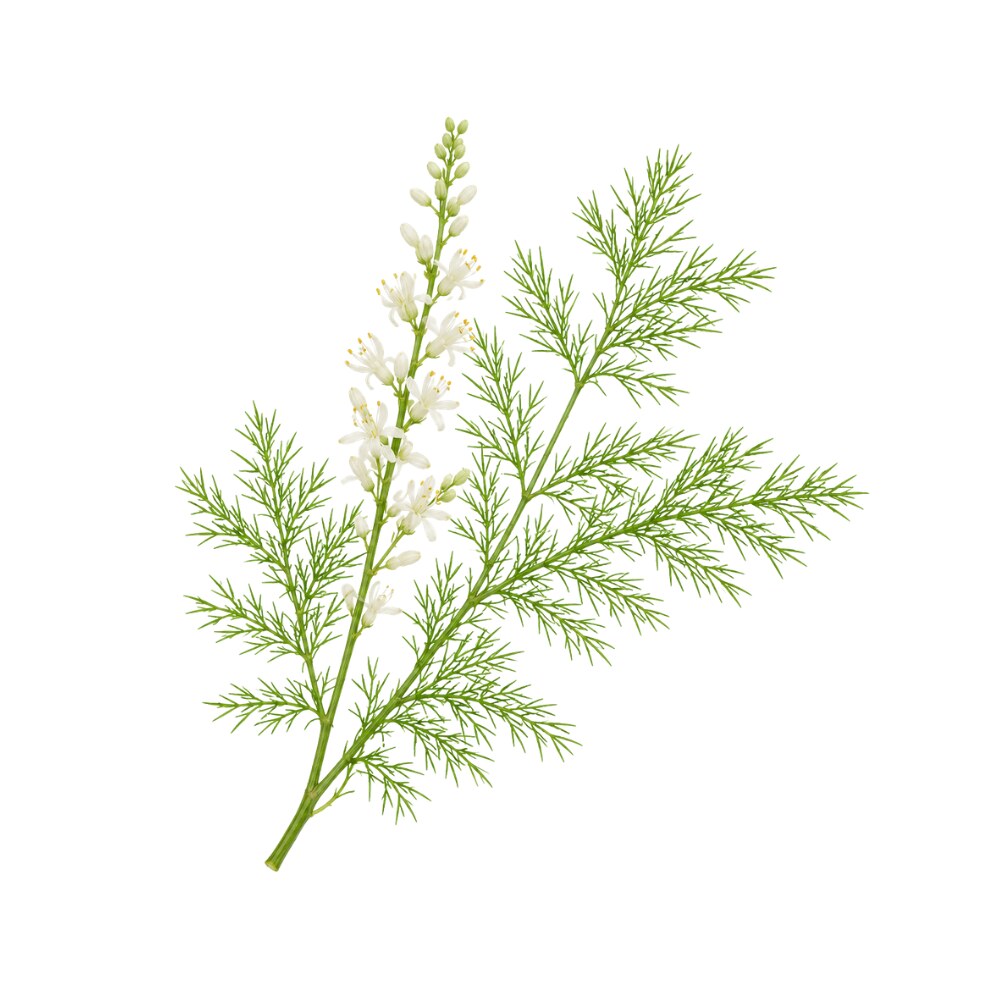
Shatavari is a climbing perennial in the asparagus genus, a relative of the garden asparagus Asparagus officinalis. Its branched stems grow from a tuberous rootstock, reaching 2 m and sometimes as much as 7 m 32,
Shatavari has no true leaves. Its green, needle-like cladodes are flattened stems, 1–2.5 cm long, growing in clusters of three to six 32Reference 32Asparagus racemosus Willdenow — species description, habitat and distribution — floraView study →. The stems carry sharp woody spines, 1.5–2 cm long on the main stems and 5–10 mm on the branches 32Reference 32Asparagus racemosus Willdenow — species description, habitat and distribution — floraView study →.
The flowers are small and bell-shaped, 2–3 mm long, borne in many-flowered racemes or panicles in the leaf axils 32Reference 32Asparagus racemosus Willdenow — species description, habitat and distribution — floraView study →. The roots are fleshy tubers, 5–13 cm long 33Reference 33Asparagus racemosus — habit, range, habitat, cultivation and uses — species databaseView study →.
Distribution
Shatavari grows from tropical Africa through Arabia and tropical Asia to northern Australia 33Reference 33Asparagus racemosus — habit, range, habitat, cultivation and uses — species databaseView study →. In Asia it is recorded from India, Pakistan, Nepal, Bhutan, Sikkim, Myanmar, Malaysia and southern Tibet 32Reference 32Asparagus racemosus Willdenow — species description, habitat and distribution — floraView study →.
It grows in the subtropics and tropics but usually avoids the wettest regions, needing a distinct dry season to flourish 33Reference 33Asparagus racemosus — habit, range, habitat, cultivation and uses — species databaseView study →. In the Himalayas it grows up to about 1,200 m from Kashmir eastwards, and in southern Tibet it is found in broad-leaved forest along streams at 2,100–2,200 m 32,
The root is heavily collected from the wild, and overcollection is a conservation concern in parts of its range 14,
Growing Conditions
Cultivation snapshot for Shatavari
- Thrives in frost-free subtropical to tropical conditions; treat it as tender where winters are cold.
- Give it full sun to light shade, with something to scramble up — it is a climbing, spine-armed vine.
- Prefers free-draining, gravelly or rocky soil; dislikes waterlogging around its tuberous roots.
- Slow to establish; the medicinal tuberous roots take a few seasons to bulk up before harvest.
Grow it yourself
Farm Wiki is our cultivation-focused sister site, also run by Justin Cooke.
Indications
- Menopausal and perimenopausal symptoms, including hot flushes and night sweats [root extract]
- Painful and irregular periods [root; Ayurveda]
- Low breast-milk supply after childbirth [root; Ayurveda]
- Female fertility and reproductive health [root; Ayurveda]
- Polycystic ovary syndrome [root extract] Caution: In one trial the extract reduced follicle count and increased endometrial thickness, but ovarian volume, hormones and body weight did not change 7.
- Stress and debility [root; Ayurveda]
- Hyperacidity and stomach ulcers [root; Ayurveda]
- Dryness of the digestive and reproductive membranes [root; Western herbal use]
- Muscle strength after menopause [root extract]
Pharmacology & Research
Shatavari has a large preclinical literature, mostly in rodents and cell lines, covering antioxidant, immune, stomach-protective, adaptogenic and anticancer activity. It also has a group of small human trials in women’s reproductive and menopausal health, and one in muscle strength 1,
The most consistent human results are for menopausal and perimenopausal symptoms and for milk supply in the days after childbirth 1,
-
Best-supported: fewer menopausal and perimenopausal hot flushes and menstrual symptoms in two trials of standardised extracts 3,
4Reference 3RCTA standardized Asparagus racemosus root extract improves hormonal balance and menstrual health and reduces vasomotor symptoms — randomised placebo-controlled trialView study →Reference 4RCTEfficacy and safety of Shatavari root extract for the management of menopausal symptoms — double-blind, multicenter, randomised controlled trialView study → ; more milk in the first 72 hours after childbirth 1Reference 1RCTShatavari (Asparagus racemosus Willd) root extract for postpartum lactation — randomised, double-blind, placebo-controlled trialView study →. -
Emerging, worth watching: grip strength and muscle contractile function in post-menopausal women 5,
6Reference 5RCTShatavari supplementation in postmenopausal women improves handgrip strength and increases myosin regulatory light chain phosphorylation — randomised controlled trialView study →Reference 6RCTShatavari supplementation in postmenopausal women alters the skeletal muscle proteome — randomised controlled trialView study → ; blood-sugar-lowering saponins acting through AMPK and GLUT4 18Reference 18In vitroFurostanol saponins from Asparagus racemosus as potential hypoglycemic agents — animal model (db/db mice) and in vitroView study →; activity of shatavarin IV against HIV-1 in cells 26Reference 26In vitroMitochondrial resilience and antioxidant defence against HIV-1: Asparagus racemosus extracts and shatavarin IV — in vitro and in silicoView study →. -
Mechanistically thin: neuroprotective and anti-Alzheimer’s claims rest mostly on reviews and computer modelling 21,
22Reference 21ReviewExploring the neuroprotective role of Asparagus racemosus in Alzheimer’s disease — reviewView study →Reference 22In vitroExploration of Asparagus racemosus for Alzheimer’s disease through integrated metabolomics and network pharmacology targeting BACE1 — in silico and in vitroView study → ; cough and anticancer claims rest on single animal or cell studies 19,25Reference 19In vitroShatavarins (containing shatavarin IV) with anticancer activity from the roots of Asparagus racemosus — in vitro and animal model (mice)View study →Reference 25AnimalAntitussive effect of Asparagus racemosus root against sulfur-dioxide-induced cough in mice — animal modelView study → . -
The caveat: the human trials are small and use proprietary standardised extracts 1,
3, .4, 7Reference 1RCTShatavari (Asparagus racemosus Willd) root extract for postpartum lactation — randomised, double-blind, placebo-controlled trialView study →Reference 3RCTA standardized Asparagus racemosus root extract improves hormonal balance and menstrual health and reduces vasomotor symptoms — randomised placebo-controlled trialView study →Reference 4RCTEfficacy and safety of Shatavari root extract for the management of menopausal symptoms — double-blind, multicenter, randomised controlled trialView study →Reference 7RCTEfficacy and safety of Shatavari root extract in women with polycystic ovarian syndrome — randomised, double-blind, placebo-controlled trialView study →
Almost every trial used a standardised root extract, not the traditional powder or decoction. Doses ran from 200 to 1,000 mg of extract a day, and results for one extract do not carry over directly to another preparation 1,
1. Menopausal & Vasomotor Relief
Two double-blind, placebo-controlled trials report benefit for menopausal symptoms with standardised root extracts.
In 50 perimenopausal women aged 40–50, a standardised extract (CL22205, 200 mg/day) taken for 120 days reduced Menopause Rating Scale and hot-flush scores and eased painful periods. Serum FSH fell by 56% and LH by 34%, and anti-Müllerian hormone rose by 188% 3Reference 3RCTA standardized Asparagus racemosus root extract improves hormonal balance and menstrual health and reduces vasomotor symptoms — randomised placebo-controlled trialView study →.
A multicentre trial in 70 women with menopausal symptoms gave 250 mg of root extract twice daily for eight weeks. Compared with placebo, it reduced hot flushes, night sweats, insomnia, anxiety, nervousness, vaginal dryness and loss of libido, and improved quality-of-life scores 4Reference 4RCTEfficacy and safety of Shatavari root extract for the management of menopausal symptoms — double-blind, multicenter, randomised controlled trialView study →.
Both trials used proprietary extracts, and neither is large 3,
Gap: small trials on proprietary extracts; no comparison with hormone therapy and no whole-root data.
2. Galactagogue & Lactation Support
A 2025 randomised, double-blind, placebo-controlled trial enrolled 120 women after childbirth, of whom 113 completed it. They took 300 mg of root extract or placebo twice daily for 72 hours. The shatavari group reached breast fullness sooner and expressed more milk at 72 hours, and more of them were satisfied with lactation (53% vs 25%). No adverse events occurred 1Reference 1RCTShatavari (Asparagus racemosus Willd) root extract for postpartum lactation — randomised, double-blind, placebo-controlled trialView study →.
An earlier randomised trial, published in 1996, tested the root in women with inadequate milk supply 2Reference 2RCTRandomized controlled trial of Asparagus racemosus (Shatavari) as a lactogogue in lactational inadequacy — RCTView study →.
Gap: the trial measured milk volume over the first three days, not sustained supply or infant weight gain; the best preparation and duration are unsettled.
3. Antioxidant
Separating the root extract by its antioxidant activity identified a new antioxidant, racemofuran (DPPH IC50 130 µM), alongside racemosol and asparagamine A 8Reference 8In vitroIdentification of antioxidant compound from Asparagus racemosus — in vitroView study →. A later analysis of authenticated plants found no asparagamine A 31Reference 31Chemical analysis reveals the botanical origin of shatavari products and confirms the absence of alkaloid asparagamine A in Asparagus racemosus — analyticalView study →.
Root extracts are high in phenols, flavonoids and tannins, with significant DPPH and FRAP antioxidant activity 9Reference 9In vitroBioactive compound, polyphenol content, and antioxidant activity of Asparagus racemosus root extract — in vitroView study →. An ethanolic root extract scavenged DPPH, hydroxyl and nitric oxide radicals at IC50 values of about 420–510 µg/mL 11Reference 11In vitroIn vitro antioxidant activities of root extract of Asparagus racemosus Linn — in vitroView study →.
A purified polysaccharide fraction protected rat-liver mitochondria against radiation damage at concentrations as low as 10 µg/mL, comparable to glutathione and vitamin C 10Reference 10In vitroAntioxidant properties of Asparagus racemosus against gamma-radiation damage in rat liver mitochondria — in vitro/ex vivoView study →.
All of this is in vitro, and no human antioxidant study exists.
4. Immunomodulatory
A standardised aqueous root extract (100 mg/kg) raised CD3+ and CD4/CD8 T-cell percentages and increased both Th1 (IL-2, interferon-γ) and Th2 (IL-4) cytokines and antibody responses in sensitised animals 12Reference 12AnimalImmunomodulatory activity of Asparagus racemosus on systemic Th1/Th2 immunity — animal modelView study →.
A fructo-oligosaccharide fraction stimulated natural-killer-cell activity in human blood cells by about 52% 13Reference 13In vitroCharacterization and in vitro immunomodulatory screening of fructo-oligosaccharides of Asparagus racemosus — in vitroView study →. Shatavarins produced in tissue culture stimulated lymphocyte proliferation, IgG secretion and IL-12 while suppressing IL-6 14Reference 14In vitroImmunomodulatory potential of shatavarins produced from Asparagus racemosus tissue cultures — in vitroView study →.
Isolated shatavarin IV also worked as a vaccine adjuvant in mice. That saponin came from the fruit of the related Asparagus adscendens (“safed musli”), not from A. racemosus root 15Reference 15AnimalShatavarin-IV saponin adjuvant elicits IgG and IgG2b responses against Staphylococcus aureus bacterin — animal model (mice); shatavarin IV isolated from Asparagus adscendens fruitView study →.
The work is confined to animals and cells, spans several fractions (saponins and fructo-oligosaccharides), and has no standard immune-active dose.
5. Muscle Strength & Contractility
In a randomised double-blind trial, 20 post-menopausal women (average age 68.5) took 1,000 mg/day of shatavari or placebo for six weeks. The authors state the dose equals 26,500 mg of fresh root a day 5Reference 5RCTShatavari supplementation in postmenopausal women improves handgrip strength and increases myosin regulatory light chain phosphorylation — randomised controlled trialView study →.
Handgrip strength improved with shatavari (+0.7 kg vs −0.4 kg with placebo, p = 0.04), but knee-extensor strength did not change. Muscle biopsies showed more phosphorylation of myosin regulatory light chain, a marker of contractile function, and of Akt. Markers of bone turnover did not change 5Reference 5RCTShatavari supplementation in postmenopausal women improves handgrip strength and increases myosin regulatory light chain phosphorylation — randomised controlled trialView study →.
A follow-up proteomic analysis of the biopsies (7 shatavari, 5 placebo) found no single protein that differed between groups. Pathways for integrin/MAPK signalling, metabolism and cell proliferation were up-regulated, while pathways for protein translation and muscle contraction were down-regulated 6Reference 6RCTShatavari supplementation in postmenopausal women alters the skeletal muscle proteome — randomised controlled trialView study →.
Gap: a single small trial (n=20) from one group, with knee strength unchanged, awaiting independent replication.
6. Gastroprotective & Antiulcer
In rats given indomethacin and pyloric ligation, a methanolic root extract (100 mg/kg/day for 15 days) reduced the ulcer index, the volume of gastric secretion and its acidity, comparably to ranitidine 16Reference 16AnimalAntisecretory and antiulcer activity of Asparagus racemosus against indomethacin plus pyloric ligation-induced gastric ulcer — animal model (rat)View study →.
A second rat study compared shatavari with ashwagandha in indomethacin- and stress-induced ulcers. Both reduced ulcers and acid secretion and raised antioxidant enzymes; shatavari was more effective against the indomethacin ulcers and ashwagandha against stress ulcers 17Reference 17AnimalAntiulcer and antioxidant activity of Asparagus racemosus and Withania somnifera in rats — animal modelView study →.
Both studies are in rats, and no human trial of dyspepsia or ulcer healing exists.
7. Menstrual & Ovarian Regulation
A 12-week randomised, double-blind, placebo-controlled trial gave 300 mg of standardised root extract daily to women aged 20–40 with polycystic ovary syndrome (70 randomised, 66 completed) 7Reference 7RCTEfficacy and safety of Shatavari root extract in women with polycystic ovarian syndrome — randomised, double-blind, placebo-controlled trialView study →.
Compared with placebo, follicle count fell (p < 0.0001), endometrial thickness increased (p = 0.028) and perceived-stress scores dropped (−6.64 points, p < 0.0001). Ovarian volume did not differ (p = 0.254), and BMI, hormone levels and metabolic markers did not change 7Reference 7RCTEfficacy and safety of Shatavari root extract in women with polycystic ovarian syndrome — randomised, double-blind, placebo-controlled trialView study →.
Gap: one trial, with ovarian volume and hormones unchanged; the improvements may reflect the stress and menstrual axis rather than a direct effect on the ovary.
8. Adaptogenic & Anti-Stress
Reviews class shatavari as an adaptogen and nervine tonic. They describe effects on the stress-hormone (HPA) axis, BDNF, monoamine and GABA signalling, and antioxidant enzymes in the brain, mostly from animal studies 23,
The clearest human signal is secondary: in the PCOS trial, perceived-stress scores fell markedly while hormones did not change 7Reference 7RCTEfficacy and safety of Shatavari root extract in women with polycystic ovarian syndrome — randomised, double-blind, placebo-controlled trialView study →.
There is no dedicated human trial for anxiety or depression.
9. Antidiabetic
A bioactivity-guided study isolated six new furostanol saponins from the root. One, furoasparoside E, lowered blood sugar after meals in db/db mice, a model of type 2 diabetes. In muscle cells it promoted GLUT4 transport to the cell surface through AMPK signalling 18Reference 18In vitroFurostanol saponins from Asparagus racemosus as potential hypoglycemic agents — animal model (db/db mice) and in vitroView study →.
It is a single study of an isolated compound in animals and cells, with no whole-root or human data.
10. Anticancer
Shatavarin IV and a shatavarin-rich fraction were cytotoxic to breast (MCF-7), colon (HT-29) and kidney (A-498) cancer cell lines. Given by mouth at 250–500 mg/kg for 10 days, the fraction reduced tumour volume in mice with Ehrlich ascites carcinoma 19Reference 19In vitroShatavarins (containing shatavarin IV) with anticancer activity from the roots of Asparagus racemosus — in vitro and animal model (mice)View study →.
A separate study combined computer modelling with cell work on triple-negative breast cancer. A crude root extract reduced cell viability (IC50 about 90 µg/mL), arrested cells in G1 and induced apoptosis, and quercetin and beta-sitosterol were predicted to bind AKT1 and ERBB2 20Reference 20In vitroMechanistic insights into the anticancer potential of Asparagus racemosus against triple-negative breast cancer — in silico and in vitroView study →.
Gap: no animal tumour data beyond one ascites model, and no clinical work; much of the newer work is computational.
11. Neuroprotective
Reviews summarise adaptogenic, antioxidant, anti-inflammatory and cholinesterase-inhibiting activity across preclinical reports, in line with shatavari’s Ayurvedic role as a medhya (mind) tonic 21,
An integrated metabolomics and network-pharmacology study predicted that root metabolites act on the Alzheimer’s enzyme BACE1, and cell assays showed effects on oxidative stress, nerve-cell apoptosis and BACE1 expression 22Reference 22In vitroExploration of Asparagus racemosus for Alzheimer’s disease through integrated metabolomics and network pharmacology targeting BACE1 — in silico and in vitroView study →.
Gap: dominated by reviews and computer modelling, with no solid animal studies of cognition and no human trial.
Mechanisms
The steroidal saponins, the shatavarins, are the root’s main constituents and have been studied for immune, anticancer and antiviral activity. Racemofuran and racemosol are the defined antioxidant molecules, and a fructo-oligosaccharide fraction stimulates natural-killer cells.
The menopause trials measured falling FSH and LH and rising anti-Müllerian hormone. They did not test which constituents produce those changes.
| Mechanism | Drives | Key compounds |
|---|---|---|
| Free-radical scavenging (DPPH, hydroxyl, NO), ↑SOD/catalase, ↓lipid peroxidation | antioxidantgastroprotective | racemofuran, racemosol |
| ↓FSH/LH, ↑AMH in trial subjects | menopausal relief | root extract (constituents not identified) |
| Th1/Th2 balancing, ↑CD4/CD8, ↑NK activity, ↑IL-12/↓IL-6 | immunomodulatory | shatavarin IV, fructo-oligosaccharides |
| ↓Gastric acid secretion, ↑gastric mucopolysaccharides | gastroprotectiveantiulcer | root extract |
| AMPK activation → GLUT4 translocation | antidiabetic | furoasparoside E |
| Apoptosis and G1 arrest; predicted AKT1/ERBB2 binding | anticancer | shatavarin IV, quercetin, beta-sitosterol |
Clinical Trials
Shatavari has an active human-trial base for an Ayurvedic herb: several published double-blind trials (menopause, perimenopause, PCOS, milk supply after childbirth, muscle strength) and several registered or recruiting trials on ClinicalTrials.gov and the Clinical Trials Registry of India. No terminated trials were found.
| Completed | Planned | Terminated | Preclinical |
|---|---|---|---|
| ~8 | ~7 | 0 | ~60+ |
Last checked: July 2026.
Phytochemistry
The defining constituents of shatavari root are steroidal saponins called shatavarins. One analysis isolated ten from the root, including shatavarins I and IV to X and immunoside 30Reference 30Steroidal saponins from the roots of Asparagus racemosus — phytochemistryView study →. Shatavarin IV is a glycoside of sarsasapogenin, carrying two rhamnose units and one glucose 29Reference 29ReviewAn updated insight on the chemistry, ethnobotany and health benefits of Asparagus racemosus (Shatavari) — reviewView study →.
Shatavarin IV is the marker used to standardise root extracts. One commercial root formulation is standardised to more than 7.4% shatavarin IV 29Reference 29ReviewAn updated insight on the chemistry, ethnobotany and health benefits of Asparagus racemosus (Shatavari) — reviewView study →, and the saponins can be measured by HPTLC 12Reference 12AnimalImmunomodulatory activity of Asparagus racemosus on systemic Th1/Th2 immunity — animal modelView study →.
A bioactivity-guided study isolated six new furostanol saponins from the root, among them the blood-sugar-lowering furoasparoside E. The same study found gallic acid and a quercetin glucoside 18Reference 18In vitroFurostanol saponins from Asparagus racemosus as potential hypoglycemic agents — animal model (db/db mice) and in vitroView study →.
The root also contains the antioxidant dihydrophenanthrene racemosol and the furan racemofuran 8Reference 8In vitroIdentification of antioxidant compound from Asparagus racemosus — in vitroView study →. It has a fructo-oligosaccharide fraction 13Reference 13In vitroCharacterization and in vitro immunomodulatory screening of fructo-oligosaccharides of Asparagus racemosus — in vitroView study → and beta-sitosterol 22Reference 22In vitroExploration of Asparagus racemosus for Alzheimer’s disease through integrated metabolomics and network pharmacology targeting BACE1 — in silico and in vitroView study →.
Shatavari is often listed as a source of the alkaloid asparagamine A. Japan’s National Institute of Health Sciences found none in authenticated A. racemosus plants or in shatavari products whose identity was confirmed by their saponins. They concluded that earlier isolations had probably come from Stemona roots mistaken for shatavari 31Reference 31Chemical analysis reveals the botanical origin of shatavari products and confirms the absence of alkaloid asparagamine A in Asparagus racemosus — analyticalView study →.
Constituent Summary
Amounts are percent of dry root and vary with provenance and assay method 29Reference 29ReviewAn updated insight on the chemistry, ethnobotany and health benefits of Asparagus racemosus (Shatavari) — reviewView study →.
Saponins4 compounds1 with data
Phenolics1 compoundno data
Other1 compoundno data
Flavonoid1 compoundno data
† Shatavarin IV is the marker saponin used to identify and standardise the root.
Dosage
The trials used standardised root extracts, not whole-root powder, decoction or tincture.
| Indication | Preparation | Dose | Est. dried-herb equivalent | Source |
|---|---|---|---|---|
| Milk supply after childbirth | Standardised root extract, capsule | 300 mg twice daily for 72 hours | — | 1Reference 1RCTShatavari (Asparagus racemosus Willd) root extract for postpartum lactation — randomised, double-blind, placebo-controlled trialView study → |
| Perimenopausal symptoms | Standardised extract CL22205 | 200 mg/day for 120 days | — | 3Reference 3RCTA standardized Asparagus racemosus root extract improves hormonal balance and menstrual health and reduces vasomotor symptoms — randomised placebo-controlled trialView study → |
| Menopausal symptoms | Root extract, capsule | 250 mg twice daily for 8 weeks | — | 4Reference 4RCTEfficacy and safety of Shatavari root extract for the management of menopausal symptoms — double-blind, multicenter, randomised controlled trialView study → |
| Muscle strength (post-menopausal) | Root extract | 1,000 mg/day for 6 weeks | — (26.5 g fresh root a day, per the authors) | 5Reference 5RCTShatavari supplementation in postmenopausal women improves handgrip strength and increases myosin regulatory light chain phosphorylation — randomised controlled trialView study → |
| Polycystic ovary syndrome | Standardised root extract, capsule | 300 mg once daily for 12 weeks | — | 7Reference 7RCTEfficacy and safety of Shatavari root extract in women with polycystic ovarian syndrome — randomised, double-blind, placebo-controlled trialView study → |
Traditional Dosage
Western herbal and Ayurvedic practice use the whole root or a liquid extract.
| System | Preparation | Dose |
|---|---|---|
| Western herbal | Dried root (decoction) | 3–6 g/day (up to ~30 g in traditional practice) |
| Western herbal | 1:2 liquid extract | 20–40 mL/week |
| Western herbal | Standardised extract | 300–500 mg/day |
| Ayurveda | Root powder (churna), often with warm milk/ghee | ~3–6 g/day |
Safety & Pregnancy
Shatavari root is well tolerated in trials, with mild side effects at placebo rates. The main cautions are hormone-sensitive medicines, asparagus allergy and pregnancy.
- Well tolerated. Side effects in trials were mild and as common as on placebo.
- Short-term use after childbirth. A 72-hour trial in new mothers found no adverse events.
- Hormone therapy. It is described as phytoestrogenic and lowered FSH and LH in one trial. Use with care alongside hormone therapy, contraceptives or tamoxifen, or with an oestrogen-sensitive condition.
- Asparagus allergy. Avoid with a known allergy to asparagus or its relatives.
- Pregnancy. Not studied; use only under supervision.
Full Safety Detail
Tolerance. No adverse events occurred in the lactation trial or in the 120-day perimenopause trial, and the menopause trial recorded no significant ones 1,
Hormone-sensitive medicines. Shatavari is described as containing phytoestrogenic compounds 5Reference 5RCTShatavari supplementation in postmenopausal women improves handgrip strength and increases myosin regulatory light chain phosphorylation — randomised controlled trialView study →, and in the perimenopause trial it lowered FSH and LH 3Reference 3RCTA standardized Asparagus racemosus root extract improves hormonal balance and menstrual health and reduces vasomotor symptoms — randomised placebo-controlled trialView study →. Use it with care alongside hormone therapy, oral contraceptives or tamoxifen, and with oestrogen-sensitive conditions. No drug interaction has been reported in people.
Drug metabolism. In rats, shatavari root extract lowered the activity of the liver enzyme CYP2E1 while protecting against isoniazid liver injury 35Reference 35AnimalProtective effects of Asparagus racemosus on oxidative damage in isoniazid-induced hepatotoxic rats: an in vivo study — animal model (rat)View study →. A water extract did not inhibit CYP3A4 in rat liver microsomes 36Reference 36In vitroEffects of Ayurvedic Rasayana botanicals on CYP3A4 isoenzyme system — in vitro (rat liver microsomes)View study →. No human interaction study has been published.
Asparagus allergy. Shatavari belongs to the asparagus genus, so avoid it with a known asparagus allergy.
Pregnancy: use only under supervision. Shatavari has not been studied in pregnancy. Reviews describe antioxytocic activity, a calming effect on the uterus, for asparagus saponins 27Reference 27ReviewModulation of various pharmacological pathways by Asparagus saponins: special emphasis on shatavarin-IV — reviewView study →.
Breastfeeding: short-term use has been studied. Shatavari is a traditional aid to milk supply. In a double-blind trial of 113 new mothers, 72 hours of root extract increased early milk volume with no adverse events 1Reference 1RCTShatavari (Asparagus racemosus Willd) root extract for postpartum lactation — randomised, double-blind, placebo-controlled trialView study →. Longer use has not been studied.
References
- Ajgaonkar, A., Debnath, T., Bhatnagar, S., Debnath, K., & Langade, J. (2025). Shatavari (Asparagus racemosus Willd) root extract for postpartum lactation — randomised, double-blind, placebo-controlled trial. Journal of Obstetrics and Gynaecology. https://pubmed.ncbi.nlm.nih.gov/41055223/
- Sharma, S., Ramji, S., Kumari, S., et al. (1996). Randomized controlled trial of Asparagus racemosus (Shatavari) as a lactogogue in lactational inadequacy — RCT. Indian Pediatrics. https://pubmed.ncbi.nlm.nih.gov/8979551/
- Yadav P, Yadav S, Vedururu SS, et al. (2025). A standardized Asparagus racemosus root extract improves hormonal balance and menstrual health and reduces vasomotor symptoms — randomised placebo-controlled trial. Journal of the American Nutrition Association. https://pubmed.ncbi.nlm.nih.gov/40434025/
- Gudise VS, Dasari MP, Kuricheti SSK (2024). Efficacy and safety of Shatavari root extract for the management of menopausal symptoms — double-blind, multicenter, randomised controlled trial. Cureus. https://pubmed.ncbi.nlm.nih.gov/38725785/
- O’Leary, M.F., et al. (2021). Shatavari supplementation in postmenopausal women improves handgrip strength and increases myosin regulatory light chain phosphorylation — randomised controlled trial. Nutrients. https://pubmed.ncbi.nlm.nih.gov/34959836/
- O’Leary MF, Jackman SR, Bowtell JL (2024). Shatavari supplementation in postmenopausal women alters the skeletal muscle proteome — randomised controlled trial. European Journal of Nutrition. https://pubmed.ncbi.nlm.nih.gov/38214710/
- Mhatre Y, Jadhav P, Malik A, et al. (2026). Efficacy and safety of Shatavari root extract in women with polycystic ovarian syndrome — randomised, double-blind, placebo-controlled trial. Frontiers in Endocrinology. https://pubmed.ncbi.nlm.nih.gov/41816216/
- Wiboonpun, N., Phuwapraisirisan, P., & Tip-pyang, S. (2004). Identification of antioxidant compound from Asparagus racemosus — in vitro. Phytotherapy Research. https://pubmed.ncbi.nlm.nih.gov/15478181/
- Oli S, Kumar Chauhan H, Kumar Bisht A, et al. (2024). Bioactive compound, polyphenol content, and antioxidant activity of Asparagus racemosus root extract — in vitro. Natural Product Research. https://pubmed.ncbi.nlm.nih.gov/37874669/
- Kamat, J.P., et al. (2000). Antioxidant properties of Asparagus racemosus against gamma-radiation damage in rat liver mitochondria — in vitro/ex vivo. Journal of Ethnopharmacology. https://pubmed.ncbi.nlm.nih.gov/10940579/
- Karuna DS, Dey P, Das S, et al. (2018). In vitro antioxidant activities of root extract of Asparagus racemosus Linn — in vitro. Journal of Traditional and Complementary Medicine. https://pubmed.ncbi.nlm.nih.gov/29321990/
- Gautam, M., et al. (2009). Immunomodulatory activity of Asparagus racemosus on systemic Th1/Th2 immunity — animal model. Journal of Ethnopharmacology. https://pubmed.ncbi.nlm.nih.gov/19038322/
- Thakur, M., et al. (2012). Characterization and in vitro immunomodulatory screening of fructo-oligosaccharides of Asparagus racemosus — in vitro. International Journal of Biological Macromolecules. https://pubmed.ncbi.nlm.nih.gov/22001723/
- Pise MV, Rudra JA, Upadhyay A (2015). Immunomodulatory potential of shatavarins produced from Asparagus racemosus tissue cultures — in vitro. Journal of Natural Science, Biology and Medicine. https://pubmed.ncbi.nlm.nih.gov/26283842/
- Palanisamy A, Sharma R, Singh PP, et al. (2023). Shatavarin-IV saponin adjuvant elicits IgG and IgG2b responses against Staphylococcus aureus bacterin — animal model (mice); shatavarin IV isolated from Asparagus adscendens fruit. Heliyon. https://pubmed.ncbi.nlm.nih.gov/37123899/
- Bhatnagar, M., Sisodia, S.S. (2006). Antisecretory and antiulcer activity of Asparagus racemosus against indomethacin plus pyloric ligation-induced gastric ulcer — animal model (rat). Journal of Herbal Pharmacotherapy. https://pubmed.ncbi.nlm.nih.gov/17135157/
- Bhatnagar, M., et al. (2005). Antiulcer and antioxidant activity of Asparagus racemosus and Withania somnifera in rats — animal model. Annals of the New York Academy of Sciences. https://pubmed.ncbi.nlm.nih.gov/16387694/
- Pandey AR, Ahmad S, Singh SP, et al. (2022). Furostanol saponins from Asparagus racemosus as potential hypoglycemic agents — animal model (db/db mice) and in vitro. Phytochemistry. https://pubmed.ncbi.nlm.nih.gov/35752344/
- Mitra, S.K., et al. (2012). Shatavarins (containing shatavarin IV) with anticancer activity from the roots of Asparagus racemosus — in vitro and animal model (mice). Indian Journal of Pharmacology. https://pubmed.ncbi.nlm.nih.gov/23248403/
- Siddiqui AJ, Elkahoui S, Alshammari AM, et al. (2025). Mechanistic insights into the anticancer potential of Asparagus racemosus against triple-negative breast cancer — in silico and in vitro. Pharmaceuticals. https://pubmed.ncbi.nlm.nih.gov/40143209/
- Nadeem M, Khan MA, Ahmad FJ, et al. (2025). Exploring the neuroprotective role of Asparagus racemosus in Alzheimer’s disease — review. 3 Biotech. https://pubmed.ncbi.nlm.nih.gov/40454371/
- Shaji V, Amrutha S, Pervaje R, et al. (2025). Exploration of Asparagus racemosus for Alzheimer’s disease through integrated metabolomics and network pharmacology targeting BACE1 — in silico and in vitro. Neurochemical Research. https://pubmed.ncbi.nlm.nih.gov/40483633/
- Singh N, Garg M, Prajapati P, et al. (2023). Adaptogenic property of Asparagus racemosus — review. Heliyon. https://pubmed.ncbi.nlm.nih.gov/37095959/
- Majumdar S, Gupta S, Prajapati SK, et al. (2021). Neuro-nutraceutical potential of Asparagus racemosus — review. Neurochemistry International. https://pubmed.ncbi.nlm.nih.gov/33689806/
- Mandal, S.C., et al. (2000). Antitussive effect of Asparagus racemosus root against sulfur-dioxide-induced cough in mice — animal model. Fitoterapia. https://pubmed.ncbi.nlm.nih.gov/11077176/
- Jadaun P, Harshithkumar R, Seniya C, et al. (2024). Mitochondrial resilience and antioxidant defence against HIV-1: Asparagus racemosus extracts and shatavarin IV — in vitro and in silico. Frontiers in Microbiology. https://pubmed.ncbi.nlm.nih.gov/39507335/
- Kurmi A, Fatima E, Negi AS, et al. (2026). Modulation of various pharmacological pathways by Asparagus saponins: special emphasis on shatavarin-IV — review. Chemistry & Biodiversity. https://pubmed.ncbi.nlm.nih.gov/41370308/
- Oyovwi MO, Chijiokwu EA, Ben-Azu B, et al. (2025). Shatavari (Asparagus racemosus): a promising ally for fertility — review. Current Nutrition Reports. https://pubmed.ncbi.nlm.nih.gov/40974515/
- Banerjee, P., Das, A., Kumar, P., et al. (2025). An updated insight on the chemistry, ethnobotany and health benefits of Asparagus racemosus (Shatavari) — review. Journal of the American Nutrition Association. https://pubmed.ncbi.nlm.nih.gov/40334116/
- Hayes, P.Y., et al. (2008). Steroidal saponins from the roots of Asparagus racemosus — phytochemistry. Phytochemistry. https://pubmed.ncbi.nlm.nih.gov/17936315/
- Kumeta, Y., Maruyama, T., Wakana, D., Kamakura, H., & Goda, Y. (2013). Chemical analysis reveals the botanical origin of shatavari products and confirms the absence of alkaloid asparagamine A in Asparagus racemosus — analytical. Journal of Natural Medicines, 67(1), 168–173. https://pubmed.ncbi.nlm.nih.gov/22529051/
- Chen, X., & Tamanian, K. G. (2000). Asparagus racemosus Willdenow — species description, habitat and distribution — flora. In Wu, Z. Y., & Raven, P. H. (eds.), Flora of China, Vol. 24. http://www.efloras.org/florataxon.aspx?flora_id=2&taxon_id=240001105
- Fern, K. (2026). Asparagus racemosus — habit, range, habitat, cultivation and uses — species database. Useful Tropical Plants Database. https://tropical.theferns.info/viewtropical.php?id=Asparagus+racemosus
- Chen, X., & Tamanian, K. G. (2000). Asparagus cochinchinensis (Loureiro) Merrill — species description — flora. In Wu, Z. Y., & Raven, P. H. (eds.), Flora of China, Vol. 24. http://www.efloras.org/florataxon.aspx?flora_id=2&taxon_id=200027560
- Palanisamy, N., & Manian, S. (2012). Protective effects of Asparagus racemosus on oxidative damage in isoniazid-induced hepatotoxic rats: an in vivo study — animal model (rat). Toxicology and Industrial Health. https://pubmed.ncbi.nlm.nih.gov/21724661/
- Borse, S. P., & Kamble, B. B. (2015). Effects of Ayurvedic Rasayana botanicals on CYP3A4 isoenzyme system — in vitro (rat liver microsomes). Journal of Integrative Medicine. https://pubmed.ncbi.nlm.nih.gov/26006029/