
Wild Yam
Dioscorea villosa
Plant Family
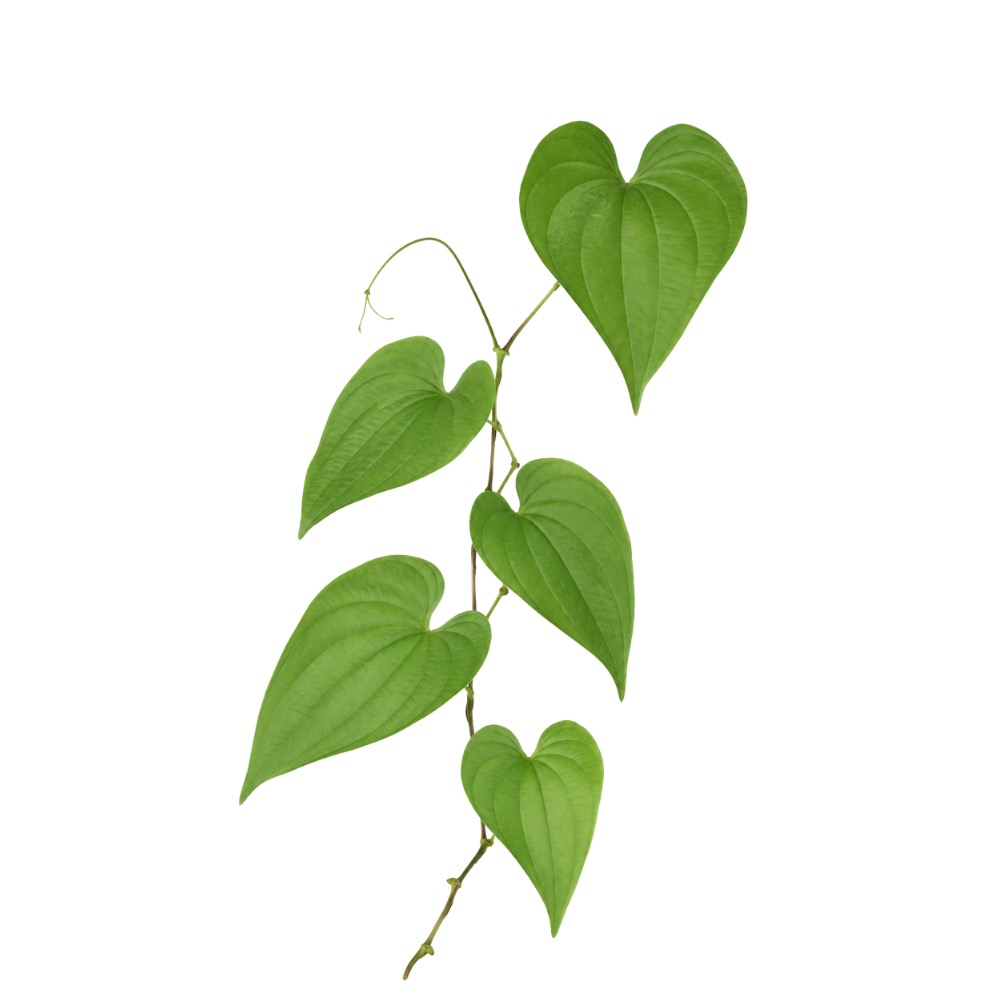
Pictured: Wild Yam
Yam family
Twining tuberous vines carrying diosgenin, the steroidal saponin that launched the semi-synthetic steroid industry — though the plant itself does not act as a hormone.
1 Herb // 2 Constituents // 5 Notable Members
Overview
Around 8 genera and 750 species, mostly twining vines with large starchy tubers, concentrated in the tropics. True yams (Dioscorea) are a staple food across West Africa and Southeast Asia and are entirely unrelated to sweet potatoes despite the shared name in American usage. The vines are usually distinguishable by heart-shaped, strongly parallel-veined leaves and a consistent twining direction within each species.
Shared Traits
In Practice
This family’s contribution to modern medicine is out of all proportion to its herbal use, and the distinction between the two is where most confusion about it arises.
Wild yam (Dioscorea villosa) is rich in diosgenin, a steroidal sapogenin. In the 1940s Russell Marker showed that diosgenin could be chemically converted into progesterone in a few laboratory steps at a fraction of the prevailing cost — a process that collapsed the price of steroid hormones and made the first oral contraceptives commercially possible. Cortisone, testosterone and the corticosteroids followed from the same feedstock.
That conversion happens in a laboratory, not in the human body. Diosgenin is not a hormone and is not metabolised into one after ingestion or topical application. Wild yam creams marketed as “natural progesterone” either do nothing hormonal, or contain progesterone that has been added synthetically. This is one of the most persistent misunderstandings in the supplement market, and it is worth stating without hedging.
What wild yam does have a traditional record for is antispasmodic use — colic, biliary and intestinal cramping, dysmenorrhoea — where the saponins may plausibly contribute. That use is poorly studied but at least internally consistent. Chinese yam (D. opposita, shan yao) is used differently again, as a gentle spleen and lung tonic, and is largely a food.
Safety: raw tubers of many species are unpalatable or toxic until processed, and saponin content can irritate the gut.
Materia Medica
The monograph in the database whose Dioscoreaceae membership is recorded on the herb itself — so this list keeps itself current as new herbs land.
Dioscorea villosa
Phytochemistry
Steroidal saponins are the family marker — diosgenin, dioscin, and their glycosides — alongside starch, mucilage, allantoin, and the alkaloid dioscorine in some species.
The compounds recorded for this family's single member, grouped by class.
Beyond the Database
Notable members without a monograph yet.
Keep Exploring