
Materia Medica
Wild Yam
Dioscorea villosa
Wild yam is a twining woodland vine of eastern North America whose rhizome is used as an antispasmodic for colic and menstrual cramps. Its rhizome contains diosgenin, a steroidal sapogenin once used to manufacture hormones.
What Is Wild Yam?
Wild yam is a twining vine of eastern North American woodlands, valued for its knotted rhizome. Western herbalists have used it chiefly as an antispasmodic, for intestinal colic, biliary colic and menstrual cramps. Its old names, “colic root” and “rheumatism root”, record those two traditional uses 22,
Dioscorea villosa grows from southern Ontario south to the Gulf states and west to the edge of the Great Plains, climbing through thickets, woodland edges and moist woods 22,
The rhizome contains diosgenin, a steroidal sapogenin that chemists once used as a starting material for making progesterone and cortisone. The body cannot carry out that conversion, and the one placebo-controlled trial of a wild yam cream found no effect on menopausal symptoms or hormone levels 1Reference 1RCTEffects of wild yam extract on menopausal symptoms, lipids and sex hormones in healthy menopausal women — randomised placebo-controlled crossover clinical trialView study →. Most other research has used purified diosgenin in animals and cell cultures.
Wild yam is a different plant from the edible yams of tropical farming and from the sweet potato, which is often sold as “yam” in North America.
How Is Wild Yam Used?
Wild yam is used mostly as the dried rhizome, taken as a smooth-muscle relaxant for cramping and griping pain. It is usually combined with other antispasmodic and carminative herbs rather than taken alone.
- Decoction — the dried rhizome simmered in water.
- Tincture or liquid extract — of the dried rhizome.
- Capsules — powdered rhizome.
- Topical cream — “wild yam cream” is sold for menopausal and premenstrual symptoms 1Reference 1RCTEffects of wild yam extract on menopausal symptoms, lipids and sex hormones in healthy menopausal women — randomised placebo-controlled crossover clinical trialView study →.
- Cosmetic ingredient — the root extract is used in skin creams and lotions, and has twice been reviewed as safe for that use 2,
3Reference 2ReviewFinal report of the amended safety assessment of Dioscorea Villosa (Wild Yam) root extract — reviewView study →Reference 3ReviewDioscorea Villosa (Wild Yam) Root Extract — safety review reaffirmationView study → .
Traditional Uses
Western Herbal Medicine
As “colic root”, wild yam was an antispasmodic for intestinal and biliary colic and for menstrual cramps. As “rheumatism root”, it was used for rheumatic and arthritic complaints 5,
It is prepared as a decoction or tincture of the dried rhizome, and is usually one herb in a formula alongside other antispasmodics.
Indigenous North American Medicine
The Meskwaki used wild yam chiefly to ease the pains of labour 24Reference 24Wild Yam – Dioscorea villosa — Species At-Risk profile — conservation assessment. https://unitedplantsavers.org/wild-yam-dioscorea-villosa/View study →.
Indications
- Intestinal colic and griping abdominal pain [rhizome; Western herbal medicine]
- Biliary colic [rhizome; Western herbal medicine]
- Menstrual cramps (dysmenorrhoea) [rhizome; Western herbal medicine]
- Flatulence and digestive spasm [rhizome; Western herbal medicine]
- Rheumatic and arthritic complaints [rhizome; Western herbal medicine]
- Menopausal symptoms [topical cream; modern use] Caution: In a double-blind, placebo-controlled crossover trial in 23 women, wild yam cream did no better than placebo on symptoms, blood lipids or hormone levels, including progesterone 1.
Botany
Wild yam is a herbaceous perennial vine in the yam family, Dioscoreaceae. It dies back each winter and regrows from a brownish, often branched and contorted rhizome 22Reference 22Raz, L. (n.d.). Dioscorea villosa Linnaeus — species description, habitat and distribution — flora. In Flora of North America Editorial Committee (eds.), Flora of North America North of Mexico, Vol. 26. http://www.efloras.org/florataxon.aspx?flora_id=1&taxon_id=242101571View study →. Its slender stems twine through surrounding vegetation to a length of 1–7 m 22Reference 22Raz, L. (n.d.). Dioscorea villosa Linnaeus — species description, habitat and distribution — flora. In Flora of North America Editorial Committee (eds.), Flora of North America North of Mexico, Vol. 26. http://www.efloras.org/florataxon.aspx?flora_id=1&taxon_id=242101571View study →.
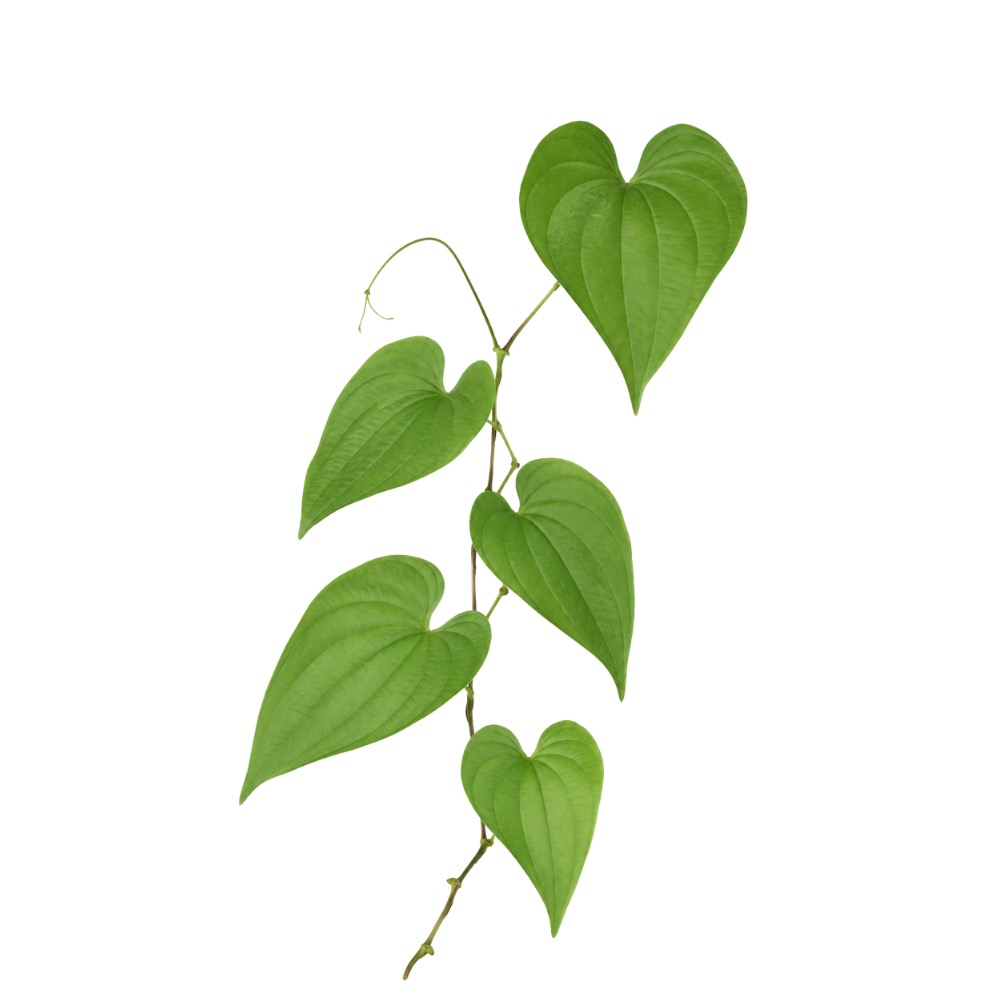
The leaves are heart-shaped and palmately veined, with 7–11 main veins, and hang from long stalks 22,
Male and female flowers grow on separate plants 23Reference 23Dioscorea villosa (wild yam) — plant description — species databaseView study →. The flowers are tiny and greenish-white to yellowish-green. Male flowers hang in branched sprays in the leaf axils, and female flowers hang in simple spikes of 4–18 22,
The fruit is a three-winged, golden-green capsule 1–3 cm long, which turns tan and papery over winter. Its flat, winged seeds are carried by the wind 22,
Dioscorea villosa is highly variable across its range. Plants of bogs and swamps tend to be small, with winged stems, while plants of rocky upland woods are robust, with large leaves in whorls. Botanists now treat the forms once named D. quaternata and D. glauca as the same species 22Reference 22Raz, L. (n.d.). Dioscorea villosa Linnaeus — species description, habitat and distribution — flora. In Flora of North America Editorial Committee (eds.), Flora of North America North of Mexico, Vol. 26. http://www.efloras.org/florataxon.aspx?flora_id=1&taxon_id=242101571View study →.
Distribution
Wild yam grows through eastern and central North America, from southern Ontario and New England south to Florida and the Gulf states and west to Minnesota, Nebraska, Kansas, Oklahoma and Texas 22Reference 22Raz, L. (n.d.). Dioscorea villosa Linnaeus — species description, habitat and distribution — flora. In Flora of North America Editorial Committee (eds.), Flora of North America North of Mexico, Vol. 26. http://www.efloras.org/florataxon.aspx?flora_id=1&taxon_id=242101571View study →. It is native throughout that range.
It grows from sea level to about 1,500 m, in moist or dry woods, thickets, woodland borders, stream banks, bog and swamp margins and rocky slopes. It also turns up on roadsides, fence lines and railway clearings 22,
Wild yam has no legal protection and has not been assessed for the IUCN Red List 24Reference 24Wild Yam – Dioscorea villosa — Species At-Risk profile — conservation assessment. https://unitedplantsavers.org/wild-yam-dioscorea-villosa/View study →. United Plant Savers lists it as At-Risk. Almost all wild yam on the market is gathered from the wild, because there is little market for farmed roots. Because the root is the part harvested, the whole plant is usually dug up 24Reference 24Wild Yam – Dioscorea villosa — Species At-Risk profile — conservation assessment. https://unitedplantsavers.org/wild-yam-dioscorea-villosa/View study →.
The edible yams of the grocery trade are different species and are no substitute. Cultivated wild yam is uncommon, but the plant is easy to grow in woodland edges and other transitional ground 24Reference 24Wild Yam – Dioscorea villosa — Species At-Risk profile — conservation assessment. https://unitedplantsavers.org/wild-yam-dioscorea-villosa/View study →. When buying the root, it is worth asking whether it was grown or gathered from the wild.
Growing Conditions
Cultivation snapshot for Wild Yam
Grow it yourself
Farm Wiki is our cultivation-focused sister site, also run by Justin Cooke.
Pharmacology & Research
The research on wild yam falls into two parts. One human trial has tested a wild yam preparation: a 2001 double-blind, placebo-controlled crossover study of a topical cream in 23 menopausal women. It found no difference from placebo 1Reference 1RCTEffects of wild yam extract on menopausal symptoms, lipids and sex hormones in healthy menopausal women — randomised placebo-controlled crossover clinical trialView study →.
Almost everything else has been done with purified diosgenin, in rodents and cell cultures. Diosgenin also occurs in fenugreek seed and other plants, and it is often sourced from them 14,
-
Best-supported: anti-inflammatory and cholesterol-lowering activity of diosgenin in animal and cell models, with a well-mapped mechanism (NF-κB/COX-2 suppression; intestinal NPC1L1 inhibition) 9,
11, .12Reference 9ReviewDiosgenin: mechanistic insights on its anti-inflammatory effects — reviewView study →Reference 11AnimalDiosgenin regulates cholesterol metabolism in hypercholesterolemic rats by inhibiting NPC1L1 and enhancing ABCG5 and ABCG8 — rat in vivo studyView study →Reference 12AnimalDietary diosgenin transcriptionally down-regulated intestinal NPC1L1 expression to prevent cholesterol gallstone formation in mice — mouse in vivo studyView study → -
Emerging, worth watching: diosgenin signals in bone loss, glucose handling and neuroprotection, all at the rodent stage 15,
16, .17, 18Reference 15AnimalEffects of chronic treatment with diosgenin on bone loss in a D-galactose-induced aging rat model — rat in vivo studyView study →Reference 16AnimalImproving bone microarchitecture in aging with diosgenin treatment: a study in senescence-accelerated OXYS rats — rat in vivo studyView study →Reference 17AnimalNeuroprotective effect of diosgenin in a mouse model of diabetic peripheral neuropathy involves the Nrf2/HO-1 pathway — mouse in vivo studyView study →Reference 18AnimalNeuroprotective role of diosgenin, a NGF stimulator, against Aβ(1-42)-induced neurotoxicity in an animal model of Alzheimer’s disease — rat in vivo studyView study → - Mechanistically thin: the antispasmodic use rests on tradition rather than pharmacology, and the in vitro “anticancer” activity of whole-yam extract is partly a saponin detergent effect 8Reference 8In vitroEffects of Wild Yam Root (Dioscorea villosa) extract on the gene expression profile of triple-negative breast cancer cells — in vitro studyView study →.
-
The caveat: nearly every positive finding is purified diosgenin at high doses, not the whole rhizome, and the one human wild yam trial was negative 1,
5Reference 1RCTEffects of wild yam extract on menopausal symptoms, lipids and sex hormones in healthy menopausal women — randomised placebo-controlled crossover clinical trialView study →Reference 5In vitroCharacterization of in vitro ADME properties of diosgenin and dioscin from Dioscorea villosa — in vitro studyView study → .
The findings belong to diosgenin, not to the herb. They come from purified diosgenin given to rodents at doses of 10–300 mg/kg a day, often from sources other than wild yam. No study has tested the dried rhizome, a tincture or a decoction for these effects 11,
1. Anti-Inflammatory
Across rodent and cell models, diosgenin consistently downregulates the NF-κB pathway and its downstream mediators COX-2 and iNOS, with parallel suppression of TGF-β 9Reference 9ReviewDiosgenin: mechanistic insights on its anti-inflammatory effects — reviewView study →.
In a rat cerebral ischaemia–reperfusion model, diosgenin reduced inflammatory injury through a HIKESHI/HSP70/NF-κB pathway, lowering TNF-α, IL-1β and IL-6 10Reference 10AnimalDiosgenin revealed potential effect against cerebral ischemia reperfusion through the HIKESHI/HSP70/NF-κB anti-inflammatory axis — rat in vivo studyView study →.
Every study uses isolated diosgenin, usually at doses well above what the rhizome supplies. There is no trial of whole wild yam for any inflammatory condition.
2. Hypolipidemic
Diosgenin has a well-characterised effect on cholesterol handling. In hypercholesterolaemic rats given 150 or 300 mg/kg a day, it lowered serum and liver cholesterol by reducing the intestinal absorption transporter NPC1L1 and increasing the efflux transporters ABCG5/ABCG8 11Reference 11AnimalDiosgenin regulates cholesterol metabolism in hypercholesterolemic rats by inhibiting NPC1L1 and enhancing ABCG5 and ABCG8 — rat in vivo studyView study →.
In mice on a gallstone-inducing diet, dietary diosgenin prevented gallstones entirely by suppressing intestinal NPC1L1 12Reference 12AnimalDietary diosgenin transcriptionally down-regulated intestinal NPC1L1 expression to prevent cholesterol gallstone formation in mice — mouse in vivo studyView study →. In mice on a high-fat, high-fructose diet, it reduced fatty liver through CYP7A1- and NPC1L1-related pathways 13Reference 13AnimalDiosgenin as a substitute for cholesterol alleviates NAFLD by affecting CYP7A1 and NPC1L1-related pathway — mouse in vivo studyView study →.
Older rat work showed a four-fold rise in cholesterol output into bile on a diosgenin diet 21Reference 21AnimalRegulation of biliary cholesterol secretion in the diosgenin-fed rat model — rat in vivo studyView study →. A 2021 review collates these mechanisms 14Reference 14ReviewThe effects of diosgenin on hypolipidemia and its underlying mechanism — reviewView study →.
⚠ This is diosgenin, not wild yam. The single human trial of a wild yam preparation found no change in total cholesterol, HDL cholesterol or triglycerides 1Reference 1RCTEffects of wild yam extract on menopausal symptoms, lipids and sex hormones in healthy menopausal women — randomised placebo-controlled crossover clinical trialView study →.
Gap: Strong in rodents for the pure molecule; the one human test of the herb was null.
3. Antioxidant
Antioxidant activity appears in the diosgenin literature as a mechanism inside other disease models. In pregnant diabetic mice, diosgenin raised SOD, catalase and glutathione and lowered lipid-peroxidation markers 20Reference 20AnimalDiosgenin ameliorates gestational diabetes through inhibition of sterol regulatory element-binding protein-1 — mouse in vivo studyView study →. In diabetic peripheral neuropathy it acted through the Nrf2/HO-1 antioxidant-response pathway 17Reference 17AnimalNeuroprotective effect of diosgenin in a mouse model of diabetic peripheral neuropathy involves the Nrf2/HO-1 pathway — mouse in vivo studyView study →.
No direct antioxidant study of wild yam itself exists, and none has been done in humans.
4. Anti-Osteoporotic
Several rodent studies point the same way. Oral diosgenin at 10 or 50 mg/kg a day prevented the loss of femur volume and the rise in bone porosity in a D-galactose-induced ageing rat model 15Reference 15AnimalEffects of chronic treatment with diosgenin on bone loss in a D-galactose-induced aging rat model — rat in vivo studyView study →. The same research group had earlier reported prevention of bone loss in menopausal rats 15Reference 15AnimalEffects of chronic treatment with diosgenin on bone loss in a D-galactose-induced aging rat model — rat in vivo studyView study →.
In senescence-accelerated OXYS rats, the same doses for eight weeks improved bone microarchitecture and raised bone mineral density 16Reference 16AnimalImproving bone microarchitecture in aging with diosgenin treatment: a study in senescence-accelerated OXYS rats — rat in vivo studyView study →.
All of these use purified diosgenin. No study has tested wild yam or a human population.
5. Antidiabetic
Diosgenin improves glucose and insulin handling in rodent models. In pregnant db/+ mice it lowered fasting glucose and insulin, improved glucose tolerance and improved blood lipids by inhibiting SREBP-1 20Reference 20AnimalDiosgenin ameliorates gestational diabetes through inhibition of sterol regulatory element-binding protein-1 — mouse in vivo studyView study →. In mice with streptozotocin-induced diabetes it also lowered blood glucose 17Reference 17AnimalNeuroprotective effect of diosgenin in a mouse model of diabetic peripheral neuropathy involves the Nrf2/HO-1 pathway — mouse in vivo studyView study →.
Diosgenin is a P-glycoprotein substrate, which limits how much crosses the gut wall 5Reference 5In vitroCharacterization of in vitro ADME properties of diosgenin and dioscin from Dioscorea villosa — in vitro studyView study →. The effect has not been tested with wild yam at any dose.
6. Neuroprotective
In an amyloid-β rat model of Alzheimer’s disease, diosgenin at 100–200 mg/kg improved spatial learning and memory and reduced plaque load, oxidative stress and neuroinflammation 18Reference 18AnimalNeuroprotective role of diosgenin, a NGF stimulator, against Aβ(1-42)-induced neurotoxicity in an animal model of Alzheimer’s disease — rat in vivo studyView study →. In diabetic peripheral neuropathy in mice, it protected nerve function through Nrf2/HO-1 signalling 17Reference 17AnimalNeuroprotective effect of diosgenin in a mouse model of diabetic peripheral neuropathy involves the Nrf2/HO-1 pathway — mouse in vivo studyView study →.
The models are varied (Alzheimer’s disease, ischaemia, neuropathy), and none has used wild yam.
7. Antispasmodic
This is the herb’s defining traditional use, for intestinal and biliary colic and menstrual cramps. No experimental study has tested an antispasmodic action of Dioscorea villosa on smooth muscle, and no clinical trial has tested it for cramping 5Reference 5In vitroCharacterization of in vitro ADME properties of diosgenin and dioscin from Dioscorea villosa — in vitro studyView study →.
Gap: No controlled smooth-muscle or clinical study of the primary traditional use.
8. Anticancer
In vitro, diosgenin induces apoptosis across several cancer cell lines, and reviews catalogue these effects 19Reference 19ReviewPro-apoptotic and anti-cancer properties of diosgenin: a comprehensive and critical reviewView study →.
⚠ Whole wild yam extract kills a wide range of cancer cell lines at low concentrations, largely because its detergent saponins break down cell membranes. That is a nonspecific effect rather than a targeted anticancer one. At lower, non-lethal concentrations in triple-negative breast cancer cells, the extract slowed cell division and switched on inflammatory genes 8Reference 8In vitroEffects of Wild Yam Root (Dioscorea villosa) extract on the gene expression profile of triple-negative breast cancer cells — in vitro studyView study →.
There is no in vivo whole-herb evidence and no human data.
Gap: Cell-line only; whole-yam cytotoxicity is partly a membrane-lysis effect, not selective anticancer activity.
Mechanisms
Diosgenin is a steroidal sapogenin with a structure close to cholesterol. In rodents it reduces intestinal cholesterol absorption through NPC1L1 and suppresses NF-κB inflammatory signalling. It has also been studied for Nrf2 antioxidant signalling and nerve growth factor. It is not converted to progesterone in the body.
The rhizome’s steroidal saponins act as detergents on cell membranes. This makes whole-yam extract toxic to cells in culture in a way that is separate from diosgenin’s pharmacology 8Reference 8In vitroEffects of Wild Yam Root (Dioscorea villosa) extract on the gene expression profile of triple-negative breast cancer cells — in vitro studyView study →.
| Mechanism | Drives | Key compounds |
|---|---|---|
| NF-κB ↓, COX-2 ↓, iNOS ↓, TGF-β ↓ | anti-inflammatory | diosgenin |
| Intestinal NPC1L1 ↓, ABCG5/8 ↑, biliary cholesterol ↑ | hypolipidemic | diosgenin |
| Nrf2/HO-1 ↑ (antioxidant response), SOD/CAT/GSH ↑ | antioxidantneuroprotective | diosgenin |
| NGF stimulation, amyloid-β reduction | neuroprotective | diosgenin |
| Saponin membrane detergency / lipid-bilayer lysis | in vitro cytotoxicity | steroidal saponins |
Clinical Trials
One controlled trial of a wild yam preparation has been published 1Reference 1RCTEffects of wild yam extract on menopausal symptoms, lipids and sex hormones in healthy menopausal women — randomised placebo-controlled crossover clinical trialView study →. The rest of the evidence base is preclinical.
| Completed | Planned | Terminated | Preclinical |
|---|---|---|---|
| 1 | 0 | 0 | ~40+ |
Last checked: July 2026.
Phytochemistry
Wild yam rhizome is characterised by its steroidal saponins. The best known is diosgenin, the sapogenin that carries most of the pharmacological literature and was once a feedstock for industrial steroid synthesis. In the plant, much of it is bound as glycosides, chiefly dioscin 5Reference 5In vitroCharacterization of in vitro ADME properties of diosgenin and dioscin from Dioscorea villosa — in vitro studyView study →.
In laboratory tests, dioscin crossed a model of the intestinal wall more readily than free diosgenin. Part of it broke down to diosgenin in simulated stomach and intestinal fluid: up to 28% of dioscin degraded in stomach fluid and 12% in intestinal fluid 5Reference 5In vitroCharacterization of in vitro ADME properties of diosgenin and dioscin from Dioscorea villosa — in vitro studyView study →. Neither compound underwent phase I metabolism in human liver microsomes 5Reference 5In vitroCharacterization of in vitro ADME properties of diosgenin and dioscin from Dioscorea villosa — in vitro studyView study →.
The saponins also act as detergents. They lower surface tension and break down cell membranes, which is why whole-yam extract appears broadly toxic in cell culture 8Reference 8In vitroEffects of Wild Yam Root (Dioscorea villosa) extract on the gene expression profile of triple-negative breast cancer cells — in vitro studyView study →.
Other work on D. villosa has isolated two series of lipidated steroid saponins, long-chain fatty-acid esters of spirostanol and clionasterol glycosides, as new chemical markers for the species 7Reference 7Lipidated steroid saponins from Dioscorea villosa (wild yam)View study →. A separate study isolated fourteen diarylheptanoids, five of them new compounds, also proposed as markers 6Reference 6Diarylheptanoids from Dioscorea villosa (Wild Yam)View study →.
A cosmetic-industry safety assessment of one root extract also reported phytosterols, alkaloids, tannins and starch 2Reference 2ReviewFinal report of the amended safety assessment of Dioscorea Villosa (Wild Yam) root extract — reviewView study →.
Constituent Summary
Figures are for one characterised cosmetic root extract 2Reference 2ReviewFinal report of the amended safety assessment of Dioscorea Villosa (Wild Yam) root extract — reviewView study →.
Saponin2 compounds2 with data
Dosage
The only human trial used a topical cream, and the animal studies used purified diosgenin, so neither gives a dose for the dried herb.
Research Doses
| Indication | Preparation | Dose | Est. dried-herb equivalent | Source |
|---|---|---|---|---|
| Menopausal symptoms | Topical wild yam cream | Applied for 3 months (no benefit vs placebo) | — | 1Reference 1RCTEffects of wild yam extract on menopausal symptoms, lipids and sex hormones in healthy menopausal women — randomised placebo-controlled crossover clinical trialView study → |
| Anti-inflammatory / hypolipidemic / bone / neuro | Purified diosgenin (oral, rodent) | 10–300 mg/kg/day (animal) | — | 11, |
Traditional Dosage
| System | Preparation | Dose |
|---|---|---|
| Western herbal medicine | Liquid extract 1:2 | 20–40 mL/week (≈3–6 mL/day) |
| Western herbal medicine | Tincture 1:5 (dried root) | ~2–4 mL, three times daily |
| Western herbal medicine | Dried root decoction | ~2–4 g, three times daily |
Safety & Pregnancy
Wild yam is well tolerated at usual short-term doses. The root extract has twice been reviewed as safe for use in cosmetics 2,
- Long, high-dose use. Rats fed wild yam extract for 28 days developed kidney fibrosis and liver inflammation, though no acute toxicity. Long, high-dose courses are best avoided, especially with reduced kidney function.
- Possible drug interactions. Diosgenin and dioscin inhibit the liver enzyme CYP3A4 in lab tests, and diosgenin is a P-glycoprotein substrate. No clinical interaction study has been done.
- Pregnancy & breastfeeding. Not studied in either; avoid.
- Not a progesterone source. A placebo-controlled trial of wild yam cream found no effect on progesterone or other hormones.
- Otherwise well tolerated. No side effects were reported in the cream trial, and the root extract is considered safe in cosmetics.
Full Safety & Interactions Detail
Kidneys and liver. Rats fed 0.79 g/kg a day of D. villosa extract showed no acute kidney or liver toxicity. By 28 days, however, their kidneys showed fibrosis and their livers showed inflammation, through pro-fibrotic TGF-β and NF-κB pathways. The authors advise against long-term use, especially in people with reduced kidney function or taking drugs that affect the kidneys 4Reference 4AnimalDioscorea villosa (wild yam) induces chronic kidney injury via pro-fibrotic pathways — rat in vivo studyView study →.
Drug interactions. In lab tests, diosgenin and dioscin inhibited CYP3A4 (IC50 about 17 and 33 µM) but not CYP2D6, 2C9 or 1A2. Diosgenin is also a P-glycoprotein substrate 5Reference 5In vitroCharacterization of in vitro ADME properties of diosgenin and dioscin from Dioscorea villosa — in vitro studyView study →. No clinical drug-interaction study has been done.
Hormones. Wild yam does not contain progesterone, and the body cannot make progesterone from diosgenin. In the double-blind crossover trial of a wild yam cream, blood and saliva progesterone, estradiol and FSH were unchanged 1Reference 1RCTEffects of wild yam extract on menopausal symptoms, lipids and sex hormones in healthy menopausal women — randomised placebo-controlled crossover clinical trialView study →. One characterised root extract showed no oestrogen-like activity in young rats at up to 500 mg/kg a day 2Reference 2ReviewFinal report of the amended safety assessment of Dioscorea Villosa (Wild Yam) root extract — reviewView study →.
Acute toxicity. In the same safety assessment, one of ten rats died at an oral dose of 2 g/kg of the extract, and none showed toxicity at 0.5 g/kg 2Reference 2ReviewFinal report of the amended safety assessment of Dioscorea Villosa (Wild Yam) root extract — reviewView study →.
Avoid. Wild yam has not been studied for safety in pregnancy or breastfeeding. Long, high-dose feeding caused kidney and liver changes in rats 4Reference 4AnimalDioscorea villosa (wild yam) induces chronic kidney injury via pro-fibrotic pathways — rat in vivo studyView study →.
References
- Komesaroff, et al. (2001). Effects of wild yam extract on menopausal symptoms, lipids and sex hormones in healthy menopausal women — randomised placebo-controlled crossover clinical trial. Climacteric. https://pubmed.ncbi.nlm.nih.gov/11428178/
- Cosmetic Ingredient Review Expert Panel. (2004). Final report of the amended safety assessment of Dioscorea Villosa (Wild Yam) root extract — review. International Journal of Toxicology. https://pubmed.ncbi.nlm.nih.gov/15513824/
- Raj, et al. / Cosmetic Ingredient Review Expert Panel. (2023). Dioscorea Villosa (Wild Yam) Root Extract — safety review reaffirmation. International Journal of Toxicology. https://pubmed.ncbi.nlm.nih.gov/37751575/
- Wojcikowski, et al. (2008). Dioscorea villosa (wild yam) induces chronic kidney injury via pro-fibrotic pathways — rat in vivo study. Food and Chemical Toxicology. https://pubmed.ncbi.nlm.nih.gov/18662738/
- Manda, et al. (2013). Characterization of in vitro ADME properties of diosgenin and dioscin from Dioscorea villosa — in vitro study. Planta Medica. https://pubmed.ncbi.nlm.nih.gov/23970424/
- Dong, et al. (2012). Diarylheptanoids from Dioscorea villosa (Wild Yam). Journal of Natural Products. https://pubmed.ncbi.nlm.nih.gov/23245349/
- Dong, et al. (2013). Lipidated steroid saponins from Dioscorea villosa (wild yam). Fitoterapia. https://pubmed.ncbi.nlm.nih.gov/23968665/
- Mazzio, et al. (2021). Effects of Wild Yam Root (Dioscorea villosa) extract on the gene expression profile of triple-negative breast cancer cells — in vitro study. Cancer Genomics & Proteomics. https://pubmed.ncbi.nlm.nih.gov/34697066/
- Karami-Mohajeri, et al. (2022). Diosgenin: mechanistic insights on its anti-inflammatory effects — review. Anti-Inflammatory & Anti-Allergy Agents in Medicinal Chemistry. https://pubmed.ncbi.nlm.nih.gov/35346012/
- Zhang, et al. (2022). Diosgenin revealed potential effect against cerebral ischemia reperfusion through the HIKESHI/HSP70/NF-κB anti-inflammatory axis — rat in vivo study. Phytomedicine. https://pubmed.ncbi.nlm.nih.gov/35217435/
- Li, et al. (2019). Diosgenin regulates cholesterol metabolism in hypercholesterolemic rats by inhibiting NPC1L1 and enhancing ABCG5 and ABCG8 — rat in vivo study. Biochimica et Biophysica Acta — Molecular and Cell Biology of Lipids. https://pubmed.ncbi.nlm.nih.gov/31054325/
- Shen, et al. (2023). Dietary diosgenin transcriptionally down-regulated intestinal NPC1L1 expression to prevent cholesterol gallstone formation in mice — mouse in vivo study. Journal of Biomedical Science. https://pubmed.ncbi.nlm.nih.gov/37370162/
- Yan, et al. (2024). Diosgenin as a substitute for cholesterol alleviates NAFLD by affecting CYP7A1 and NPC1L1-related pathway — mouse in vivo study. Phytomedicine. https://pubmed.ncbi.nlm.nih.gov/38301301/
- Sun, et al. (2021). The effects of diosgenin on hypolipidemia and its underlying mechanism — review. Diabetes, Metabolic Syndrome and Obesity. https://pubmed.ncbi.nlm.nih.gov/34552341/
- Hung, et al. (2014). Effects of chronic treatment with diosgenin on bone loss in a D-galactose-induced aging rat model — rat in vivo study. Chinese Journal of Physiology. https://pubmed.ncbi.nlm.nih.gov/24826780/
- Tikhonova, et al. (2015). Improving bone microarchitecture in aging with diosgenin treatment: a study in senescence-accelerated OXYS rats — rat in vivo study. Chinese Journal of Physiology. https://pubmed.ncbi.nlm.nih.gov/26387656/
- Leng, et al. (2020). Neuroprotective effect of diosgenin in a mouse model of diabetic peripheral neuropathy involves the Nrf2/HO-1 pathway — mouse in vivo study. BMC Complementary Medicine and Therapies. https://pubmed.ncbi.nlm.nih.gov/32336289/
- Som, et al. (2022). Neuroprotective role of diosgenin, a NGF stimulator, against Aβ(1-42)-induced neurotoxicity in an animal model of Alzheimer’s disease — rat in vivo study. Metabolic Brain Disease. https://pubmed.ncbi.nlm.nih.gov/35023028/
- Sethi, et al. (2018). Pro-apoptotic and anti-cancer properties of diosgenin: a comprehensive and critical review. Nutrients. https://pubmed.ncbi.nlm.nih.gov/29783752/
- Hua, et al. (2016). Diosgenin ameliorates gestational diabetes through inhibition of sterol regulatory element-binding protein-1 — mouse in vivo study. Biomedicine & Pharmacotherapy. https://pubmed.ncbi.nlm.nih.gov/27810341/
- Nibbering, et al. (2001). Regulation of biliary cholesterol secretion in the diosgenin-fed rat model — rat in vivo study. Journal of Hepatology. https://pubmed.ncbi.nlm.nih.gov/11580137/
- Raz, L. (n.d.). Dioscorea villosa Linnaeus — species description, habitat and distribution — flora. In Flora of North America Editorial Committee (eds.), Flora of North America North of Mexico, Vol. 26. http://www.efloras.org/florataxon.aspx?flora_id=1&taxon_id=242101571
- NC State Extension (n.d.). Dioscorea villosa (wild yam) — plant description — species database. North Carolina Extension Gardener Plant Toolbox. https://plants.ces.ncsu.edu/plants/dioscorea-villosa/
- United Plant Savers (2019). Wild Yam – Dioscorea villosa — Species At-Risk profile — conservation assessment. https://unitedplantsavers.org/wild-yam-dioscorea-villosa/



