
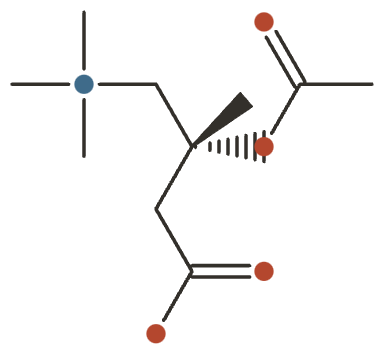
Acetyl-L-Carnitine (ALCAR)
The acetylated form of L-carnitine, taken for mood, brain energy in aging, and nerve and sperm support — best evidenced where carnitine status or nerve function is already low.

Acetyl-L-Carnitine (ALCAR) at a Glance
Acetyl-L-carnitine (ALCAR) is the acetylated ester of L-carnitine — the amino-acid derivative the body uses to shuttle long-chain fatty acids into mitochondria for energy. The acetyl group is the whole point: it helps the molecule cross the blood–brain barrier and can feed the acetyl-CoA pool used for acetylcholine synthesis, which is why ALCAR rather than plain carnitine is the form sold as a nootropic.
There is no meaningful dietary source of ALCAR specifically. Food supplies L-carnitine, which the body interconverts with its acetyl ester — concentrated in red meat, sparse in poultry and fish, essentially absent from plants.
The framing that matters: carnitine is conditionally essential, meaning healthy omnivores make and absorb enough without supplementing. So the honest question is whether extra ALCAR helps a replete person — and the evidence splits along exactly that line. The strongest signals come from populations where something is already low or failing: older adults with cognitive decline, people with depression, men with poor sperm motility, damaged nerves.
The honest bottom line: real evidence, unevenly distributed, and the popular use — a same-day focus or energy lift in a healthy young adult — has almost no controlled support. There is also one clear harm signal, in chemotherapy-induced neuropathy, which the marketing never mentions.
What It’s Used For
Ranked by how well the evidence actually holds up:
- Depression — the best-supported use, and the one most often left out. A meta-analysis of 12 RCTs found a large effect versus placebo and efficacy comparable to antidepressants with fewer side effects.
- Cognition in MCI and early Alzheimer’s — a statistically real but small effect, tied to an aging or impaired brain.
- Male fertility — reproducible gains in sperm motility, though from combined carnitine formulations rather than ALCAR alone.
- Diabetic peripheral neuropathy — a Cochrane-reviewed pain reduction on low-certainty evidence.
- Fatigue in older adults and MS fatigue — small, largely single-team trials.
- Peyronie’s disease — one small comparative trial.
Two things to be sceptical about. The first is the everyday “focus and energy” pitch in healthy young people: no strong controlled trial supports it, and the cognition evidence that does exist is in impaired older adults. The second is more serious — in a 409-patient RCT, ALCAR taken to prevent taxane-induced neuropathy made the neuropathy significantly worse over two years. That is the opposite of the intended effect, and it is why anyone on taxane chemotherapy should not take this without their oncologist’s say-so.
How It Works
ALCAR does two jobs that its parent molecule does, plus one it does better.
The shared job is the carnitine shuttle: binding long-chain fatty acids and carrying them across the inner mitochondrial membrane via CPT-1 and CPT-2 so they can be burned for ATP. That underpins the fatigue and general energy-metabolism rationale.
The distinctive job is the acetyl group. Carrying it makes the molecule more brain-penetrant, and once delivered the acetyl moiety can feed the acetyl-CoA pool used to synthesise acetylcholine. This is the entire basis for preferring ALCAR over plain carnitine for cognitive and mood indications — and it is a plausible mechanism rather than a demonstrated one.
Beyond that, preclinical work shows ALCAR upregulates nerve growth factor and neurotrophic signalling, which is the rationale for the neuropathy trials, and it acetylates membrane phospholipids and reduces oxidative stress 14Reference 14ReviewThe neurobiology of acetyl-L-carnitine — reviewView study →.
The pharmacokinetics deserve as much attention as the mechanism, because they constrain everything above. Oral supplemental carnitine is only ~14–18% absorbed, against 54–86% from food, because food-level amounts use active transport while a supplemental bolus relies on passive diffusion 13Reference 13ReviewKinetics, pharmacokinetics, and regulation of L-carnitine and acetyl-L-carnitine metabolism — reviewView study →. Fractional absorption therefore falls as the dose rises — which is precisely why studied regimens split 1.5–3 g/day across the day rather than taking it all at once.
Pharmacology & Research
Acetyl-L-carnitine (ALCAR) is the acetylated ester of L-carnitine — an amino-acid derivative the body uses to shuttle long-chain fatty acids into mitochondria for β-oxidation. It is sold mainly as a nootropic, on the reasoning that the acetyl group helps it cross the blood–brain barrier and can feed the acetyl-CoA pool used for acetylcholine synthesis. The evidence is real but uneven, and it splits along a clear line: the strongest signals are in populations with low carnitine status or an aging/diseased nervous system (older adults with cognitive decline, people with depression, men with poor sperm motility), while the popular use — a same-day focus or energy lift in healthy young adults — has little controlled support. Because oral bioavailability of supplemental carnitine is low (roughly 15% versus 54–86% from food), form and dose matter more than the marketing suggests, and several benefits are best read as correcting a shortfall rather than adding something on top of an already adequate diet.
Support is an experimental score I’m building — a composite weighted by study type (human > animal > in vitro > review) and study volume, then tempered for consistency, form/bioavailability, and whether the effect depends on correcting a deficiency. It’s a beta: a fast way to rank strength of evidence at a glance, not a validated metric. Each application links down to its write-up.
A 2018 systematic review and meta-analysis pooled 12 RCTs (~791 participants, mean age 54, 65% female; mostly 1–3 g/day ALCAR monotherapy). Against placebo or no intervention, ALCAR significantly reduced depressive symptoms with a large standardised effect (SMD −1.10, 95% CI −1.65 to −0.56), and in head-to-head trials it matched established antidepressants (SMD 0.06, 95% CI −0.22 to 0.34) while causing significantly fewer adverse effects 2Reference 2Meta-analysisAcetyl-L-carnitine supplementation and the treatment of depressive symptoms: a systematic review and meta-analysisView study →.
The signal is consistent in direction and clinically interesting, and there is a plausible mechanism (low ALCAR levels are associated with depression). This is not a deficiency-only effect confined to older adults, which is why it scores highest here.
Gap: heterogeneity was very high (I² = 86%), several trials were small and older, and the authors call for large confirmatory trials — so the true effect size is likely smaller than the headline.
A 2003 meta-analysis of double-blind, placebo-controlled trials (studies of 3–12 months, 1.5–3 g/day, pooling on the order of 1,200 adults with mild cognitive impairment or mild/early Alzheimer’s) found a statistically significant advantage for ALCAR on integrated clinical and psychometric measures — but the effect size was small (summary ES ≈ 0.20; Clinical Global Impression of Change ES ≈ 0.32) 1Reference 1Meta-analysisMeta-analysis of double-blind randomized controlled clinical trials of acetyl-L-carnitine versus placebo in the treatment of mild cognitive impairment and mild Alzheimer’s diseaseView study →. The benefit is tied to an aging or impaired brain; there is no comparable evidence that it sharpens cognition in healthy young adults.
Gap: a small effect pooled across many different instruments, in an older/impaired population — not evidence for general “brain boosting,” and newer large trials are lacking.
A 2018 meta-analysis of RCTs on supplements and sperm quality found that carnitines significantly increased sperm total motility (+7.84%, 95% CI 6.54–9.13) and progressive motility (+7.45%, 95% CI 6.24–8.67) 3Reference 3Meta-analysisThe effect of nutrients and dietary supplements on sperm quality parameters: a systematic review and meta-analysis of randomized clinical trialsView study →.
This is supported by placebo-controlled double-blind RCTs in men with asthenozoospermia using combined L-carnitine (2 g/day) plus acetyl-L-carnitine (1 g/day) 4,
Motility gains are real and reproducible; effects on concentration and morphology were weaker or absent.
Gap: the trials use combined L-carnitine + acetyl-L-carnitine (so ALCAR alone isn’t isolated), most are small, and improved motility parameters do not reliably translate into higher live-birth rates.
A 2019 Cochrane review included four trials (907 participants) of ALCAR (1,500–3,000 mg/day) for diabetic peripheral neuropathy. ALCAR reduced pain more than placebo on a 0–100 mm visual-analogue scale (mean difference −9.16 mm, 95% CI −16.76 to −1.57), but the reviewers rated the evidence sparse and of low certainty and were “very uncertain” whether it genuinely reduces pain 6Reference 6Systematic reviewAcetyl-L-carnitine for the treatment of diabetic peripheral neuropathy — Cochrane systematic reviewView study →.
Gap: low-certainty evidence, no data on the proportion achieving meaningful pain relief, and the safety data were too weak to judge — a signal, not a settled result. Note also that this is diabetic neuropathy; the chemotherapy-induced kind showed the opposite (see Safety).
A randomised trial in 96 subjects over 70 with fatigue reported that ALCAR reduced both physical and mental fatigue and improved functional status versus baseline 7Reference 7RCTAcetyl-L-carnitine (ALC) treatment in elderly patients with fatigue — randomized controlled trialView study →. The context is an aging population where carnitine status and mitochondrial function decline, so this reads as repletion in a susceptible group rather than a general energiser.
Gap: much of the elderly-fatigue and cirrhosis-fatigue literature comes from a single Italian research group, trials are small, and results have not been widely replicated by independent teams.
Small pilot RCTs have compared ALCAR with amantadine for MS-related fatigue, with mixed and modest results 8Reference 8RCTComparison of the effects of acetyl-L-carnitine and amantadine for the treatment of fatigue in multiple sclerosis — randomized controlled crossover trialView study →. Cochrane assessments of carnitine for MS fatigue have found insufficient evidence to recommend it.
Gap: pilot-scale trials, inconsistent comparators and outcomes; not enough to establish a reliable benefit.
A small comparative RCT reported that ALCAR was better tolerated than tamoxifen and reduced pain and curvature progression in Peyronie’s disease 12Reference 12RCTAcetyl-L-carnitine vs tamoxifen in the oral therapy of Peyronie’s disease: a preliminary report — randomized controlled trialView study →. It is a single, small, preliminary study.
Gap: one small trial with no independent replication — hypothesis-generating only.
Mechanisms
| Target / pathway | Effect | Relevant to |
|---|---|---|
| Carnitine shuttle (CPT-1/CPT-2, mitochondrial fatty-acid import) | Supports β-oxidation and ATP production | Fatigueneuropathygeneral energy metabolism |
| Acetyl-CoA / acetylcholine synthesis | Donates acetyl groups; may support cholinergic transmission | Cognitionmood |
| Nerve growth factor & neurotrophic signalling | Up (preclinical) 14Reference 14ReviewThe neurobiology of acetyl-L-carnitine — reviewView study → | Diabetic and peripheral neuropathynerve repair |
| Membrane phospholipid acetylation / antioxidant effects | Reduces oxidative stress (preclinical) 14Reference 14ReviewThe neurobiology of acetyl-L-carnitine — reviewView study → | Neuroprotectionaging brain |
| Blood ammonia | Lowered 9Reference 9Systematic reviewAcetyl-L-carnitine for patients with hepatic encephalopathy — Cochrane systematic reviewView study → | Hepatic encephalopathy (biochemical onlyno clear clinical benefit) |
Pharmacokinetics
Oral carnitine supplements are poorly absorbed: bioavailability of supplemental L-carnitine is roughly 14–18% (some sources cite 5–25%), compared with 54–86% from dietary (food) carnitine, because food-level amounts use active transport while larger supplemental boluses rely on passive diffusion 13Reference 13ReviewKinetics, pharmacokinetics, and regulation of L-carnitine and acetyl-L-carnitine metabolism — reviewView study →. Fractional absorption therefore falls as the dose rises, which is the pharmacologic reason studied regimens split 1.5–3 g/day across the day. Unabsorbed carnitine is largely degraded by gut bacteria (one route to trimethylamine-N-oxide, TMAO). Whole-body turnover is slow (on the order of 38–119 hours at normal intake), and homeostasis is maintained mostly by efficient renal reabsorption plus modest endogenous synthesis from lysine and methionine 13Reference 13ReviewKinetics, pharmacokinetics, and regulation of L-carnitine and acetyl-L-carnitine metabolism — reviewView study →. This low, dose-dependent bioavailability is the decision-relevant fact: much of an oral dose never reaches tissue.
Clinical trials
ALCAR is off-patent and inexpensive, so most trials are investigator-initiated or small single-centre studies rather than large industry programmes; several key literatures (elderly fatigue, hepatic encephalopathy) trace to a single research group, which limits confidence. Depression and diabetic-neuropathy trials are the more independently replicated.
| Completed | Planned | Terminated | Preclinical |
|---|---|---|---|
| ~40+RCTs across indications | few large confirmatory | rare | extensive(rodent/in vitro) |
Last checked: August 2026.
Dietary Sources
There is no meaningful dietary source of acetyl-L-carnitine specifically — foods supply L-carnitine, which the body interconverts with its acetyl ester. Carnitine is concentrated in animal muscle, so red meat is by far the richest source, with poultry, fish and dairy contributing less and plant foods almost none. Food carnitine is also far better absorbed (54–86%) than supplemental carnitine (~15%), so ordinary omnivores rarely have low status.
| Food | Typical carnitine (approx.) |
|---|---|
| Beef steak / ground beef | 56–162 mg per 4 oz (115 g) |
| Pork | ~42–50 mg per 4 oz |
| Cod (fish) | ~4–7 mg per 4 oz |
| Chicken breast | 3–5 mg per 4 oz |
| Whole milk | ~8 mg per cup (235 mL) |
| Cheese | small amounts |
| Vegetables, fruits, grains | negligible |
An omnivorous diet supplies roughly 60–180 mg/day of carnitine (some estimates 23–135 mg/day); a strict vegan diet provides only ~1–12 mg/day 15Reference 15Carnitine — Health Professional Fact SheetView study →. Healthy people synthesise the rest from lysine and methionine, so carnitine is conditionally essential — a concern mainly for those with renal disease or on dialysis, certain genetic transporter defects, or very low intake, not for the general population 15Reference 15Carnitine — Health Professional Fact SheetView study →.
Dosage
- No RDA/AI and no UL — carnitine is not classed as an essential nutrient, and no Tolerable Upper Intake Level has been set. Absence of a UL is not a statement that unlimited intake is safe 15Reference 15Carnitine — Health Professional Fact SheetView study →.
- Studied supplemental range: 1.5–3 g/day of acetyl-L-carnitine in most cognition, mood and neuropathy trials; sperm-motility trials used ~1 g/day ALCAR combined with ~2 g/day L-carnitine.
- Split the dose. Because absorption is passive and saturable, fractional uptake falls as the single dose rises — studies typically divide the daily amount into 2–3 doses 13Reference 13ReviewKinetics, pharmacokinetics, and regulation of L-carnitine and acetyl-L-carnitine metabolism — reviewView study →.
These are doses studied in research, not a personal recommendation. Benefit is most plausible where carnitine status or nerve/brain function is already compromised; in a replete, healthy adult the marginal benefit is likely small.
Safety
ALCAR is generally well tolerated, and the important safety content is not about toxicity but about one specific population where it did harm.
- Generally well tolerated at the studied 1.5–3 g/day, across dozens of trials.
- Avoid during taxane chemotherapy. In a 409-patient RCT, 24 weeks of ALCAR given to prevent taxane neuropathy left neuropathy significantly worse at two years 10,
11Reference 10RCTTwo-year trends of taxane-induced neuropathy in women enrolled in a randomized trial of acetyl-L-carnitine (SWOG S0715)View study →Reference 11Systematic reviewNutraceuticals and chemotherapy-induced peripheral neuropathy (CIPN): a systematic reviewView study → . - GI upset and fishy body odour above ~3 g/day — the usual dose-limiting effects 15Reference 15Carnitine — Health Professional Fact SheetView study →.
- Seizure disorders — carnitine has been associated with increased seizure frequency in susceptible people.
- Thyroid medication. Carnitine can antagonise thyroid hormone action and may blunt levothyroxine; separate timing and monitor.
- Anticoagulants. May potentiate warfarin/acenocoumarol (raised INR) — monitor.
Full Safety & Interactions Detail
The dose-limiting adverse effects are gastrointestinal (nausea, vomiting, cramps, diarrhoea) and a fishy body odour, both appearing mainly above ~3 g/day 15Reference 15Carnitine — Health Professional Fact SheetView study →. Less common reports include rash and increased appetite.
The chemotherapy harm signal. In a 409-patient RCT, 24 weeks of ALCAR given to prevent taxane-induced neuropathy resulted in significantly worse neuropathy over two years, not better 10Reference 10RCTTwo-year trends of taxane-induced neuropathy in women enrolled in a randomized trial of acetyl-L-carnitine (SWOG S0715)View study →; a systematic review of nutraceuticals in chemotherapy-induced peripheral neuropathy reaches the same cautionary conclusion 11Reference 11Systematic reviewNutraceuticals and chemotherapy-induced peripheral neuropathy (CIPN): a systematic reviewView study →. This is worth stating carefully, because ALCAR does show benefit in diabetic neuropathy — the two are different conditions, and a result in one does not transfer to the other. Anyone undergoing taxane chemotherapy should avoid ALCAR unless their oncologist advises otherwise.
Other specific cautions:
- Seizure disorders: carnitine has been associated with increased seizure frequency in susceptible individuals.
- Thyroid medication: carnitine can antagonise thyroid hormone action and may reduce the effect of levothyroxine; separate timing and monitor.
- Anticoagulants: carnitine may potentiate warfarin/acenocoumarol (raised INR) — monitor.
- Renal impairment / dialysis: carnitine handling is altered; supplementation should be clinician-directed.
Scope disclosure. Interactions assessed? Yes — thyroid hormone (levothyroxine), anticoagulants, anticonvulsants/seizure threshold, and taxane chemotherapy were reviewed. Pregnancy/lactation assessed? Yes — no adequate safety data at supplemental doses; treat as not established. Upper limit established? No UL set, which does not imply unlimited intake is safe; GI effects and body odour rise above ~3 g/day.
Not established — avoid supplemental doses unless prescribed. There are no adequate safety data for supplemental acetyl-L-carnitine in pregnancy or breastfeeding at the gram-level doses used in trials. Dietary carnitine from food is safe and normal; supplemental doses have not been shown safe in this group, so they should be used only under clinician guidance.
Related molecules: L-carnitine, the parent molecule of which ALCAR is the acetyl ester; and coenzyme Q10, a common mitochondrial and fertility co-supplement. Propionyl-L-carnitine — the sibling acyl-carnitine studied for vascular and peripheral indications — and alpha-lipoic acid, frequently co-formulated for neuropathy, do not have pages here yet.
References
- Montgomery SA, Thal LJ, Amrein R. (2003). Meta-analysis of double-blind randomized controlled clinical trials of acetyl-L-carnitine versus placebo in the treatment of mild cognitive impairment and mild Alzheimer’s disease. International Clinical Psychopharmacology. https://pubmed.ncbi.nlm.nih.gov/12598816/
- Veronese N, Stubbs B, Solmi M, et al. (2018). Acetyl-L-carnitine supplementation and the treatment of depressive symptoms: a systematic review and meta-analysis. Psychosomatic Medicine. https://pubmed.ncbi.nlm.nih.gov/29076953/
- Salas-Huetos A, Rosique-Esteban N, Becerra-Tomás N, et al. (2018). The effect of nutrients and dietary supplements on sperm quality parameters: a systematic review and meta-analysis of randomized clinical trials. Advances in Nutrition. https://pubmed.ncbi.nlm.nih.gov/30462179/
- Lenzi A, Sgrò P, Salacone P, et al. (2004). A placebo-controlled double-blind randomized trial of the use of combined L-carnitine and L-acetyl-carnitine treatment in men with asthenozoospermia. Fertility and Sterility. https://pubmed.ncbi.nlm.nih.gov/15193480/
- Balercia G, Regoli F, Armeni T, et al. (2005). Placebo-controlled double-blind randomized trial on the use of L-carnitine, L-acetylcarnitine, or combined L-carnitine and L-acetylcarnitine in men with idiopathic asthenozoospermia. Fertility and Sterility. https://pubmed.ncbi.nlm.nih.gov/16169400/
- Rolim LC, da Silva EM, Flumignan RL, et al. (2019). Acetyl-L-carnitine for the treatment of diabetic peripheral neuropathy — Cochrane systematic review. Cochrane Database of Systematic Reviews. https://pubmed.ncbi.nlm.nih.gov/31201734/
- Malaguarnera M, Gargante MP, Cristaldi E, et al. (2008). Acetyl-L-carnitine (ALC) treatment in elderly patients with fatigue — randomized controlled trial. Archives of Gerontology and Geriatrics. https://pubmed.ncbi.nlm.nih.gov/17658628/
- Tomassini V, Pozzilli C, Onesti E, et al. (2004). Comparison of the effects of acetyl-L-carnitine and amantadine for the treatment of fatigue in multiple sclerosis — randomized controlled crossover trial. Journal of the Neurological Sciences. https://pubmed.ncbi.nlm.nih.gov/14759641/
- Martí-Carvajal AJ, Gluud C, Arevalo-Rodriguez I, Martí-Amarista CE. (2019). Acetyl-L-carnitine for patients with hepatic encephalopathy — Cochrane systematic review. Cochrane Database of Systematic Reviews. https://pubmed.ncbi.nlm.nih.gov/30610762/
- Hershman DL, Unger JM, Crew KD, et al. (2018). Two-year trends of taxane-induced neuropathy in women enrolled in a randomized trial of acetyl-L-carnitine (SWOG S0715). Journal of the National Cancer Institute. https://pubmed.ncbi.nlm.nih.gov/29361042/
- Schloss JM, Colosimo M, Airey C, et al. (2013). Nutraceuticals and chemotherapy-induced peripheral neuropathy (CIPN): a systematic review. Clinical Nutrition. https://pubmed.ncbi.nlm.nih.gov/23647723/
- Biagiotti G, Cavallini G. (2001). Acetyl-L-carnitine vs tamoxifen in the oral therapy of Peyronie’s disease: a preliminary report — randomized controlled trial. BJU International. https://pubmed.ncbi.nlm.nih.gov/11446848/
- Rebouche CJ. (2004). Kinetics, pharmacokinetics, and regulation of L-carnitine and acetyl-L-carnitine metabolism — review. Annals of the New York Academy of Sciences. https://pubmed.ncbi.nlm.nih.gov/15591001/
- Traina G. (2016). The neurobiology of acetyl-L-carnitine — review. Frontiers in Bioscience (Landmark Edition). https://pubmed.ncbi.nlm.nih.gov/27100509/
- National Institutes of Health, Office of Dietary Supplements. Carnitine — Health Professional Fact Sheet. NIH ODS. https://ods.od.nih.gov/factsheets/Carnitine-HealthProfessional/
For half-lives, timing and stacking across the nootropics on this site, see the Nootropic Dosage Guide.



