
Compound Monograph
Anaferine
Anaferine is a trace dipiperidine alkaloid of ashwagandha (Withania somnifera) — two piperidine rings bridged by a ketone. It is a chemotaxonomic marker of the plant, not a driver of its pharmacology, and has essentially no standalone bioactivity data.

Sources · 2
Where Does It Come From?
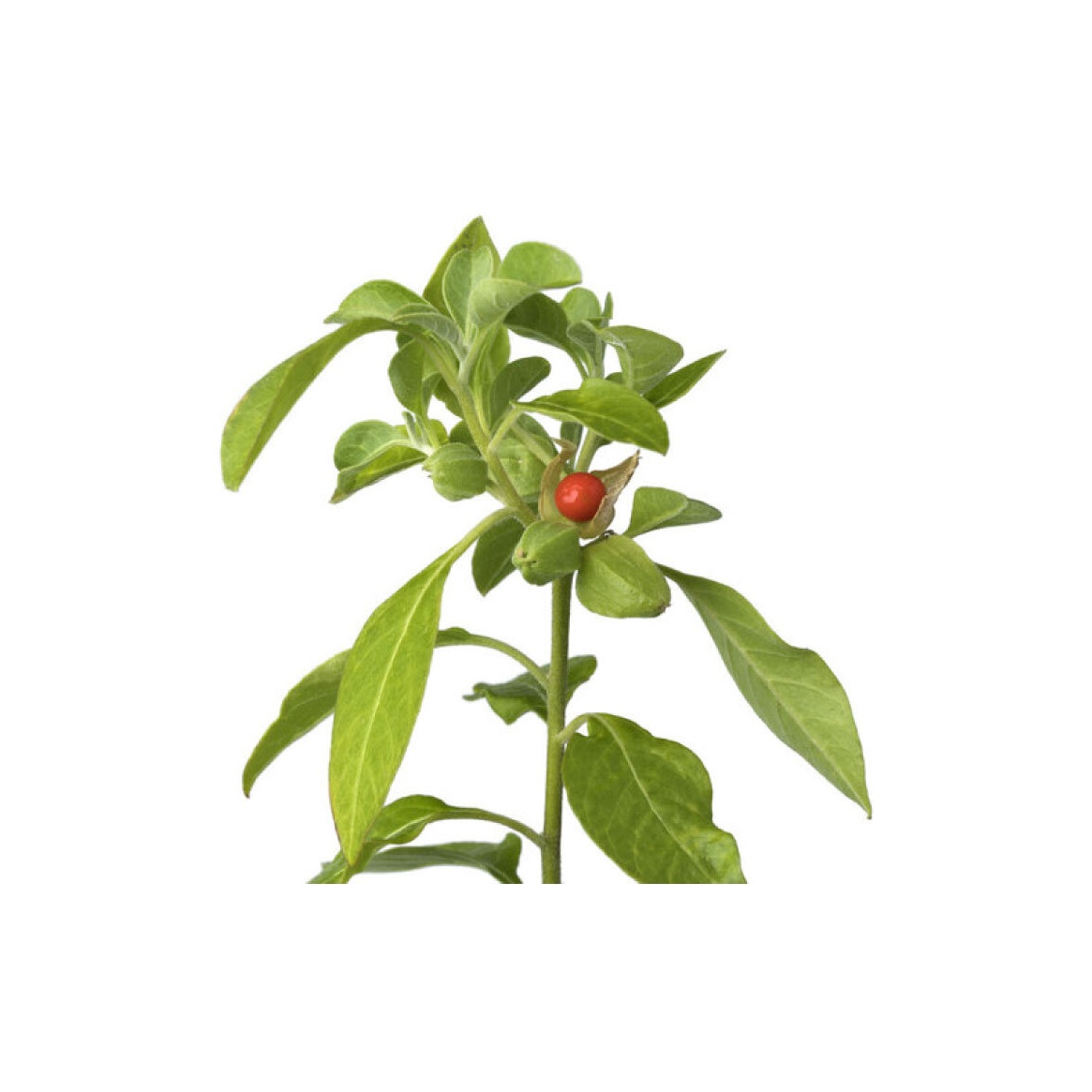
Anaferine is a naturally occurring dipiperidine (bis-piperidine) alkaloid, found in Ashwagandha and Withania spp.. It is well tolerated orally (low toxicity).
Concentration
Content by Source
Concentrations not reported. No percent-dry-weight or mg/g figures have been published for this compound in its source plants.
Anaferine at a Glance
Anaferine is a minor dipiperidine alkaloid — two piperidine rings joined through their C-2 positions by a central ketone bridge — that is characteristic of ashwagandha (Withania somnifera) and other Withania species. It sits alongside a suite of other trace alkaloids (tropine, pseudotropine, cuscohygrine, anahygrine, isopelletierine) in the plant’s small total-alkaloid fraction.
It is best understood as a chemotaxonomic marker, not a medicine. Ashwagandha’s pharmacology is carried almost entirely by its withanolides (steroidal lactones such as withaferin A and withanolide A) 4Reference 4Steroidal lactones from Withania somnifera, an ancient plant for novel medicineView study →; the alkaloids, anaferine included, are minor components with little independent pharmacological record.
Honest headline: there is essentially no standalone bioactivity data for anaferine. No isolate pharmacology, mechanism, pharmacokinetic or clinical study exists for the pure molecule. What is well documented is its chemistry — its structure, stereochemistry, biosynthesis and several total syntheses 1,
A Dipiperidine Alkaloid: Withania Marker Chemistry
This is the point of the page. Anaferine’s interest is structural and taxonomic, not therapeutic.
Structurally it is a bis-piperidine alkaloid: two piperidine rings connected through their C-2 atoms by a 2-propanone (acetone-derived ketone) bridge 1Reference 1Total Synthesis of (–)-Anaferine: A Further Ramification in a Diversity-Oriented ApproachView study →. The framework is C2-symmetric, so anaferine exists as two enantiomers plus a meso-form — the (−)-enantiomer is the (R,R) form and the (+)-enantiomer the (S,S) form, and the compound was first obtained from the plant as a diastereomeric mixture 1Reference 1Total Synthesis of (–)-Anaferine: A Further Ramification in a Diversity-Oriented ApproachView study →.
Biosynthetically it belongs to the lysine-derived piperidine alkaloids. L-lysine is decarboxylated to cadaverine, oxidatively deaminated, and cyclised to the Δ¹-piperideine Schiff base; condensation of Δ¹-piperideine with an acetoacetate-derived unit gives a pelletierine-type ketone, and a further Mannich-type coupling of that unit with a second Δ¹-piperideine assembles the symmetric dipiperidine skeleton of anaferine 3Reference 3Alkaloids Derived from Lysine: Piperidine AlkaloidsView study →. In short, anaferine reads as two pelletierine-type piperidine units bridged by a ketone — which is exactly why it turns up in the same plants, and the same alkaloid fractions, as the pelletierine/piperidine family.
That biosynthetic and structural signature is what makes anaferine a marker: its presence, together with related Solanaceous minor alkaloids, is part of the phytochemical fingerprint of Withania 4,
Anaferine vs. Isopelletierine
Because anaferine and isopelletierine co-occur in ashwagandha and are easily conflated, the distinction is worth stating explicitly:
- Isopelletierine is the monomer — a single piperidine ring bearing a propan-2-one side chain (a pelletierine-type unit).
- Anaferine is effectively the dimer — two of those piperidine-bearing units joined by the central ketone, giving the C2-symmetric bis-piperidine described above 1,
3Reference 1Total Synthesis of (–)-Anaferine: A Further Ramification in a Diversity-Oriented ApproachView study →Reference 3Alkaloids Derived from Lysine: Piperidine AlkaloidsView study → .
Both are lysine-derived, both are trace Withania alkaloids, and neither carries the plant’s therapeutic reputation — but they are different molecules (monomer vs. dimer), which matters when reading older phytochemical alkaloid lists that name them side by side.
What It's Used For
The honest position is short: anaferine has not been studied as an isolated pharmacological agent. The material below is near the evidence floor, and the scores reflect documentation (occurrence, chemistry, one computational signal) rather than any demonstrated efficacy.
Support is an experimental score — weighted by study type (human > animal > in vitro) and volume. A beta, not a validated metric. For anaferine there are no efficacy studies of any kind, so both rows sit near the floor: they reward how well the occurrence and one in-silico lead are documented, not any demonstrated therapeutic effect. Read the per-row basis and the Gap lines as the real story.
Anaferine’s best-supported “application” is not a health use at all — it is its role as a marker constituent of Withania somnifera and related species 1Reference 1Total Synthesis of (–)-Anaferine: A Further Ramification in a Diversity-Oriented ApproachView study →.
It is repeatedly catalogued among the plant’s minor alkaloids (with tropine, pseudotropine, cuscohygrine, anahygrine and isopelletierine) in phytochemical reviews of ashwagandha 4,
This is plant chemistry, documented on the isolated/characterised molecule, not a pharmacological outcome.
Gap: occurrence is documented but not quantified for the isolate in most sources, and a marker role says nothing about what (if anything) the molecule does in a body.
The only molecule-specific bioactivity lead is computational: syntheses of anaferine have noted in-silico studies suggesting possible relevance to neurodegenerative-disease targets 1Reference 1Total Synthesis of (–)-Anaferine: A Further Ramification in a Diversity-Oriented ApproachView study →. This is a docking/modelling signal — neither isolate nor plant assay — and cannot be read as evidence of an effect.
Gap: there is no in-vitro, animal or human study of anaferine for any neurological (or other) endpoint; the computational suggestion is a hypothesis to test, not a result 1Reference 1Total Synthesis of (–)-Anaferine: A Further Ramification in a Diversity-Oriented ApproachView study →.
Mechanisms
| Target / pathway | Effect | Relevant to |
|---|---|---|
| None demonstrated (isolate) | no receptor, enzyme or transporter target has been experimentally assayed for pure anaferine | the entire pharmacology gap |
| In-silico docking (neurodegeneration targets) | computational binding only, not experimentally confirmed | the single speculative neuroactivity lead |
| Lysine → Δ¹-piperideine → pelletierine-type units | biosynthetic assembly of the dipiperidine skeleton (plant chemistry, not human pharmacology) | structure / prevalence |
There is no established molecular mechanism for anaferine. The table records the absence honestly rather than implying a target from silence.
Pharmacokinetics
No pharmacokinetic data exist for isolated anaferine in any species — absorption, oral bioavailability, metabolism, active metabolites and half-life are all uncharacterised. As a lysine-derived piperidine alkaloid present only at trace levels in ashwagandha root, human exposure from standardised ashwagandha supplements is negligible, and no study has attempted to measure circulating anaferine after dosing. This is a genuine hole, not a reassurance.
Clinical Trials
No clinical trials have studied anaferine, as an isolate or as a standardised fraction. Human evidence for ashwagandha belongs to whole-root extracts standardised to withanolides, within which anaferine is an incidental trace constituent.
| Completed | Planned | Terminated | Preclinical |
|---|---|---|---|
| — | — | — | In-silico docking only 1Reference 1Total Synthesis of (–)-Anaferine: A Further Ramification in a Diversity-Oriented ApproachView study → |
Last checked: July 2026.
Isolate vs. Plant Studies
For anaferine the usual isolate-vs-plant caveat collapses into a simpler statement: the molecule’s isolate record is chemistry, not pharmacology. Anaferine has been isolated, its structure and stereochemistry determined, and it has been made by total synthesis 1,
Ashwagandha’s Alkaloids vs. Its Withanolides
Ashwagandha carries two very different chemical stories, and conflating them is the common error. The alkaloids — anaferine, isopelletierine, tropine, cuscohygrine, anahygrine and others — are a minor fraction and function mainly as phytochemical markers 4,
In other words, when a study or product speaks of ashwagandha’s “actives,” it means the withanolides. Anaferine rides along as part of the alkaloid signature; it is not what makes ashwagandha work.
Prevalence in Nature
Anaferine is reported chiefly from the root of Withania somnifera, where it occurs as one of a group of minor alkaloids — a fraction that is itself small relative to the plant’s withanolide content 4,
Its abundance is not reliably quantified as an isolate in the accessible literature — reports place it within the total-alkaloid fraction without a dependable molecule-specific figure, so no cited concentration is given here (this hole is tracked in the compound’s gaps note).
Discovery & Synthesis
Anaferine was first isolated in 1962 by Schwarting and co-workers from the root extract of Withania somnifera, obtained as a diastereomeric mixture 1Reference 1Total Synthesis of (–)-Anaferine: A Further Ramification in a Diversity-Oriented ApproachView study →. Structure determination established it as a bis-piperidine alkaloid in which the two rings are linked through their C-2 atoms by a 2-propanone bridge; optical-rotatory-dispersion analysis later assigned the absolute configurations, with (−)-anaferine as the (R,R)-enantiomer and (+)-anaferine as the (S,S)-enantiomer, the framework also permitting a meso form 1Reference 1Total Synthesis of (–)-Anaferine: A Further Ramification in a Diversity-Oriented ApproachView study →.
Because of that compact, symmetric, stereochemically interesting skeleton, anaferine has been a recurring synthetic target: modern asymmetric and diversity-oriented total syntheses of (−)-anaferine 1Reference 1Total Synthesis of (–)-Anaferine: A Further Ramification in a Diversity-Oriented ApproachView study → and convergent routes to (+)-anaferine (reported together with (−)-dihydrocuscohygrine) 2Reference 2Highly convergent total synthesis of (+)-anaferine and (−)-dihydrocuscohygrineView study → have been published. Biosynthetically it is assembled from lysine by way of the Δ¹-piperideine Schiff base and pelletierine-type units, dimerised through a Mannich-type coupling 3Reference 3Alkaloids Derived from Lysine: Piperidine AlkaloidsView study →.
Manufacture today: anaferine is not a commercial product. It is prepared in the laboratory by total synthesis for research purposes, or isolated in small amounts from Withania; there is no industrial extraction or production stream, consistent with its status as a trace marker rather than a used compound.
Patents: not yet researched.
Toxicity & Safety
Anaferine carries a low flag — but this reflects trace exposure and the absence of any reported toxicity, not a completed safety dossier. No dedicated toxicology, genotoxicity, reproductive or repeat-dose dataset exists for the isolated molecule, and it has never been characterised as a standalone toxic principle. Human exposure occurs only incidentally, at trace levels, through ashwagandha root — whose overall safety profile is assessed at the level of the standardised extract, not its individual alkaloids.
As context (not a specific finding for anaferine): piperidine alkaloids as a class can be toxic in a dose-dependent way — coniine from poison hemlock is the notorious example — but there is no report of such toxicity for anaferine, and its trace abundance means it is not a meaningful contributor to any exposure. Interactions have not been assessed for the isolate; nothing here should be read as a demonstrated CYP/transporter interaction claim.
- No reported toxicity as an isolate. No case reports, poisonings or adverse-effect literature attributable to anaferine specifically.
- Trace-level, incidental exposure only. Present at very low levels in ashwagandha root; not concentrated or supplemented.
- “Low” reflects data absence, not a clean bill. No formal toxicology, genotoxicity or reproductive dataset exists for the pure compound.
- Piperidine-alkaloid class context. Some piperidine alkaloids are dose-dependently toxic; this is a class note, with no such finding reported for anaferine.
Dosage
There is no dose for anaferine. It is not sold or used as a supplement, has no established human dosing, and has never been administered as an isolate in a study. Where people encounter it at all, it is as a trace constituent of ashwagandha, which is itself dosed as a withanolide-standardised whole-root extract — chosen and measured for its withanolides, not its alkaloids.
Any figure for anaferine would therefore be a research or analytical value, not a personal recommendation.
References
- Bonandi E, Tedesco G, Perdicchia D, Passarella D (2020). Total Synthesis of (–)-Anaferine: A Further Ramification in a Diversity-Oriented Approach. Molecules. https://pubmed.ncbi.nlm.nih.gov/32120931/
- Torres J, Escolano M, Rabasa-Alcañiz F, Sanz-Vidal A, Sánchez-Roselló M, del Pozo C (2019). Highly convergent total synthesis of (+)-anaferine and (−)-dihydrocuscohygrine. Organic Chemistry Frontiers. https://doi.org/10.1039/c9qo00811j
- Szőke É, Lemberkovics É, Kursinszki L (2013). Alkaloids Derived from Lysine: Piperidine Alkaloids. In: Natural Products (Springer). https://doi.org/10.1007/978-3-642-22144-6_10
- Mirjalili MH, Moyano E, Bonfill M, Cusido RM, Palazón J (2009). Steroidal lactones from Withania somnifera, an ancient plant for novel medicine. Molecules. https://pubmed.ncbi.nlm.nih.gov/19633611/
- Afewerky HK, Ayodeji AE, Tiamiyu BB, Orege JI, Okeke ES, Oyejobi AO, Bate PNN, Adeyemi SB (2021). Critical review of the Withania somnifera (L.) Dunal: ethnobotany, pharmacological efficacy, and commercialization significance in Africa. Bulletin of the National Research Centre. https://pubmed.ncbi.nlm.nih.gov/34697529/



