
Compound Monograph
Isopelletierine
Isopelletierine is a minor piperidine alkaloid — a β-aminoketone of the pelletierine family — found as a trace constituent of ashwagandha and, classically, in pomegranate bark, where pelletierine-type alkaloids were once used as tapeworm remedies. Despite being grouped with ashwagandha's tropane-type fraction it is not a true tropane, and its isolated pharmacology is barely characterised.

Sources · 2
Where Does It Come From?
Isopelletierine is a naturally occurring piperidine alkaloid (β-aminoketone; pelletierine group), found in Ashwagandha and Pomegranate — root/stem bark, historically. It is well tolerated orally (low toxicity).
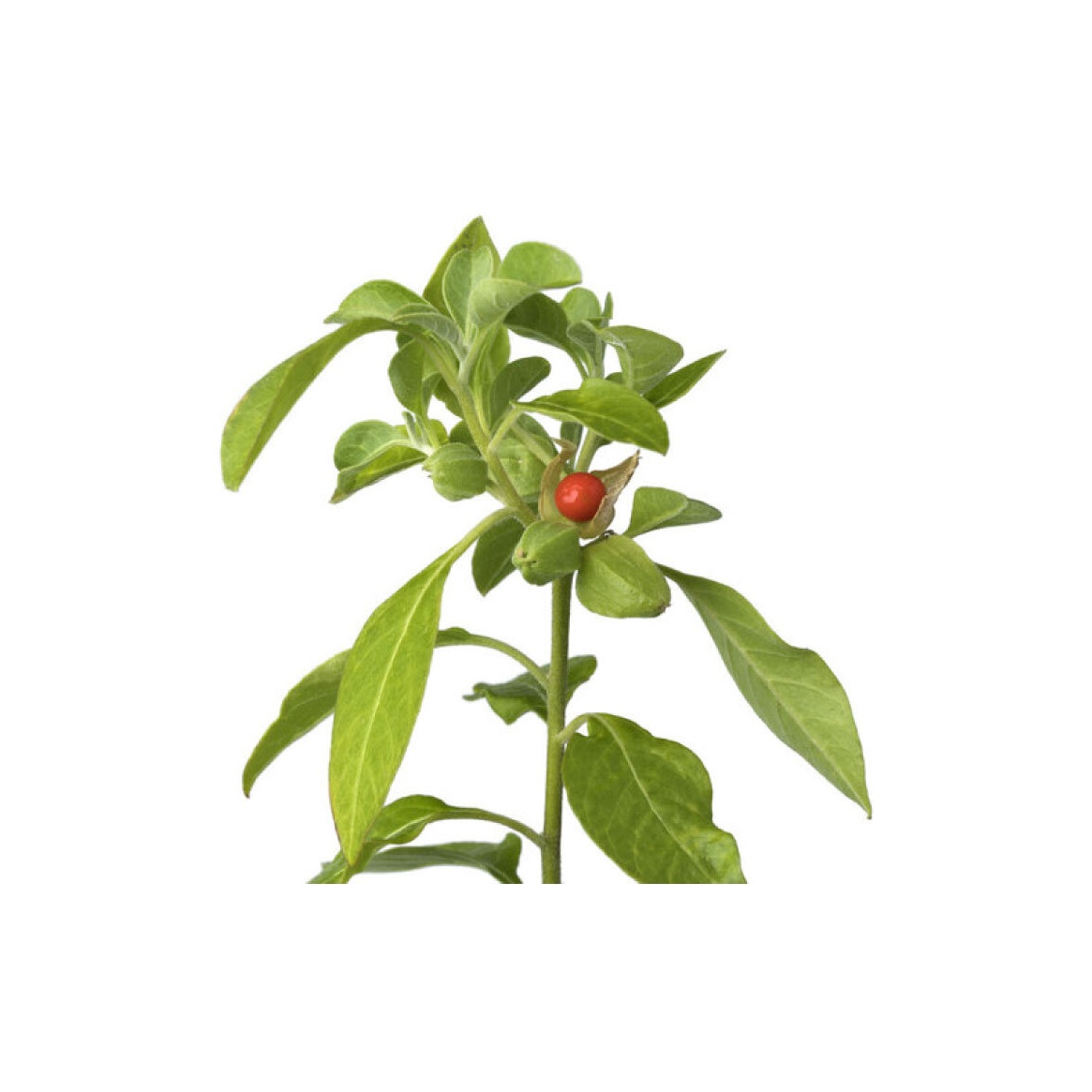
Concentration
Content by Source
Concentrations not reported. No percent-dry-weight or mg/g figures have been published for this compound in its source plants.
Isopelletierine at a Glance
Isopelletierine is a minor piperidine alkaloid — a small β-aminoketone built on a single saturated six-membered nitrogen ring. It is the racemic (±) member of the pelletierine family, the group of simple piperidine alkaloids classically isolated from the root and stem bark of pomegranate (Punica granatum).
In ashwagandha (Withania somnifera) it is a trace constituent, part of the herb’s small alkaloid fraction rather than one of its active principles 1,
The one thing the pelletierine family is genuinely known for is old anthelmintic (tapeworm) use — and that is a pomegranate-bark / pelletierine-family fact, tested on parasites, not an established property of ashwagandha’s trace isopelletierine 2Reference 2The truth behind the myth of pomegranate tree root: proofs on anti-nematode and anti-feeding properties of pelletierine-like alkaloidsView study →. As an isolated molecule its modern pharmacology is barely characterised: there are no human clinical data on it, and most references that mention it by name do so either to catalogue ashwagandha’s constituents or in computational screens.
Piperidine Identity: The Pelletierine Family & Pomegranate’s Anthelmintic History
This is the section that matters for placing the molecule correctly, because isopelletierine is easy to mis-file and easy to confuse with its siblings.
It is a piperidine, not a tropane. Isopelletierine is (±)-1-(piperidin-2-yl)propan-2-one (2-acetonylpiperidine): a plain piperidine ring bearing a small acetonyl (β-keto) side chain — hence “β-aminoketone.” It carries no N-methyl group and, crucially, no bicyclic bridge. That is what separates it from the true tropanes (tropine, pseudotropine) and from its own bicyclic cousin, and it is why the botanical literature groups it with the piperidine/pomegranate alkaloids even when ashwagandha reviews lump the whole minor fraction together as “tropane-type” 1,
Don’t conflate the siblings — they are chemically distinct and their data do not transfer:
- Pelletierine — the optically active parent; isopelletierine is its racemate (dl-pelletierine). The names have been muddled since the nineteenth century, so figures reported under one label should not be silently assigned to the other.
- N-methylisopelletierine — the N-methylated homolog; a different molecule.
- Pseudopelletierine — a bicyclic N-methyl-granatan-3-one (a granatane/tropane-related ketone), not a simple piperidine. In the one modern activity comparison, isopelletierine was more nematicidal than pseudopelletierine — direct evidence the two are not interchangeable 2Reference 2The truth behind the myth of pomegranate tree root: proofs on anti-nematode and anti-feeding properties of pelletierine-like alkaloidsView study →.
- Anaferine — a dimeric bis-(2-piperidinyl) ketone (two piperidine units), the other minor ashwagandha piperidine alkaloid; a bigger, different molecule.
The anthelmintic history is pomegranate’s, not ashwagandha’s. The pelletierine alkaloids take their name from the French chemist Pierre-Joseph Pelletier, and the family was drawn from pomegranate bark, a remedy used against tapeworm since antiquity; pelletierine preparations (often the tannate) were the nineteenth- and early-twentieth-century taenicides derived from that tradition. Modern work confirms the underlying activity: pelletierine-like alkaloids isolated from pomegranate root are active against parasitic nematodes, with isopelletierine the more potent of the pair tested against Meloidogyne javanica 2Reference 2The truth behind the myth of pomegranate tree root: proofs on anti-nematode and anti-feeding properties of pelletierine-like alkaloidsView study →. But two honest caveats bound this: (1) it is a pomegranate/pelletierine-family property demonstrated on worms/nematodes, and (2) it says nothing about the safety or efficacy of the trace isopelletierine that occurs in ashwagandha, which is present at incidental levels and has never been dosed as a drug.
What It's Used For
Isopelletierine sits at the thin end of the evidence spectrum. What exists is either activity of the pelletierine family against parasites (the isolated molecules, but tested on nematodes) or computational/detection-level mentions in the ashwagandha literature. There are no human trials of isolated isopelletierine.
Support is an experimental score — weighted by study type (human > animal > in vitro) and volume. A beta, not a validated metric. Every row here is low: no human data exists for isolated isopelletierine, so read each basis literally.
The only application with experimental support, and it belongs to the pelletierine family from pomegranate, not to ashwagandha. Pelletierine-like alkaloids extracted from pomegranate root — isolated and tested as pure isopelletierine and pseudopelletierine — showed anti-nematode and anti-feeding activity, with isopelletierine the more active of the two against the root-knot nematode Meloidogyne javanica 2Reference 2The truth behind the myth of pomegranate tree root: proofs on anti-nematode and anti-feeding properties of pelletierine-like alkaloidsView study →.
This is the modern, mechanistic echo of pomegranate bark’s ancient reputation as a taenicide (tapeworm expellent). It is an isolate result — a genuine strength methodologically — but on plant-parasitic nematodes, in an agricultural biocontrol frame.
Gap: no data connect this to human anthelmintic dosing of isolated isopelletierine (historic human use was whole pomegranate bark / pelletierine tannate, now obsolete), and nothing links it to ashwagandha, whose isopelletierine is a trace constituent 2Reference 2The truth behind the myth of pomegranate tree root: proofs on anti-nematode and anti-feeding properties of pelletierine-like alkaloidsView study →.
When researchers computationally screen ashwagandha’s phytochemicals, isopelletierine sometimes surfaces among the alkaloid hits — for example a network-pharmacology / molecular-docking study of W. somnifera constituents for neurodegenerative-disease targets ranked isopelletierine among alkaloids with notable predicted binding affinity 4Reference 4Network pharmacological evaluation of Withania somnifera bioactive phytochemicals for identifying novel potential inhibitors against neurodegenerative disorderView study →. These are predictions from software, not measured activity.
Gap: docking scores are hypotheses, not pharmacology. There is no in-vitro, animal or human confirmation that isolated isopelletierine engages any of these targets, and the trace levels in ashwagandha make a meaningful contribution unlikely 4Reference 4Network pharmacological evaluation of Withania somnifera bioactive phytochemicals for identifying novel potential inhibitors against neurodegenerative disorderView study →.
Isopelletierine appears in the ashwagandha drug-interaction literature mainly as an analytically detected marker: a study of W. somnifera effects on CYP2B6, CYP3A4 and β-esterase in human liver microsomes and HepG2 cells reported isopelletierine among the extract’s constituents while measuring the extract’s enzyme modulation 5Reference 5Investigation of CYP2B6, 3A4 and β-esterase interactions of Withania somnifera (L.) Dunal in human liver microsomes and HepG2 cellsView study →.
Gap: the CYP/β-esterase effects are properties of the whole extract, not of isolated isopelletierine — its individual contribution was not isolated, and at trace abundance it is unlikely to drive them. Read this as “present in an extract that interacts,” not “isopelletierine inhibits CYP” 5Reference 5Investigation of CYP2B6, 3A4 and β-esterase interactions of Withania somnifera (L.) Dunal in human liver microsomes and HepG2 cellsView study →.
Mechanisms
| Target / pathway | Effect | Relevant to |
|---|---|---|
| Nematode / helminth neuromuscular function | pelletierine-type alkaloids paralyse/expel parasites (basis of the classic taenicide use); mechanism not resolved for isopelletierine specifically | anthelmintic / nematicidal (pelletierine family) |
| Predicted CNS-disease protein binding (in silico) | favourable docking scores only — no confirmed engagement | in-silico screens (ashwagandha context) |
| CYP2B6 / CYP3A4 / β-esterase | modulation attributed to the whole W. somnifera extract, in which isopelletierine is merely detected | drug-interaction context (extractnot isolate) |
Load-bearing caveat: none of these is an established isopelletierine mechanism at a human-relevant dose. The parasite activity is a family/whole-bark property 2Reference 2The truth behind the myth of pomegranate tree root: proofs on anti-nematode and anti-feeding properties of pelletierine-like alkaloidsView study →; the enzyme and CNS entries are whole-extract or computational 4,
Pharmacokinetics
Essentially uncharacterised for the isolated molecule. No absorption, bioavailability, metabolism or half-life data for isopelletierine in humans could be verified. Structurally it is a small, basic, water-and-lipid-miscible piperidine β-aminoketone, so oral absorption is chemically plausible, but this is inference, not measurement. What can be said is exposure-side: dietary intake via ashwagandha is trace, so real-world systemic exposure from taking the herb is expected to be very low 1,
Clinical Trials
There are no clinical trials of isolated isopelletierine — not for anthelmintic use, not for anything. Its human “exposure” is only as an incidental trace component of ashwagandha products, whose trials are designed around withanolide-standardised extracts (e.g. KSM-66, Sensoril), not around this alkaloid.
| Completed | Planned | Terminated | Preclinical |
|---|---|---|---|
| None(isolate) | — | — | Pelletierine-family nematicidal/anti-feeding assays 2Reference 2The truth behind the myth of pomegranate tree root: proofs on anti-nematode and anti-feeding properties of pelletierine-like alkaloidsView study →; in-silico ashwagandha screens 4Reference 4Network pharmacological evaluation of Withania somnifera bioactive phytochemicals for identifying novel potential inhibitors against neurodegenerative disorderView study → |
Last checked: July 2026.
Isolate vs. Plant Studies
The evidence splits by which plant is in view. The isolate work that exists is pomegranate’s: isopelletierine was isolated and tested as a pure molecule in the nematicidal comparison, a genuine methodological strength — but the readout was parasite activity, not a mammalian outcome 2Reference 2The truth behind the myth of pomegranate tree root: proofs on anti-nematode and anti-feeding properties of pelletierine-like alkaloidsView study →. For ashwagandha, by contrast, there is no isolate pharmacology at all — isopelletierine appears only as a detected constituent of whole-root extracts and in computational screens, never as a separately dosed agent 1,
Its Role in Plants
Isopelletierine is a lysine-derived alkaloid. In the classical scheme, L-lysine is decarboxylated to cadaverine, oxidatively deaminated and cyclised to the reactive imine Δ¹-piperideine, and that piperideine intermediate is then elaborated — for the pelletierine group, by condensation of the acetonyl side chain onto the ring — to give the β-aminoketone skeleton 6Reference 6The energetic viability of Δ¹-piperideine dimerization in lysine-derived alkaloid biosynthesisView study →. The same Δ¹-piperideine node feeds a wide range of piperidine alkaloids and, by dimerisation, the bis-piperidine alkaloids such as ashwagandha’s anaferine; the energetics of that dimerisation step have been examined directly 6Reference 6The energetic viability of Δ¹-piperideine dimerization in lysine-derived alkaloid biosynthesisView study →.
Ecologically, the pelletierine alkaloids fit the general pattern of plant alkaloids as chemical defence — the family’s anti-nematode and anti-feeding activity against herbivores and parasites is consistent with a protective role for the pomegranate that makes them 2Reference 2The truth behind the myth of pomegranate tree root: proofs on anti-nematode and anti-feeding properties of pelletierine-like alkaloidsView study →. This is plant biology and should not be read as human pharmacology.
Prevalence in Nature
Isopelletierine is a minor, low-abundance alkaloid wherever it occurs. Its classic home is the root and stem bark of pomegranate (Punica granatum), the source from which the pelletierine family was first drawn and where isopelletierine has been isolated as a pure compound 2Reference 2The truth behind the myth of pomegranate tree root: proofs on anti-nematode and anti-feeding properties of pelletierine-like alkaloidsView study →. It is also reported as a trace constituent of ashwagandha (Withania somnifera) root, where it was documented as far back as 1962 and sits within a small total-alkaloid fraction alongside tropine, pseudotropine and anaferine rather than being individually quantified 1,
Because it is never a major constituent, reliable percentage figures for isopelletierine specifically are scarce; abundance in ashwagandha is best described as trace, and even in pomegranate the pelletierine alkaloids are a modest bark fraction. Where a source lacks a measured number, that hole is logged in this compound’s gaps tracker rather than guessed.
Discovery & Synthesis
The pelletierine family was drawn from pomegranate bark in the 1870s–80s, associated with the French pharmacist-chemist Charles Tanret, and named in honour of Pierre-Joseph Pelletier — the alkaloid chemist whose lab (with Caventou) had isolated many of the great plant alkaloids. From the start the names were tangled: “pelletierine” and its racemic counterpart isopelletierine were separated and re-described repeatedly, and the family (pelletierine, isopelletierine, N-methylisopelletierine, pseudopelletierine) was worked out only gradually — a reason to keep sibling data apart to this day.
Its appearance in a second, unrelated plant came much later: isopelletierine was reported in Withania somnifera (ashwagandha) in 1962 by Khanna, Schwarting and Bobbitt, establishing it as a shared piperidine alkaloid rather than a pomegranate curiosity 1Reference 1The occurrence of isopelletierine in Withania somniferaView study →. As a small, symmetric β-aminoketone the racemate is a classic, readily accessible synthetic target (condensations onto a Δ¹-piperideine-type imine mirror its biosynthesis 6Reference 6The energetic viability of Δ¹-piperideine dimerization in lysine-derived alkaloid biosynthesisView study →), and it is far more often prepared or referenced than commercially extracted — there is no meaningful modern manufacturing story for it as a stand-alone material.
Patents: not yet researched.
Toxicity & Safety
Isopelletierine carries a low flag — but that reflects trace exposure and a near-total absence of isolate data, not a positive demonstration of safety. Two things are worth separating: the incidental trace you meet in ashwagandha, and the pelletierine family’s own neuroactivity at the high, deliberate doses of its obsolete anthelmintic use.
- Trace, incidental exposure via ashwagandha. As a minor constituent of a widely used herb, isopelletierine has no distinct safety signal at dietary intake levels; ashwagandha’s own safety profile governs 1,
3Reference 1The occurrence of isopelletierine in Withania somniferaView study →Reference 3Revisiting the multifaceted therapeutic potential of withaferin A (WA), a novel steroidal lactone, W-ferinAmax ashwagandha, from Withania somnifera (L.) DunalView study → . - Data-poor — do not infer safety from silence. There is no dedicated toxicology, genotoxicity or reproductive dataset for isolated isopelletierine; “low” here means low-exposure and untested, not proven benign.
- Pelletierine-family neuroactivity is dose-dependent. The family’s classic taenicide use relied on biological activity potent enough to paralyse parasites; historic high-dose pomegranate-bark/pelletierine preparations were not benign. That caution attaches to concentrated pelletierine dosing, not to trace dietary isopelletierine 2Reference 2The truth behind the myth of pomegranate tree root: proofs on anti-nematode and anti-feeding properties of pelletierine-like alkaloidsView study →.
- Interactions unassessed for the isolate. Isopelletierine has only been observed inside whole W. somnifera extract in enzyme (CYP/β-esterase) work; no isolate interaction data exist, so none should be assumed either way 5Reference 5Investigation of CYP2B6, 3A4 and β-esterase interactions of Withania somnifera (L.) Dunal in human liver microsomes and HepG2 cellsView study →.
Dosage
There is no established or recommended dose for isolated isopelletierine, and no research dose to report — it has never been trialled as a stand-alone agent in humans. Exposure through ashwagandha is trace and incidental, governed by the herb’s own dosing (its withanolide-standardised extracts), not by this alkaloid. The historical anthelmintic dosing of the pelletierine family applied to whole pomegranate-bark preparations / pelletierine tannate, is obsolete, and must not be read as a dose for isopelletierine. Any figures in this space are historical or preclinical, not a personal recommendation.
References
- Khanna KL, Schwarting AE, Bobbitt JM (1962). The occurrence of isopelletierine in Withania somnifera. Journal of Pharmaceutical Sciences. https://pubmed.ncbi.nlm.nih.gov/14032282/
- Bonacci S, Scarano P, Iriti G, et al. (2026). The truth behind the myth of pomegranate tree root: proofs on anti-nematode and anti-feeding properties of pelletierine-like alkaloids. Molecules. https://doi.org/10.3390/molecules31081254
- Kumar P, Banik SP, Goel A, et al. (2024). Revisiting the multifaceted therapeutic potential of withaferin A (WA), a novel steroidal lactone, W-ferinAmax ashwagandha, from Withania somnifera (L.) Dunal. Journal of the American Nutrition Association. https://pubmed.ncbi.nlm.nih.gov/37410676/
- Pahal S, Gupta A, Choudhary P, et al. (2022). Network pharmacological evaluation of Withania somnifera bioactive phytochemicals for identifying novel potential inhibitors against neurodegenerative disorder. Journal of Biomolecular Structure and Dynamics. https://pubmed.ncbi.nlm.nih.gov/34278961/
- Kumar S, Bouic PJ, Rosenkranz B (2021). Investigation of CYP2B6, 3A4 and β-esterase interactions of Withania somnifera (L.) Dunal in human liver microsomes and HepG2 cells. Journal of Ethnopharmacology. https://pubmed.ncbi.nlm.nih.gov/33395575/
- Sato H, Uchiyama M, Saito K, Yamazaki M (2018). The energetic viability of Δ¹-piperideine dimerization in lysine-derived alkaloid biosynthesis. Metabolites. https://pubmed.ncbi.nlm.nih.gov/30200334/



