
Compound Monograph
Artemetin
Artemetin (artemisetin) is a highly methylated flavonol of yarrow, Artemisia and chaste-tree. Its stand-out finding is a genuine hypotensive action — the isolated molecule lowers arterial pressure in rats partly by inhibiting angiotensin-converting enzyme — backed by endothelial nitric-oxide, antioxidant and anti-inflammatory signals. All of it is preclinical.

Sources · 7
Where Does It Come From?
Artemetin is a naturally occurring flavonoid (polymethoxylated flavonol), found in Yarrow, Chaste Tree, Vitex trifolia and Vitex rotundifolia and 4 other sources. It is well tolerated orally (low toxicity).
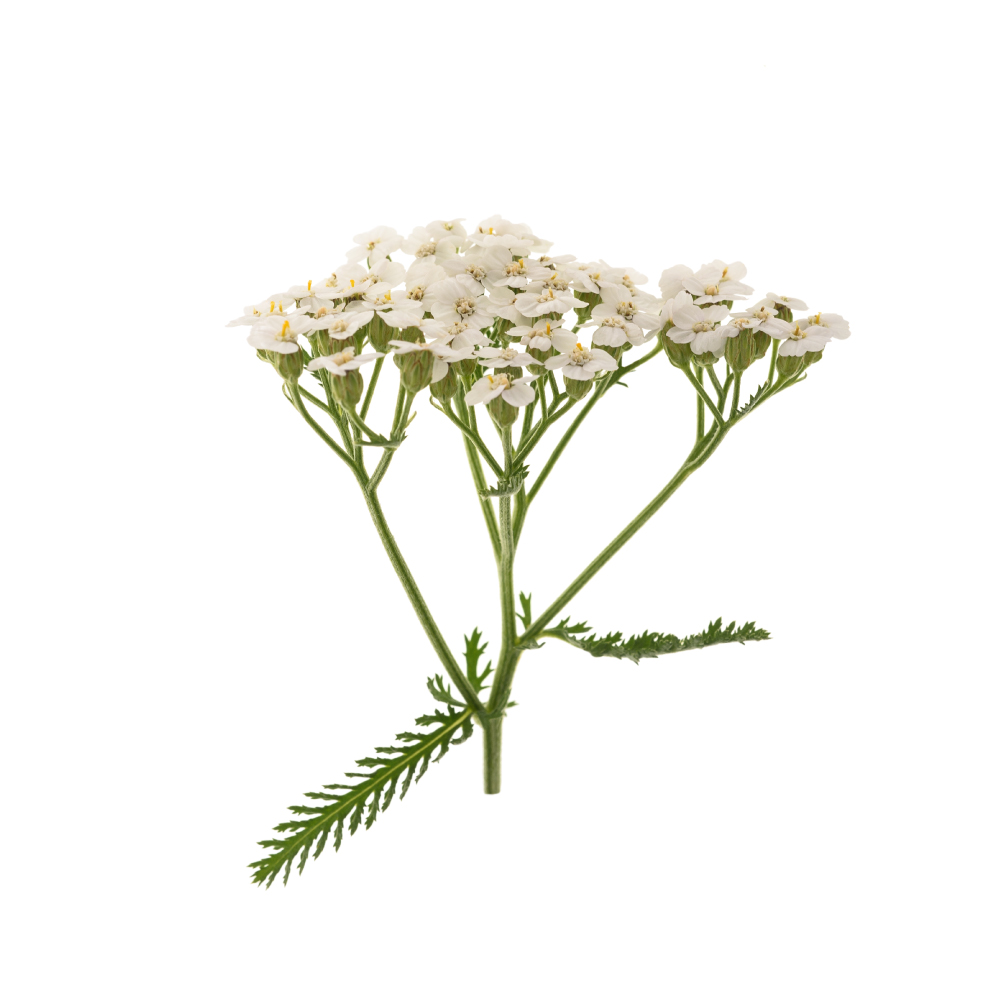 Principal source Yarrow Achillea millefolium Herb monograph →
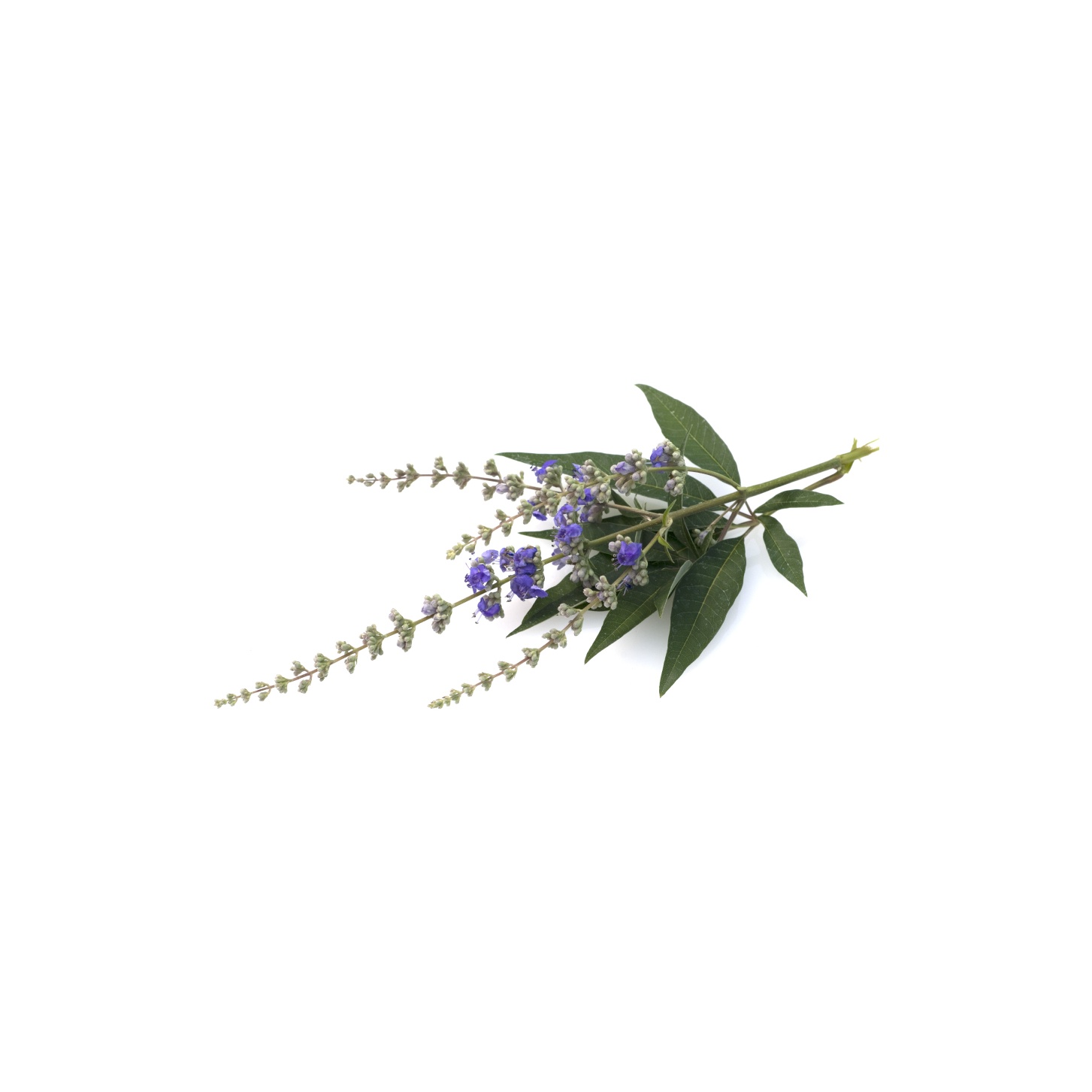 Source Chaste Tree Vitex agnus-castus Herb monograph →
Concentration
Content by Source
Concentrations not reported. No percent-dry-weight or mg/g figures have been published for this compound in its source plants.
Artemetin at a Glance
Artemetin, also called artemisetin, is a highly methylated flavonol — 5-hydroxy-3,6,7,3′,4′-pentamethoxyflavone — carrying five methoxy groups and a single free hydroxyl. It is a minor but widespread constituent of yarrow, several Artemisia species, chaste-tree and other Vitex, and a scatter of other genera. It sits in the same methoxyflavone family as casticin, and is a relative of the common flavones luteolin and apigenin and the flavonols quercetin and kaempferol.
Its most distinctive finding — and the point — is a hypotensive, cardiovascular action: the isolated molecule dose-dependently lowers arterial pressure in rats, and the mechanism was traced substantially to inhibition of angiotensin-converting enzyme (ACE) 1Reference 1AnimalHypotensive mechanism of the extracts and artemetin isolated from Achillea millefolium L. (Asteraceae) in ratsView study →. That is supported by separate work in which artemetin raised endothelial nitric-oxide release and protected blood-vessel cells as an antioxidant 2Reference 2Effects of artemetin on nitric oxide release and protection against peroxidative injuries in porcine coronary artery endothelial cellsView study →.
The honest posture for the rest is the usual compound-page discipline: artemetin’s anti-inflammatory and antioxidant activities are real but entirely preclinical — cell and rodent studies of the isolate or of extracts — and there are no human trials of the isolated molecule. Its toxicity signal is negligible, but its ACE-inhibitory mechanism carries a theoretical blood-pressure-interaction caution.
The Hypotensive / ACE-Inhibition Cardiovascular Action
This is the molecule’s signature. Yarrow has a traditional cardiovascular reputation, and when researchers put its preparations into anaesthetised rats, the hydroethanolic extract and its dichloromethane fractions significantly lowered mean arterial pressure (MAP); bio-guided fractionation identified artemetin as the major active flavonoid in the most potent fraction 1Reference 1AnimalHypotensive mechanism of the extracts and artemetin isolated from Achillea millefolium L. (Asteraceae) in ratsView study →.
Given on its own, artemetin dose-dependently reduced MAP, by up to 11.47 ± 1.5 mmHg at 1.5 mg/kg intravenously 1Reference 1AnimalHypotensive mechanism of the extracts and artemetin isolated from Achillea millefolium L. (Asteraceae) in ratsView study →. The mechanism the authors reported is what makes the finding notable: artemetin behaved as an ACE inhibitor. It blunted the pressor (hypertensive) response to angiotensin I — the peptide ACE converts to the vasoconstrictor angiotensin II — while prolonging the hypotension produced by bradykinin, a peptide ACE normally degrades. Critically, it did not affect responses to angiotensin II itself, placing the action at the converting enzyme rather than downstream. In vitro, artemetin cut plasma ACE activity by about 37% and vascular ACE activity by up to 63% 1Reference 1AnimalHypotensive mechanism of the extracts and artemetin isolated from Achillea millefolium L. (Asteraceae) in ratsView study →. This is the same pharmacological logic as the ACE-inhibitor drug class, though here at animal/in-vitro scale with an isolated plant flavonoid.
A second strand reinforces the vascular story from the endothelial side. In porcine coronary-artery endothelial cells, artemetin increased nitric-oxide release and protected endothelial function against peroxidative injury, acting as an antioxidant and antiapoptotic agent through kinase-signalling pathways 2Reference 2Effects of artemetin on nitric oxide release and protection against peroxidative injuries in porcine coronary artery endothelial cellsView study →. Raised endothelial NO is itself vasodilatory, so the two mechanisms — ACE inhibition and enhanced NO — point the same direction on blood pressure.
Artemetin also appears in a broader review of antihypertensive flavonoids from herbal medicine, which places compounds like it in a promising-but-preclinical category and stresses that clinical evidence is still insufficient to recommend flavonoids as antihypertensive treatments 7Reference 7ReviewThe antihypertensive potential of flavonoids from Chinese Herbal Medicine: A reviewView study →. That is the correct frame here too.
What It's Used For
Beyond the cardiovascular signal, artemetin’s pharmacology is a modest set of preclinical anti-inflammatory and antioxidant findings, split between isolate and whole-extract studies.
Support is an experimental score — weighted by study type (human > animal > in vitro) and volume. A beta, not a validated metric. There is no human isolate data, so even the best-supported use stays mid-range by design.
The strongest and most specific application, and — usefully — one carried by the isolated molecule. Bio-guided fractionation of Achillea millefolium identified artemetin as the active flavonoid behind the extract’s blood-pressure lowering, and pure artemetin dose-dependently reduced rat MAP (up to ~11.5 mmHg at 1.5 mg/kg i.v.) with an ACE-inhibitor signature: reduced angiotensin-I pressor response, prolonged bradykinin hypotension, no change to angiotensin II, and 37% (plasma) / up to 63% (vascular) inhibition of ACE activity in vitro 1Reference 1AnimalHypotensive mechanism of the extracts and artemetin isolated from Achillea millefolium L. (Asteraceae) in ratsView study →.
Independent endothelial-cell work adds an increased nitric-oxide and antioxidant/antiapoptotic mechanism that also favours vasodilation 2Reference 2Effects of artemetin on nitric oxide release and protection against peroxidative injuries in porcine coronary artery endothelial cellsView study →.
Gap: the hypotension evidence is anaesthetised-rat and in-vitro, delivered intravenously — it sidesteps whether oral artemetin reaches active blood levels — and there are no human data; the flavonoid-antihypertensive field as a whole is judged clinically insufficient 1,
A real but mixed preclinical signal. Isolated artemetin from Vitex trifolia suppressed TNF-α and IL-1β production in human U937 macrophages — the first such demonstration for the molecule 3Reference 3Effects of Vitex trifolia L. leaf extracts and phytoconstituents on cytokine production in human U937 macrophagesView study → — and artemetin (with casticin) from Vitex agnus-castus showed potent lipoxygenase inhibition 4Reference 4Antiinflammatory and lipoxygenase inhibitory compounds from Vitex agnus-castusView study →. The caveat is a candid one: in an antiedematogenic study of Cordia curassavica, the crude extract reduced carrageenan oedema substantially but the purified artemetin fraction alone had no activity, implying the effect there depended on the whole-plant matrix rather than artemetin in isolation 5Reference 5Evaluation of the antiedematogenic activity of artemetin isolated from Cordia curassavica DCView study →.
Gap: cell-based and single-model animal work only, with a directly conflicting isolate-versus-extract result — no coherent in-vivo anti-inflammatory dose-response and no human data 3,
Artemetin protected porcine coronary-artery endothelial cells from peroxidative injury, acting as an antioxidant and antiapoptotic agent while raising nitric-oxide output 2Reference 2Effects of artemetin on nitric oxide release and protection against peroxidative injuries in porcine coronary artery endothelial cellsView study →. In a structure-activity comparison of flavonoid peroxyl-radical scavenging, artemetin ranked as only a moderately active flavone — its heavy methoxylation and single free hydroxyl leave it well behind fully hydroxylated flavonols such as quercetin 6Reference 6Evaluation of the total peroxyl radical-scavenging capacity of flavonoids: structure-activity relationshipsView study →.
Gap: direct antioxidant potency is modest and the protective data are a single endothelial-cell system; this is a supporting mechanism for the vascular story, not a stand-alone therapeutic antioxidant claim 2,
Mechanisms
| Target / pathway | Effect | Relevant to |
|---|---|---|
| Angiotensin-converting enzyme (ACE) | inhibited — ↓plasma ACE ~37%, ↓vascular ACE up to 63% in vitro; blunts angiotensin-I pressor response, prolongs bradykinin hypotension; no effect on angiotensin II | hypotensive / cardiovascular (core mechanism) |
| Endothelial nitric oxide (NO) | increased release in coronary-artery endothelial cells → vasodilation | cardiovascular / endothelial protection |
| Reactive oxygen species / peroxyl radicals | moderate scavenging; protects endothelium from peroxidative injury (antioxidant, antiapoptotic) | antioxidant / endothelial |
| TNF-α, IL-1β | suppressed in human macrophages | anti-inflammatory |
| Lipoxygenase (LOX) | inhibited | anti-inflammatory |
The load-bearing point is the ACE story: an isolated plant flavonoid reproducing the pharmacological logic of the ACE-inhibitor drug class in animals, reinforced by an independent endothelial-NO mechanism 1,
Pharmacokinetics
There are no dedicated pharmacokinetic data for artemetin — no human or animal absorption, bioavailability, metabolism or half-life figures for the isolate. Two things are worth flagging in their absence. First, the defining hypotension study delivered artemetin intravenously 1Reference 1AnimalHypotensive mechanism of the extracts and artemetin isolated from Achillea millefolium L. (Asteraceae) in ratsView study →, which demonstrates activity but deliberately bypasses the oral-absorption question — the usual weak point for flavonoids — so nothing here shows that eaten or extract-delivered artemetin reaches active plasma concentrations. Second, as a heavily O-methylated flavonol, artemetin would be expected to be more lipophilic and metabolically stable than its hydroxylated relatives (methoxy groups resist the rapid glucuronidation/sulfation that clears flavones like luteolin), but this is a class generalisation, not a measured property of artemetin. Its poor water solubility and unknown oral bioavailability are the central pharmacokinetic gaps.
Clinical Trials
There are no clinical trials of artemetin — the isolate has never been administered to humans for efficacy, safety or pharmacokinetics. The human cardiovascular evidence that exists for its source plants belongs to whole extracts and traditional use, not to the molecule, and reviews of antihypertensive flavonoids explicitly note the lack of clinical data 7Reference 7ReviewThe antihypertensive potential of flavonoids from Chinese Herbal Medicine: A reviewView study →.
| Completed | Planned | Terminated | Preclinical |
|---|---|---|---|
| —(none, isolate) | — | — | Cardiovascular(hypotension/ACE, endothelial), anti-inflammatory, antioxidant |
Last checked: July 2026.
Isolate vs. Plant Studies
Artemetin sits unusually evenly across the isolate/plant divide, which is part of what makes it interesting. The marquee cardiovascular findings are the isolated molecule: pure artemetin lowered rat MAP and inhibited ACE 1Reference 1AnimalHypotensive mechanism of the extracts and artemetin isolated from Achillea millefolium L. (Asteraceae) in ratsView study →, and pure artemetin drove the endothelial nitric-oxide/antioxidant effects 2Reference 2Effects of artemetin on nitric oxide release and protection against peroxidative injuries in porcine coronary artery endothelial cellsView study → — genuine isolate evidence, a strength. The anti-inflammatory data are mixed on exactly this axis: isolated artemetin suppressed macrophage cytokines 3Reference 3Effects of Vitex trifolia L. leaf extracts and phytoconstituents on cytokine production in human U937 macrophagesView study → and inhibited LOX 4Reference 4Antiinflammatory and lipoxygenase inhibitory compounds from Vitex agnus-castusView study →, yet in the Cordia curassavica oedema model the whole extract was active while the purified artemetin was not 5Reference 5Evaluation of the antiedematogenic activity of artemetin isolated from Cordia curassavica DCView study →, a clean reminder that a molecule can behave differently alone than in its plant matrix. Across its source plants — yarrow, Vitex, Artemisia, Callicarpa, Cordia, Taraxacum — artemetin is typically one methoxyflavone among many, and the herbs’ human/traditional effects should not be reduced to it.
Its Role in Plants
Artemetin is a product of the flavonoid biosynthetic pathway further decorated by O-methyltransferases that cap the hydroxyls of a precursor flavonol with methyl groups. That heavy methylation raises the molecule’s lipophilicity and membrane permeability relative to ordinary flavonols, a common theme for methoxyflavones that accumulate in surface resins, glandular trichomes and leaf exudates.
In Vitex rotundifolia, artemetin was isolated among phenolics and flavonoids evaluated as plant growth regulators, screened in lettuce-seedling bioassays 8Reference 8Phenolic compounds and flavonoids as plant growth regulators from fruit and leaf of Vitex rotundifoliaView study → — consistent with the broader role of methylated flavonoids in plant signalling and defence. As with any constituent, this plant biology does not predict human pharmacology.
Prevalence in Nature
Artemetin is a minor but widely distributed methoxyflavone rather than a bulk constituent of any one plant. It is reported across several families:
- Asteraceae — yarrow (Achillea millefolium), where it was isolated as the hypotensive flavonoid 1Reference 1AnimalHypotensive mechanism of the extracts and artemetin isolated from Achillea millefolium L. (Asteraceae) in ratsView study →; multiple Artemisia species, e.g. Artemisia gorgonum 9Reference 9In vitroIn vitro antitumoral activity of compounds isolated from Artemisia gorgonum WebbView study → (the genus that lends the molecule its artemisetin synonym); and Mongolian dandelion (Taraxacum mongolicum), for which it was a first-reported isolation 10Reference 10Yao W, Lin WY, Zhou CX, Zhao Y (2007). [Studies on constituents from Taraxacum mongolicum]. Zhongguo Zhong Yao Za Zhi (China Journal of Chinese Materia Medica). https://pubmed.ncbi.nlm.nih.gov/17655148/View study →.
- Lamiaceae / Verbenaceae (Vitex and relatives) — chaste-tree (Vitex agnus-castus) 4Reference 4Antiinflammatory and lipoxygenase inhibitory compounds from Vitex agnus-castusView study →, Vitex trifolia 3Reference 3Effects of Vitex trifolia L. leaf extracts and phytoconstituents on cytokine production in human U937 macrophagesView study → and Vitex rotundifolia 8Reference 8Phenolic compounds and flavonoids as plant growth regulators from fruit and leaf of Vitex rotundifoliaView study →; and Callicarpa longissima 11Reference 11Bioactive diterpenes from Callicarpa longissimaView study →.
- Boraginaceae — Cordia curassavica 5Reference 5Evaluation of the antiedematogenic activity of artemetin isolated from Cordia curassavica DCView study →.
No reliable quantitative content figures (percent dry weight or mg per gram) are published for artemetin in these plants — a genuine data gap. It commonly co-occurs with the sibling methoxyflavone casticin and with common flavones such as apigenin, luteolin and chrysin.
Discovery & Synthesis
Artemetin’s name (and its synonym artemisetin) points to its recurrent occurrence in Artemisia, the genus in which methylated flavonols of this type are characteristic; the original isolation and naming are not well documented in the accessible literature. Structurally it is 5-hydroxy-3,6,7,3′,4′-pentamethoxyflavone — a flavonol bearing five methoxy groups and one free hydroxyl at the 5-position.
Artemetin is obtained by extraction and chromatographic isolation from plant material rather than by commercial synthesis; it has no established industrial manufacturing route, and it is used essentially as a research reference compound and phytochemical marker. Laboratory total synthesis of polymethoxyflavones of this type is feasible through standard flavone chemistry (methylation of the corresponding hydroxyflavonol), but no dominant route is documented for artemetin specifically.
Patents: not yet researched.
Toxicity & Safety
Artemetin carries a low flag. It is a minor constituent of edible and medicinal plants with a long food/herbal exposure history, no reported toxicity signal, and only preclinical pharmacology — the balance of evidence points to low concern. The one caveat is mechanism-based rather than observed: because artemetin inhibits ACE and raises endothelial nitric oxide 1,
- No observed toxicity signal. Nothing of concern surfaced for artemetin itself, and its source plants (yarrow, chaste-tree) are generally well tolerated in traditional and trial use.
- Theoretical blood-pressure interaction. Its ACE-inhibitory, NO-raising mechanism could add to ACE inhibitors and other antihypertensives — a mechanism-based caution, not a documented event 1,
2Reference 1AnimalHypotensive mechanism of the extracts and artemetin isolated from Achillea millefolium L. (Asteraceae) in ratsView study →Reference 2Effects of artemetin on nitric oxide release and protection against peroxidative injuries in porcine coronary artery endothelial cellsView study → . - No isolate toxicology or human data. The low flag rests on balance of evidence and food-plant history, not on a dedicated safety study; pharmacokinetics and interactions are uncharacterised.
- Source-herb cautions still apply. Yarrow and chaste-tree carry their own safety notes (Asteraceae allergy; chaste-tree’s hormonal activity) decided at the herb level, not here.
Reproductive and developmental safety data for isolated artemetin do not exist; pregnancy and lactation decisions belong to the herb or product page where intake is actually decided, not to this molecule page.
Dosage
There is no established human dose for artemetin — it has never been given to people as an isolate. The figures in the literature are experimental only: the hypotension study dosed artemetin intravenously in rats (dose-dependent effect up to 1.5 mg/kg i.v.) 1Reference 1AnimalHypotensive mechanism of the extracts and artemetin isolated from Achillea millefolium L. (Asteraceae) in ratsView study →, with the parent extracts given orally at 100–300 mg/kg (whole extract) and 10–30 mg/kg (active fraction); the cell studies used micromolar concentrations 2,
References
- de Souza P, Gasparotto A Jr, Crestani S, Stefanello MÉ, Marques MC, da Silva-Santos JE, Kassuya CA (2011). Hypotensive mechanism of the extracts and artemetin isolated from Achillea millefolium L. (Asteraceae) in rats. Phytomedicine. https://pubmed.ncbi.nlm.nih.gov/21420289/
- Grossini E, Marotta P, Farruggio S, Sigaudo L, Qoqaiche F, Raina G, de Giuli I, Mary D, Vacca G, Pollastro F (2015). Effects of artemetin on nitric oxide release and protection against peroxidative injuries in porcine coronary artery endothelial cells. Phytotherapy Research. https://pubmed.ncbi.nlm.nih.gov/26032176/
- Wee HN, Neo SY, Singh D, Yew HC, Qiu ZY, Tsai XRC, How SH, Yip KYC, Ho HK, Koh HL (2020). Effects of Vitex trifolia L. leaf extracts and phytoconstituents on cytokine production in human U937 macrophages. BMC Complementary Medicine and Therapies. https://pubmed.ncbi.nlm.nih.gov/32188443/
- Choudhary MI, Azizuddin, Jalil S, Nawaz SA, Khan KM, Tareen RB, Atta-ur-Rahman (2009). Antiinflammatory and lipoxygenase inhibitory compounds from Vitex agnus-castus. Phytotherapy Research. https://pubmed.ncbi.nlm.nih.gov/19173281/
- Bayeux MC, Fernandes AT, Foglio MA, Carvalho JE (2002). Evaluation of the antiedematogenic activity of artemetin isolated from Cordia curassavica DC. Brazilian Journal of Medical and Biological Research. https://pubmed.ncbi.nlm.nih.gov/12424497/
- Dugas AJ Jr, Castañeda-Acosta J, Bonin GC, Price KL, Fischer NH, Winston GW (2000). Evaluation of the total peroxyl radical-scavenging capacity of flavonoids: structure-activity relationships. Journal of Natural Products. https://pubmed.ncbi.nlm.nih.gov/10757712/
- Cao Y, Xie L, Liu K, Liang Y, Dai X, Wang X, Lu J, Zhang X, Li X (2021). The antihypertensive potential of flavonoids from Chinese Herbal Medicine: A review. Pharmacological Research. https://pubmed.ncbi.nlm.nih.gov/34601080/
- Yoshioka T, Inokuchi T, Fujioka S, Kimura Y (2004). Phenolic compounds and flavonoids as plant growth regulators from fruit and leaf of Vitex rotundifolia. Zeitschrift für Naturforschung C. https://pubmed.ncbi.nlm.nih.gov/15813370/
- Martins A, Mignon R, Bastos M, Batista D, Neng NR, Nogueira JMF, Vizetto-Duarte C, Custódio L, Varela J, Rauter AP (2014). In vitro antitumoral activity of compounds isolated from Artemisia gorgonum Webb. Phytotherapy Research. https://pubmed.ncbi.nlm.nih.gov/24633846/
- Yao W, Lin WY, Zhou CX, Zhao Y (2007). [Studies on constituents from Taraxacum mongolicum]. Zhongguo Zhong Yao Za Zhi (China Journal of Chinese Materia Medica). https://pubmed.ncbi.nlm.nih.gov/17655148/
- Liu YW, Cheng YB, Liaw CC, Chen CH, Guh JH, Hwang TL, Tsai JS, Wang WB, Shen YC (2012). Bioactive diterpenes from Callicarpa longissima. Journal of Natural Products. https://pubmed.ncbi.nlm.nih.gov/22429052/



