
Compound Monograph
Behenic Acid
Behenic acid (docosanoic acid, C22:0) is a very-long-chain saturated fatty acid named for ben oil, the seed oil of the Moringa (ben) tree. It is poorly absorbed as a nutrient, so its real-world footprint is chemical — as glyceryl behenate, a pharmaceutical excipient and cosmetic emollient — rather than medicinal; despite low absorption, it modestly raises LDL cholesterol.

Sources · 6
Where Does It Come From?
Behenic Acid is a naturally occurring fatty acid (saturated, c22:0), found in Moringa / ben-oil tree seed oil, Peanut oil, Rapeseed / canola oil and 3 other sources. It is well tolerated orally (low toxicity).
 Source Muira Puama Ptychopetalum olacoides Herb monograph →
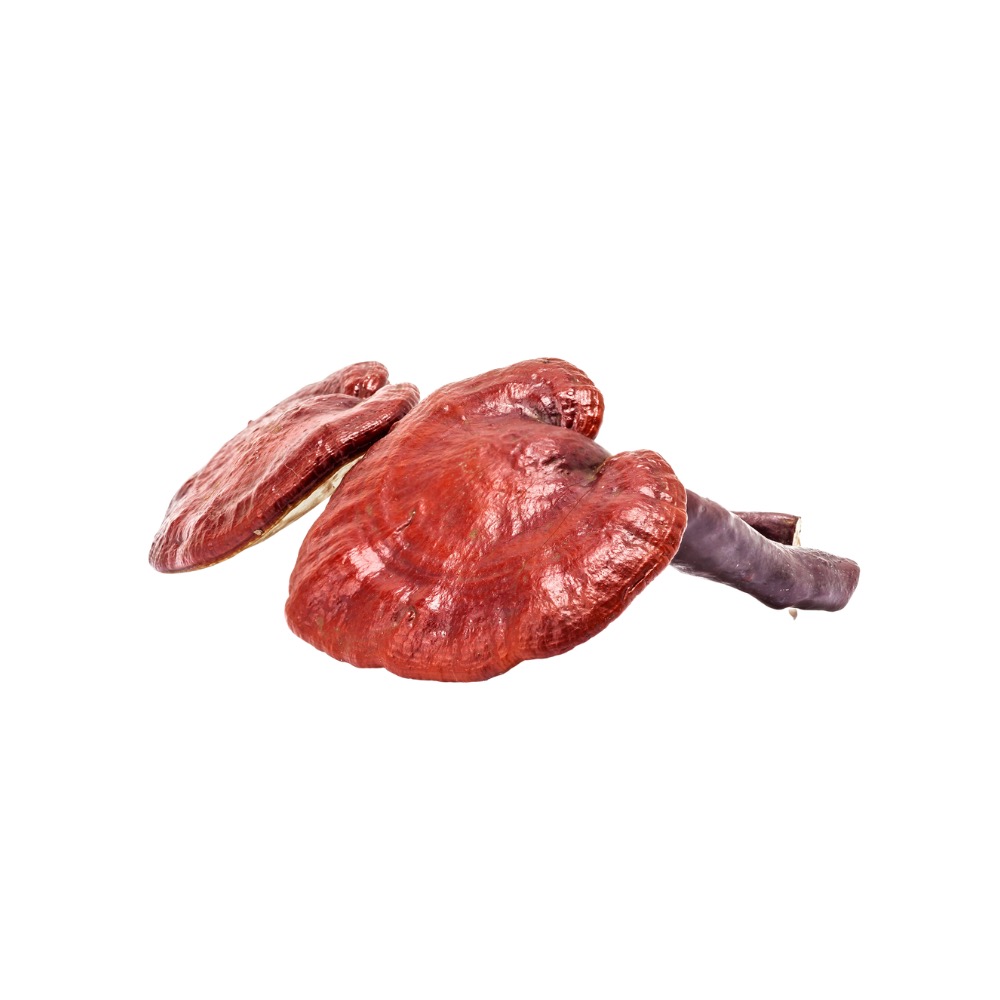 Source Reishi Ganoderma lucidum Herb monograph →
Concentration
Content by Source
Concentrations not reported. No percent-dry-weight or mg/g figures have been published for this compound in its source plants.
Behenic Acid at a Glance
Behenic acid, or docosanoic acid (C22:0), is a very-long-chain saturated fatty acid — a straight 22-carbon chain with no double bonds. It takes its name from ben oil, the seed oil of the Moringa or “ben” tree (Moringa oleifera), from which it was first obtained; it also occurs as a minor fatty acid of peanut, rapeseed and many other seed oils 1,
It is a poor candidate for a “bioactive” molecule page, and this one is deliberately lean and honest about why. Unlike shorter fatty acids, behenic acid is poorly absorbed from the gut — its very long, fully saturated chain is difficult to solubilise and take up 2,
The one thing it is not is metabolically inert. Despite its low absorption, controlled human feeding shows behenic acid modestly raises LDL cholesterol — enough that it was judged unsuitable as a “neutral” replacement for palmitic acid in manufactured fats 2Reference 2Behenic acid is a cholesterol-raising saturated fatty acid in humansView study →. It carries a low toxicity flag as an ordinary dietary and excipient fatty acid, with that LDL caveat noted.
Behenic Acid as a Pharmaceutical Excipient
The application that actually matters for this molecule is not pharmacological but materials-chemical. Behenic acid’s glyceryl ester, glyceryl behenate (a blend of mono-, di- and tri-behenate, sold as Compritol 888 ATO), is a widely used lipid excipient 4,
Because it is a high-melting, hydrophobic wax, glyceryl behenate is valued for exactly the properties that make free behenic acid a poor nutrient. In tablets and capsules it acts as a controlled-/sustained-release matrix former and as a lubricant and coating agent, slowing the release of an incorporated drug over many hours 4,
This is the honest centre of the page: behenic acid’s most established, documented human-facing use is as a formulation material, not as an ingested active. The evidence for the ester as an excipient is extensive; the evidence for the free acid as a medicine is essentially absent.
Poorly Absorbed, Yet Cholesterol-Raising
Behenic acid sits behind an instructive paradox. Very-long-chain saturated fatty acids are absorbed inefficiently — the free acid solubilises poorly into bile-salt micelles and, when esterified into triacylglycerols, is recovered only weakly in intestinal lymph after a meal 2,
The intuitive expectation — that a poorly absorbed fat should be metabolically neutral — is exactly what a controlled human feeding study set out to test, and disproved. Cater and Denke fed volunteers a behenate-rich oil and found that it raised total and LDL cholesterol to levels indistinguishable from palm oil and well above high-oleic sunflower oil; they concluded behenic acid is a cholesterol-raising saturated fatty acid despite its low bioavailability, and is therefore unsuitable as a “neutral” palmitic-acid substitute in manufactured fats 2Reference 2Behenic acid is a cholesterol-raising saturated fatty acid in humansView study →. The mechanism by which the small absorbed fraction shifts LDL is not fully resolved, but the practical read is clear: poorly absorbed does not mean harmless.
What It's Used For
Behenic acid has essentially no established pharmacology as a bioactive isolate. Its documented human-facing uses are as an excipient (via glyceryl behenate) and as an object of lipid/nutrition research; scattered reports of “antimicrobial” or “anticancer” activity trace to gas-chromatography–mass-spectrometry surveys of crude extracts and should be read with caution.
Support is an experimental score — weighted by study type (human > animal > in vitro) and volume. A beta, not a validated metric. Note the top row is an established materials/pharmaceutical use of the glyceryl ester, not a bioactivity of the ingested free acid; the others are thin.
The application with genuine depth of evidence — though it is a materials role, not a pharmacology. Glyceryl behenate (Compritol 888 ATO), the glyceryl ester of behenic acid, is a multifunctional lipid excipient: a high-melting hydrophobic wax used as a sustained-release matrix former, tablet/capsule lubricant and coating agent, and as the lipid phase of solid lipid nanoparticles and nanostructured lipid carriers 4Reference 4Compritol 888 ATO: a multifunctional lipid excipient in drug delivery systems and nanopharmaceuticalsView study →.
Formulation studies show it can extend drug release over many hours — for example, floating gastroretentive granules that released their drug beyond ten hours 5Reference 5Gastroretentive extended-release floating granules prepared using a novel fluidized hot melt granulation (FHMG) techniqueView study →.
This is an ester-of-behenic-acid material, not the free acid, and the “activity” is physical (slowing diffusion), not biochemical.
Gap: the evidence is for the manufactured ester as a formulation aid, not for behenic acid as an ingested active; it says nothing about any herbal or nutritional effect of the free molecule.
A preclinical curiosity that follows directly from behenic acid’s poor absorption. A structured triacylglycerol with behenic acid esterified at the outer positions and oleic acid in the middle suppressed triacylglycerol absorption and prevented obesity in rats, with markedly reduced lymphatic recovery of the behenic acid itself 3Reference 3AnimalStructured triacylglycerol containing behenic and oleic acids suppresses triacylglycerol absorption and prevents obesity in ratsView study →.
The effect depends on the behenate being left unabsorbed, so it is a property of the structured fat, not a benefit of behenic acid entering the body.
Gap: a single rodent study of a specifically engineered triacylglycerol — no human data, no confirmation, and not a claim that behenic acid as such is beneficial 3Reference 3AnimalStructured triacylglycerol containing behenic and oleic acids suppresses triacylglycerol absorption and prevents obesity in ratsView study →.
The claims most in need of skepticism. Behenic acid is frequently named in gas-chromatography–mass-spectrometry surveys of plant, fungal and marine extracts, and such papers routinely append boilerplate “antimicrobial/anticancer” activity to the whole profile. In these reports behenic acid is one peak among dozens in a crude extract; it is essentially never isolated, quantified against a dose–response, or shown to be the active agent.
Gap: no isolated-compound, dose-controlled bioactivity study supports an antimicrobial or anticancer effect of behenic acid; these are whole-extract attributions and should not be read as evidence for the molecule.
Mechanisms
| Target / pathway | Effect | Relevant to |
|---|---|---|
| Bile-salt micellar solubilisation / enterocyte uptake | very-long-chain saturation → inefficient absorption; low lymphatic recovery | pharmacokinetics / structured-fat effect |
| Hepatic LDL handling (mechanism unresolved) | the absorbed fraction raises LDL cholesterol in controlled human feeding | dietary lipid effect |
| Hydrophobic lipid matrix (as glyceryl behenate) | forms a diffusion-slowing wax matrix / lubricant film | controlled-release excipient |
| Structured triacylglycerol (behenate at sn-1,3) | outer behenate left unabsorbed → reduced total fat uptake | fat-absorption suppression (preclinical) |
The load-bearing point is that behenic acid’s defining physical property — poor absorption of a very-long-chain saturated fat — explains both its usefulness as a slow-release material and, paradoxically, its persistence as an LDL-raising fatty acid.
Pharmacokinetics
Behenic acid is poorly absorbed — the key pharmacokinetic fact about the molecule. As a very-long-chain (C22:0) saturated fatty acid it is difficult to solubilise into bile-salt mixed micelles, and when delivered esterified in a triacylglycerol it shows low lymphatic recovery relative to shorter or unsaturated fatty acids 3Reference 3AnimalStructured triacylglycerol containing behenic and oleic acids suppresses triacylglycerol absorption and prevents obesity in ratsView study →. Its bioavailability is explicitly lower than that of oleic acid and typical dietary fats 2Reference 2Behenic acid is a cholesterol-raising saturated fatty acid in humansView study →; a precise oral-bioavailability percentage for the isolate is not well established, and the commonly repeated notion that it is metabolically inert because of this is wrong — the fraction that is absorbed still shifts LDL cholesterol 2Reference 2Behenic acid is a cholesterol-raising saturated fatty acid in humansView study →. No active-metabolite or half-life data are characterised for the isolated compound.
Clinical Trials
Human evidence is confined to controlled dietary lipid studies, not therapeutic trials: the defining datum is a controlled feeding study showing behenic acid raises LDL cholesterol 2Reference 2Behenic acid is a cholesterol-raising saturated fatty acid in humansView study →. There are no clinical trials of isolated behenic acid as a drug or supplement; the extensive human-facing work on glyceryl behenate is pharmaceutical formulation research, not clinical evaluation of the acid.
| Completed | Planned | Terminated | Preclinical |
|---|---|---|---|
| Dietary/lipid: controlled cholesterol feeding study 2Reference 2Behenic acid is a cholesterol-raising saturated fatty acid in humansView study →; extensive excipient formulation work 4, | — | — | Structured-TAG fat-absorption/obesity model (rat) 3Reference 3AnimalStructured triacylglycerol containing behenic and oleic acids suppresses triacylglycerol absorption and prevents obesity in ratsView study → |
Last checked: July 2026.
Isolate vs. Plant Studies
For behenic acid the isolate-vs-plant axis resolves in an unusual way: almost none of the meaningful evidence is “plant” evidence at all. The one solid human dataset used a behenate-enriched oil in a controlled feeding design 2Reference 2Behenic acid is a cholesterol-raising saturated fatty acid in humansView study →, and the structured-fat work used a synthesised triacylglycerol 3Reference 3AnimalStructured triacylglycerol containing behenic and oleic acids suppresses triacylglycerol absorption and prevents obesity in ratsView study → — both are engineered lipid preparations, not herbal extracts. Where behenic acid appears as a herb constituent — a listed lipid of reishi and a reported fatty-acid ester component of muira puama — it is present only qualitatively, as one minor fatty acid among many, with no isolated-compound activity attributed to it and no quantitative figure in most sources. The honest summary: a small body of controlled lipid-chemistry evidence for engineered behenate, and essentially no isolate pharmacology from any plant.
Prevalence in Nature
Behenic acid is widespread but minor. It occurs across many plant seed oils as a small component of the fatty-acid profile rather than a dominant one. It is most associated with ben oil, the seed oil of Moringa oleifera (the “ben” or “behen” tree), where it ranks among the leading fatty acids after oleic and palmitic acids and lends the molecule its name 1,
Beyond seeds, it is listed among the lipids of some medicinal organisms here — the fungus reishi (Ganoderma lucidum) and the root of muira puama (Ptychopetalum olacoides), where it is reported as a fatty-acid ester constituent. In all of these it is a quantitatively minor fatty acid; hard per-source figures are sparse, and where a source names behenic acid it is often without a measured percentage.
Discovery & Synthesis
Behenic acid was recognised in the nineteenth century as a component of ben oil, the expressed seed oil of the Moringa (ben) tree — the source that gave the acid its name (“behenic,” from behen/ben). As a common minor fatty acid it was characterised in the classic era of fat chemistry alongside the other saturated-acid homologues, and its systematic name, docosanoic acid, simply reflects its 22-carbon chain.
Manufacture today is by extraction and separation from natural fats and oils rather than total synthesis: behenic acid and its salts/esters are obtained by hydrogenation and fractionation of high-erucic rapeseed and other seed oils. Its industrially important derivative, glyceryl behenate, is made by esterifying behenic acid with glycerol to yield the mono-/di-/tri-ester blend used as a pharmaceutical excipient 4Reference 4Compritol 888 ATO: a multifunctional lipid excipient in drug delivery systems and nanopharmaceuticalsView study →. Commercial behenic acid is therefore a purified natural product, and most of its economic value lies in the ester rather than the free acid.
Patents: not yet researched.
Toxicity & Safety
Behenic acid carries a low toxicity flag: it is an ordinary dietary fatty acid eaten as a minor component of common seed oils, and its glyceryl ester is a widely accepted pharmaceutical and cosmetic excipient with a long safety record 4Reference 4Compritol 888 ATO: a multifunctional lipid excipient in drug delivery systems and nanopharmaceuticalsView study →. There is no toxicity concern from incidental dietary or excipient exposure. The one substantive caveat is a cardiovascular one, and it is easy to overlook precisely because the molecule is poorly absorbed.
- An ordinary dietary and excipient fatty acid. A minor component of peanut, rapeseed and other seed oils, and the basis of glyceryl behenate — a well-established, safe formulation and cosmetic material 4Reference 4Compritol 888 ATO: a multifunctional lipid excipient in drug delivery systems and nanopharmaceuticalsView study →.
- It raises LDL cholesterol. Controlled human feeding shows behenic acid is a cholesterol-raising saturated fatty acid, comparable to palm oil — poor absorption does not make it metabolically neutral 2Reference 2Behenic acid is a cholesterol-raising saturated fatty acid in humansView study →.
- “Poorly absorbed” is not “inert.” The small fraction that is absorbed still shifts blood lipids; treat behenate-enriched fats like other cholesterol-raising saturated fats 2Reference 2Behenic acid is a cholesterol-raising saturated fatty acid in humansView study →.
- Bioactivity claims are unsubstantiated. Antimicrobial/anticancer attributions come from whole-extract GC-MS surveys, not isolated-compound testing — do not read them as evidence.
Pregnancy/lactation is a per-herb / per-supplement decision and is not adjudicated on this molecule page; as a minor dietary and excipient fatty acid, behenic acid has no isolate-specific reproductive-toxicity dataset, and no isolate verdict is issued here.
Dosage
There is no established or recommended dose of isolated behenic acid — it is a minor dietary fatty acid and a formulation material, not a supplement or drug, and it is poorly absorbed. Meaningful human “exposure” is incidental: a small fraction of the fat in peanut, rapeseed and other seed oils, plus contact with glyceryl behenate as an excipient in tablets, capsules and cosmetics 4,
| Context | Form | Figure |
|---|---|---|
| Controlled cholesterol feeding study | behenate-enriched oil | LDL-raising, comparable to palm oil 2Reference 2Behenic acid is a cholesterol-raising saturated fatty acid in humansView study → |
| Structured-fat research (rat) | behenate at sn-1,3 of a triacylglycerol | reduced fat absorption; behenate largely unabsorbed 3Reference 3AnimalStructured triacylglycerol containing behenic and oleic acids suppresses triacylglycerol absorption and prevents obesity in ratsView study → |
| Pharmaceutical / cosmetic use | glyceryl behenate (Compritol 888 ATO) | excipient level in the formulation, not an ingested dose 4Reference 4Compritol 888 ATO: a multifunctional lipid excipient in drug delivery systems and nanopharmaceuticalsView study → |
These are research and formulation figures, not a personal recommendation, and they describe engineered fats or excipient materials rather than a dose of the pure compound.
References
- Sánchez-Machado DI, López-Cervantes J, Núñez-Gastélum JA, Servín de la Mora-López G, López-Hernández J, Paseiro-Losada P (2015). Effect of the refining process on Moringa oleifera seed oil quality. Food Chemistry. https://pubmed.ncbi.nlm.nih.gov/25976997/
- Cater NB, Denke MA (2001). Behenic acid is a cholesterol-raising saturated fatty acid in humans. American Journal of Clinical Nutrition. https://pubmed.ncbi.nlm.nih.gov/11124748/
- Kojima M, Tachibana N, Yamahira T, Seino S, Izumisawa A, Sagi N, Arishima T, Kohno M, Takamatsu K, Hirotsuka M, Ikeda I (2010). Structured triacylglycerol containing behenic and oleic acids suppresses triacylglycerol absorption and prevents obesity in rats. Lipids in Health and Disease. https://pubmed.ncbi.nlm.nih.gov/20653972/
- Aburahma MH, Badr-Eldin SM (2014). Compritol 888 ATO: a multifunctional lipid excipient in drug delivery systems and nanopharmaceuticals. Expert Opinion on Drug Delivery. https://pubmed.ncbi.nlm.nih.gov/25152197/
- Zhai H, Jones DS, McCoy CP, Madi AM, Tian Y, Andrews GP (2014). Gastroretentive extended-release floating granules prepared using a novel fluidized hot melt granulation (FHMG) technique. Molecular Pharmaceutics. https://pubmed.ncbi.nlm.nih.gov/25105340/
- Wang ML, Khera P, Pandey MK, Wang H, Qiao L, Feng S, Tonnis B, Barkley NA, Pinnow D, Holbrook CC, Culbreath AK, Varshney RK, Guo B (2015). Genetic mapping of QTLs controlling fatty acids provided insights into the genetic control of fatty acid synthesis pathway in peanut (Arachis hypogaea L.). PLoS One. https://pubmed.ncbi.nlm.nih.gov/25849082/



