
Compound Monograph
Chelerythrine
Chelerythrine is a cytotoxic quaternary benzophenanthridine alkaloid from greater celandine, bloodroot and California poppy — best known not as a medicine but as a heavily-used laboratory PKC-inhibitor and BH3-mimetic (Bcl-XL inhibitor) tool. It is antibacterial and pro-apoptotic in vitro, but the selectivity behind its research-tool status is contested, and it is genotoxic; there is no approved therapeutic use.

Sources · 5
Where Does It Come From?
Chelerythrine is a naturally occurring benzophenanthridine alkaloid (quaternary isoquinoline), found in Greater celandine, Bloodroot, Plume poppy and 2 other sources. It is flagged as moderately toxic.
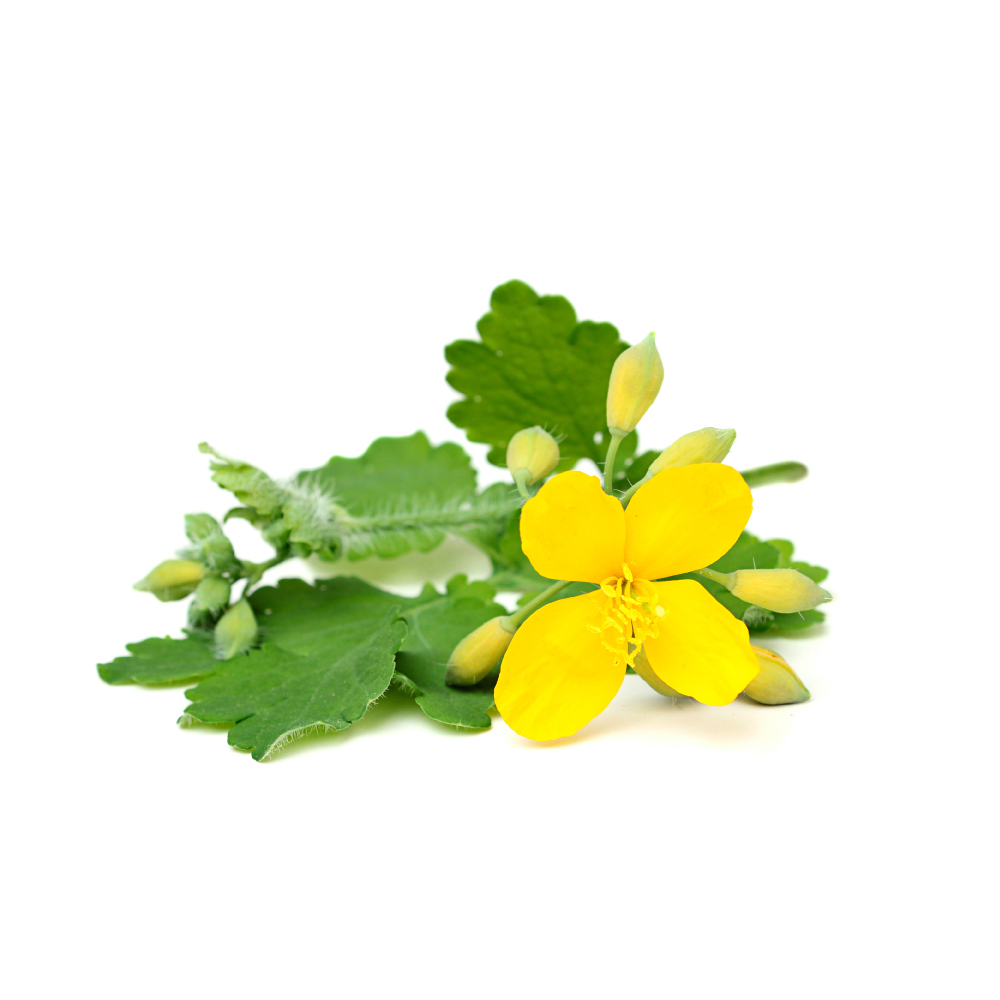 Principal source Greater Celandine Chelidonium majus Herb monograph →
 Source California Poppy Eschscholzia californica Herb monograph →
Concentration
Content by Source
Reported concentrations across the plants that contain chelerythrine — the bar marks the typical level, the line shows the reported range.
Literature figures for varying plant parts and preparations. Read them as a comparative guide, not exact assays.
Chelerythrine at a Glance
Chelerythrine is a quaternary benzophenanthridine alkaloid — the near-twin of sanguinarine — found in greater celandine (Chelidonium majus), bloodroot (Sanguinaria canadensis), plume poppy and, in trace amounts, California poppy. Unlike most molecules here, its fame comes not from any traditional or clinical use but from the laboratory bench: since 1990 it has been one of the most widely-cited protein kinase C (PKC) inhibitors, and since 2003 a standard BH3-mimetic / Bcl-XL inhibitor used to trigger apoptosis in cell studies 1,
Both of those research-tool identities come with caveats that are the point. The “specific PKC inhibitor” label has been undermined by work showing chelerythrine kills cells through reactive-oxygen-species generation independent of PKC 3Reference 3Chelerythrine rapidly induces apoptosis through generation of reactive oxygen species in cardiac myocytesView study →, and its pro-apoptotic action is inseparable from general cytotoxicity and genotoxicity 9Reference 9AnimalDifferential effect of sanguinarine, chelerythrine and chelidonine on DNA damage and cell viability in primary mouse spleen cells and mouse leukemic cellsView study →. It also has genuine, mechanism-defined antibacterial activity against Gram-positive organisms in vitro 7Reference 7Antibacterial mechanism of chelerythrine isolated from root of Toddalia asiatica (Linn) LamView study →.
It has no approved therapeutic use, and its safety flag is real: it is a cytotoxic, DNA-reactive iminium alkaloid that blocks the cardiac hERG channel 11Reference 11Effects of Chelidonium majus extracts and major alkaloids on hERG potassium channels and on dog cardiac action potential — a safety approachView study →. Crucially, in the herbs people actually consume it is a trace or minor constituent — the whole-herb hepatotoxicity associated with greater celandine is a property of the plant, not a dose of isolated chelerythrine.
Chelerythrine as a PKC Inhibitor
Chelerythrine’s single most influential role is as a research reagent, and it deserves an honest hearing because thousands of papers use it to “prove” a PKC dependency.
The foundational report — Herbert and colleagues, 1990 — described chelerythrine as a “potent and specific inhibitor of protein kinase C”, with half-maximal inhibition at 0.66 µM, competitive at the histone/substrate site rather than the ATP site, and far weaker against tyrosine kinase, cAMP-dependent kinase and calmodulin-dependent kinase 1Reference 1Chelerythrine is a potent and specific inhibitor of protein kinase CView study →. That paper is why chelerythrine became a default “PKC blocker” in cell biology.
The reproducibility caveat is substantial and often ignored:
- The killing is frequently PKC-independent. In cardiac myocytes, chelerythrine (6–30 µM) rapidly induced apoptosis, but down-regulating the PMA-sensitive PKC did not prevent it, while antioxidants (N-acetylcysteine, glutathione) did — implicating reactive oxygen species, not PKC inhibition, as the actual cause of cell death 3Reference 3Chelerythrine rapidly induces apoptosis through generation of reactive oxygen species in cardiac myocytesView study →. The same ROS-driven, PKC-independent pattern recurs in cancer-cell studies 5Reference 5Induction of reactive oxygen species-stimulated distinctive autophagy by chelerythrine in non-small cell lung cancer cellsView study →.
- Kinase-inhibitor “specificity” is generally overstated. Systematic profiling of commonly-used kinase inhibitors concluded that several supposedly selective reagents inhibit many kinases and should be interpreted cautiously 2Reference 2Specificity and mechanism of action of some commonly used protein kinase inhibitorsView study → — the general lesson that applies squarely to chelerythrine.
- Concentration matters enormously. The tidy sub-micromolar enzyme figure 1Reference 1Chelerythrine is a potent and specific inhibitor of protein kinase CView study → sits well below the low-micromolar concentrations at which chelerythrine is typically dosed onto cells, where off-target oxidative and mitochondrial effects dominate 3,
5Reference 3Chelerythrine rapidly induces apoptosis through generation of reactive oxygen species in cardiac myocytesView study →Reference 5Induction of reactive oxygen species-stimulated distinctive autophagy by chelerythrine in non-small cell lung cancer cellsView study → .
Practical reading: a cellular phenotype that appears when chelerythrine is added is not proof of a PKC mechanism. It may reflect ROS generation, Bcl-XL inhibition (below), or plain cytotoxicity. This is a methodological caution, not a claim that chelerythrine never touches PKC.
Chelerythrine & Sanguinarine
Chelerythrine and sanguinarine are the benzophenanthridine pair of the Papaveraceae — structurally and behaviourally close enough that they are almost always studied, and regulated, together. Understanding one is largely understanding the other.
Shared iminium-ion reactivity. Both are quaternary benzophenanthridines that exist in a pH-dependent equilibrium between a charged iminium form (dominant at acidic-to-neutral pH) and a neutral alkanolamine (pseudobase) form (above ~pH 9). For both molecules the iminium form is the DNA- and RNA-binding species, intercalating nucleic acids with affinities in the 10⁵–10⁷ M⁻¹ range, while the alkanolamine form binds negligibly 8Reference 8Interaction of the putative anticancer alkaloid chelerythrine with nucleic acids: biophysical perspectivesView study →. That reactive iminium is the common thread behind their cytotoxicity, genotoxicity and enzyme inhibition.
Shared toxicology. Because they co-occur (and co-purify from Macleaya), regulators assess the “sanguinarine/chelerythrine” pair jointly. A 90-day pig feeding study of the pair found alkaloid accumulation in gingiva and liver, no DNA adducts in liver, and defined an oral no-adverse-effect exposure of up to ~5 mg/kg/day 10Reference 10Sanguinarine and chelerythrine: assessment of safety on pigs in a ninety-day feeding experimentView study → — reassuring for feed-additive levels but not a license for the isolated molecule. In a direct comparison, sanguinarine and chelerythrine both produced dose-dependent DNA damage and cytotoxicity in normal mouse spleen cells and leukemic cells, whereas the sibling alkaloid chelidonine did not damage DNA — a reminder that “benzophenanthridine” is not one uniform hazard 9Reference 9AnimalDifferential effect of sanguinarine, chelerythrine and chelidonine on DNA damage and cell viability in primary mouse spleen cells and mouse leukemic cellsView study →.
Where they differ. Sanguinarine carries the heavier human safety record — it is the poison behind argemone-oil epidemic dropsy and was linked to oral leukoplakia in the withdrawn Viadent products 13Reference 13Sanguinaria canadensis: traditional medicine, phytochemical composition, biological activities and current usesView study →. Chelerythrine has no comparable named human-poisoning syndrome, which is part of why it sits at a [moderate], not toxic, flag here. Functionally they diverge too: sanguinarine is the stronger NF-κB inhibitor, while chelerythrine is the one that became the PKC-inhibitor and Bcl-XL-inhibitor bench reagent 1,
What It's Used For
Beyond its research-tool identity, chelerythrine has a modest, almost entirely preclinical activity profile. The evidence is in-vitro and ex-vivo, on the isolated molecule, and every “beneficial” activity shades into its general cytotoxicity.
Support is an experimental score — weighted by study type (human > animal > in vitro) and volume. A beta, not a validated metric. Chelerythrine has no human efficacy trials, so every score is low and reflects preclinical mechanism only.
The best-defined “useful” activity. Chelerythrine isolated from Toddalia asiatica root inhibited Staphylococcus aureus, MRSA and ESBL-producing S. aureus at a uniform MIC of 0.156 mg/mL, acting by destroying channels across the bacterial membrane (causing protein leakage) and inhibiting bacterial protein biosynthesis, with electron microscopy showing cell-wall/membrane damage 7Reference 7Antibacterial mechanism of chelerythrine isolated from root of Toddalia asiatica (Linn) LamView study →.
This is the isolated alkaloid, not a whole-herb extract.
Gap: in-vitro only, at concentrations far above anything achievable systemically, and the same membrane-disrupting reactivity is non-selective (it damages host cells too) — this is preservative/topical-relevant chemistry, not a systemic-antibiotic claim 7Reference 7Antibacterial mechanism of chelerythrine isolated from root of Toddalia asiatica (Linn) LamView study →.
Chelerythrine was identified by high-throughput screening of >107,000 natural-product extracts as an inhibitor of Bcl-XL function — a BH3-mimetic that blocks Bcl-XL–Bak BH3-peptide binding (IC50 ~1.5 µM), displaces Bax, and uniquely released cytochrome c from isolated mitochondria, killing even Bcl-XL-overexpressing cells 4Reference 4Identification of chelerythrine as an inhibitor of BclXL functionView study →.
In non-small-cell lung cancer lines it triggered ROS-dependent autophagy and death 5Reference 5Induction of reactive oxygen species-stimulated distinctive autophagy by chelerythrine in non-small cell lung cancer cellsView study →, and in cardiac myocytes it caused ROS-driven, PKC-independent apoptosis 3Reference 3Chelerythrine rapidly induces apoptosis through generation of reactive oxygen species in cardiac myocytesView study →.
All of this is the isolated molecule in cell/ex-vivo systems.
Gap: entirely preclinical, no human trials, and the pro-apoptotic action is inseparable from general cytotoxicity and DNA damage 9Reference 9AnimalDifferential effect of sanguinarine, chelerythrine and chelidonine on DNA damage and cell viability in primary mouse spleen cells and mouse leukemic cellsView study → — a poor therapeutic-index profile, which is why it remains a tool compound, not a drug candidate.
Chelerythrine (with sanguinarine) is a potent inhibitor of 5-lipoxygenase in polymorphonuclear leukocytes and 12-lipoxygenase in mouse epidermis, by a non-redox mechanism 6Reference 6Benzophenanthridine alkaloids of Chelidonium majus; IView study → — a plausible route to reduced leukotriene-driven inflammation.
Gap: enzyme- and cell-level only, with no in-vivo or clinical anti-inflammatory outcome data, and the effect cannot be separated from the molecule’s cytotoxicity 6Reference 6Benzophenanthridine alkaloids of Chelidonium majus; IView study →.
Mechanisms
| Target / pathway | Effect | Relevant to |
|---|---|---|
| Protein kinase C | substrate-competitive inhibition (IC50 ~0.66 µM in enzyme assay) — but cellular effects are often PKC-independent | research-tool use; contested selectivity |
| Reactive oxygen species / mitochondria | ROS generation → cytochrome-c release, caspase-9/3 apoptosis (blocked by antioxidants, not by PKC loss) | pro-apoptotic; cytotoxicity |
| Bcl-XL (BH3 groove) | BH3-mimetic — blocks Bcl-XL–Bak binding, displaces Bax (IC50 ~1.5 µM) | pro-apoptotic / anticancer |
| DNA / RNA (iminium form) | intercalation, DNA adducts / genotoxicity | genotoxicity; anticancer |
| 5-/12-lipoxygenase | non-redox inhibition → ↓ leukotrienes | anti-inflammatory |
| Bacterial cell wall / membrane + protein synthesis | membrane channel disruption, protein leakage, translation inhibition | antibacterial |
| Cardiac hERG (IKr) potassium channel | block → action-potential/QT prolongation | cardiac toxicity |
The load-bearing point: the “specific PKC inhibitor” mechanism is only one of several, and in intact cells the ROS/mitochondrial and Bcl-XL routes frequently dominate over PKC 1,
Pharmacokinetics
There is no robust human pharmacokinetic dataset for isolated chelerythrine. As a quaternary (permanently charged in its iminium form) benzophenanthridine, it shares sanguinarine’s profile of poor oral bioavailability and rapid clearance: in the 90-day pig study of the sanguinarine/chelerythrine pair, alkaloid accumulated modestly in gingival tissue and liver and was undetectable in muscle, with low plasma levels and no hepatic DNA adducts 10Reference 10Sanguinarine and chelerythrine: assessment of safety on pigs in a ninety-day feeding experimentView study →. Its cellular behaviour is governed by the pH-dependent iminium ⇌ alkanolamine equilibrium — the neutral alkanolamine crosses membranes, while the charged iminium is the DNA-reactive intracellular species 8Reference 8Interaction of the putative anticancer alkaloid chelerythrine with nucleic acids: biophysical perspectivesView study →. The practical consequence for the compound page: in-vitro potency at low micromolar concentrations does not translate to systemic exposure, and no oral bioavailability figure for the isolate is established.
Clinical Trials
There are no clinical trials of chelerythrine. Its entire human relevance is (a) as a laboratory reagent and (b) as a trace/minor alkaloid in ingested herbs (greater celandine, California poppy), where it is not dosed as an isolate. All efficacy data below the mechanism level are preclinical.
| Completed | Planned | Terminated | Preclinical |
|---|---|---|---|
| — | — | — | Extensive(PKC/Bcl-XL tool, antibacterial, apoptosis) |
Last checked: July 2026.
Isolate vs. Plant Studies
Chelerythrine’s evidence is almost entirely isolate work, and that cuts both ways. As a research reagent it is always the purified molecule (or its chloride salt) 1,
Prevalence in Nature
Chelerythrine is a benzophenanthridine alkaloid of the poppy family (Papaveraceae) and some Rutaceae. It is richest in bloodroot (Sanguinaria canadensis) rhizome and plume poppy (Macleaya cordata) — the commercial sources — and occurs alongside sanguinarine in greater celandine (Chelidonium majus), where root and latex are far richer than the aerial parts (the benzophenanthridines chelidonine + sanguinarine + coptisine make up roughly a fifth of fresh latex). In a 25% ethanol aerial-part extract of greater celandine, chelerythrine measured about 0.06 mg/g, well below coptisine (~6.4 mg/g) and chelidonine (~1.75 mg/g) 11Reference 11Effects of Chelidonium majus extracts and major alkaloids on hERG potassium channels and on dog cardiac action potential — a safety approachView study →. It is a trace alkaloid of California poppy aerial parts 12Reference 12Modulatory effects of Eschscholzia californica alkaloids on recombinant GABAA receptorsView study → and is also isolated from the root of Toddalia asiatica 7Reference 7Antibacterial mechanism of chelerythrine isolated from root of Toddalia asiatica (Linn) LamView study →. As with the whole benzophenanthridine class, absolute content varies several-fold with plant part, ecotype and season.
Discovery & Synthesis
Chelerythrine was first isolated in the nineteenth century from the alkaloid-rich latex and roots of Papaveraceae (and independently from Toddalia, giving its synonym toddaline), as part of the classical characterisation of the benzophenanthridine alkaloids of greater celandine and bloodroot. Its modern prominence, however, dates to 1990, when Herbert and colleagues introduced it as a protein-kinase-C inhibitor 1Reference 1Chelerythrine is a potent and specific inhibitor of protein kinase CView study → — the paper that turned a botanical alkaloid into a mass-market laboratory reagent. Manufacture today is by extraction from Macleaya cordata and Sanguinaria canadensis, the same benzophenanthridine feedstocks used for sanguinarine; reagent-grade material is sold as the chloride salt. No commercial total synthesis dominates supply — plant extraction is the practical route.
Patents: not yet researched.
Toxicity & Safety
Chelerythrine carries a [moderate] flag — lower than its twin sanguinarine (which has named human poisoning syndromes) but higher than a benign phytochemical, because it is a cytotoxic, genotoxic, DNA-reactive iminium alkaloid that also blocks the cardiac hERG channel. The flag describes the isolated molecule; the trace amounts in ingested herbs are a separate, much lower exposure.
- Cytotoxic and genotoxic isolate. The iminium form intercalates DNA and produces dose-dependent DNA damage and cell death in normal and cancer cells alike 8,
9Reference 8Interaction of the putative anticancer alkaloid chelerythrine with nucleic acids: biophysical perspectivesView study →Reference 9AnimalDifferential effect of sanguinarine, chelerythrine and chelidonine on DNA damage and cell viability in primary mouse spleen cells and mouse leukemic cellsView study → — this is exactly the reactivity that makes it an apoptosis-inducing reagent. - Cardiac hERG block. Chelerythrine and its co-alkaloids block the hERG potassium channel and prolong the cardiac action potential in dog tissue — a QT/arrhythmia concern 11Reference 11Effects of Chelidonium majus extracts and major alkaloids on hERG potassium channels and on dog cardiac action potential — a safety approachView study →.
- A research tool, not a treatment. No approved use and no clinical trials; “PKC inhibitor” claims about its cellular effects are often confounded by ROS and cytotoxicity 2,
3Reference 2Specificity and mechanism of action of some commonly used protein kinase inhibitorsView study →Reference 3Chelerythrine rapidly induces apoptosis through generation of reactive oxygen species in cardiac myocytesView study → . - This is the isolated molecule. Greater celandine and California poppy carry only minor/trace chelerythrine — do not read this cytotoxicity onto those whole-herb products 11,
12Reference 11Effects of Chelidonium majus extracts and major alkaloids on hERG potassium channels and on dog cardiac action potential — a safety approachView study →Reference 12Modulatory effects of Eschscholzia californica alkaloids on recombinant GABAA receptorsView study → . - Reassuring sub-chronic feed data at low doses. A 90-day pig study of the sanguinarine/chelerythrine pair found no DNA adducts in liver and defined a no-adverse-effect oral exposure up to ~5 mg/kg/day 10Reference 10Sanguinarine and chelerythrine: assessment of safety on pigs in a ninety-day feeding experimentView study →.
Full Safety & Interactions Detail
Cytotoxicity and genotoxicity. Chelerythrine’s core hazard is the same reactivity that makes it useful in the lab: its iminium form intercalates DNA/RNA 8Reference 8Interaction of the putative anticancer alkaloid chelerythrine with nucleic acids: biophysical perspectivesView study →, and in a controlled comparison it produced dose-dependent DNA damage and cytotoxicity in both primary mouse spleen cells and L1210 leukemic cells (the sibling chelidonine did not) 9Reference 9AnimalDifferential effect of sanguinarine, chelerythrine and chelidonine on DNA damage and cell viability in primary mouse spleen cells and mouse leukemic cellsView study →. Its pro-apoptotic action proceeds through ROS generation and mitochondrial cytochrome-c release that antioxidants block 3,
Cardiac. Hydroalcoholic greater-celandine extracts and their major alkaloids block the hERG (IKr) potassium channel and prolong the cardiac action potential in canine tissue, flagging a QT-prolongation/arrhythmia risk for concentrated alkaloid exposure 11Reference 11Effects of Chelidonium majus extracts and major alkaloids on hERG potassium channels and on dog cardiac action potential — a safety approachView study →.
Whole-herb context. Greater celandine is associated with idiosyncratic hepatotoxicity, but that is a whole-herb phenomenon attributed to the plant’s overall alkaloid burden and idiosyncratic mechanisms — it is not established as a direct dose of isolated chelerythrine, which is only a minor constituent (~0.06 mg/g of an aerial extract) 11Reference 11Effects of Chelidonium majus extracts and major alkaloids on hERG potassium channels and on dog cardiac action potential — a safety approachView study →. The sub-chronic pig data on the sanguinarine/chelerythrine pair were reassuring at feed-additive doses (no DNA adducts; no-adverse-effect up to ~5 mg/kg/day) 10Reference 10Sanguinarine and chelerythrine: assessment of safety on pigs in a ninety-day feeding experimentView study →, but this does not license isolated high-dose exposure.
Interactions and populations (scope note). No dedicated human drug-interaction dataset (CYP isoforms, P-gp) exists for isolated chelerythrine; the meaningful interaction signal for the class is the hERG/QT liability 11Reference 11Effects of Chelidonium majus extracts and major alkaloids on hERG potassium channels and on dog cardiac action potential — a safety approachView study →, which argues for caution with other QT-prolonging agents in any concentrated-alkaloid exposure. No comprehensive reproductive-toxicity dataset exists for the isolate; a cytotoxic, genotoxic, DNA-intercalating alkaloid warrants conservative avoidance in pregnancy, but that decision belongs to the herb/product page where intake is decided, not to this molecule page. Absence of data here is not evidence of safety.
Dosage
There is no therapeutic dose for chelerythrine and none should be inferred — it is a cytotoxic research reagent, not a supplement or medicine. The figures in the literature are in-vitro concentrations used to probe biology: sub-micromolar to low-micromolar for enzyme/PKC and Bcl-XL assays (IC50 ~0.66 µM against PKC 1Reference 1Chelerythrine is a potent and specific inhibitor of protein kinase CView study →; ~1.5 µM against Bcl-XL–Bak binding 4Reference 4Identification of chelerythrine as an inhibitor of BclXL functionView study →), higher micromolar for cell-killing 3,
References
- Herbert JM, Augereau JM, Gleye J, Maffrand JP (1990). Chelerythrine is a potent and specific inhibitor of protein kinase C. Biochemical and Biophysical Research Communications. https://pubmed.ncbi.nlm.nih.gov/2244923/
- Davies SP, Reddy H, Caivano M, Cohen P (2000). Specificity and mechanism of action of some commonly used protein kinase inhibitors. Biochemical Journal. https://pubmed.ncbi.nlm.nih.gov/10998351/
- Yamamoto S, Seta K, Morisco C, Vatner SF, Sadoshima J (2001). Chelerythrine rapidly induces apoptosis through generation of reactive oxygen species in cardiac myocytes. Journal of Molecular and Cellular Cardiology. https://pubmed.ncbi.nlm.nih.gov/11603925/
- Chan SL, Lee MC, Tan KO, et al. (2003). Identification of chelerythrine as an inhibitor of BclXL function. Journal of Biological Chemistry. https://pubmed.ncbi.nlm.nih.gov/12702731/
- Tang ZH, Cao WX, Wang ZY, et al. (2017). Induction of reactive oxygen species-stimulated distinctive autophagy by chelerythrine in non-small cell lung cancer cells. Redox Biology. https://pubmed.ncbi.nlm.nih.gov/28288416/
- Vavrečková C, Gawlik I, Müller K (1996). Benzophenanthridine alkaloids of Chelidonium majus; I. Inhibition of 5- and 12-lipoxygenase by a non-redox mechanism. Planta Medica. https://pubmed.ncbi.nlm.nih.gov/9005450/
- He N, Wang P, Wang P, Ma C, Kang W (2018). Antibacterial mechanism of chelerythrine isolated from root of Toddalia asiatica (Linn) Lam. BMC Complementary and Alternative Medicine. https://pubmed.ncbi.nlm.nih.gov/30257662/
- Basu A, Kumar GS (2020). Interaction of the putative anticancer alkaloid chelerythrine with nucleic acids: biophysical perspectives. Biophysical Reviews. https://pubmed.ncbi.nlm.nih.gov/33131000/
- Kaminskyy V, Lin KW, Filyak Y, Stoika R (2008). Differential effect of sanguinarine, chelerythrine and chelidonine on DNA damage and cell viability in primary mouse spleen cells and mouse leukemic cells. Cell Biology International. https://pubmed.ncbi.nlm.nih.gov/18029203/
- Kosina P, Walterová D, Ulrichová J, et al. (2004). Sanguinarine and chelerythrine: assessment of safety on pigs in a ninety-day feeding experiment. Food and Chemical Toxicology. https://pubmed.ncbi.nlm.nih.gov/14630132/
- Orvos P, Virág L, Tálosi L, et al. (2015). Effects of Chelidonium majus extracts and major alkaloids on hERG potassium channels and on dog cardiac action potential — a safety approach. Fitoterapia. https://pubmed.ncbi.nlm.nih.gov/25481375/
- Fedurco M, Gregorová J, Šebrlová K, et al. (2015). Modulatory effects of Eschscholzia californica alkaloids on recombinant GABAA receptors. Biochemistry Research International. https://pubmed.ncbi.nlm.nih.gov/26509084/
- Croaker A, King GJ, Pyne JH, Anoopkumar-Dukie S, Liu L (2016). Sanguinaria canadensis: traditional medicine, phytochemical composition, biological activities and current uses. International Journal of Molecular Sciences. https://pubmed.ncbi.nlm.nih.gov/27618894/



