
Compound Monograph
Colchicine
Colchicine is a licensed prescription anti-inflammatory drug with a narrow therapeutic index and no antidote, extracted from meadow saffron and the glory lily. It blocks the inflammatory response to urate crystals rather than lowering urate, and its plant sources are lethal in their own right.

Sources · 3
Where Does It Come From?
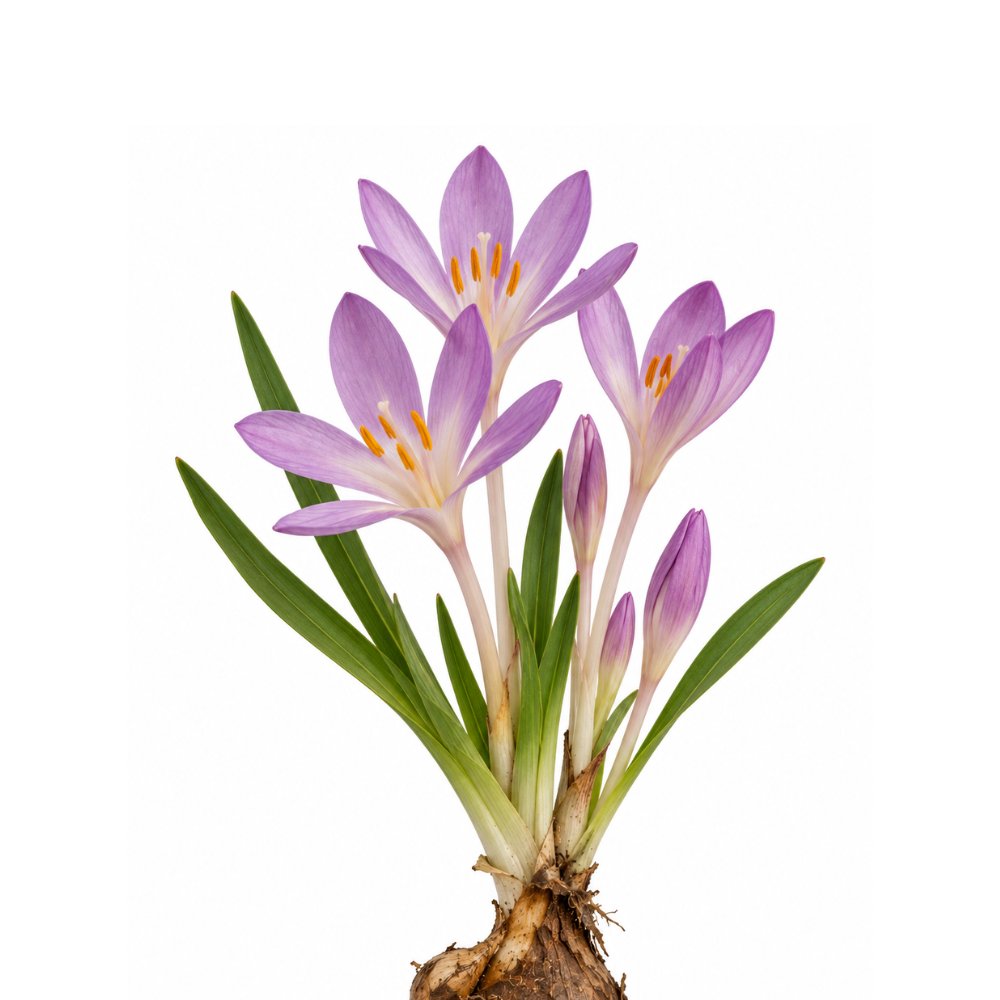
Colchicine is a naturally occurring tropolone alkaloid (colchicinoid), found in Meadow saffron, Glory lily and 1 other source. It is flagged as poisonous.
Concentration
Content by Source
Reported concentrations across the plants that contain colchicine — the bar marks the typical level, the line shows the reported range.
Literature figures for varying plant parts and preparations. Read them as a comparative guide, not exact assays.
Colchicine at a Glance
Colchicine is a licensed prescription medicine before it is anything else. It is dispensed by the milligram for acute gout, pericarditis, familial Mediterranean fever and secondary cardiovascular prevention, and it carries one of the strongest randomised-trial records of any drug ever taken out of a plant 1,
It is also one of the least forgiving. The gap between a therapeutic and a toxic dose is small, poisoning runs a slow three-phase course that looks like gastroenteritis on day one and multi-organ failure by day three, and there is no antidote 24,
Only after all of that is it a plant constituent. It is extracted from the corm and seed of meadow saffron (Colchicum autumnale) and from the seed and tuber of the glory lily (Gloriosa superba), both of which kill people who eat them 25,
One correction worth making at the top: colchicine is not urate-lowering. It does nothing to serum uric acid. It blunts the inflammatory response to urate crystals — a different action, and the reason it treats a flare without treating the underlying hyperuricaemia 14Reference 14Gout-associated uric acid crystals activate the NALP3 inflammasomeView study →.
Established Medical Uses
Colchicine is approved and routinely prescribed for four things:
- Acute gout flare — a low, capped dose at the start of an attack 1,
2Reference 1RCTHigh versus low dosing of oral colchicine for early acute gout flare: Twenty-four-hour outcome of the first multicenter, randomized, double-blind, placebo-controlled, parallel-group, dose-comparison colchicine study — randomised controlled trialView study →Reference 2Systematic reviewColchicine for acute gout — systematic reviewView study → . - Pericarditis — acute and recurrent, added to aspirin or an NSAID 3,
4, .5, 6Reference 3RCTA randomized trial of colchicine for acute pericarditis — randomised controlled trialView study →Reference 4RCTColchicine for recurrent pericarditis (CORP): a randomized trial — randomised controlled trialView study →Reference 5RCTEfficacy and safety of colchicine for treatment of multiple recurrences of pericarditis (CORP-2): a multicentre, double-blind, placebo-controlled, randomised trial — randomised controlled trialView study →Reference 6Meta-analysisThe Role of Colchicine in Pericarditis—A Systematic Review and Meta-analysis of Randomised Trials — meta-analysisView study → - Familial Mediterranean fever — long-term prophylaxis against attacks and against the secondary amyloidosis that kills 11,
12Reference 11RCTA controlled trial of colchicine in preventing attacks of familial mediterranean fever — randomised controlled trialView study →Reference 12Meta-analysisInterventions for reducing inflammation in familial Mediterranean fever — meta-analysisView study → . - Atherosclerotic cardiovascular disease — secondary prevention after myocardial infarction or in chronic coronary disease 7,
8, .9, 10Reference 7RCTEfficacy and Safety of Low-Dose Colchicine after Myocardial Infarction — randomised controlled trialView study →Reference 8RCTColchicine in Patients with Chronic Coronary Disease — randomised controlled trialView study →Reference 9Meta-analysisColchicine for the secondary prevention of cardiovascular events — meta-analysisView study →Reference 10Meta-analysisLong-term trials of colchicine for secondary prevention of vascular events: a meta-analysis — meta-analysisView study →
All four rest on the same single action, and all four are dosed in fractions of a milligram. A fifth historical indication — hepatic fibrosis and cirrhosis — was tested properly and failed, and is covered below as a demonstrated null rather than an open question 13Reference 13Meta-analysisColchicine for alcoholic and non-alcoholic liver fibrosis and cirrhosis — meta-analysisView study →.
The Therapeutic Index Is the Whole Story
Most drugs have a dose at which they work and a much higher dose at which they cause harm. Colchicine’s two doses sit close together, and the reason is mechanical: it binds tubulin and stops microtubules assembling, and microtubules are essential to every dividing cell. There is no tissue it spares selectively 17,
The dose ceiling is a measured finding, not a caution. The AGREE trial randomised 184 patients in early acute gout to a low-dose regimen (1.8 mg total over one hour), a high-dose regimen (4.8 mg over six hours), or placebo. Low-dose achieved ≥50% pain reduction at 24 hours in 37.8% versus 15.5% on placebo. High-dose achieved no more benefit and produced diarrhoea in 77% of patients, while low-dose had an adverse-event profile indistinguishable from placebo 1Reference 1RCTHigh versus low dosing of oral colchicine for early acute gout flare: Twenty-four-hour outcome of the first multicenter, randomized, double-blind, placebo-controlled, parallel-group, dose-comparison colchicine study — randomised controlled trialView study →. More colchicine is not a stronger anti-inflammatory; past a low ceiling it is only more tubulin toxicity.
Overdose runs three phases. Onset is deceptively delayed — typically 2 to 12 hours — and then:
| Phase | Timing | What happens |
|---|---|---|
| 1. Gastrointestinal | ~0–24 h | Nausea, vomiting, abdominal pain, profuse diarrhoea and volume loss. Easily mistaken for food poisoning |
| 2. Multi-organ failure | days 2–7 | Bone-marrow suppression, arrhythmia, respiratory distress, renal and hepatic injury, cardiovascular collapse |
| 3. Recovery | week 2 onward | In survivors — with characteristic hair loss as arrested follicles restart |
There is no reversal agent. Management is supportive and intensive: fluid resuscitation, cardiac monitoring, marrow support. Severe poisoning is frequently fatal despite full intensive care 24,
Interactions: CYP3A4 and P-Glycoprotein
Colchicine is a substrate of CYP3A4 and of the efflux transporter P-glycoprotein, and it is metabolised substantially in the gut wall as well as the liver 18Reference 18ReviewColchicine Pharmacokinetics and Mechanism of Action — reviewView study →. Inhibiting either route raises systemic exposure of a drug that has almost no headroom, so the interaction list is unusually consequential — colchicine toxicity from co-prescription is a recognised, sometimes fatal, medication error rather than a theoretical risk 22Reference 22ReviewColchicine Drug Interaction Errors and Misunderstandings: Recommendations for Improved Evidence-Based Management — reviewView study →.
The pattern to hold on to:
| Interacting agent | Route | Effect |
|---|---|---|
| Clarithromycin, erythromycin; ketoconazole, itraconazole | CYP3A4 inhibition | Exposure rises sharply; reported fatalities |
| Ciclosporin, verapamil, diltiazem, ranolazine | P-glycoprotein inhibition | Reduced efflux, higher plasma levels |
| Ritonavir and other protease inhibitors | Dual CYP3A4 + P-gp | The largest documented increases |
| Grapefruit juice | Intestinal P-gp / CYP3A4 | Measurably augments intestinal absorption 20Reference 20Grapefruit juice and its constituents augment colchicine intestinal absorption: potential hazardous interaction and the role of p-glycoproteinView study → |
| Statins, fibrates | Additive myotoxicity | Myopathy and rhabdomyolysis rather than a kinetic effect |
| Renal or hepatic impairment | Reduced clearance | Not an interaction, but the same consequence |
The grapefruit finding deserves its own line: in a controlled absorption study, grapefruit juice and its furanocoumarin constituents increased colchicine’s intestinal absorption through P-glycoprotein inhibition 20Reference 20Grapefruit juice and its constituents augment colchicine intestinal absorption: potential hazardous interaction and the role of p-glycoproteinView study →. The familiar supermarket warning attaches here to a drug with a lethal ceiling.
Because the arithmetic is not obvious at the bedside, a formal evidence-based dose-reduction algorithm was developed from dedicated pharmacokinetic interaction studies, specifying how far to cut the colchicine dose — or whether to withhold it entirely — for each class of CYP3A4/P-gp inhibitor 21Reference 21Clinical trialNovel evidence-based colchicine dose-reduction algorithm to predict and prevent colchicine toxicity in the presence of cytochrome P450 3A4/P-glycoprotein inhibitors — clinical trialView study →. A 2023 review found the algorithm is still applied inconsistently and catalogued the recurring errors: treating all CYP3A4 inhibitors as equivalent, missing the renal-impairment multiplier, and overlooking P-gp-only inhibitors altogether 22Reference 22ReviewColchicine Drug Interaction Errors and Misunderstandings: Recommendations for Improved Evidence-Based Management — reviewView study →.
What It's Used For
The evidence base is drug-grade: multiple placebo-controlled randomised trials, several Cochrane reviews, and two large cardiovascular outcome trials. Every result below is for precisely metered pharmaceutical colchicine, never a plant preparation.
The best-supported indication, and the one where the effect size is largest. In ICAP (n=240, acute pericarditis), adding colchicine — 0.5 mg twice daily above 70 kg, once daily at or below 70 kg, for three months — to aspirin or ibuprofen cut incessant or recurrent pericarditis from 37.5% to 16.7%, a number-needed-to-treat of 4 (P<0.001) 3Reference 3RCTA randomized trial of colchicine for acute pericarditis — randomised controlled trialView study →.
CORP (n=120, recurrent pericarditis) reduced 18-month recurrence from 55% to 24% 4Reference 4RCTColchicine for recurrent pericarditis (CORP): a randomized trial — randomised controlled trialView study →, and CORP-2 extended the benefit to patients with multiple prior recurrences 5Reference 5RCTEfficacy and safety of colchicine for treatment of multiple recurrences of pericarditis (CORP-2): a multicentre, double-blind, placebo-controlled, randomised trial — randomised controlled trialView study →.
A meta-analysis of the randomised trials confirmed reduced recurrence with an acceptable adverse-event profile 6Reference 6Meta-analysisThe Role of Colchicine in Pericarditis—A Systematic Review and Meta-analysis of Randomised Trials — meta-analysisView study →.
Every trial adds colchicine to standard aspirin or NSAID therapy, so the evidence is adjunctive rather than stand-alone.
COLCOT (n=4,745, within 30 days of myocardial infarction) found 0.5 mg daily lowered a composite of cardiovascular death, resuscitated cardiac arrest, myocardial infarction, stroke or urgent revascularisation from 7.1% to 5.5% over a median 22.6 months — hazard ratio 0.77 (95% CI 0.61–0.96) — with the effect concentrated in stroke and urgent revascularisation 7Reference 7RCTEfficacy and Safety of Low-Dose Colchicine after Myocardial Infarction — randomised controlled trialView study →. LoDoCo2 (n=5,522, chronic coronary disease) reduced its primary composite from 9.6% to 6.8% over a median 28.6 months, HR 0.69 8Reference 8RCTColchicine in Patients with Chronic Coronary Disease — randomised controlled trialView study →. A 2025 Cochrane review and a 2025 European Heart Journal meta-analysis pooled these with the other trials and found a consistent reduction in major adverse cardiovascular events 9,
Gap: no mortality benefit is demonstrated, and LoDoCo2 carried an unexplained non-significant excess of non-cardiovascular death (HR 1.51, 95% CI 0.99–2.31) 8Reference 8RCTColchicine in Patients with Chronic Coronary Disease — randomised controlled trialView study → — a signal that has not been resolved.
Colchicine is the reference prophylaxis for this hereditary autoinflammatory disease, and has been since Zemer and colleagues’ randomised, double-blind trial in 1974 showed it prevents the recurrent fever-and-serositis attacks and, given long term, protects against the secondary amyloidosis that is the disease’s main cause of death 11Reference 11RCTA controlled trial of colchicine in preventing attacks of familial mediterranean fever — randomised controlled trialView study →.
A Cochrane review supports it as first-line while noting how small and old the trial base is 12Reference 12Meta-analysisInterventions for reducing inflammation in familial Mediterranean fever — meta-analysisView study →.
Patients who do not respond are now defined as “colchicine-resistant” and studied for IL-1 inhibitors — the terminology itself shows the alkaloid remains the standard against which everything else is measured.
Gap: the pivotal evidence is a single small trial from 1974. Clinical acceptance is near-universal; the formal randomised base behind it is thin, and it will not be repeated.
The oldest documented use, and the one where the dose ceiling was established. AGREE (n=184) compared low-dose colchicine (1.8 mg total over one hour) with high-dose (4.8 mg over six hours) and placebo in early acute flare: ≥50% pain reduction at 24 hours in 37.8% on low-dose versus 15.5% on placebo (P=0.005), while high-dose added nothing therapeutically and produced diarrhoea in 77% 1Reference 1RCTHigh versus low dosing of oral colchicine for early acute gout flare: Twenty-four-hour outcome of the first multicenter, randomized, double-blind, placebo-controlled, parallel-group, dose-comparison colchicine study — randomised controlled trialView study →. The 2021 Cochrane review rated the evidence low-quality but consistent with a real, modest benefit for the low-dose regimen, and confirmed that high-dose regimens add toxicity without efficacy 2Reference 2Systematic reviewColchicine for acute gout — systematic reviewView study →.
Gap: colchicine treats the flare, not the disease. It does not lower serum urate and does not prevent crystal formation — urate-lowering therapy is a separate drug class, and describing colchicine as urate-lowering is a persistent and consequential error 14Reference 14Gout-associated uric acid crystals activate the NALP3 inflammasomeView study →.
Included because a demonstrated null is a result. Colchicine was used for decades in alcoholic and other liver fibrosis on the theory that its antimitotic and anti-collagen actions would slow scarring. The Cochrane review pooling the randomised trials found no effect on all-cause mortality (RR 1.00), liver-related mortality, complications, liver biochemistry or histology — and a significantly increased risk of adverse events, RR 4.35 13Reference 13Meta-analysisColchicine for alcoholic and non-alcoholic liver fibrosis and cirrhosis — meta-analysisView study →.
The authors concluded it should not be used for liver fibrosis or cirrhosis outside a trial.
Gap: this is not a data gap. It is a properly tested indication that failed while carrying a real safety cost — a use to abandon rather than to investigate further.
Mechanisms
Colchicine does one thing. Everything below follows from it.
It binds tubulin at a site between the alpha and beta subunits — the “colchicine site”, mapped in detail by X-ray crystallography and now the target of a whole class of synthetic tubulin inhibitors 17Reference 17ReviewMolecular interactions at the colchicine binding site in tubulin: An X-ray crystallography perspective — reviewView study →. Bound tubulin cannot polymerise into microtubules. Cells that must change shape and crawl depend on microtubules most, and neutrophils are exactly such cells: block microtubule formation and they cannot migrate to inflamed tissue, degranulate, or assemble the NLRP3 inflammasome 14Reference 14Gout-associated uric acid crystals activate the NALP3 inflammasomeView study →.
That is an anti-inflammatory effect achieved by disabling the cells that inflame, rather than by blocking a signalling molecule — which is why one drug works in conditions as unrelated as gout, pericarditis and familial Mediterranean fever.
A 2021 mouse study complicates the simple picture usefully: at safe doses, colchicine depolymerises microtubules selectively in hepatocytes rather than in circulating myeloid cells, triggering Nrf2-driven secretion of anti-inflammatory hepatokines such as GDF15 that then dampen myeloid activation 15Reference 15Colchicine acts selectively in the liver to induce hepatokines that inhibit myeloid cell activationView study →. If that holds in humans, the systemic anti-inflammatory effect is indirect and liver-mediated rather than a direct poisoning of neutrophils.
| Target / pathway | Effect | Relevant to |
|---|---|---|
| Tubulin, colchicine binding site | Blocks microtubule polymerisation — the root action 17Reference 17ReviewMolecular interactions at the colchicine binding site in tubulin: An X-ray crystallography perspective — reviewView study → | every indicationand the toxicity |
| NLRP3 inflammasome assembly | Suppressed; IL-1β release falls 14Reference 14Gout-associated uric acid crystals activate the NALP3 inflammasomeView study → | goutpericarditisFMFcardiovascular |
| Neutrophil chemotaxis and adhesion | Impaired migration and degranulation | acute goutserositis |
| Hepatocyte Nrf2 → GDF15 hepatokine axis | Indirect suppression of myeloid activation at safe doses 15Reference 15Colchicine acts selectively in the liver to induce hepatokines that inhibit myeloid cell activationView study → | systemic anti-inflammatory effect |
| Foam-cell formation | Reduced; plaque stabilisation in vitro and in animals 16Reference 16Colchicine exerts anti-atherosclerotic and -plaque-stabilizing effects targeting foam cell formationView study → | cardiovascular secondary prevention |
| Mitotic spindle in any dividing cell | Metaphase arrest — no tissue selectivity | gut and marrow toxicity; plant polyploidy |
| Serum urate | No effect 14Reference 14Gout-associated uric acid crystals activate the NALP3 inflammasomeView study → | the thing it is repeatedly mistaken for doing |
Pharmacokinetics
Absolute oral bioavailability is roughly 44–45%, measured against intravenous dosing in both healthy volunteers and elderly subjects. After a 1 mg oral dose, peak plasma concentration was 5.5 ng/mL at about an hour in healthy volunteers and 12 ng/mL at 87 minutes in elderly subjects — more than double, on the same dose 19Reference 19Clinical trialPharmacokinetics and absolute bioavailability of colchicine after i.v. and oral administration in healthy human volunteers and elderly subjectsView study →. Plasma elimination half-life is long, around 30–34 hours, with a large volume of distribution (about 6.7 L/kg) reflecting extensive tissue binding, and total body clearance roughly halved in the elderly group 19Reference 19Clinical trialPharmacokinetics and absolute bioavailability of colchicine after i.v. and oral administration in healthy human volunteers and elderly subjectsView study →.
The metabolic route is the clinically decisive part. Colchicine is metabolised substantially in the gastrointestinal tract as well as the liver, and both CYP3A4 and P-glycoprotein govern its disposition 18Reference 18ReviewColchicine Pharmacokinetics and Mechanism of Action — reviewView study →. Elimination is partly renal and partly biliary, so renal impairment, hepatic impairment and transporter inhibition all push in the same direction. Long half-life plus tissue accumulation plus a narrow window is why toxicity from a chronic regimen can appear days after a new interacting drug is started, rather than immediately.
Clinical Trials
Large and drug-grade: more than ten completed placebo-controlled randomised trials across four indications, several ongoing cardiovascular programmes, and a historic hepatic-fibrosis programme that produced a null with harm. There are no trials of any plant preparation.
| Completed | Planned | Terminated | Preclinical |
|---|---|---|---|
| 10+(gout, pericarditis, FMF, cardiovascular) | Several(cardiovascular, perioperative) | Hepatic fibrosis — abandoned on a demonstrated null | Extensive(tubulin, inflammasome, oncology) |
Last checked: September 2026.
Isolate vs. Plant Studies
This molecule sits at the far end of the isolate-versus-plant spectrum: the entire human evidence base is the isolate, and the plant has none at all.
Every trial cited above administered pharmaceutical-grade colchicine at a measured dose in fractions of a milligram. No randomised trial has ever used a Colchicum or Gloriosa preparation, and none is possible — because alkaloid content in the corm and seed shifts through the vegetation period 29Reference 29Changes in colchicine and demecolcine content during vegetation period of colchicum autumnale LView study →, so a weighed quantity of plant material is not a reproducible dose. On a drug whose therapeutic and toxic ranges nearly touch, that is disqualifying rather than merely inconvenient.
The historical record confirms it directly. Tincture and wine of colchicum were official pharmacopoeial preparations through the nineteenth century, prescribed for gout, and they were a recognised cause of poisoning in the same era. Once Pelletier and Caventou isolated the alkaloid in 1820 and it could be purified and assayed, the crude preparations were abandoned outright 24Reference 24ReviewColchicine today — reviewView study →. That is not a case of a plant being overlooked; it is a case of a plant being tested and found undoseable.
The plant-side literature that does exist is toxicological. Fatal accidental poisoning from mistaking meadow saffron leaves for ramsons is documented 25Reference 25Case reportFatal colchicine poisoning by accidental ingestion of meadow saffron-case report — case reportView study →, paediatric exposures recur steadily in national poisons-centre data 26Reference 26Case reportPaediatric colchicine poisoning in the UK: a 10-year retrospective case series from the National Poisons Information ServiceView study →, and self-poisoning with Gloriosa superba tubers is a significant clinical problem in South Asia with its own toxicokinetic and biomarker literature 27Reference 27ObservationalEpidemiology, toxicokinetics and biomarkers after self-poisoning with Gloriosa superbaView study →.
Prevalence in Nature
Colchicine occurs in the family Colchicaceae, and effectively nowhere else. The two sources that matter commercially are Colchicum autumnale (meadow saffron, Europe and western Asia) and Gloriosa superba (glory lily, tropical Africa and South Asia) 30Reference 30Discovery and engineering of colchicine alkaloid biosynthesisView study →.
Seed is the richest tissue, and the glory lily is the richer plant. A validated reversed-phase HPLC comparison found colchicine at 333 and 471 mg per 100 g dry weight in two imported Gloriosa superba seed samples, against 76 mg per 100 g in Colchicum speciosum seed — roughly 0.33–0.47% versus 0.08% 28Reference 28Comparison of Seeds of Colchicum speciosum and Gloriosa superba in respect to Colchicine and Colchicoside Contents by RP-LCView study →. That difference is why much of the world’s pharmaceutical supply is extracted from Gloriosa seed rather than from the European plant that gave the molecule its name.
Within Colchicum, no single figure can honestly be quoted: colchicine and demecolcine levels in corm and seed change measurably across the vegetation period 29Reference 29Changes in colchicine and demecolcine content during vegetation period of colchicum autumnale LView study →. The related colchicinoids — demecolcine (colchamine) and the glycoside colchicoside — travel with it in both genera, and colchicoside is typically present at a similar order of magnitude to colchicine itself 28Reference 28Comparison of Seeds of Colchicum speciosum and Gloriosa superba in respect to Colchicine and Colchicoside Contents by RP-LCView study →.
The biosynthesis was unresolved until recently. A 2020 study in Nature used transcriptomics and pathway reconstitution in Gloriosa superba to identify eight genes producing N-formyldemecolcine, the precursor carrying colchicine’s characteristic tropolone ring — including a non-canonical cytochrome P450 that catalyses the ring-expansion step that builds the unusual seven-membered C ring. The authors then engineered a 16-enzyme route to that precursor in Nicotiana benthamiana from phenylalanine and tyrosine 30Reference 30Discovery and engineering of colchicine alkaloid biosynthesisView study →, and completed the pathway to colchicine itself the following year 31Reference 31Total Biosynthesis of the Tubulin-Binding Alkaloid ColchicineView study →. Whether the plant makes it as a herbivore defence is an obvious inference and not a demonstrated one.
Colchicine in Plant Breeding
The clearest demonstration that colchicine is a general antimitotic rather than a targeted anti-inflammatory is that plant breeders use it for something else entirely. Applied to seeds, seedlings or meristems, it blocks spindle formation during cell division so that chromosomes duplicate without the cell separating — producing polyploid plants with doubled chromosome sets, often larger organs and altered fertility. It is a routine laboratory technique across ornamental and crop species 33Reference 33Colchicine-Induced Polyploidy in Rhododendron fortunei LindlView study →.
Nothing in that application is medicinal, and that is the point. The same tubulin binding that stops a neutrophil crawling into an inflamed joint stops a plant cell finishing mitosis, and stops a human bone-marrow cell dividing in overdose. There is no version of this molecule that acts on inflammation alone.
Discovery & Synthesis
First isolation, 1820. Pierre-Joseph Pelletier and Joseph Bienaimé Caventou isolated colchicine from Colchicum — the same pair, in the same year, who isolated quinine from cinchona bark. The name traces the plant’s to Colchis, the Black Sea kingdom of Greek myth associated with Medea and with poisons.
First total synthesis, 1959–61. Albert Eschenmoser and co-workers at ETH Zürich completed the first total synthesis of colchicine, a landmark of the era chiefly because the tropolone ring is an awkward structure to build. Several further syntheses followed, and none of them displaced extraction.
Manufacture today is still extraction. Commercial colchicine is obtained from Gloriosa superba seed and from Colchicum material — the seed concentrations make agricultural sourcing cheaper than any synthetic route 28,
Patents: not yet researched.
Toxicity & Safety
Colchicine is flagged poisonous, and unlike most entries here that is not a statement about a plant part. The purified drug is lethal in overdose, and the margin above the licensed dose is small.
- No antidote exists. Management of poisoning is supportive and intensive; severe cases are frequently fatal despite full critical care 24,
25Reference 24ReviewColchicine today — reviewView study →Reference 25Case reportFatal colchicine poisoning by accidental ingestion of meadow saffron-case report — case reportView study → . - Narrow therapeutic index. Licensed doses are fractions of a milligram, and pushing past the ceiling adds toxicity, not efficacy 1Reference 1RCTHigh versus low dosing of oral colchicine for early acute gout flare: Twenty-four-hour outcome of the first multicenter, randomized, double-blind, placebo-controlled, parallel-group, dose-comparison colchicine study — randomised controlled trialView study →.
- Three-phase overdose course. Gastrointestinal illness in the first day, multi-organ failure with bone-marrow suppression over days 2–7, then recovery or death. The first phase mimics gastroenteritis 24Reference 24ReviewColchicine today — reviewView study →.
- CYP3A4 and P-glycoprotein interactions are the commonest route to harm — clarithromycin, ketoconazole, ciclosporin, verapamil, ritonavir; a formal dose-reduction algorithm exists and is under-applied 21,
22Reference 21Clinical trialNovel evidence-based colchicine dose-reduction algorithm to predict and prevent colchicine toxicity in the presence of cytochrome P450 3A4/P-glycoprotein inhibitors — clinical trialView study →Reference 22ReviewColchicine Drug Interaction Errors and Misunderstandings: Recommendations for Improved Evidence-Based Management — reviewView study → . - Grapefruit juice measurably raises intestinal absorption 20Reference 20Grapefruit juice and its constituents augment colchicine intestinal absorption: potential hazardous interaction and the role of p-glycoproteinView study →.
- Renal and hepatic impairment reduce clearance and require dose reduction independently of any interaction 18,
19Reference 18ReviewColchicine Pharmacokinetics and Mechanism of Action — reviewView study →Reference 19Clinical trialPharmacokinetics and absolute bioavailability of colchicine after i.v. and oral administration in healthy human volunteers and elderly subjectsView study → . - Diarrhoea is the dose-limiting adverse effect at therapeutic doses, and the early warning that exposure is too high 1,
23Reference 1RCTHigh versus low dosing of oral colchicine for early acute gout flare: Twenty-four-hour outcome of the first multicenter, randomized, double-blind, placebo-controlled, parallel-group, dose-comparison colchicine study — randomised controlled trialView study →Reference 23Meta-analysisAdverse events during oral colchicine use: a systematic review and meta-analysis of randomised controlled trials — meta-analysisView study → . - Both source plants cause fatal poisoning. Meadow saffron leaves are mistaken for ramsons 25,
26Reference 25Case reportFatal colchicine poisoning by accidental ingestion of meadow saffron-case report — case reportView study →Reference 26Case reportPaediatric colchicine poisoning in the UK: a 10-year retrospective case series from the National Poisons Information ServiceView study → ; Gloriosa superba tubers are a major self-poisoning agent in South Asia 27Reference 27ObservationalEpidemiology, toxicokinetics and biomarkers after self-poisoning with Gloriosa superbaView study →.
Full Safety & Interactions Detail
Adverse effects at licensed doses are dominated by the gastrointestinal tract. A meta-analysis of randomised trials found diarrhoea to be the consistent dose-limiting problem, more frequent on higher-dose regimens and largely absent on the modern low-dose ones 23Reference 23Meta-analysisAdverse events during oral colchicine use: a systematic review and meta-analysis of randomised controlled trials — meta-analysisView study →; AGREE showed high-dose gout regimens produce it in 77% of patients while adding nothing therapeutically 1Reference 1RCTHigh versus low dosing of oral colchicine for early acute gout flare: Twenty-four-hour outcome of the first multicenter, randomized, double-blind, placebo-controlled, parallel-group, dose-comparison colchicine study — randomised controlled trialView study →. Less common but more serious are myopathy and rhabdomyolysis (particularly with a statin, in renal impairment, or on long-term therapy), bone-marrow suppression with neutropenia or pancytopenia, and peripheral neuropathy. Rising diarrhoea in a patient on a stable dose should be read as a signal that exposure has increased, not as a nuisance.
Overdose. The toxidrome is described above; the practical trap is the delay. Onset at 2–12 hours and a first phase indistinguishable from gastroenteritis mean patients present late and are triaged low, and by the time marrow suppression and cardiovascular collapse appear the window for gastrointestinal decontamination has closed 24,
Interactions. Colchicine is metabolised by CYP3A4 and effluxed by P-glycoprotein, both in the gut wall and systemically 18Reference 18ReviewColchicine Pharmacokinetics and Mechanism of Action — reviewView study →. Strong CYP3A4 inhibitors (clarithromycin, ketoconazole, itraconazole), P-glycoprotein inhibitors (ciclosporin, verapamil, diltiazem, ranolazine) and dual inhibitors (ritonavir and other protease inhibitors) all raise exposure, with fatalities reported for several of these combinations. Grapefruit juice augments intestinal absorption through the same transporter 20Reference 20Grapefruit juice and its constituents augment colchicine intestinal absorption: potential hazardous interaction and the role of p-glycoproteinView study →. Statins and fibrates interact pharmacodynamically instead, adding myotoxicity. The formal dose-reduction algorithm derived from dedicated interaction studies specifies the reduction or withholding required for each class 21Reference 21Clinical trialNovel evidence-based colchicine dose-reduction algorithm to predict and prevent colchicine toxicity in the presence of cytochrome P450 3A4/P-glycoprotein inhibitors — clinical trialView study →; a 2023 review documented how often it is applied wrongly, and named the recurring errors — treating all CYP3A4 inhibitors as equivalent, ignoring P-gp-only inhibitors, and missing the compounding effect of renal impairment 22Reference 22ReviewColchicine Drug Interaction Errors and Misunderstandings: Recommendations for Improved Evidence-Based Management — reviewView study →.
Populations. Renal and hepatic impairment both reduce clearance and demand dose reduction; the combination of renal impairment with an interacting drug is the classic setting for chronic colchicine toxicity. Elderly patients reach roughly double the peak plasma concentration on the same oral dose, with about half the total body clearance 19Reference 19Clinical trialPharmacokinetics and absolute bioavailability of colchicine after i.v. and oral administration in healthy human volunteers and elderly subjectsView study →.
Reproductive findings. Colchicine is taken long term by women with familial Mediterranean fever, so the question has been examined properly rather than left to inference. A 2025 systematic review and meta-analysis of colchicine safety in fertility, pregnancy and lactation was conducted specifically to inform the EULAR/PReS recommendations for FMF 32Reference 32Meta-analysisSafety of colchicine on fertility, pregnancy, and lactation: a systematic review and meta-analysis informing the EULAR/PReS recommendations for familial Mediterranean fever — meta-analysisView study → — an actively managed specialist prescribing question with a formal evidence base behind it. That evidence concerns the metered pharmaceutical and says nothing about the source plants, which are lethal and undoseable in any form.
Dosage
These are the licensed and trial regimens for the isolated prescription drug. They are recorded here for reference and are not a personal recommendation; nothing here is achievable with plant material.
| Indication | Regimen | Source |
|---|---|---|
| Acute gout flare | 1.8 mg total over 1 hour (1.2 mg then 0.6 mg). Higher regimens add toxicity, not efficacy | 1, |
| Pericarditis (adjunct to aspirin/NSAID) | 0.5 mg twice daily above 70 kg, 0.5 mg once daily at or below 70 kg, for 3 months | 3Reference 3RCTA randomized trial of colchicine for acute pericarditis — randomised controlled trialView study → |
| Recurrent pericarditis | 0.5 mg twice daily for 6 months, weight-adjusted | 4, |
| Cardiovascular secondary prevention | 0.5 mg once daily, long term | 7, |
| Familial Mediterranean fever | Long-term daily prophylaxis, specialist-managed and titrated | 11, |
Two adjustments are not optional. Dose must be reduced for renal or hepatic impairment, and reduced or withheld altogether alongside a CYP3A4 or P-glycoprotein inhibitor, per the published algorithm 21Reference 21Clinical trialNovel evidence-based colchicine dose-reduction algorithm to predict and prevent colchicine toxicity in the presence of cytochrome P450 3A4/P-glycoprotein inhibitors — clinical trialView study →.
No plant-material equivalent can be stated. Alkaloid content in Colchicum corm and seed varies through the vegetation period 29Reference 29Changes in colchicine and demecolcine content during vegetation period of colchicum autumnale LView study →, and the two source plants differ severalfold from each other in seed content 28Reference 28Comparison of Seeds of Colchicum speciosum and Gloriosa superba in respect to Colchicine and Colchicoside Contents by RP-LCView study →. On a drug with this therapeutic index and no antidote, a converted figure would be indefensible rather than merely imprecise.
References
- Terkeltaub, R. A., Furst, D. E., Bennett, K., et al. (2010). High versus low dosing of oral colchicine for early acute gout flare: Twenty-four-hour outcome of the first multicenter, randomized, double-blind, placebo-controlled, parallel-group, dose-comparison colchicine study — randomised controlled trial. Arthritis Rheum. https://pubmed.ncbi.nlm.nih.gov/20131255/
- McKenzie, B. J., Wechalekar, M. D., Johnston, R. V., et al. (2021). Colchicine for acute gout — systematic review. Cochrane Database Syst Rev. https://pubmed.ncbi.nlm.nih.gov/34438469/
- Imazio, M., Brucato, A., Cemin, R., et al. (2013). A randomized trial of colchicine for acute pericarditis — randomised controlled trial. N Engl J Med. https://pubmed.ncbi.nlm.nih.gov/23992557/
- Imazio, M., Brucato, A., Cemin, R., et al. (2011). Colchicine for recurrent pericarditis (CORP): a randomized trial — randomised controlled trial. Ann Intern Med. https://pubmed.ncbi.nlm.nih.gov/21873705/
- Imazio, M., Belli, R., Brucato, A., et al. (2014). Efficacy and safety of colchicine for treatment of multiple recurrences of pericarditis (CORP-2): a multicentre, double-blind, placebo-controlled, randomised trial — randomised controlled trial. Lancet. https://pubmed.ncbi.nlm.nih.gov/24694983/
- Raval, J., Nagaraja, V., Eslick, G. D., et al. (2015). The Role of Colchicine in Pericarditis—A Systematic Review and Meta-analysis of Randomised Trials — meta-analysis. Heart Lung Circ. https://pubmed.ncbi.nlm.nih.gov/25766664/
- Tardif, J. C., Kouz, S., Waters, D. D., et al. (2019). Efficacy and Safety of Low-Dose Colchicine after Myocardial Infarction — randomised controlled trial. N Engl J Med. https://pubmed.ncbi.nlm.nih.gov/31733140/
- Nidorf, S. M., Fiolet, A. T. L., Mosterd, A., et al. (2020). Colchicine in Patients with Chronic Coronary Disease — randomised controlled trial. N Engl J Med. https://pubmed.ncbi.nlm.nih.gov/32865380/
- Ebrahimi, F., Ebrahimi, R., Beer, M., et al. (2025). Colchicine for the secondary prevention of cardiovascular events — meta-analysis. Cochrane Database Syst Rev. https://pubmed.ncbi.nlm.nih.gov/41224205/
- Samuel, M., Berry, C., Dubé, M. P., et al. (2025). Long-term trials of colchicine for secondary prevention of vascular events: a meta-analysis — meta-analysis. Eur Heart J. https://pubmed.ncbi.nlm.nih.gov/40314333/
- Zemer, D., Revach, M., Pras, M., et al. (1974). A controlled trial of colchicine in preventing attacks of familial mediterranean fever — randomised controlled trial. N Engl J Med. https://pubmed.ncbi.nlm.nih.gov/4606109/
- Wu, B., Xu, T., Li, Y., et al. (2015). Interventions for reducing inflammation in familial Mediterranean fever — meta-analysis. Cochrane Database Syst Rev. https://pubmed.ncbi.nlm.nih.gov/25791871/
- Rambaldi, A., Gluud, C. (2005). Colchicine for alcoholic and non-alcoholic liver fibrosis and cirrhosis — meta-analysis. Cochrane Database Syst Rev. https://pubmed.ncbi.nlm.nih.gov/15846629/
- Martinon, F., Pétrilli, V., Mayor, A., et al. (2006). Gout-associated uric acid crystals activate the NALP3 inflammasome. Nature. https://pubmed.ncbi.nlm.nih.gov/16407889/
- Weng, J. H., Koch, P. D., Luan, H. H., et al. (2021). Colchicine acts selectively in the liver to induce hepatokines that inhibit myeloid cell activation. Nat Metab. https://pubmed.ncbi.nlm.nih.gov/33846641/
- Schwarz, N., Fernando, S., Chen, Y. C., et al. (2023). Colchicine exerts anti-atherosclerotic and -plaque-stabilizing effects targeting foam cell formation. FASEB J. https://pubmed.ncbi.nlm.nih.gov/36856983/
- Wang, J., Miller, D. D., Li, W. (2022). Molecular interactions at the colchicine binding site in tubulin: An X-ray crystallography perspective — review. Drug Discov Today. https://pubmed.ncbi.nlm.nih.gov/34890803/
- Angelidis, C., Kotsialou, Z., Kossyvakis, C., et al. (2018). Colchicine Pharmacokinetics and Mechanism of Action — review. Curr Pharm Des. https://pubmed.ncbi.nlm.nih.gov/29359661/
- Rochdi, M., Sabouraud, A., Girre, C., et al. (1994). Pharmacokinetics and absolute bioavailability of colchicine after i.v. and oral administration in healthy human volunteers and elderly subjects. Eur J Clin Pharmacol. https://pubmed.ncbi.nlm.nih.gov/7957521/
- Dahan, A., Amidon, G. L. (2009). Grapefruit juice and its constituents augment colchicine intestinal absorption: potential hazardous interaction and the role of p-glycoprotein. Pharm Res. https://pubmed.ncbi.nlm.nih.gov/19048359/
- Terkeltaub, R. A., Furst, D. E., Digiacinto, J. L., et al. (2011). Novel evidence-based colchicine dose-reduction algorithm to predict and prevent colchicine toxicity in the presence of cytochrome P450 3A4/P-glycoprotein inhibitors — clinical trial. Arthritis Rheum. https://pubmed.ncbi.nlm.nih.gov/21480191/
- Hansten, P. D., Tan, M. S., Horn, J. R., et al. (2023). Colchicine Drug Interaction Errors and Misunderstandings: Recommendations for Improved Evidence-Based Management — review. Drug Saf. https://pubmed.ncbi.nlm.nih.gov/36522578/
- Stewart, S., Yang, K. C. K., Atkins, K., et al. (2020). Adverse events during oral colchicine use: a systematic review and meta-analysis of randomised controlled trials — meta-analysis. Arthritis Res Ther. https://pubmed.ncbi.nlm.nih.gov/32054504/
- Niel, E., Scherrmann, J. M. (2006). Colchicine today — review. Joint Bone Spine. https://pubmed.ncbi.nlm.nih.gov/17067838/
- Sundov, Z., Nincevic, Z., Definis-Gojanovic, M., et al. (2005). Fatal colchicine poisoning by accidental ingestion of meadow saffron-case report — case report. Forensic Sci Int. https://pubmed.ncbi.nlm.nih.gov/15749368/
- Kazi, B., Gray, L., Thanacoody, H. K. R., et al. (2026). Paediatric colchicine poisoning in the UK: a 10-year retrospective case series from the National Poisons Information Service. Arch Dis Child. https://pubmed.ncbi.nlm.nih.gov/41663238/
- Wijerathna, T. M., Gawarammana, I. B., Mohamed, F., et al. (2019). Epidemiology, toxicokinetics and biomarkers after self-poisoning with Gloriosa superba. Clin Toxicol (Phila). https://pubmed.ncbi.nlm.nih.gov/30888889/
- Gumustas, M., Polat, D. Ç., Kiliç, C. S., et al. (2016). Comparison of Seeds of Colchicum speciosum and Gloriosa superba in respect to Colchicine and Colchicoside Contents by RP-LC. Nat Prod Commun. https://pubmed.ncbi.nlm.nih.gov/27169190/
- Vicar, J., Klusáková, L., Simánek, V. (1993). Changes in colchicine and demecolcine content during vegetation period of colchicum autumnale L. Acta Univ Palacki Olomuc Fac Med. https://pubmed.ncbi.nlm.nih.gov/7887202/
- Nett, R. S., Lau, W., Sattely, E. S. (2020). Discovery and engineering of colchicine alkaloid biosynthesis. Nature. https://pubmed.ncbi.nlm.nih.gov/32699417/
- Nett, R. S., Sattely, E. S. (2021). Total Biosynthesis of the Tubulin-Binding Alkaloid Colchicine. J Am Chem Soc. https://pubmed.ncbi.nlm.nih.gov/34780686/
- Otón, T., Sağ, E., Carmona, L., et al. (2025). Safety of colchicine on fertility, pregnancy, and lactation: a systematic review and meta-analysis informing the EULAR/PReS recommendations for familial Mediterranean fever — meta-analysis. Ann Rheum Dis. https://pubmed.ncbi.nlm.nih.gov/40023732/
- Mo, L., Chen, J., Lou, X., et al. (2020). Colchicine-Induced Polyploidy in Rhododendron fortunei Lindl. Plants (Basel). https://pubmed.ncbi.nlm.nih.gov/32244298/



