EAAs (essential amino acids)
A blend of the nine essential amino acids the body can't make, taken to support muscle protein synthesis — a more complete stimulus than BCAAs alone.

EAAs (essential amino acids) at a Glance
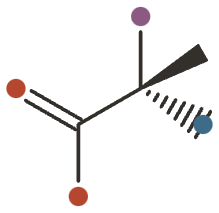
The nine essential amino acids — histidine, isoleucine, leucine, lysine, methionine, phenylalanine, threonine, tryptophan and valine — are the ones human metabolism cannot build from scratch. Everything else in the twenty can be made from something else; these nine have to be eaten. An EAA supplement is simply those nine supplied in free form, already broken down, requiring no digestion.
The product exists mostly as a reaction against BCAAs, which dominated sports nutrition for years. BCAA products contain only three of the nine — leucine, isoleucine, valine — chosen because leucine is the amino acid that triggers muscle protein synthesis. The flaw is straightforward once stated: triggering synthesis without supplying the other six is like turning on a production line with only a third of the parts. The signal fires, and then the process runs out of material.
So the case for EAAs over BCAAs is sound and settled. The harder question — the one the supplement industry would rather not dwell on — is EAAs versus simply eating protein. A serving of whey, eggs or chicken supplies all nine amino acids too, plus everything else in the food, usually for less money. The situations where a free-form blend genuinely wins are narrower than the marketing suggests: mostly where appetite, digestion or total intake is the constraint.
What It’s Used For
- Stimulating muscle protein synthesis — the core use, and mechanistically the best-settled thing here.
- Preserving muscle in older and undernourished adults — the most defensible real-world niche, because the constraint being corrected is genuine.
- Attenuating muscle loss during disuse — tested in bed rest, where exercise turns out to do the protecting.
- Resistance-training adaptations in healthy adults — the most heavily marketed use, and the thinnest-evidenced.
Two things to be clear about. EAAs are strictly better than BCAAs for this purpose — a BCAA-only product cannot maximally drive synthesis without the other essentials present 2Reference 2ReviewBranched-chain amino acids and muscle protein synthesis in humans: myth or reality? — reviewView study →. And EAAs are not clearly better than food: robust long-term trials showing EAA blends beat ordinary dietary protein for real-world muscle gain in healthy trainees are thin, and no definitive long-term outcome meta-analysis turned up in this pass.
How It Works
Muscle protein is continually built and broken down. Growth happens when synthesis exceeds breakdown across the day, and the main lever on synthesis is amino-acid availability after a meal.
That process has two distinct requirements, and conflating them is the source of most confusion in this category. The first is a signal: leucine activates the mTOR pathway, effectively announcing that building conditions are good. Leucine is unusually potent here, which is why it anchors every product in the space. The second is substrate: actually assembling a protein requires every amino acid in its sequence, in order. Miss one and the ribosome stalls.
BCAA supplements deliver the signal without the substrate. Synthesis is initiated, the missing amino acids have to come from somewhere — in practice, from breaking down existing body protein — and the net effect is far smaller than the leucine spike suggests. A complete EAA blend supplies both, which is why the synthesis response is both larger and longer-lasting.
Free-form amino acids are absorbed fast, appearing in blood within roughly fifteen minutes against an hour or more for intact protein, which is the one genuine pharmacokinetic advantage over food. Whether a faster, sharper peak translates into more muscle over months is exactly the question the long-term literature has not settled. Note also that most EAA evidence comes from acute stable-isotope studies measuring synthesis rates over hours — a real measurement, but a proxy for the outcome anyone actually cares about.
The full trial record is in Pharmacology & Research below.
Pharmacology & Research
Essential amino acids (EAAs) are the nine amino acids — histidine, isoleucine, leucine, lysine, methionine, phenylalanine, threonine, tryptophan and valine — that the body cannot synthesise and must obtain from the diet; an EAA supplement supplies all nine in free form. The evidence posture is unusual for a sports supplement: the mechanism is exceptionally well characterised — synthesising new muscle protein requires the full set of EAAs as substrate, with leucine acting as the trigger for the mTOR anabolic signal — and this is what makes a complete EAA blend a strictly better product than BCAAs. The weakness is on the outcome side. Almost all of the supportive data comes from acute stable-isotope studies measuring muscle protein synthesis (MPS) rates over hours, a validated but proxy measurement; long-term trials showing EAA blends produce more real-world muscle than ordinary dietary protein in healthy, replete trainees are thin. The clearest genuine benefit is repletion — topping up intake in older or undernourished adults who cannot reach a protein target through food — rather than an extra-on-top effect in people who already eat enough. Free-form delivery adds fast absorption and a non-satiating format, which are convenience advantages, not nutritional ones.
Support is an experimental score I’m building — a composite weighted by study type (human > animal > in vitro > review) and study volume. It’s a beta: a fast way to rank strength of evidence at a glance, not a validated metric. Each application links down to its write-up.
The core, best-evidenced use. Acute studies using primed constant infusions of labelled amino acids in humans show that MPS is driven by the availability of the full complement of EAAs as substrate, with leucine content setting the size of the signal 1,
A complete EAA mixture therefore produces a larger and longer synthesis response than BCAAs alone: the Wolfe review lays out why BCAA-only products cannot maximally stimulate synthesis, since the missing six EAAs can only come from breaking down existing muscle, capping the theoretical response at around 30% and realistically less 2,
Blood-EAA dose-response is hyperbolic and saturable — MPS rises steeply then plateaus as blood EAA climbs 3Reference 3Human muscle protein synthesis is modulated by extracellular, not intramuscular amino acid availability: a dose-response studyView study → — and effective doses can be low: 3.6 g of a high-leucine EAA composition raised fractional synthetic rate in older subjects, with roughly 80% of the ingested EAAs apparently used 7Reference 7Stimulation of muscle protein synthesis with low-dose amino acid composition in older individualsView study →.
In the elderly a higher proportion of leucine (about 41% against 26%) is needed to overcome anabolic resistance and get a synthesis response at all 6Reference 6A high proportion of leucine is required for optimal stimulation of the rate of muscle protein synthesis by essential amino acids in the elderlyView study →.
Gap: virtually all of this is acute FSR measured over 2–4 hours — a real but short-term proxy. Whether a sharper synthesis peak accrues into more muscle over months is the question these studies cannot answer.
The most defensible real-world niche, because the constraint being corrected — inadequate protein intake against a raised, anabolic-resistant requirement — is genuine. A 2018 systematic review and meta-analysis of 39 RCTs (n≈4,274) of protein and EAA supplements in older adults found small pooled improvements in fat-free mass, muscle strength and physical function (SMD ≈ 0.21–0.27), but with significant heterogeneity, high risk of bias, and no effect among the seven low-bias studies — the benefit concentrated in the undernourished subgroup 9Reference 9Meta-analysisSystematic review and meta-analysis of the effect of protein and amino acid supplements in older adults with acute or chronic conditions — meta-analysisView study →.
A 2026 meta-analysis of nine RCTs (n=496) in sarcopenia found that adding amino-acid supplementation to resistance training improved handgrip strength, gait speed and physical-performance scores versus training alone, but not muscle mass, at low-to-very-low certainty 10Reference 10Meta-analysisCombined resistance training and amino acid-based supplementation for sarcopenia in older adults: a systematic review and meta-analysisView study →.
Leucine-focused meta-analysis similarly raises synthesis rate without translating into measured lean-body-mass gains 11Reference 11Meta-analysisThe effectiveness of leucine on muscle protein synthesis, lean body mass and leg lean mass accretion in older people: a systematic review and meta-analysisView study →.
Reviews frame EAA supplements as a non-satiating way to lift a sub-optimal meal’s protein toward an effective dose, magnified by exercise 8Reference 8ReviewThe efficacy of essential amino acid supplementation for augmenting dietary protein intake in older adults: implications for skeletal muscle mass, strength and function — reviewView study →.
Gap: effects are modest, heterogeneous and low-certainty, and they largely disappear in replete or low-risk-of-bias samples — this is repletion of a deficit, not a general muscle-building effect.
Bed rest and immobilisation drop MPS and cause rapid muscle loss, and amino acids have been tested as a countermeasure. In a 14-day bed-rest RCT in middle-aged adults, leucine (0.06 g/kg/meal) only partially protected muscle — it preserved knee-extensor peak torque and endurance and blunted lean-mass loss at 7 days, but the MPS and cell-signalling changes did not differ significantly between groups 12Reference 12RCTLeucine partially protects muscle mass and function during bed rest in middle-aged adults — randomised controlled trialView study →.
In a 28-day bed-rest study under a mild energy deficit, EAA supplementation without exercise was the least effective countermeasure — myostatin transcripts actually rose in the amino-acid-only arm, and resistance exercise was what attenuated atrophy markers 13Reference 13RCTEffects of resistance exercise combined with essential amino acid supplementation and energy deficit on markers of skeletal muscle atrophy and regeneration during bed rest and active recovery — randomised controlled trialView study →.
Gap: small trials, surrogate and molecular endpoints, and a consistent signal that exercise — not amino acids alone — does the protecting. EAA supplementation on its own is weak in disuse.
The most heavily marketed use is also the thinnest-evidenced. Proof-of-concept trials show leucine-enriched EAA gels produce robust aminoacidemia and enhance anabolic signalling (mTOR, rpS6) after resistance exercise irrespective of age 15Reference 15Novel essential amino acid supplements following resistance exercise induce aminoacidemia and enhance anabolic signaling irrespective of age: a proof-of-concept trialView study →, and an early RCT reported amino-acid supplementation influenced some physiological adaptations to resistance training 16Reference 16RCTEffects of amino acids supplement on physiological adaptations to resistance training — randomised controlled trialView study →. But these are acute signalling and synthesis proxies or small trials, and none demonstrate that EAAs add muscle or strength on top of an already-adequate protein intake in healthy trainees.
Gap: no long-term outcome meta-analysis shows EAA blends beat equivalent dietary protein for hypertrophy or strength in replete, healthy people; total daily protein and training volume dominate the outcome.
Mechanisms
| Target / pathway | Effect | Relevant to |
|---|---|---|
| mTORC1 / p70S6K / 4E-BP1 (leucine-triggered) | ↑ translation initiation — the anabolic “signal” | Muscle protein synthesis; training adaptations |
| Ribosomal assembly and elongation (all nine EAAs as substrate) | ↑ actual protein assembly — the “material” | Muscle protein synthesis |
| Blood EAA availability (saturable, hyperbolic) | ↑ MPS up to a plateau | MPS dose-response; older adults |
| Muscle protein breakdown | ↓ / net-positive balance when EAAs are supplied | Disuse; whole-body protein turnover |
| Myostatin / MAFbx (atrophy signalling) | Variable — not reliably suppressed by EAA alone | Disuse and bed rest |
Pharmacokinetics
Free-form EAAs require no digestion and appear in the bloodstream faster than intact protein. In a proof-of-concept trial, leucinemia peaked roughly 60–120 minutes after ingesting a leucine-enriched EAA gel 15Reference 15Novel essential amino acid supplements following resistance exercise induce aminoacidemia and enhance anabolic signaling irrespective of age: a proof-of-concept trialView study →, and blood amino acids begin rising within about 15 minutes against an hour or more for whole protein. This faster, sharper peak is the one genuine pharmacokinetic edge over food.
MPS tracks blood EAA concentration, not intramuscular concentration, and the relationship is
hyperbolic and saturable 3Reference 3Human muscle protein synthesis is modulated by extracellular, not intramuscular amino acid availability: a dose-response studyView study →: past a threshold, adding more EAA yields diminishing synthesis. That is
why acute effective doses can be modest — a response was seen at 3.6 g of a high-leucine blend in
older adults 7Reference 7Stimulation of muscle protein synthesis with low-dose amino acid composition in older individualsView study → — and why leucine proportion matters more than total grams, particularly in the
anabolic-resistant elderly 6Reference 6A high proportion of leucine is required for optimal stimulation of the rate of muscle protein synthesis by essential amino acids in the elderlyView study →. Amino-acid oxidation rises at higher doses, so surplus is burned
rather than stored 4,
The decision-relevant point: EAAs are absorbed efficiently and act quickly, but the synthesis machinery saturates — more is not proportionally better.
Clinical trials
Registered-trial activity around essential amino acids and muscle is substantial but mostly examines mixed protein and EAA nutrition in older-adult and clinical populations, rather than EAA-blend-specific hypertrophy in healthy athletes. As a cheap, off-patent nutrient category there is limited incentive for large industry-funded outcome trials. Counts below are approximate ClinicalTrials.gov totals for “essential amino acids muscle” and include intact-protein interventions.
| Completed | Planned | Terminated | Preclinical |
|---|---|---|---|
| ~166 | ~43 | ~11 | Many(extensive rodent/tracer literature) |
Last checked: February 2026.
Dietary Sources
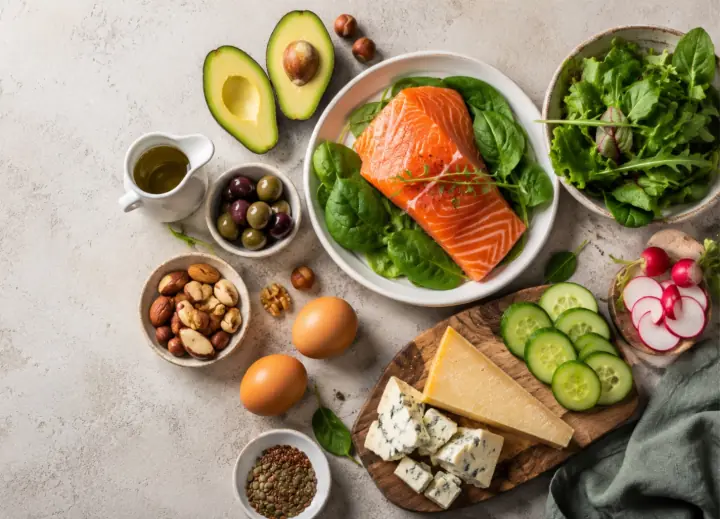
Any complete protein supplies all nine essential amino acids in usable proportions — meat, fish, eggs, dairy, soy and quinoa among them. Most plant proteins are lower in one or two (legumes in methionine, grains in lysine), which is why varied plant diets cover the requirement through combination across the day rather than within a single meal.
The relevant comparison for anyone considering this supplement:
| Source | EAA content | Notes |
|---|---|---|
| Whey protein, ~25 g | ~11 g EAA, ~2.5 g leucine | Comfortably in the studied range, and far cheaper per gram |
| Eggs, 3 large | ~8 g EAA | Complete, with the rest of the food attached |
| Chicken breast, 100 g | ~12 g EAA | Complete |
| EAA supplement, 10 g | ~10 g EAA | Faster absorption; no other nutrition |
The honest framing is that EAAs are not a nutrient you can be short of if you eat enough protein — they are a delivery format. The supplement solves a convenience or appetite problem, not a nutritional one.
Dosage
These are doses studied in research, not a personal recommendation.
- Acute studies commonly use 6–15 g per dose, often with an emphasis on roughly 2–3 g of leucine within the blend 1,
2Reference 1ReviewEssential amino acids and protein synthesis: insights into maximizing the muscle and whole-body response to feeding — reviewView study →Reference 2ReviewBranched-chain amino acids and muscle protein synthesis in humans: myth or reality? — reviewView study → . - Leucine content is the number that matters on a label, more than total grams — it is what determines whether the synthesis signal fires.
- Total daily protein still dominates. An EAA dose is a top-up on adequate intake, not a replacement for it.
- The clearest use case is someone who cannot comfortably reach their protein target through food — older adults, poor appetite, illness, restrictive diets.
- Cost check: a comparable EAA load from whey is usually substantially cheaper. Worth doing the arithmetic before committing.
- The synthesis response saturates. MPS plateaus as blood EAA rises 3Reference 3Human muscle protein synthesis is modulated by extracellular, not intramuscular amino acid availability: a dose-response studyView study →, so very large single
doses are not proportionally more effective, and surplus is oxidised 4,
5Reference 4RCTIngested protein dose response of muscle and albumin protein synthesis after resistance exercise in young men — randomised controlled trialView study →Reference 5RCTMyofibrillar muscle protein synthesis rates subsequent to a meal in response to increasing doses of whey protein at rest and after resistance exercise — randomised controlled trialView study → . - No RDA/AI or Upper Limit exists for an “EAA blend.” Essential amino acids are covered by the general protein DRI (RDA 0.8 g protein/kg/day; higher intakes of ~1.2–1.6 g/kg are commonly studied for muscle), and no UL has been set for supplemental EAAs.
Safety
Essential amino acids supplied in free form are ordinary dietary nutrients at food-level intakes, and there is little to flag in healthy adults beyond context and specific-population cautions.
- Well tolerated in healthy adults at the intakes studied — food-level amounts of food components, with no distinct pharmacological activity to interact with.
- Absolute contraindication in phenylketonuria (PKU). EAA blends contain phenylalanine; anyone with PKU must avoid them unless the product is specifically formulated.
- Competes with levodopa. Large neutral amino acids compete with levodopa for blood–brain-barrier transport, so timing relative to doses matters in Parkinson’s disease.
- Kidney or liver impairment. A significant free-amino-acid load raises the nitrogen-handling burden.
- GI upset from a large bolus — nausea or loose stools, especially on an empty stomach — plus the notoriously bitter taste, which is why most products are heavily flavoured.
- Not a substitute for adequate protein intake, and no UL has been set.
Full Safety & Interactions Detail
These are food-level amounts of food components, and in healthy adults there is little to flag.
- The dose-limiting effect is gastrointestinal — nausea or loose stools from a large free-amino-acid bolus, especially on an empty stomach — plus the bitter taste that is the reason most products are heavily flavoured.
- Phenylketonuria (PKU) is an absolute contraindication: EAA blends contain phenylalanine, and anyone with PKU must avoid them unless the product is specifically formulated.
- Levodopa (Parkinson’s disease): large neutral amino acids compete with levodopa for transport across the blood–brain barrier, so timing relative to doses matters — the same reason protein timing is managed in Parkinson’s.
- Kidney or liver impairment: a significant free-amino-acid load raises the nitrogen-handling burden, a real consideration where that capacity is reduced.
- Not a substitute for adequate protein intake — they supplement a diet rather than replace part of it.
Scope disclosure. Interactions were assessed partially: two mechanistically grounded interactions are noted — levodopa transport competition, and nitrogen load in renal impairment — but a systematic drug-interaction screen was not performed. Pregnancy and lactation were not specifically assessed. There is no UL for supplemental EAAs, and absence of one does not imply unlimited intake is safe. Where something was not studied, it is marked “not assessed,” not “safe.”
Not established — meet the raised requirement through food. Protein requirements rise in pregnancy and lactation, but free-form supplemental EAA blends have not been studied specifically in either setting. Essential amino acids are ordinary dietary nutrients, and meeting the increased requirement through whole-food protein is the established route with a track record. Supplemental EAA use in pregnancy or lactation should be discussed with a qualified practitioner.
References
- Church DD, Hirsch KR, Park S, et al. (2020). Essential amino acids and protein synthesis: insights into maximizing the muscle and whole-body response to feeding — review. Nutrients. https://pubmed.ncbi.nlm.nih.gov/33276485/
- Wolfe RR (2017). Branched-chain amino acids and muscle protein synthesis in humans: myth or reality? — review. Journal of the International Society of Sports Nutrition. https://pubmed.ncbi.nlm.nih.gov/28852372/
- Bohé J, Low A, Wolfe RR, Rennie MJ (2003). Human muscle protein synthesis is modulated by extracellular, not intramuscular amino acid availability: a dose-response study. The Journal of Physiology. https://pubmed.ncbi.nlm.nih.gov/12909668/
- Moore DR, Robinson MJ, Fry JL, et al. (2009). Ingested protein dose response of muscle and albumin protein synthesis after resistance exercise in young men — randomised controlled trial. American Journal of Clinical Nutrition. https://pubmed.ncbi.nlm.nih.gov/19056590/
- Witard OC, Jackman SR, Breen L, et al. (2014). Myofibrillar muscle protein synthesis rates subsequent to a meal in response to increasing doses of whey protein at rest and after resistance exercise — randomised controlled trial. American Journal of Clinical Nutrition. https://pubmed.ncbi.nlm.nih.gov/24257722/
- Katsanos CS, Kobayashi H, Sheffield-Moore M, et al. (2006). A high proportion of leucine is required for optimal stimulation of the rate of muscle protein synthesis by essential amino acids in the elderly. American Journal of Physiology: Endocrinology and Metabolism. https://pubmed.ncbi.nlm.nih.gov/16507602/
- Church DD, Ferrando AA, Wolfe RR (2024). Stimulation of muscle protein synthesis with low-dose amino acid composition in older individuals. Frontiers in Nutrition. https://pubmed.ncbi.nlm.nih.gov/38524852/
- Ispoglou T, Witard OC, Duckworth LC, Lees MJ (2021). The efficacy of essential amino acid supplementation for augmenting dietary protein intake in older adults: implications for skeletal muscle mass, strength and function — review. Proceedings of the Nutrition Society. https://pubmed.ncbi.nlm.nih.gov/33315000/
- Cheng H, Kong J, Underwood C, et al. (2018). Systematic review and meta-analysis of the effect of protein and amino acid supplements in older adults with acute or chronic conditions — meta-analysis. British Journal of Nutrition. https://pubmed.ncbi.nlm.nih.gov/29508691/
- Xie C, Yan R, Tao R (2026). Combined resistance training and amino acid-based supplementation for sarcopenia in older adults: a systematic review and meta-analysis. BMC Musculoskeletal Disorders. https://pubmed.ncbi.nlm.nih.gov/41540398/
- Xu ZR, Tan ZJ, Zhang Q, et al. (2015). The effectiveness of leucine on muscle protein synthesis, lean body mass and leg lean mass accretion in older people: a systematic review and meta-analysis. British Journal of Nutrition. https://pubmed.ncbi.nlm.nih.gov/25234223/
- English KL, Mettler JA, Ellison JB, et al. (2016). Leucine partially protects muscle mass and function during bed rest in middle-aged adults — randomised controlled trial. American Journal of Clinical Nutrition. https://pubmed.ncbi.nlm.nih.gov/26718415/
- Brooks NE, Cadena SM, Vannier E, et al. (2010). Effects of resistance exercise combined with essential amino acid supplementation and energy deficit on markers of skeletal muscle atrophy and regeneration during bed rest and active recovery — randomised controlled trial. Muscle & Nerve. https://pubmed.ncbi.nlm.nih.gov/20928906/
- Kaspy MS, Hannaian SJ, Bell ZW, Churchward-Venne TA (2024). The effects of branched-chain amino acids on muscle protein synthesis, muscle protein breakdown and associated molecular signalling responses in humans: an update — review. Nutrition Research Reviews. https://pubmed.ncbi.nlm.nih.gov/37681443/
- Lees MJ, Wilson OJ, Webb EK, et al. (2020). Novel essential amino acid supplements following resistance exercise induce aminoacidemia and enhance anabolic signaling irrespective of age: a proof-of-concept trial. Nutrients. https://pubmed.ncbi.nlm.nih.gov/32664648/
- Kraemer WJ, Hatfield DL, Volek JS, et al. (2009). Effects of amino acids supplement on physiological adaptations to resistance training — randomised controlled trial. Medicine & Science in Sports & Exercise. https://pubmed.ncbi.nlm.nih.gov/19346975/