Most yerba maté buying guides are a list of names. That’s not much help when you’re standing in front of a shelf — or a search results page — holding two bags that look identical and cost the same.
The truth is that brand matters far less than style. Almost every difference you’ll taste between one bag of yerba maté and the next comes down to four decisions the producer made: which country’s cut they use, whether the stems went in, how much leaf dust is left, and how the leaves were dried. Learn to read those four things off the bag and you can predict what a maté will taste like before you buy it — including brands nobody has reviewed.
So this guide does both. First the four variables, then ten brands worth your money, sorted by the style they belong to rather than by an arbitrary ranking.
- Style beats brand. Country of origin, stems (palos), dust (polvo) and the drying method explain nearly all the taste difference between bags — brand loyalty is mostly a proxy for those four things.
- Start Argentine, con palo. Playadito, Cruz de Malta or Taragüi Red are mild, forgiving, cheap, and won’t clog a bombilla. Save Uruguayan and Paraguayan styles for later.
- Two long-standing recommendations are out of date: Guayakí rebranded to Yerba Madre in 2025 [1], and Runa was discontinued by Vita Coco in 2024 [2] — it is no longer a product you can buy.
- The real safety issue isn’t caffeine, it’s temperature. Habitually drinking maté scalding-hot is an established oesophageal-cancer risk factor [5, 6]. Brew it warm (~80 °C / 176 °F), not boiling.
The Four Things That Actually Change the Taste
Everything below this section is an application of these four variables. If you only read one part of this guide, read this one.
1. Country & Cut
The four maté-drinking countries have genuinely different house styles, and the style is a far better predictor of flavour than the logo on the bag.
| Style | Cut | Stems | Dust | Tastes like |
|---|---|---|---|---|
| Argentine | Coarse, chunky leaf | ✅ | Low | Grassy, mild, slightly sweet, gently bitter |
| Paraguayan | Coarse, often smoke-dried | ✅ | Low–medium | Bold, roasted, distinctly smoky |
| Brazilian (chimarrão) | Very fine, vivid green | ❌ | Very high | Vegetal, intense, matcha-like |
| Uruguayan | Fine, aged | ❌ | Very high | Deep, dark, powerfully bitter |
One correction worth making, because it appears in almost every roundup on the internet (including an earlier version of this one): Uruguay does not grow yerba maté. The climate won’t support it. Uruguay is the world’s heaviest per-capita consumer and has an unmistakable national style, but the leaf itself is imported — mostly from the Brazilian states of Santa Catarina, Paraná and Rio Grande do Sul — then aged and milled in Uruguay. “Uruguayan yerba maté” describes a processing tradition, not an origin.
2. Palos — The Stems
Yerba maté is sold either con palo (with stems) or sin palo / despalada (without). This is the single biggest lever on how a maté drinks, and the direction is the opposite of what most people assume.
The Argentine and Paraguayan default, and the right first bag.
- Milder and rounder. The stems dilute the leaf, so there’s less caffeine and less bitterness per gourd.
- A woody, faintly sweet note that offsets the leaf’s sharpness.
- It won’t pack into mud. Fibrous stems hold the pile open so water rinses through evenly.
- Far less likely to clog a bombilla — the main reason it’s the beginner default.
- Less intense. Experienced drinkers often find a good con palo pleasant but flat.
- Cheap brands don’t always screen the palos, so you can get splinters that prick the mouth.
Despalada. The Brazilian and Uruguayan default — and Taragüi’s blue bag.
- Stronger and more stimulating. It’s all leaf, and the leaf is where the caffeine lives.
- Deeper, more complex bitterness once your palate has caught up with it.
- Clogs easily, especially with a bamboo or spring-filter bombilla.
- Unforgiving of a bad pour — hot water straight onto dry sin palo leaf turns harsh immediately.
- You’ll use more leaf per gourd, so a bag doesn’t go as far.
The old line that “stems are the bitter part” is backwards. Stems are the mild part. If a maté is punishing you, more palos — not fewer — is the fix.
3. Polvo — The Dust
Polvo is the fine powder produced as the leaves are milled. It dissolves almost instantly, which means it delivers a big share of the brew’s strength and most of its bitterness in the first few washes — think of it as the matcha fraction of the bag, the same way powdered tea delivers the whole leaf at once.
A lot of polvo gives you a strong, fast, slightly chalky maté that fades quickly and blocks your straw. Very little polvo gives you a cleaner, slower brew that lasts more washes. Neither is better; they’re different drinks. Brazilian and Uruguayan cuts run high on polvo by design, Argentine cuts run low.
4. The Cure
Fresh maté leaf is flash-heated over flame (sapecado) to kill the enzymes that would otherwise brown it, then dried properly, then milled and usually aged. Two decisions in there matter to you:
- How it was dried. Barbacuá — the traditional method, drying over a wood fire — leaves a real smokiness in the cup. It’s the signature of Paraguayan maté and some Argentine brands. Modern indirect hot-air drying produces a cleaner, greener, unsmoked flavour.
- Whether it was aged. Estacionada (aged, typically 12–24 months in controlled storage) rounds the harshness off and deepens the flavour. Unaged green maté is brighter and sharper. Most Argentine bags say estacionada somewhere on the front.
Argentine + con palo + estacionada = the safe first bag. Everything else is a deliberate step away from that.
The one-line version
Quick Picks
If you’d rather not think about it, start here.
Argentine Style
Mild, coarse, con palo
Ten brands worth your money, grouped by style rather than ranked against each other. This first group is the largest category and where nearly everyone should start.
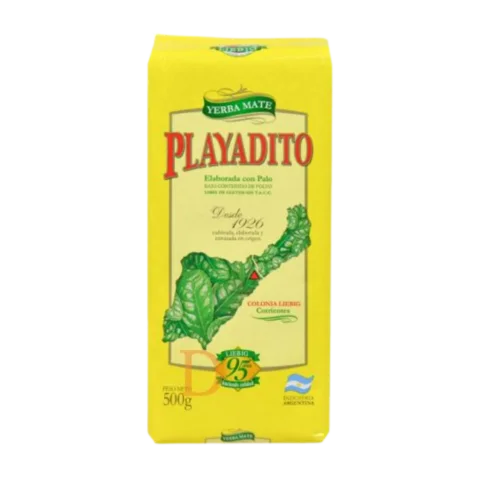
1. Playadito
The one to buy first. Forgiving of a clumsy pour, slow to turn bitter, and cheap enough to experiment with.
Find it onlineIf I could only recommend one bag to someone who has never drunk maté, this is it. Playadito is made by the Cooperativa Agrícola de la Colonia Liebig, a growers’ co-operative in northeastern Corrientes founded in 1926 [3], and it has become one of Argentina’s best-selling yerbas on the strength of being reliably, almost boringly, pleasant.
The cut is coarse, the stems are generous, and there’s very little dust — which means it’s forgiving of a clumsy pour, it doesn’t clog, and it stays drinkable well past the point where a stronger maté would have turned to tannin. The flavour is soft and faintly sweet with just enough bitterness to be recognisably maté.
The trade-off is that it’s not a complex drink. Experienced drinkers sometimes find it flat. That’s exactly what makes it the right first bag.
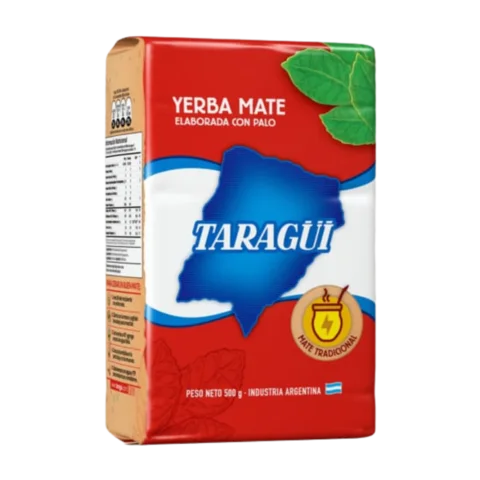
2. Taragüi — Red
The travel bag. The red bag — not the blue one — is the mild, aged, beginner-safe version.
Find it onlineTaragüi is made by Establecimiento Las Marías in Gobernador Virasoro, and it’s the yerba you’ll find in the widest range of countries. If you travel, this is the one you can count on.
The red bag and the blue bag are not the same drink. The red one says it plainly on the front — elaborada con palo, estacionada, made with stems and aged: mild and structurally forgiving. Blue is despalada — stems screened out, stronger, more bitter, quicker to clog. Most people who say they “tried Taragüi and hated it” bought the blue bag first.
Red isn’t the best-tasting maté on this list. It is, however, the most consistent thing in the category — I’ve drunk it in Australia, Argentina, Canada and the USA and it has tasted identical every time, which is worth more than it sounds.
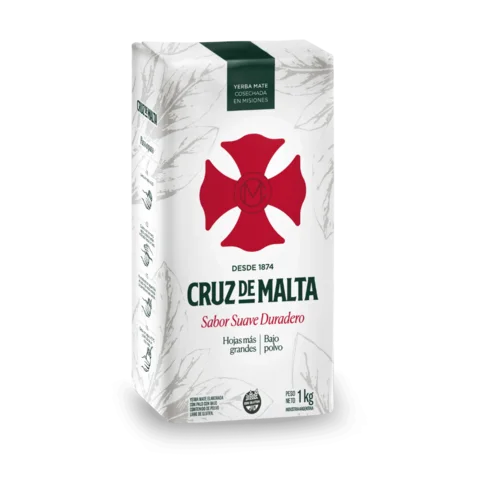
3. Cruz De Malta
The value pick. The cheapest maté on this list that doesn’t taste like the cheapest maté on this list.
Find it onlineMade by Molinos Río de la Plata and on the market since 1874, Cruz de Malta is the value option that doesn’t feel like one. It’s noticeably less bitter than most of this list, with a faint sweetness, and it carries less polvo than almost anything else you can buy cheaply.
That last point makes it the most bombilla-friendly maté here. If you’re using a traditional bamboo bombilla — notorious for blocking mid-session — this is the bag that will give you the least trouble.
Low dust also means lower intensity. Cruz de Malta sits at about mid-strength. If you want more punch, step up to Rosamonte rather than compensating by overfilling the gourd.
4. Nobleza Gaucha
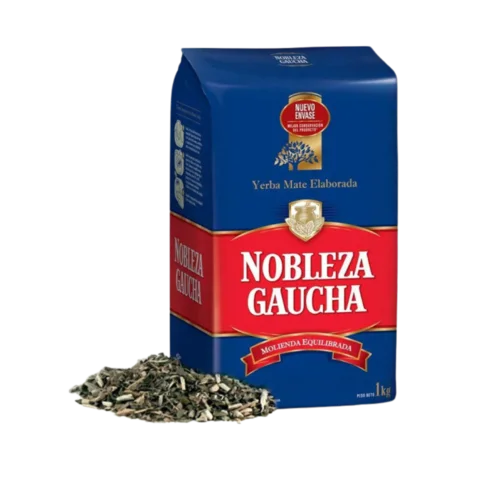
The best second bag. A small, safe step up from Playadito or Cruz de Malta.
Find it onlineNobleza Gaucha has been made since 1940 (by Molinos, the same house as Cruz de Malta) and is aged around 18 months before packing. The bag advertises a molienda equilibrada — a balanced grind — and that’s a fair description of the whole product: plenty of pale stem, a middling amount of dust, a textbook mid-strength Argentine blend.
Everything about it is mid-scale: not too bitter, not too strong, enough body and enough kick to feel like a proper maté. The palos are well screened, so you don’t get the splintery bits that cheaper con-palo yerbas can leave in your mouth. Flavour runs smooth and slightly buttery.
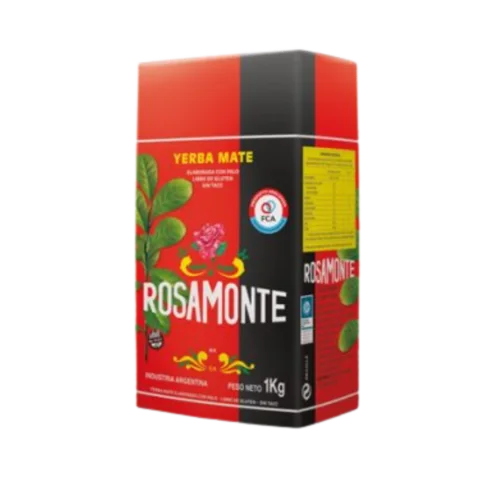
5. Rosamonte
The step up. Where most people go once mild maté stops being interesting — coffee, wood, a little smoke.
Find it onlineRosamonte has been made by La Cachuera S.A. in Apóstoles since 1936.
It is genuinely robust — bitter in a way that rewards a developed palate rather than punishing a new one, with notes of coffee and wood and a faint buttery undertone from the long ageing. The traditional drying gives it a light smokiness that the cleaner Corrientes brands don’t have. It also seems to vary subtly batch to batch, which is either a flaw or the best thing about it depending on your temperament.
One thing to correct: Rosamonte is often described online — and was described in an earlier version of this article — as a “Brazilian-style” maté. It isn’t. It’s a thoroughly Argentine con palo blend; its strength comes from ageing and the roast, not from Brazilian-style fine milling.
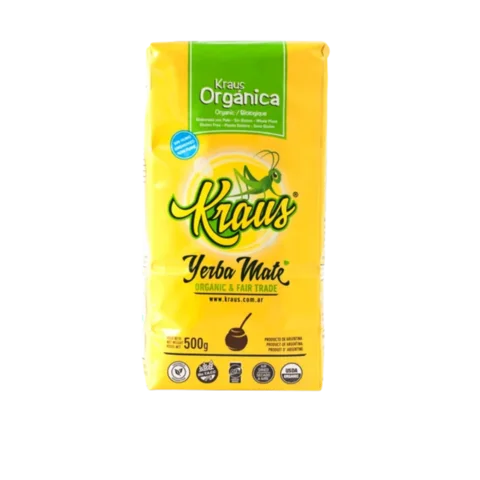
6. Kraus
The clean one. Certified organic, no wood smoke at all — and it costs accordingly.
Find it onlineKraus is a small family operation in Misiones producing certified organic, fair-trade yerba using a drying system that runs on indirect hot air rather than wood smoke [4]. The result is a maté with no smokiness at all — clean, green and mild, which is unusual for a producer this traditional.
It’s the one to reach for if you drink maté daily and care about what was sprayed on it, or if you actively dislike the smoky note in Paraguayan and older Argentine brands. It costs meaningfully more than the supermarket names, and it’s harder to find outside specialist retailers.
Paraguayan Style
Bold & smoke-dried
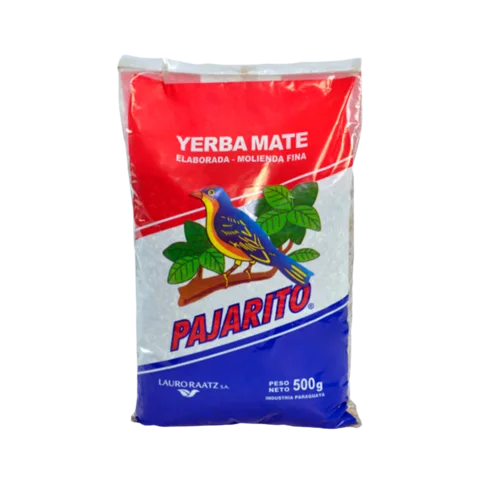
7. Pajarito
The characterful one. If you like lapsang souchong or mezcal, start here instead.
Find it onlinePajarito has been made since 1956 and is Paraguay’s best-selling yerba. It’s dried the traditional barbacuá way — over a wood fire — and the smoke is not subtle. If you’ve only had Argentine maté, the first gourd of Pajarito tastes like a different plant.
Bold, roasted, faintly sweet under the smoke, and strong enough that it holds up over a long session. There’s an organic version if you want it. This is not a beginner’s bag, but it’s the most characterful thing here for the money — and if you already like lapsang souchong (a pine-smoked black tea) or mezcal, you’ll probably take to it immediately.
Uruguayan Style
Fine, dusty & powerful
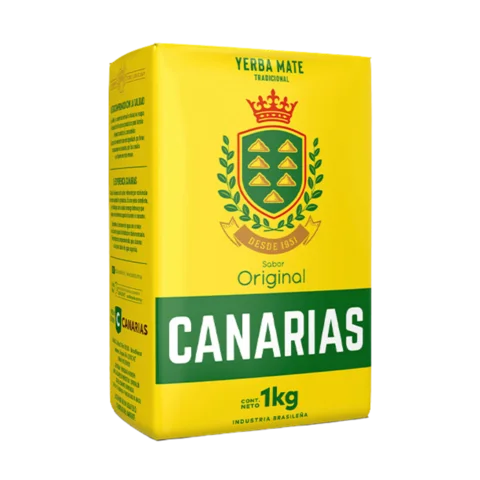
8. Canarias
The strongest thing here. Smoky, creamy, heavily bitter — and it will destroy a bamboo bombilla.
Find it onlineCanarias is Uruguay’s dominant brand and the strongest thing on this list. Two facts about it are widely reported backwards, so to be precise: Canarias is a Uruguayan company, and the leaf is grown in Brazil (Santa Catarina, Paraná and Rio Grande do Sul), then aged four to six months and milled in Uruguay.
The flavour is smoky, creamy and heavily bitter, with a dense body that comes from the enormous quantity of polvo in a Uruguayan-style cut. It hits harder than anything else here — both in taste and in perceived stimulation, since all that dissolved dust front-loads the first few washes.
Practical warning: all that polvo will clog a bombilla fast. Use a spoon-style or hook-style bombilla with a solid filter plate; bamboo and spring bombillas struggle badly with Canarias. And pour carefully — hot water straight onto dry sin-palo leaf is how you get a gourd of undrinkable tannin.
Ready-To-Drink & Tea Bags
These belong in a separate category from loose leaf. They’re a different product solving a different problem — convenience, and getting the caffeine without the ritual or the bitterness.
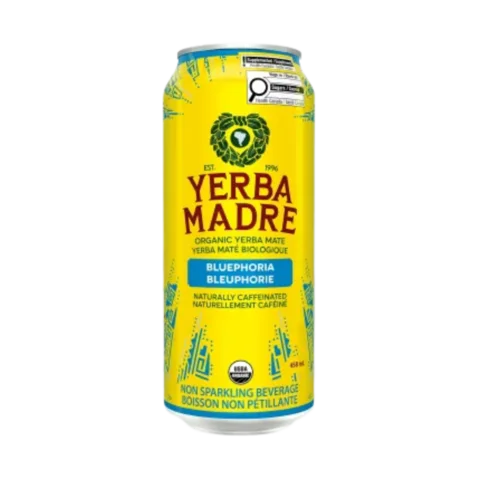
9. Yerba Madre (formerly Guayakí)
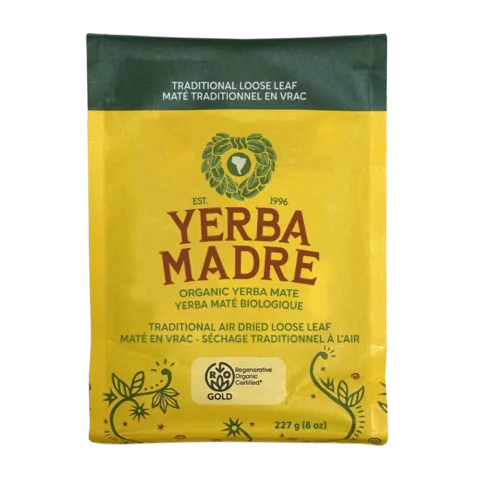
The supermarket option. For people who like the idea of maté but not the taste of it.
Find it onlineIf you’ve been recommended “Guayakí” and can’t find it, that’s because the company rebranded to Yerba Madre in May 2025 after nearly thirty years under the old name [1]. Same company, same sourcing network of family farmers and Indigenous communities across Argentina, Brazil and Paraguay, new name — “Mother Herb”.
The canned drinks are what most North Americans know. Caffeine runs roughly 80–150 mg per can depending on the line — call it one to one-and-a-half coffees — and the formulation is deliberately built to bury the bitterness under fruit and sweetener. They’re the obvious answer for someone who likes the idea of maté (clean, sustained energy) but genuinely doesn’t like how it tastes. Being pre-brewed, there’s no polvo and no palos to think about.
They also sell a straightforward organic loose leaf, air-dried and unsmoked, which is a perfectly good — if pricey — traditional maté and easier to find in a North American supermarket than any of the Argentine brands above.
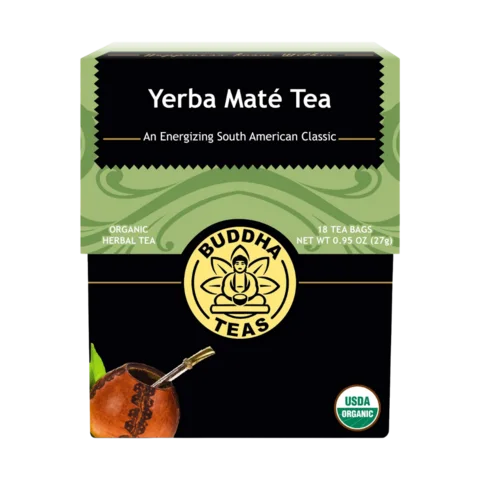
10. Buddha Teas Yerba Maté
The desk-drawer option. No gourd, no bombilla, no technique — and a thinner cup for it.
Find it onlineCertified organic maté in bleach-free bags, sourced from across South America. This is the desk-drawer option — no gourd, no bombilla, nothing to clean — and it’s also the easiest way to make cold brew, since you can drop a couple of bags in a jug overnight.
The brew is weaker and simpler than a proper gourd session; there’s no getting around that, since a tea bag holds a couple of grams and a gourd holds forty. Their loose leaf has almost no polvo and minimal stems, which makes it very gentle and very low on depth. Good for beginners and offices, not for maté drinkers.
Runa — Discontinued
Runa deserves a mention only because half the internet still recommends it. It no longer exists. Vita Coco, which acquired Runa in 2018, discontinued the entire line in early 2024 [2].
It was worth drinking: canned, 150 mg of caffeine, and made not from maté at all but from guayusa (Ilex guayusa) — a close cousin in the same Ilex genus as maté (Ilex paraguariensis), traditionally drunk in Ecuador. Note the correction there too: guayusa and maté are the same genus, not merely the same family (the hollies), which is why they’re so similar in the cup.
If you’re chasing that flavour, other guayusa brands still exist, but the specific product people remember is gone.
Also Worth a Look
Not everything fits a top-ten. Amanda is a well-regarded Argentine mainstay with a fresh, smooth profile. CBSé builds flavoured and herb-blended yerbas — orange, mint, guaraná — which purists dismiss and beginners often love. La Merced and Union both have loyal followings. And if you’re ever in southern Brazil, buy a bag of local chimarrão: vivid green, no stems, milled almost to a powder, and completely unlike anything on this list.
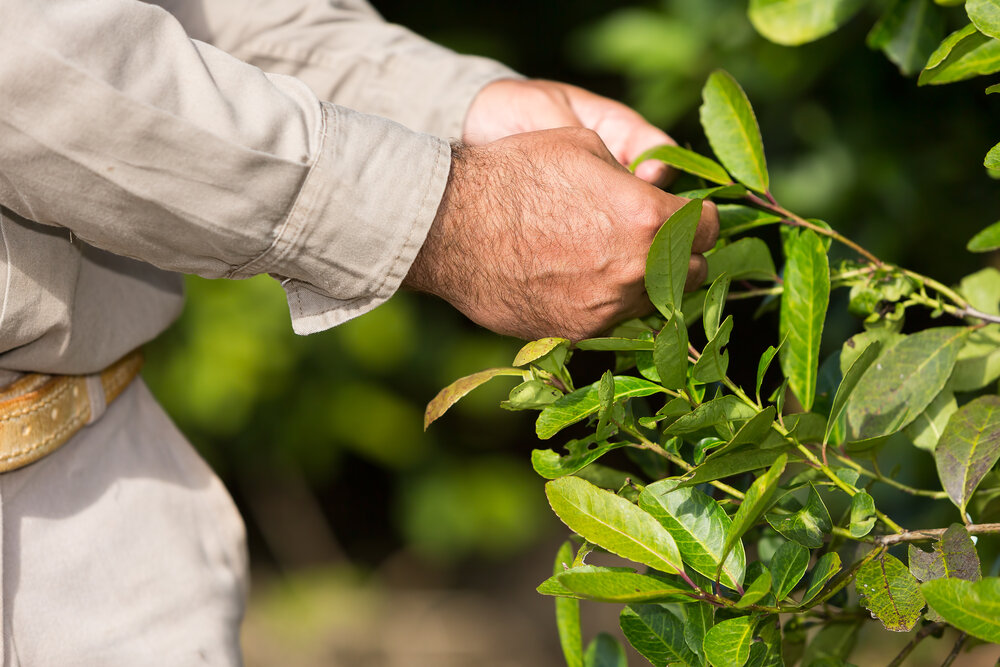
What You Actually Need to Get Started
The leaf is the cheap part. The one-off kit costs more than your first several bags combined, and then lasts years.
Everything you need for a traditional gourd session — buy once, then just replace the leaf.
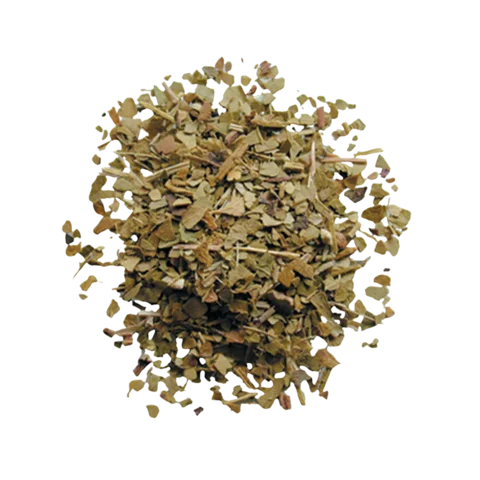
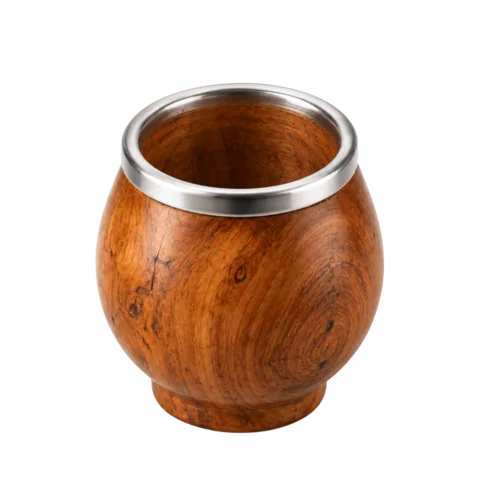
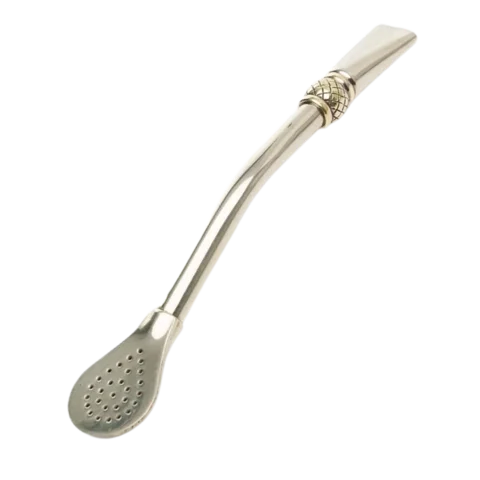
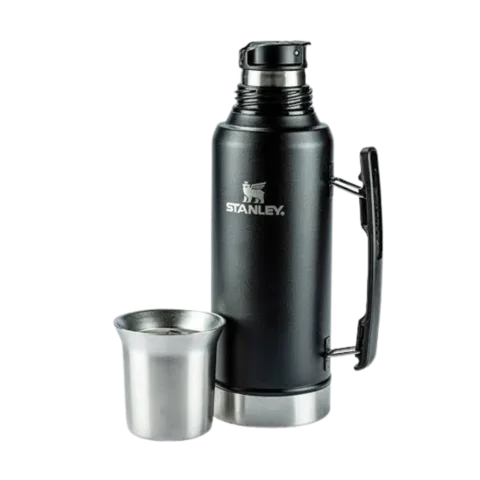
Three of those four choices have a wrong answer, and the traditional-looking option is the wrong one twice.
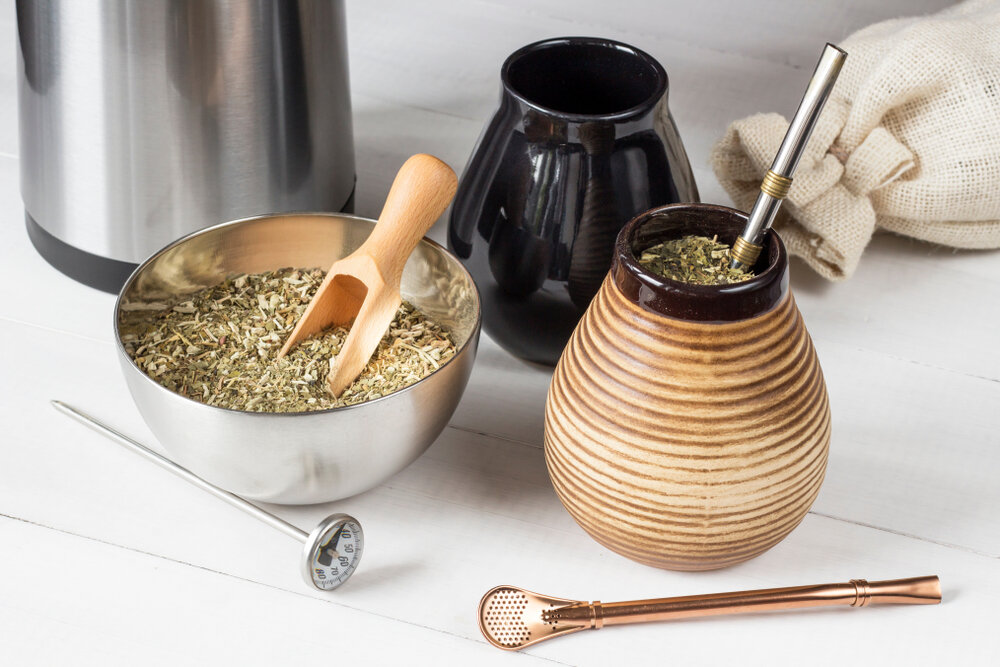
Full instructions for the gourd method, plus tereré, the french press, tea bags and cold brew, are in the companion guide:
→ How to Prepare Yerba Maté: The Five Best Methods
How Much Should You Buy?
Maté is bought by the half-kilo or kilo, and the sizing surprises people used to tea.
Buy one 500 g bag of two or three different brands before you commit to a kilo of anything. Maté keeps well in a sealed container away from light, but it does slowly lose its brightness, so there’s no advantage to stockpiling until you know what you like.
What’s Actually in the Cup
Maté’s stimulation is caffeine — the same molecule as in coffee, with the same strengths and limits, at a slightly lower concentration by dry weight. What softens it is theobromine, the gentler xanthine that gives dark chocolate its lift (cacao is its main source), present at roughly five to ten times the level found in coffee. Theobromine is a milder central stimulant and works on the blood vessels in partly opposite ways, which is the usual explanation for why a gourd of maté feels smoother than an equivalent hit of espresso.
Layered on top is an unusually heavy polyphenol load — about 10% of the dry leaf, dominated by chlorogenic acid — plus the bitter triterpene saponins called matesaponins [7]. Those are where most of the researched metabolic effects appear to come from.
Which disposes of the internet’s favourite maté claim: that the stimulant isn’t caffeine at all but a unique alkaloid called mateine, with all the lift and none of the side effects. There’s no such compound. Caffeine in maté has been confirmed dozens of times over. The myth probably started because maté’s xanthines are partly bound to tannins, sugars and phenolics in the raw leaf and are only released on heating — so early analyses of unheated leaf found something that behaved oddly and gave it a new name. It was caffeine all along. The reason maté feels gentler is real; it’s just theobromine and a slow delivery, not a different molecule.
For the full evidence review — glycaemic control, lipids, body composition, bone density and what the meta-analyses actually found — see the yerba maté monograph [8]. Its effect on fat burning during exercise is covered in Herbs to Optimize Athletic Performance.
Safety
- Serve it warm, not scalding — ~80 °C / 176 °F. The risk is the heat, not the leaf: habitually very hot maté is an established cause of oesophageal squamous cell carcinoma, tracking with temperature and cumulative intake [5, 6].
- A gourd is a serious caffeine dose. 40–50 g of leaf holds ~500 mg; you won’t extract it all, but a session outpaces two espressos. Nothing after mid-afternoon if you’re prone to insomnia.
- Caffeine’s cautions are maté’s cautions — hypertension, arrhythmias, anxiety disorders, and pregnancy or breastfeeding (unstudied for maté specifically; treat it as coffee).
- Smoke-dried (barbacuá) maté carries PAHs from the wood fire. Choose an air-dried brand — Kraus, Yerba Madre — if that concerns you.
FAQ
Which brand should I buy first?
Why is my bombilla always clogging?
Con palo or sin palo?
Is Guayakí still around?
Where can I buy Runa?
Does maté have more caffeine than coffee?
Is “mateine” a real thing?
How long does a bag last?
Can I reuse the leaves?
Where to Buy Yerba Maté
In South America it’s a supermarket staple, and in Argentina, Uruguay and Paraguay there are maté bars that sell a filled gourd over the counter the way a café sells coffee.
Everywhere else, buy online. The big Argentine names — Playadito, Taragüi, Cruz de Malta, Rosamonte, Nobleza Gaucha — turn up on general marketplaces, and specialist South American grocers carry the rest, including Paraguayan and Uruguayan brands you’ll never see in a supermarket. Yerba Madre’s cans and loose leaf are the exception: those are stocked in ordinary North American supermarkets and health-food shops.
Whatever you order first, order small. Maté is a taste you develop, and the bag that suits you in year two is rarely the one you started with.
References
- Yerba Madre / PR Newswire (2025). Guayakí Yerba Mate Rebrands as Yerba Madre, Deepening Its Regenerative Mission and Honoring Indigenous Partnerships. Link
- BevNET (2024). Vita Coco Chops Runa, All Products Discontinued. Link
- Cooperativa Agrícola de la Colonia Liebig. Institucional — Yerba Mate Playadito. Link
- Kraus. Organic & Fair Trade Yerba Mate, Unsmoked. Link
- Lubin, J. H., et al. (2014). Maté drinking and esophageal squamous cell carcinoma in South America: pooled results from two case-control studies. Cancer Epidemiology, Biomarkers & Prevention. Link
- Inoue-Choi, M., et al. (2025). Hot beverage intake and oesophageal cancer in the UK Biobank. British Journal of Cancer. Link
- Gawron-Gzella, A., et al. (2021). Yerba Mate — a long but current history. Nutrients. Link
- Li, D., et al. (2025). Yerba Maté and its impact on glycemic control and metabolic health: a systematic review and meta-analysis of RCTs. Frontiers in Endocrinology. Link
Clinical herbalist and the writer behind The Sunlight Experiment — an evidence-based pharmacopoeia of herbs, supplements, and the chemistry behind them.