Sushi is usually described as a dish of fish and rice. Botanically it is nothing of the sort — count what actually arrives on the plate and the fish is outnumbered. There is a grass, a red alga, a brown alga, a rhizome, a mustard-family root, a mint-family leaf, a legume fermented by a mould, and a fruit acid, before anyone reaches for the fish.
What makes the combination interesting is that it isn’t arbitrary. Sushi began as a way of preserving fish, not serving it fresh, and it evolved in a hot, humid country long before refrigeration. Look at the plants that survived into the modern form and a pattern appears: almost every one of them is antimicrobial.
Whether that pattern is design or accident is impossible to settle. Traditions rarely explain themselves, and plenty of culinary pairings are pure taste. But the chemistry is real, and it is a good excuse to look closely at a plate most people never think of as botanical at all.
The Dish Started As A Preservation Method
The ancestor of modern sushi is narezushi — fish packed in salt and cooked rice and left to ferment for months. The rice wasn’t food; it was the medium. Lactic acid bacteria fermenting the rice dropped the pH far enough to keep the fish edible, and the rice was thrown away.
Nigiri — the fresh, fast, hand-pressed version — is a comparatively recent Edo-period invention. It kept the sourness by short-cutting it: instead of months of fermentation, the rice is seasoned with vinegar. The flavour everyone recognises as “sushi rice” is a chemical shortcut to a preservation step.
That history is why the acid matters, and it frames everything below.
The Antimicrobial Core
Wasabi (Eutrema japonicum)
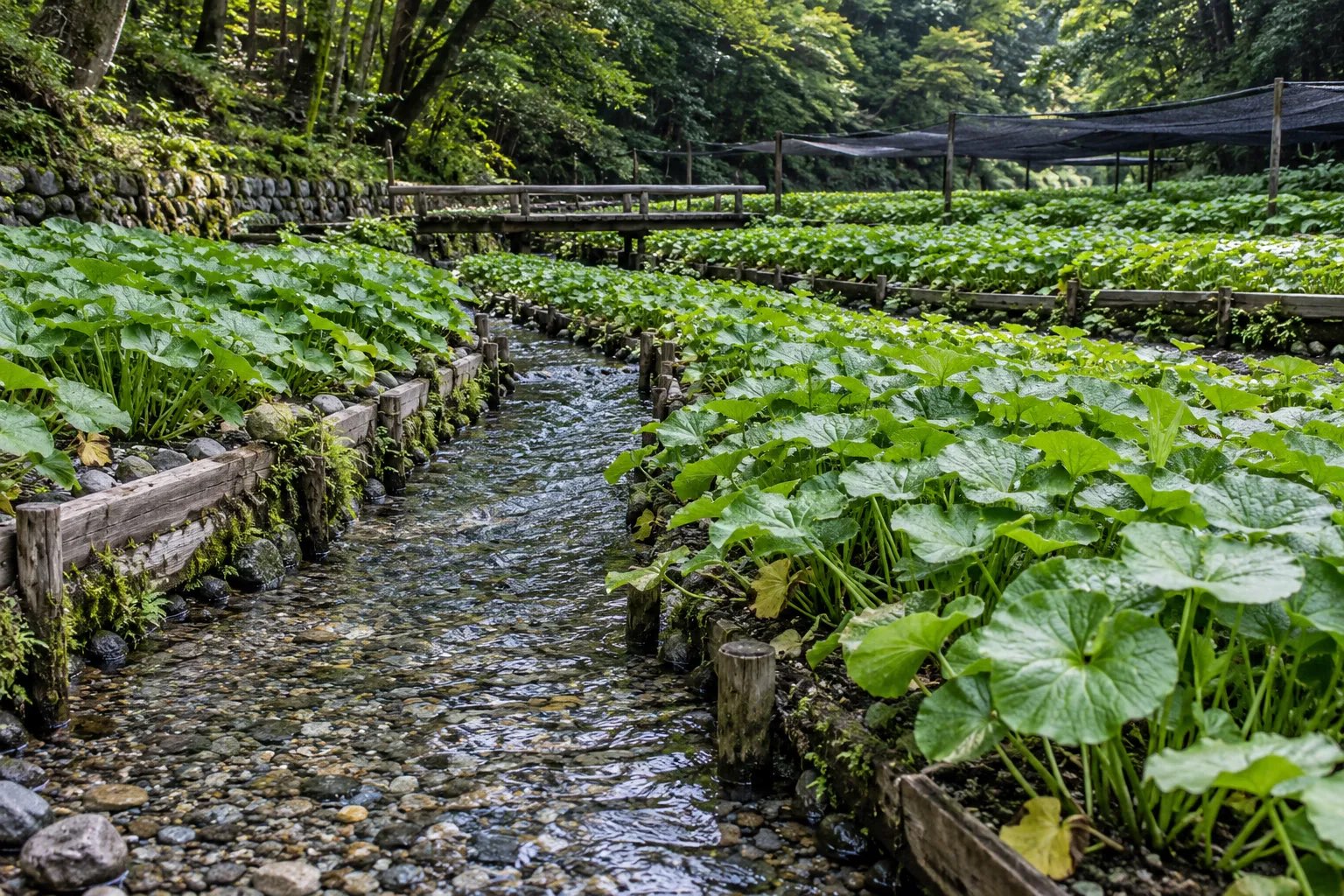
Wasabi is a rhizome from the mustard family, grown semi-submerged in cold running water — notoriously difficult and slow, which is why it is expensive.
Its heat is not capsaicin. Intact wasabi cells store a glucosinolate, sinigrin, separately from the enzyme myrosinase. Grating breaks the cells, the two meet, and the reaction releases allyl isothiocyanate — a small, volatile, sharply pungent molecule. Because it is volatile it travels up the nasal passages rather than burning the tongue, which is why wasabi heat is brief and hits the sinuses, while chilli heat lingers on the palate.
Allyl isothiocyanate is a genuinely broad antimicrobial in laboratory conditions, which is the basis of the traditional claim. Being volatile, it also fades fast: freshly grated wasabi loses much of its punch within about 15 minutes, which is why it is grated to order.
What you are probably eating. Most “wasabi” outside Japan — and plenty inside it — is horseradish (Armoracia rusticana), mustard and green colouring. That is less of a swindle than it sounds: horseradish is in the same family and works through the same glucosinolate chemistry, producing the same allyl isothiocyanate. It is a different plant delivering a similar molecule, not a fake.
Ginger (Zingiber officinale)
Served as gari — young ginger sliced thin and pickled in sweetened vinegar, the pale pink or pale yellow slices at the edge of the plate. Its accepted job is palate cleansing between pieces.
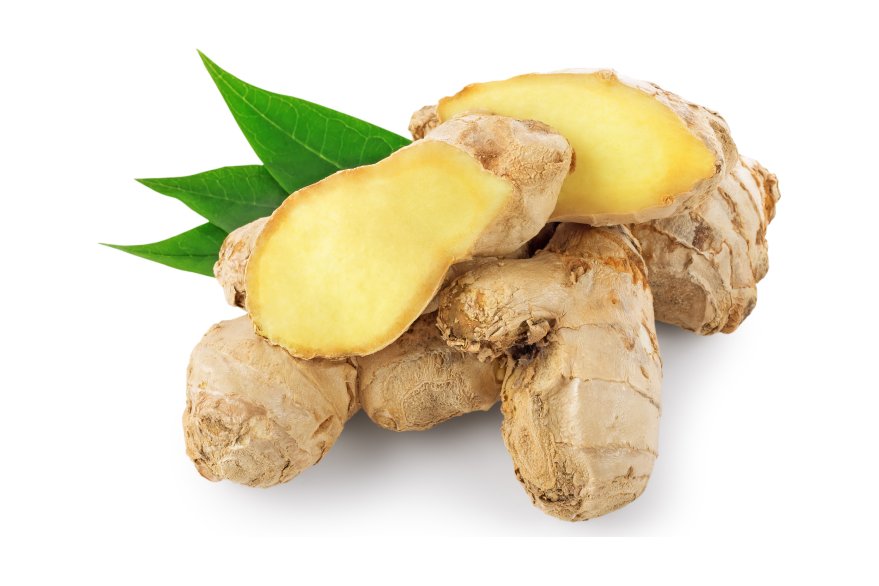
Ginger’s characteristic pungency comes from the gingerols, which convert to shogaols on drying and heating. Of everything on this plate, ginger has the strongest human evidence behind it — specifically for nausea, where it performs respectably in trials. The full monograph covers that in detail.
Note that gari arrives doubly preserved: it is ginger, and it is ginger in vinegar.
Shiso (Perilla frutescens)
A mint-family leaf, used green (aojiso) or red (akajiso), with a flavour somewhere between basil, mint and cinnamon. It appears as a garnish, a wrapper, and pressed against the fish.
Shiso is rich in rosmarinic acid — the same compound that makes rosemary and lemon balm interesting — along with the aldehyde perillaldehyde, which carries most of the aroma. Rosmarinic acid is one of the better-studied plant anti-inflammatories, and perilla extract has a real, if modest, research literature in allergic rhinitis.
Red shiso is also the plant that dyes umeboshi pink, through its anthocyanins.
Rice Vinegar
The rice is seasoned with vinegar, sugar and salt. The active ingredient is acetic acid, and its function is straightforward: it lowers the pH of the rice, which suppresses bacterial growth. This is the same mechanism behind every pickle in every cuisine, and it is the direct descendant of the lactic fermentation in narezushi.
Vinegar does have one genuine effect beyond the rice: acetic acid modestly blunts the blood glucose spike from a starchy meal, which is a convenient thing for a bowl of white rice to come with. It does not “alkalise” anything — blood pH is held in a narrow band and dinner has no say in it.
Bamboo Leaf (Sasa species)
The one almost nobody notices. Traditional sushi used haran — a bamboo or aspidistra leaf — as a divider between pieces, cut into decorative shapes. Bamboo leaf has documented antibacterial activity, and the leaf served as both partition and preservative.
That green plastic grass in a supermarket sushi tray is the vestige of it: a food-safety tool that survived as decoration long after it stopped doing anything.
The Body Of The Meal
Rice (Oryza sativa)
A grass seed, and the reason the dish exists — first as fermentation medium, later as the food itself. Short-grain japonica varieties are chosen for their higher amylopectin content, which makes the grains cling together enough to be shaped by hand.
Nori (Pyropia / Porphyra species)
Not a plant — a red alga, pressed into sheets in a process borrowed from papermaking.
Nori is a good source of iodine, though far less than kombu, and it is genuinely interesting for vitamin B12. Most seaweeds contain pseudo-B12: inactive analogues that occupy the same assays without doing the job, which is why “seaweed is a B12 source” is usually wrong. Nori is the notable exception, containing substantial amounts of the bioactive form. It is one of the few plausible non-animal B12 sources — though the amount surviving processing and storage varies enough that it is a poor thing to rely on.
Kombu (Saccharina japonica)
A brown alga, usually invisible in the finished dish: it goes into the rice or the dashi and is removed. Kombu is where the umami comes from — it is the seaweed in which glutamate was first identified as a taste in its own right, in 1908.
Worth a caution: kombu is extraordinarily iodine-dense, far more than nori, and regular heavy use can push intake past the safe upper limit.
The Garnishes
Mitsuba (Cryptotaenia japonica)
Japanese wild parsley, in the carrot family, named for its three leaflets. Flavour sits between parsley and celery, and it is used fresh and late so the aroma survives. Traditional use covers colds, fevers and general nervous restlessness; the modern evidence is thin, and it is best thought of as a culinary herb with a long folk history rather than a medicine.
Daikon (Raphanus sativus)
The shredded white threads under sashimi — tsuma. It looks purely decorative and isn’t: daikon is another mustard-family plant running the same glucosinolate chemistry as wasabi and horseradish, releasing isothiocyanates when shredded. Raw grated daikon is also traditionally served with oily fish as a digestive.
Sesame (Sesamum indicum)
Toasted seeds, or gomashio. Sesame carries the lignans sesamin and sesamolin, unusual compounds that contribute to the oil’s notable oxidative stability.
Ume (Prunus mume)
Umeboshi — the intensely sour, salted, red-shiso-dyed fruit, often rolled with shiso in umeshiso maki. Ume is loaded with citric acid and salt, which is the whole preservation story in one ingredient. It is also the traditional Japanese travel food for exactly that reason.
Sansho (Zanthoxylum piperitum)
Same genus as Sichuan pepper, and it works the same way: hydroxy-alpha-sanshool produces a tingling, buzzing numbness rather than heat, by acting directly on touch-sensitive nerve fibres rather than the pain receptors chilli targets. Used sparingly, more with eel than with raw fish.
Yuzu (Citrus junos)
A knobbly, intensely aromatic citrus, used mostly as zest or juice. Almost all of its character is in the peel oil.
The Modern Additions
Cucumber (Cucumis sativus) in kappa maki, and avocado (Persea americana) in everything invented after 1970. Avocado is not remotely Japanese — it entered via North American kitchens looking for something with the fatty mouthfeel of toro. Neither has much of a medicinal story; they are there for texture, and there is nothing wrong with that.
Served Alongside
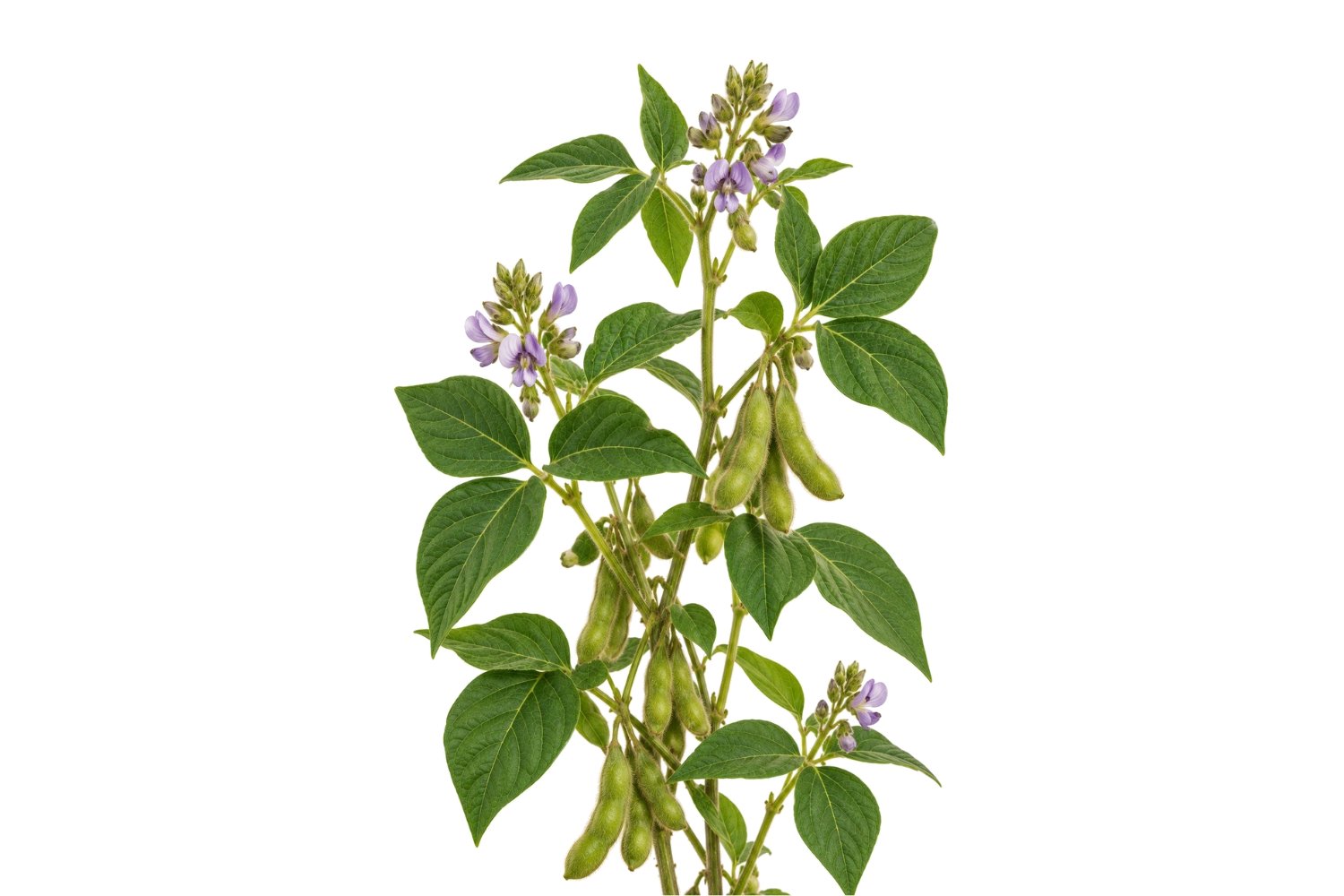
Soy sauce is fermented soybean (Glycine max) and wheat, worked on by the mould Aspergillus oryzae over months. It contributes glutamate, a large amount of salt, and its own fermentation-derived antimicrobial character.
Green tea (Camellia sinensis) is served hot and strong with sushi, and it fits the pattern precisely: the catechins, especially EGCG, are among the better-characterised plant antimicrobials, and green tea has a long association with oral and gut bacteria specifically. It also carries caffeine and L-theanine together, which is the combination that makes tea feel different from coffee. See the tea monograph for the full picture.
The Plants Outlasted Their Job
A cuisine that grew up around preserved, and later raw, fish converged on a set of plants that are antimicrobial, acidic, or both — and then kept every one of them long after refrigeration made the point moot. By that stage they had stopped being a precaution and become the flavour of the dish.
Which is the fun part. Nobody orders sushi for the wasabi’s isothiocyanates. But the reason that particular green paste, that particular pickled root and that particular sour rice ended up on the plate together — and stayed there for a thousand years — is written in their chemistry.
Clinical herbalist and the writer behind The Sunlight Experiment — an evidence-based pharmacopoeia of herbs, supplements, and the chemistry behind them.