
Compound Monograph
Ebulin
Ebulin (ebulin 1 / ebulin f) is a type-2 ribosome-inactivating protein — a two-chain galactose-binding lectin from dwarf elder (Sambucus ebulus) and a structural cousin of ricin. It is the toxin behind the nausea and vomiting of raw elder and elderberry, but it is thousands of times less toxic than ricin because its lectin chain binds cells poorly, and it is heat-labile: cooking denatures it and lets stomach pepsin break it down, neutralising the hazard.

Sources · 2
Where Does It Come From?
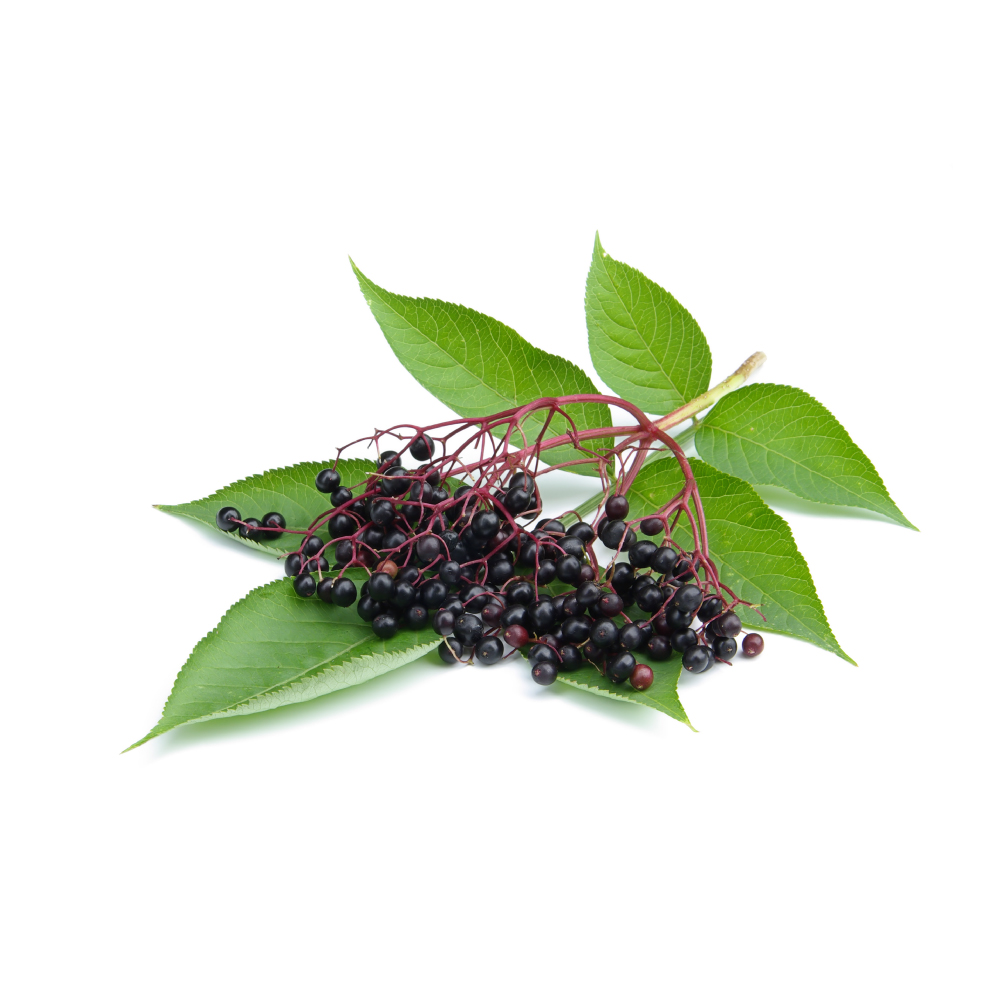
Ebulin is a naturally occurring ribosome-inactivating protein (type 2 lectin), found in Elder and Dwarf elder. It is flagged as toxic.
Concentration
Content by Source
Concentrations not reported. No percent-dry-weight or mg/g figures have been published for this compound in its source plants.
Ebulin at a Glance
Ebulin is a type-2 ribosome-inactivating protein (RIP) — a two-chain plant toxin from dwarf elder (Sambucus ebulus) and a close structural relative of the notorious castor-bean toxin ricin. “Ebulin” is really a small family of nearly identical isoforms named for the tissue they come from: ebulin l (leaves), ebulin f (fruit), ebulin blo (blossoms) and the collective ebulin 1. All share the same architecture and the same enzymatic warhead 1,
Like every type-2 RIP, ebulin is built from two disulphide-linked chains 1,
- an A chain — the toxic enzyme, an rRNA N-glycosidase that snips a single adenine out of the sarcin-ricin loop of the 28S ribosomal RNA, permanently crippling the ribosome and halting protein synthesis;
- a B chain — a galactose-binding lectin that docks onto sugars on the cell surface and ferries the A chain inside.
That is exactly ricin’s design. What makes ebulin not ricin is the B chain: ebulin’s lectin binds galactosides weakly, so it enters cells poorly, and the potent enzyme in the A chain rarely reaches a ribosome. The crystal structure pins this on “an altered mode of galactoside binding” in the lectin domain 3Reference 3Pascal JM, Day PJ, Monzingo AF, Ernst SR, Robertus JD, Iglesias R, Pérez Y, Férreras JM, Citores L, Girbés T (2001). 2.8-Å crystal structure of a nontoxic type-II ribosome-inactivating protein, ebulin l. Proteins. https://pubmed.ncbi.nlm.nih.gov/11288182/View study →. The result is a genuine toxin that is thousands of times less dangerous than its cousin — Girbés and colleagues named it, in the paper that first isolated it, a “nontoxic novel type-2 ribosome-inactivating protein” 2Reference 2Ebulin 1, a nontoxic novel type 2 ribosome-inactivating protein from Sambucus ebulus L. leavesView study →.
For anyone using elder, ebulin is the practical reason raw elder and dwarf-elder material — berries, leaves, bark, unripe fruit — causes nausea, vomiting and GI upset, and the reason the classic advice is to cook it first. Ebulin is heat-labile: a few minutes of heating denatures it and makes it a ready meal for stomach pepsin, which is the single most important safety fact here 1,
Ebulin vs. Ricin — Same Weapon, Different Trigger
The clearest way to understand ebulin is by the contrast that defines it. Both are type-2 RIPs with an equally lethal enzymatic A chain; the difference is entirely in cell entry, dictated by the lectin B chain 1,
| Ricin (reference toxin) | Ebulin (this one) | |
|---|---|---|
| Structure | Type-2 RIP (A + B chains) | Type-2 RIP (A + B chains) |
| A-chain enzyme | 28S rRNA N-glycosidase | 28S rRNA N-glycosidase (equally active in vitro) 1, |
| B-chain lectin | Binds galactosides strongly → efficient cell entry | Binds galactosides weakly → poor cell entry 3Reference 3Pascal JM, Day PJ, Monzingo AF, Ernst SR, Robertus JD, Iglesias R, Pérez Y, Férreras JM, Citores L, Girbés T (2001). 2.8-Å crystal structure of a nontoxic type-II ribosome-inactivating protein, ebulin l. Proteins. https://pubmed.ncbi.nlm.nih.gov/11288182/View study → |
| Cultured-cell toxicity | Extreme | ~10,000× lower than ricin 1Reference 1ReviewEbulin from dwarf elder (Sambucus ebulus L.): a mini-reviewView study → |
| Toxicity to mice | ~micrograms/kg (i.p. LD50 ~0.02 µg/kg) | i.p. LD50 ~2.5 mg/kg for ebulin l — roughly 100,000× higher dose needed 1Reference 1ReviewEbulin from dwarf elder (Sambucus ebulus L.): a mini-reviewView study → |
| Classed as | Highly poisonous | Low-toxicity (“nontoxic”) RIP 2Reference 2Ebulin 1, a nontoxic novel type 2 ribosome-inactivating protein from Sambucus ebulus L. leavesView study → |
So the enzyme is just as deadly; ebulin simply struggles to get the enzyme into the cell. This is why the same molecular machinery that makes ricin a weapon makes ebulin merely an emetic nuisance in undercooked elder.
What It's Used For
Ebulin has no therapeutic use — it is studied as a toxin and as a research reagent. The evidence base is a coherent body of biochemical and rodent work from the Girbés, Jiménez and Stirpe groups, describing what it does, how toxic it is, and how easily it is neutralised.
Support is an experimental score — weighted by study type (human > animal > in vitro) and volume. A beta, not a validated metric. This is a toxicology page, so “support” reads as strength of evidence that the effect is real, not endorsement — every row is biochemical or rodent work, with no human trials.
This is the practical face of ebulin. Raw and undercooked elder and dwarf-elder material has been known for centuries to cause nausea, vomiting, cramping and diarrhoea, and ebulin — specifically the fruit isoform ebulin f — is a principal molecular cause. Unlike the leaf form, ebulin f “displays a significant oral toxicity in mice” and, at high doses, produces histopathological damage to the stomach and intestine (and, lethally, lung and heart) — the type-2 RIP mechanism acting on the gut epithelium it contacts first 1Reference 1ReviewEbulin from dwarf elder (Sambucus ebulus L.): a mini-reviewView study →.
Because the lectin binds cells weakly, systemic poisoning is rare from culinary exposure; the dominant real-world effect is local GI irritation and emesis from eating raw fruit, leaves or bark.
Basis: rodent oral-toxicity and histopathology data plus the long ethnobotanical record of raw-elder emesis; no controlled human dosing (and none is ethical) 1Reference 1ReviewEbulin from dwarf elder (Sambucus ebulus L.): a mini-reviewView study →.
The core biochemistry, and the best-characterised thing ebulin does. The A chain is an rRNA N-glycosidase: it hydrolyses a specific adenine (A4324 in the rat 28S rRNA numbering) in the sarcin-ricin loop, the ribosomal site where elongation factors dock. One depurination event irreversibly inactivates that ribosome, so the enzyme is catalytic and extremely potent. In cell-free systems ebulin inhibits mammalian protein synthesis about as strongly as ricin does, but — tellingly — does not affect plant or bacterial translation 2Reference 2Ebulin 1, a nontoxic novel type 2 ribosome-inactivating protein from Sambucus ebulus L. leavesView study →.
The gap between this ferocious enzymology and ebulin’s mild whole-organism toxicity is the whole story of the molecule: the enzyme is lethal, but the weak B-chain lectin rarely delivers it into a cell 1,
Basis: direct enzymology and cell-free/cell translation assays from the isolating groups — strong, reproducible mechanistic evidence 1,
The most useful finding for anyone actually eating elder. Ebulin is a protein, and like most protein toxins it is heat-labile. In a controlled study of dwarf-elder juices, five minutes of heating fully sensitised both elder lectins (including ebulin) to digestion by pepsin — meaning heat unfolds the toxin enough that stomach acid-protease chops it up before it can act — while reducing polyphenol, anthocyanin and antioxidant content by under 13% 5Reference 5Effects of short-term heating on total polyphenols, anthocyanins, antioxidant activity and lectins of different parts of dwarf elder (Sambucus ebulus L.)View study →.
In plain terms: cooking neutralises the toxin and keeps almost all the good stuff. This is the mechanism behind the universal advice to cook elderberries (and never eat them, the leaves, or the bark raw), and it is why cooked elderberry preparations are considered safe where the raw plant is not 1,
Basis: a purpose-designed heating/pepsin-digestion study on dwarf-elder material — direct, practically relevant evidence 5Reference 5Effects of short-term heating on total polyphenols, anthocyanins, antioxidant activity and lectins of different parts of dwarf elder (Sambucus ebulus L.)View study →.
The one “constructive” research thread. Because RIP A chains are such efficient ribosome-killers, they are attractive warheads for immunotoxins — conjugates in which a tumour-targeting antibody, rather than the protein’s own lectin, delivers the toxin to cancer cells. Ebulin and its relatives are noted candidates precisely because they are low-toxicity in native form: a poorly-binding lectin means less non-specific damage, so the killing can be steered by the antibody instead 1,
This work sits in the broader RIP-therapeutics field alongside relatives like nigrin b; it is exploratory and preclinical, with no approved ebulin-based agent.
Basis: the general RIP-immunotoxin rationale and reviews positioning ebulin-type proteins as conjugate components — early-stage, conceptual 1,
Mechanisms
| Target / pathway | Effect | Relevant to |
|---|---|---|
| 28S rRNA sarcin-ricin loop (A chain, N-glycosidase) | Depurination of a single adenine → irreversible ribosome inactivation → protein-synthesis arrest | protein-synthesis inhibitioncytotoxicity |
| Cell-surface galactosides (B chain lectin) | Weak binding → inefficient cell entry → low whole-cell/organism toxicity | ebulin-vs-ricin toxicity gap |
| Gastrointestinal epithelium (ebulin f, oral) | Local RIP toxicity → mucosal damage, nausea/vomiting | raw-plant GI toxicity |
| Protein tertiary structure (heat) | Denaturation → sensitised to pepsin → inactivation | heat inactivation / safety |
| Ribosome (as immunotoxin A-chain payload) | Antibody-delivered ribosome killing of targeted cells | anticancer research |
The load-bearing pair is the A-chain enzyme (why ebulin is dangerous at all) and the weak B-chain lectin (why it mostly isn’t). Everything practical — raw-plant emesis, the value of cooking, the immunotoxin interest — follows from the tension between those two facts.
Pharmacokinetics
Conventional ADME does not really apply to a large, orally-labile protein toxin. Ingested ebulin is largely confined to the gut: its weak lectin gives it poor cellular uptake and it is a substrate for gastric and intestinal proteases once denatured, so systemic absorption of intact toxin from food is minimal — the reason culinary exposure produces local GI upset rather than the multi-organ failure seen with ricin. The decisive “pharmacokinetic” variable is preparation, not dose: raw ebulin survives long enough to irritate the gut, whereas heated ebulin is unfolded and fully sensitised to pepsin within ~5 minutes, so it is degraded before it can act 1,
Clinical Trials
There are no human clinical trials of ebulin — it is a toxin, not a therapeutic, and human data come only from case reports of raw-elder poisoning (self-limiting nausea, vomiting and GI upset), not controlled studies.
| Completed | Planned | Terminated | Preclinical |
|---|---|---|---|
| —(none) | — | — | Toxin characterisation, oral toxicity (ebulin f), heat/pepsin inactivation, immunotoxin-conjugate research |
Last checked: July 2026.
Where It Comes From
Ebulin is the signature type-2 RIP of dwarf elder (Sambucus ebulus), and it is distributed through the whole plant — leaves (ebulin l), ripe fruit (ebulin f), blossoms (ebulin blo) and rhizome — which is why every raw part of the plant carries some hazard 1,
| Source | Plant part | Ebulin form |
|---|---|---|
| Dwarf elder (Sambucus ebulus) | leaves | ebulin l 2Reference 2Ebulin 1, a nontoxic novel type 2 ribosome-inactivating protein from Sambucus ebulus L. leavesView study → |
| Dwarf elder (Sambucus ebulus) | ripe fruit | ebulin f (orally toxic isoform) 1Reference 1ReviewEbulin from dwarf elder (Sambucus ebulus L.): a mini-reviewView study → |
| Dwarf elder (Sambucus ebulus) | blossoms | ebulin blo (Sam n1-related) 4Reference 4Isolation and molecular characterization of two lectins from dwarf elder (Sambucus ebulus L.) blossoms related to the Sam n1 allergenView study → |
| Elder (Sambucus nigra) | bark / fruit | related type-2 RIPs — nigrin b, SNAs 1Reference 1ReviewEbulin from dwarf elder (Sambucus ebulus L.): a mini-reviewView study → |
Discovery
Ebulin entered the literature in 1993, when Girbés, Citores, Ferreras, Stirpe and colleagues isolated it from the leaves of Sambucus ebulus and reported it, strikingly, as a “nontoxic novel type-2 ribosome-inactivating protein” — a two-subunit protein (A chain ~26 kDa, D-galactose-binding B chain ~30 kDa) that strongly inhibited mammalian cell-free translation yet was harmless to ricin-sensitive cultured human cells and non-toxic to mice up to 2 mg/kg 2Reference 2Ebulin 1, a nontoxic novel type 2 ribosome-inactivating protein from Sambucus ebulus L. leavesView study →. The 2.8-Å crystal structure followed in 2001, explaining the paradox: an altered galactoside-binding site in the B chain gives ebulin its low affinity for cells and hence its low toxicity, despite an intact ricin-like enzyme 3Reference 3Pascal JM, Day PJ, Monzingo AF, Ernst SR, Robertus JD, Iglesias R, Pérez Y, Férreras JM, Citores L, Girbés T (2001). 2.8-Å crystal structure of a nontoxic type-II ribosome-inactivating protein, ebulin l. Proteins. https://pubmed.ncbi.nlm.nih.gov/11288182/View study →. Subsequent work from the same groups characterised the tissue-specific isoforms (ebulin f, blo), the oral toxicity of the fruit form, and the heat/pepsin inactivation that underpins safe use 1,
Toxicity & Safety
Ebulin is a genuine toxin — a ribosome-inactivating protein — and it is flagged toxic. The saving graces are three, and they are what keep elder in the kitchen: ebulin is poorly cell-permeant (thousands of times less toxic than ricin) 1,
- Never eat elder or dwarf-elder raw — not the berries, unripe fruit, leaves, bark or stems. Raw material can cause nausea, vomiting, cramping and diarrhoea, driven substantially by ebulin (ebulin f) acting on the gut lining 1Reference 1ReviewEbulin from dwarf elder (Sambucus ebulus L.): a mini-reviewView study →.
- Cook it. A few minutes of heating denatures ebulin and hands it to stomach pepsin, neutralising the toxin while keeping most of elder’s antioxidants — the reason cooked elderberry syrups and jams are considered safe 1,
5Reference 1ReviewEbulin from dwarf elder (Sambucus ebulus L.): a mini-reviewView study →Reference 5Effects of short-term heating on total polyphenols, anthocyanins, antioxidant activity and lectins of different parts of dwarf elder (Sambucus ebulus L.)View study → . - Dwarf elder (S. ebulus) is more hazardous than common elder and is generally treated as not for casual food use; treat all Sambucus raw material as suspect.
- Ebulin’s blossom relatives are tied to the Sam n1 elder allergen, so allergy to elder proteins is a separate, real consideration 4Reference 4Isolation and molecular characterization of two lectins from dwarf elder (Sambucus ebulus L.) blossoms related to the Sam n1 allergenView study →.
- danger: A real ribosome-inactivating toxin. Ebulin’s A chain halts protein synthesis by depurinating the 28S rRNA — the same mechanism as ricin. Do not treat raw elder as harmless.
- Raw elder = emetic. Ebulin (ebulin f) is a principal cause of the nausea, vomiting and GI upset from eating raw or undercooked elder/dwarf-elder berries, leaves or bark.
- Cooking neutralises it. Ebulin is heat-labile — a few minutes of heating denatures it and lets stomach pepsin destroy it, while retaining most antioxidants. This is the key safety fact.
- Far milder than ricin. A weakly cell-binding lectin B chain makes ebulin ~10,000× less toxic to cells and ~100,000× less toxic to mice than ricin — a low-toxicity (“nontoxic”) RIP.
- Dwarf elder is the higher-risk species, and elder-protein (Sam n1) allergy is a separate concern.
Dosage
Not applicable — ebulin is a toxin, not a supplement, and has no therapeutic dose. There is no intake at which isolated ebulin is taken deliberately. The only “dose” figures in the literature are experimental toxicity endpoints (e.g. an intraperitoneal LD50 near 2.5 mg/kg for ebulin l in mice) used to quantify how weak a toxin it is relative to ricin — they are not consumption guidance 1,
References
- Jiménez P, Tejero J, Cordoba-Diaz D, Quinto EJ, Garrosa M, Gayoso MJ, Girbés T (2015). Ebulin from dwarf elder (Sambucus ebulus L.): a mini-review. Toxins (Basel). https://pubmed.ncbi.nlm.nih.gov/25723322/
- Girbés T, Citores L, Iglesias R, Ferreras JM, Muñoz R, Rojo MA, Arias FJ, García JR, Méndez E, Calonge M (1993). Ebulin 1, a nontoxic novel type 2 ribosome-inactivating protein from Sambucus ebulus L. leaves. Journal of Biological Chemistry. https://pubmed.ncbi.nlm.nih.gov/8349695/
- Pascal JM, Day PJ, Monzingo AF, Ernst SR, Robertus JD, Iglesias R, Pérez Y, Férreras JM, Citores L, Girbés T (2001). 2.8-Å crystal structure of a nontoxic type-II ribosome-inactivating protein, ebulin l. Proteins. https://pubmed.ncbi.nlm.nih.gov/11288182/
- Jiménez P, Cabrero P, Basterrechea JE, Tejero J, Cordoba-Diaz D, Girbés T (2013). Isolation and molecular characterization of two lectins from dwarf elder (Sambucus ebulus L.) blossoms related to the Sam n1 allergen. Toxins (Basel). https://doi.org/10.3390/toxins5101767
- Jiménez P, Cabrero P, Basterrechea JE, Tejero J, Cordoba-Diaz D, Cordoba-Diaz M, Girbés T (2014). Effects of short-term heating on total polyphenols, anthocyanins, antioxidant activity and lectins of different parts of dwarf elder (Sambucus ebulus L.). Plant Foods for Human Nutrition. https://pubmed.ncbi.nlm.nih.gov/24793353/
- Girbés T, Ferreras JM, Arias FJ, Stirpe F (2004). Description, distribution, activity and phylogenetic relationship of ribosome-inactivating proteins in plants, fungi and bacteria. Mini Reviews in Medicinal Chemistry. https://pubmed.ncbi.nlm.nih.gov/15180503/



