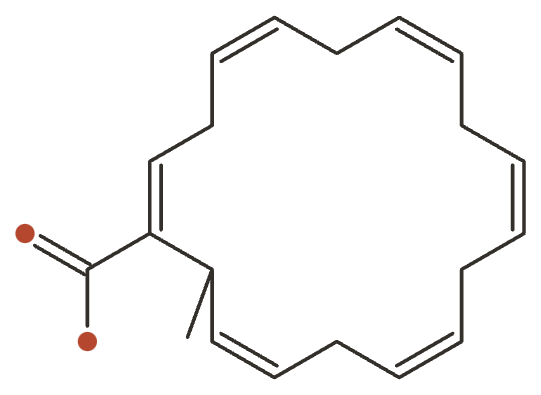

Fish Oil (EPA/DHA) at a Glance
Fish oil is a marine-derived lipid supplement whose active constituents are two long-chain omega-3 fatty acids: EPA (eicosapentaenoic acid) and DHA (docosahexaenoic acid). It is among the most-studied supplements in existence — and the evidence is correspondingly large, and genuinely mixed.
The headline pattern is a split between biomarkers and outcomes. Triglycerides fall and blood pressure edges down consistently and dose-dependently. Clinical outcomes depend heavily on dose, formulation and population — a high-dose EPA-only prescription drug lowers cardiovascular events, while ordinary mixed EPA+DHA capsules at 1 g/day largely do not.
The recurring theme is that benefit is easiest to demonstrate where a deficit or a specific risk factor exists — high triglycerides, diagnosed depression, active rheumatoid arthritis — and hardest to demonstrate as general prevention in already-healthy, well-nourished people.
What It’s Used For
- Triglyceride lowering — the most robust effect fish oil has, and guideline-endorsed.
- Preterm birth prevention — one of its better-evidenced clinical outcomes.
- Rheumatoid arthritis symptoms — modest, consistent symptom relief and NSAID sparing.
- Cardiovascular events (high-dose EPA) — defined by two large trials that disagree.
- Depression (diagnosed) — real, EPA-driven, and only in established diagnosis.
- Blood pressure — small on average, meaningful in untreated hypertensives.
- ADHD symptoms — statistically real, well below stimulant efficacy.
- General cardiovascular prevention — the biggest claim, and largely null at supermarket doses.
- Non-alcoholic fatty liver disease — reduces liver fat on imaging; surrogate endpoints only.
Two clean negatives worth naming. Fish oil did not prevent cognitive decline or dementia in healthy older adults, and it did not relieve dry eye better than an olive-oil placebo in the large DREAM trial. And one genuine harm signal: high doses carry a small but real increase in atrial-fibrillation risk.
How It Works
Fish oil’s effects run through four distinct routes, which is why its evidence looks so uneven — they do not all deliver equally.
In the liver, EPA and DHA suppress VLDL and triglyceride synthesis and speed clearance. This is the triglyceride mechanism, and it is a genuine pharmacologic action rather than a deficiency correction — which is why it scales with dose.
In the inflammatory cascade, EPA and DHA compete with arachidonic acid for the COX and LOX enzymes, yielding less inflammatory prostaglandins and leukotrienes. They are also the precursors to resolvins and protectins, mediators that actively terminate inflammation rather than merely damping it. Together these underpin the rheumatoid-arthritis effect — and the mild antiplatelet action behind the bleeding caution.
In cell membranes, EPA and DHA are incorporated into phospholipids over weeks, changing membrane fluidity. This is the structural route relevant to neurodevelopment, mood and the retina.
In cardiac tissue, membrane and ion-channel effects are context-dependent — anti-arrhythmic in some settings, pro-arrhythmic in others, which is the most plausible explanation for the atrial-fibrillation signal appearing precisely at the highest doses.
The full trial record is in Pharmacology & Research below.
Pharmacology & Research
Fish oil is a marine-derived lipid supplement whose active constituents are the long-chain omega-3 polyunsaturated fatty acids eicosapentaenoic acid (EPA, 20:5n-3) and docosahexaenoic acid (DHA, 22:6n-3). It is among the most-studied supplements in existence, and the evidence is correspondingly large — but also genuinely mixed. The headline pattern is a split between biomarker effects that are consistent and dose-dependent (triglycerides fall, blood pressure edges down) and clinical-outcome effects that depend heavily on dose, formulation and population — a high-dose EPA-only prescription drug lowers cardiovascular events while ordinary mixed EPA+DHA capsules at 1 g/day largely do not. A recurring theme is that benefit is easiest to demonstrate where a deficit or a specific risk factor exists (high triglycerides, diagnosed depression, active rheumatoid arthritis), and hardest to demonstrate as general prevention in already-healthy, well-nourished people.
Support is an experimental score I’m building — a composite weighted by study type (human > animal > in vitro > review) and study volume, then tempered for consistency, formulation and whether the effect depends on a deficit or elevated risk factor. It’s a beta: a fast way to rank strength of evidence at a glance, not a validated metric. Each application links down to its write-up.
This is the most robust effect of fish oil. Across randomised trials, high-dose EPA+DHA — typically 2–4 g/day — lowers fasting triglycerides by roughly 20–30%, with the largest reductions in people who start with the highest levels. The 2019 American Heart Association science advisory concluded that 4 g/day of prescription omega-3 is an effective, safe treatment for hypertriglyceridemia and that the effect is graded — more omega-3, more triglyceride lowering — occurring with both EPA-only and mixed EPA+DHA formulations 7Reference 7Omega-3 fatty acids for the management of hypertriglyceridemia: a science advisory from the American Heart AssociationView study →.
This is a genuine pharmacologic action on hepatic lipid metabolism, not merely a deficiency correction.
Gap: lowering triglycerides is a biomarker; whether it translates into fewer cardiovascular events is a separate question, answered inconsistently by the outcome trials below.
A 2018 Cochrane review of 70 randomised trials (~20,000 women) found that omega-3 supplementation during pregnancy reduced the risk of preterm birth before 37 weeks by about 11% and early preterm birth before 34 weeks by about 42%, and increased the proportion of longer pregnancies 14Reference 14Systematic reviewOmega-3 fatty acid addition during pregnancy — Cochrane systematic reviewView study →.
DHA is the dominant fatty acid accreted by the fetal brain and retina in the third trimester, giving biological plausibility. This is one of the better-evidenced clinical outcomes for fish oil.
Gap: the optimal dose and timing are not settled, and very high maternal doses have been linked to slightly prolonged gestation and higher birthweight — so this is a use for medical supervision, not self-dosing.
Meta-analyses of marine omega-3 in rheumatoid arthritis show modest but consistent improvements in joint pain, morning stiffness, number of tender joints, and NSAID consumption, typically at anti-inflammatory doses of 2.7–3 g/day EPA+DHA used for three months or more 12,
Gap: effects are modest, doses are high and slow to act (weeks to months), and fish oil is an adjunct to, not a replacement for, disease-modifying therapy.
The cardiovascular story is defined by two large trials that disagree. REDUCE-IT (2019) gave 4 g/day of icosapent ethyl — a purified EPA ethyl ester — to statin-treated patients with high triglycerides and found a 25% relative reduction in major adverse cardiovascular events 3Reference 3RCTCardiovascular risk reduction with icosapent ethyl for hypertriglyceridemia (REDUCE-IT) — randomised controlled trialView study →.
STRENGTH (2020) gave 4 g/day of a mixed EPA+DHA carboxylic acid to a similar population and found no benefit 4Reference 4RCTEffect of high-dose omega-3 fatty acids vs corn oil on major adverse cardiovascular events (STRENGTH) — randomised controlled trialView study →.
Meta-analyses that separate formulations find EPA-predominant, high-dose regimens show more consistent risk reduction than mixed EPA+DHA at typical doses 1Reference 1Meta-analysisEffect of omega-3 fatty acids on cardiovascular outcomes: a systematic review and meta-analysisView study →.
The disagreement may reflect the specific agent, the dose, or the mineral-oil comparator used in REDUCE-IT.
Gap: the positive result comes from a prescription EPA drug at 4 g/day in a high-risk, high-triglyceride, statin-treated population — it does not license over-the-counter mixed capsules for general heart protection.
Meta-analyses in people with diagnosed major depressive disorder find a real antidepressant effect, concentrated in EPA-predominant formulations — EPA at 60% or more of the total, roughly 1–2 g EPA/day — used as adjuncts to standard treatment 9,
The effect is more convincing in clinical depression than in subthreshold low mood. Crucially, the large VITAL-DEP prevention trial (~18,000 older adults) found that 1 g/day of fish oil did not prevent depression or improve mood scores in a general, non-depressed population 11Reference 11RCTEffect of long-term supplementation with marine omega-3 fatty acids vs placebo on risk of depression or clinically relevant depressive symptoms (VITAL-DEP) — randomised controlled trialView study →.
Gap: benefit appears tied to an established diagnosis and to EPA-rich formulations; as general mood prevention in healthy people the evidence is null, and trial heterogeneity is high.
A dose-response meta-analysis of 70 randomised trials found EPA+DHA lowered systolic and diastolic blood pressure by roughly 1.5/1.0 mmHg overall, with larger reductions — about 4.5/3.0 mmHg — in untreated hypertensive participants at doses around 2–3 g/day 8Reference 8Meta-analysisLong-chain omega-3 fatty acids EPA and DHA and blood pressure: a meta-analysis of randomized controlled trialsView study →. The effect is small at a population level but genuine and dose-related.
Gap: the average effect is modest and clinically minor for most people; the meaningful reductions are seen mainly in hypertensives at higher doses.
A 2011 meta-analysis of omega-3 supplementation in children with ADHD found a small but statistically significant improvement in symptoms (standardised mean difference ≈0.31), with EPA dose correlating with efficacy 15Reference 15Meta-analysisOmega-3 fatty acid supplementation for the treatment of children with attention-deficit/hyperactivity disorder symptomatology: systematic review and meta-analysisView study →. The effect size is well below that of stimulant medication.
Gap: the effect is small, based on relatively few trials with heterogeneous designs, and omega-3 is at best a modest adjunct rather than a primary ADHD treatment.
For ordinary mixed EPA+DHA capsules at typical doses — about 1 g/day — the outcome evidence is largely null. The 2020 Cochrane review concluded that increasing EPA and DHA has little or no effect on all-cause mortality, cardiovascular mortality or cardiovascular events, while confirming a reliable reduction in triglycerides 2Reference 2Systematic reviewOmega-3 fatty acids for the primary and secondary prevention of cardiovascular disease — Cochrane systematic reviewView study →.
Two large primary-prevention trials agree: VITAL (~26,000 adults) and ASCEND (~15,000 people with diabetes) found no significant reduction in major cardiovascular events with 1 g/day fish oil 5,
Some meta-analyses detect a small reduction in myocardial infarction and coronary death, but the overall event and mortality signal is weak.
Gap: at supermarket doses in well-nourished populations, fish oil is not a proven way to prevent heart attacks or extend life — the positive cardiovascular data come specifically from high-dose EPA.
A systematic review and meta-analysis concluded that omega-3 supplementation reduces liver fat and can improve some liver-enzyme markers in non-alcoholic fatty liver disease 20Reference 20Meta-analysisOmega-3 supplementation and non-alcoholic fatty liver disease — systematic review and meta-analysisView study →. The signal for reduced hepatic fat content is fairly consistent, supporting a plausible metabolic role.
Gap: the benefit sits on liver-fat surrogates rather than histological or clinical outcomes; the included trials were heterogeneous and often methodologically weak, and the optimal dose was never established.
Mechanisms
| Target / pathway | Effect | Relevant to |
|---|---|---|
| Hepatic VLDL / triglyceride synthesis | ↓ production, ↑ clearance | Triglyceride lowering |
| Arachidonic-acid eicosanoid cascade (COX/LOX) | ↓ pro-inflammatory prostaglandins and leukotrienes | Rheumatoid arthritisinflammation |
| Specialised pro-resolving mediators (resolvins, protectins) | ↑ active resolution of inflammation | Joint paininflammatory conditions |
| Cell-membrane phospholipid composition and fluidity | Incorporation of EPA and DHA | Neurodevelopmentmoodretina |
| Endothelial nitric oxide / vascular tone | Mild vasodilation | Blood pressure |
| Cardiac ion-channel and membrane effects | Anti- and pro-arrhythmic, context-dependent | CV events; atrial-fibrillation risk |
Pharmacokinetics
Absorption of EPA and DHA is strongly form- and food-dependent. The re-esterified triglyceride (rTG) and natural triglyceride forms are absorbed better than the ethyl ester (EE) form, and ethyl esters in particular are absorbed markedly more when taken with a high-fat meal — bioavailability can more than double versus fasting. Krill-oil phospholipid-bound omega-3 is absorbed comparably to or slightly better than triglyceride fish oil per gram of EPA/DHA.
Once absorbed, EPA and DHA are incorporated into cell-membrane phospholipids over weeks; the “omega-3 index” (red-cell EPA+DHA) takes roughly 3–4 months of steady dosing to plateau. Plasma half-life is short — hours — but the functional half-life in tissue membranes is long, which is why fish oil is dosed for sustained intake rather than acute effect.
Plant-derived ALA from flax, chia and walnuts is a precursor but converts poorly — only about 5–10% to EPA and under 1% to DHA — so ALA is not an efficient substitute for preformed marine omega-3.
Clinical trials
Fish oil is one of the most heavily trialled supplements, with thousands of registered and completed randomised trials spanning cardiovascular, metabolic, psychiatric, rheumatologic, ophthalmologic and perinatal endpoints. Because EPA and DHA are largely off-patent, much recent high-dose outcome research has centred on proprietary prescription formulations — icosapent ethyl, omega-3 carboxylic acids.
| Completed | Planned | Terminated | Preclinical |
|---|---|---|---|
| >1,000 | ~50 | ~40 | Thousands |
Last checked: July 2026.
Dietary Sources
Preformed EPA and DHA come almost entirely from marine sources; the richest are cold-water oily fish. Plant foods — flax, chia, walnuts, canola — supply the precursor alpha-linolenic acid (ALA), but humans convert ALA to EPA at only about 5–10% and to DHA at under 1%, so plant omega-3 is a poor substitute for the marine forms.
| Food (typical serving) | EPA+DHA (approx.) |
|---|---|
| Salmon, Atlantic farmed (3 oz / 85 g) | ~1.2–2.4 g |
| Herring (3 oz) | ~1.3–2.0 g |
| Mackerel (3 oz) | ~1.0 g |
| Anchovies (3 oz) | ~1.0 g |
| Sardines, canned (3 oz) | ~0.8–1.0 g |
| Cod liver oil (1 tsp) | ~0.8–1.0 g (plus high vitamin A and D) |
| Trout (3 oz) | ~0.8–1.0 g |
| Algal oil (vegan, per label) | ~0.2–0.5 g (mostly DHA; some now include EPA) |
| Tuna, light canned (3 oz) | ~0.2–0.3 g |
| Flaxseed, chia, walnuts | ALA only — negligible direct EPA/DHA |
Eating oily fish twice weekly is the intake target used by most dietary guidance, and roughly matches the lower supplemental range 19Reference 19Omega-3 Fatty Acids — Health Professional Fact SheetView study →. Note that some large predatory fish — king mackerel, swordfish, shark, some tuna — carry higher mercury; the smaller oily fish (sardines, anchovies, herring, salmon) are both lower-mercury and omega-3-rich.
Forms of Fish Oil
Fish oil is a mixture, not a single molecule, and it is sold in several carrier forms that differ mainly in absorption and concentration rather than in the underlying EPA and DHA. The “natural is always better absorbed” claim is overstated — the practical differences are modest and largely erased by taking any form with a fatty meal.
| Form | What it is | Absorption | Notes |
|---|---|---|---|
| Natural triglyceride (TG) | EPA/DHA on a glycerol backbone, as in whole fish | Good | Lower EPA/DHA concentration; closest to food |
| Re-esterified triglyceride (rTG) | Concentrated, then re-attached to glycerol | Best of the concentrates | Higher potency; more processing and cost |
| Ethyl ester (EE) | EPA/DHA as ethyl esters (most concentrated) | Lower when fasting; near-TG with a high-fat meal | Common in high-potency and prescription products |
| Phospholipid (krill oil) | EPA/DHA bound to phospholipids | Comparable per gram, possibly slightly better | Lower dose per capsule; costs more per gram of omega-3 |
| Free fatty acid / carboxylic acid | Unesterified EPA/DHA | High, less meal-dependent | Used in some prescription formulations |
| Algal oil | EPA/DHA from microalgae | Good | Vegan; historically DHA-dominant, EPA-containing versions now available |
Practical read: for most people the form matters less than the dose of EPA+DHA on the label, and taking it with food. Ethyl esters are cheaper and fine with a meal; rTG and krill are premium options with modest absorption advantages that rarely justify the price difference on their own.
Intake & Dosage
These are doses studied in research, not a personal recommendation.
There is no formal RDA for EPA or DHA. The Adequate Intake is set only for the precursor ALA (1.6 g/day for men, 1.1 g/day for women). Several health bodies suggest a general intake of 250–500 mg/day combined EPA+DHA, roughly two servings of oily fish per week.
- General / dietary maintenance: ~250–1,000 mg/day EPA+DHA.
- Triglyceride lowering: ~2–4 g/day EPA+DHA, typically as a prescription formulation and under medical supervision 7Reference 7Omega-3 fatty acids for the management of hypertriglyceridemia: a science advisory from the American Heart AssociationView study →.
- Rheumatoid arthritis / anti-inflammatory: ~2.7–3 g/day EPA+DHA for three months or more
12,
13Reference 12Meta-analysisOmega-3 polyunsaturated fatty acids and the treatment of rheumatoid arthritis: a meta-analysisView study →Reference 13Meta-analysisA meta-analysis of the analgesic effects of omega-3 polyunsaturated fatty acid supplementation for inflammatory joint painView study → . - Depression (adjunct, diagnosed): ~1–2 g/day of an EPA-predominant formulation 9,
10Reference 9Meta-analysisMeta-analysis and meta-regression of omega-3 polyunsaturated fatty acid supplementation for major depressive disorderView study →Reference 10Meta-analysisEfficacy of omega-3 PUFAs in depression: a meta-analysisView study → . - Read the label for actual EPA+DHA content, which is usually well below the total “fish oil” weight — a 1,000 mg capsule often provides only about 300 mg of EPA+DHA.
- Take it with a fat-containing meal to improve absorption, especially for ethyl-ester products. Effects on the tissue omega-3 index build over weeks to months, so this is a sustained-intake supplement rather than an acute one.
Safety
Fish oil is generally well tolerated. The most common effects are a fishy aftertaste, “fish burps,” and mild gastrointestinal upset — loose stools, nausea — which often improve with enteric-coated products, taking capsules with food, or freezing them.
- Well tolerated. The usual complaints are taste and mild GI upset, and they respond to enteric coating, food or freezing the capsules.
- A small but real atrial-fibrillation signal. A meta-analysis of long-term trials found a statistically significant increase in AF risk, concentrated at high (~4 g/day) doses 18Reference 18Meta-analysisEffect of long-term marine omega-3 fatty acids supplementation on the risk of atrial fibrillation in randomized controlled trials — meta-analysisView study →. People with a history of AF should be cautious with prescription-strength doses.
- Bleeding at high doses. Modestly prolonged bleeding time, with additive risk alongside anticoagulants and antiplatelets (warfarin, DOACs, clopidogrel, aspirin) — combine only with medical oversight.
- Contaminants and rancidity. Low-quality oil can contain mercury, dioxins or PCBs, and poorly stored oil oxidises. Prefer molecularly distilled, third-party-tested products.
- Cod liver oil is a different risk. It additionally supplies high vitamin A and D, which can accumulate at high intakes.
- No upper limit is set by the IOM. EFSA judges up to 5 g/day supplemental EPA+DHA safe and the FDA treats up to 3 g/day as GRAS — but the AF and bleeding signals set the practical ceiling.
Full Safety & Interactions Detail
The most common effects are a fishy aftertaste, “fish burps,” and mild gastrointestinal upset. Fish oil can also become oxidised or rancid if poorly stored, which worsens taste and may blunt any benefit.
- Bleeding: high doses modestly prolong bleeding time, and the dose-limiting interaction is with anticoagulants and antiplatelet drugs — warfarin, DOACs, clopidogrel, aspirin. Additive bleeding risk means these should be combined only with medical oversight.
- Atrial fibrillation: a meta-analysis of long-term trials found a small but statistically significant increase in atrial-fibrillation risk, concentrated at high doses around 4 g/day 18Reference 18Meta-analysisEffect of long-term marine omega-3 fatty acids supplementation on the risk of atrial fibrillation in randomized controlled trials — meta-analysisView study →. People with a history of AF should be cautious with prescription-strength doses. This is the clearest harm signal in the fish-oil literature.
- Contaminants: low-quality fish oil can contain mercury, dioxins or PCBs; reputable products are molecularly distilled and third-party tested. Cod liver oil additionally supplies high vitamin A and D, which can accumulate at high intakes.
- Who should be cautious: people on blood thinners, those with bleeding disorders, anyone before surgery (high-dose use is often paused), and those with a history of atrial fibrillation.
Scope disclosure. Interactions were assessed: anticoagulant and antiplatelet drugs for additive bleeding risk, and the arrhythmia signal at high dose. Fish oil may also interact with blood-pressure and lipid therapy, generally complementarily. Pregnancy and lactation were assessed — supported at moderate doses, with high doses under supervision. No IOM Upper Limit is set; EFSA judges up to 5 g/day supplemental EPA+DHA safe and the FDA treats up to 3 g/day as GRAS. Absence of a UL does not mean unlimited intake is safe — the AF and bleeding signals set a practical ceiling. Where an endpoint was not studied, it is marked as not assessed.
Generally beneficial and appropriate at moderate doses, under care. DHA is important for fetal brain and eye development, and maternal omega-3 supplementation reduces preterm and early-preterm birth in a large Cochrane review 14Reference 14Systematic reviewOmega-3 fatty acid addition during pregnancy — Cochrane systematic reviewView study →. Standard prenatal DHA doses — around 200–300 mg/day, often up to 1 g/day EPA+DHA — are widely used. Very high doses should be supervised, and pregnant people should choose low-mercury sources and purified supplements. Decisions should be individualised with a clinician.
References
- Khan SU, et al. (2021). Effect of omega-3 fatty acids on cardiovascular outcomes: a systematic review and meta-analysis. EClinicalMedicine. https://pubmed.ncbi.nlm.nih.gov/34505026/
- Abdelhamid AS, et al. (2020). Omega-3 fatty acids for the primary and secondary prevention of cardiovascular disease — Cochrane systematic review. Cochrane Database of Systematic Reviews. https://pubmed.ncbi.nlm.nih.gov/32114706/
- Bhatt DL, et al. (2019). Cardiovascular risk reduction with icosapent ethyl for hypertriglyceridemia (REDUCE-IT) — randomised controlled trial. New England Journal of Medicine. https://pubmed.ncbi.nlm.nih.gov/30415628/
- Nicholls SJ, et al. (2020). Effect of high-dose omega-3 fatty acids vs corn oil on major adverse cardiovascular events (STRENGTH) — randomised controlled trial. JAMA. https://pubmed.ncbi.nlm.nih.gov/33190147/
- Manson JE, et al. (2019). Marine n-3 fatty acids and prevention of cardiovascular disease and cancer (VITAL) — randomised controlled trial. New England Journal of Medicine. https://pubmed.ncbi.nlm.nih.gov/30415637/
- ASCEND Study Collaborative Group (2018). Effects of n-3 fatty acid supplements in diabetes mellitus — randomised controlled trial. New England Journal of Medicine. https://pubmed.ncbi.nlm.nih.gov/30146932/
- Skulas-Ray AC, et al. (2019). Omega-3 fatty acids for the management of hypertriglyceridemia: a science advisory from the American Heart Association. Circulation. https://pubmed.ncbi.nlm.nih.gov/31422671/
- Miller PE, et al. (2014). Long-chain omega-3 fatty acids EPA and DHA and blood pressure: a meta-analysis of randomized controlled trials. American Journal of Hypertension. https://pubmed.ncbi.nlm.nih.gov/24610882/
- Mocking RJT, et al. (2016). Meta-analysis and meta-regression of omega-3 polyunsaturated fatty acid supplementation for major depressive disorder. Translational Psychiatry. https://pubmed.ncbi.nlm.nih.gov/26978738/
- Liao Y, et al. (2019). Efficacy of omega-3 PUFAs in depression: a meta-analysis. Translational Psychiatry. https://pubmed.ncbi.nlm.nih.gov/31383846/
- Okereke OI, et al. (2021). Effect of long-term supplementation with marine omega-3 fatty acids vs placebo on risk of depression or clinically relevant depressive symptoms (VITAL-DEP) — randomised controlled trial. JAMA. https://pubmed.ncbi.nlm.nih.gov/34932079/
- Lee YH, et al. (2012). Omega-3 polyunsaturated fatty acids and the treatment of rheumatoid arthritis: a meta-analysis. Archives of Medical Research. https://pubmed.ncbi.nlm.nih.gov/22835600/
- Goldberg RJ, Katz J (2007). A meta-analysis of the analgesic effects of omega-3 polyunsaturated fatty acid supplementation for inflammatory joint pain. Pain. https://pubmed.ncbi.nlm.nih.gov/17335973/
- Middleton P, et al. (2018). Omega-3 fatty acid addition during pregnancy — Cochrane systematic review. Cochrane Database of Systematic Reviews. https://pubmed.ncbi.nlm.nih.gov/30480773/
- Bloch MH, Qawasmi A (2011). Omega-3 fatty acid supplementation for the treatment of children with attention-deficit/hyperactivity disorder symptomatology: systematic review and meta-analysis. Journal of the American Academy of Child & Adolescent Psychiatry. https://pubmed.ncbi.nlm.nih.gov/21961774/
- Sydenham E, et al. (2012). Omega-3 fatty acid for the prevention of cognitive decline and dementia — Cochrane systematic review. Cochrane Database of Systematic Reviews. https://pubmed.ncbi.nlm.nih.gov/22696350/
- Dry Eye Assessment and Management (DREAM) Research Group (2018). n-3 fatty acid supplementation for the treatment of dry eye disease — randomised controlled trial. New England Journal of Medicine. https://pubmed.ncbi.nlm.nih.gov/29652551/
- Gencer B, et al. (2021). Effect of long-term marine omega-3 fatty acids supplementation on the risk of atrial fibrillation in randomized controlled trials — meta-analysis. Circulation. https://pubmed.ncbi.nlm.nih.gov/34612056/
- National Institutes of Health, Office of Dietary Supplements. Omega-3 Fatty Acids — Health Professional Fact Sheet. https://ods.od.nih.gov/factsheets/Omega3FattyAcids-HealthProfessional/
- Parker HM, et al. (2012). Omega-3 supplementation and non-alcoholic fatty liver disease — systematic review and meta-analysis. Journal of Hepatology. https://pubmed.ncbi.nlm.nih.gov/22023985/