
Compound Monograph
Gypenoside L
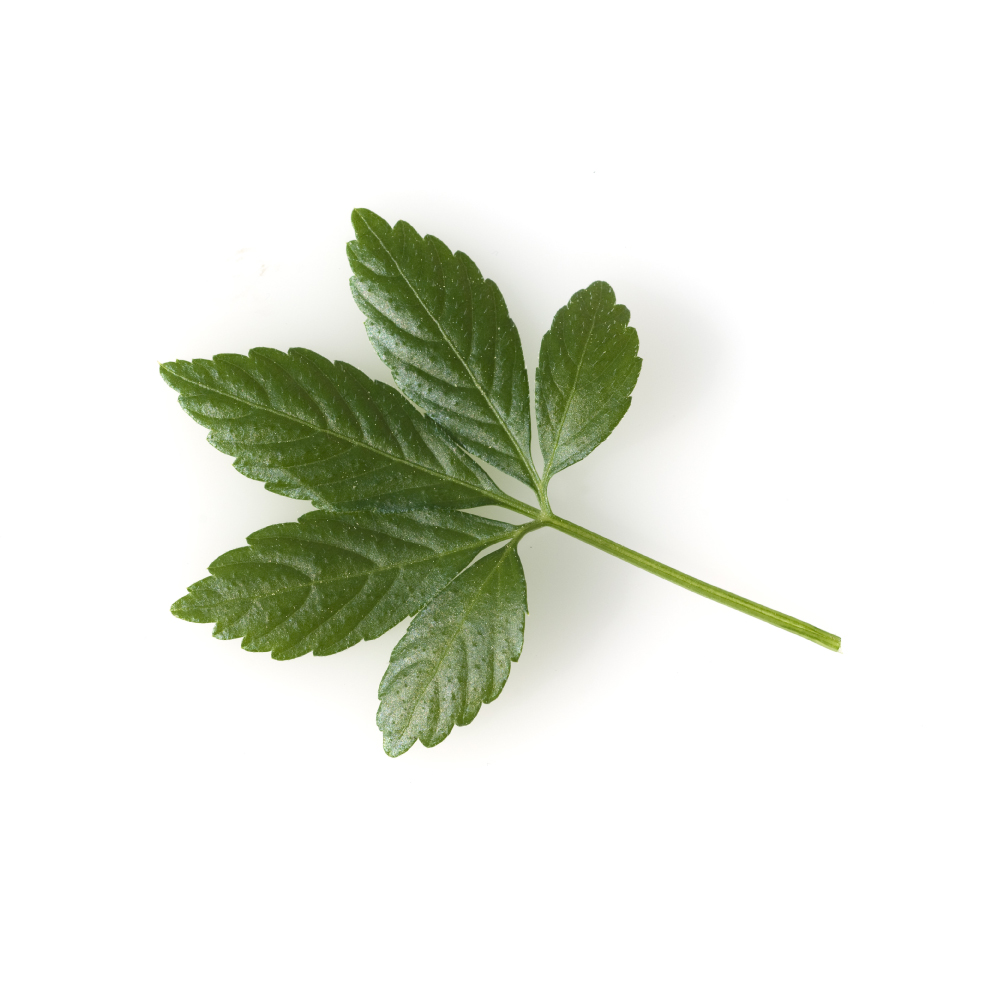
Gypenoside L is one of the dammarane-type saponins of jiaogulan (Gynostemma pentaphyllum) — the plant sometimes called "southern ginseng" because many of its gypenosides are structurally close to, or identical with, ginseng's ginsenosides. Its own isolated-molecule data is almost entirely in-vitro anticancer work (it pushes cancer cells into senescence and non-apoptotic death); the human evidence belongs to whole jiaogulan extract, not to the pure compound.

Sources · 2
Where Does It Come From?
Gypenoside L is a naturally occurring dammarane triterpenoid saponin (protopanaxadiol group), found in Jiaogulan and 1 other source. It is well tolerated orally (low toxicity).
Concentration
Content by Source
Concentrations not reported. No percent-dry-weight or mg/g figures have been published for this compound in its source plants.
Gypenoside L at a Glance
Gypenoside L is one of the dammarane-type triterpenoid saponins of jiaogulan (Gynostemma pentaphyllum), the vining herb widely sold as “southern ginseng.” It belongs to the protopanaxadiol branch of the dammarane family — the same skeleton that underpins ginseng’s ginsenosides — which is why jiaogulan and ginseng share part of their chemistry 10Reference 10ReviewChemistry and pharmacology of Gynostemma pentaphyllum — reviewView study →.
Two honesty notes frame everything below. First, “gypenosides” are almost always studied as a mixture, not as single molecules; jiaogulan’s ~200-plus saponins vary so much between plants that no individual gypenoside is reliably standardised 9Reference 9ReviewTriterpenoids from the genus Gynostemma: chemistry and pharmacological activities — reviewView study →. Isolated gypenoside-L-specific data is therefore scarce, and where it exists it is overwhelmingly in-vitro cancer-cell work 1,
The single most consistent isolated-molecule finding is that gypenoside L pushes cancer cells into senescence or into non-apoptotic forms of death in the dish — a laboratory anticancer signal, not a demonstrated human therapy.
Gypenosides & “Southern Ginseng”
Jiaogulan earns its “southern ginseng” nickname from chemistry, not folklore. Its active saponins, the gypenosides, are dammarane-type triterpenoids built on the same protopanaxadiol/protopanaxatriol skeletons as ginseng’s ginsenosides — and a meaningful slice of them are literally the same molecules. Around a quarter of jiaogulan’s total saponin pool is shared ginsenosides (including ginsenoside Rb1’s relatives Rb3, Rd and F2), which is the structural basis for jiaogulan being pitched as a cheaper, faster-growing source of ginseng-like saponins 10Reference 10ReviewChemistry and pharmacology of Gynostemma pentaphyllum — reviewView study →. The remaining gypenosides are close structural cousins rather than exact copies.
Two cautions keep this from being a simple “jiaogulan = ginseng” story:
- The mixture problem. Total gypenosides sit at roughly 2.4% of the dried plant, but the individual profile — how much gypenoside L versus A, IX, LVI, or shared Rb1 — swings widely with cultivar, ploidy and processing, and no single gypenoside is a dependable marker across products 9,
10Reference 9ReviewTriterpenoids from the genus Gynostemma: chemistry and pharmacological activities — reviewView study →Reference 10ReviewChemistry and pharmacology of Gynostemma pentaphyllum — reviewView study → . A “gypenoside-L-standardised” extract is a formulation choice, not a natural constant. - Isolate-L data is thin. Where gypenoside L has been studied as the isolate, it is almost entirely cell-culture anticancer work — its own distinctive signal is senescence induction and non-apoptotic cell death, not the tonic/adaptogenic profile the ginsenosides are known for 1,
2, . The senescence and hepatocellular-carcinoma findings are the reason gypenoside L is singled out at all; they are also entirely preclinical.3Reference 1In vitroGypenoside L inhibits proliferation of liver and esophageal cancer cells by inducing senescence — in vitroView study →Reference 2In vitroGypenoside L, isolated from Gynostemma pentaphyllum, induces cytoplasmic vacuolation death in hepatocellular carcinoma cells through reactive-oxygen-species-mediated unfolded protein response — in vitroView study →Reference 3In vitroGypenoside L inhibits autophagic flux and induces cell death in human esophageal cancer cells through endoplasm reticulum stress-mediated Ca²⁺ release — in vitroView study →
So the accurate framing is: jiaogulan is a legitimate dammarane-saponin source that overlaps with ginseng, gypenoside L is one of its individually-named members, and what we actually know about this molecule is a laboratory anticancer story — separate from the whole-extract human data on fatigue and metabolism.
What It's Used For
Gypenoside L’s evidence splits sharply by what was tested. The isolated molecule appears almost exclusively in in-vitro oncology; the human signals ride on whole jiaogulan extract that merely contains or is standardised to it.
Support is an experimental score — weighted by study type (human > animal > in vitro) and volume, tempered for isolate-vs-plant match and bioavailability. A beta, not a validated metric. Note the split: the best-studied application (anticancer) is isolate-but-in-vitro, while the applications with human data rest on whole extract, not gypenoside L itself.
The deepest isolated-gypenoside-L signal, and the reason the molecule is named at all — but it is entirely in cells (with one in-vivo xenograft). In liver (HepG2) and esophageal (ECA-109) cancer cells, isolated gypenoside L induced senescence — raised SA-β-galactosidase activity and senescence-associated secretory cytokines (IL-1α, IL-6, CXCL-1/2, TIMP-1) — through dose-dependent activation of p38 and ERK MAPK and NF-κB, and made the cells more sensitive to cisplatin and 5-fluorouracil 1Reference 1In vitroGypenoside L inhibits proliferation of liver and esophageal cancer cells by inducing senescence — in vitroView study →.
In hepatocellular-carcinoma cells it also triggered non-apoptotic deaths: ROS-mediated unfolded protein response with IP3R calcium release and cytoplasmic vacuolation 2Reference 2In vitroGypenoside L, isolated from Gynostemma pentaphyllum, induces cytoplasmic vacuolation death in hepatocellular carcinoma cells through reactive-oxygen-species-mediated unfolded protein response — in vitroView study →, and separately a block of autophagic flux with ER-stress calcium mobilisation in esophageal cells 3Reference 3In vitroGypenoside L inhibits autophagic flux and induces cell death in human esophageal cancer cells through endoplasm reticulum stress-mediated Ca²⁺ release — in vitroView study →.
More recent work reports it targeting the SREBP2–HMGCS1 mevalonate/cholesterol axis to curb HCC proliferation while enhancing MHC-I-linked anticancer immunity 4Reference 4In vitroGypenoside L inhibits hepatocellular carcinoma by targeting the SREBP2-HMGCS1 axis and enhancing immune response — in vitroView study →, and (with its sibling gypenoside LI) inhibiting clear-cell renal-cell carcinoma via MAPK and arachidonic-acid metabolism 5Reference 5In vitroGypenoside L and gypenoside LI inhibit proliferation in renal cell carcinoma via regulation of the MAPK and arachidonic acid metabolism pathways — in vitro + xenograftView study →.
Bioassay-guided fractionation ranked gypenoside L among the strongest jiaogulan constituents against A549 (lung) and MCF-7 (breast) lines 6Reference 6In vitroBioassay-guided isolation and identification of anticancer and antioxidant compounds from Gynostemma pentaphyllum (Thunb.) Makino — in vitroView study →.
Gap: every result is the isolated molecule in cell culture (plus a single renal xenograft) at micromolar exposures; there are no human trials, and no oral-dosing data showing these concentrations are reachable in a person given gypenoside L’s poor absorption 11Reference 11ReviewDammarane-type leads panaxadiol and protopanaxadiol for drug discovery: biological activity and structural modification — reviewView study →.
The only application with human data — and the caveat is structural. A randomised, double-blind, placebo-controlled trial of a gypenoside-L-standardised jiaogulan extract over 12 weeks improved maximal oxygen consumption (VO₂max) and O₂ pulse, lowered rating of perceived exertion, eased fatigue scores, and raised blood eNOS 7Reference 7RCTEffects of gypenoside L-containing Gynostemma pentaphyllum extract on fatigue and physical performance: a double-blind, placebo-controlled, randomized trialView study →.
A separate randomised study in healthy men found that jiaogulan extract increased 20-km time-trial performance and muscle oxygen flux, with greater exercise-induced AMPK (Thr172) activation 8Reference 8RCTGynostemma pentaphyllum increases exercise performance and alters mitochondrial respiration and AMPK in healthy males — randomized human trialView study →.
Both are genuine human trials — but of the whole extract, in which gypenoside L is one saponin among many, so the benefit cannot be attributed to the isolate.
Gap: no trial has given isolated gypenoside L to people; “gypenoside-L-standardised” names the marker used to define the extract, not the active agent proven responsible 7Reference 7RCTEffects of gypenoside L-containing Gynostemma pentaphyllum extract on fatigue and physical performance: a double-blind, placebo-controlled, randomized trialView study →.
A whole-plant, class-level story that is often loosely attached to gypenoside L. Total gypenosides (the mixture) reduced serum transaminases (SGOT/SGPT) and cut collagen deposition by about a third in CCl₄-induced rat liver fibrosis 13Reference 13AnimalTherapeutic effect of gypenoside on chronic liver injury and fibrosis induced by CCl₄ in rats — animal modelView study →, and jiaogulan’s metabolic and anti-fatigue effects track AMPK activation by the saponin fraction 8,
Gap: hepatoprotection and AMPK-driven metabolic benefit are documented for the gypenoside mixture / whole extract in rodents, not for isolated gypenoside L; the molecule’s own liver evidence is anti-tumour, not protective 9,
Mechanisms
| Target / pathway | Effect | Relevant to |
|---|---|---|
| p38 & ERK MAPK | dose-dependent activation → cellular senescence | anticancer / senescence |
| NF-κB | phosphorylation/activation → senescence-associated secretory cytokines | anticancer / senescence |
| ROS → protein ubiquitination → unfolded protein response | ER IP3R Ca²⁺ release → cytoplasmic vacuolation death | anticancer (HCC) |
| Autophagic flux | blockade + ER-stress Ca²⁺ mobilisation → non-apoptotic death | anticancer (esophageal) |
| SREBP2 → HMGCS1 / HMGCR / MVK (mevalonate pathway) | suppressed cholesterol & triglyceride synthesis; ↑ MHC-I antitumour immunity | anticancer / metabolic |
| MAPK (DUSP1, p-JNK ↑; p-MEK/ERK/p38 ↓) + arachidonic-acid metabolism | anti-proliferative, pro-apoptotic | anticancer (renal) |
| AMPK (Thr172) — whole extract | activation → improved exercise metabolism | fatigue / metabolic |
| eNOS — whole extract | raised nitric-oxide signalling | exercise / vascular |
The load-bearing point: the isolate mechanisms (senescence, ROS-UPR, cholesterol-axis) are all cell-culture anticancer routes, while the whole-extract mechanisms (AMPK, eNOS) carry the human benefits — two different bodies of evidence that should not be merged.
Pharmacokinetics
There is no published human pharmacokinetics for isolated gypenoside L, and this is the load-bearing caveat under the in-vitro anticancer data. As a large, glycosylated protopanaxadiol-type dammarane saponin, it belongs to a class whose defining pharmacokinetic feature is poor oral absorption: low membrane permeability and gut-wall handling severely limit the bioavailability of these saponins, and the aglycone/deglycosylated forms are more absorbable than the intact glycosides 11Reference 11ReviewDammarane-type leads panaxadiol and protopanaxadiol for drug discovery: biological activity and structural modification — reviewView study →. What little Gynostemma-specific pharmacokinetic work exists was done on other gypenosides (LVI and XLVI) and their protopanaxadiol metabolites in rat plasma, not on gypenoside L 12Reference 12AnimalSimultaneous determination of gypenoside LVI, gypenoside XLVI, 2α-OH-protopanaxadiol and their two metabolites in rat plasma by LC-MS/MS and its application to pharmacokinetic studies — ratView study →. By analogy with the closely related ginsenosides, intact oral saponin likely reaches tissue in only small amounts, with gut-microbial deglycosylation shaping the actual exposure — meaning the micromolar concentrations used in the cancer-cell studies may not be achievable from an oral dose.
Clinical Trials
There are no clinical trials of isolated gypenoside L. The human evidence attached to the name is for whole jiaogulan extract — a gypenoside-L-standardised extract for fatigue/exercise 7Reference 7RCTEffects of gypenoside L-containing Gynostemma pentaphyllum extract on fatigue and physical performance: a double-blind, placebo-controlled, randomized trialView study → and a jiaogulan extract for exercise performance and AMPK 8Reference 8RCTGynostemma pentaphyllum increases exercise performance and alters mitochondrial respiration and AMPK in healthy males — randomized human trialView study → — where the isolate’s individual contribution is unknown.
| Completed | Planned | Terminated | Preclinical |
|---|---|---|---|
| None(isolated Gyp-L); whole-extract RCTs only 7, | None identified | None | Extensive(in-vitro anticancer) |
Last checked: July 2026.
Isolate vs. Plant Studies
This molecule is a clean case of the two literatures pointing in different directions. The isolated-compound evidence is real but narrow: reproducible in-vitro anticancer activity — senescence, ROS-UPR, autophagy blockade, cholesterol-axis suppression — across liver, esophageal, renal, lung and breast lines, with a single renal xenograft 1,
Prevalence in Nature
Gypenoside L occurs in jiaogulan (Gynostemma pentaphyllum), chiefly the leaf, as one member of a saponin family exceeding 200 structures; related Gynostemma species (e.g. G. longipes) carry overlapping dammarane saponins 9Reference 9ReviewTriterpenoids from the genus Gynostemma: chemistry and pharmacological activities — reviewView study →. Total gypenoside saponins amount to roughly 2.4% of the dried plant, of which about a quarter are ginsenosides shared with Panax ginseng — the chemical basis of the “southern ginseng” label 10Reference 10ReviewChemistry and pharmacology of Gynostemma pentaphyllum — reviewView study →. The individual abundance of gypenoside L is not reliably quantified or standardised: it varies with cultivar, ploidy level and how the leaf is processed, and no single gypenoside serves as a dependable content marker across products 9,
Discovery & Synthesis
The gypenoside saponins were first catalogued in the early 1980s, when Takemoto and colleagues isolated and named gypenosides I–XIV from Gynostemma pentaphyllum (alongside the already-known ginsenosides Rb1, Rb3, Rd and F2 they found in the same plant), published in 1983 14Reference 14Studies on the constituents of Gynostemma pentaphyllum MakinoView study →. The numbering was extended in subsequent studies well past fifty members; gypenoside L (Roman numeral 50) belongs to that later series, and a discrete first-isolation record for it specifically is not well documented. There is no reported total synthesis: like the ginsenosides, gypenoside L is obtained by extraction and chromatographic fractionation from jiaogulan leaf, typically by bioassay-guided isolation 6Reference 6In vitroBioassay-guided isolation and identification of anticancer and antioxidant compounds from Gynostemma pentaphyllum (Thunb.) Makino — in vitroView study →, rather than by chemical manufacture. No commercial isolate is produced at scale; what reaches people is whole or partially-purified jiaogulan extract.
Patents: not yet researched.
Toxicity & Safety
Gypenoside L carries a low toxicity flag, in line with the broadly favourable safety record of jiaogulan and the dammarane saponins generally — but this is a class inference and a whole-extract observation, not a characterised safety package for the isolated molecule. No dedicated repeat-dose, genotoxicity or reproductive-toxicity dataset exists for pure gypenoside L, and its cytotoxicity to cancer cells in vitro says nothing about systemic safety at achievable oral exposures (which are limited by poor absorption anyway 11Reference 11ReviewDammarane-type leads panaxadiol and protopanaxadiol for drug discovery: biological activity and structural modification — reviewView study →).
- Low apparent toxicity in context. Jiaogulan and its dammarane saponins have a generally benign safety record at dietary/supplemental extract doses.
- Isolate is uncharacterised. No repeat-dose, genotoxicity, reproductive or human safety data exist for pure gypenoside L; its profile is inferred from the plant and the saponin class.
- Preparation matters. Whole-leaf tea, standardised extracts, and “gypenoside-L-standardised” products are not interchangeable — human trial results attach to specific extracts, not to the isolate 7,
9Reference 7RCTEffects of gypenoside L-containing Gynostemma pentaphyllum extract on fatigue and physical performance: a double-blind, placebo-controlled, randomized trialView study →Reference 9ReviewTriterpenoids from the genus Gynostemma: chemistry and pharmacological activities — reviewView study → . - Interactions not formally studied. No enzyme/transporter interaction work exists for isolated gypenoside L; the AMPK/metabolic activity of jiaogulan extract 8Reference 8RCTGynostemma pentaphyllum increases exercise performance and alters mitochondrial respiration and AMPK in healthy males — randomized human trialView study → is a theoretical reason for caution alongside glucose-lowering therapy, extrapolated from the plant, not the molecule.
Pregnancy and lactation are decided on the herb or product where intake actually happens (see jiaogulan), not on this molecule page; no isolate-specific reproductive data exist to add here.
Dosage
There is no established human dose of isolated gypenoside L — it is a research compound, not a standardised supplement. The human trials that name it dosed whole jiaogulan extract standardised to (or containing) gypenoside L rather than the pure molecule 7,
References
- Ma J, Hu X, Liao C, et al. (2019). Gypenoside L inhibits proliferation of liver and esophageal cancer cells by inducing senescence — in vitro. Molecules. https://pubmed.ncbi.nlm.nih.gov/30889805/
- Zheng K, Liao C, Li Y, et al. (2016). Gypenoside L, isolated from Gynostemma pentaphyllum, induces cytoplasmic vacuolation death in hepatocellular carcinoma cells through reactive-oxygen-species-mediated unfolded protein response — in vitro. Journal of Agricultural and Food Chemistry. https://pubmed.ncbi.nlm.nih.gov/26870999/
- Liao C, Zheng K, Li Y, et al. (2016). Gypenoside L inhibits autophagic flux and induces cell death in human esophageal cancer cells through endoplasm reticulum stress-mediated Ca²⁺ release — in vitro. Oncotarget. https://pubmed.ncbi.nlm.nih.gov/27329722/
- Xiao MY, Pei WJ, Li S, et al. (2024). Gypenoside L inhibits hepatocellular carcinoma by targeting the SREBP2-HMGCS1 axis and enhancing immune response — in vitro. Bioorganic Chemistry. https://pubmed.ncbi.nlm.nih.gov/38861912/
- Liu H, Li X, Xie J, et al. (2022). Gypenoside L and gypenoside LI inhibit proliferation in renal cell carcinoma via regulation of the MAPK and arachidonic acid metabolism pathways — in vitro + xenograft. Frontiers in Pharmacology. https://pubmed.ncbi.nlm.nih.gov/35370678/
- Wang TX, Shi MM, Jiang JG (2018). Bioassay-guided isolation and identification of anticancer and antioxidant compounds from Gynostemma pentaphyllum (Thunb.) Makino — in vitro. RSC Advances. https://pubmed.ncbi.nlm.nih.gov/35540147/
- Ahn Y, Lee HS, Lee SH, et al. (2023). Effects of gypenoside L-containing Gynostemma pentaphyllum extract on fatigue and physical performance: a double-blind, placebo-controlled, randomized trial. Phytotherapy Research. https://pubmed.ncbi.nlm.nih.gov/36877124/
- Nayyar D, Yan X, Xu G, et al. (2023). Gynostemma pentaphyllum increases exercise performance and alters mitochondrial respiration and AMPK in healthy males — randomized human trial. Nutrients. https://pubmed.ncbi.nlm.nih.gov/38004115/
- Nguyen NH, Ha TKQ, Yang JL, et al. (2021). Triterpenoids from the genus Gynostemma: chemistry and pharmacological activities — review. Journal of Ethnopharmacology. https://pubmed.ncbi.nlm.nih.gov/33186700/
- Razmovski-Naumovski V, Huang THW, Tran VH, et al. (2005). Chemistry and pharmacology of Gynostemma pentaphyllum — review. Phytochemistry Reviews. https://doi.org/10.1007/s11101-005-3754-4
- Wang M, Li H, Liu W, et al. (2020). Dammarane-type leads panaxadiol and protopanaxadiol for drug discovery: biological activity and structural modification — review. European Journal of Medicinal Chemistry. https://pubmed.ncbi.nlm.nih.gov/32007667/
- Zhang L, Lin Y, Guan H, et al. (2015). Simultaneous determination of gypenoside LVI, gypenoside XLVI, 2α-OH-protopanaxadiol and their two metabolites in rat plasma by LC-MS/MS and its application to pharmacokinetic studies — rat. Journal of Chromatography B. https://pubmed.ncbi.nlm.nih.gov/26454343/
- Chen JC, Tsai CC, Chen LD, et al. (2000). Therapeutic effect of gypenoside on chronic liver injury and fibrosis induced by CCl₄ in rats — animal model. The American Journal of Chinese Medicine. https://pubmed.ncbi.nlm.nih.gov/10999436/
- Takemoto T, Arihara S, Nakajima T, Okuhira M (1983). Studies on the constituents of Gynostemma pentaphyllum Makino. I. Structures of gypenoside I–XIV. Yakugaku Zasshi. https://doi.org/10.1248/yakushi1947.103.2_173



