
Iodine at a Glance
Iodine is a trace mineral the body needs for one job and essentially one job only: building thyroid hormone. Thyroxine (T4) carries four iodine atoms per molecule and triiodothyronine (T3) carries three, so without a steady supply the thyroid cannot make the hormones that set metabolic rate. The thyroid is the only tissue that concentrates iodine in quantity, which makes it unusual among nutrients — almost everything iodine does, it does through the thyroid.
We get iodine from food, and how much is in food depends almost entirely on how much is in the local soil and sea. Seafood, dairy and eggs are the reliable natural sources; most inland plant foods carry very little. The single largest source for most people is iodised table salt — a deliberate public-health intervention rather than a natural feature of the diet.
Iodine is a nutrient with a real deficiency state to correct, not a molecule that does more the more you take. The dose–response curve is U-shaped, and both ends cause thyroid disease. Correcting a genuine deficiency prevents goitre, hypothyroidism and, in pregnancy, irreversible harm to a baby’s brain development. Piling extra iodine onto an already-adequate intake does not add benefit and can itself trigger thyroid dysfunction. If you live somewhere with iodised salt and eat a normal mixed diet you are almost certainly getting enough, and high-dose iodine or seaweed supplements are more likely to harm than help — particularly in autoimmune thyroid disease.
What It’s Used For
Iodine’s uses divide sharply into fixing a shortfall, which is well supported, and adding extra for benefit, which mostly is not.
- Preventing iodine deficiency disorders — correcting a deficiency prevents goitre and hypothyroidism. The core, well-established use and the basis for salt iodisation worldwide.
- Protecting fetal brain development — adequate iodine in pregnancy is essential, and correcting moderate-to-severe deficiency protects the developing brain.
- Children’s cognitive development — deficient children score lower on cognitive measures and correction helps. A genuine effect, dependent on deficiency.
- Blocking radioactive iodine in an emergency — high-dose potassium iodide saturates the thyroid to keep radioiodine out. A specific, time-limited countermeasure, not a daily supplement.
- Thyroid function in mild-to-moderate deficiency — supplementing shifts thyroid markers, but whether it improves clinical outcomes at mild deficiency is much less clear.
- Molecular iodine for cyclic breast pain — an emerging, breast-specific use with a couple of small trials.
Be sceptical of high-dose “thyroid support” and kelp or bladderwrack supplements for fatigue, weight or energy in people who are not deficient; of the idea that more iodine means better thyroid function; and of the claim that mild maternal deficiency can be safely fixed with a supplement late in pregnancy — the best trial found no benefit, and correction should happen before conception.
How It Works
Iodine enters the thyroid through a dedicated pump, the sodium-iodide symporter, which actively concentrates iodide from the blood to many times its plasma level. Inside the gland, thyroid peroxidase attaches — organifies — iodine onto tyrosine residues of the large protein thyroglobulin. Coupling those iodinated tyrosines builds T4 and T3, which are then released to control metabolic rate, growth and, critically in early life, brain development. Because thyroid hormone is the only place the body uses iodine in bulk, iodine status is essentially a story about thyroid hormone supply.
The gland protects itself against both shortage and excess. When iodine is scarce the pituitary raises TSH, which drives the thyroid to trap more iodine and grow — the enlargement seen as goitre. When iodine floods in, the thyroid temporarily shuts down hormone synthesis: the Wolff-Chaikoff effect. A healthy thyroid escapes this block within days, but some people — newborns, fetuses, those with autoimmune thyroid disease or prior thyroid surgery — fail to escape and become hypothyroid on high iodine. This autoregulation is why the same nutrient sits at both ends of the U-shaped curve.
Two wrinkles explain why iodine results vary. First, deficiency-dependence: nearly every benefit of supplementation appears only in people who were short to begin with; in a replete person extra iodine has no hormone-building room to fill and simply raises the risk of overload. Second, susceptibility: in people carrying thyroid autoantibodies, a rise in iodine intake can accelerate Hashimoto’s thyroiditis — so an intervention that helps a deficient population can harm an autoimmune-prone individual. Selenium status modifies this response, which is one reason correction is best supervised rather than improvised.
Pharmacology & Research
Iodine is an essential trace mineral whose entire physiological role is as the substrate for thyroid hormone synthesis. The evidence posture is unusual: the case for correcting deficiency is among the strongest in all of nutrition — decades of ecological, cohort and interventional data plus one of the most successful public-health programmes ever run — while the case for supplementing iodine-replete people is essentially absent, and high intakes carry real thyroid risk. Throughout, the decision-relevant distinction is deficiency-correction versus extra-on-top, and effects seen in deficient populations should not be read as general benefits. Iodine is delivered as potassium iodide, potassium iodate, or (for breast tissue) molecular iodine; these differ in how they distribute but all feed the same thyroidal pathway.
Support is an experimental score I’m building — a composite weighted by study type (human > animal > in vitro > review) and study volume. It’s a beta: a fast way to rank strength of evidence at a glance, not a validated metric. Each application links down to its write-up.
Iodine deficiency is the leading preventable cause of goitre, hypothyroidism and intellectual disability worldwide, and the case for correcting it is one of the strongest in nutrition 1Reference 1ReviewIodine deficiency and thyroid disorders — reviewView study →.
The evidence is a convergence of ecological data — goitre and cretinism belts mapping onto iodine-poor soils — controlled iodine-repletion programmes, and monitoring of population thyroid status before and after intervention. Universal salt iodisation, delivering iodide or iodate at microgram doses, has eliminated iodine-deficiency disorders across whole countries and regions and is regarded as among the most cost-effective public-health measures ever implemented 2,
The intervention works precisely because it corrects a shortfall: it restores the substrate the thyroid was missing.
Gap: the benefit is entirely deficiency-dependent — it says nothing about supplementing people whose intake is already adequate, in whom added iodine offers no gain and carries overload risk.
Thyroid hormone is essential for fetal brain development, and maternal iodine requirements rise in pregnancy to 220 µg/day. In moderately-to-severely deficient populations, correcting maternal iodine deficiency protects offspring neurodevelopment; systematic reviews of randomised and observational data support this where baseline deficiency is real 4,
This is why iodine sufficiency before and during pregnancy is a near-universal antenatal recommendation. Critically, though, the strongest randomised evidence comes from deficient settings — the benefit tracks the size of the shortfall being corrected, not iodine intake in general 7,
Gap: in mildly deficient women, supplementation begun during pregnancy has not shown a neurodevelopmental benefit, so the practical message is to achieve adequacy before conception rather than to add iodine late.
A systematic review and meta-analysis of children five years and under found that iodine deficiency is associated with poorer mental development, and that iodine repletion improves cognitive measures in deficient children 5Reference 5Meta-analysisIodine and mental development of children 5 years old and under — systematic review and meta-analysisView study →. This aligns with the broader picture that the developing brain is the tissue most vulnerable to iodine shortage, and it underpins programmes targeting iodine status in women of reproductive age and young children.
Gap: the effect is measured against a deficient baseline and uses developmental or IQ proxies; it does not imply cognitive gains from supplementing iodine-sufficient children.
In a nuclear emergency, high-dose potassium iodide — orders of magnitude above nutritional intake, around 130 mg for adults — saturates the thyroid so that inhaled or ingested radioactive iodine cannot be taken up, reducing the later risk of radiation-induced thyroid cancer. This is guideline-backed practice: the American Thyroid Association scientific statement details indications, dosing and timing 10Reference 10American Thyroid Association scientific statement on the use of potassium iodide ingestion in a nuclear emergency — practice statementView study →, and a systematic review of thyroid outcomes after nuclear accidents supports iodine blocking, especially for children 11Reference 11Systematic reviewThe effects of iodine blocking on thyroid cancer, hypothyroidism and benign thyroid nodules following nuclear accidents — systematic reviewView study →.
The mechanism — competitive saturation of the sodium-iodide symporter plus the Wolff-Chaikoff block — is well established.
Gap: the human outcome evidence is observational rather than randomised, benefit depends on correct timing relative to exposure, and this is a one-off emergency countermeasure carrying its own risk of transient hypothyroidism — not a chronic supplement.
In mild-to-moderate iodine deficiency, supplementation measurably shifts thyroid parameters — thyroglobulin, thyroid volume and, variably, TSH and thyroid hormone levels — as shown in a meta-analysis of controlled trials 9Reference 9Meta-analysisImpact of iodine supplementation in mild-to-moderate iodine deficiency — systematic review and meta-analysisView study →.
A broader meta-analysis confirms that iodine supplementation changes thyroid-function markers, but with heterogeneity and a risk of tipping some individuals toward dysfunction 8Reference 8Meta-analysisEffects of iodine supplementation during pregnancy on pregnant women and their offspring — systematic review and meta-analysisView study →.
Forms used are iodide or iodate at microgram-to-low-milligram doses.
Gap: biomarker shifts are not the same as clinical benefit; at mild deficiency the case for routine supplementation is weak, and over-correction can induce iodine-excess hypothyroidism or unmask hyperthyroidism.
Molecular iodine (I₂), which distributes to breast tissue rather than being trapped only by the thyroid, has been tested for cyclic breast pain associated with fibrocystic change. A randomised dose-ranging trial reported reduced breast pain and tenderness at supraphysiologic molecular-iodine doses versus placebo 16Reference 16RCTThe effect of supraphysiologic levels of iodine on patients with cyclic mastalgia — randomised controlled trialView study →, and a later multicentre randomised trial of a molecular-iodine-containing formula reported reduced cyclic breast pain 17Reference 17RCTA randomised controlled multicentre trial of an investigational liquid nutritional formula in women with cyclic breast pain associated with fibrocystic breast changes — randomised controlled trialView study →.
The signal is breast-specific and mechanistically distinct from iodine’s thyroid role.
Gap: the trial base is small, some studies are industry-sponsored, doses are far above nutritional intake, and independent long-term replication and safety data are limited — a candidate therapy, not an established one.
Mechanisms
| Target / pathway | Effect | Relevant to |
|---|---|---|
| Sodium-iodide symporter (NIS) | Actively concentrates iodide into the thyroid; saturated deliberately in emergency dosing to block radioiodine | All thyroidal uses; radiation blocking |
| Thyroid peroxidase (TPO) | Organifies iodine onto thyroglobulin tyrosines | Hormone synthesis; deficiency correction |
| Thyroglobulin / T4 & T3 assembly | Iodinated tyrosines couple into T4 (4 I) and T3 (3 I) | Deficiency disorders; neurodevelopment |
| Hypothalamic-pituitary-thyroid axis | Low iodine → high TSH → gland hypertrophy (goitre) | Goitre; deficiency disorders |
| Wolff-Chaikoff autoregulation | Acute iodine excess transiently halts hormone synthesis; failure to escape → hypothyroidism | Iodine-excess disease; radiation blocking |
| Breast tissue iodine uptake | Molecular iodine distributes to breast; proposed antiproliferative and analgesic effect | Cyclic mastalgia |
Pharmacokinetics
Dietary iodide is almost completely absorbed in the stomach and small intestine, above 90%. Circulating iodide is cleared by two competing routes — thyroidal uptake via the symporter and renal excretion — which is why urinary iodine concentration is the standard population marker of intake. A healthy adult thyroid holds roughly 15–20 mg of iodine and turns over its trapped iodine slowly, while plasma inorganic iodide has a half-life on the order of hours because it is rapidly either trapped or excreted. Iodine incorporated into thyroid hormone then follows thyroxine’s much longer kinetics, with a T4 half-life of about 7 days. Absorption is efficient across the usual forms; molecular iodine behaves differently in that a portion distributes to non-thyroidal tissue including breast. The decision-relevant point is autoregulation rather than absorption: because the thyroid defends a set internal iodine pool, giving far more than needed does not proportionally raise hormone output but does raise the risk of triggering the Wolff-Chaikoff block.
Clinical trials
Iodine is an unpatentable public-health nutrient, so most rigorous evidence comes from government- and academic-funded deficiency-correction trials and monitoring programmes rather than industry drug development. Registered interventional activity centres on pregnancy neurodevelopment, salt-iodisation monitoring, and molecular iodine for breast conditions.
| Completed | Planned / recruiting | Terminated | Preclinical |
|---|---|---|---|
| ~40+ | ~10 | Few | Extensive(mechanistic, decades) |
Last checked: August 2026.
Dietary Sources
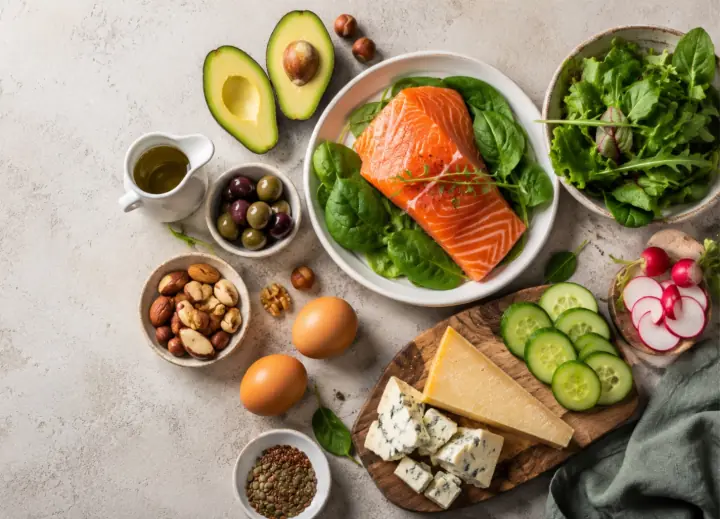
Iodine in food is essentially a mirror of local geology: it enters the food chain from soil and seawater, so content varies enormously by region and by whether iodised salt is used. The reliable natural sources are marine — seafood and seaweed — plus dairy and eggs, largely because of iodine in animal feed and dairy sanitisers. Most plant foods grown inland carry very little.
| Source | Approximate iodine | Notes |
|---|---|---|
| Seaweed (kelp, nori, wakame) | Highly variable — ~15 µg to several thousand µg per gram | Can massively exceed the upper limit; kelp and bladderwrack supplements are a genuine overdose hazard |
| Cod / haddock (85 g) | ~100–160 µg | Among the most iodine-dense common foods |
| Iodised table salt (1.5 g, ~¼ tsp) | ~70 µg | The main dietary source for most people; not naturally present in salt |
| Milk / dairy (1 cup) | ~55–90 µg | A major source in many Western diets |
| Egg (1 large) | ~25 µg | Concentrated in the yolk |
| Shrimp (85 g) | ~35 µg | — |
| Bread | Variable | Depends on whether iodate dough conditioners are used |
What lowers intake: switching to non-iodised speciality salts — sea salt, Himalayan, kosher — without other marine sources; plant-based diets that exclude dairy, eggs and fish; and goitrogens in raw cruciferous vegetables and soy, which modestly interfere with uptake, mainly when iodine is already low. Absorption of dietary iodide is efficient, above 90%.
Dosage
The figures below are reference intakes and doses studied in research, not a personal recommendation.
- RDA: 150 µg/day for adults; 220 µg/day in pregnancy; 290 µg/day during lactation; 90–120 µg/day for children depending on age.
- Tolerable Upper Intake Level: 1,100 µg/day for adults, lower for children. The upper limit counts iodine from supplements and food — a single kelp tablet can exceed it many times over.
- Typical supplement: 150 µg/day of potassium iodide or iodate, often as part of a prenatal formulation, is enough to meet the RDA for someone not getting it from diet.
- Therapeutic and emergency doses — radiation thyroid blocking at around 130 mg KI for adults, or molecular iodine at 3–6 mg for breast conditions — are clinician-directed, far above nutritional intake, and outside the scope of routine supplementation.
Iodine does not need dose-splitting the way some minerals do, and it is absorbed well with or without food. The usual advice is not “take more” but “achieve adequacy”: most people in countries using iodised salt already meet the RDA, so blanket supplementation adds risk without benefit. Where a genuine shortfall exists — pregnancy, exclusion diets, regions without salt iodisation — a modest RDA-level supplement is appropriate.
Safety
Iodine is two-edged in a way few nutrients are: the same U-shaped curve that makes deficiency dangerous makes excess dangerous too. Iodine at reference intake is safe and necessary, but iodine well above it — especially from kelp, bladderwrack or “thyroid support” megadoses — is a real cause of thyroid disease, not a supportive measure.
- Reference-intake iodine is safe and essential. Meeting the RDA of 150 µg/day, more in pregnancy and lactation, prevents deficiency without meaningful risk.
- Benefit is deficiency-dependent. Supplementing when intake is already adequate offers no gain and moves you toward the risky end of the curve.
- Correct before conception, not late in pregnancy. The best randomised trial found no neurodevelopmental benefit from iodine started during a mildly deficient pregnancy.
- Excess can induce thyroid disease. High intake can cause iodine-induced hypothyroidism or precipitate hyperthyroidism, particularly in autoimmune-prone or elderly people.
- Kelp and bladderwrack carry wildly variable, sometimes enormous iodine loads. A single serving can exceed the upper limit many-fold.
- Specific hazard in Hashimoto’s. Higher iodine intake can accelerate autoimmune thyroiditis; do not supplement above reference intake without clinical supervision.
Full Safety & Interactions Detail
At nutritional (microgram) doses iodine is safe, and adverse effects are almost entirely a story of excess. Acute large doses can cause a metallic taste, gastrointestinal upset, sialadenitis and, rarely, hypersensitivity reactions. The dose-limiting concern with chronic excess is thyroid dysfunction in both directions: iodine-induced hypothyroidism via a failure to escape the Wolff-Chaikoff block — most likely in fetuses, neonates, people with autoimmune thyroiditis, and after thyroid surgery — and iodine-induced hyperthyroidism, the Jod-Basedow phenomenon, most likely in older people with nodular goitre after a rise in iodine intake 12,
Large population data show that both low and high iodine intake raise the incidence of thyroid disease, with excess associated with more subclinical hypothyroidism and autoimmune thyroiditis 13Reference 13ObservationalEffect of iodine intake on thyroid diseases in China — cohort studyView study →.
Iodine is one of several nutritional factors implicated in the risk of Hashimoto’s thyroiditis, so a step-up in intake is specifically hazardous in people who already carry thyroid autoantibodies 15Reference 15ReviewMultiple nutritional factors and the risk of Hashimoto’s thyroiditis — reviewView study →.
Interactions by drug class. Iodine adds to or antagonises antithyroid drugs (methimazole, propylthiouracil) and can complicate their dosing. Lithium and iodine both suppress the thyroid, and together increase hypothyroidism and goitre risk. Amiodarone is itself an enormous iodine load, so additional iodine compounds the risk of amiodarone-induced thyroid dysfunction. Potassium-sparing diuretics and ACE inhibitors combined with potassium-iodide preparations can raise serum potassium. Radioactive-iodine therapy and thyroid scans require prior iodine restriction, so supplements and kelp should be stopped beforehand on medical advice.
Who should be cautious. Anyone with autoimmune thyroid disease, nodular goitre, prior thyroid surgery or radioiodine treatment; neonates; and pregnant or breastfeeding women considering anything above reference intake.
Scope disclosure. Interactions assessed? Yes — antithyroid drugs, lithium, amiodarone, potassium-sparing diuretics and ACE inhibitors, and radioiodine procedures. Pregnancy/lactation assessed? Yes. Upper limit established? Yes — 1,100 µg/day for adults, counting food plus supplements.
Caution. Adequate iodine is essential in pregnancy — the requirement rises to 220 µg/day, and 290 µg/day during lactation — and correcting genuine deficiency protects fetal brain development. The caution is directional: meet the reference intake, typically via a prenatal supplement where dietary iodine is low, but do not exceed it, and specifically avoid high-dose iodine and kelp or bladderwrack, which can suppress the fetal or infant thyroid. Where deficiency is only mild, the priority is achieving adequacy before conception — the strongest randomised trial found no neurodevelopmental benefit from starting supplementation during a mildly deficient pregnancy 6Reference 6RCTEffect of iodine supplementation in pregnant women on child neurodevelopment — randomised, double-blind, placebo-controlled trialView study →.
References
- Zimmermann MB, Boelaert K (2015). Iodine deficiency and thyroid disorders — review. The Lancet Diabetes & Endocrinology. https://pubmed.ncbi.nlm.nih.gov/25591468/
- Maberly GF, et al. (2003). Iodine deficiency: consequences and progress toward elimination — review. Food and Nutrition Bulletin. https://pubmed.ncbi.nlm.nih.gov/17016950/
- Pretell EA, et al. (2024). A history of the elimination of iodine deficiency disorders in the Americas — review. The Journal of Nutrition. https://pubmed.ncbi.nlm.nih.gov/39419352/
- Zhou SJ, et al. (2013). Effect of iodine supplementation in pregnancy on child development and other clinical outcomes — systematic review of randomised controlled trials. American Journal of Clinical Nutrition. https://pubmed.ncbi.nlm.nih.gov/24025628/
- Bougma K, et al. (2013). Iodine and mental development of children 5 years old and under — systematic review and meta-analysis. Nutrients. https://pubmed.ncbi.nlm.nih.gov/23609774/
- Gowachirapant S, et al. (2017). Effect of iodine supplementation in pregnant women on child neurodevelopment — randomised, double-blind, placebo-controlled trial. The Lancet Diabetes & Endocrinology. https://pubmed.ncbi.nlm.nih.gov/29030199/
- Dineva M, et al. (2020). Effects of iodine supplementation on thyroid function and child neurodevelopment in mildly-to-moderately iodine-deficient pregnant women — systematic review and meta-analysis. American Journal of Clinical Nutrition. https://pubmed.ncbi.nlm.nih.gov/32320029/
- Nazeri P, et al. (2021). Effects of iodine supplementation during pregnancy on pregnant women and their offspring — systematic review and meta-analysis. European Journal of Endocrinology. https://pubmed.ncbi.nlm.nih.gov/33112293/
- Taylor PN, et al. (2014). Impact of iodine supplementation in mild-to-moderate iodine deficiency — systematic review and meta-analysis. European Journal of Endocrinology. https://pubmed.ncbi.nlm.nih.gov/24088547/
- Leung AM, et al. (2017). American Thyroid Association scientific statement on the use of potassium iodide ingestion in a nuclear emergency — practice statement. Thyroid. https://pubmed.ncbi.nlm.nih.gov/28537500/
- Pfinder M, et al. (2016). The effects of iodine blocking on thyroid cancer, hypothyroidism and benign thyroid nodules following nuclear accidents — systematic review. Journal of Radiological Protection. https://pubmed.ncbi.nlm.nih.gov/27655110/
- Bürgi H (2010). Iodine excess — review. Best Practice & Research Clinical Endocrinology & Metabolism. https://pubmed.ncbi.nlm.nih.gov/20172475/
- Teng W, et al. (2006). Effect of iodine intake on thyroid diseases in China — cohort study. New England Journal of Medicine. https://pubmed.ncbi.nlm.nih.gov/16807415/
- Sohn SY, et al. (2024). Risks of iodine excess — review. Endocrine Reviews. https://pubmed.ncbi.nlm.nih.gov/38870258/
- Hu S, Rayman MP (2017). Multiple nutritional factors and the risk of Hashimoto’s thyroiditis — review. Thyroid. https://pubmed.ncbi.nlm.nih.gov/28290237/
- Kessler JH (2004). The effect of supraphysiologic levels of iodine on patients with cyclic mastalgia — randomised controlled trial. The Breast Journal. https://pubmed.ncbi.nlm.nih.gov/15239792/
- Mansel RE, et al. (2018). A randomised controlled multicentre trial of an investigational liquid nutritional formula in women with cyclic breast pain associated with fibrocystic breast changes — randomised controlled trial. Journal of Women’s Health. https://pubmed.ncbi.nlm.nih.gov/29237134/