
Compound Monograph
Matricin
Matricin is the colourless guaianolide proazulene that German chamomile actually contains — the heat-labile precursor whose breakdown during steam distillation creates the blue chamazulene. Unusually for a sesquiterpene lactone it has no reactive exocyclic methylene, and the best evidence treats it as a natural prodrug of chamazulene carboxylic acid.

Sources · 4
Where Does It Come From?
Matricin is a naturally occurring sesquiterpene lactone (guaianolide proazulene), found in German chamomile and 3 other sources. It is well tolerated orally (low toxicity).
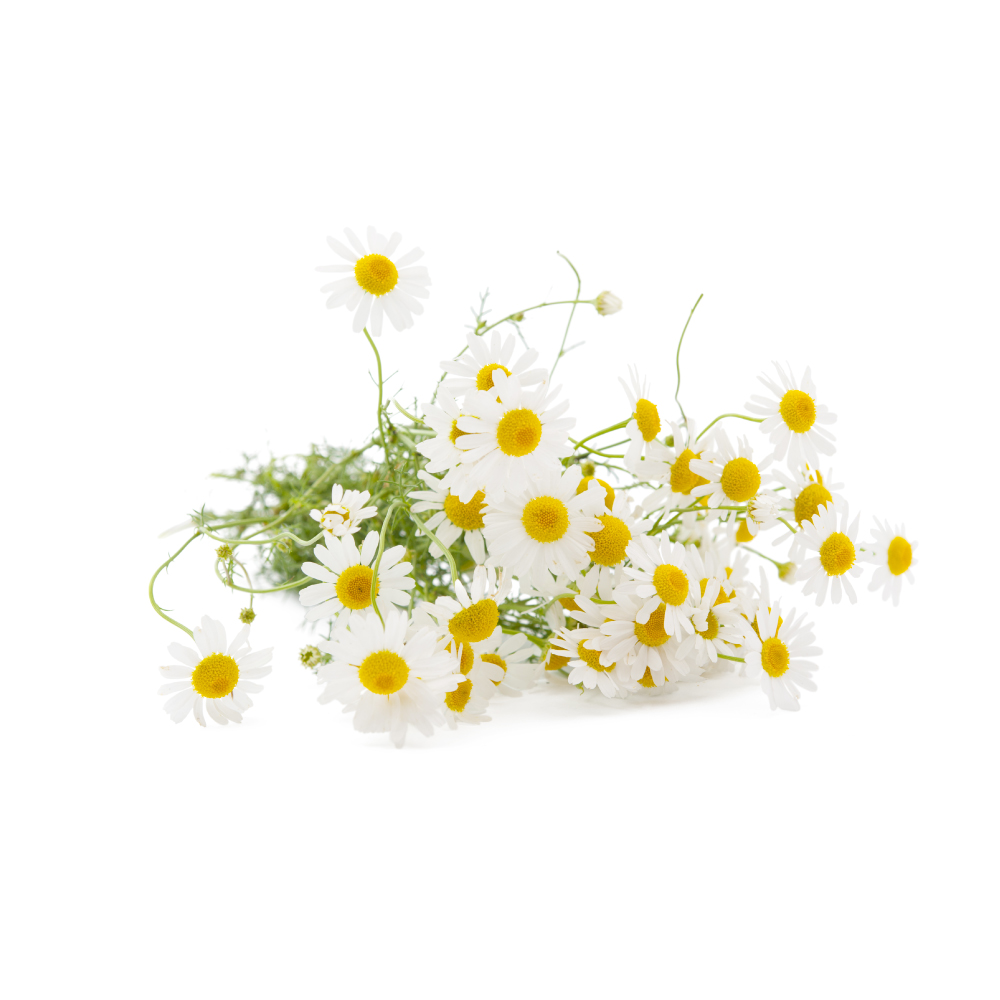 Principal source German Chamomile Matricaria chamomilla Herb monograph →
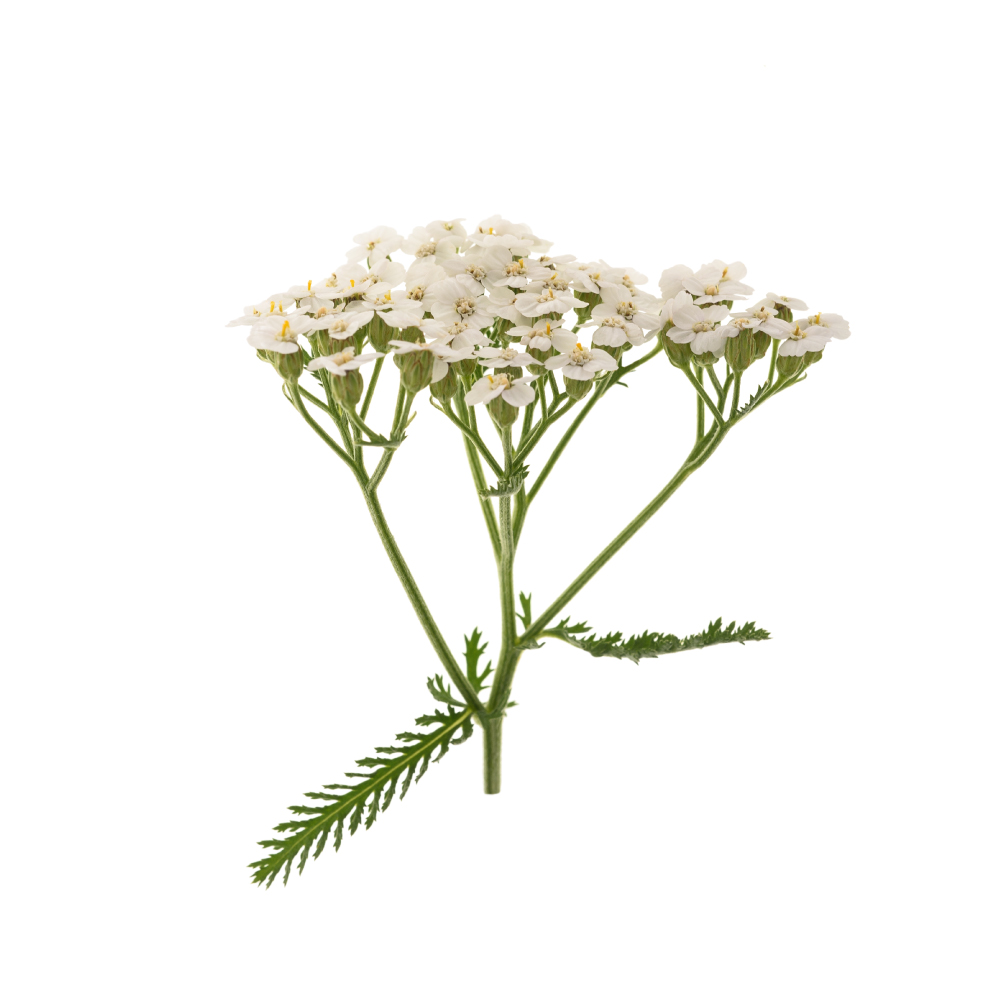 Source Yarrow Achillea millefolium Herb monograph →
Concentration
Content by Source
Reported concentrations across the plants that contain matricin — the bar marks the typical level, the line shows the reported range.
Literature figures for varying plant parts and preparations. Read them as a comparative guide, not exact assays.
Matricin at a Glance
Matricin is the sesquiterpene lactone that German chamomile actually contains. It is a guaianolide proazulene — colourless, heat-labile, and present in the dried flower heads at roughly 0.03–0.2% 5Reference 5ReviewAssessment report on Matricaria recutita L., flos and Matricaria recutita L., aetheroleum (EMA/HMPC/55837/2011) — regulatory monograph assessmentView study →.
Its fame is second-hand. Under the heat of steam distillation matricin breaks down to chamazulene, the deep-blue hydrocarbon that colours chamomile essential oil 5,
Two things make matricin pharmacologically interesting in its own right. First, it behaves as a natural prodrug: given orally to human volunteers it is converted in the acidic stomach to chamazulene carboxylic acid, a COX-2-selective “natural profen” that reaches micromolar plasma levels 1Reference 1AnimalChamazulene carboxylic acid and matricin: a natural profen and its natural prodrug, identified through similarity to synthetic drug substances — animal models plus an oral human pharmacokinetic armView study →. Second, and unusually for its class, matricin lacks the reactive α-methylene-γ-lactone that makes most sesquiterpene lactones indiscriminate thiol alkylators — so the standard class explanation for “sesquiterpene lactone inhibits NF-κB” does not apply to it, and its NF-κB effect remains mechanistically unexplained 2Reference 2In vitroRevisited anti-inflammatory activity of matricine in vitro: comparison with chamazuleneView study →.
Matricin → Chamazulene: The Blue Is Made, Not Grown
This conversion is the single most important fact about the molecule, and it is the same story told from the other end on the chamazulene page.
The living chamomile flower stores proazulenes — colourless guaianolide lactones, chiefly matricin with lesser matricarin — not azulenes 5Reference 5ReviewAssessment report on Matricaria recutita L., flos and Matricaria recutita L., aetheroleum (EMA/HMPC/55837/2011) — regulatory monograph assessmentView study →. Matricin is a C17H22O5 guaianolide carrying an acetate ester, a tertiary hydroxyl and a saturated γ-lactone; its relative structure was solved by Čekan, Herout and Šorm in 1957 10Reference 10Čekan Z, Herout V, Šorm F (1957). Über Terpene LXXX. Die Struktur von Matricin, ein Guajanolid aus der Kamille. Collection of Czechoslovak Chemical Communications. https://doi.org/10.1135/cccc19571921View study → and its absolute configuration only nailed down in 2001, by way of synthetic, NMR and CD work on its own decomposition product 8,
Under heat and acid, matricin loses acetic acid and water and aromatises to chamazulene carboxylic acid; decarboxylation of that intermediate gives chamazulene itself 1,
Three consequences follow, and they are practical rather than academic:
- Blue oil means matricin has already been spent. The colour is the receipt for the reaction. An oil rich in chamazulene is an oil whose matricin was consumed making it.
- Matricin degrades even without distillation. In chamomile carbon-dioxide extracts it was stable at −30 °C, fell to 80–90% recovery after six months at +5 °C, and decomposed completely within 3–4 months at room temperature or +30 °C; residual water in the extract accelerated the loss 6Reference 6Supercritical carbon dioxide extraction of chamomile flowers: extraction efficiency, stability, and in-line inclusion of chamomile-carbon dioxide extract in beta-cyclodextrinView study →. A separate degradation route yields 8-desacetylmatricine 7Reference 7Isolation, identification and stability of 8-desacetylmatricine, a new degradation product of matricineView study →. Matricin-containing preparations are therefore cold-chain products in a way that most herbal extracts are not.
- The two molecules are not interchangeable actives. They have opposite in-vitro profiles: chamazulene inhibits leukotriene-B4 formation and matricin does not 3Reference 3In vitroChamazulene: an antioxidant-type inhibitor of leukotriene B4 formation — in vitro, with matricin as the inactive comparatorView study →; matricin suppresses NF-κB-driven adhesion-molecule expression and chamazulene does not 2Reference 2In vitroRevisited anti-inflammatory activity of matricine in vitro: comparison with chamazuleneView study →. Substituting one for the other in a preparation changes the pharmacology.
One further wrinkle applies to skin: applied topically, matricin transforms slowly to chamazulene at the skin surface, so a topical matricin dose is partly a slow-release chamazulene dose 5Reference 5ReviewAssessment report on Matricaria recutita L., flos and Matricaria recutita L., aetheroleum (EMA/HMPC/55837/2011) — regulatory monograph assessmentView study →.
Which Preparations Actually Deliver Matricin
Because the molecule survives water but not distillation, the preparation decides the exposure.
| Preparation | Matricin | Chamazulene | Note |
|---|---|---|---|
| Dried flower heads (the herb) | Yes — 0.03–0.2% dry wt 5Reference 5ReviewAssessment report on Matricaria recutita L., flos and Matricaria recutita L., aetheroleum (EMA/HMPC/55837/2011) — regulatory monograph assessmentView study → | Essentially none | The native state; degrades on warm storage 6Reference 6Supercritical carbon dioxide extraction of chamomile flowers: extraction efficiency, stability, and in-line inclusion of chamomile-carbon dioxide extract in beta-cyclodextrinView study → |
| Hot-water infusion (chamomile tea) | Yes — extracted “in concentrations which are pharmaceutically relevant” 5Reference 5ReviewAssessment report on Matricaria recutita L., flos and Matricaria recutita L., aetheroleum (EMA/HMPC/55837/2011) — regulatory monograph assessmentView study → | Little to none | Teas carry only ~10–15% of the essential-oil constituents overall 5Reference 5ReviewAssessment report on Matricaria recutita L., flos and Matricaria recutita L., aetheroleum (EMA/HMPC/55837/2011) — regulatory monograph assessmentView study → |
| Hydroalcoholic / liquid extracts, CO₂ extracts | Yes, if kept cold 6Reference 6Supercritical carbon dioxide extraction of chamomile flowers: extraction efficiency, stability, and in-line inclusion of chamomile-carbon dioxide extract in beta-cyclodextrinView study → | Little | Where the measured matricin figures in animal studies come from 5Reference 5ReviewAssessment report on Matricaria recutita L., flos and Matricaria recutita L., aetheroleum (EMA/HMPC/55837/2011) — regulatory monograph assessmentView study → |
| Steam-distilled essential oil | Essentially none | Yes — the blue 5Reference 5ReviewAssessment report on Matricaria recutita L., flos and Matricaria recutita L., aetheroleum (EMA/HMPC/55837/2011) — regulatory monograph assessmentView study → | Matricin has been converted; azulenes ~2–18% of oil 5Reference 5ReviewAssessment report on Matricaria recutita L., flos and Matricaria recutita L., aetheroleum (EMA/HMPC/55837/2011) — regulatory monograph assessmentView study → |
This is the honest answer to a common assumption. Chamomile tea is a matricin preparation, not a chamazulene preparation, and the blue oil is the reverse. The relevance shows up directly in animal data: in croton-oil mouse-ear oedema, a fresh chamomile extract containing 29.6 mg matricin/100 g inhibited inflammation by 31.6% — matching the reference drug benzydamine at 31.5% — while a dried extract with 16.4 mg/100 g managed 23.7%, and the essential oil, which contained chamazulene and bisabolol but no matricin at all, produced only 6.6% inhibition 5Reference 5ReviewAssessment report on Matricaria recutita L., flos and Matricaria recutita L., aetheroleum (EMA/HMPC/55837/2011) — regulatory monograph assessmentView study →.
Why the Sesquiterpene-Lactone Class Rules Do Not Apply Here
Almost everything written about sesquiterpene lactone pharmacology rests on one chemical feature: the α-methylene-γ-lactone, an exocyclic C=CH₂ conjugated to the lactone carbonyl. That group is a Michael acceptor — it alkylates cysteine thiols on proteins, which is why members of this family (parthenolide, helenalin, costunolide and dozens of others) all “inhibit NF-κB”, all show cytotoxicity, and all figure in Asteraceae contact allergy. It is a class property, and reporting it for an individual lactone says almost nothing specific.
Matricin does not have it. Its lactone is saturated at C-11 (the carbon bears a methyl group and a hydrogen, not a methylene), and the authors of the definitive in-vitro study state the point explicitly: matricin “lacks an α,β-unsaturated carbonyl and is thus not able to act via a Michael reaction with electron rich SH groups of functional biological molecules” 2Reference 2In vitroRevisited anti-inflammatory activity of matricine in vitro: comparison with chamazuleneView study →. The same distinction shows up in Achillea phytochemistry, where matricin, achillicin and achillin were reported as not α-methylene-γ-lactones and the first true α-methylene lactones from the A. millefolium aggregate had to be isolated separately 12Reference 12Zitterl-Eglseer K, Jurenitsch J, Korhammer S, Haslinger E, Sosa S, Della Loggia R, Kubelka W, Franz C (1991). [Sesquiterpene lactones of Achillea setacea with antiphlogistic activity]. Planta Medica. https://pubmed.ncbi.nlm.nih.gov/1798798/View study →.
That has two consequences worth stating clearly:
- Matricin’s NF-κB inhibition is not explained by class reactivity. It suppresses TNF-α- and LPS-induced ICAM-1 expression and NF-κB promoter activity in endothelial cells at 10–75 µM without cytotoxicity — and it does so by a mechanism the authors describe as hitherto unknown 2Reference 2In vitroRevisited anti-inflammatory activity of matricine in vitro: comparison with chamazuleneView study →. This is the rare case where “inhibits NF-κB” is actually informative about a specific sesquiterpene lactone, precisely because the usual shortcut is unavailable.
- The class’s thiol-alkylation liabilities are correspondingly weaker for matricin — the cytotoxicity and, in part, the contact-allergen reputation of the family are driven by the group matricin does not carry. That is consistent with chamomile’s unusually low sensitisation record among Asteraceae herbs 16Reference 16ReviewContact sensitization from Compositae-containing herbal remedies and cosmetics — reviewView study → (see Toxicity & Safety).
What It's Used For
Matricin’s pharmacology splits into an old, reasonably solid in-vivo anti-inflammatory record and a much thinner mechanistic account of why. There are no controlled clinical trials of the isolate; the one human dataset is a pharmacokinetic arm showing it is converted to something else before it acts.
Support is an experimental score — weighted by study type (human > animal > in vitro) and volume. A beta, not a validated metric. The human data here are pharmacokinetic, not outcome data, so scores stay modest by design.
The oldest and most durable claim. Isolated matricin was one arm of the classical German comparison of chamomile constituents’ antiphlogistic effects against chamazulene 4Reference 4AnimalJakovlev V, Isaac O, Flaskamp E (1983). [Pharmacologic studies on chamomile compounds. VI. Studies on the antiphlogistic effect of chamazulene and matricine] — animal models, German-language original. Planta Medica. https://pubmed.ncbi.nlm.nih.gov/6657784/View study → — work that later authors summarise as establishing “strong in vivo anti-inflammatory activity” for matricin while leaving its target unidentified 2Reference 2In vitroRevisited anti-inflammatory activity of matricine in vitro: comparison with chamazuleneView study →.
The most interpretable single dataset is plant-extract, not isolate: in croton-oil-induced mouse-ear oedema, a fresh chamomile extract assayed at 29.6 mg matricin/100 g inhibited oedema by 31.6% (benzydamine reference 31.5%), a dried extract at 16.4 mg/100 g gave 23.7%, and the matricin-free essential oil gave 6.6% — no effect 5Reference 5ReviewAssessment report on Matricaria recutita L., flos and Matricaria recutita L., aetheroleum (EMA/HMPC/55837/2011) — regulatory monograph assessmentView study →.
In mouse-ear models using arachidonic acid, phorbol ester and oxazolone, matricin and chamazulene at 1 µM were both somewhat less effective than α-bisabolol, with the caveat that matricin transforms slowly to chamazulene on skin 5Reference 5ReviewAssessment report on Matricaria recutita L., flos and Matricaria recutita L., aetheroleum (EMA/HMPC/55837/2011) — regulatory monograph assessmentView study →.
Gap: the primary comparative study is a 1983 German-language paper without an English abstract 4Reference 4AnimalJakovlev V, Isaac O, Flaskamp E (1983). [Pharmacologic studies on chamomile compounds. VI. Studies on the antiphlogistic effect of chamazulene and matricine] — animal models, German-language original. Planta Medica. https://pubmed.ncbi.nlm.nih.gov/6657784/View study →, and the strongest oedema data are extract-level correlations — matricin content tracked activity, but the extracts contained bisabolol and apigenin too 5Reference 5ReviewAssessment report on Matricaria recutita L., flos and Matricaria recutita L., aetheroleum (EMA/HMPC/55837/2011) — regulatory monograph assessmentView study →. No modern isolate dose-response in a validated in-vivo model has been published.
The best-characterised thing matricin does may be turn into something else. Chamazulene carboxylic acid — the aromatised intermediate on the route to chamazulene — is structurally a profen, and behaves like one: it inhibited cyclo-oxygenase-2 but not COX-1 and was anti-inflammatory in several animal models by both local and systemic application. When human volunteers took matricin orally, plasma levels of chamazulene carboxylic acid were in the micromolar range; matricin was converted to it in artificial gastric fluid but not artificial intestinal fluid, implicating stomach acid as the activating step. The authors propose matricin and the yarrow proazulenes are anti-inflammatory through this conversion 1Reference 1AnimalChamazulene carboxylic acid and matricin: a natural profen and its natural prodrug, identified through similarity to synthetic drug substances — animal models plus an oral human pharmacokinetic armView study →.
Gap: this is a pharmacokinetic finding in a small volunteer arm, not a clinical outcome — nobody has shown that the plasma concentrations achieved produce a measurable anti-inflammatory effect in people. It also implies gastric-acid dependence: acid suppression, enteric coating, or topical/rectal routes bypass the activating step, and none of that has been studied 1Reference 1AnimalChamazulene carboxylic acid and matricin: a natural profen and its natural prodrug, identified through similarity to synthetic drug substances — animal models plus an oral human pharmacokinetic armView study →.
The one genuinely matricin-specific mechanism. In human microvascular endothelial cells (HMEC-1), isolated matricin concentration-dependently inhibited ICAM-1 protein expression induced by TNF-α and LPS but not by IFN-γ, over 10–75 µM and without cytotoxicity; at 75 µM ICAM-1 fell to 52.7% (TNF-α) and 20.4% (LPS) of control, and ICAM-1 mRNA to 32.3% of control at 100 µM. NF-κB promoter-activity and cytoplasm-to-nucleus translocation assays confirmed the effect sits on NF-κB signalling. Chamazulene showed no activity in the same assays 2Reference 2In vitroRevisited anti-inflammatory activity of matricine in vitro: comparison with chamazuleneView study →.
Because matricin cannot alkylate thiols (see above), this is not the usual sesquiterpene-lactone class effect — the mechanism is explicitly unresolved 2Reference 2In vitroRevisited anti-inflammatory activity of matricine in vitro: comparison with chamazuleneView study →.
Matricin is correspondingly inert where chamazulene is active: no effect on leukotriene-B4 formation, arachidonate peroxidation, cyclo-oxygenase or 12-lipoxygenase up to 200 µM 3Reference 3In vitroChamazulene: an antioxidant-type inhibitor of leukotriene B4 formation — in vitro, with matricin as the inactive comparatorView study →.
Gap: a single in-vitro study in one cell line, at concentrations (10–100 µM) well above anything demonstrated in human plasma — where the circulating species is the metabolite, not matricin 1Reference 1AnimalChamazulene carboxylic acid and matricin: a natural profen and its natural prodrug, identified through similarity to synthetic drug substances — animal models plus an oral human pharmacokinetic armView study →. No animal confirmation that ICAM-1/NF-κB suppression happens in vivo.
Thin and provisional. In benzo(a)pyrene-induced lung carcinogenesis in Swiss albino mice, isolated matricin at 100 mg/kg orally from weeks 12–18 reduced tumour formation and serum tumour markers, restored enzymatic and non-enzymatic antioxidants, lowered TNF-α/IL-6/IL-1β, and was attributed by the authors to antioxidant activity, immunomodulation and NF-κB mitigation 18Reference 18AnimalMitigating effect of matricin against benzo(a)pyrene-induced lung carcinogenesis in an experimental mice modelView study →.
Gap: one study, one model, one dose, no independent replication, and in a low-profile journal. It also sits awkwardly with the pharmacokinetics — an orally dosed animal is largely being dosed with chamazulene carboxylic acid, not matricin 1Reference 1AnimalChamazulene carboxylic acid and matricin: a natural profen and its natural prodrug, identified through similarity to synthetic drug substances — animal models plus an oral human pharmacokinetic armView study →, which the paper does not address. Treat as hypothesis-generating only. A separate matricin anticancer paper in pancreatic carcinoma cells has been retracted and is deliberately not cited here.
Mechanisms
| Target / pathway | Effect | Relevant to |
|---|---|---|
| NF-κB signalling (promoter activity, nuclear translocation) | inhibited in endothelial cells, 10–75 µM, not via thiol alkylation — mechanism unresolved | anti-inflammatory |
| ICAM-1 (endothelial adhesion molecule) | protein and mRNA expression suppressed after TNF-α and LPS, but not IFN-γ, stimulation | leukocyte adhesion / vascular inflammation |
| Cyclo-oxygenase-2 (via chamazulene carboxylic acid) | the gastric metabolite inhibits COX-2 but not COX-1 — a natural “profen” | anti-inflammatorythe likely systemic route |
| 5-Lipoxygenase / leukotriene B4 | no effect up to 200 µM (chamazulene, by contrast, IC50 ~10–15 µM) | negative result that separates it from chamazulene |
| Cyclo-oxygenase & 12-lipoxygenase (platelets) | no effect up to 200 µM | negative result |
| Arachidonic-acid peroxidation | no effect (chamazulene blocks it at ~2 µM) | antioxidant claims belong to chamazulenenot matricin |
| α-Methylene-γ-lactone Michael chemistry | absent — matricin has no α,β-unsaturated carbonyl, so no cysteine alkylation | why the sesquiterpene-lactone class story does not transfer |
The load-bearing point: matricin’s activity profile is the photographic negative of chamazulene’s. Where chamazulene works (leukotrienes, lipid peroxidation) matricin is inert; where matricin works (NF-κB/ICAM-1) chamazulene is inert 2,
Pharmacokinetics
Matricin is best understood as an orally administered prodrug with a chemical, not enzymatic, activation step. Given by mouth to human volunteers, it appears in plasma as chamazulene carboxylic acid at micromolar concentrations; the conversion occurs in artificial gastric fluid and not in artificial intestinal fluid, so gastric acid is the trigger 1Reference 1AnimalChamazulene carboxylic acid and matricin: a natural profen and its natural prodrug, identified through similarity to synthetic drug substances — animal models plus an oral human pharmacokinetic armView study →. Circulating matricin itself has not been characterised — absorption fraction, half-life and tissue distribution of the parent molecule are unknown, and it is not clear how much intact matricin ever reaches the systemic circulation.
Stability is a pharmacokinetic problem in its own right. Matricin decomposes completely within 3–4 months at room temperature in a chamomile extract (stable at −30 °C; 80–90% recovery at +5 °C over six months), with residual moisture accelerating the loss 6Reference 6Supercritical carbon dioxide extraction of chamomile flowers: extraction efficiency, stability, and in-line inclusion of chamomile-carbon dioxide extract in beta-cyclodextrinView study →, and generates degradation products including 8-desacetylmatricine 7Reference 7Isolation, identification and stability of 8-desacetylmatricine, a new degradation product of matricineView study →. On skin it converts slowly to chamazulene 5Reference 5ReviewAssessment report on Matricaria recutita L., flos and Matricaria recutita L., aetheroleum (EMA/HMPC/55837/2011) — regulatory monograph assessmentView study →. The practical consequence: the matricin content of an aged, warm-stored product is not the matricin content on its label, and any in-vitro potency figure (10–100 µM) sits far above concentrations demonstrated in human plasma for the parent molecule.
Clinical Trials
There are no controlled clinical trials of isolated matricin. The only human exposure documented in the literature is the oral pharmacokinetic arm in volunteers, which measured plasma chamazulene carboxylic acid rather than a clinical endpoint 1Reference 1AnimalChamazulene carboxylic acid and matricin: a natural profen and its natural prodrug, identified through similarity to synthetic drug substances — animal models plus an oral human pharmacokinetic armView study →. Human evidence for chamomile is at the level of whole preparations — infusions, hydroalcoholic extracts and topical products — where matricin is one constituent among flavonoids, bisabolol and spiroethers 5,
| Completed | Planned | Terminated | Preclinical |
|---|---|---|---|
| None for the isolate (one human oral pharmacokinetic arm only 1Reference 1AnimalChamazulene carboxylic acid and matricin: a natural profen and its natural prodrug, identified through similarity to synthetic drug substances — animal models plus an oral human pharmacokinetic armView study →) | — | — | Antiphlogistic in-vivo 4, |
Last checked: July 2026.
Isolate vs. Plant Studies
Matricin sits on the isolate-mechanism, extract-clinical side of the line, with an unusual complication: even the isolate work often ends up measuring a different molecule.
The isolate has been studied directly in vitro (NF-κB/ICAM-1 in HMEC-1 2Reference 2In vitroRevisited anti-inflammatory activity of matricine in vitro: comparison with chamazuleneView study →; the negative eicosanoid panel 3Reference 3In vitroChamazulene: an antioxidant-type inhibitor of leukotriene B4 formation — in vitro, with matricin as the inactive comparatorView study →), in classical antiphlogistic animal pharmacology 4Reference 4AnimalJakovlev V, Isaac O, Flaskamp E (1983). [Pharmacologic studies on chamomile compounds. VI. Studies on the antiphlogistic effect of chamazulene and matricine] — animal models, German-language original. Planta Medica. https://pubmed.ncbi.nlm.nih.gov/6657784/View study →, in the human oral pharmacokinetic arm 1Reference 1AnimalChamazulene carboxylic acid and matricin: a natural profen and its natural prodrug, identified through similarity to synthetic drug substances — animal models plus an oral human pharmacokinetic armView study → and in one mouse chemoprevention model 18Reference 18AnimalMitigating effect of matricin against benzo(a)pyrene-induced lung carcinogenesis in an experimental mice modelView study →. That is a respectable isolate base by plant-constituent standards. But orally, the isolate becomes chamazulene carboxylic acid before it acts 1Reference 1AnimalChamazulene carboxylic acid and matricin: a natural profen and its natural prodrug, identified through similarity to synthetic drug substances — animal models plus an oral human pharmacokinetic armView study →, and topically it drifts toward chamazulene 5Reference 5ReviewAssessment report on Matricaria recutita L., flos and Matricaria recutita L., aetheroleum (EMA/HMPC/55837/2011) — regulatory monograph assessmentView study → — so “matricin was administered” and “matricin was the active species” are not the same statement, and most of the literature does not distinguish them.
The plant/extract side is more useful than usual here because the extracts were chemically quantified: the croton-oil ear-oedema comparison of fresh extract (29.6 mg matricin/100 g), dried extract (16.4 mg/100 g) and matricin-free essential oil is close to a dose-response across preparations, and it points the same way as the isolate work 5Reference 5ReviewAssessment report on Matricaria recutita L., flos and Matricaria recutita L., aetheroleum (EMA/HMPC/55837/2011) — regulatory monograph assessmentView study →. Those extracts still contained bisabolol and apigenin, so attribution is not clean. No human trial has ever tested a chamomile product standardised to matricin.
Prevalence in Nature
Matricin is a narrowly distributed Asteraceae guaianolide, not a widespread plant metabolite.
- German chamomile (Matricaria chamomilla / M. recutita) is the defining source and effectively the only quantified one: 0.03–0.2% of the dried flower heads, alongside the related proazulene matricarin. The flowers also carry 0.3–1.9% essential oil, up to 6% flavonoids, and 0.01–0.08% coumarins 5Reference 5ReviewAssessment report on Matricaria recutita L., flos and Matricaria recutita L., aetheroleum (EMA/HMPC/55837/2011) — regulatory monograph assessmentView study →. The European Pharmacopoeia specifies chamomile flower by its blue essential oil (minimum 4 mL/kg) and apigenin-7-glucoside — i.e. by matricin’s product, not by matricin 5Reference 5ReviewAssessment report on Matricaria recutita L., flos and Matricaria recutita L., aetheroleum (EMA/HMPC/55837/2011) — regulatory monograph assessmentView study →.
- Yarrow and other Achillea species carry the same proazulene chemistry, but usually as achillicin and related guaianolides rather than matricin itself; these are the compounds behind azulene-rich yarrow chemotypes and were quantified by HPLC in A. collina and A. pratensis 13,
14Reference 13Qualitative and quantitative determination of sesquiterpenoids in Achillea species by reversed-phase high-performance liquid chromatography, mass-spectrometry and thin-layer chromatographyView study →Reference 14ReviewBiological activities of yarrow species (Achillea spp.) — reviewView study → . Matricin is not universal in the genus — it was specifically looked for, and not detected, in A. setacea 12Reference 12Zitterl-Eglseer K, Jurenitsch J, Korhammer S, Haslinger E, Sosa S, Della Loggia R, Kubelka W, Franz C (1991). [Sesquiterpene lactones of Achillea setacea with antiphlogistic activity]. Planta Medica. https://pubmed.ncbi.nlm.nih.gov/1798798/View study →. Commercial yarrow quality is uneven on exactly this axis: only about half of 40 commercial samples met European Pharmacopoeia standards for essential-oil and proazulene content 15Reference 15Yarrow (Achillea millefolium L. s.l.): pharmaceutical quality of commercial samplesView study →. - Artemisia. Matricin was isolated from Artemisia caruthii in 1967 — the clearest documented occurrence outside chamomile 11Reference 11Isolation of matricin from Artemisia caruthiiView study →.
Reported matricin content varies with cultivar, provenance, plant part, harvest season and extraction method, and the same drivers govern the essential-oil composition downstream of it 5,
Discovery & Synthesis
The blue of chamomile oil was known long before its precursor was. Matricin was isolated from chamomile in the 1950s, and its structure as a guaianolide was established by Zdeněk Čekan, Vlastimil Herout and František Šorm at the Czechoslovak Academy of Sciences in 1957 10Reference 10Čekan Z, Herout V, Šorm F (1957). Über Terpene LXXX. Die Struktur von Matricin, ein Guajanolid aus der Kamille. Collection of Czechoslovak Chemical Communications. https://doi.org/10.1135/cccc19571921View study → — part of the same Prague terpene programme that mapped much of Asteraceae sesquiterpene chemistry. The name follows the plant genus Matricaria.
A note on the name cluster. “Matricin” sits inside a knot of near-identical Asteraceae lactone names that are routinely conflated in the literature, and they are four (at least) genuinely different molecules:
| Name | Formula | MW | PubChem CID |
|---|---|---|---|
| Matricin (matricine) — this one | C17H22O5 | 306.4 | 92265 |
| Matricarin | C17H20O5 | 304.3 | 3083923 |
| Desacetylmatricarin (deacetylmatricarin) — retains the C-8 hydroxyl | C15H18O4 | 262.3 | 6713966 |
| Leucodin (= desacetoxymatricarin) — no oxygen at C-8 | C15H18O3 | 246.3 | 167683 |
Desacetyl- and desacetoxy-matricarin are not synonyms, despite being treated as such in some sources. Separately, an unrelated nuclear-matrix protein fraction was also named “matricin” in 1980s cell-biology papers — a literature search on the bare word returns both.
Stereochemistry took another four decades. Only the relative configuration had been determined; the absolute configuration — 3S,3aR,4S,9R,9aS,9bS — was confirmed in 2001 by Imming’s group in Marburg, using NMR of matricin and its epimers plus synthetic and circular-dichroism work on its decomposition product, chamazulene carboxylic acid 8,
Manufacture today is extraction, not synthesis. Matricin is obtained from chamomile flowers by cold or near-cold solvent or supercritical-CO₂ extraction, and the whole engineering problem is avoiding the conversion that makes chamazulene: keep the temperature down, keep water out, and store cold 6Reference 6Supercritical carbon dioxide extraction of chamomile flowers: extraction efficiency, stability, and in-line inclusion of chamomile-carbon dioxide extract in beta-cyclodextrinView study →. No total synthesis is in commercial use, and the isolated compound is essentially a reference standard rather than a production chemical.
Patents: not yet researched.
Toxicity & Safety
Matricin carries a low flag. It is a normal constituent of chamomile flowers and of the tea made from them, consumed in milligram quantities with a very long use record 5,
Asteraceae contact dermatitis (a class phenomenon, reported at its real strength). Allergic contact dermatitis to the daisy family is real, common enough to warrant a dedicated sesquiterpene-lactone mix in standard patch-test series, and is driven chiefly by α-methylene-γ-lactone-bearing compounds — the group matricin does not have 12,
The clinically serious chamomile reaction is IgE-mediated, not lactone-mediated. Immediate-type hypersensitivity — urticaria, angioedema, bronchospasm, anaphylactic shock — is documented after mucosal contact with liquid chamomile preparations, including a fatal outcome for a newborn after a chamomile enema during labour and anaphylaxis after a chamomile tea enema. Cross-reactivity with mugwort (Artemisia vulgaris) and birch pollen is frequent 5Reference 5ReviewAssessment report on Matricaria recutita L., flos and Matricaria recutita L., aetheroleum (EMA/HMPC/55837/2011) — regulatory monograph assessmentView study →. This is a whole-plant protein/pollen allergy and has nothing to do with matricin as a molecule, but it is the safety fact that matters most for anyone using chamomile preparations.
- No distinctive toxicity for the isolate. A dietary-level constituent of chamomile flowers and tea, with no reported isolate-specific toxicity.
- Not a thiol-alkylating lactone. Matricin lacks the α-methylene-γ-lactone Michael acceptor that drives sesquiterpene-lactone cytotoxicity and much of the class’s contact allergy 2,
12Reference 2In vitroRevisited anti-inflammatory activity of matricine in vitro: comparison with chamazuleneView study →Reference 12Zitterl-Eglseer K, Jurenitsch J, Korhammer S, Haslinger E, Sosa S, Della Loggia R, Kubelka W, Franz C (1991). [Sesquiterpene lactones of Achillea setacea with antiphlogistic activity]. Planta Medica. https://pubmed.ncbi.nlm.nih.gov/1798798/View study → . - Chamomile can cause IgE-mediated anaphylaxis. Rare but documented and occasionally fatal, especially with mucosal exposure (enemas, rinses); mugwort/birch cross-reactivity is common 5Reference 5ReviewAssessment report on Matricaria recutita L., flos and Matricaria recutita L., aetheroleum (EMA/HMPC/55837/2011) — regulatory monograph assessmentView study →.
- Asteraceae contact allergy is a class issue. Sesquiterpene-lactone-mix patch testing is standard for the family; German chamomile’s own sensitisation risk is judged low relative to arnica, feverfew and yarrow 16Reference 16ReviewContact sensitization from Compositae-containing herbal remedies and cosmetics — reviewView study →.
- No isolate toxicology package. No repeat-dose, genotoxicity or reproductive-toxicity data exist for pure matricin; safety inference comes from herbal use, not from testing.
Reproductive note (prose only). No reproductive- or developmental-toxicity dataset exists for isolated matricin. Pregnancy and lactation decisions are made on the herb or product page where intake is decided, not on a molecule-level phytochemistry page; no isolate-specific verdict is issued here.
Dosage
There is no established or recommended human dose for isolated matricin, and it is not sold as a stand-alone product. Exposure is entirely through chamomile preparations, and is calculable only roughly.
| Route of exposure | Matricin delivered | Basis |
|---|---|---|
| Standard infusion — 3 g dried flowers in 150 mL water, 3–4× daily | ~1–6 mg per cup in the drug, less after extraction | 0.03–0.2% of flower 5Reference 5ReviewAssessment report on Matricaria recutita L., flos and Matricaria recutita L., aetheroleum (EMA/HMPC/55837/2011) — regulatory monograph assessmentView study →; hot water extracts matricin at pharmaceutically relevant concentrations 5Reference 5ReviewAssessment report on Matricaria recutita L., flos and Matricaria recutita L., aetheroleum (EMA/HMPC/55837/2011) — regulatory monograph assessmentView study → |
| Hydroalcoholic / CO₂ extracts | Variable; measured at 16–30 mg/100 g in animal-study extracts | 5, |
| Steam-distilled essential oil | Essentially none — converted to chamazulene | 5Reference 5ReviewAssessment report on Matricaria recutita L., flos and Matricaria recutita L., aetheroleum (EMA/HMPC/55837/2011) — regulatory monograph assessmentView study → |
| Research: in-vitro concentrations | 10–100 µM | Isolate, HMEC-1 2Reference 2In vitroRevisited anti-inflammatory activity of matricine in vitro: comparison with chamazuleneView study → |
| Research: animal dose | 100 mg/kg orally, mice | Single chemoprevention study 18Reference 18AnimalMitigating effect of matricin against benzo(a)pyrene-induced lung carcinogenesis in an experimental mice modelView study → |
The per-cup figure is arithmetic on the cited content range and the cited infusion posology, not a measured assay of a brewed tea — real delivery depends on extraction efficiency and on how long and how warm the herb was stored 6Reference 6Supercritical carbon dioxide extraction of chamomile flowers: extraction efficiency, stability, and in-line inclusion of chamomile-carbon dioxide extract in beta-cyclodextrinView study →. These are research figures and calculated estimates, not a personal recommendation.
References
- Ramadan M, Goeters S, Watzer B, Krause E, Lohmann K, Bauer R, Hempel B, Imming P (2006). Chamazulene carboxylic acid and matricin: a natural profen and its natural prodrug, identified through similarity to synthetic drug substances — animal models plus an oral human pharmacokinetic arm. Journal of Natural Products. https://pubmed.ncbi.nlm.nih.gov/16872141/
- Flemming M, Kraus B, Rascle A, Jürgenliemk G, Fuchs S, Fürst R, Heilmann J (2015). Revisited anti-inflammatory activity of matricine in vitro: comparison with chamazulene. Fitoterapia. https://pubmed.ncbi.nlm.nih.gov/26304764/
- Safayhi H, Sabieraj J, Sailer ER, Ammon HP (1994). Chamazulene: an antioxidant-type inhibitor of leukotriene B4 formation — in vitro, with matricin as the inactive comparator. Planta Medica. https://pubmed.ncbi.nlm.nih.gov/7997466/
- Jakovlev V, Isaac O, Flaskamp E (1983). [Pharmacologic studies on chamomile compounds. VI. Studies on the antiphlogistic effect of chamazulene and matricine] — animal models, German-language original. Planta Medica. https://pubmed.ncbi.nlm.nih.gov/6657784/
- Committee on Herbal Medicinal Products, European Medicines Agency (2015). Assessment report on Matricaria recutita L., flos and Matricaria recutita L., aetheroleum (EMA/HMPC/55837/2011) — regulatory monograph assessment. European Medicines Agency. https://www.ema.europa.eu/en/documents/herbal-report/final-assessment-report-matricaria-recutita-l-flos-and-matricaria-recutita-l-aetheroleum-first-version_en.pdf-0
- Kaiser CS, Römpp H, Schmidt PC (2004). Supercritical carbon dioxide extraction of chamomile flowers: extraction efficiency, stability, and in-line inclusion of chamomile-carbon dioxide extract in beta-cyclodextrin. Phytochemical Analysis. https://pubmed.ncbi.nlm.nih.gov/15311845/
- Ness A, Metzger JW, Schmidt PC (1996). Isolation, identification and stability of 8-desacetylmatricine, a new degradation product of matricine. Pharmaceutica Acta Helvetiae. https://doi.org/10.1016/s0031-6865(96)00026-x
- Imming P, Goeters S, Pawlitzki G, Hempel B (2001). Absolute stereochemistry of guaianolides, of matricin and its epimers, of yarrow proazulenes, and of chamazulene carboxylic acid. Chirality. https://pubmed.ncbi.nlm.nih.gov/11400185/
- Goeters S, Imming P, Pawlitzki G, Hempel B (2001). On the absolute configuration of matricin. Planta Medica. https://pubmed.ncbi.nlm.nih.gov/11345709/
- Čekan Z, Herout V, Šorm F (1957). Über Terpene LXXX. Die Struktur von Matricin, ein Guajanolid aus der Kamille. Collection of Czechoslovak Chemical Communications. https://doi.org/10.1135/cccc19571921
- Spitzer JC, Steelink C (1967). Isolation of matricin from Artemisia caruthii. Journal of Pharmaceutical Sciences. https://pubmed.ncbi.nlm.nih.gov/6032786/
- Zitterl-Eglseer K, Jurenitsch J, Korhammer S, Haslinger E, Sosa S, Della Loggia R, Kubelka W, Franz C (1991). [Sesquiterpene lactones of Achillea setacea with antiphlogistic activity]. Planta Medica. https://pubmed.ncbi.nlm.nih.gov/1798798/
- Glasl S, Kastner U, Jurenitsch J, Kubelka W (1999). Qualitative and quantitative determination of sesquiterpenoids in Achillea species by reversed-phase high-performance liquid chromatography, mass-spectrometry and thin-layer chromatography. Journal of Chromatography B. https://pubmed.ncbi.nlm.nih.gov/10410963/
- Németh E, Bernáth J (2008). Biological activities of yarrow species (Achillea spp.) — review. Current Pharmaceutical Design. https://pubmed.ncbi.nlm.nih.gov/19075697/
- Benedek B, Rothwangl-Wiltschnigg K, Rozema E, Gjoncaj N, Reznicek G, Jurenitsch J, Kopp B, Glasl S (2008). Yarrow (Achillea millefolium L. s.l.): pharmaceutical quality of commercial samples. Pharmazie. https://pubmed.ncbi.nlm.nih.gov/18271298/
- Paulsen E (2002). Contact sensitization from Compositae-containing herbal remedies and cosmetics — review. Contact Dermatitis. https://pubmed.ncbi.nlm.nih.gov/12492516/
- Srivastava JK, Shankar E, Gupta S (2010). Chamomile: a herbal medicine of the past with a bright future — review. Molecular Medicine Reports. https://pubmed.ncbi.nlm.nih.gov/21132119/
- Yang G, Liu H, Xu S, Tian Z (2024). Mitigating effect of matricin against benzo(a)pyrene-induced lung carcinogenesis in an experimental mice model. Combinatorial Chemistry & High Throughput Screening. https://pubmed.ncbi.nlm.nih.gov/38204250/
- Gabbanini S, Neba JN, Matera R, Valgimigli L (2024). Photochemical and oxidative degradation of chamazulene contained in Artemisia, Matricaria and Achillea essential oils and setup of protection strategies. Molecules. https://pubmed.ncbi.nlm.nih.gov/38893479/
- Sharifi-Rad M, Nazaruk J, Polito L, et al. (2018). Matricaria genus as a source of antimicrobial agents: from farm to pharmacy and food applications — review. Microbiological Research. https://pubmed.ncbi.nlm.nih.gov/30172312/



