
Compound Monograph
N-trans-p-Caffeoyltyramine
N-trans-p-caffeoyltyramine is a phenolic amide (hydroxycinnamic acid amide) — an amide of caffeic acid and tyramine — that turns up as a minor constituent across many plants, from Tribulus terrestris and hemp seed to goji (Lycium) root bark. Its documented pharmacology is entirely preclinical: anti-inflammatory (NF-κB, COX-2, iNOS and cytokine suppression in LPS-stimulated macrophages), antioxidant, and an emerging hepatic-lipid thread in which it acts as an HNF4α agonist that reverses fatty-liver storage in mice. Never tested clinically.

Sources · 4
Where Does It Come From?
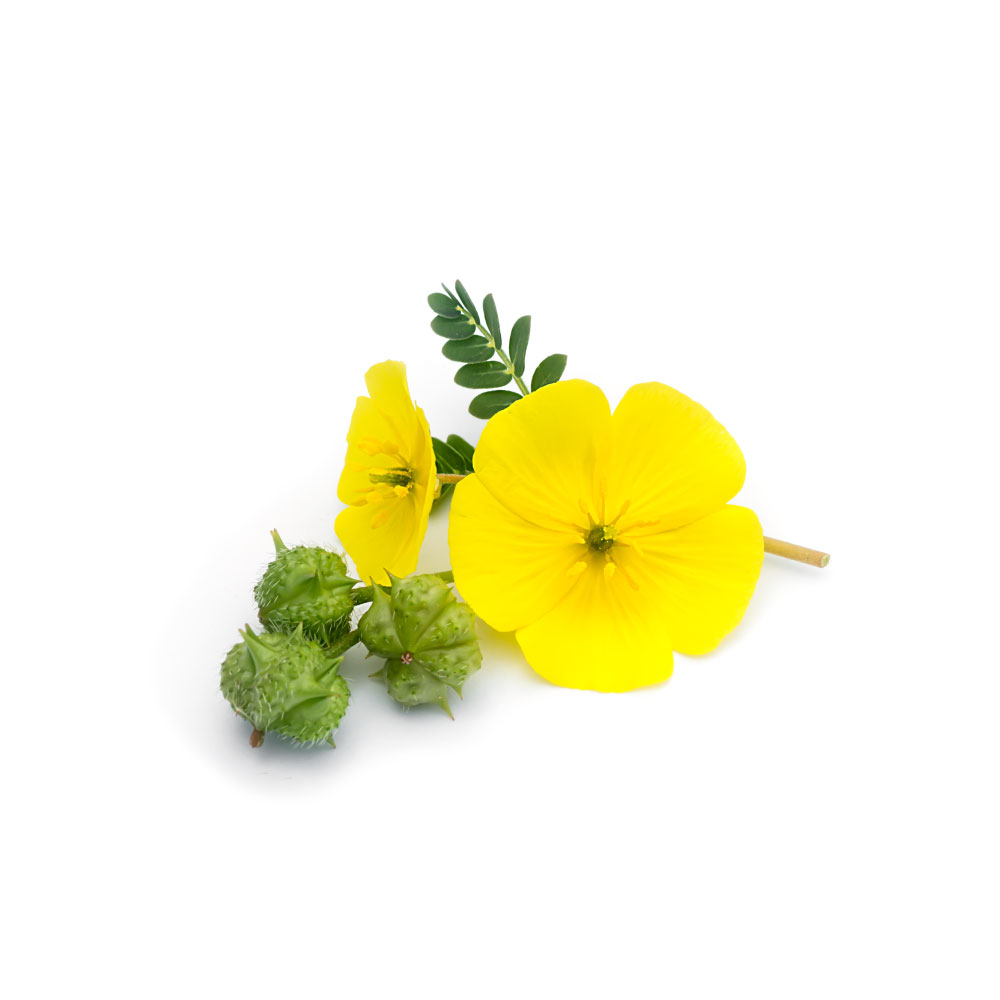
N-trans-p-Caffeoyltyramine is a naturally occurring phenolic amide (hydroxycinnamic acid amide; caffeic acid–tyramine amide), found in Tribulus and 3 other sources. It is well tolerated orally (low toxicity).
Concentration
Content by Source
Concentrations not reported. No percent-dry-weight or mg/g figures have been published for this compound in its source plants.
N-trans-p-Caffeoyltyramine at a Glance
N-trans-p-caffeoyltyramine is a phenolic amide — more precisely a hydroxycinnamic acid amide (phenolamide), formed by joining caffeic acid to the biogenic amine tyramine through an amide bond. Structurally it is caffeic acid’s catechol-bearing cinnamoyl unit capped onto tyramine’s 4-hydroxyphenethylamine, with the double bond in the trans (E) configuration — hence the name. It belongs to the same phenylpropanoid family the herb pages file it under, and is best read as a conjugate of two simpler molecules that each have their own monograph here.
It is a genuinely minor, widely scattered plant constituent. It appears in Tribulus terrestris (where this site meets it, as one of the herb’s anti-inflammatory amides), in hemp/Cannabis seed, in the root bark of goji (Lycium) — the traditional Chinese material cortex Lycii / di gu pi — and across various Solanaceae and other families 1,
Its pharmacology is entirely preclinical — in-vitro and rodent only, no human trials — but it clusters into two coherent threads. The older, best-documented one is anti-inflammatory / antioxidant activity (suppressing NF-κB-driven inflammatory mediators in stimulated macrophages, and protecting cells from oxidative stress) 1,
Classification — A Caffeic Acid–Tyramine Amide
The clearest way to place this molecule is as a two-part conjugate:
- The acid half — caffeic acid. A hydroxycinnamic (phenylpropanoid) acid carrying a catechol (3,4-dihydroxy) group. This is the redox-active, radical-scavenging end, and the reason the amide shows antioxidant behaviour at all.
- The amine half — tyramine. A 4-hydroxyphenethylamine (a decarboxylated tyrosine). In the free state tyramine is a vasoactive, MAO-sensitive biogenic amine; locked into an amide it is not free tyramine and does not carry tyramine’s pressor/“cheese-reaction” liability.
Joining them through the amide bond gives a hydroxycinnamic acid amide (HCAA / phenolamide) — a large plant class that also includes the feruloyl analogue (N-trans-feruloyltyramine) and the p-coumaroyl analogue, which frequently co-occur with it. On this site it sits in the phenylpropanoid subgroup of the phenolics, matching the classification used on the Tribulus page (Phenylpropanoid → phenolics · phenylpropanoids). (A sibling Tribulus amide, tribulusamide D, is referenced in the same context but does not yet have its own page here.)
What It's Used For
The evidence base is a modest preclinical scatter — a handful of cell and rodent studies on the isolate — organised around two themes: an older anti-inflammatory/antioxidant thread, and a newer, higher-profile hepatic-lipid/HNF4α thread. There is no human data of any kind.
Support is an experimental score — weighted by study type (human > animal > in vitro) and volume. A beta, not a validated metric. Every row rests on isolate cell or rodent work with no human trials, so scores stay low by design; read the per-row basis.
The best-characterised action, and the one this site’s Tribulus page cites. Ko and colleagues isolated N-trans-p-caffeoyl tyramine from Tribulus terrestris and tested it in LPS-stimulated RAW 264.7 macrophages. It suppressed nitric oxide and prostaglandin E₂ production, down-regulated iNOS and COX-2, and reduced the pro-inflammatory cytokines TNF-α, IL-6 and IL-1β — effects the authors traced to inhibition of NF-κB activation 1Reference 1N-trans-ρ-caffeoyl tyramine isolated from Tribulus terrestris exerts anti-inflammatory effects in lipopolysaccharide-stimulated RAW 264.7 cellsView study →.
That mechanistic package (NF-κB ↓, COX-2 ↓, TNF-α/IL-6 ↓) is exactly the mechanism-table entry on the Tribulus monograph. A structurally related goji-root-bark amide, dihydro-N-caffeoyltyramine, independently down-regulates COX-2 via C/EBP and AP-1, consistent with a class effect.
Gap: a single in-vitro macrophage study; no in-vivo anti-inflammatory confirmation and no human data 1Reference 1N-trans-ρ-caffeoyl tyramine isolated from Tribulus terrestris exerts anti-inflammatory effects in lipopolysaccharide-stimulated RAW 264.7 cellsView study →.
A cell-model antioxidant signal, drawn from the goji-root-bark (cortex Lycii) literature. In PC12 cells challenged with hydrogen peroxide (H₂O₂), pre-treatment with trans-N-caffeoyltyramine isolated from Lycium chinense increased cell viability and the activities of the antioxidant enzymes superoxide dismutase, catalase and glutathione, lowered malondialdehyde (a lipid-peroxidation marker) and reactive oxygen species, reduced Ca²⁺ influx, and restored mitochondrial membrane potential — attenuating oxidative-stress-induced cytotoxicity 2Reference 2Neuroprotective effect of trans-N-caffeoyltyramine from Lycium chinense against H₂O₂ induced cytotoxicity in PC12 cells by attenuating oxidative stressView study →.
This antioxidant capacity comes straightforwardly from the caffeic-acid catechol half of the molecule.
Gap: one in-vitro study in a single cell line; neuroprotection is inferred from a chemical stressor, with no in-vivo or human evidence 2Reference 2Neuroprotective effect of trans-N-caffeoyltyramine from Lycium chinense against H₂O₂ induced cytotoxicity in PC12 cells by attenuating oxidative stressView study →.
The newest and most distinctive thread, and the source of the anti-NAFLD interest. Screening for activators of hepatocyte nuclear factor 4 alpha (HNF4α) — a master liver transcription factor — identified N-trans-caffeoyltyramine (NCT) (with its feruloyl analogue) as a potent HNF4α agonist 3Reference 3Liver fat storage is controlled by HNF4α through induction of lipophagy and is reversed by a potent HNF4α agonistView study →.
In diet-induced-obese mice, NCT restored hepatic HNF4α expression and reduced steatosis (liver fat) by inducing lipophagy — the autophagic clearance of lipid droplets — driven by increased dihydroceramide levels downstream of HNF4α 3Reference 3Liver fat storage is controlled by HNF4α through induction of lipophagy and is reversed by a potent HNF4α agonistView study →.
This is the mechanistic basis for describing the compound as a candidate against non-alcoholic fatty liver disease (NAFLD) and related metabolic/anti-fibrotic targets; some of the same interest is framed around inhibition of hepatic triglyceride synthesis (DGAT-type) pathways, but the published mechanism here is the HNF4α–lipophagy axis.
Gap: a mouse and mechanistic study; promising but preclinical, with no clinical validation of the isolate for fatty-liver disease 3Reference 3Liver fat storage is controlled by HNF4α through induction of lipophagy and is reversed by a potent HNF4α agonistView study →.
Mechanisms
| Target / pathway | Effect | Relevant to |
|---|---|---|
| NF-κB activation | inhibition → less inflammatory transcription | anti-inflammatory |
| iNOS / NO and COX-2 / PGE₂ | down-regulation → ↓ NO, ↓ PGE₂ | anti-inflammatory |
| TNF-α, IL-6, IL-1β | suppressed cytokine output | anti-inflammatory |
| Antioxidant enzymes (SOD, catalase, GSH) | up-regulated; MDA and ROS lowered | antioxidant / neuroprotective |
| Mitochondrial membrane potential | preserved under oxidative stress | antioxidant / neuroprotective |
| HNF4α (nuclear receptor) | agonism → restored hepatic HNF4α signalling | hepatic lipid / anti-steatosis |
| Dihydroceramide → lipophagy | raised dihydroceramide induces lipophagy → ↓ liver fat | hepatic lipid / anti-steatosis |
The load-bearing threads are NF-κB-mediated anti-inflammatory action and the HNF4α–lipophagy hepatic-lipid mechanism. The antioxidant behaviour is the expected contribution of the caffeic-acid catechol half and underpins the cytoprotective signal.
Pharmacokinetics
The human pharmacokinetics of N-trans-p-caffeoyltyramine are uncharacterised — no Cmax, half-life or oral-bioavailability data for the isolate. What can be said is structural: it is a moderately lipophilic phenolic amide, and as an amide it is a plausible substrate for esterase/amidase hydrolysis that would liberate caffeic acid and tyramine, each with its own disposition (caffeic acid heavily conjugated and rapidly cleared; free tyramine subject to MAO). The mouse anti-steatosis work dosed the compound orally and saw hepatic effects, implying meaningful oral exposure to liver tissue in rodents 3Reference 3Liver fat storage is controlled by HNF4α through induction of lipophagy and is reversed by a potent HNF4α agonistView study →, but this has not been translated to human ADME. Robust pharmacokinetic characterisation is a clear gap.
Clinical Trials
There are no clinical trials of N-trans-p-caffeoyltyramine. The entire evidence base is in-vitro and rodent work on the isolate; there is no established human use.
| Completed | Planned | Terminated | Preclinical |
|---|---|---|---|
| —(none) | — | — | Anti-inflammatory, antioxidant / neuroprotective, hepatic anti-steatosis (HNF4α) |
Last checked: July 2026.
Isolate vs. Plant Studies
The split is clean: every result is on the isolated molecule — from Tribulus into macrophages 1Reference 1N-trans-ρ-caffeoyl tyramine isolated from Tribulus terrestris exerts anti-inflammatory effects in lipopolysaccharide-stimulated RAW 264.7 cellsView study →, from goji root bark onto PC12 cells 2Reference 2Neuroprotective effect of trans-N-caffeoyltyramine from Lycium chinense against H₂O₂ induced cytotoxicity in PC12 cells by attenuating oxidative stressView study →, and as a screened HNF4α agonist in mice 3Reference 3Liver fat storage is controlled by HNF4α through induction of lipophagy and is reversed by a potent HNF4α agonistView study →. As an isolate-mechanism base that is a modest strength; as human evidence it is silent.
In its source plants, N-trans-p-caffeoyltyramine is consistently a minor, co-acting amide. In Tribulus terrestris it is one of several anti-inflammatory constituents, so the herb’s activity cannot be pinned to this amide alone. In goji root bark (cortex Lycii) it sits among a family of phenolic amides (the caffeoyl-, feruloyl-, coumaroyl-tyramines and their dihydro forms) that share antioxidant/anti-inflammatory behaviour 1,
Its Role in Plants
Hydroxycinnamic acid amides like N-trans-p-caffeoyltyramine are part of a plant’s defence and structural phenolamide chemistry. They are built by amide-forming enzymes that couple hydroxycinnamoyl-CoA units (from the phenylpropanoid pathway) to amines such as tyramine, and they accumulate in bark, roots, seeds and wound/pathogen-challenged tissue, where they contribute to antioxidant defence, pathogen resistance and cell-wall cross-linking. That biology explains where the compound is found: concentrated in protective tissues like goji root bark and seed coats (hemp seed), and induced in stressed tissue. These are plant-biochemistry roles and should not be read as human pharmacology.
Prevalence in Nature
N-trans-p-caffeoyltyramine is widely but thinly distributed — a recurring minor amide rather than a signature compound of any one plant. It is reported in Tribulus terrestris, in hemp/Cannabis seed, in the root bark of goji (Lycium chinense / Lycium) where it is a characteristic cortex Lycii phenolamide, and across scattered Solanaceae, Annonaceae and other families 1,
Major Natural Sources
| Source | Plant part | Notes |
|---|---|---|
| Tribulus (Tribulus terrestris) | aerial parts / fruit | anti-inflammatory amide; source for the RAW 264.7 study 1Reference 1N-trans-ρ-caffeoyl tyramine isolated from Tribulus terrestris exerts anti-inflammatory effects in lipopolysaccharide-stimulated RAW 264.7 cellsView study → |
| Goji root bark (Lycium chinense, cortex Lycii) | root bark | characteristic phenolic amide; source for antioxidant/PC12 work 2, |
| Hemp seed (Cannabis sativa) | seed / seed coat | one of the seed’s phenolamides; minor |
Levels are largely unquantified in the sources reviewed here; the occurrences are qualitative and the missing numbers are tracked for a later pass.
Toxicity & Safety
N-trans-p-caffeoyltyramine carries a low flag on the available (preclinical) evidence. In the published work it appears as a protective agent — anti-inflammatory, antioxidant and anti-steatotic 1,
The honest limits are the usual ones for a compound with no human data: there are no dedicated repeat-dose, genotoxicity or reproductive-toxicity studies of the pure isolate, and no human drug-interaction studies. A theoretical consideration is that amide hydrolysis could in principle release tyramine and caffeic acid, but no toxicity has been attributed to this in practice. Its HNF4α and anti-inflammatory activities are pharmacologically interesting but have only been shown at research doses in animals and cells.
- Reads as protective, not toxic, in preclinical work. Anti-inflammatory, antioxidant and anti-steatotic effects in cells and mice — no toxicity signal at the doses studied.
- Bound tyramine, not free. The tyramine unit is locked in an amide, so the intact molecule does not carry free tyramine’s pressor / MAO-interaction risk.
- No human data at all. No clinical trials, and no characterised repeat-dose / genotoxicity package for the pure isolate.
- Interactions untested. Drug-interaction potential (including any from hydrolysis to caffeic acid + tyramine) is theoretical and unstudied.
Dosage
There is no established or recommended human dose for isolated N-trans-p-caffeoyltyramine. The only quantitative figures are preclinical research doses, not convertible to human self-dosing:
| Application | Form / route (research) | Dose studied |
|---|---|---|
| Hepatic anti-steatosis (HNF4α) | Isolate, mice (oral) | research dose in diet-induced-obese mice 3Reference 3Liver fat storage is controlled by HNF4α through induction of lipophagy and is reversed by a potent HNF4α agonistView study → |
| Anti-inflammatory | Isolate, RAW 264.7 macrophages | in-vitro assay concentrations 1Reference 1N-trans-ρ-caffeoyl tyramine isolated from Tribulus terrestris exerts anti-inflammatory effects in lipopolysaccharide-stimulated RAW 264.7 cellsView study → |
| Antioxidant / neuroprotective | Isolate, PC12 cells | in-vitro assay concentrations 2Reference 2Neuroprotective effect of trans-N-caffeoyltyramine from Lycium chinense against H₂O₂ induced cytotoxicity in PC12 cells by attenuating oxidative stressView study → |
Human exposure is dietary and low — trace amounts in hemp seed and in traditional goji-root-bark (cortex Lycii) preparations. These are doses studied in research and are not a personal recommendation.
References
- Ko HJ, Ahn EK, Oh JS (2015). N-trans-ρ-caffeoyl tyramine isolated from Tribulus terrestris exerts anti-inflammatory effects in lipopolysaccharide-stimulated RAW 264.7 cells. International Journal of Molecular Medicine. https://pubmed.ncbi.nlm.nih.gov/26239676/
- Olatunji OJ, Chen H, Zhou Y (2017). Neuroprotective effect of trans-N-caffeoyltyramine from Lycium chinense against H₂O₂ induced cytotoxicity in PC12 cells by attenuating oxidative stress. Biomedicine & Pharmacotherapy. https://pubmed.ncbi.nlm.nih.gov/28715870/
- Lee SH, Veeriah V, Levine F (2021). Liver fat storage is controlled by HNF4α through induction of lipophagy and is reversed by a potent HNF4α agonist. Cell Death & Disease. https://pubmed.ncbi.nlm.nih.gov/34117215/
- Han SH, Lee HH, Lee IS, Moon YH, Woo ER (2002). A new phenolic amide from Lycium chinense Miller. Archives of Pharmacal Research. https://pubmed.ncbi.nlm.nih.gov/12214850/
- Lee HH, Ahn EK, Hong SS, Oh JS (2017). Anti-inflammatory effect of tribulusamide D from Tribulus terrestris in LPS-stimulated RAW 264.7 macrophages. Molecular Medicine Reports. https://pubmed.ncbi.nlm.nih.gov/28849109/



