
Compound Monograph
Nordamnacanthal
Nordamnacanthal is a Rubiaceae-type root anthraquinone (1,3-dihydroxy-2-formylanthraquinone) from noni, cleavers and other madder-family plants — biosynthetically distinct from the emodin-type laxative anthraquinones, with a real but entirely preclinical anticancer signal (apoptosis, topoisomerase-adjacent activity) and no human data. It is the demethyl analog of damnacanthal.

Sources · 6
Where Does It Come From?
Nordamnacanthal is a naturally occurring anthraquinone (rubiaceae-type 2-formyl-1,3-dihydroxyanthraquinone), found in Noni, Morinda elliptica, Cleavers and 3 other sources. It is flagged as moderately toxic.
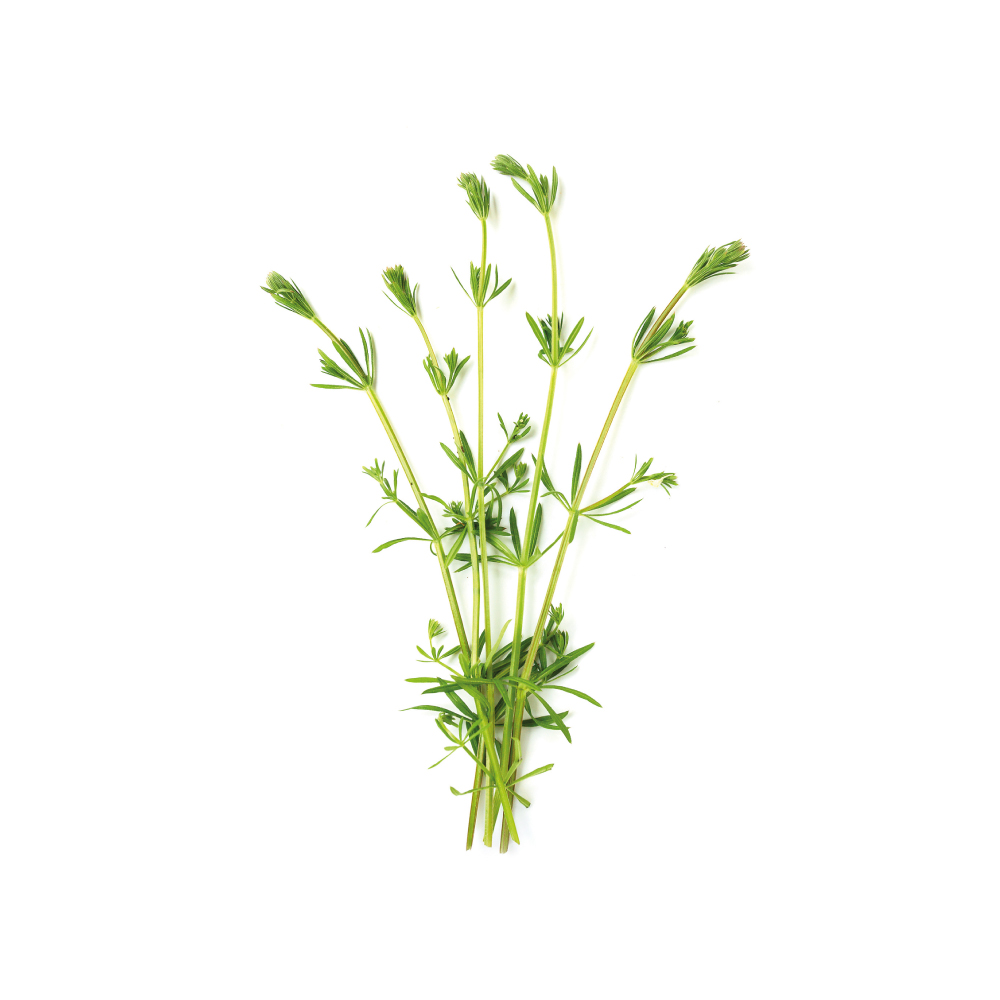
Concentration
Content by Source
Concentrations not reported. No percent-dry-weight or mg/g figures have been published for this compound in its source plants.
Nordamnacanthal at a Glance
Nordamnacanthal is a Rubiaceae-type anthraquinone — a root pigment (1,3-dihydroxy-2-formylanthraquinone) found in noni (Morinda citrifolia), cleavers (Galium aparine) and other members of the madder family, where the root anthraquinones historically supplied a red dye 2,
Two framing points define the molecule. First, despite being an anthraquinone, it is not one of the emodin-type laxative anthraquinones: the madder family builds its anthraquinones by a completely different biosynthetic route, and nordamnacanthal has no purgative role. Second, its research interest is almost entirely oncological — the isolated molecule triggers apoptosis in leukaemia, breast and oral-cancer cell lines and delays tumour growth in one mouse model 3,
The honest headline is that all of this is preclinical. There are no human trials, no clinical pharmacokinetics, and — for a reactive, DNA-interactive anthraquinone structurally close to the genotoxic madder pigments — no dedicated genotoxicity package on the isolate (see Toxicity).
A Rubiaceae Anthraquinone, Not a Laxative One
The single most useful thing to understand about nordamnacanthal is that “anthraquinone” covers two chemically unrelated families, and this molecule is in the other one.
The familiar herbal anthraquinones — emodin, chrysophanol, rhein, and the sennosides/cascarosides behind senna, cascara and rhubarb — are polyketide anthraquinones, assembled from acetate/malonate units, and their glycosides drive the stimulant-laxative effect of those herbs. Nordamnacanthal shares none of that. The Rubiaceae (madder-family) anthraquinones are built by a different pathway: rings A and B come from shikimate and α-ketoglutarate via chorismate and o-succinylbenzoate, and ring C from an isoprenoid unit (isopentenyl diphosphate) — the chorismate/o-succinylbenzoate route, not the polyketide one 11Reference 11Biosynthesis of anthraquinones in cell cultures of the RubiaceaeView study →.
Two consequences follow. Nordamnacanthal is not a laxative and should not be reasoned about as though it were an emodin-type molecule. And its toxicology has to be read against its own structural neighbourhood — the Rubiaceae root anthraquinones, some of which (lucidin, rubiadin) are genuinely genotoxic (see Toxicity) — rather than against the laxative anthraquinones.
Nordamnacanthal vs. Damnacanthal
Nordamnacanthal is the O-demethyl analog of damnacanthal. Damnacanthal is 3-hydroxy-1-methoxy-2-formylanthraquinone; remove the 1-methyl group and you have nordamnacanthal, 1,3-dihydroxy-2-formylanthraquinone (molecular formula C₁₅H₈O₅, confirmed by single-crystal X-ray) 2Reference 2Awang K, Ismail NH, Ahmad R, Saidan NH, Retailleau P (2008). 1,3-Dihydroxy-9,10-dioxo-9,10-dihydroanthracene-2-carbaldehyde (nordamnacanthal). Acta Crystallographica Section E: Structure Reports Online. https://pubmed.ncbi.nlm.nih.gov/21201935/View study →. The two almost always occur together in Morinda roots and are studied side by side.
That one methyl group matters for potency and for mechanism:
- Damnacanthal is generally the more potent of the pair in direct cytotoxicity comparisons — in the total-synthesis study it was the most cytotoxic analog against MCF-7 and K-562 lines, ahead of nordamnacanthal 9Reference 9Total synthesis, cytotoxic effects of damnacanthal, nordamnacanthal and related anthraquinone analoguesView study →, and in the oral-cancer and leukaemia work the two track together with damnacanthal often edging ahead 3,
5Reference 3Anticancer potential of damnacanthal and nordamnacanthal from Morinda elliptica roots on T-lymphoblastic leukemia cellsView study →Reference 5Cell cycle arrest and mechanism of apoptosis induction in H400 oral cancer cells in response to damnacanthal and nordamnacanthal isolated from Morinda citrifoliaView study → . - The marquee non-cytotoxic mechanisms belong specifically to damnacanthal, not to nordamnacanthal. Damnacanthal is a highly potent, selective inhibitor of the p56^lck tyrosine kinase (IC50 ≈ 17 nM for autophosphorylation) 10Reference 10Damnacanthal is a highly potent, selective inhibitor of p56^lck tyrosine kinase activityView study → and is the anthraquinone reported to inhibit DNA topoisomerase II in this series. Nordamnacanthal’s own confirmed action is intrinsic (mitochondrial) apoptosis (below); its topoisomerase-II / kinase activity as an isolate is inferred from the close analog rather than separately established.
The practical reading: where a source says “damnacanthal/nordamnacanthal do X,” check which molecule actually carried the assay. The topo-II-poison and Lck-inhibitor reputations are damnacanthal’s; nordamnacanthal’s strongest independent evidence is pro-apoptotic cytotoxicity.
Nordamnacanthal in Cancer Research
Essentially the entire nordamnacanthal literature is oncology, and essentially all of it is the isolated molecule in cell culture, with a single in-vivo mouse study. The signal is real and mechanistically coherent — apoptosis through the intrinsic mitochondrial pathway — but it stops well short of anything human.
Support is an experimental score — weighted by study type (human > animal > in vitro) and volume. A beta, not a validated metric. Every application here is preclinical isolate work, so scores stay low by design.
The best-developed strand. Against CEM-SS T-lymphoblastic leukaemia cells, isolated nordamnacanthal from Morinda elliptica roots is strongly cytotoxic (IC50 ≈ 1.7 µg/mL, more potent than damnacanthal’s ~10 µg/mL) and kills by apoptosis: it produces internucleosomal DNA fragmentation (the classic 180–200 bp ladder) via a Mg²⁺/Ca²⁺-dependent endonuclease, and — distinctively — does so independently of ongoing transcription 1,
Electron microscopy confirms the morphology: chromatin condensation at 10 µg/mL progressing to membrane blebbing, nuclear fragmentation and apoptotic bodies at 30 µg/mL 4Reference 4Ultrastructural and morphological effects in T-lymphoblastic leukemia CEM-SS cells following treatment with nordamnacanthal and damnacanthalView study →.
Gap: all in-vitro isolate work in one leukaemia line; no animal leukaemia model and no human data 3,
The only application with an in-vivo result. In mice, nordamnacanthal (from M. citrifolia) delayed 4T1 mammary-tumour progression at ~50 mg/kg and acted as an immunomodulator — raising natural-killer-cell activity and the protective cytokines IL-2 and IFN-γ — while a parallel subchronic-toxicity arm found no mortality, toxicity signs or serum-liver-enzyme changes 8Reference 8Subchronic toxicity, immunoregulation and anti-breast tumor effect of nordamnacanthal, an anthraquinone extracted from the stems of Morinda citrifolia LView study →.
In vitro it is cytotoxic to MCF-7 and MDA-MB-231 cells 8Reference 8Subchronic toxicity, immunoregulation and anti-breast tumor effect of nordamnacanthal, an anthraquinone extracted from the stems of Morinda citrifolia LView study →, and combined with tamoxifen it roughly doubled cytotoxicity in MCF-7 cells through reactive-oxygen-species generation and mitochondrial-membrane-potential collapse — a potential dose-sparing combination 7Reference 7Nordamnacanthal potentiates the cytotoxic effects of tamoxifen in human breast cancer cellsView study →.
Gap: a single syngeneic mouse model plus in-vitro isolate assays; the tamoxifen synergy is cell-culture only, and there is no clinical work 7,
A cleanly mechanistic in-vitro strand. In H400 oral squamous-cell-carcinoma cells, nordamnacanthal showed the strongest growth inhibition of the lines tested (IC50 ≈ 1.9 µg/mL) and induced apoptosis through the intrinsic mitochondrial pathway — mitochondrial-membrane-potential disruption, cytochrome-c release and caspase-9 then caspase-3/7 activation — alongside cell-cycle perturbation and reduced cancer-cell migration 5,
Gap: in-vitro isolate only, in oral-cancer lines; no in-vivo or human oral-cancer data 5,
A minor, older strand from the Morinda elliptica survey: nordamnacanthal was among the anthraquinones with strong antimicrobial activity (with damnacanthal and morindone) and was “very cytotoxic” to CEM-SS cells 1Reference 1Antiviral, cytotoxic and antimicrobial activities of anthraquinones isolated from the roots of Morinda ellipticaView study →. Note the anti-HIV activity in that screen belonged to damnacanthal, not nordamnacanthal 1Reference 1Antiviral, cytotoxic and antimicrobial activities of anthraquinones isolated from the roots of Morinda ellipticaView study →.
Gap: in-vitro screening data, isolate; no mechanism, spectrum or in-vivo follow-up for nordamnacanthal specifically 1Reference 1Antiviral, cytotoxic and antimicrobial activities of anthraquinones isolated from the roots of Morinda ellipticaView study →.
Mechanisms
| Target / pathway | Effect | Relevant to |
|---|---|---|
| Intrinsic mitochondrial apoptosis (MMP loss → cytochrome-c → caspase-9 → caspase-3/7) | pro-apoptotic cell death | oralbreast cancer |
| Mg²⁺/Ca²⁺-dependent endonuclease; internucleosomal DNA fragmentation | apoptotic DNA laddering, transcription-independent | leukaemia |
| Reactive oxygen species + mitochondrial-membrane-potential collapse | potentiates tamoxifen cytotoxicity (~2×) | breast (MCF-7) |
| NK-cell activity, IL-2 / IFN-γ | immunostimulation in vivo | breast (4T1 mouse) |
| DNA topoisomerase II / p56^lck tyrosine kinase | poisoning/inhibition reported for this anthraquinone scaffold — the potent, characterised data are damnacanthal’s, not nordamnacanthal’s | mechanistic context |
The load-bearing caveat: nordamnacanthal’s own confirmed action is intrinsic-mitochondrial apoptosis. The topoisomerase-II-poison and Lck-inhibitor mechanisms often cited for “damnacanthal/nordamnacanthal” are established for damnacanthal (the 1-O-methyl ether) 10Reference 10Damnacanthal is a highly potent, selective inhibitor of p56^lck tyrosine kinase activityView study →; assume them for nordamnacanthal only by analogy until tested directly.
Pharmacokinetics
No pharmacokinetic data exist for nordamnacanthal — no absorption, oral bioavailability, half-life, metabolism or tissue-distribution study has been published for the isolate, in humans or animals. The only systemic-exposure evidence is indirect: nordamnacanthal delayed tumour growth in mice at ~50 mg/kg with no overt toxicity, so some usable in-vivo exposure is achievable 8Reference 8Subchronic toxicity, immunoregulation and anti-breast tumor effect of nordamnacanthal, an anthraquinone extracted from the stems of Morinda citrifolia LView study →, but the numbers behind it are uncharacterised. Its reactive 2-formyl (aldehyde) group is a plausible liability for stability and non-specific protein binding, which makes the absence of ADME data a real limitation on interpreting the low-µg/mL in-vitro potency. This is the single biggest hole in the file.
Clinical Trials
None. There are no clinical trials of nordamnacanthal in any indication; the entire evidence base is preclinical (cell culture plus one mouse study).
| Completed | Planned | Terminated | Preclinical |
|---|---|---|---|
| — | — | — | Anticancer(leukaemia, breast, oral); one in-vivo 4T1 model; antimicrobial screening |
Last checked: July 2026.
Isolate vs. Plant Studies
Nordamnacanthal is an unusually isolate-clean file — which is a strength for attribution and a limit for translation. The cytotoxicity, apoptosis-mechanism and in-vivo tumour work all use purified nordamnacanthal (from Morinda elliptica or M. citrifolia roots, or synthesised) rather than a whole extract 1,
Its Role in Plants
In the madder family, nordamnacanthal is a root-localised anthraquinone pigment. Its ring system is built by the Rubiaceae-specific route — chorismate and o-succinylbenzoate (from shikimate + α-ketoglutarate) supplying rings A and B, an isoprenoid unit supplying ring C 11Reference 11Biosynthesis of anthraquinones in cell cultures of the RubiaceaeView study → — the same machinery that produces the family’s red root pigments such as alizarin and purpurin. These root anthraquinones underlie the historical use of madder-family roots as a red dye, and nordamnacanthal is named for exactly this lineage (the demethyl “nor” form of damnacanthal). As with other plant anthraquinones, the presumed ecological roles are pigmentation and chemical defence in root tissue, though nordamnacanthal’s specific ecological function is not well characterised.
Prevalence in Nature
Nordamnacanthal occurs in the roots of madder-family (Rubiaceae) plants. The best-documented sources are Morinda species — noni (Morinda citrifolia) and Morinda elliptica, the root from which most of the anticancer isolate work was drawn 1,
Concentrations are rarely quantified as a percentage of dry weight: the compound is a minor, root-restricted constituent, and the literature reports its presence and biological activity far more often than its content. No reliable comparative concentration figures were available to build a source chart (see the gaps tracker).
Discovery & Synthesis
Nordamnacanthal entered the literature as a root anthraquinone of Morinda and related Rubiaceae, identified and named as the demethyl analog of damnacanthal (damnacanthal itself taking its name from the genus Damnacanthus). Its structure — 1,3-dihydroxy-2-formylanthraquinone, C₁₅H₈O₅ — was placed on a firm footing by a single-crystal X-ray determination in 2008, on material isolated from Malaysian Morinda citrifolia 2Reference 2Awang K, Ismail NH, Ahmad R, Saidan NH, Retailleau P (2008). 1,3-Dihydroxy-9,10-dioxo-9,10-dihydroanthracene-2-carbaldehyde (nordamnacanthal). Acta Crystallographica Section E: Structure Reports Online. https://pubmed.ncbi.nlm.nih.gov/21201935/View study →.
A total synthesis was reported in 2013, when Akhtar and colleagues prepared nordamnacanthal, damnacanthal and a series of related anthraquinone analogues by modified routes and screened them for cytotoxicity — confirming the natural structures and enabling structure–activity comparison across the series 9Reference 9Total synthesis, cytotoxic effects of damnacanthal, nordamnacanthal and related anthraquinone analoguesView study →. In practice the molecule is obtained by root extraction or laboratory synthesis for research use only; there is no commercial production as a supplement or drug.
Patents: not yet researched.
Toxicity & Safety
Nordamnacanthal carries a moderate flag. That is a deliberate middle position: the one in-vivo study found it well tolerated at an anti-tumour dose, but it is a reactive, DNA-interactive anthraquinone sitting structurally next to genuinely genotoxic relatives, and its own genotoxicity has never been tested — so neither “low” nor “toxic” would be honest.
The reassuring data point: in the mouse breast-tumour study, a subchronic oral-toxicity arm found no mortality, no signs of toxicity and no serum-liver-enzyme changes at the doses used, and the anti-tumour dose (~50 mg/kg) was tolerated over 28 days 8Reference 8Subchronic toxicity, immunoregulation and anti-breast tumor effect of nordamnacanthal, an anthraquinone extracted from the stems of Morinda citrifolia LView study →. Against that sit two cautions. First, nordamnacanthal is by design a cytotoxic, pro-apoptotic molecule with a reactive 2-formyl aldehyde group — the very features that make it interesting against cancer cells make an untested safety margin a real gap. Second, it belongs to the Rubiaceae root-anthraquinone class that includes lucidin and rubiadin, which are genotoxic: lucidin (1,3-dihydroxy-2-hydroxymethylanthraquinone — a close structural cousin) is mutagenic in Salmonella and mammalian cells 12Reference 12The genotoxicity of lucidin, a natural component of Rubia tinctorum L., and lucidinethylether, a component of ethanolic Rubia extractsView study →, madder-family anthraquinone glycosides yield genotoxic metabolites 13Reference 13Formation of genotoxic metabolites from anthraquinone glycosides, present in Rubia tinctorum LView study →, and long-term madder-root feeding was carcinogenic with DNA-adduct formation in rats, prompting withdrawal of madder-root herbal products in some countries 14Reference 14AnimalCarcinogenicity and DNA adduct formation observed in ACI rats after long-term treatment with madder root, Rubia tinctorum LView study →. Whether nordamnacanthal shares this liability is unknown — it has not been assayed — but the class context is why the isolate should not be treated as food-safe.
- Tolerated in the one in-vivo test. Subchronic oral dosing in mice showed no mortality, toxicity signs or liver-enzyme changes at anti-tumour doses 8Reference 8Subchronic toxicity, immunoregulation and anti-breast tumor effect of nordamnacanthal, an anthraquinone extracted from the stems of Morinda citrifolia LView study →.
- A reactive, DNA-interactive cytotoxic anthraquinone. Its pro-apoptotic 2-formyl scaffold is exactly what makes the absence of a genotoxicity/repeat-dose package on the isolate a real gap.
- Genotoxic close relatives. The Rubiaceae root-anthraquinone class includes mutagenic/carcinogenic members (lucidin, rubiadin; madder root); nordamnacanthal’s own genotoxicity is untested 12,
13, .14Reference 12The genotoxicity of lucidin, a natural component of Rubia tinctorum L., and lucidinethylether, a component of ethanolic Rubia extractsView study →Reference 13Formation of genotoxic metabolites from anthraquinone glycosides, present in Rubia tinctorum LView study →Reference 14AnimalCarcinogenicity and DNA adduct formation observed in ACI rats after long-term treatment with madder root, Rubia tinctorum LView study → - Everything is preclinical. No human exposure, safety or interaction data of any kind exist; this is a research compound, not a supplement.
Dosage
There is no established or safe human dose for nordamnacanthal. It is a research compound, not a supplement or medicine, and no human has been dosed with the isolate in a reported study. For reference only, the figures that appear in the literature are:
| Context | Model | Figure |
|---|---|---|
| Cytotoxicity (leukaemia, CEM-SS) | in vitro | IC50 ≈ 1.7 µg/mL 3Reference 3Anticancer potential of damnacanthal and nordamnacanthal from Morinda elliptica roots on T-lymphoblastic leukemia cellsView study → |
| Cytotoxicity (oral cancer, H400) | in vitro | IC50 ≈ 1.9 µg/mL 5Reference 5Cell cycle arrest and mechanism of apoptosis induction in H400 oral cancer cells in response to damnacanthal and nordamnacanthal isolated from Morinda citrifoliaView study → |
| Anti-tumour effect (4T1 breast) | mouse | ~50 mg/kg 8Reference 8Subchronic toxicity, immunoregulation and anti-breast tumor effect of nordamnacanthal, an anthraquinone extracted from the stems of Morinda citrifolia LView study → |
These are preclinical research doses, cited to characterise the compound, and are not a personal recommendation.
References
- Ali AM, Ismail NH, Mackeen MM, Yazan LS, Mohamed SM, Ho AS, Lajis NH (2000). Antiviral, cytotoxic and antimicrobial activities of anthraquinones isolated from the roots of Morinda elliptica. Pharmaceutical Biology. https://pubmed.ncbi.nlm.nih.gov/21214480/
- Awang K, Ismail NH, Ahmad R, Saidan NH, Retailleau P (2008). 1,3-Dihydroxy-9,10-dioxo-9,10-dihydroanthracene-2-carbaldehyde (nordamnacanthal). Acta Crystallographica Section E: Structure Reports Online. https://pubmed.ncbi.nlm.nih.gov/21201935/
- Latifah SY, Gopalsamy B, Abdul Rahim R, Ali AM, Lajis NH (2021). Anticancer potential of damnacanthal and nordamnacanthal from Morinda elliptica roots on T-lymphoblastic leukemia cells. Molecules. https://pubmed.ncbi.nlm.nih.gov/33808969/
- Latifah SY, Gopalsamy B, Abdul Rahim R, Ali AM, Lajis NH (2022). Ultrastructural and morphological effects in T-lymphoblastic leukemia CEM-SS cells following treatment with nordamnacanthal and damnacanthal. Molecules. https://pubmed.ncbi.nlm.nih.gov/35807381/
- Shaghayegh G, Alabsi AM, Ali-Saeed R, Ali AM, Vincent-Chong VK, Zain RB (2016). Cell cycle arrest and mechanism of apoptosis induction in H400 oral cancer cells in response to damnacanthal and nordamnacanthal isolated from Morinda citrifolia. Cytotechnology. https://pubmed.ncbi.nlm.nih.gov/27488882/
- Shaghayegh G, Alabsi AM, Ali-Saeed R, Ali AM, Vincent-Chong VK, Zain RB (2017). Effects of damnacanthal and nordamnacanthal on proliferation, apoptosis, and migration of oral squamous cell carcinoma cells. Asian Pacific Journal of Cancer Prevention. https://pubmed.ncbi.nlm.nih.gov/29286228/
- Subramani T, Yeap SK, Ho WY, Ho CL, Osman CP, Ismail NH, Alitheen NB (2015). Nordamnacanthal potentiates the cytotoxic effects of tamoxifen in human breast cancer cells. Oncology Letters. https://pubmed.ncbi.nlm.nih.gov/25435988/
- Abu N, Zamberi NR, Yeap SK, Nordin N, Mohamad NE, Romli MF, Rasol NE, Subramani T, et al. (2018). Subchronic toxicity, immunoregulation and anti-breast tumor effect of nordamnacanthal, an anthraquinone extracted from the stems of Morinda citrifolia L. BMC Complementary and Alternative Medicine. https://pubmed.ncbi.nlm.nih.gov/29374471/
- Akhtar MN, Zareen S, Yeap SK, Ho WY, Lo KM, Hasan A, Alitheen NB (2013). Total synthesis, cytotoxic effects of damnacanthal, nordamnacanthal and related anthraquinone analogues. Molecules. https://pubmed.ncbi.nlm.nih.gov/23966087/
- Faltynek CR, Schroeder J, Mauvais P, Miller D, Wang S, Murphy D, Lehr R, Kelley M, Maycock A, Michne W, et al. (1995). Damnacanthal is a highly potent, selective inhibitor of p56^lck tyrosine kinase activity. Biochemistry. https://pubmed.ncbi.nlm.nih.gov/7547985/
- Han YS, Van der Heijden R, Verpoorte R (2001). Biosynthesis of anthraquinones in cell cultures of the Rubiaceae. Plant Cell, Tissue and Organ Culture. https://doi.org/10.1023/A:1012758922713
- Westendorf J, Poginsky B, Marquardt H, Groth G, Marquardt H (1988). The genotoxicity of lucidin, a natural component of Rubia tinctorum L., and lucidinethylether, a component of ethanolic Rubia extracts. Cell Biology and Toxicology. https://pubmed.ncbi.nlm.nih.gov/3069188/
- Blömeke B, Poginsky B, Schmutte C, Marquardt H, Westendorf J (1992). Formation of genotoxic metabolites from anthraquinone glycosides, present in Rubia tinctorum L. Mutation Research. https://pubmed.ncbi.nlm.nih.gov/1370725/
- Westendorf J, Pfau W, Schulte A (1998). Carcinogenicity and DNA adduct formation observed in ACI rats after long-term treatment with madder root, Rubia tinctorum L. Carcinogenesis. https://pubmed.ncbi.nlm.nih.gov/9886573/



