
Compound Monograph
Oleanolic Acid 28-O-Glucopyranoside
Oleanolic acid 28-O-β-D-glucopyranoside is the 28-O-glucosyl ester (a monodesmosidic saponin) of the pentacyclic triterpene oleanolic acid — the sugar-bound transport/storage form of the molecule, reported in ginseng, Achyranthes bidentata root and Brazilian ginseng (suma). Its own pharmacology is thin: one recent preclinical body (isolate) shows anti-ulcerative-colitis activity, while most triterpene bioactivity data belong to its aglycone, oleanolic acid.

Sources · 3
Where Does It Come From?
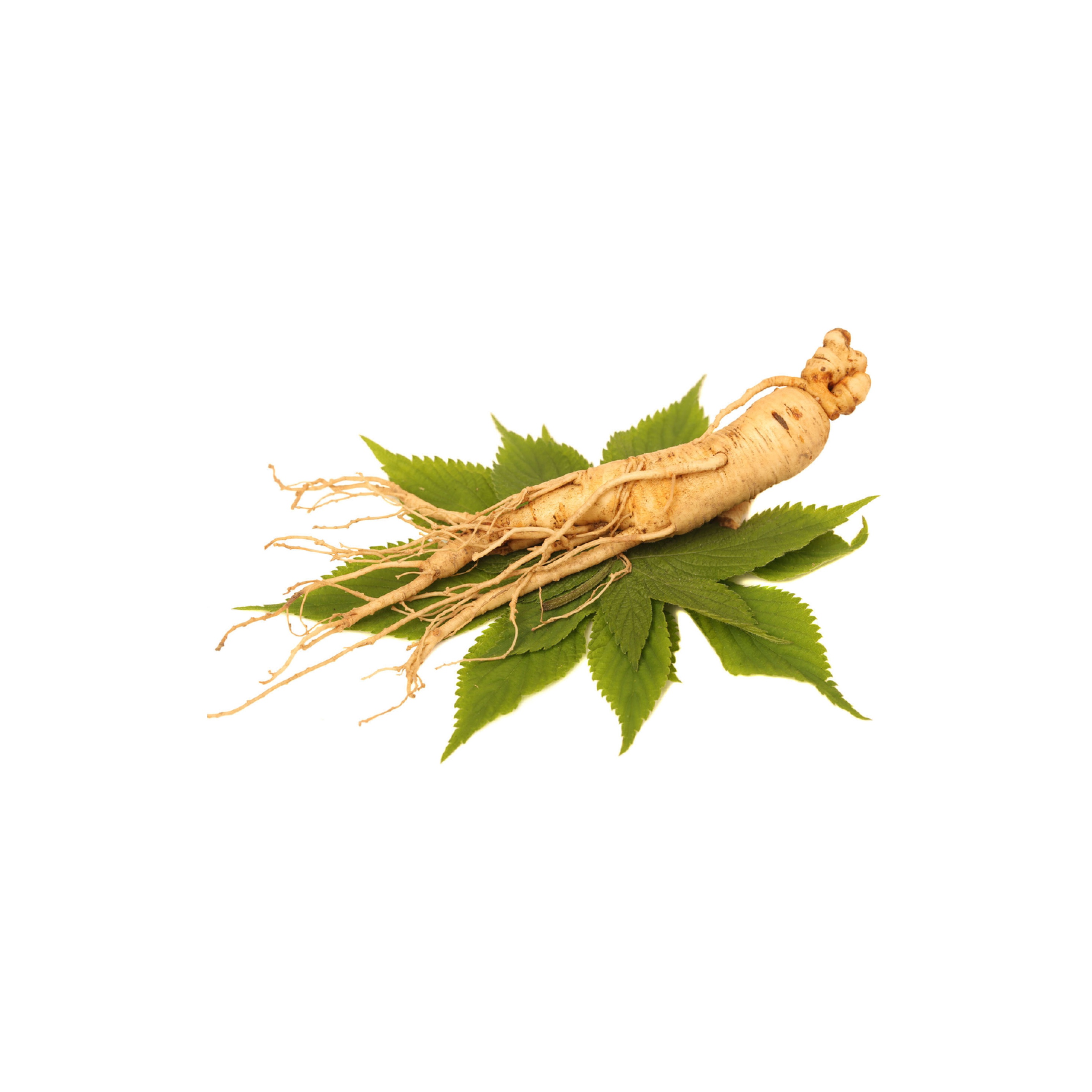
Oleanolic Acid 28-O-Glucopyranoside is a naturally occurring oleanane triterpenoid saponin (monodesmosidic 28-o-glucosyl ester of oleanolic acid), found in Ginseng, Achyranthes bidentata root and Brazilian ginseng / suma. It is well tolerated orally (low toxicity).
Concentration
Content by Source
Concentrations not reported. No percent-dry-weight or mg/g figures have been published for this compound in its source plants.
Oleanolic Acid 28-O-Glucopyranoside at a Glance
Oleanolic acid 28-O-β-D-glucopyranoside is a triterpenoid saponin — specifically the 28-O-glucosyl ester of oleanolic acid, the pentacyclic oleanane triterpene. A single glucose is attached through an ester bond at the C-28 carboxyl, making it a monodesmosidic saponin (one sugar chain). It is the sugar-bound form of oleanolic acid — broadly, the way plants transport and store the more lipophilic aglycone.
It is a minor constituent reported in ginseng (Panax ginseng), Achyranthes bidentata (niu xi) root, and Brazilian ginseng / suma (Pfaffia paniculata), co-occurring with the phytosterols and other triterpenoids of those roots 3,
The honest posture: literature on the glycoside itself is sparse. One recent preclinical research group has studied the isolate in ulcerative-colitis models, which is the only application with molecule-specific data 1,
The Glucoside vs. the Aglycone
This is the point of the page. Oleanolic acid 28-O-glucopyranoside and oleanolic acid are not interchangeable, and most of what is “known” about this molecule is actually known about its aglycone.
- Oleanolic acid (the aglycone) is the widely studied pentacyclic triterpene of olive leaf, clove and many Lamiaceae — with a substantial (if trial-thin) record in liver protection and diabetes prevention, and a notoriously poor ~0.7% oral bioavailability. See oleanolic acid.
- Oleanolic acid 28-O-glucopyranoside is that molecule with a glucose esterified at C-28. Glycosylation is the plant’s storage/transport strategy: it raises water solubility and changes how the molecule is handled biologically. The C-28 ester bond is, in principle, cleavable by esterases and gut microbiota, which can liberate free oleanolic acid — so part of the glycoside’s activity in vivo may run through the aglycone.
The practical rule: attribute a finding to the glucoside only where the isolated glucoside was the thing tested (the colitis work below 1,
What It's Used For
Molecule-specific evidence is narrow. One research group has published a small, internally consistent body of preclinical work on the isolate (abbreviated OAG) in ulcerative colitis (UC) — two animal models plus a cell model, sharing authors and program, so they read as a single replicated line of work, not independent confirmations 1,
Support is an experimental score — weighted by study type (human > animal > in vitro) and volume. A beta, not a validated metric. Only one application has isolate-specific data, and it is preclinical single-group, so the score stays low by design.
The only application where the isolated glucoside itself was tested. In LPS-induced Caco-2 cells and DSS-induced model mice, OAG reduced weight loss and disease-activity index, restored colon length, lowered inflammatory cytokines and immune-cell infiltration, and strengthened the epithelial barrier (higher TEER, more tight-junction protein, less bacterial translocation) — reportedly outperforming 5-aminosalicylic acid on barrier function — while increasing microbial diversity and beneficial-bacteria abundance; multi-omics implicated PI3K-AKT and MAPK signalling 1Reference 1Oleanolic acid 28-O-β-D-glucopyranoside: a novel therapeutic agent against ulcerative colitis via anti-inflammatory, barrier-preservation, and gut microbiota-modulationView study →. A follow-up in TNBS-induced rats attributed the effect to inhibition of ferroptosis through the Nrf2 / x-CT / GPX4 axis, alongside reduced oxidative stress, lower IL-17 and a corrected Th17/Treg balance 2Reference 2AnimalOleanolic acid 28-O-β-D-glucopyranoside alleviates TNBS-induced ulcerative colitis in rat by regulating Nrf2/x-CT/GPX4-mediated ferroptosisView study →.
Gap: entirely preclinical (mouse, rat, Caco-2), from a single research group, with no independent replication and no human data; the verified abstracts do not report the mg/kg doses, and the degree to which the effect runs through liberated oleanolic acid after C-28 ester cleavage is uncharacterised 1,
Mechanisms
| Target / pathway | Effect | Relevant to |
|---|---|---|
| PI3K-AKT & MAPK signalling | modulated (multi-omics) → reduced colonic inflammation | anti-ulcerative colitis |
| Intestinal tight junctions / epithelial barrier | strengthened (↑ TEER, ↑ tight-junction proteins, ↓ translocation) | anti-ulcerative colitis |
| Gut microbiota | diversity ↑, beneficial taxa ↑, harmful taxa ↓ | anti-ulcerative colitis |
| Nrf2 / x-CT / GPX4 (ferroptosis) | ferroptosis inhibited → less oxidative colonic injury | anti-ulcerative colitis |
| Th17/Treg balance; IL-17 | Th17/Treg ratio ↓; IL-17 ↓ | anti-ulcerative colitis (immune) |
| C-28 glucosyl ester bond | esterase / gut-microbial cleavage can liberate the aglycone | pharmacokinetics (glycoside → oleanolic acid) |
The mechanistic picture is coherent (barrier, microbiota, anti-ferroptosis anti-oxidant tone) but comes from one program; none of it has been reproduced independently or in humans.
Pharmacokinetics
There is no dedicated human or animal pharmacokinetic study of the isolated glucoside. What can be said is structural and inferential: as a large, polar monodesmosidic saponin, oral absorption of the intact molecule is expected to be low (the saponin class is poorly membrane-permeable), and its C-28 glucosyl ester is a plausible substrate for gut esterases and microbial glycosidases — so a meaningful fraction of any oral dose may be converted to free oleanolic acid, itself only ~0.7% orally bioavailable. That the compound was nonetheless orally effective in the colitis models is consistent with a locally acting, gut-restricted agent rather than one relying on systemic exposure 1,
Clinical Trials
There are no clinical trials of oleanolic acid 28-O-glucopyranoside. All evidence is preclinical.
| Completed | Planned | Terminated | Preclinical |
|---|---|---|---|
| — | — | — | Anti-ulcerative-colitis (one research program) |
Last checked: July 2026.
Isolate vs. Plant Studies
The evidence base here is unusually clean on one axis and empty on another. The colitis work used the isolated glucoside as the test article 1,
Prevalence in Nature
Oleanolic acid 28-O-glucopyranoside occurs as a minor oleanane-saponin constituent across several unrelated roots. It is described as a naturally occurring pentacyclic triterpenoid found in ginseng (Panax ginseng), where oleanane-type (oleanolic-acid) saponins are a recognised minority class alongside the dominant dammarane ginsenosides 1,
No reliable quantitative content figure (% dry weight) is documented for any of these sources, so no “Content by Source” chart is drawn — the numbers are logged in the gaps tracker to chase later.
Discovery & Synthesis
A clean first-isolation date and discoverer are not reliably documented for this compound (CAS 14162-53-9); it appears in the literature as a recurring known co-isolate whenever oleanane-saponin fractions of roots such as Achyranthes bidentata 4Reference 4Five new oleanolic acid glycosides from Achyranthes bidentata with inhibitory activity on osteoclast formationView study → and Pfaffia paniculata 3Reference 3Triterpenoids from Brazilian ginseng, Pfaffia paniculataView study → are characterised by NMR and mass spectrometry, rather than as a headline new natural product. Structurally it is a straightforward 28-O-monoglucoside of oleanolic acid, and it can be accessed by regioselective glucosylation of the C-28 carboxyl of oleanolic acid (or, conversely, obtained by partial hydrolysis of more highly glycosylated oleanolic-acid saponins). No landmark total synthesis is associated with the molecule; production for research is by isolation from plant saponin fractions or semi-synthesis from oleanolic acid.
Patents: not yet researched.
Toxicity & Safety
The molecule carries a low / not-established flag. There is no toxicity dataset specific to the isolated glucoside; the badge is assigned conservatively rather than from direct safety studies.
- Well tolerated in the available preclinical work. Oral OAG was protective, not harmful, in the DSS mouse and TNBS rat colitis models at the research doses used 1,
2Reference 1Oleanolic acid 28-O-β-D-glucopyranoside: a novel therapeutic agent against ulcerative colitis via anti-inflammatory, barrier-preservation, and gut microbiota-modulationView study →Reference 2AnimalOleanolic acid 28-O-β-D-glucopyranoside alleviates TNBS-induced ulcerative colitis in rat by regulating Nrf2/x-CT/GPX4-mediated ferroptosisView study → . - Safety is largely uncharacterised. No repeat-dose, genotoxicity, or reproductive-toxicity data exist for the isolated glucoside; “low” reflects absence of a red flag plus its low-toxicity aglycone, not a clean safety file.
- Read the aglycone’s cautions across. Because the C-28 ester can liberate oleanolic acid, the aglycone’s dose-dependent cautions (cholestatic liver effects at high or prolonged intake) are the relevant reference point.
- Generic saponin caution. Saponins can be membrane-active / haemolytic at high concentrations in vitro; whether this monodesmosidic 28-O ester shows it meaningfully in vivo is not established.
Because this is a plant-constituent page, no pregnancy or lactation verdict is issued here — that decision belongs on the herb or product page where intake is actually chosen. No reproductive-toxicity data for the isolated glucoside were found.
Dosage
There is no established human dose. The only figures in the literature are preclinical research doses — oral administration of the isolate in DSS-induced mice, TNBS-induced rats and LPS-treated Caco-2 cells 1,
References
- Wang C, Liu H, Li Z, Yang Q, Wang Q, Yang T, Tang D, Wang C, Liu J (2024). Oleanolic acid 28-O-β-D-glucopyranoside: a novel therapeutic agent against ulcerative colitis via anti-inflammatory, barrier-preservation, and gut microbiota-modulation. Biomedicine & Pharmacotherapy. https://pubmed.ncbi.nlm.nih.gov/39405905/
- Wang C, Li Z, Liu L, Jia W, Geng X, Liu H, Wang C, Wu Y, Lin H, Liu J (2025). Oleanolic acid 28-O-β-D-glucopyranoside alleviates TNBS-induced ulcerative colitis in rat by regulating Nrf2/x-CT/GPX4-mediated ferroptosis. Journal of Ethnopharmacology. https://pubmed.ncbi.nlm.nih.gov/40780475/
- Li J, Jadhav AN, Khan IA (2010). Triterpenoids from Brazilian ginseng, Pfaffia paniculata. Planta Medica. https://pubmed.ncbi.nlm.nih.gov/19941264/
- Li JX, Hareyama T, Tezuka Y, Zhang Y, Miyahara T, Kadota S (2005). Five new oleanolic acid glycosides from Achyranthes bidentata with inhibitory activity on osteoclast formation. Planta Medica. https://pubmed.ncbi.nlm.nih.gov/16041655/



