
Compound Monograph
Penduletin
Penduletin (5,4'-dihydroxy-3,6,7-trimethoxyflavone) is a polymethoxylated flavonol — a triple methyl ether of quercetagetin — from chaste tree, Vitex, Artemisia and related plants, studied only in the laboratory for antiproliferative, antiviral and anti-inflammatory activity.

Sources · 9
Where Does It Come From?
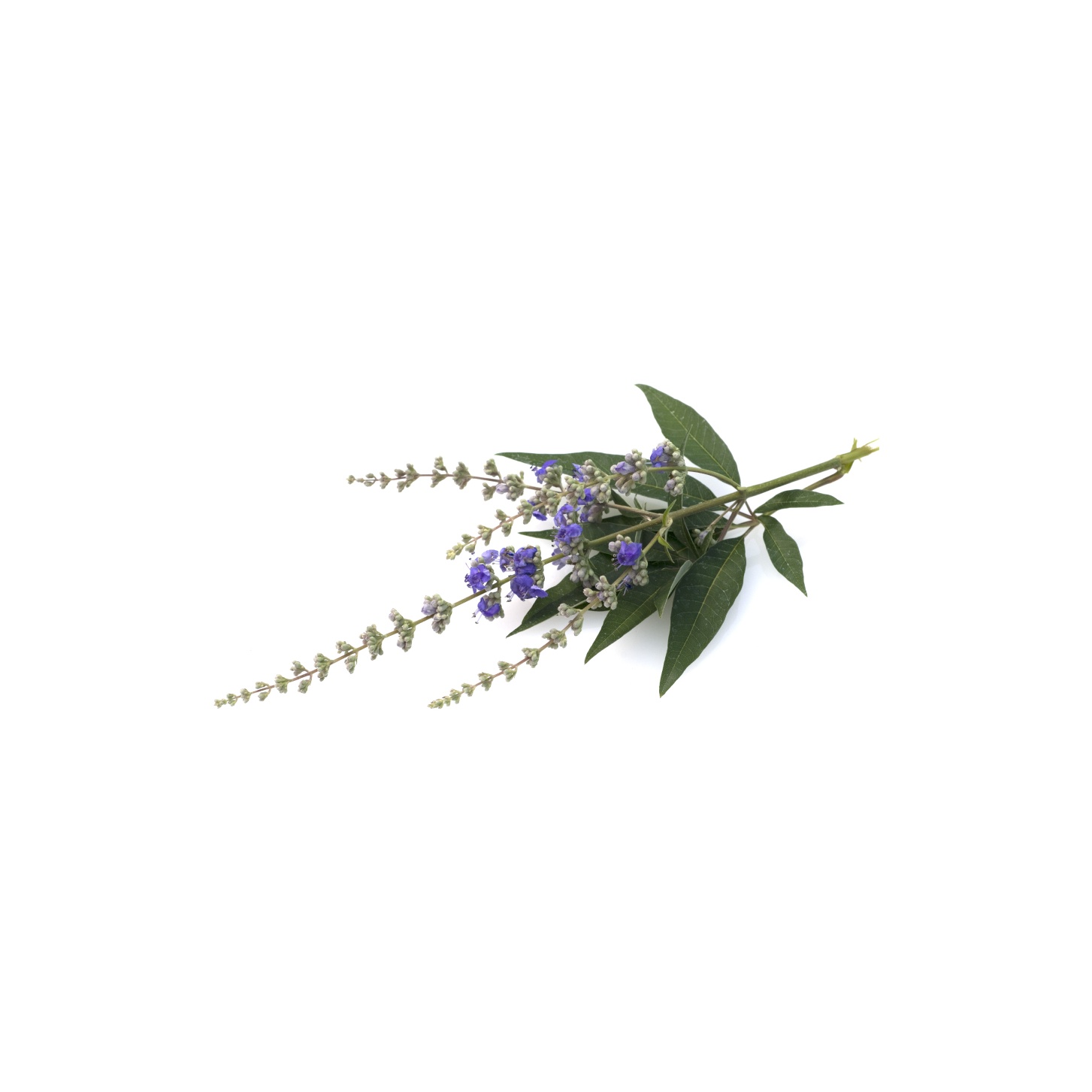
Penduletin is a naturally occurring flavonol (methylated), found in Chaste tree, Chinese chaste tree, Simple-leaf chaste tree and 6 other sources. It is well tolerated orally (low toxicity).
Concentration
Content by Source
Concentrations not reported. No percent-dry-weight or mg/g figures have been published for this compound in its source plants.
Penduletin at a Glance
Penduletin, or 5,4’-dihydroxy-3,6,7-trimethoxyflavone, is a polymethoxylated flavonol — structurally a triple methyl ether of quercetagetin (6-hydroxykaempferol), placing it in the same family as the far better-known dietary flavonols quercetin and kaempferol. Three of its hydroxyl groups are capped as methoxy groups, which changes how it behaves compared with its unmethylated parents.
It occurs as a minor constituent of the flavonoid fraction in Vitex (chaste tree), Artemisia, Croton, Brickellia and various other plants, usually alongside close relatives such as patuletin, casticin and chrysosplenetin.
The evidence for penduletin is entirely preclinical — cell-culture assays and a small number of animal studies, most of them isolating or fractionating the molecule from a source plant. It has the most consistent signal for antiproliferative (anticancer) activity in vitro and a notably potent antiviral effect against enterovirus 71, plus scattered anti-inflammatory, estrogen-receptor-binding and antibacterial findings. There are no human trials, and its pharmacokinetics in people are undocumented. Read the page in that light: this is an interesting laboratory molecule, not an established remedy.
A Methylated Flavonol
The point worth understanding about penduletin is what the methylation does. Its parent, quercetagetin, and cousins like quercetin and kaempferol carry free hydroxyl (–OH) groups that make them water-friendly, strongly antioxidant, and rapidly conjugated and cleared once eaten. Penduletin instead carries three methoxy (–OCH₃) groups in place of those hydroxyls.
In general, methylating a flavonol makes it more lipophilic (fat-soluble), which tends to improve passage across cell membranes and slows the phase-II conjugation (glucuronidation/sulfation) that so limits ordinary dietary flavonols — but it also removes the free hydroxyls that carry out direct radical-scavenging antioxidant activity. This trade-off is the plausible reason methoxyflavones such as penduletin often show sharper activity in cell-based assays (cytotoxic, antiviral) than their heavily-conjugated parent flavonols, while contributing less as classic antioxidants. This is a general property of the polymethoxyflavone class; it has not been measured directly for penduletin, so treat it as context, not a proven claim about this molecule.
What It's Used For
All of the pharmacology below is preclinical — in vitro, with one antiviral study extending into mice. Where a study fractionated or isolated penduletin from a plant, that is noted; several “findings” are really the activity of an extract in which penduletin is one of several flavonoids.
Support is an experimental score — weighted by study type (human > animal > in vitro) and volume. A beta, not a validated metric. Every row here is preclinical, so no score reaches the middle of the scale; read the per-row basis.
The most reproduced activity. Penduletin isolated from Vitex negundo was antiproliferative against liver (HepG2, IC50 ~5.6 µM) and breast (MCF-7, ~6.4 µM) cancer cells, raising reactive-oxygen species and triggering caspase-dependent apoptosis 1Reference 1In vitroIn silico and in vitro studies on the anti-cancer activity of artemetin, vitexicarpin and penduletin compounds from Vitex negundoView study →.
In a separate study, penduletin from Rhamnus disperma roots was more potent still — IC50 ~0.53 µM against A2780 ovarian and ~2.2 µM against MCF-7 and HT29 cells — with 2–9-fold selectivity over normal cells, doubling of the apoptotic population and G1 arrest 2Reference 2Isolation, characterization, complete structural assignment, and anticancer activities of the methoxylated flavonoids from Rhamnus disperma rootsView study →.
Penduletin from Vitex trifolia arrested cancer cells at the G2/M phase (IC50 ~19.8 µg/mL) 3Reference 3Flavonoids from Vitex trifolia L. inhibit cell cycle progression at G2/M phase and induce apoptosis in mammalian cancer cellsView study →, and a review has argued the flavonol is an “underestimated” anticancer candidate 5Reference 5Penduletin — yet underestimated flavonoid with a potential anti-cancer activityView study →.
Structure-activity work on methoxylated flavonoids places penduletin among those preferentially toxic to tumour over normal cells 4Reference 4Antiproliferative activity of flavonoids: influence of the sequential methoxylation state of the flavonoid structureView study →.
Gap: every result is a cell-culture assay of the isolated molecule (or an extract fraction). There is no in-vivo tumour model, no oral-exposure data, and no evidence the low-micromolar concentrations used are reachable in a living animal, let alone a human.
The most striking single result. Penduletin (alongside the related methoxyflavone chrysosplenetin) inhibited enterovirus 71 RNA replication in cell culture with an IC50 around 0.20 µM and a high selectivity index 6Reference 6Inhibition of enterovirus 71 replication by chrysosplenetin and penduletinView study →.
A follow-up study extended this into animals: flavonoids including penduletin protected newborn mice from a lethal EV71 challenge, with roughly two-thirds surviving 7Reference 7In vitroAntiviral efficacy of flavonoids against enterovirus 71 infection in vitro and in newborn miceView study →.
EV71 is a major cause of severe hand-foot-and-mouth disease, so a sub-micromolar plant flavonol with in-vivo activity is a genuinely interesting lead.
Gap: promising but early — a mouse model and cell assays, not human trials, and penduletin’s oral absorption and tissue exposure are unknown, so whether an antiviral concentration could be achieved in people is untested.
Penduletin isolated from Artemisia copa reduced prostaglandin E2 (PGE2) production in lipopolysaccharide-stimulated mouse macrophages, the basis for the plant’s traditional anti-inflammatory use 8Reference 8Flavonoids from Artemisia copa with anti-inflammatory activityView study →. This fits the broad flavonol pattern of dampening inflammatory eicosanoid signalling.
Gap: a single in-vitro macrophage study of the isolate; no animal inflammation model, no dose-response in a whole organism, and — as elsewhere — no human data. Notably, when tested in Vitex agnus-castus fractions, penduletin did not show significant anti-inflammatory or lipoxygenase-inhibitory activity, so the signal is not uniform across studies.
Penduletin is one of the Vitex agnus-castus (chaste tree) flavones reported to bind the estrogen receptor with β-subtype selectivity in vitro, contributing to the weak phytoestrogenic activity attributed to the chaste-tree flavonoid fraction 9Reference 9Evidence for estrogen receptor beta-selective activity of Vitex agnus-castus and isolated flavonesView study →. This is often cited as part of chaste tree’s hormonal mechanism, though the diterpenes (dopaminergic, prolactin-lowering) are usually considered the main reproductive actives.
Gap: an in-vitro receptor-binding finding for one component of a complex extract; it does not establish a clinically meaningful hormonal effect of purified penduletin, and no functional or human endpoint rests on the isolate.
Mechanisms
| Target / pathway | Effect | Relevant to |
|---|---|---|
| Reactive-oxygen species / caspase cascade | raises ROS, activates caspases → apoptosis | antiproliferative |
| Cell cycle (G1 and G2/M checkpoints) | arrest reported at both G1 and G2/M in different cell lines | antiproliferative |
| Enterovirus 71 RNA replication | inhibits viral replication at sub-µM concentrations | antiviral |
| Prostaglandin E2 (COX/eicosanoid axis) | lowers PGE2 in stimulated macrophages | anti-inflammatory |
| Estrogen receptor β | selective binding (weak phytoestrogen) | estrogen-receptor binding |
The mechanistic picture is fragmentary — each row comes from a different study in a different model. No unifying mechanism has been established for penduletin, and the methoxyflavone lipophilicity story (see “A Methylated Flavonol”) is inferred from the class, not measured for this molecule.
Pharmacokinetics
No pharmacokinetic data exist for penduletin. Its absorption, oral bioavailability, distribution, metabolism and half-life in animals or humans have not been reported. As a polymethoxylated flavonol it would be expected to be more lipophilic and more metabolically stable than hydroxylated dietary flavonols such as quercetin, but this is a class-level inference, not a measurement for penduletin. This gap is the single biggest caveat on the cell-culture potencies above: without knowing whether the low-micromolar concentrations used in vitro are achievable in the body, none of the activity can be assumed to translate.
Clinical Trials
There are no clinical trials of penduletin — completed, ongoing or planned. All evidence is preclinical.
| Completed | Planned | Terminated | Preclinical |
|---|---|---|---|
| — | — | — | Antiproliferative (cell lines); antiviral (cells + newborn mice); anti-inflammatory, ER-binding, antibacterial (in vitro) |
Last checked: July 2026.
Isolate vs. Plant Studies
Penduletin’s evidence is overwhelmingly isolate-based — most reports isolate the pure compound from a source plant and test it in cell culture, which is a strength for attribution (the activity is genuinely the molecule’s, not a mystery extract’s). The important limitation is the reverse of the usual one: because there is no whole-organism pharmacokinetics and no human dosing, the isolate data float free of any real-world exposure. A cancer cell line dying at 2 µM in a dish says nothing about what a chaste-tree tea or a Vitex supplement — where penduletin is a trace flavonoid among many — delivers to human tissue. Several findings are also really extract-fraction results (Artemisia anti-inflammatory activity, chaste-tree ER binding) where penduletin is one contributor among several flavonoids.
Prevalence in Nature
Penduletin is a minor methoxylated flavonol distributed across several plant families, most consistently in the genus Vitex — it is a documented flavonoid of chaste tree (Vitex agnus-castus) fruit 9Reference 9Evidence for estrogen receptor beta-selective activity of Vitex agnus-castus and isolated flavonesView study →, Vitex negundo leaf 1Reference 1In vitroIn silico and in vitro studies on the anti-cancer activity of artemetin, vitexicarpin and penduletin compounds from Vitex negundoView study → and Vitex trifolia 3Reference 3Flavonoids from Vitex trifolia L. inhibit cell cycle progression at G2/M phase and induce apoptosis in mammalian cancer cellsView study →. It also occurs in Artemisia species (e.g. A. copa) 8Reference 8Flavonoids from Artemisia copa with anti-inflammatory activityView study →, Croton, Brickellia, Rhamnus disperma root 2Reference 2Isolation, characterization, complete structural assignment, and anticancer activities of the methoxylated flavonoids from Rhamnus disperma rootsView study →, Colocasia species 11Reference 11First-time report on compound isolation from two Colocasia species: vegetable-derived bioactive metabolites and their medicinal potentialView study →, Dodonaea viscosa, and in some samples of green propolis. It is typically found together with structurally similar methoxyflavones — casticin, chrysosplenetin, artemetin and patuletin — as part of the plant’s methoxylated flavonoid fraction.
Its individual concentrations are not well quantified in the literature; it is generally reported as a constituent of the flavonoid fraction rather than measured as a percentage of dry weight, so no meaningful richest-source ranking can be given.
Discovery & Synthesis
Penduletin was characterised as a plant flavonol during the twentieth-century phytochemistry of Brickellia, Vitex and Artemisia-type species, and no single “first isolation” paper is well documented — it emerged, like many methoxyflavones, from surveys of a genus’s flavonoid fraction rather than from one landmark study. Structurally it is defined as quercetagetin 3,6,7-trimethyl ether (5,4’-dihydroxy-3,6,7-trimethoxyflavone).
A dedicated total synthesis of penduletin is not well documented in the accessible literature; polymethoxyflavones of this type are generally accessible by selective methylation of the corresponding hydroxyflavonol (here, quercetagetin), but no specific synthetic route is established as canonical for this molecule. In practice, research quantities are obtained by extraction and chromatographic isolation from source plants rather than by manufacture.
Patents: not yet researched.
Toxicity & Safety
Penduletin carries a low toxicity flag. It is a minor flavonol of edible and medicinal plants (chaste tree, Colocasia taro, Artemisia), consumed in trace amounts as part of ordinary plant flavonoid intake, with no reports of toxicity at those levels. Where tested, its cytotoxicity toward cancer cells has shown selectivity over normal cells (2–9-fold in one study) rather than indiscriminate toxicity 2Reference 2Isolation, characterization, complete structural assignment, and anticancer activities of the methoxylated flavonoids from Rhamnus disperma rootsView study →.
The honest qualifier is that “low” here reflects the absence of adverse-effect data as much as demonstrated safety: there are no repeat-dose, genotoxicity, reproductive or human safety studies of isolated penduletin. Its estrogen-receptor-β binding 9Reference 9Evidence for estrogen receptor beta-selective activity of Vitex agnus-castus and isolated flavonesView study → is a theoretical consideration for hormone-sensitive contexts, but has not been shown to produce a meaningful hormonal effect from the isolate.
- A trace dietary/medicinal-plant flavonol — consumed in small amounts from chaste tree, Artemisia and taro with no reported toxicity at those levels.
- Selective in vitro — reported cancer-cell cytotoxicity showed selectivity over normal cells, not general toxicity 2Reference 2Isolation, characterization, complete structural assignment, and anticancer activities of the methoxylated flavonoids from Rhamnus disperma rootsView study →.
- No safety dataset for the isolate — no genotoxicity, repeat-dose, reproductive or human safety studies exist; “low” reflects trace exposure and absent harm reports, not a completed safety review.
- Weak ERβ binding — a theoretical consideration in hormone-sensitive situations, unquantified for purified penduletin 9Reference 9Evidence for estrogen receptor beta-selective activity of Vitex agnus-castus and isolated flavonesView study →.
Dosage
There is no established human dose for penduletin. It has never been given to people as an isolated compound, and the numbers in the literature are in-vitro potencies — for example antiproliferative IC50 values of roughly 0.5–6 µM against various cancer cell lines 1,
These are laboratory concentrations reported in research and are not a personal recommendation.
References
- Vo QV, et al. (2022). In silico and in vitro studies on the anti-cancer activity of artemetin, vitexicarpin and penduletin compounds from Vitex negundo. Saudi Pharmaceutical Journal. https://pubmed.ncbi.nlm.nih.gov/36249935/
- Mohammed RS, et al. (2021). Isolation, characterization, complete structural assignment, and anticancer activities of the methoxylated flavonoids from Rhamnus disperma roots. Molecules. https://pubmed.ncbi.nlm.nih.gov/34641372/
- Li WX, et al. (2005). Flavonoids from Vitex trifolia L. inhibit cell cycle progression at G2/M phase and induce apoptosis in mammalian cancer cells. Journal of Asian Natural Products Research. https://pubmed.ncbi.nlm.nih.gov/16087636/
- Moghaddam G, et al. (2012). Antiproliferative activity of flavonoids: influence of the sequential methoxylation state of the flavonoid structure. Phytotherapy Research. https://pubmed.ncbi.nlm.nih.gov/22184071/
- Kałużińska-Kołat Ż, et al. (2023). Penduletin — yet underestimated flavonoid with a potential anti-cancer activity. Anti-Cancer Agents in Medicinal Chemistry. https://pubmed.ncbi.nlm.nih.gov/36631926/
- Zhu QC, et al. (2011). Inhibition of enterovirus 71 replication by chrysosplenetin and penduletin. European Journal of Pharmaceutical Sciences. https://pubmed.ncbi.nlm.nih.gov/21914477/
- Dai W, et al. (2019). Antiviral efficacy of flavonoids against enterovirus 71 infection in vitro and in newborn mice. Viruses. https://pubmed.ncbi.nlm.nih.gov/31284698/
- Moscatelli V, et al. (2006). Flavonoids from Artemisia copa with anti-inflammatory activity. Planta Medica. https://pubmed.ncbi.nlm.nih.gov/16450301/
- Jarry H, et al. (2003). Evidence for estrogen receptor beta-selective activity of Vitex agnus-castus and isolated flavones. Planta Medica. https://pubmed.ncbi.nlm.nih.gov/14648399/
- Lo MM, et al. (2022). Isolation and identification of flavones responsible for the antibacterial activities of Tillandsia bergeri extracts. ACS Omega. https://pubmed.ncbi.nlm.nih.gov/36249367/
- Alam S, et al. (2024). First-time report on compound isolation from two Colocasia species: vegetable-derived bioactive metabolites and their medicinal potential. Frontiers in Pharmacology. https://pubmed.ncbi.nlm.nih.gov/39697535/



