
Compound Monograph
Pfaffic Acid
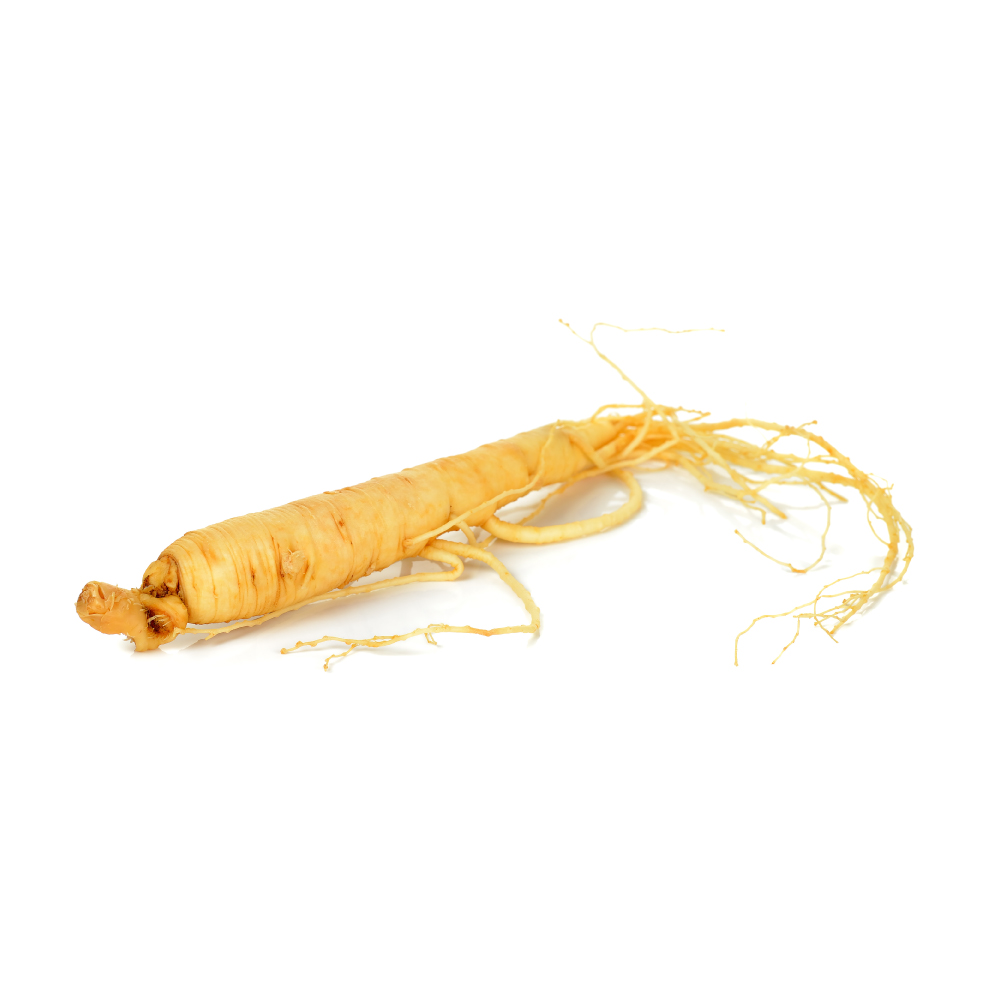
Pfaffic acid is the nortriterpenoid acid at the heart of suma (Pfaffia paniculata / Hebanthe eriantha) — the aglycone the pfaffosides (pfaffoside A–F) are built on, and the marker compound used to standardise Brazilian-ginseng extracts (~1–4% of root). Much of suma's anticancer chemistry — cell-cycle arrest and caspase-3 apoptosis in tumour cell lines — tracks to this pfaffic-acid/pfaffoside saponin fraction, but the whole literature is preclinical, with a species-confusion caveat running through it.

Sources · 1
Where Does It Come From?
Pfaffic Acid is a naturally occurring nortriterpenoid acid (pfaffoside aglycone), found in Suma. It is well tolerated orally (low toxicity).
Concentration
Content by Source
Reported concentrations across the plants that contain pfaffic acid — the bar marks the typical level, the line shows the reported range.
Literature figures for varying plant parts and preparations. Read them as a comparative guide, not exact assays.
Pfaffic Acid at a Glance
Pfaffic acid is a nortriterpenoid acid — a triterpene skeleton missing a carbon — and it is the defining molecule of the phytochemistry of suma, the Brazilian-ginseng root of Pfaffia paniculata (botanical synonym Hebanthe eriantha). It matters for two linked reasons: it is the aglycone that suma’s signature saponins, the pfaffosides (pfaffoside A–F), are assembled around, and it is the standardisation marker analysts use to quantify how much of that saponin chemistry a given suma extract actually contains 1,
Its abundance sits at roughly 1–4% of the dried root across genotypes, while the whole saponin fraction it anchors is reported to reach as high as ~11% of the root — an unusually saponin-rich material 3Reference 3Development of an analytical method for the quantification of pfaffic acid in Brazilian ginseng (Hebanthe eriantha)View study →. So the honest framing throughout is a two-layer one: pfaffic acid is the free aglycone and the yardstick; the pfaffosides are the glycosylated forms that carry most of the measured pharmacology. Where a study dosed “the pfaffosidic fraction,” it was dosing pfaffic-acid glucuronides, not the free acid.
The most developed line of research is anticancer / antitumour activity, worked largely by one Brazilian (Takemoto/Nishimoto and later São Paulo) lineage: the purified pfaffosidic fraction arrests the cell cycle and triggers caspase-3 apoptosis in tumour cell lines 5Reference 5Pfaffosidic fraction from Hebanthe paniculata induces cell cycle arrest and caspase-3-induced apoptosis in HepG2 cellsView study →, alongside weaker anti-cholesterol and antimicrobial signals attributed to the same saponins 2Reference 2Pfaffosides and nortriterpenoid saponins from Pfaffia paniculataView study →. Two caveats govern all of it. First, the entire suma literature is preclinical — cell and rodent work, with no completed clinical trial. Second, there is a persistent species-confusion problem: P. paniculata / H. eriantha, P. glomerata and P. townsendii are all sold as “Brazilian ginseng,” and results do not transfer cleanly between them.
The Pfaffoside Family
Pfaffic acid is best understood as the core the pfaffosides hang off. The pfaffosides (A through F) are nortriterpenoid saponins — pfaffic acid carrying glucuronic-acid and sugar chains — and they are found, so far, only in Pfaffia, which is what makes them (and their aglycone) chemotaxonomic markers for the genus 2Reference 2Pfaffosides and nortriterpenoid saponins from Pfaffia paniculataView study →.
- Pfaffic acid (–COOH aglycone) — the free nortriterpene acid, this molecule; the shared backbone and the quantitation standard 1,
3Reference 1Pfaffic acid, a novel nortriterpene from Pfaffia paniculata KuntzeView study →Reference 3Development of an analytical method for the quantification of pfaffic acid in Brazilian ginseng (Hebanthe eriantha)View study → . - Pfaffosides A–F (glycosides) — pfaffic acid glucuronides bearing varied sugars; the saponins that dissolve, foam and carry the bioactivity 2,
5Reference 2Pfaffosides and nortriterpenoid saponins from Pfaffia paniculataView study →Reference 5Pfaffosidic fraction from Hebanthe paniculata induces cell cycle arrest and caspase-3-induced apoptosis in HepG2 cellsView study → .
The relationship is the usual saponin one: hydrolysing a pfaffoside strips its sugars and returns pfaffic acid, which is exactly why an analytical method can acid-hydrolyse a suma extract and measure total pfaffic acid as a proxy for total pfaffoside content 3Reference 3Development of an analytical method for the quantification of pfaffic acid in Brazilian ginseng (Hebanthe eriantha)View study →. Around this core sit related root nortriterpenoids characterised later — pfaffine A and B and pfameric acid, isolated alongside the ecdysteroids and common phytosterols of the root — which extend the same nortriterpene chemistry without displacing pfaffic acid as the marker 4Reference 4Triterpenoids from Brazilian ginseng, Pfaffia paniculataView study →. These sibling compounds do not yet have their own reference pages here, so they are named rather than linked.
What It's Used For
Almost everything attributed to “pfaffic acid” is really the pharmacology of the pfaffosides built on it, measured in cell and animal models. It is a thin, single-lineage preclinical base — no human trial of suma’s whole herb, let alone of the isolated acid.
Support is an experimental score — weighted by study type (human > animal > in vitro) and volume. A beta, not a validated metric. Every row rests on isolate/fraction cell or animal work with no human trials, so scores stay low by design; read the per-row basis.
This is the centre of gravity. In HepG2 hepatocellular-carcinoma cells, a purified pfaffosidic fraction from suma (composed mainly of pfaffosides A–F, the glycosides of pfaffic acid) reduced viability and growth, drove S-phase / G2-M cell-cycle arrest, raised the sub-G1 (apoptotic) population, and produced caspase-3-mediated apoptosis — with caspase-3 activation rising roughly three-fold versus control — via cyclin E downregulation and p27^KIP1^ overexpression 5Reference 5Pfaffosidic fraction from Hebanthe paniculata induces cell cycle arrest and caspase-3-induced apoptosis in HepG2 cellsView study →.
This sits inside a broader body of suma anticancer work from the same Brazilian lineage, in which the tumour-inhibiting activity of the whole root repeatedly tracks to its saponins 2Reference 2Pfaffosides and nortriterpenoid saponins from Pfaffia paniculataView study →.
Gap: the active material is the fraction (pfaffic-acid glucuronides), not the isolated free acid; the strongest data are in a single cell line, and no in-vivo or human antitumour outcome rests on pfaffic acid specifically 5Reference 5Pfaffosidic fraction from Hebanthe paniculata induces cell cycle arrest and caspase-3-induced apoptosis in HepG2 cellsView study →.
Reported at the origin of the chemistry. When the pfaffosides were first isolated and characterised, the saponin family was described as carrying anti-cholesterol (hypocholesterolaemic-type) activity — a common property of triterpenoid saponins, plausibly through bile-acid / sterol-binding in the gut 2Reference 2Pfaffosides and nortriterpenoid saponins from Pfaffia paniculataView study →. It is repeated in suma reviews as one of the saponin fraction’s headline effects.
Gap: an early qualitative attribution to the saponin family, not a controlled study of pfaffic acid or a defined pfaffoside; no modern isolate replication and no human lipid data 2Reference 2Pfaffosides and nortriterpenoid saponins from Pfaffia paniculataView study →.
The third signal from the same early saponin work: the pfaffoside fraction was reported to show antimicrobial activity, again a generic property of many triterpenoid saponins (membrane-permeabilising surfactancy) rather than a mechanism proven for pfaffic acid itself 2Reference 2Pfaffosides and nortriterpenoid saponins from Pfaffia paniculataView study →.
Gap: qualitative and old; no spectrum, MICs or isolate-level confirmation are established here 2Reference 2Pfaffosides and nortriterpenoid saponins from Pfaffia paniculataView study →.
Mechanisms
| Target / pathway | Effect | Relevant to |
|---|---|---|
| Cyclin E / CDK2 / p27^KIP1^ cell-cycle control | cyclin E ↓, CDK2/4 ↓, p27^KIP1^ ↑ → S / G2-M arrest | anticancer |
| Caspase-3 apoptosis axis | caspase-3 activation, ↑ sub-G1 population → tumour-cell apoptosis | anticancer |
| Cholesterol / sterol handling | saponin-type sterol/bile-acid binding (proposed) | anti-cholesterol |
| Microbial membranes | saponin surfactancy / membrane disruption (proposed) | antimicrobial |
The load-bearing thread is the cell-cycle-arrest → caspase-3 apoptosis axis measured for the pfaffosidic fraction 5Reference 5Pfaffosidic fraction from Hebanthe paniculata induces cell cycle arrest and caspase-3-induced apoptosis in HepG2 cellsView study →. The anti-cholesterol and antimicrobial actions are older, class-level saponin attributions 2Reference 2Pfaffosides and nortriterpenoid saponins from Pfaffia paniculataView study →. In every case the demonstrated actor is a pfaffoside glycoside; free pfaffic acid is the shared scaffold and the measurement standard, not an independently characterised drug.
Pharmacokinetics
Pfaffic acid’s pharmacokinetics are uncharacterised — no Cmax, half-life or oral bioavailability for the isolate is established. What can be said is structural: it is a large, polar nortriterpene acid, and in the plant it circulates as glycosides (the pfaffosides), which behave like other saponins — poorly absorbed intact, surface-active in the gut, and subject to hydrolysis of their sugars by gut microbiota, a step that would liberate the aglycone. Because the studied anticancer effects used direct cell exposure to the pfaffosidic fraction 5Reference 5Pfaffosidic fraction from Hebanthe paniculata induces cell cycle arrest and caspase-3-induced apoptosis in HepG2 cellsView study →, none of them speaks to what an oral dose of suma delivers systemically. Robust ADME work on either the acid or the individual pfaffosides is a clear hole.
Clinical Trials
There are no controlled human trials of pfaffic acid, of any individual pfaffoside, or of the whole suma root against a clinical endpoint. The entire evidence base is in-vitro and rodent work; human exposure is through suma as a traditional tonic root and supplement.
| Completed | Planned | Terminated | Preclinical |
|---|---|---|---|
| —(none of the isolate or fraction) | — | — | Anticancer/antitumour, anti-cholesterol, antimicrobial |
Last checked: July 2026.
Isolate vs. Plant Studies
The split is unusually clean. Pure pfaffic acid appears in the literature mainly as an analyte and a structure — the compound that was isolated and named 1Reference 1Pfaffic acid, a novel nortriterpene from Pfaffia paniculata KuntzeView study →, whose glucuronides became the pfaffosides 2Reference 2Pfaffosides and nortriterpenoid saponins from Pfaffia paniculataView study →, and which a validated assay now measures to grade extracts 3Reference 3Development of an analytical method for the quantification of pfaffic acid in Brazilian ginseng (Hebanthe eriantha)View study →. The pharmacology, by contrast, is almost always the fraction or the whole root: the HepG2 anticancer work dosed the pfaffosidic fraction 5Reference 5Pfaffosidic fraction from Hebanthe paniculata induces cell cycle arrest and caspase-3-induced apoptosis in HepG2 cellsView study →, and the anti-cholesterol / antimicrobial signals are saponin-family attributions 2Reference 2Pfaffosides and nortriterpenoid saponins from Pfaffia paniculataView study →.
In its source plant, suma, pfaffic-acid chemistry is genuinely central — the saponin fraction is large (up to ~11% of root) and the pfaffosides are unique to Pfaffia — but it never acts alone: the root also carries the phytoecdysteroid β-ecdysterone, common phytosterols, and the sibling nortriterpenoids pfaffine A/B and pfameric acid 4Reference 4Triterpenoids from Brazilian ginseng, Pfaffia paniculataView study →. So suma’s tonic and anticancer reputation cannot be pinned on pfaffic acid alone, even though the acid is the fraction’s defining marker. The correct reading: strong role as a chemotaxonomic marker and saponin scaffold, modest and preclinical role as an isolated bioactive, and a species-confusion caveat over the whole genus.
Its Role in Plants
In Pfaffia paniculata (Hebanthe eriantha), pfaffic acid is not stored free but as its glycosides, the pfaffosides — the plant’s characteristic triterpenoid saponins, concentrated in the root 2Reference 2Pfaffosides and nortriterpenoid saponins from Pfaffia paniculataView study →. Saponins of this kind are typically defence chemicals: their soap-like surfactancy deters herbivores, insects and microbes, and a root that is up to ~11% saponin is investing heavily in that chemistry. Pfaffic acid is the biosynthetic aglycone core onto which the plant appends glucuronic acid and sugars to build that defensive saponin pool, sitting among the root’s wider nortriterpenoid and ecdysteroid inventory 4Reference 4Triterpenoids from Brazilian ginseng, Pfaffia paniculataView study →. These are plant-biochemistry roles and should not be read as human pharmacology.
Prevalence in Nature
Pfaffic acid is narrowly distributed — effectively a genus marker for Pfaffia. Its documented occurrence is the root of suma / Brazilian ginseng (Pfaffia paniculata, syn. Hebanthe eriantha), where it makes up roughly 1–4% of the dried root across genotypes as measured by the validated marker assay 3Reference 3Development of an analytical method for the quantification of pfaffic acid in Brazilian ginseng (Hebanthe eriantha)View study →, and where the pfaffoside saponins it anchors can reach ~11% of the root 2Reference 2Pfaffosides and nortriterpenoid saponins from Pfaffia paniculataView study →. Because “Brazilian ginseng” is shared across three Pfaffia species, exact figures vary with the material — one more reason the standardisation marker exists.
Major Natural Sources
| Source | Plant part | Reported pfaffic-acid content |
|---|---|---|
| Suma / Brazilian ginseng (Pfaffia paniculata, syn. Hebanthe eriantha) | root | ~1–4% dry weight (marker assay); pfaffoside saponin fraction up to ~11% 2, |
Occurrence outside Pfaffia is not established; the compound is treated as a Pfaffia-specific nortriterpenoid.
Discovery & Synthesis
Pfaffic acid was isolated and named in 1983 by Takemoto, Nishimoto, Nakai and colleagues, who described it as “a novel nortriterpene from Pfaffia paniculata Kuntze” 1Reference 1Pfaffic acid, a novel nortriterpene from Pfaffia paniculata KuntzeView study →. The following year the same group reported its glycosides — pfaffosides A, B and C, nortriterpenoid saponins — establishing pfaffic acid as the aglycone of a new saponin family unique to the genus 2Reference 2Pfaffosides and nortriterpenoid saponins from Pfaffia paniculataView study →. Later triterpenoid-isolation work on the root (Li and colleagues, 2010) rounded out the picture, characterising further nortriterpenoids — pfaffine A and B, pfameric acid — alongside the root’s ecdysteroids and phytosterols 4Reference 4Triterpenoids from Brazilian ginseng, Pfaffia paniculataView study →.
There is no synthesis or manufacturing industry for isolated pfaffic acid: it is obtained from suma root, and in practice it is generated on demand by acid hydrolysis of the extract’s pfaffosides for the purpose of quantification, then measured chromatographically 3Reference 3Development of an analytical method for the quantification of pfaffic acid in Brazilian ginseng (Hebanthe eriantha)View study →. Commercial interest is in standardised suma extract, graded by its pfaffic-acid (marker) content, rather than in the pure compound.
Patents: not researched.
Toxicity & Safety
Pfaffic acid carries a low flag, held together more by suma’s long traditional use than by dedicated isolate data. Suma root is a traditional Brazilian tonic with a broad history of food/tonic use, and in the preclinical literature its pfaffic-acid/pfaffoside chemistry appears as a protective / antitumour actor rather than a toxicant 2,
The honest limits are the usual ones for a preclinical-only molecule: there is no dedicated repeat-dose, genotoxicity or reproductive package for pure pfaffic acid or the individual pfaffosides, and no human drug-interaction data. A practical caution specific to suma is its fine powder being an inhalation/asthma irritant for handlers — a whole-herb dust issue, not a property of the purified acid. And the species-confusion caveat means safety generalisations across “Brazilian ginseng” products should be made carefully.
- Marker of a traditional tonic root. Pfaffic acid is the quantitation marker of suma, a long-used Brazilian tonic; its chemistry reads as protective, not toxic, in the preclinical literature.
- Preclinical studies use it as an antitumour actor. The pfaffosidic fraction shows anticancer (cell-cycle arrest, caspase-3 apoptosis) rather than toxic effects in cell work.
- Safety rests on tradition + preclinical data. No human trials and no characterised repeat-dose / genotoxicity package for the isolated acid or individual pfaffosides.
- Saponin and species caveats. Triterpenoid saponins can irritate the gut in isolation; suma powder is an inhalation irritant for handlers; and three Pfaffia species share the “Brazilian ginseng” name, so product data do not transfer cleanly.
Dosage
There is no dosing regimen for isolated pfaffic acid — it is a standardisation marker, not a taken isolate. In practice its role is to describe extract strength: a suma extract standardised to a stated pfaffic-acid percentage tells you how concentrated its pfaffoside saponins are, not how much of anything to swallow.
| Context | Form / route | Figure |
|---|---|---|
| Standardisation marker | Suma root / extract | ~1–4% pfaffic acid of dried root (marker assay) 3Reference 3Development of an analytical method for the quantification of pfaffic acid in Brazilian ginseng (Hebanthe eriantha)View study → |
| Saponin fraction | Suma root | up to ~11% saponins (pfaffosides) of root 2Reference 2Pfaffosides and nortriterpenoid saponins from Pfaffia paniculataView study → |
| Anticancer research | Pfaffosidic fraction, cell model | in-vitro concentrations on HepG2 cells 5Reference 5Pfaffosidic fraction from Hebanthe paniculata induces cell cycle arrest and caspase-3-induced apoptosis in HepG2 cellsView study → |
Human suma intake is as the whole root or a standardised extract at traditional tonic amounts; the marker figures above characterise the material, and the research concentrations are laboratory exposures, not personal recommendations.
References
- Takemoto T, Nishimoto N, Nakai S, Takagi N, Hayashi S, Odashima S, Wada Y (1983). Pfaffic acid, a novel nortriterpene from Pfaffia paniculata Kuntze. Tetrahedron Letters. https://doi.org/10.1016/S0040-4039(00)81603-2
- Nishimoto N, Nakai S, Takagi N, Hayashi S, Takemoto T, Odashima S, Kizu H, Wada Y (1984). Pfaffosides and nortriterpenoid saponins from Pfaffia paniculata. Phytochemistry. https://doi.org/10.1016/0031-9422(84)83094-0
- Rodrigues MV, Souza Kde P, Rehder VL, et al. (2013). Development of an analytical method for the quantification of pfaffic acid in Brazilian ginseng (Hebanthe eriantha). Journal of Pharmaceutical and Biomedical Analysis. https://pubmed.ncbi.nlm.nih.gov/23384553/
- Li J, Jadhav AN, Khan IA (2010). Triterpenoids from Brazilian ginseng, Pfaffia paniculata. Planta Medica. https://pubmed.ncbi.nlm.nih.gov/19941264/
- da Silva TC, Cogliati B, Latorre AO, Akisue G, et al. (2015). Pfaffosidic fraction from Hebanthe paniculata induces cell cycle arrest and caspase-3-induced apoptosis in HepG2 cells. Evidence-Based Complementary and Alternative Medicine. https://pubmed.ncbi.nlm.nih.gov/26075002/



