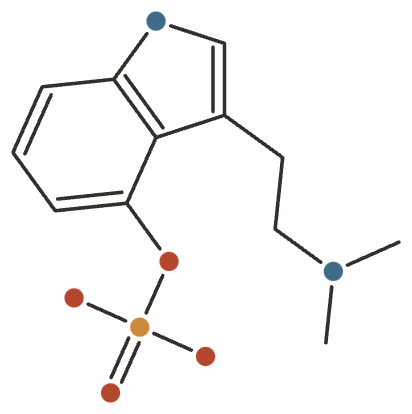
Compound Monograph
Psilocybin
Psilocybin is the principal psychedelic tryptamine of magic mushrooms, a prodrug converted in the body to psilocin.

Sources · 1
Where Does It Come From?
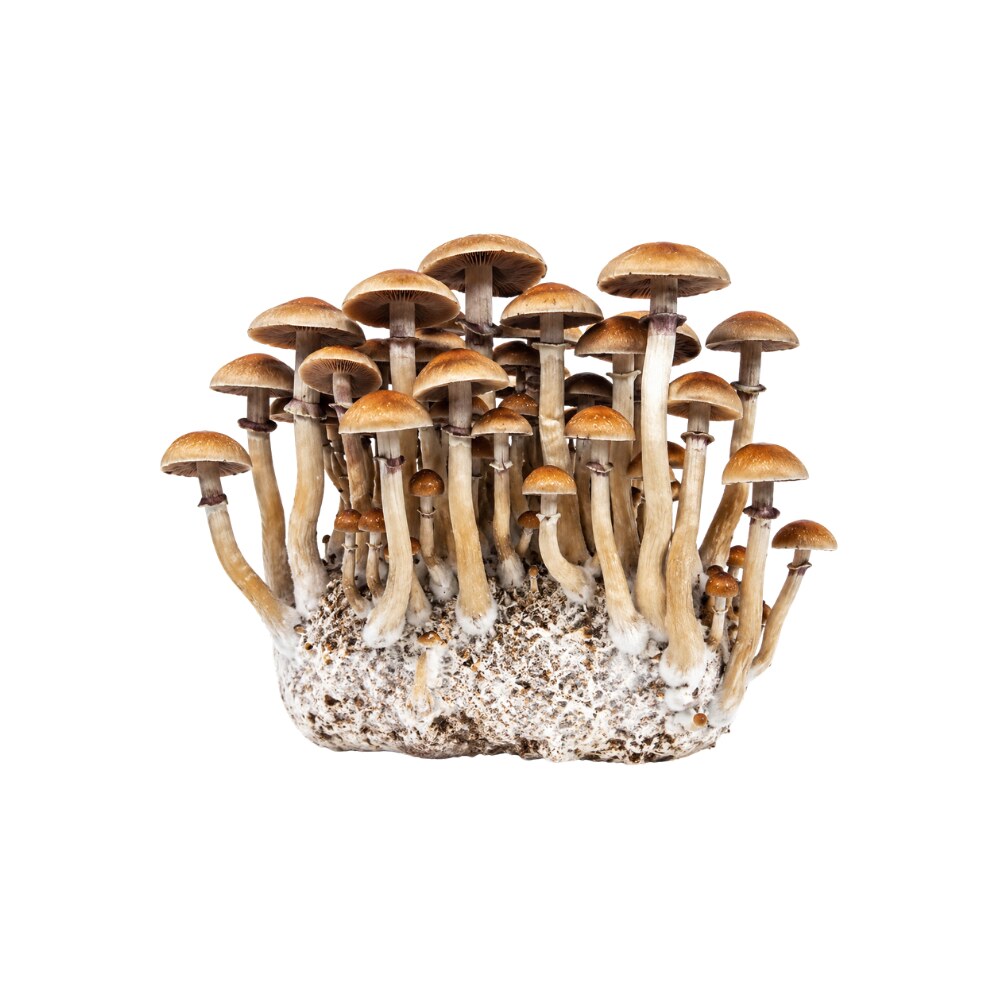
Psilocybin is a naturally occurring tryptamine alkaloid, found in Magic mushrooms. It is well tolerated orally (low toxicity) and psychedelic.
Concentration
Content by Source
Concentrations not reported. No percent-dry-weight or mg/g figures have been published for this compound in its source plants.
Psilocybin at a Glance
Psilocybin is the principal psychedelic tryptamine of magic mushrooms, and a prodrug: it is dephosphorylated in the body to psilocin, which is the molecule that actually acts, as a 5-HT2A receptor agonist.
That conversion is why psilocybin itself is inactive in vitro and why the two compounds appear together throughout its literature.
It is among the most actively researched psychedelics in modern clinical psychiatry, and it is a controlled substance in most jurisdictions.
Research & Evidence
Psilocybin is the main psychoactive constituent of Psilocybe mushrooms. It is a prodrug: the body dephosphorylates it to psilocin, a partial agonist at serotonin 5-HT2A receptors, which produces the characteristic changes in perception, mood and thought. Contemporary clinical research has focused on its potential in treatment-resistant depression, end-of-life anxiety and addiction, typically in supervised settings.
Toxicity & Safety
Physiological toxicity is low and overdose deaths from psilocybin alone are essentially unreported, but psychological risk is real: it can trigger anxiety, confusion and, in vulnerable people, persistent psychiatric effects. It is generally contraindicated alongside serotonergic drugs and in those with a personal or family history of psychosis. It is a Schedule I substance in the United States.
Dosage
Research and naturalistic reports describe a common oral range of roughly 10–25 mg. These figures describe doses studied in research and are not a recommendation.