
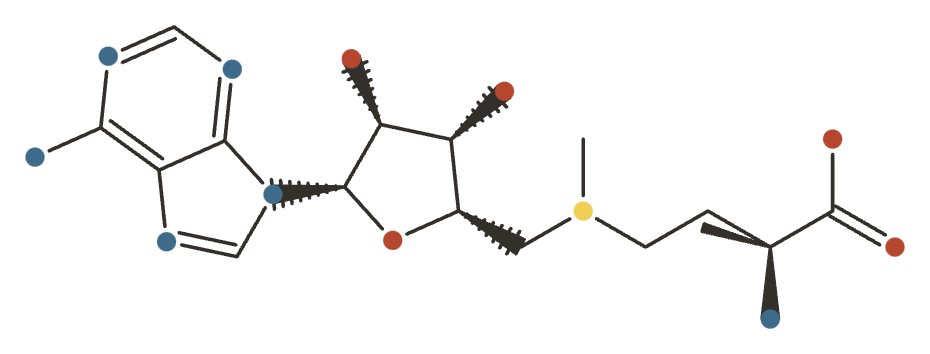
SAM-e (S-Adenosylmethionine)
SAM-e is the body's universal methyl donor, formed from methionine and ATP — sold as a supplement for depression, osteoarthritis and liver disease, with a trial base that is real but ageing and heavily European.

SAM-e (S-Adenosylmethionine) at a Glance
SAM-e (S-adenosylmethionine) is a molecule the body makes in every cell, and its job is to hand out methyl groups — small chemical tags — to more than a hundred different reactions, from switching genes on and off to building the neurotransmitters that regulate mood. It is formed when the amino acid methionine reacts with ATP, so it sits at the crossroads of protein metabolism and cellular energy. People take it mainly for depression, osteoarthritis and certain liver conditions.
You do not get SAM-e from food in any meaningful amount — it is too unstable to survive digestion or storage intact. The body synthesises all of it internally, using dietary methionine plus folate and vitamin B12 to keep the methylation cycle turning. As a supplement it is sold as an enteric-coated, stabilised salt precisely because the raw molecule degrades so readily, which is also why it is comparatively expensive and why product quality varies.
The point that should set expectations: SAM-e is not a nutrient you can be deficient in the way you can be short of iron or vitamin D — a healthy body makes what it needs. Supplemental SAM-e is therefore an extra on top of a normally functioning system, aiming to push methylation or monoamine synthesis harder, rather than the correction of a dietary gap. The exception is genuine disease states — advanced liver disease and some depressive illness — where the body’s own SAM-e economy may be impaired. Its trial history is genuine, much of it from Italy and Germany where it has long been a prescription medicine, but that evidence is ageing, heterogeneous and rarely replicated to modern standards. The most recent and largest analyses are lukewarm.
What It’s Used For
- Depression — the flagship use, as either a standalone or an add-on to standard antidepressants. Older trials and one positive augmentation study are encouraging, but the largest recent meta-analysis found no significant edge over placebo.
- Osteoarthritis — taken for joint pain and stiffness; roughly comparable to NSAIDs in head-to-head trials, but the placebo-controlled evidence is small and weak, and the leading systematic review advises against routine use.
- Liver disease & cholestasis — used, often intravenously as a prescription drug in Europe, for cholestasis in liver disease and in pregnancy. Plausible and licensed in some countries, but modern high-quality trial support is limited.
- Fibromyalgia — a couple of small, old double-blind trials with partial benefit; too thin to lean on.
Be sceptical of SAM-e marketed as a general brain optimiser, a liver detox, or a cognitive enhancer for healthy people. Those claims outrun the evidence, which is disease-focused, ageing, and — for the most recent readouts — largely null.
How It Works
Almost everything SAM-e does traces back to a single chemical talent: it is the cell’s main methyl donor. A methyl group is just a carbon with three hydrogens, but attaching one to the right molecule at the right time is how cells silence or activate genes, build cell membranes, and synthesise and break down the monoamine neurotransmitters — serotonin, dopamine and noradrenaline — that underlie mood. When SAM-e donates its methyl group it becomes S-adenosylhomocysteine, which is recycled onward; part of that downstream traffic feeds the transsulfuration pathway, the route by which the body makes glutathione. This dual role — methylation upstream, glutathione downstream — is the thread that ties its uses together: monoamine methylation for depression, cartilage and antioxidant support for osteoarthritis, and glutathione and bile handling for liver disease.
For mood, the working idea is that raising SAM-e availability supports monoamine synthesis and turnover — which is also why it carries serotonergic risk. The same mechanism that might lift mood can, stacked on top of an antidepressant, push serotonin too far, and in someone with bipolar illness can tip toward mania. For joints, SAM-e appears to nudge chondrocytes toward making cartilage matrix and to blunt inflammatory signalling, though the human effect size is modest. For the liver, it supports bile flow and replenishes glutathione, which is depleted in cholestatic and alcoholic liver disease.
Two wrinkles explain why results vary. First, deficiency-dependence: in a healthy person the body already makes ample SAM-e, so a supplement has less to correct — whereas in advanced liver disease, where the enzyme that makes SAM-e is impaired, replacement is more rational. Second, bioavailability: oral SAM-e is unstable and poorly and variably absorbed, with only a small fraction reaching the bloodstream. That is why it is enteric-coated, why doses are large, and why some trials using low or poorly-absorbed preparations may have understated any real effect.
Pharmacology & Research
SAM-e is an endogenous methyl-donor molecule sold as a nutraceutical, and its evidence base is unusual: a substantial but ageing body of mostly European trials, much of it generated when SAM-e was a prescription drug in Italy and Germany, rather than a stream of modern replications. The overall posture is promising-but-unsettled — historically positive signals in depression and osteoarthritis have not held up cleanly in the largest and most recent syntheses. Because a healthy body synthesises its own SAM-e, most supplemental use is an attempt to push a normal system harder rather than to correct a deficiency; the clearer rationale is in disease states such as advanced liver disease where endogenous production is impaired. A recurring confound throughout the literature is oral bioavailability: SAM-e is chemically unstable and poorly, variably absorbed, so form and formulation may drive as much of the between-trial variance as the underlying biology.
Support is an experimental score I’m building — a composite weighted by study type (human > animal > in vitro > review) and study volume. It’s a beta: a fast way to rank strength of evidence at a glance, not a validated metric. Each application links down to its write-up.
Depression is SAM-e’s most-studied indication and its historical flagship, but the modern verdict is mixed. A 2005 systematic review found SAM-e broadly comparable to tricyclic antidepressants and superior to placebo across mostly small older trials 2Reference 2Systematic reviewS-adenosylmethionine (SAMe) as treatment for depression — systematic reviewView study →.
The strongest single modern result is a 6-week double-blind RCT in 73 serotonin-reuptake-inhibitor non-responders, where adjunctive oral SAM-e at a target of 800 mg twice daily roughly doubled response (36.1% vs 17.6%) and remission rates versus placebo 3Reference 3RCTS-adenosyl methionine (SAMe) augmentation of serotonin reuptake inhibitors for antidepressant nonresponders with major depressive disorder — randomised controlled trialView study →.
Against that, a 12-week, two-site RCT of about 189 people comparing SAM-e (1,600–3,200 mg/day) with escitalopram and placebo was formally negative overall, though a subsample analysis found a moderate-to-large effect for SAM-e versus placebo 4Reference 4RCTS-adenosyl methionine (SAMe) versus escitalopram and placebo in major depression — randomised controlled trialView study →, and a later re-analysis suggested benefit was confined to men 5Reference 5RCTIs S-adenosyl methionine (SAMe) for depression only effective in males? A re-analysis of data from a randomised clinical trialView study →.
The decisive recent evidence is an updated 2024 meta-analysis of 14 trials and 1,522 subjects (200–3,200 mg/day, 2–12 weeks), which found no significant difference for SAM-e versus placebo as either monotherapy or adjunctive therapy, though it appeared broadly similar to imipramine or escitalopram 1Reference 1Meta-analysisS-adenosylmethionine (SAMe) as an adjuvant therapy for patients with depression — updated systematic review and meta-analysisView study →.
A 2025 review of milder depression concurred 6Reference 6Meta-analysisEfficacy of pharmacological interventions in milder depression — systematic review and meta-analysisView study →.
Gap: the trial base is heterogeneous in dose, formulation and era; the two largest, most rigorous readouts are null or negative, and any real effect may be small, subgroup-limited, and undermined by variable oral absorption.
SAM-e is used for the joint pain and stiffness of knee and hip osteoarthritis, with the mechanistic rationale that it supports cartilage-matrix synthesis and dampens inflammatory signalling 10Reference 10ReviewExploring the mechanisms behind S-adenosylmethionine (SAMe) in the treatment of osteoarthritis — reviewView study →.
In head-to-head trials it performs comparably to anti-inflammatory drugs: a 2002 meta-analysis found SAM-e as effective as NSAIDs for pain and function while causing fewer side effects 8Reference 8Meta-analysisSafety and efficacy of S-adenosylmethionine (SAMe) for osteoarthritis — meta-analysisView study →, and a 16-week double-blind crossover trial versus celecoxib at 1,200 mg/day found celecoxib faster initially but no significant difference by the second month 9Reference 9RCTS-adenosyl methionine (SAMe) versus celecoxib for the treatment of osteoarthritis symptoms — double-blind crossover randomised controlled trialView study →.
The placebo-controlled picture is weaker: a 2009 Cochrane review of four trials in 656 patients found only a small, non-significant pain benefit and no function benefit, judged the trials of poor quality, and concluded that routine use should not be advised pending adequately-sized trials 7Reference 7Systematic reviewS-adenosylmethionine for osteoarthritis of the knee or hip — Cochrane systematic reviewView study →.
Gap: “comparable to NSAIDs” rests on small head-to-head trials without a robust placebo anchor; the direct placebo-controlled evidence is sparse and low-quality, so it is unclear how much of the apparent benefit is specific to SAM-e.
SAM-e, as ademetionine, is a licensed prescription medicine in several European and other countries for intrahepatic cholestasis, where the rationale is strong: the enzyme that makes SAM-e is impaired in cirrhosis and alcoholic liver disease, so supplementation is closer to genuine replacement, and SAM-e supports bile flow and replenishes glutathione. An 8-week open-label multicentre study in 72 patients with alcoholic liver disease and intrahepatic cholestasis, using intravenous then oral ademetionine at 500–1,500 mg/day, reported improvement in symptoms and cholestasis markers 11Reference 11Open-label study of ademetionine for the treatment of intrahepatic cholestasis associated with alcoholic liver disease — multicentre open-label studyView study →.
For intrahepatic cholestasis of pregnancy, a 2020 Cochrane review found SAM-e among the pharmacological options studied but concluded the overall evidence remains limited and largely from small trials 12Reference 12Systematic reviewPharmacological interventions for treating intrahepatic cholestasis of pregnancy — Cochrane systematic reviewView study →.
Gap: much of the supportive data is open-label or uses intravenous dosing under medical supervision rather than the oral over-the-counter supplement; modern placebo-controlled evidence is limited, and this is a disease-state indication, not a general-wellness one.
Two small double-blind trials examined SAM-e in fibromyalgia. A 6-week study in 44 patients with primary fibromyalgia at 800 mg/day orally found significant improvements versus placebo in clinical disease activity, pain, fatigue, morning stiffness and mood, though tender-point score and muscle strength did not differ 13Reference 13RCTOral S-adenosylmethionine in primary fibromyalgia — double-blind clinical evaluationView study →. A second, smaller double-blind study in secondary fibromyalgia did not find a benefit 14Reference 14RCTEvaluation of S-adenosylmethionine in secondary fibromyalgia — double-blind studyView study →.
Gap: the evidence is limited to two small, decades-old trials with inconsistent outcomes and no modern replication — too thin to support a confident recommendation.
Mechanisms
| Target / pathway | Effect | Relevant to |
|---|---|---|
| Transmethylation (SAM-e → SAH) | Universal methyl donor: DNA, phospholipid, protein and monoamine methylation | Depression; all uses |
| Monoamine synthesis and turnover | Supports serotonin, dopamine and noradrenaline metabolism | Depressionfibromyalgiaserotonergic risk |
| Transsulfuration pathway | Downstream production of glutathione | Liver diseaseosteoarthritis |
| Chondrocyte matrix synthesis | Stimulates proteoglycan and cartilage production; anti-inflammatory | Osteoarthritis |
| Hepatic bile flow / membrane methylation | Restores membrane fluidity and bile secretion | Liver cholestasis |
Pharmacokinetics
Oral SAM-e has low and variable bioavailability. The parent molecule is chemically unstable, so it is sold as enteric-coated, stabilised salts such as the tosylate disulfate; even so, only a small fraction of an oral dose reaches systemic circulation, plasma levels peak roughly 3–5 hours after an enteric-coated dose, and the plasma half-life is short, on the order of 1–2 hours 15Reference 15Pharmacokinetic study of a novel oral formulation of S-adenosylmethionine (MSI-195) in healthy subjectsView study →. Bioavailability differs markedly between products and formulations — a dedicated pharmacokinetic study of a novel high-bioavailability oral formulation showed several-fold differences versus a commercial reference product 15Reference 15Pharmacokinetic study of a novel oral formulation of S-adenosylmethionine (MSI-195) in healthy subjectsView study → — and even within a depression trial, measured plasma SAM-e levels varied widely and correlated with response 16Reference 16RCTBioavailability of S-adenosyl methionine and impact on response in a randomised, double-blind, placebo-controlled trial in major depressive disorderView study →. Food may reduce absorption, so enteric-coated SAM-e is typically taken on an empty stomach. These pharmacokinetics justify the large, divided dosing seen in trials, and are a plausible reason some studies underperformed.
Clinical trials
Registered-trial activity is modest and has slowed. SAM-e is off-patent and generates little industry-sponsored interest, so most of the pivotal data predates modern standards and much of it is European. Recent syntheses largely re-analyse older trials rather than reflecting new large RCTs.
| Completed | Planned / recruiting | Terminated | Preclinical |
|---|---|---|---|
| ~40+(mostly older, small) | Few | Some | Hundreds(in vitro and animal methylation and liver studies) |
Last checked: August 2026.
Dietary Sources
SAM-e is essentially not a dietary nutrient. The molecule is chemically unstable and does not survive food processing, storage or digestion intact, so — unlike a vitamin or mineral — you cannot meaningfully raise your SAM-e level by eating particular foods. The body synthesises all the SAM-e it uses internally, in effectively every cell, from the amino acid methionine plus ATP.
What diet does supply are the raw materials the methylation cycle needs to make and regenerate SAM-e:
| Nutrient | Role in the SAM-e cycle | Food sources |
|---|---|---|
| Methionine | Direct precursor; combined with ATP to form SAM-e | Eggs, fish, meat, poultry, dairy, Brazil nuts, sesame seeds |
| Folate | Regenerates methionine from homocysteine | Leafy greens, legumes, fortified grains |
| Vitamin B12 | Cofactor for the same methionine-regenerating step | Meat, fish, eggs, dairy, fortified foods |
| Betaine / choline | Alternative methyl source for methionine regeneration | Eggs, liver, wheat germ, spinach, beets |
In practice a protein-adequate diet with sufficient folate and B12 gives the body what it needs to maintain its own SAM-e supply. There is no food-based way to supplement SAM-e itself, which is precisely why the isolated molecule is sold as a manufactured, enteric-coated tablet.
Dosage
The figures below are doses studied in research, not a personal recommendation. There is no reference intake for SAM-e because it is synthesised endogenously, and no upper limit has been established.
- Depression: most trials used 800–1,600 mg/day in divided doses; some more recent trials
titrated as high as 1,600–3,200 mg/day 1,
3, .4Reference 1Meta-analysisS-adenosylmethionine (SAMe) as an adjuvant therapy for patients with depression — updated systematic review and meta-analysisView study →Reference 3RCTS-adenosyl methionine (SAMe) augmentation of serotonin reuptake inhibitors for antidepressant nonresponders with major depressive disorder — randomised controlled trialView study →Reference 4RCTS-adenosyl methionine (SAMe) versus escitalopram and placebo in major depression — randomised controlled trialView study → - Osteoarthritis: commonly 1,200 mg/day, sometimes started higher and reduced, in divided doses 9Reference 9RCTS-adenosyl methionine (SAMe) versus celecoxib for the treatment of osteoarthritis symptoms — double-blind crossover randomised controlled trialView study →.
- Liver cholestasis: in the licensed setting, often 500–1,500 mg/day, frequently begun intravenously under medical supervision before switching to oral 11Reference 11Open-label study of ademetionine for the treatment of intrahepatic cholestasis associated with alcoholic liver disease — multicentre open-label studyView study →.
- Fibromyalgia: 800 mg/day in the main positive trial 13Reference 13RCTOral S-adenosylmethionine in primary fibromyalgia — double-blind clinical evaluationView study →.
SAM-e is unstable, so buy enteric-coated tablets and check the packaging is intact and in date. Take it on an empty stomach, since food appears to reduce absorption, and divide the daily dose because of its short half-life — taking a stimulating dose late in the day can worsen insomnia. Effects on mood or joints, if they occur, typically build over two to six weeks. Because oral bioavailability varies so much between products 15Reference 15Pharmacokinetic study of a novel oral formulation of S-adenosylmethionine (MSI-195) in healthy subjectsView study →, results may depend on the specific brand and formulation.
Safety
SAM-e is generally well tolerated for a supplement, but its safety profile is defined less by common side effects than by two specific, serious concerns: it is serotonergic, and it can destabilise mood in bipolar disorder. The most common complaints are mild and gastrointestinal.
- Generally well tolerated at studied doses. The usual side effects are mild — nausea, other gastrointestinal upset, and insomnia — and often dose-related.
- No established organ toxicity or upper limit. Trials up to 1,600–3,200 mg/day have not shown consistent serious toxicity in otherwise healthy adults.
- Serotonergic — risk of serotonin syndrome. Do not combine with SSRIs, SNRIs, MAOIs, tramadol, triptans or other serotonergic agents without medical supervision.
- Can precipitate mania or hypomania. People with bipolar disorder, or undiagnosed bipolarity, may be tipped into mania. This is the single most important caution.
- Variable product quality and stability. SAM-e degrades readily; poorly-made or expired products may be underdosed or ineffective.
Full Safety & Interactions Detail
Adverse effects. In trials the most frequently reported effects are gastrointestinal — nausea, loose stools, dyspepsia — plus headache and, notably, insomnia or an activating feeling, which is why divided daytime dosing is preferred. These are usually mild and reversible on dose reduction. No consistent hepatic, renal or haematological toxicity has emerged at studied doses, and no upper intake level has been set.
The dose-limiting concern is psychiatric, not physical. SAM-e’s activating, serotonergic activity is the effect most likely to cause trouble: insomnia and agitation at the mild end, and the two interactions below at the serious end.
Interactions by drug class.
- Serotonergic drugs — SSRIs, SNRIs, MAOIs, tricyclics, tramadol, triptans, St John’s wort, meperidine: additive serotonergic effect raising the theoretical risk of serotonin syndrome. SAM-e has been used deliberately with antidepressants in augmentation trials, but only under supervision; it should not be self-combined.
- In bipolar disorder: SAM-e can precipitate a switch into mania or hypomania, as antidepressants can. The caution applies to anyone with a personal or family history of bipolar illness.
- Levodopa: as a methyl donor, SAM-e may theoretically accelerate levodopa metabolism and reduce its effect.
Who should be cautious. Anyone taking an antidepressant or other serotonergic medication; anyone with bipolar disorder or a family history of it; people with Parkinson’s disease on levodopa; and — because data are inadequate — people who are pregnant or breastfeeding taking it for non-medical reasons.
Scope disclosure. Interactions assessed? Yes — serotonergic antidepressants, tramadol, triptans, St John’s wort, levodopa. Pregnancy/lactation assessed? Yes — physiological and therapeutic use distinguished from over-the-counter supplementation; lactation data inadequate. Upper limit established? No — trials extend to about 3,200 mg/day.
Caution. SAM-e is a normal physiological molecule, present throughout pregnancy, and intravenous ademetionine has been studied specifically for intrahepatic cholestasis of pregnancy under obstetric supervision 12Reference 12Systematic reviewPharmacological interventions for treating intrahepatic cholestasis of pregnancy — Cochrane systematic reviewView study →. However, that is a supervised, disease-specific medical use — it does not establish that routine over-the-counter oral SAM-e is safe in pregnancy for other purposes such as mood, and adequate safety data for that use are lacking. Breastfeeding data are inadequate. Any use in pregnancy or lactation should be directed by a clinician rather than self-prescribed.
References
- Peng TR, et al. (2024). S-adenosylmethionine (SAMe) as an adjuvant therapy for patients with depression — updated systematic review and meta-analysis. General Hospital Psychiatry. https://pubmed.ncbi.nlm.nih.gov/38199136/
- Williams AL, et al. (2005). S-adenosylmethionine (SAMe) as treatment for depression — systematic review. Clinical and Investigative Medicine. https://pubmed.ncbi.nlm.nih.gov/16021987/
- Papakostas GI, et al. (2010). S-adenosyl methionine (SAMe) augmentation of serotonin reuptake inhibitors for antidepressant nonresponders with major depressive disorder — randomised controlled trial. American Journal of Psychiatry. https://pubmed.ncbi.nlm.nih.gov/20595412/
- Sarris J, et al. (2014). S-adenosyl methionine (SAMe) versus escitalopram and placebo in major depression — randomised controlled trial. Journal of Affective Disorders. https://pubmed.ncbi.nlm.nih.gov/24856557/
- Sarris J, et al. (2015). Is S-adenosyl methionine (SAMe) for depression only effective in males? A re-analysis of data from a randomised clinical trial. Pharmacopsychiatry. https://pubmed.ncbi.nlm.nih.gov/26011569/
- Urata M, et al. (2025). Efficacy of pharmacological interventions in milder depression — systematic review and meta-analysis. Neuropsychopharmacology Reports. https://pubmed.ncbi.nlm.nih.gov/40014460/
- Rutjes AW, et al. (2009). S-adenosylmethionine for osteoarthritis of the knee or hip — Cochrane systematic review. Cochrane Database of Systematic Reviews. https://pubmed.ncbi.nlm.nih.gov/19821403/
- Soeken KL, et al. (2002). Safety and efficacy of S-adenosylmethionine (SAMe) for osteoarthritis — meta-analysis. Journal of Family Practice. https://pubmed.ncbi.nlm.nih.gov/12019049/
- Najm WI, et al. (2004). S-adenosyl methionine (SAMe) versus celecoxib for the treatment of osteoarthritis symptoms — double-blind crossover randomised controlled trial. BMC Musculoskeletal Disorders. https://pubmed.ncbi.nlm.nih.gov/15102339/
- Hosea Blewett HJ (2008). Exploring the mechanisms behind S-adenosylmethionine (SAMe) in the treatment of osteoarthritis — review. Critical Reviews in Food Science and Nutrition. https://pubmed.ncbi.nlm.nih.gov/18464034/
- Ivashkin VT, et al. (2018). Open-label study of ademetionine for the treatment of intrahepatic cholestasis associated with alcoholic liver disease — multicentre open-label study. Minerva Gastroenterologica e Dietologica. https://pubmed.ncbi.nlm.nih.gov/29431335/
- Walker KF, et al. (2020). Pharmacological interventions for treating intrahepatic cholestasis of pregnancy — Cochrane systematic review. Cochrane Database of Systematic Reviews. https://pubmed.ncbi.nlm.nih.gov/32716060/
- Jacobsen S, et al. (1991). Oral S-adenosylmethionine in primary fibromyalgia — double-blind clinical evaluation. Scandinavian Journal of Rheumatology. https://pubmed.ncbi.nlm.nih.gov/1925418/
- Tavoni A, et al. (1998). Evaluation of S-adenosylmethionine in secondary fibromyalgia — double-blind study. Clinical and Experimental Rheumatology. https://pubmed.ncbi.nlm.nih.gov/9543578/
- Cameron BR, et al. (2020). Pharmacokinetic study of a novel oral formulation of S-adenosylmethionine (MSI-195) in healthy subjects. BMC Pharmacology and Toxicology. https://pubmed.ncbi.nlm.nih.gov/33317621/
- Mischoulon D, et al. (2012). Bioavailability of S-adenosyl methionine and impact on response in a randomised, double-blind, placebo-controlled trial in major depressive disorder. Journal of Clinical Psychiatry. https://pubmed.ncbi.nlm.nih.gov/22687580/



