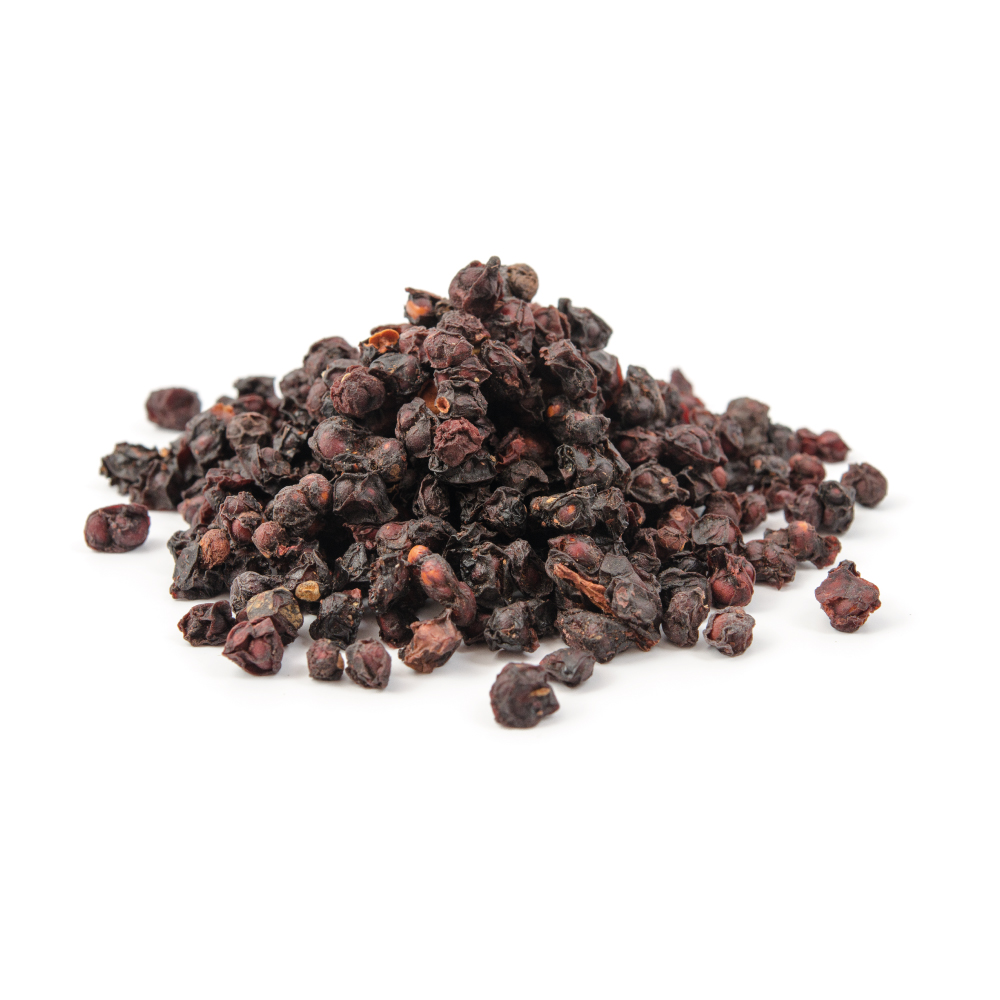
Schisantherin A (gomisin C) is a dibenzocyclooctadiene lignan from schisandra berries, studied preclinically for neuroprotection, anti-inflammatory and liver-protective effects — and notable as a CYP3A/P-glycoprotein-interacting constituent.
✎ Review pending Clinical herbalist · Updated July 2026
Sources · 3
Where Does It Come From?
Schisantherin A is a naturally occurring lignan (dibenzocyclooctadiene), found in Schisandra / five-flavour berry, Southern schisandra and 1 other source. It is well tolerated orally (low toxicity).
Concentrations not reported. No percent-dry-weight or mg/g figures have been published for this compound in its source plants.
Schisantherin A at a Glance
Schisantherin A, also called gomisin C, is a dibenzocyclooctadiene lignan — the same structural family as schisandrin (schisandrol A) — found in the berries of Schisandra chinensis (northern, bei-wuweizi) and Schisandra sphenanthera (southern, nan-wuweizi). It is one of the marker lignans used to standardise schisandra extracts and the “Wuzhi” / “Wuweizi” preparations built from them.
Its research profile is preclinical. Isolated schisantherin A has been studied mostly in cell and rodent models for neuroprotection (Parkinson’s-disease models), anti-inflammatory and anti-neuroinflammatory activity, liver protection, and some anticancer effects. There are no human efficacy trials of the isolated molecule — where humans appear in the literature, it is as one constituent of a whole schisandra preparation, usually studied for its effect on the blood levels of co-administered drugs rather than for a benefit of its own.
That drug-interaction angle is the practically important one: as a schisandra lignan, schisantherin A inhibits CYP3A and P-glycoprotein, which is why schisandra-based products raise circulating levels of transplant drugs like tacrolimus. Its intrinsic toxicity looks low, but this pharmacokinetic reach is real 17,18Reference 17Qin XL et al. · 2014Effect of tacrolimus on the pharmacokinetics of bioactive lignans of Wuzhi tablet (Schisandra sphenanthera extract) and the potential roles of CYP3A and P-gpView study →Reference 18He Q et al. · 2021Investigation of the impact of CYP3A5 polymorphism on drug–drug interaction between tacrolimus and schisantherin A/schisandrin A based on physiologically-based pharmacokinetic modelingView study →.
What It's Used For
Schisantherin A is a thinly-evidenced molecule: a large, consistent body of in-vitro and animal work, essentially no human isolate data, and a recurring bioavailability problem that formulation chemists have spent more effort solving than clinicians have spent testing outcomes 20Reference 20Xiao Z et al. · 2022Research progress on the pharmacological action of schisantherin AView study →. Read every row below as preclinical.
Neuroprotection is the best-developed story — but only in animals.Isolated schisantherin A protects dopaminergic neurons in MPTP/6-OHDA zebrafish and cell models of Parkinson’s disease, acting through AKT/GSK3β and antioxidant (ROS/NO) pathways 1,2Reference 1Sa F et al. · 2015In vitroDiscovery of novel anti-parkinsonian effect of schisantherin A in in vitro and in vivoView study →Reference 2Zhang LQ et al. · 2015Schisantherin A protects against 6-OHDA-induced dopaminergic neuron damage in zebrafish and cytotoxicity in SH-SY5Y cells through the ROS/NO and AKT/GSK3β pathwaysView study →; the molecule’s poor water-solubility and weak brain penetration mean the effect is usually shown with engineered nanocrystal/nanoparticle formulations 5,6Reference 5Chen T et al. · 2016Oral delivery of a nanocrystal formulation of schisantherin A with improved bioavailability and brain delivery for the treatment of Parkinson’s diseaseView study →Reference 6Sa F et al. · 2015Pharmacokinetic study and optimal formulation of new anti-Parkinson natural compound schisantherin AView study →.
A broad anti-inflammatory / Nrf2 / NF-κB signature runs through most of its models.In activated microglia it dampens neuroinflammation via Nrf2 (ERK-dependent) 3,4Reference 3Li C et al. · 2018Schisantherin A attenuates neuroinflammation in activated microglia: role of Nrf2 activation through ERK phosphorylationView study →Reference 4Park SY et al. · 2014Comparison of anti-inflammatory potential of four different dibenzocyclooctadiene lignans in microglia; action via activation of PKA and Nrf-2 signaling and inhibition of MAPK/STAT/NF-κB pathwaysView study →; the same NRF2-up / NF-κB-down pattern recurs in liver-fibrosis, alcohol-liver-injury, colitis, sepsis-kidney and cardiac-injury models 8,9,10,11,12Reference 8Xiao H et al. · 2026Schisantherin A alleviates DSS-induced colitis by upregulating ferredoxin 1 to inhibit inflammation and restore intestinal barrier functionView study →Reference 9Wang H et al. · 2021In vitroSchisantherin A ameliorates liver fibrosis through TGF-β1-mediated activation of TAK1/MAPK and NF-κB pathways in vitro and in vivoView study →Reference 10Li B et al. · 2018Schisantherin A alleviated alcohol-induced liver injury by the regulation of alcohol metabolism and NF-κB pathwayView study →Reference 11Gui Y et al. · 2020Schisantherin A attenuates sepsis-induced acute kidney injury by suppressing inflammation via regulating the NRF2 pathwayView study →Reference 12Mi X et al. · 2023AnimalCardioprotective effects of schisantherin A against isoproterenol-induced acute myocardial infarction through amelioration of oxidative stress and inflammation via modulation of PI3K-AKT/Nrf2/ARE and TLR4/MAPK/NF-κB pathways in ratsView study →.
The honest headline:every “protective” or “anticancer” claim rests on isolated-molecule cell/animal work, none on human trials; and the molecule’s most human-relevant property is a pharmacokinetic one — CYP3A/P-glycoprotein inhibition that alters other drugs’ blood levels 17,18Reference 17Qin XL et al. · 2014Effect of tacrolimus on the pharmacokinetics of bioactive lignans of Wuzhi tablet (Schisandra sphenanthera extract) and the potential roles of CYP3A and P-gpView study →Reference 18He Q et al. · 2021Investigation of the impact of CYP3A5 polymorphism on drug–drug interaction between tacrolimus and schisantherin A/schisandrin A based on physiologically-based pharmacokinetic modelingView study →.
Evidence by IndicationStrength of support · Beta
Support is an experimental score — weighted by study type (human > animal > in vitro) and volume. A beta, not a validated metric. Every application here is preclinical, so scores are capped low; read the per-row basis.
The most developed application, and the one that put the molecule on the map. In zebrafish and cultured neuron models of Parkinson’s disease, isolated schisantherin A protects dopaminergic neurons and restores locomotor behaviour against MPTP/MPP+ and 6-hydroxydopamine toxicity 1,2Reference 1Sa F et al. · 2015In vitroDiscovery of novel anti-parkinsonian effect of schisantherin A in in vitro and in vivoView study →Reference 2Zhang LQ et al. · 2015Schisantherin A protects against 6-OHDA-induced dopaminergic neuron damage in zebrafish and cytotoxicity in SH-SY5Y cells through the ROS/NO and AKT/GSK3β pathwaysView study →.
Mechanistically the protection is attributed to antioxidant action (suppressing ROS and nitric-oxide) and to modulation of the AKT/GSK3β survival pathway2Reference 2Zhang LQ et al. · 2015Schisantherin A protects against 6-OHDA-induced dopaminergic neuron damage in zebrafish and cytotoxicity in SH-SY5Y cells through the ROS/NO and AKT/GSK3β pathwaysView study →.
Because the free molecule is poorly water-soluble and only weakly brain-penetrant, much of the follow-up work is formulation engineering — nanocrystal and mPEG-PLGA nanoparticle systems built specifically to get more of it into the brain and improve anti-parkinsonian activity 5,6Reference 5Chen T et al. · 2016Oral delivery of a nanocrystal formulation of schisantherin A with improved bioavailability and brain delivery for the treatment of Parkinson’s diseaseView study →Reference 6Sa F et al. · 2015Pharmacokinetic study and optimal formulation of new anti-Parkinson natural compound schisantherin AView study →.
Gap: all of this is isolated-molecule animal/cell data (zebrafish, SH-SY5Y/PC12); there is no mammalian behavioural PD trial and no human study, and the heavy reliance on special formulations underlines that plain schisantherin A does not reach the brain well on its own 5,6Reference 5Chen T et al. · 2016Oral delivery of a nanocrystal formulation of schisantherin A with improved bioavailability and brain delivery for the treatment of Parkinson’s diseaseView study →Reference 6Sa F et al. · 2015Pharmacokinetic study and optimal formulation of new anti-Parkinson natural compound schisantherin AView study →.
A signature that recurs across the molecule’s models. In LPS-activated microglia (BV2) schisantherin A attenuates neuroinflammation by activating Nrf2 through ERK phosphorylation, lowering nitric-oxide and pro-inflammatory mediators 3Reference 3Li C et al. · 2018Schisantherin A attenuates neuroinflammation in activated microglia: role of Nrf2 activation through ERK phosphorylationView study →; a comparative study of four schisandra dibenzocyclooctadiene lignans found the same anti-inflammatory action working via PKA and Nrf2 while inhibiting MAPK/STAT/NF-κB signalling 4Reference 4Park SY et al. · 2014Comparison of anti-inflammatory potential of four different dibenzocyclooctadiene lignans in microglia; action via activation of PKA and Nrf-2 signaling and inhibition of MAPK/STAT/NF-κB pathwaysView study →.
The identical NRF2-up, NF-κB-down pattern reappears in whole-animal injury models — sepsis-induced acute kidney injury11Reference 11Gui Y et al. · 2020Schisantherin A attenuates sepsis-induced acute kidney injury by suppressing inflammation via regulating the NRF2 pathwayView study → and isoproterenol cardiac injury (PI3K-AKT/Nrf2/ARE and TLR4/MAPK/NF-κB) 12Reference 12Mi X et al. · 2023AnimalCardioprotective effects of schisantherin A against isoproterenol-induced acute myocardial infarction through amelioration of oxidative stress and inflammation via modulation of PI3K-AKT/Nrf2/ARE and TLR4/MAPK/NF-κB pathways in ratsView study → — and in the liver and gut models below.
Gap: the mechanistic consistency is genuine, but it is entirely cell + rodent; the isolated molecule has not been tested for an anti-inflammatory outcome in humans, and several models use it as one of several co-administered lignans 4Reference 4Park SY et al. · 2014Comparison of anti-inflammatory potential of four different dibenzocyclooctadiene lignans in microglia; action via activation of PKA and Nrf-2 signaling and inhibition of MAPK/STAT/NF-κB pathwaysView study →.
Consistent with schisandra’s traditional liver reputation, isolated schisantherin A is protective in several rodent liver-injury models. It ameliorates liver fibrosis by interrupting TGF-β1-driven TAK1/MAPK and NF-κB signalling in vitro and in mice 9Reference 9Wang H et al. · 2021In vitroSchisantherin A ameliorates liver fibrosis through TGF-β1-mediated activation of TAK1/MAPK and NF-κB pathways in vitro and in vivoView study →, and (in a related report later issued with a published corrigendum) via upregulating DDAH1. It alleviates alcohol-induced liver injury by regulating alcohol metabolism and the NF-κB pathway 10Reference 10Li B et al. · 2018Schisantherin A alleviated alcohol-induced liver injury by the regulation of alcohol metabolism and NF-κB pathwayView study →, and reduces non-alcoholic fatty liver disease partly by restoring intestinal-barrier function. A 2026 study extends the gut theme, showing it eases DSS-induced colitis by upregulating ferredoxin-1 to curb inflammation and restore the intestinal barrier 8Reference 8Xiao H et al. · 2026Schisantherin A alleviates DSS-induced colitis by upregulating ferredoxin 1 to inhibit inflammation and restore intestinal barrier functionView study →.
Gap: these are isolated-molecule animal models; none establishes a hepatoprotective effect of the isolate in humans, where liver exposure is to whole schisandra extract, not purified schisantherin A 19Reference 19Yang K et al. · 2022ReviewA comprehensive review of ethnopharmacology, phytochemistry, pharmacology, and pharmacokinetics of Schisandra chinensis (Turcz.) Baill. and Schisandra sphenanthera Rehd. et WilsView study →.
An in-vitro-dominated application spanning several tumour types. Schisantherin A inhibits hepatocellular-carcinoma cell proliferation by reprogramming glucose metabolism13Reference 13Feng F et al. · 2022Schisantherin A inhibits cell proliferation by regulating glucose metabolism pathway in hepatocellular carcinomaView study →, induces apoptosis through ROS/JNK signalling in gastric-cancer cells14Reference 14Wang Z et al. · 2020Schisantherin A induces cell apoptosis through ROS/JNK signaling pathway in human gastric cancer cellsView study →, and (2026) triggers ferroptosis in non-small-cell lung cancer via the YAP/ACSL4/TfR axis15Reference 15Zhu W et al. · 2026Schisantherin A induces ferroptosis in non-small cell lung cancer through activation of the YAP/ACSL4/TfR signaling pathwayView study →.
A separate line shows it suppresses osteoclast formation and wear-particle-induced osteolysis through RANKL signalling — an anti-bone-resorption rather than anti-tumour effect, but part of the same in-vitro/small-animal mechanistic literature 16Reference 16He Y et al. · 2014Schisantherin A suppresses osteoclast formation and wear particle-induced osteolysis via modulating RANKL signaling pathwaysView study →.
Gap: these are cell-line and small xenograft/calvarial studies with no clinical follow-through; anticancer relevance for the isolate in humans is unestablished, and effective concentrations may exceed what oral schisandra intake achieves given the molecule’s poor bioavailability 5,6Reference 5Chen T et al. · 2016Oral delivery of a nanocrystal formulation of schisantherin A with improved bioavailability and brain delivery for the treatment of Parkinson’s diseaseView study →Reference 6Sa F et al. · 2015Pharmacokinetic study and optimal formulation of new anti-Parkinson natural compound schisantherin AView study →.
The unifying theme on the efficacy side is a redox/inflammation switch — Nrf2 up, NF-κB down — that recurs across organs. The load-bearing point for real-world use, though, is the last row: the molecule’s clearest human-relevant action is pharmacokinetic, not therapeutic.
Pharmacokinetics
Schisantherin A’s defining pharmacokinetic feature is poor druggability of the free molecule: it is lipophilic and poorly water-soluble, giving low oral bioavailability and weak brain penetration — which is exactly why the Parkinson’s work leans on nanocrystal and polymer-nanoparticle formulations engineered to raise systemic exposure and brain uptake 5,6Reference 5Chen T et al. · 2016Oral delivery of a nanocrystal formulation of schisantherin A with improved bioavailability and brain delivery for the treatment of Parkinson’s diseaseView study →Reference 6Sa F et al. · 2015Pharmacokinetic study and optimal formulation of new anti-Parkinson natural compound schisantherin AView study →. After absorption it undergoes extensive phase-I and phase-II metabolism; UHPLC-Q-TOF-MS/MS screening has mapped its major in-vivo and in-vitro metabolites (oxidation, demethylation and conjugation products) 7Reference 7Feng W et al. · 2020In vitroScreening and identification of the main metabolites of schisantherin A in vivo and in vitro by using UHPLC-Q-TOF-MS/MSView study →. Its metabolism is CYP3A-dependent, and it is both an inhibitor of CYP3A and a P-glycoprotein substrate/inhibitor — the mechanistic basis for the schisandra–drug interactions discussed below 17,18Reference 17Qin XL et al. · 2014Effect of tacrolimus on the pharmacokinetics of bioactive lignans of Wuzhi tablet (Schisandra sphenanthera extract) and the potential roles of CYP3A and P-gpView study →Reference 18He Q et al. · 2021Investigation of the impact of CYP3A5 polymorphism on drug–drug interaction between tacrolimus and schisantherin A/schisandrin A based on physiologically-based pharmacokinetic modelingView study →. No validated human single-dose pharmacokinetic parameters (Cmax, t½, absolute bioavailability) for the purified isolate are established; human exposure data come from whole-extract (Wuzhi/Wuweizi) dosing.
Clinical Trials
There are no clinical trials of isolated schisantherin A for any therapeutic indication. Where humans appear, it is as a quantified constituent of whole schisandra (Wuzhi/Wuweizi) preparations studied for drug-interaction pharmacokinetics — e.g. schisandra co-medication raising tacrolimus blood levels in transplant patients 17,18Reference 17Qin XL et al. · 2014Effect of tacrolimus on the pharmacokinetics of bioactive lignans of Wuzhi tablet (Schisandra sphenanthera extract) and the potential roles of CYP3A and P-gpView study →Reference 18He Q et al. · 2021Investigation of the impact of CYP3A5 polymorphism on drug–drug interaction between tacrolimus and schisantherin A/schisandrin A based on physiologically-based pharmacokinetic modelingView study →.
Completed
Planned
Terminated
Preclinical
None(isolate); human data only as a whole-extract PK-interaction marker 17,18Reference 17Qin XL et al. · 2014Effect of tacrolimus on the pharmacokinetics of bioactive lignans of Wuzhi tablet (Schisandra sphenanthera extract) and the potential roles of CYP3A and P-gpView study →Reference 18He Q et al. · 2021Investigation of the impact of CYP3A5 polymorphism on drug–drug interaction between tacrolimus and schisantherin A/schisandrin A based on physiologically-based pharmacokinetic modelingView study →
—
—
Neuroprotection, anti-inflammatory, hepatoprotective, anticancer (cell + rodent) 1,2,3,4,5,6,7,8,9,10,11,12,13,14,15,16Reference 1Sa F et al. · 2015In vitroDiscovery of novel anti-parkinsonian effect of schisantherin A in in vitro and in vivoView study →Reference 2Zhang LQ et al. · 2015Schisantherin A protects against 6-OHDA-induced dopaminergic neuron damage in zebrafish and cytotoxicity in SH-SY5Y cells through the ROS/NO and AKT/GSK3β pathwaysView study →Reference 3Li C et al. · 2018Schisantherin A attenuates neuroinflammation in activated microglia: role of Nrf2 activation through ERK phosphorylationView study →Reference 4Park SY et al. · 2014Comparison of anti-inflammatory potential of four different dibenzocyclooctadiene lignans in microglia; action via activation of PKA and Nrf-2 signaling and inhibition of MAPK/STAT/NF-κB pathwaysView study →Reference 5Chen T et al. · 2016Oral delivery of a nanocrystal formulation of schisantherin A with improved bioavailability and brain delivery for the treatment of Parkinson’s diseaseView study →Reference 6Sa F et al. · 2015Pharmacokinetic study and optimal formulation of new anti-Parkinson natural compound schisantherin AView study →Reference 7Feng W et al. · 2020In vitroScreening and identification of the main metabolites of schisantherin A in vivo and in vitro by using UHPLC-Q-TOF-MS/MSView study →Reference 8Xiao H et al. · 2026Schisantherin A alleviates DSS-induced colitis by upregulating ferredoxin 1 to inhibit inflammation and restore intestinal barrier functionView study →Reference 9Wang H et al. · 2021In vitroSchisantherin A ameliorates liver fibrosis through TGF-β1-mediated activation of TAK1/MAPK and NF-κB pathways in vitro and in vivoView study →Reference 10Li B et al. · 2018Schisantherin A alleviated alcohol-induced liver injury by the regulation of alcohol metabolism and NF-κB pathwayView study →Reference 11Gui Y et al. · 2020Schisantherin A attenuates sepsis-induced acute kidney injury by suppressing inflammation via regulating the NRF2 pathwayView study →Reference 12Mi X et al. · 2023AnimalCardioprotective effects of schisantherin A against isoproterenol-induced acute myocardial infarction through amelioration of oxidative stress and inflammation via modulation of PI3K-AKT/Nrf2/ARE and TLR4/MAPK/NF-κB pathways in ratsView study →Reference 13Feng F et al. · 2022Schisantherin A inhibits cell proliferation by regulating glucose metabolism pathway in hepatocellular carcinomaView study →Reference 14Wang Z et al. · 2020Schisantherin A induces cell apoptosis through ROS/JNK signaling pathway in human gastric cancer cellsView study →Reference 15Zhu W et al. · 2026Schisantherin A induces ferroptosis in non-small cell lung cancer through activation of the YAP/ACSL4/TfR signaling pathwayView study →Reference 16He Y et al. · 2014Schisantherin A suppresses osteoclast formation and wear particle-induced osteolysis via modulating RANKL signaling pathwaysView study →
Last checked: July 2026.
Schisantherin A as a CYP3A / P-Glycoprotein Interaction Signal
The most clinically consequential thing about schisantherin A is not a benefit — it is an interaction. Schisandra lignans, schisantherin A among them, inhibit the drug-metabolising enzyme CYP3A and the efflux transporter P-glycoprotein (P-gp/ABCB1). Because CYP3A and P-gp together govern the disposition of many narrow-therapeutic-index drugs, blocking them raises those drugs’ blood levels.
The best-documented case is tacrolimus, an immunosuppressant with a razor-thin therapeutic window. Schisandra-based Wuzhi preparations measurably increase tacrolimus exposure in transplant recipients, and physiologically-based pharmacokinetic modelling attributes this to CYP3A/P-gp effects that vary with CYP3A5 genotype, with schisantherin A and schisandrin A modelled explicitly as the interacting lignans 17,18Reference 17Qin XL et al. · 2014Effect of tacrolimus on the pharmacokinetics of bioactive lignans of Wuzhi tablet (Schisandra sphenanthera extract) and the potential roles of CYP3A and P-gpView study →Reference 18He Q et al. · 2021Investigation of the impact of CYP3A5 polymorphism on drug–drug interaction between tacrolimus and schisantherin A/schisandrin A based on physiologically-based pharmacokinetic modelingView study →. The same enzyme/transporter reach has been probed for interactions with kinase inhibitors such as lenvatinib.
Practically: this is a drug-interaction caution attached to schisandra products generally, not evidence that purified schisantherin A is a therapy. Anyone on tacrolimus, cyclosporine, or other CYP3A/P-gp substrates should treat schisandra as an interacting botanical 17,18Reference 17Qin XL et al. · 2014Effect of tacrolimus on the pharmacokinetics of bioactive lignans of Wuzhi tablet (Schisandra sphenanthera extract) and the potential roles of CYP3A and P-gpView study →Reference 18He Q et al. · 2021Investigation of the impact of CYP3A5 polymorphism on drug–drug interaction between tacrolimus and schisantherin A/schisandrin A based on physiologically-based pharmacokinetic modelingView study →.
Isolate vs. Plant Studies
The split here is unusually clean. The efficacy literature is almost entirely isolated-molecule, preclinical — purified schisantherin A in zebrafish, cultured neurons, cancer cell lines and rodent injury models 1,2,3,4,5,6,7,8,9,10,11,12,13,14,15,16Reference 1Sa F et al. · 2015In vitroDiscovery of novel anti-parkinsonian effect of schisantherin A in in vitro and in vivoView study →Reference 2Zhang LQ et al. · 2015Schisantherin A protects against 6-OHDA-induced dopaminergic neuron damage in zebrafish and cytotoxicity in SH-SY5Y cells through the ROS/NO and AKT/GSK3β pathwaysView study →Reference 3Li C et al. · 2018Schisantherin A attenuates neuroinflammation in activated microglia: role of Nrf2 activation through ERK phosphorylationView study →Reference 4Park SY et al. · 2014Comparison of anti-inflammatory potential of four different dibenzocyclooctadiene lignans in microglia; action via activation of PKA and Nrf-2 signaling and inhibition of MAPK/STAT/NF-κB pathwaysView study →Reference 5Chen T et al. · 2016Oral delivery of a nanocrystal formulation of schisantherin A with improved bioavailability and brain delivery for the treatment of Parkinson’s diseaseView study →Reference 6Sa F et al. · 2015Pharmacokinetic study and optimal formulation of new anti-Parkinson natural compound schisantherin AView study →Reference 7Feng W et al. · 2020In vitroScreening and identification of the main metabolites of schisantherin A in vivo and in vitro by using UHPLC-Q-TOF-MS/MSView study →Reference 8Xiao H et al. · 2026Schisantherin A alleviates DSS-induced colitis by upregulating ferredoxin 1 to inhibit inflammation and restore intestinal barrier functionView study →Reference 9Wang H et al. · 2021In vitroSchisantherin A ameliorates liver fibrosis through TGF-β1-mediated activation of TAK1/MAPK and NF-κB pathways in vitro and in vivoView study →Reference 10Li B et al. · 2018Schisantherin A alleviated alcohol-induced liver injury by the regulation of alcohol metabolism and NF-κB pathwayView study →Reference 11Gui Y et al. · 2020Schisantherin A attenuates sepsis-induced acute kidney injury by suppressing inflammation via regulating the NRF2 pathwayView study →Reference 12Mi X et al. · 2023AnimalCardioprotective effects of schisantherin A against isoproterenol-induced acute myocardial infarction through amelioration of oxidative stress and inflammation via modulation of PI3K-AKT/Nrf2/ARE and TLR4/MAPK/NF-κB pathways in ratsView study →Reference 13Feng F et al. · 2022Schisantherin A inhibits cell proliferation by regulating glucose metabolism pathway in hepatocellular carcinomaView study →Reference 14Wang Z et al. · 2020Schisantherin A induces cell apoptosis through ROS/JNK signaling pathway in human gastric cancer cellsView study →Reference 15Zhu W et al. · 2026Schisantherin A induces ferroptosis in non-small cell lung cancer through activation of the YAP/ACSL4/TfR signaling pathwayView study →Reference 16He Y et al. · 2014Schisantherin A suppresses osteoclast formation and wear particle-induced osteolysis via modulating RANKL signaling pathwaysView study →. That is a methodological strength for mechanism (you know what molecule acted) but a weakness for relevance: none of it has been carried into humans, and the doses/formulations used (special nanocarriers to overcome poor solubility) are not what a person swallowing schisandra berry receives 5,6Reference 5Chen T et al. · 2016Oral delivery of a nanocrystal formulation of schisantherin A with improved bioavailability and brain delivery for the treatment of Parkinson’s diseaseView study →Reference 6Sa F et al. · 2015Pharmacokinetic study and optimal formulation of new anti-Parkinson natural compound schisantherin AView study →. The human literature, conversely, is entirely whole-plant — schisantherin A appears only as a standardisation marker and PK-interaction contributor inside whole schisandra/Wuzhi extracts 17,18,19Reference 17Qin XL et al. · 2014Effect of tacrolimus on the pharmacokinetics of bioactive lignans of Wuzhi tablet (Schisandra sphenanthera extract) and the potential roles of CYP3A and P-gpView study →Reference 18He Q et al. · 2021Investigation of the impact of CYP3A5 polymorphism on drug–drug interaction between tacrolimus and schisantherin A/schisandrin A based on physiologically-based pharmacokinetic modelingView study →Reference 19Yang K et al. · 2022ReviewA comprehensive review of ethnopharmacology, phytochemistry, pharmacology, and pharmacokinetics of Schisandra chinensis (Turcz.) Baill. and Schisandra sphenanthera Rehd. et WilsView study →. So no application bridges both: the isolate has the mechanisms, the plant has the human exposure, and the two have not met in a controlled efficacy trial.
Prevalence in Nature
Schisantherin A is a dibenzocyclooctadiene lignan largely confined to the genus Schisandra (family Schisandraceae). It occurs in the berries (fruit) of Schisandra chinensis and, often at higher relative levels, Schisandra sphenanthera — the “southern” schisandra whose Wuzhi/Wuweizi extracts are the usual commercial source of interaction studies 17,19Reference 17Qin XL et al. · 2014Effect of tacrolimus on the pharmacokinetics of bioactive lignans of Wuzhi tablet (Schisandra sphenanthera extract) and the potential roles of CYP3A and P-gpView study →Reference 19Yang K et al. · 2022ReviewA comprehensive review of ethnopharmacology, phytochemistry, pharmacology, and pharmacokinetics of Schisandra chinensis (Turcz.) Baill. and Schisandra sphenanthera Rehd. et WilsView study →. Across schisandra, total lignans typically amount to only a few percent of the dried fruit, and schisantherin A is one marker component of that fraction; its absolute concentration varies with species, chemotype (northern vs. southern) and provenance, so any single figure is provenance-specific 19Reference 19Yang K et al. · 2022ReviewA comprehensive review of ethnopharmacology, phytochemistry, pharmacology, and pharmacokinetics of Schisandra chinensis (Turcz.) Baill. and Schisandra sphenanthera Rehd. et WilsView study →. It is not a widespread phytochemical — unlike simpler lignans such as pinoresinol or sesamin, it is essentially a schisandra-lineage marker rather than a compound found broadly across plant families.
Discovery & Synthesis
Schisantherin A belongs to the wave of dibenzocyclooctadiene “gomisin” lignans isolated from Schisandra chinensis fruit by Japanese phytochemists in the late 1970s, when the schisandrins and gomisins were being catalogued; under that naming it is gomisin C, and it also appears in the older literature as wuweizi ester A19Reference 19Yang K et al. · 2022ReviewA comprehensive review of ethnopharmacology, phytochemistry, pharmacology, and pharmacokinetics of Schisandra chinensis (Turcz.) Baill. and Schisandra sphenanthera Rehd. et WilsView study →. Structurally it is a benzoyloxy-substituted dibenzocyclooctadiene (molecular formula C30H32O9), distinguished from the parent schisandrin by its ester (benzoate) group. The precise first-isolation report is not well pinned in the accessible English literature, and there is no widely-cited total synthesis — the molecule is obtained by extraction and chromatographic isolation from schisandra berries, not by manufacture, which is consistent with its role as a natural marker constituent rather than a produced drug.
Patents: not yet researched.
Toxicity & Safety
Schisantherin A carries a low intrinsic-toxicity flag. It is a natural constituent of a widely consumed medicinal food berry (schisandra), and across its large preclinical literature it appears as a protective agent rather than a toxicant, with no notable organ-toxicity signal at the doses studied. The meaningful caution is not intrinsic toxicity but drug interactions: as a CYP3A inhibitor and P-glycoprotein substrate/inhibitor it can raise the blood levels of co-administered drugs cleared by those routes 17,18Reference 17Qin XL et al. · 2014Effect of tacrolimus on the pharmacokinetics of bioactive lignans of Wuzhi tablet (Schisandra sphenanthera extract) and the potential roles of CYP3A and P-gpView study →Reference 18He Q et al. · 2021Investigation of the impact of CYP3A5 polymorphism on drug–drug interaction between tacrolimus and schisantherin A/schisandrin A based on physiologically-based pharmacokinetic modelingView study →.
Safety at a Glance
✅ Low / no toxicity
Constituent of an edible medicinal berry. Consumed for centuries as part of whole schisandra fruit; no distinctive isolate-toxicity signal in the preclinical record.
CYP3A / P-glycoprotein drug interactions. Schisandra lignans raise levels of CYP3A/P-gp substrates — notably tacrolimus and cyclosporine (narrow therapeutic index) 17,18Reference 17Qin XL et al. · 2014Effect of tacrolimus on the pharmacokinetics of bioactive lignans of Wuzhi tablet (Schisandra sphenanthera extract) and the potential roles of CYP3A and P-gpView study →Reference 18He Q et al. · 2021Investigation of the impact of CYP3A5 polymorphism on drug–drug interaction between tacrolimus and schisantherin A/schisandrin A based on physiologically-based pharmacokinetic modelingView study →.
Human safety of the isolate is uncharacterised. No dedicated human toxicology, repeat-dose or reproductive-toxicity dataset exists for purified schisantherin A; assume the caution level of whole schisandra pending data.
Reproductive/developmental note: no dedicated reproductive-toxicity dataset exists for isolated schisantherin A. Pregnancy and lactation decisions belong to the schisandra herb/product page, where intake is decided, not to this molecule page.
Dosage
There is no established human dose for isolated schisantherin A, and it is not sold as a stand-alone supplement. Human exposure is indirect — as a minor marker lignan of whole schisandra berry and its standardised (Wuzhi/Wuweizi) extracts 17,19Reference 17Qin XL et al. · 2014Effect of tacrolimus on the pharmacokinetics of bioactive lignans of Wuzhi tablet (Schisandra sphenanthera extract) and the potential roles of CYP3A and P-gpView study →Reference 19Yang K et al. · 2022ReviewA comprehensive review of ethnopharmacology, phytochemistry, pharmacology, and pharmacokinetics of Schisandra chinensis (Turcz.) Baill. and Schisandra sphenanthera Rehd. et WilsView study →. In research, isolated schisantherin A is dosed in the range of roughly 5–50 mg/kg in rodents, frequently in solubility- or brain-penetration-enhanced formulations (nanocrystals, mPEG-PLGA nanoparticles) precisely because the plain molecule is poorly water-soluble and poorly brain-penetrant 5,6Reference 5Chen T et al. · 2016Oral delivery of a nanocrystal formulation of schisantherin A with improved bioavailability and brain delivery for the treatment of Parkinson’s diseaseView study →Reference 6Sa F et al. · 2015Pharmacokinetic study and optimal formulation of new anti-Parkinson natural compound schisantherin AView study →. These are experimental figures, not a personal recommendation.
References
Sa F, et al. (2015). Discovery of novel anti-parkinsonian effect of schisantherin A in in vitro and in vivo. Neuroscience Letters. https://pubmed.ncbi.nlm.nih.gov/25770828/
Zhang LQ, et al. (2015). Schisantherin A protects against 6-OHDA-induced dopaminergic neuron damage in zebrafish and cytotoxicity in SH-SY5Y cells through the ROS/NO and AKT/GSK3β pathways. Journal of Ethnopharmacology. https://pubmed.ncbi.nlm.nih.gov/25934514/
Li C, et al. (2018). Schisantherin A attenuates neuroinflammation in activated microglia: role of Nrf2 activation through ERK phosphorylation. Cellular Physiology and Biochemistry. https://pubmed.ncbi.nlm.nih.gov/29953988/
Park SY, et al. (2014). Comparison of anti-inflammatory potential of four different dibenzocyclooctadiene lignans in microglia; action via activation of PKA and Nrf-2 signaling and inhibition of MAPK/STAT/NF-κB pathways. Molecular Nutrition & Food Research. https://pubmed.ncbi.nlm.nih.gov/24214854/
Chen T, et al. (2016). Oral delivery of a nanocrystal formulation of schisantherin A with improved bioavailability and brain delivery for the treatment of Parkinson’s disease. Molecular Pharmaceutics. https://pubmed.ncbi.nlm.nih.gov/27740776/
Sa F, et al. (2015). Pharmacokinetic study and optimal formulation of new anti-Parkinson natural compound schisantherin A. Parkinson’s Disease. https://pubmed.ncbi.nlm.nih.gov/26075137/
Feng W, et al. (2020). Screening and identification of the main metabolites of schisantherin A in vivo and in vitro by using UHPLC-Q-TOF-MS/MS. Molecules. https://pubmed.ncbi.nlm.nih.gov/31936367/
Xiao H, et al. (2026). Schisantherin A alleviates DSS-induced colitis by upregulating ferredoxin 1 to inhibit inflammation and restore intestinal barrier function. Phytomedicine. https://pubmed.ncbi.nlm.nih.gov/41966028/
Wang H, et al. (2021). Schisantherin A ameliorates liver fibrosis through TGF-β1-mediated activation of TAK1/MAPK and NF-κB pathways in vitro and in vivo. Phytomedicine. https://pubmed.ncbi.nlm.nih.gov/34126414/
Li B, et al. (2018). Schisantherin A alleviated alcohol-induced liver injury by the regulation of alcohol metabolism and NF-κB pathway. Experimental Animals. https://pubmed.ncbi.nlm.nih.gov/29806627/
Gui Y, et al. (2020). Schisantherin A attenuates sepsis-induced acute kidney injury by suppressing inflammation via regulating the NRF2 pathway. Life Sciences. https://pubmed.ncbi.nlm.nih.gov/32730835/
Mi X, et al. (2023). Cardioprotective effects of schisantherin A against isoproterenol-induced acute myocardial infarction through amelioration of oxidative stress and inflammation via modulation of PI3K-AKT/Nrf2/ARE and TLR4/MAPK/NF-κB pathways in rats. BMC Complementary Medicine and Therapies. https://pubmed.ncbi.nlm.nih.gov/37542250/
Feng F, et al. (2022). Schisantherin A inhibits cell proliferation by regulating glucose metabolism pathway in hepatocellular carcinoma. Frontiers in Pharmacology. https://pubmed.ncbi.nlm.nih.gov/36425581/
Wang Z, et al. (2020). Schisantherin A induces cell apoptosis through ROS/JNK signaling pathway in human gastric cancer cells. Biochemical Pharmacology. https://pubmed.ncbi.nlm.nih.gov/31629709/
Zhu W, et al. (2026). Schisantherin A induces ferroptosis in non-small cell lung cancer through activation of the YAP/ACSL4/TfR signaling pathway. Molecular Medicine Reports. https://pubmed.ncbi.nlm.nih.gov/41201015/
He Y, et al. (2014). Schisantherin A suppresses osteoclast formation and wear particle-induced osteolysis via modulating RANKL signaling pathways. Biochemical and Biophysical Research Communications. https://pubmed.ncbi.nlm.nih.gov/24845381/
Qin XL, et al. (2014). Effect of tacrolimus on the pharmacokinetics of bioactive lignans of Wuzhi tablet (Schisandra sphenanthera extract) and the potential roles of CYP3A and P-gp. Phytomedicine. https://pubmed.ncbi.nlm.nih.gov/24462213/
He Q, et al. (2021). Investigation of the impact of CYP3A5 polymorphism on drug–drug interaction between tacrolimus and schisantherin A/schisandrin A based on physiologically-based pharmacokinetic modeling. Pharmaceuticals (Basel). https://pubmed.ncbi.nlm.nih.gov/33673653/
Yang K, et al. (2022). A comprehensive review of ethnopharmacology, phytochemistry, pharmacology, and pharmacokinetics of Schisandra chinensis (Turcz.) Baill. and Schisandra sphenanthera Rehd. et Wils. Journal of Ethnopharmacology. https://pubmed.ncbi.nlm.nih.gov/34678416/
Xiao Z, et al. (2022). Research progress on the pharmacological action of schisantherin A. Evidence-Based Complementary and Alternative Medicine. https://pubmed.ncbi.nlm.nih.gov/35190748/