
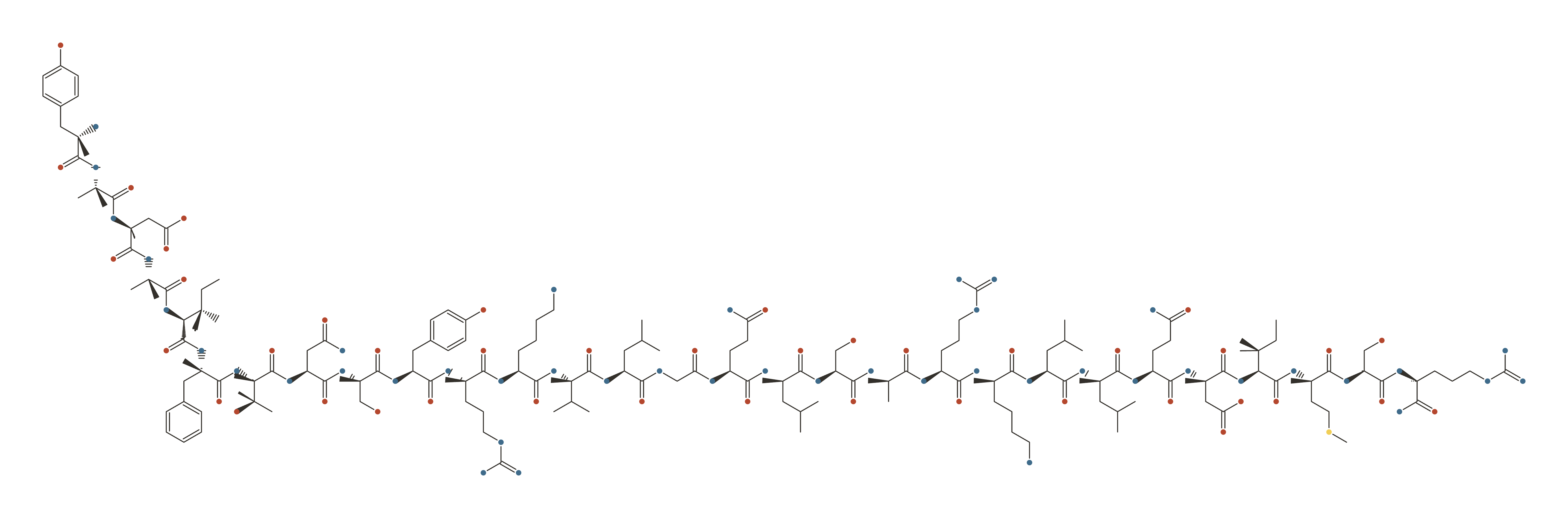
Sermorelin
The shortest fully active fragment of human GHRH — a former FDA-approved drug (Geref), withdrawn in 2008 and now compounded for off-label anti-aging use.

Sermorelin at a Glance
Sermorelin is GHRH(1-29), the shortest piece of growth-hormone-releasing hormone that still does the full job of the parent molecule. Because it works by prompting the pituitary to release its own growth hormone, output stays under normal feedback control rather than being imposed from outside — the reason this class is often preferred to injected growth hormone itself. It was approved by the FDA as Geref for diagnosing and treating growth-hormone deficiency in children, and withdrawn in 2008 for commercial rather than safety reasons. Today it is compounded and sold outside that approval, mostly for anti-ageing and body-composition use.
History & Development
Growth-hormone-releasing hormone was not found by looking for it in a healthy brain. It was isolated from a pancreatic tumour that was causing acromegaly - the tumour was making so much of the hormone that it could finally be purified.
| First described | GHRH isolated and characterised in 1982; sermorelin is its 1-29 fragment 19Reference 19Growth hormone-releasing factor from a human pancreatic tumor that caused acromegalyView study → |
| Discovered / synthesised by | Roger Guillemin and colleagues (44-amino-acid form); Rivier, Spiess, Thorner and Vale (40-amino-acid form), independently 19Reference 19Growth hormone-releasing factor from a human pancreatic tumor that caused acromegalyView study → |
| Institution | The Salk Institute for Biological Studies 19Reference 19Growth hormone-releasing factor from a human pancreatic tumor that caused acromegalyView study → |
| Origin | Synthetic fragment - the first 29 amino acids of human GHRH |
| Key patent | Not established in the sources consulted for this section |
| Assignee | n/a |
| Development status | Formerly approved - FDA, GEREF, 28 December 1990 and 26 September 1997; discontinued 2008 for commercial reasons 20Reference 20Determination that GEREF (sermorelin acetate) injection was not withdrawn from sale for reasons of safety or effectivenessView study → |
Discovery
For decades GHRH was a hypothesised molecule. Growth hormone clearly came from the pituitary under hypothalamic control, but the releasing factor itself resisted isolation because it exists in vanishingly small quantities in normal tissue.
The breakthrough came from pathology. In 1982 two groups independently characterised the hormone from pancreatic islet cell tumours that were producing it ectopically in large amounts and causing acromegaly in the patients carrying them. Guillemin’s group at the Salk Institute reported a 44-amino-acid peptide; Rivier, Spiess, Thorner and Vale characterised a 40-amino-acid form 19Reference 19Growth hormone-releasing factor from a human pancreatic tumor that caused acromegalyView study →. Guillemin had already received the Nobel Prize in 1977 for earlier work on hypothalamic hormones.
Sermorelin is the 1-29 fragment of that molecule - established as the shortest piece retaining receptor binding and GH-releasing activity comparable to the full-length peptide. Everything after the 29th residue turned out to be dispensable.
Development & ownership
Sermorelin was approved by the FDA as GEREF, first on 28 December 1990 and again on 26 September 1997 for a second presentation, indicated for diagnosing and treating growth-hormone deficiency in children.
Its disappearance is the part usually misreported. GEREF was voluntarily discontinued in 2008 for commercial reasons, and the FDA subsequently issued a formal determination in the Federal Register that it was “not withdrawn from sale for reasons of safety or effectiveness” 20Reference 20Determination that GEREF (sermorelin acetate) injection was not withdrawn from sale for reasons of safety or effectivenessView study →. That distinction is legally meaningful - it is the finding that permits abbreviated applications referencing the withdrawn product - and it is why sermorelin can still be compounded lawfully.
How it reached the market
Sermorelin today reaches patients almost entirely through compounding pharmacies operating under 503A and 503B provisions, rather than as an FDA-approved finished drug product - no approved sermorelin product is currently marketed in the United States. It is prescribed largely for anti-ageing and body-composition purposes, which is neither the indication it was approved for nor a use supported by the trials that secured that approval.
What It's Used For
Sermorelin is GHRH(1-29)NH2 — the first 29 amino acids of human growth-hormone-releasing hormone, the shortest N-terminal fragment that keeps full biological activity. It binds the pituitary GHRH receptor and makes the pituitary release its own growth hormone in pulses, with hypothalamic feedback intact, rather than replacing GH from outside. Its place on this hub is unusual, and it is the thing to understand first: sermorelin was an FDA-approved drug. It held two US new drug applications as Geref and Geref Diagnostic (EMD Serono) — approved in December 1990 and September 1997 for GH-stimulation testing and for treating idiopathic growth-hormone deficiency in children — and EMD Serono voluntarily discontinued both in 2008, with FDA formally withdrawing the approvals in June 2009 (Drugs@FDA; 74 FR, 19 May 2009). In 2013 FDA published a determination that Geref “[was] not withdrawn for reasons of safety or effectiveness” (78 FR, 4 March 2013). So it is neither a never-approved research chemical nor a currently approved medicine — it is a withdrawn drug, and the compounding pharmacies and anti-aging clinics that now sell it trade heavily on that former approval.
That history is exactly where the honesty problem lies. The approved indications were pediatric GH deficiency and diagnostic testing — and the genuine human evidence, small and dating from the 1980s–90s, sits there and nowhere else. Not one controlled trial has ever tested sermorelin for the adult uses it is now compounded and marketed for — anti-aging, body recomposition, fat loss, sleep, injury recovery, libido. What gets cited for those is trial data on other GHRH analogues, principally tesamorelin, which is the stabilized member of this family and the one that is still FDA-approved (for HIV-associated lipodystrophy). Route is load-bearing throughout: sermorelin is injected subcutaneously because it has negligible oral bioavailability, and the parent peptide is gone within minutes.
Support is an experimental score I’m building — a composite weighted by study type (human > animal > in vitro > review) and study volume. It’s a beta: a fast way to rank strength of evidence at a glance, not a validated metric. Each application links down to its write-up.
Adult anti-aging, fat loss, muscle gain, injury healing and libido — the uses sermorelin is actually sold for — are deliberately absent from this table. They rest on vendor and clinic marketing, not on evidence, and are not scored.
This is human data and was a former FDA-approved indication (Geref Diagnostic, NDA 19-863, approved December 1990). A single intravenous dose of about 1 µg/kg reliably provokes GH release from the pituitary and serves as a rapid provocative test of GH secretory capacity, with fewer false-positive responses in children without GH deficiency than some alternative provocative agents; pairing IV sermorelin with arginine improves specificity in adults 1Reference 1ReviewSermorelin: a review of its use in the diagnosis and treatment of children with idiopathic growth hormone deficiency — reviewView study →.
Dose-response was characterized directly in healthy men: 0.25 µg/kg IV already produced significant GH release, with maximal response at 1–2 µg/kg 4Reference 4Pharmacokinetics of growth hormone-releasing hormone(1-29)-NH2 and stimulation of growth hormone secretion in healthy subjects after intravenous or intranasal administration — human (PK / dose-response, n=30)View study →.
The limitation is biological rather than statistical, and it is the reason the test was never sufficient alone. Because sermorelin acts at the pituitary, a normal GH response cannot exclude GH deficiency caused by a hypothalamic defect — the pituitary is fine, the signal upstream is not. A subnormal response on a second, differently-acting provocative test is still required to confirm the diagnosis 1Reference 1ReviewSermorelin: a review of its use in the diagnosis and treatment of children with idiopathic growth hormone deficiency — reviewView study →.
Gap: genuinely solid human diagnostic evidence, but the approved product has not been marketed in the US since 2008, so any current use is compounded and off-label; and the test cannot rule out hypothalamic-origin GH deficiency by itself.
All human, and this was the therapeutic FDA-approved indication (Geref, NDA 20-443, approved September 1997). The largest trial is the Geref International Study Group study: 110 previously untreated prepubertal GH-deficient children given 30 µg/kg subcutaneously once daily at bedtime for up to a year. Mean height velocity rose from 4.1 cm/yr at baseline to 8.0 cm/yr at six months and 7.2 cm/yr at twelve; 74% were judged good responders, bone-age advance tracked height-age, and there was no excessive IGF-1 generation or change in fasting glucose 2Reference 2Clinical trialOnce daily subcutaneous growth hormone-releasing hormone therapy accelerates growth in growth hormone-deficient children during the first year of therapy (Geref International Study Group) — human (multicentre open-label clinical trial, n=110 children)View study →.
Crucially, this was a multicenter open-label study, not a randomized placebo-controlled trial — the standard of the era, but not approval-grade by modern expectations.
Two earlier clinical series fill it in. In 18 prepubertal GH-deficient children on twice-daily subcutaneous GHRH(1-29)NH2, height velocity rose in 12 and 8 showed a worthwhile response sustained over 6–18 months — but 4 children actually decelerated on treatment for unknown reasons, and anti-GHRH antibodies developed in 14 of 18 without apparent effect on growth or GH response 3Reference 3Clinical trialTreatment of growth-hormone deficiency with growth-hormone-releasing hormone [GHRH(1-29)NH2] — human (clinical trial, n=18 children)View study →.
And in 8 children given a continuous subcutaneous infusion (60 ng/kg/min), mean growth velocity rose from 4.6 to 7.0 cm/yr over a year with pulsatile GH secretion preserved and no desensitization — but growth returned to pretreatment rates in every child once treatment stopped 5Reference 5Clinical trialContinuous subcutaneous GHRH(1-29)NH2 promotes growth over 1 year in short, slowly growing children — human (clinical trial, n=8 children)View study →.
Response also requires an intact pituitary, which is why GHRH therapy remained a niche alternative to recombinant GH rather than a replacement for it.
Gap: real human efficacy, but modest, narrow (pediatric idiopathic GHD only), largely open-label, from a product withdrawn from the market — and it is not evidence for any adult use whatsoever.
This is the application the modern anti-aging trade is actually selling, and no trial of sermorelin supports it. What exists is human RCT data on other GHRH analogues. In a 5-month single-blind randomized trial, age-advanced men and women self-injecting [Nle27]GHRH(1-29)NH2 (10 µg/kg nightly) restored GH pulsatility and raised IGF-1, with accompanying changes in body composition and skin thickness 6Reference 6RCTEndocrine and metabolic effects of long-term administration of [Nle27]growth hormone-releasing hormone-(1-29)-NH2 in age-advanced men and women — human (RCT, GHRH analogue)View study →.
Separately, tesamorelin improved mitochondrial function measured by phosphocreatine recovery in obese adults with reduced GH, correlating with the IGF-1 rise 7Reference 7RCTThe effects of tesamorelin on phosphocreatine recovery in obese subjects with reduced growth hormone — human (RCT, tesamorelin)View study →.
Reviews of the GHRH and GH-secretagogue class in aging reach a consistent conclusion: these compounds reliably raise GH and IGF-1, but have never been shown to be an effective substitute for recombinant GH or to deliver a meaningful anti-aging benefit 9,
The substitution being made here is the core problem with sermorelin’s marketing. [Nle27]GHRH and tesamorelin are structurally modified to resist enzymatic breakdown; sermorelin is not, and clears in minutes (see Pharmacokinetics). Exposure profiles that different cannot be assumed to produce the same outcome.
Gap: no sermorelin-specific adult body-composition RCT exists. The analogue effects that are cited in its place are themselves modest, and the class reviews are explicit that raising IGF-1 is not the same as demonstrating benefit.
A 20-week randomized, double-blind, placebo-controlled trial in 152 adults aged 55–87 (66 with mild cognitive impairment) reported favorable effects on executive-function cognition versus placebo 8Reference 8RCTEffects of growth hormone-releasing hormone on cognitive function in adults with mild cognitive impairment and healthy older adults — human (RCT, tesamorelin)View study →.
It is a real human RCT — but the drug was tesamorelin, a stabilized GHRH(1-44) analogue, at a single academic center, and the effect was on a cognitive subdomain rather than global function. It has not replicated: a phase 2 RCT in 73 people with HIV found only a non-significant trend and no between-group difference 11Reference 11RCTEffects of tesamorelin on neurocognitive impairment in persons with HIV and abdominal obesity — human (phase 2 RCT, tesamorelin)View study →, and a later placebo-controlled pilot found no significant effect on standard cognitive measures 12Reference 12RCTThe effect of growth hormone-releasing hormone on cognition and brain connectivity in adults with cognition rated normal to mildly impaired — human (placebo-controlled pilot trial). eNeurologicalSci. https://pubmed.ncbi.nlm.nih.gov/42382101/View study →.
Gap: one positive single-center trial of a different molecule, set against two null trials. No sermorelin cognition trial has ever been run, and even for the class the cognitive benefit is unestablished.
GHRH promotes slow-wave (deep) sleep while inhibiting cortisol, and a shift in the hypothalamic GHRH-to-CRH balance is implicated in the sleep-endocrine changes of normal aging 13Reference 13ReviewEffects of hormones on sleep [GHRH and slow-wave sleep] — review (human neuroendocrine)View study →.
This is human neuroendocrine and mechanistic work, and it is the honest basis for the “sermorelin improves your sleep” pitch — but it studies GHRH administration generally, in small pulsatile-dosing protocols, with sleep architecture as a physiological readout. It is not a sermorelin trial and not a sleep-disorder outcome trial. Worth noting because it is often misattributed: the registered GHRH sleep trial in service members with traumatic brain injury and insomnia (NCT02931474) used tesamorelin, not sermorelin, and was withdrawn before enrolling.
Gap: mechanistically plausible and observed in humans for GHRH as a class, but there is no sermorelin sleep-outcome trial — and the one registered GHRH sleep study never ran.
Animal only. GHRH-receptor agonists stimulate cardiac repair after myocardial infarction: in a swine subacute-MI model, the synthetic agonist MR-409 (30 µg/kg) reduced infarct scar size and limited adverse ventricular remodeling 14Reference 14Growth hormone-releasing hormone agonists reduce myocardial infarct scar in swine with subacute ischemic cardiomyopathy — animal (swine, MR-409)View study →, building on earlier rat MI work. Schally’s group reports that GHRH agonists act directly on GHRH receptors expressed in myocardium to promote tissue repair, apparently independent of the pituitary GH axis 15Reference 15ReviewActions and potential therapeutic applications of growth hormone-releasing hormone agonists — reviewView study →.
Two caveats make this non-transferable. The compounds used are potent, enzymatically stabilized synthetic agonists of the JI/MR class — not sermorelin — and there is no human trial of any of them for cardiac repair.
Gap: encouraging preclinical cardiac biology for the GHRH-agonist class, zero human data, and not this molecule. Applying it to sermorelin is pure extrapolation.
A 2021 transcriptomic drug screen across 1,018 glioma patients scored 4,865 candidate drugs and flagged sermorelin as the top-scoring candidate for recurrent tumors, with pathway analysis suggesting cell-cycle blockade and immune modulation 16Reference 16A potentially effective drug for patients with recurrent glioma: sermorelin — in silico (transcriptomic drug screen, n=1,018 patients)View study →. This is an in-silico repurposing signal only — no cell-culture, animal, or human validation followed it, and it is the one application here where the molecule named is genuinely sermorelin rather than an analogue.
It also points the wrong way from the rest of the page: GHRH-axis stimulation in cancer is mechanistically double-edged, since GHRH agonists elsewhere are reported to promote cell proliferation 15Reference 15ReviewActions and potential therapeutic applications of growth hormone-releasing hormone agonists — reviewView study →, and raising IGF-1 is the basis of the theoretical neoplasia concern in the Safety section below.
Gap: a hypothesis-generating computational hit with no experimental confirmation of any kind. Not a basis for use, and not reassurance about cancer risk.
Mechanisms
| Target / pathway | Effect | Relevant to |
|---|---|---|
| Pituitary GHRH receptor (GHRH-R) | Agonist → pulsatile GH release, hypothalamic feedback preserved | Diagnosispediatric GHDall marketed adult uses |
| GH → hepatic IGF-1 axis | ↑ GH, ↑ IGF-1 / IGFBP-3 | Body compositionmetabolic and mitochondrial function; also the neoplasia concern |
| Somatostatin tone | Pulse frequency remains somatostatin-determined even under continuous GHRH — no desensitization observed | Why pulsatility is preserved; dosing schedule |
| Hypothalamic GHRH : CRH balance | GHRH ↑ slow-wave sleep, ↓ cortisol | Sleep (class-levelhuman) |
| Dipeptidyl-peptidase-IV and serum peptidases | Rapid degradation of the unmodified peptide | Very short half-life; why stabilized analogues behave differently |
| Extra-pituitary GHRH receptors (myocardium, tumor tissue) | Agonists promote proliferation and tissue repair | Cardiac repair (animal); double-edged in oncology |
Pharmacokinetics
Sermorelin is given by subcutaneous injection (intravenously for the diagnostic test); oral bioavailability is negligible, as for peptides of this size, so any oral “sermorelin” product cannot deliver intact peptide regardless of what the label claims. Human PK was characterized directly in 30 healthy men: intravenous GHRH(1-29)NH2 was rapidly eliminated, yet the GH response it triggered kept GH elevated for about 3 hours — the same peptide-versus-effect mismatch seen with tesamorelin, and the reason bedtime dosing works 4Reference 4Pharmacokinetics of growth hormone-releasing hormone(1-29)-NH2 and stimulation of growth hormone secretion in healthy subjects after intravenous or intranasal administration — human (PK / dose-response, n=30)View study →. That study also tested an intranasal route and found absorption through the nasal mucosa poor, with bioavailability of only 3–5%; roughly 50 µg/kg intranasally was needed to match 1 µg/kg intravenously 4Reference 4Pharmacokinetics of growth hormone-releasing hormone(1-29)-NH2 and stimulation of growth hormone secretion in healthy subjects after intravenous or intranasal administration — human (PK / dose-response, n=30)View study →. A precise human elimination half-life is not established in the accessible literature — figures in the 10–20-minute range circulate but trace to class knowledge rather than a specific measured value in the sources reviewed here.
The short duration is the load-bearing PK fact. It is why continuous-infusion and depot formulations were explored in the approved era to make sustained therapy practical 1,
Clinical & regulatory status
Sermorelin acetate held two US new drug applications, both now withdrawn. Per Drugs@FDA: NDA 19-863 (Geref Diagnostic, 0.05 mg base/ampoule) was approved 28 December 1990 as a new molecular entity, and NDA 20-443 (Geref, 0.5 and 1.0 mg base/vial) was approved 26 September 1997; both were held by EMD Serono and both are listed as Discontinued. EMD Serono notified FDA in July and December 2008 that the products were being discontinued and requested withdrawal of approval on the grounds that they were no longer marketed; the withdrawals took effect 18 June 2009 (74 FR, 19 May 2009). FDA subsequently published a determination that Geref “[was] not withdrawn for reasons of safety or effectiveness” (78 FR, 4 March 2013) — a finding made specifically so that abbreviated new drug applications referencing it could be approved. No primary source states the manufacturer’s actual business rationale; “withdrawn for commercial reasons” is a fair inference from a voluntary, non-safety withdrawal, but it is an inference, and it will not be dress it up as a documented fact.
There is consequently no approved sermorelin product in the US today. It circulates through two channels: compounding pharmacies, dispensing it on prescription for individual patients (an FDA-tolerated compounding pathway, not an approval, and one whose status FDA has been actively reviewing across the peptide category), and unregulated “research chemical” vendors selling powder outside the prescription system entirely. It is a prescription agent, not a dietary supplement, and is not a scheduled or controlled substance.
Registered-trial activity that is genuinely sermorelin is essentially nil. A ClinicalTrials.gov search returns 42 records matching the term, but they are dominated by tesamorelin and generic GHRH studies — including NCT02931474 (GHRH for sleep after traumatic brain injury), which used tesamorelin and was withdrawn. The active GHRH pipeline belongs to tesamorelin, not to sermorelin. Counts below reflect what is findable and verifiable in PubMed and ClinicalTrials.gov this pass.
| Completed | Ongoing | Terminated / Withdrawn | Preclinical |
|---|---|---|---|
| ~4(approved-era pediatric GHD, diagnostic and PK trials) | 0sermorelin-specific | 0sermorelin-specific (the withdrawn GHRH sleep trial used tesamorelin) | Sparse(in-silico glioma; cardiac work used other analogues) |
Last checked: July 2026.
Sourcing, Route & Legal Status
Regulatory status — the distinguishing fact. Sermorelin is a withdrawn drug, which puts it in a category of its own on this hub: not a never-approved research chemical like most peptides here, and not a currently approved medicine like tesamorelin. It was FDA-approved as Geref Diagnostic (1990) and Geref (1997), EMD Serono voluntarily discontinued both in 2008, and the approvals were withdrawn in June 2009; FDA determined in 2013 that this was not for reasons of safety or effectiveness. Anyone reading that as an endorsement should stop at the limits: the approval covered GH-stimulation testing and pediatric growth-hormone deficiency, and it ended seventeen years ago. It never covered adult use, and there is no approved sermorelin product to point to now. The clinics and compounders selling it for anti-aging are borrowing credibility from a lapsed pediatric approval — that is the single most important thing to understand about how this compound is marketed.
How it’s supplied and administered. Sermorelin ships as a lyophilized (freeze-dried) powder that must be reconstituted — typically with bacteriostatic water — before use, and is given by subcutaneous injection, conventionally at bedtime to align with the natural nocturnal GH pulse. The diagnostic use was intravenous, as a single dose. Oral routes do not work: a 29-amino-acid peptide is digested rather than absorbed, so oral products are pharmacologically inert. The intranasal route was investigated and found poor — 3–5% bioavailability 4Reference 4Pharmacokinetics of growth hormone-releasing hormone(1-29)-NH2 and stimulation of growth hormone secretion in healthy subjects after intravenous or intranasal administration — human (PK / dose-response, n=30)View study → — so nasal formulations require enormous dose multiples to do anything. Reconstituted solution needs refrigeration and has limited shelf life; the dry powder keeps longer if kept cold and dry.
Sourcing reality (this is a safety issue, not a footnote). Two channels, two different risk profiles. Compounded prescription sermorelin from a licensed pharmacy is the more controlled of the two, but compounded preparations are not FDA-approved products — they are not reviewed for safety, efficacy or manufacturing quality the way an approved drug is, and FDA has been actively scrutinizing the bulk-substance pathway that peptide compounding depends on, so availability is not stable. Gray-market “research use only” powder has no oversight at all: uncertain identity and actual peptide content, mislabeling, under- or over-concentration, bacterial endotoxin, and no sterility guarantee. Reconstitution and self-injection add technique and contamination risk on top. A vendor’s own certificate of analysis is not independent verification and can be falsified. None of the human efficacy data here were generated with either compounded or gray-market material — they came from a manufactured pharmaceutical that no longer exists. This page does not recommend or link vendors.
Safety
Sermorelin has real adverse-event data from an approved-era clinical program, and it was generally well tolerated — but that record belongs to children with GH deficiency dosed for up to a year under supervision, not to healthy adults dosing indefinitely with compounded material. Read the tolerability as evidence about a different use.
- Active or suspected malignancy is the clearest reason to avoid it. GHRH agonism and IGF-1 elevation are theoretically pro-proliferative, and GHRH receptors appear on some tumor tissue.
- Contraindicated in pregnancy and breastfeeding by default. No reproductive data exist — see the box below.
- No long-term adult safety data at all. The approved-era data cover about a year of dosing in children; the modern adult use has never been tested.
- GH-excess effects follow the mechanism. Fluid retention, arthralgia and myalgia, carpal-tunnel symptoms, and impaired glucose tolerance.
- Interactions not formally assessed. Stacking with other GH secretagogues compounds IGF-1 elevation and is entirely unstudied.
- Injection-site reactions were the commonest problem in trials. Redness, pain and swelling, with flushing, headache or dizziness less often.
Full Safety & Interactions Detail
Overall posture. Sermorelin has something almost nothing else on this hub has: real adverse-event data from an approved-era clinical program. In the pediatric GHD and diagnostic trials it was generally well tolerated — the largest study reported no adverse changes in biochemical or hormonal analyses, no change in fasting glucose, and no excessive IGF-1 generation over a year of daily dosing in children 2Reference 2Clinical trialOnce daily subcutaneous growth hormone-releasing hormone therapy accelerates growth in growth hormone-deficient children during the first year of therapy (Geref International Study Group) — human (multicentre open-label clinical trial, n=110 children)View study →. Commonly reported effects across the GHRH(1-29) literature are injection-site reactions (redness, pain, swelling) and, less often, flushing, headache, dizziness or transient nausea. Anti-GHRH antibodies developed in 14 of 18 children on chronic therapy in one series, with no apparent effect on growth or on GH responsiveness 3Reference 3Clinical trialTreatment of growth-hormone deficiency with growth-hormone-releasing hormone [GHRH(1-29)NH2] — human (clinical trial, n=18 children)View study → — a genuine immunogenicity finding whose long-term significance was never established, because the drug left the market.
The limits of that reassurance. That safety record belongs to children with GH deficiency, dosed for up to a year, under medical supervision, with a manufactured pharmaceutical product. It does not transfer to healthy adults dosing indefinitely for cosmetic reasons with compounded or gray-market material — a population, a duration, an indication and a supply chain that have never been studied. Read the pediatric tolerability as what it is: evidence about a different use.
Mechanistic risks that follow the GH axis. Sermorelin raises GH and therefore IGF-1. Sustained elevation carries the GH-excess concerns familiar from recombinant GH — fluid retention, arthralgia and myalgia, carpal-tunnel-type symptoms, and impaired glucose tolerance or insulin resistance. These are expected to be less pronounced than with exogenous GH, because GHRH stimulation preserves pituitary feedback and pulsatility rather than overriding them, but “less pronounced” is a mechanistic argument, not a measured outcome in adults. Contemporary clinical reviews of unregulated GH-IGF-1-axis peptides report exactly this cluster in self-administering users — dysglycemia, fluid retention, myalgia and arthralgia, injection-site reactions, and prolactin or cortisol disturbance — alongside biologically plausible but unproven mitogenic concerns 17,
The proliferation question. Because GHRH agonism and IGF-1 elevation are theoretically pro-proliferative, and because GHRH receptors are expressed on some tumor tissue 15Reference 15ReviewActions and potential therapeutic applications of growth hormone-releasing hormone agonists — reviewView study →, active or suspected malignancy is the clearest reason to avoid it. This is the same concern that appears as a formal contraindication on the tesamorelin label, and it is the strongest argument against unsupervized use: for the one approved drug in this class, IGF-1 monitoring is part of the prescription.
Interactions. Not formally assessed for adult use. On mechanistic grounds only: GH response may be blunted by agents that suppress GH secretion (somatostatin analogues, glucocorticoids) and is influenced by thyroid status; stacking with other GH-axis stimulants — ipamorelin, GHRP-2, GHRP-6, CJC-1295, MK-677 — compounds the IGF-1 elevation and is the norm in community protocols. That is mechanism-based reasoning about a common practice, not data from a controlled interaction study.
Who should avoid it. Anyone with active or suspected malignancy; anyone pregnant, breastfeeding or trying to conceive; children outside a diagnosed and supervised GHD indication; anyone with diabetes or impaired glucose tolerance without supervision; and anyone unwilling to accept a non-approved product of unverified composition. Injection-specific risks — non-sterile technique, contaminated product, endotoxin — scale with how far the supply sits from a licensed pharmacy.
Scope disclosure (honesty, not a claim):
- Human data? Yes, but narrow and old — human clinical data exist for GH-stimulation testing and pediatric GHD treatment (the former FDA-approved indications, 1980s–90s, mostly small and open-label). No human efficacy data exist for any adult use. Adult body-composition, cognition and sleep data come from other GHRH analogues, not sermorelin.
- Interactions assessed? No. The notes above are mechanism-based; no controlled interaction study in adults exists, and stacking with other GH secretagogues is entirely unstudied.
- Pregnancy/lactation assessed? No — not established; avoid.
- Long-term safety established? No. The approved-era data cover roughly a year of dosing in children. There is no long-term adult safety data at all, and the immunogenicity finding 3Reference 3Clinical trialTreatment of growth-hormone deficiency with growth-hormone-releasing hormone [GHRH(1-29)NH2] — human (clinical trial, n=18 children)View study → was never followed up.
- Does the former approval make it safe for current use? No — and this is the specific misreading to guard against. The approval covered one population and two indications, ended in 2009, and says nothing about indefinite adult use with non-approved product.
Never imply safety from silence. Where sermorelin has not been studied — adult efficacy, long-term dosing, interactions, pregnancy, compounded and gray-market product quality — the correct statement is “not assessed,” not “safe.”
Not assessed / not established. No adequate human pregnancy or lactation data exist for sermorelin, and no reproductive-toxicity data were located. Treat as contraindicated by default in pregnancy and breastfeeding.
Dosage
There is no established adult dose for sermorelin, and none is recommended here. No controlled trial has ever dose-ranged it in adults for any purpose. Every figure below is an approved-era clinical dose reported as historical data, not a protocol and not a recommendation — and none of it was generated for the uses sermorelin is now sold for.
The diagnostic dose was a single ~1 µg/kg intravenously, which is near the top of the dose-response curve; 0.25 µg/kg IV already produced significant GH release and 1–2 µg/kg gave maximal release in healthy men 1,
The doses used in adult anti-aging compounding are not here, because there is nothing to source them from except vendor copy and clinic protocols, and this site does not launder those into dose figures. Growth benefit in the pediatric trials was also maintenance-dependent — height velocity reverted to pretreatment rates in every child once treatment stopped 5Reference 5Clinical trialContinuous subcutaneous GHRH(1-29)NH2 promotes growth over 1 year in short, slowly growing children — human (clinical trial, n=8 children)View study → — so the trial results describe continuous dosing, not a course with a lasting result. Oral products cannot deliver intact peptide (see Pharmacokinetics), whatever the label says.
References
- Prakash A, Goa KL. (1999). Sermorelin: a review of its use in the diagnosis and treatment of children with idiopathic growth hormone deficiency — review. BioDrugs. https://pubmed.ncbi.nlm.nih.gov/18031173/
- Thorner M, et al. (1996). Once daily subcutaneous growth hormone-releasing hormone therapy accelerates growth in growth hormone-deficient children during the first year of therapy (Geref International Study Group) — human (multicentre open-label clinical trial, n=110 children). Journal of Clinical Endocrinology & Metabolism. https://pubmed.ncbi.nlm.nih.gov/8772599/
- Ross RJ, et al. (1987). Treatment of growth-hormone deficiency with growth-hormone-releasing hormone [GHRH(1-29)NH2] — human (clinical trial, n=18 children). Lancet. https://pubmed.ncbi.nlm.nih.gov/2879138/
- Wilton P, et al. (1993). Pharmacokinetics of growth hormone-releasing hormone(1-29)-NH2 and stimulation of growth hormone secretion in healthy subjects after intravenous or intranasal administration — human (PK / dose-response, n=30). Acta Paediatrica Supplement. https://pubmed.ncbi.nlm.nih.gov/8329825/
- Brain CE, et al. (1990). Continuous subcutaneous GHRH(1-29)NH2 promotes growth over 1 year in short, slowly growing children — human (clinical trial, n=8 children). Clinical Endocrinology (Oxford). https://pubmed.ncbi.nlm.nih.gov/2140733/
- Khorram O, et al. (1997). Endocrine and metabolic effects of long-term administration of [Nle27]growth hormone-releasing hormone-(1-29)-NH2 in age-advanced men and women — human (RCT, GHRH analogue). Journal of Clinical Endocrinology & Metabolism. https://pubmed.ncbi.nlm.nih.gov/9141536/
- Makimura H, et al. (2014). The effects of tesamorelin on phosphocreatine recovery in obese subjects with reduced growth hormone — human (RCT, tesamorelin). Journal of Clinical Endocrinology & Metabolism. https://pubmed.ncbi.nlm.nih.gov/24178787/
- Baker LD, et al. (2012). Effects of growth hormone-releasing hormone on cognitive function in adults with mild cognitive impairment and healthy older adults — human (RCT, tesamorelin). Archives of Neurology. https://pubmed.ncbi.nlm.nih.gov/22869065/
- Aimaretti G, et al. (2004). GHRH and GH secretagogues: clinical perspectives and safety — review. Pediatric Endocrinology Reviews. https://pubmed.ncbi.nlm.nih.gov/16456487/
- Merriam GR, et al. (1997). Potential applications of GH secretagogues in the evaluation and treatment of the age-related decline in growth hormone secretion — review. Endocrine. https://pubmed.ncbi.nlm.nih.gov/9449031/
- Ellis RJ, et al. (2025). Effects of tesamorelin on neurocognitive impairment in persons with HIV and abdominal obesity — human (phase 2 RCT, tesamorelin). Journal of Infectious Diseases. https://pubmed.ncbi.nlm.nih.gov/39813152/
- Stewart CE, et al. (2026). The effect of growth hormone-releasing hormone on cognition and brain connectivity in adults with cognition rated normal to mildly impaired — human (placebo-controlled pilot trial). eNeurologicalSci. https://pubmed.ncbi.nlm.nih.gov/42382101/
- Steiger A. (1998). Effects of hormones on sleep [GHRH and slow-wave sleep] — review (human neuroendocrine). Hormone Research. https://pubmed.ncbi.nlm.nih.gov/9550112/
- Bagno LL, et al. (2015). Growth hormone-releasing hormone agonists reduce myocardial infarct scar in swine with subacute ischemic cardiomyopathy — animal (swine, MR-409). Journal of the American Heart Association. https://pubmed.ncbi.nlm.nih.gov/25827134/
- Schally AV, et al. (2019). Actions and potential therapeutic applications of growth hormone-releasing hormone agonists — review. Endocrinology. https://pubmed.ncbi.nlm.nih.gov/31070727/
- Chang Y, et al. (2021). A potentially effective drug for patients with recurrent glioma: sermorelin — in silico (transcriptomic drug screen, n=1,018 patients). Annals of Translational Medicine. https://pubmed.ncbi.nlm.nih.gov/33842627/
- Dominikowski A, et al. (2026). The emerging landscape of performance-enhancing peptides modulating the GH-IGF1 axis: bridging the gap between clinical evidence and patient self-administration — review. Frontiers in Endocrinology. https://pubmed.ncbi.nlm.nih.gov/42395176/
- Mendias CL, Awan TM. (2026). Safety and efficacy of approved and unapproved peptide therapies for musculoskeletal injuries and athletic performance — review. Sports Medicine. https://pubmed.ncbi.nlm.nih.gov/41966639/
- Guillemin, R., Brazeau, P., Bohlen, P., Esch, F., Ling, N., & Wehrenberg, W. B. (1982). Growth hormone-releasing factor from a human pancreatic tumor that caused acromegaly. Science, 218(4572), 585-587. https://pubmed.ncbi.nlm.nih.gov/6812220/
- U.S. Food and Drug Administration (2013). Determination that GEREF (sermorelin acetate) injection was not withdrawn from sale for reasons of safety or effectiveness. Federal Register. https://www.federalregister.gov/documents/2013/03/04/2013-04827/determination-that-geref-sermorelin-acetate-injection-05-milligrams-basevial-and-10-milligrams



