
Compound Monograph
Sitoindoside IX
Sitoindoside IX is a glycowithanolide (a glycosylated withanolide) from ashwagandha (Withania somnifera). It is almost never studied on its own — its evidence is for the equimolar sitoindoside VII–X plus withaferin A active-principle fraction (WSG), the anti-stress, antioxidant and immunomodulatory part of the root. As an isolated molecule it is thin: essentially one 1989 isolation report and a 2025 in-silico docking study.

Sources · 1
Where Does It Come From?
Sitoindoside IX is a naturally occurring glycowithanolide (withanolide glucoside / acylsteryl-glucoside class), found in Ashwagandha. It is well tolerated orally (low toxicity).
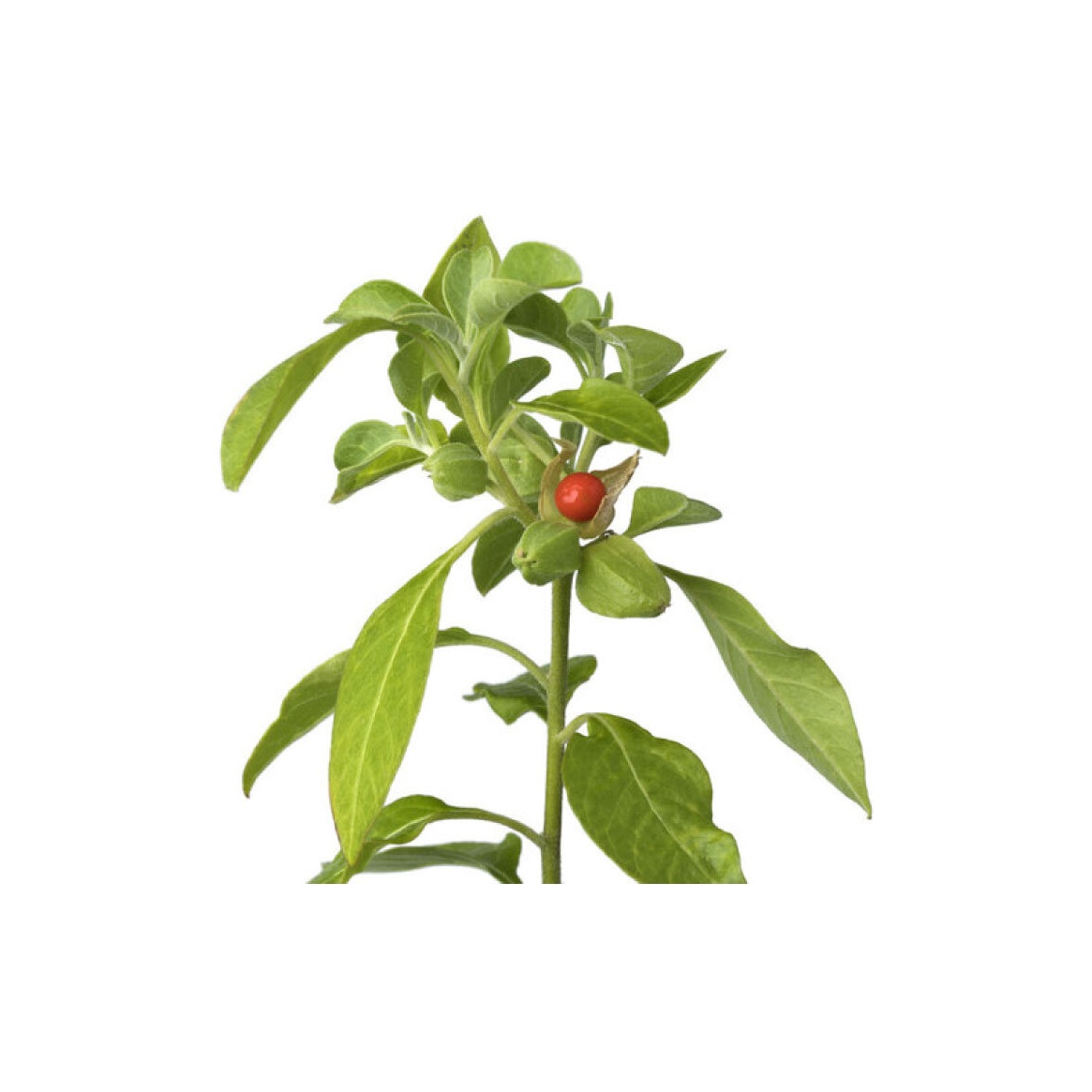
Concentration
Content by Source
Concentrations not reported. No percent-dry-weight or mg/g figures have been published for this compound in its source plants.
Sitoindoside IX at a Glance
Sitoindoside IX is a glycowithanolide — a withanolide (the C28 steroidal-lactone class that defines ashwagandha) carrying an attached sugar, which makes it more water-soluble and less reactive than the free aglycones. It was named in 1989 alongside its near-twin sitoindoside X as one of “two new glycowithanolides” from Withania somnifera roots 1Reference 1Immunomodulatory and CNS effects of sitoindosides IX and X, two new glycowithanolides from Withania somniferaView study →.
The single most important thing to understand about this molecule is that it is almost never studied by itself. The influential anti-stress, antioxidant, immunomodulatory and cognition work associated with “sitoindosides” was done on a mixed active-principle fraction — usually the equimolar combination of sitoindosides VII, VIII, IX and X plus withaferin A, abbreviated WSG (Withania somnifera glycowithanolides) — not on purified sitoindoside IX 2,
So the isolate record is thin. The interesting biology — adaptogenic anti-stress activity, a rise in brain antioxidant enzymes, immune mobilisation — is real but belongs to the fraction. As an individually characterised molecule, sitoindoside IX has essentially one isolation/pharmacology paper 1Reference 1Immunomodulatory and CNS effects of sitoindosides IX and X, two new glycowithanolides from Withania somniferaView study → and one modern in-silico docking study 7Reference 7Exploring the potential use of Withania somnifera in leprosy and lepra reactions: a molecular docking approachView study →; there is no isolated-molecule human data.
The Sitoindoside IX & X Anti-Stress Glycowithanolide Fraction
This is the point of the page: sitoindoside IX earns its place in the literature as one half of the sitoindoside IX + X pair, and more broadly as a member of the sitoindoside VII–X glycowithanolide fraction that the Bhattacharya/Ghosal group at Banaras Hindu University proposed as the anti-stress (“adaptogenic”) active principle of ashwagandha root.
How the fraction was assembled and tested. The group isolated a set of glycowithanolides — sitoindosides VII, VIII, IX and X — and reconstituted them (often with withaferin A) in equimolar concentrations as a defined test article called WSG. Across roughly fifteen years of rodent work this fraction:
- Raised brain antioxidant enzymes. Given to rats once daily for up to 21 days, WSG produced a dose-related increase in superoxide dismutase (SOD), catalase (CAT) and glutathione peroxidase (GPX) in the frontal cortex and striatum, comparable to the reference antioxidant deprenyl 2Reference 2Antioxidant activity of glycowithanolides from Withania somniferaView study →.
- Reversed stress-induced oxidative changes. In chronic footshock stress, WSG normalised stress-driven perturbations in the same enzymes and lowered lipid peroxidation — a proposed molecular basis for the herb’s “adaptogen” reputation 3Reference 3AnimalAnti-oxidant effect of Withania somnifera glycowithanolides in chronic footshock stress-induced perturbations of oxidative free radical scavenging enzymes and lipid peroxidation in rat frontal cortex and striatumView study →.
- Behaved as an anxiolytic-antidepressant. WSG (20–50 mg/kg) produced anxiolytic effects comparable to lorazepam in the elevated plus-maze and social-interaction tests, and lowered the anxiety endocoid tribulin 4Reference 4Anxiolytic-antidepressant activity of Withania somnifera glycowithanolides: an experimental studyView study →.
The framing to hold onto: sitoindoside IX is a named constituent of a beneficial fraction, and the fraction’s anti-stress/antioxidant story is the reason the molecule is worth a page. What the literature does not provide is a demonstration that sitoindoside IX by itself is responsible for any of it.
What It's Used For
The evidence for sitoindoside IX is almost entirely the evidence for the WSG fraction in rodents. Read every row below as “the sitoindoside-containing fraction did this in animals,” not “sitoindoside IX did this.”
Support is an experimental score — weighted by study type (human > animal > in vitro) and volume. A beta, not a validated metric. Every row here is animal or in-silico, and nearly all of it is the mixed WSG fraction, not isolated sitoindoside IX — so the scores are low by design. Each application is a jump link to its write-up.
The most replicated finding, and the mechanistic core of the adaptogen claim — but tested as the WSG fraction, not isolated sitoindoside IX. In rats, the equimolar sitoindoside VII–X + withaferin A mixture (10–20 mg/kg, once daily for 21 days) produced a dose-related, statistically significant increase in SOD, catalase and glutathione peroxidase in the frontal cortex and striatum, comparable to the reference antioxidant deprenyl 2Reference 2Antioxidant activity of glycowithanolides from Withania somniferaView study →. Under chronic footshock stress, the same fraction reversed stress-induced enzyme perturbations and lowered lipid peroxidation 3Reference 3AnimalAnti-oxidant effect of Withania somnifera glycowithanolides in chronic footshock stress-induced perturbations of oxidative free radical scavenging enzymes and lipid peroxidation in rat frontal cortex and striatumView study →.
Gap: the active article is always the four-glycoside (+ withaferin A) mixture in rodents — sitoindoside IX is never fractionated out and tested alone, so its individual contribution is unknown. No human antioxidant outcome rests on it 2,
The “adaptogen” application. In rats, WSG (20 and 50 mg/kg orally) produced an anxiolytic effect comparable to lorazepam in the elevated plus-maze, social-interaction and feeding-latency tests, plus an antidepressant effect, and it lowered the anxiety endocoid tribulin 4Reference 4Anxiolytic-antidepressant activity of Withania somnifera glycowithanolides: an experimental studyView study →. This behavioural anti-stress activity is proposed to be downstream of the antioxidant enzyme changes above rather than a direct GABA-mimetic action 3,
Gap: all animal, all the mixed fraction; the isolated molecule has never been run through an anxiety or stress model. Human adaptogen evidence belongs to standardised whole-root extracts (e.g. KSM-66, Sensoril), not to sitoindoside IX 4Reference 4Anxiolytic-antidepressant activity of Withania somnifera glycowithanolides: an experimental studyView study →.
The closest thing to isolate-specific data. The 1989 founding report that named sitoindosides IX and X described immunomodulatory activity for the two new glycowithanolides studied together 1Reference 1Immunomodulatory and CNS effects of sitoindosides IX and X, two new glycowithanolides from Withania somniferaView study → — this is the historical basis for listing the sitoindosides among ashwagandha’s immune-active constituents.
Gap: the study paired IX with X (not IX alone), it is a single early report, and it is animal/preclinical. There is no modern replication of an isolated-sitoindoside-IX immunomodulatory effect 1Reference 1Immunomodulatory and CNS effects of sitoindosides IX and X, two new glycowithanolides from Withania somniferaView study →.
The same 1989 report documented central-nervous-system effects for sitoindosides IX and X 1Reference 1Immunomodulatory and CNS effects of sitoindosides IX and X, two new glycowithanolides from Withania somniferaView study →, which — together with the antioxidant fraction data — underpins ashwagandha’s traditional medhya rasayana (cognition-supporting) reputation. The antioxidant fraction has separately shown a protective effect in a rat model of neuroleptic-induced tardive dyskinesia, attributed to its antioxidant rather than GABA-mimetic action 5Reference 5AnimalEffect of Withania somnifera glycowithanolides on a rat model of tardive dyskinesiaView study →.
Gap: the CNS/cognition signal is animal, is for the IX + X pair or the WSG fraction, and includes no memory or dementia endpoint for isolated sitoindoside IX. Do not read whole-plant cognition claims onto this molecule 1,
An extension of the antioxidant story. In rats, WSG (10–50 mg/kg orally for 10 days) attenuated iron-overload-induced hepatotoxicity — reducing hepatic lipid peroxidation and the serum liver enzymes ALT, AST and LDH in a dose-related manner, comparably to silymarin 6Reference 6AnimalEffect of Withania somnifera glycowithanolides on iron-induced hepatotoxicity in ratsView study →.
Gap: one rat study, the mixed fraction again, no isolate and no human data; it supports an antioxidant/hepatoprotective role for the fraction, not for sitoindoside IX specifically 6Reference 6AnimalEffect of Withania somnifera glycowithanolides on iron-induced hepatotoxicity in ratsView study →.
Mechanisms
| Target / pathway | Effect | Relevant to |
|---|---|---|
| Brain SOD / catalase / glutathione peroxidase | dose-related increase in antioxidant-enzyme activity (frontal cortex, striatum) — WSG fraction | antioxidant / anti-stress |
| Lipid peroxidation | reduced tissue LPO under chronic stress and iron overload — WSG fraction | antioxidant / hepatoprotective |
| Stress-axis / behavioural anxiety | anxiolytic comparable to lorazepam; antidepressant effect; not blocked as a GABA-mimetic route | anti-stress / adaptogenic |
| Tribulin (endocoid anxiety marker) | normalised elevated rat-brain tribulin | anti-stress / adaptogenic |
| Immune effectors (unspecified) | immunomodulation reported for sitoindosides IX + X together | immunomodulatory |
| M. leprae targets / TNF-α / IL-6 (in silico only) | sitoindoside IX docked with high binding affinity — hypothesis-generating, no wet-lab confirmation | speculative |
The load-bearing caveat: apart from the in-silico docking row, every mechanism was measured on the mixed sitoindoside VII–X (+ withaferin A) fraction. These are fraction-level mechanisms attributed to sitoindoside IX by membership, not by isolation.
Pharmacokinetics
There is no pharmacokinetic dataset for isolated sitoindoside IX — no measured oral bioavailability, no half-life, no human PK. What can be said is structural: as a glycowithanolide it carries a sugar on the steroidal-lactone scaffold, making it more polar and water-soluble than the reactive aglycone withanolides. Glycosides of this kind are commonly deglycosylated by gut microflora to their aglycones before absorption, which would mean the molecule reaching systemic circulation may not be sitoindoside IX itself — but this has not been demonstrated for this compound. Treat any absorption or exposure figure quoted for “sitoindosides” as pertaining to the fraction, not the purified molecule.
Clinical Trials
There are no clinical trials of isolated sitoindoside IX for any indication. Human evidence exists only for standardised whole-root ashwagandha extracts, which are not attributable to this single glycoside. All isolate-adjacent evidence is preclinical (rodent) or in-silico.
| Completed | Planned | Terminated | Preclinical |
|---|---|---|---|
| —(none for the isolate) | — | — | Rodent antioxidant / anti-stress / hepatoprotective (WSG fraction); 1989 IX + X immunomodulatory/CNS report; in-silico docking 1, |
Last checked: July 2026.
Isolate vs. Plant Studies
This molecule sits at the difficult end of the isolate-vs-plant spectrum: almost nothing is the isolate. The pharmacology is the mixed WSG fraction (equimolar sitoindosides VII–X + withaferin A) in rats 2,
Its Role in Plants
Glycowithanolides like sitoindoside IX are glycosylated (sugar-bearing) forms of withanolides, the steroidal lactones that dominate Withania chemistry. Attaching a sugar generally makes such molecules more water-soluble and less chemically reactive than the free withanolide aglycones (of which withaferin A is the reactive archetype) — consistent with a role as storage, transport or a detoxified/stabilised form within the plant, though the specific biosynthesis and ecological function of sitoindoside IX have not been characterised. Withanolides broadly serve defensive functions in the Solanaceae; this is plant biology and should not be read as human pharmacology.
Prevalence in Nature
Sitoindoside IX is reported from the roots of ashwagandha (Withania somnifera), where it occurs as a minor glycowithanolide and one member of the sitoindoside VII–X active-principle fraction 1,
Discovery & Synthesis
Sitoindoside IX was isolated and named in 1989 by S. Ghosal and colleagues at Banaras Hindu University, reported as one of “two new glycowithanolides” — sitoindosides IX and X — from the roots of Withania somnifera, with immunomodulatory and CNS activity noted in the same paper 1Reference 1Immunomodulatory and CNS effects of sitoindosides IX and X, two new glycowithanolides from Withania somniferaView study →. The “sitoindoside” series names (VII, VIII, IX, X) come from this Indian phytochemistry programme, which framed the glycowithanolides as the anti-stress active principles of the root.
Total synthesis: none reported — the molecule is obtained by extraction and fractionation from ashwagandha root, not by synthesis, and no manufacturing route beyond botanical isolation is documented for it.
Patents: not yet researched.
Toxicity & Safety
Sitoindoside IX carries a low flag. As a glycowithanolide, it belongs to the benign, water-soluble adaptogen fraction of ashwagandha — chemically the opposite of the reactive, cytotoxic aglycone withaferin A, and it appears in the doses and fractions the Bhattacharya group administered to rats without reported toxicity 2,
- Benign glycowithanolide class. Water-soluble, non-reactive glycoside — the anti-stress fraction of ashwagandha, distinct from the cytotoxic aglycone withaferin A.
- No adverse effects reported in animal work. The WSG fraction was well tolerated at the anti-stress/antioxidant doses used in rats 2,
3, .4, 6Reference 2Antioxidant activity of glycowithanolides from Withania somniferaView study →Reference 3AnimalAnti-oxidant effect of Withania somnifera glycowithanolides in chronic footshock stress-induced perturbations of oxidative free radical scavenging enzymes and lipid peroxidation in rat frontal cortex and striatumView study →Reference 4Anxiolytic-antidepressant activity of Withania somnifera glycowithanolides: an experimental studyView study →Reference 6AnimalEffect of Withania somnifera glycowithanolides on iron-induced hepatotoxicity in ratsView study → - No isolate safety dataset. Tolerability is inferred from the fraction and from whole-root ashwagandha; there is no dedicated repeat-dose, genotoxicity or reproductive-toxicity study of purified sitoindoside IX. Absence of data is not evidence of safety.
- Interactions not characterised. No drug-interaction, CYP or transporter data exist for the isolated molecule; any interaction expectation is borrowed from whole-herb ashwagandha, not established here.
Reproductive and pregnancy/lactation decisions belong on the ashwagandha herb page, where intake is actually decided — not on this molecule-level page. No dedicated reproductive-toxicity dataset exists for isolated sitoindoside IX.
Dosage
There is no isolated-molecule dose for sitoindoside IX, and none is recommended. Every dose figure in the literature is for the mixed glycowithanolide fraction (WSG) in animals — typically 10–50 mg/kg in rats, given once daily 2,
References
- Ghosal S, Lal J, Srivastava R, et al. (1989). Immunomodulatory and CNS effects of sitoindosides IX and X, two new glycowithanolides from Withania somnifera. Phytotherapy Research. https://doi.org/10.1002/ptr.2650030510
- Bhattacharya SK, Satyan KS, Ghosal S (1997). Antioxidant activity of glycowithanolides from Withania somnifera. Indian Journal of Experimental Biology. https://pubmed.ncbi.nlm.nih.gov/9332168/
- Bhattacharya A, Ghosal S, Bhattacharya SK (2001). Anti-oxidant effect of Withania somnifera glycowithanolides in chronic footshock stress-induced perturbations of oxidative free radical scavenging enzymes and lipid peroxidation in rat frontal cortex and striatum. Journal of Ethnopharmacology. https://pubmed.ncbi.nlm.nih.gov/11137343/
- Bhattacharya SK, Bhattacharya A, Sairam K, Ghosal S (2000). Anxiolytic-antidepressant activity of Withania somnifera glycowithanolides: an experimental study. Phytomedicine. https://pubmed.ncbi.nlm.nih.gov/11194174/
- Bhattacharya SK, Bhattacharya D, Sairam K, Ghosal S (2002). Effect of Withania somnifera glycowithanolides on a rat model of tardive dyskinesia. Phytomedicine. https://pubmed.ncbi.nlm.nih.gov/11995951/
- Bhattacharya A, Ramanathan M, Ghosal S, Bhattacharya SK (2000). Effect of Withania somnifera glycowithanolides on iron-induced hepatotoxicity in rats. Phytotherapy Research. https://pubmed.ncbi.nlm.nih.gov/11054855/
- Thangaraju P, Saraswathy T, Velmurugan H, et al. (2025). Exploring the potential use of Withania somnifera in leprosy and lepra reactions: a molecular docking approach. Infectious Disorders - Drug Targets. https://pubmed.ncbi.nlm.nih.gov/39757611/



