
Compound Monograph
Tetrahydroharman
Tetrahydroharman (1-methyl-1,2,3,4-tetrahydro-β-carboline) is the fully reduced form of harman — a simple tetrahydro-β-carboline that forms endogenously from tryptamine and acetaldehyde and occurs in fermented foods, with only weak monoamine-oxidase activity.

Sources · 6
Where Does It Come From?
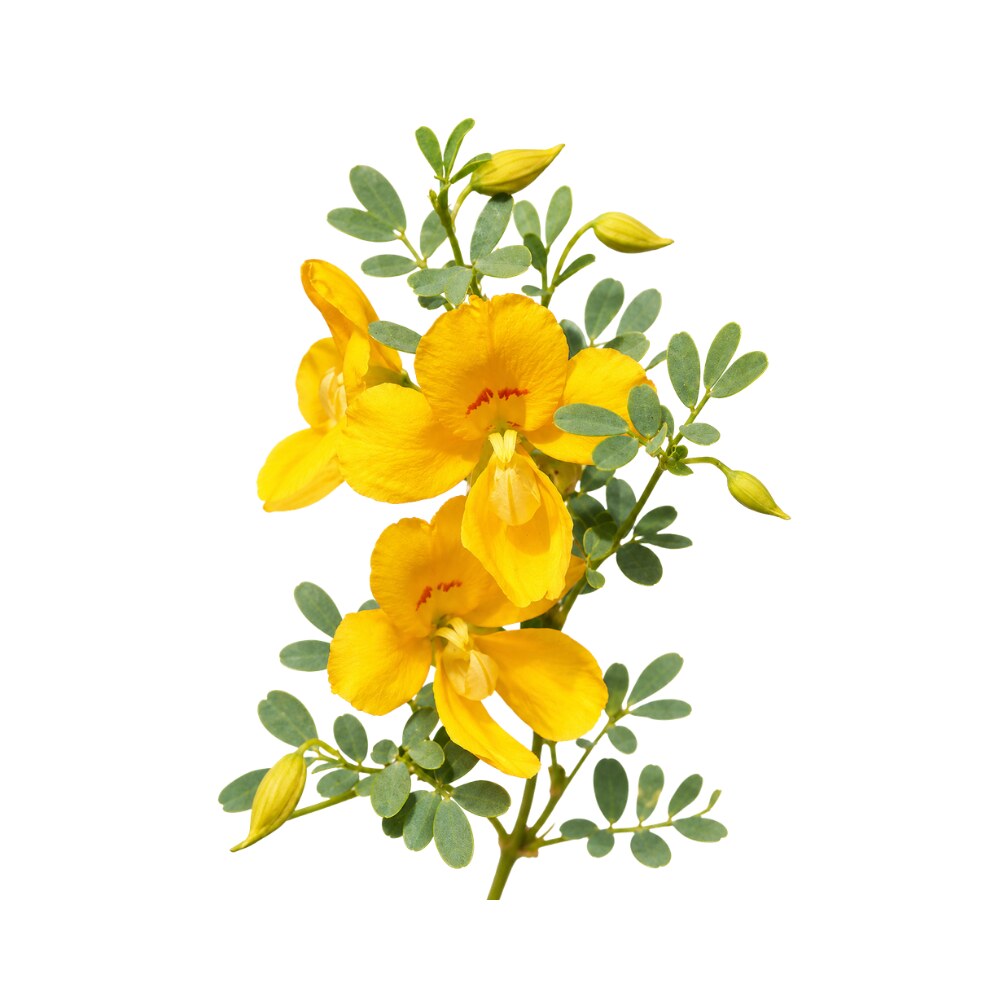
Tetrahydroharman is a naturally occurring (and made in the body) β-carboline alkaloid, found in Russian olive, Common reed and 4 other sources. It is well tolerated orally (low toxicity).
Concentration
Content by Source
Concentrations not reported. No percent-dry-weight or mg/g figures have been published for this compound in its source plants.
Tetrahydroharman at a Glance
Tetrahydroharman is a simple β-carboline alkaloid — specifically 1-methyl-1,2,3,4-tetrahydro-β-carboline, the fully saturated (tetrahydro) counterpart of harman. Where harman is a flat, fully aromatic β-carboline, tetrahydroharman has its pyridine ring reduced, which softens most of its pharmacology.
Unusually for the harmala family, it is best understood not as a drug but as an endogenous and dietary molecule. It forms readily when tryptamine-type amines condense with a small aldehyde — classically acetaldehyde, the first metabolite of alcohol — through a Pictet–Spengler reaction, and it turns up as a trace constituent of fruits, fruit juices and fermented products such as wine, soy sauce and aged garlic 3,
The honest posture on this molecule is that its literature is sparse. Like other β-carbolines it can interact with monoamine oxidase (MAO), but as a tetrahydro compound that interaction is weak — considerably weaker than harman’s — and there is essentially no human clinical data on the isolated molecule 1,
Tetrahydroharman vs. Harman
The single most useful frame for this molecule is its relationship to its aromatic parent. Tetrahydroharman is harman with the pyridine ring reduced — four extra hydrogens across the 1,2,3,4 positions. That structural difference is not cosmetic:
- MAO interaction drops. The potent, sub-micromolar MAO-A inhibition that makes harman notable belongs to the aromatic β-carbolines. Reduced (tetrahydro) β-carbolines such as tetrahydroharman are much weaker MAO-A inhibitors and barely touch MAO-B 1,
2Reference 1Analysis of monoamine oxidase enzymatic activity by reversed-phase high performance liquid chromatography and inhibition by β-carboline alkaloids occurring in foods and plantsView study →Reference 2Herraiz T (2023). β-Carboline alkaloids in soy sauce and inhibition of monoamine oxidase (MAO). Molecules. https://pubmed.ncbi.nlm.nih.gov/36985694/View study → . - It is a metabolic precursor, not a metabolite. In foods and in the body, the tetrahydro form comes first (from a Pictet–Spengler condensation), and can then be oxidised/aromatised to harman under the right conditions — a route documented for the related acid MTCA (a tetrahydro-β-carboline-3-carboxylic acid) converting to harman in soy sauce 2Reference 2Herraiz T (2023). β-Carboline alkaloids in soy sauce and inhibition of monoamine oxidase (MAO). Molecules. https://pubmed.ncbi.nlm.nih.gov/36985694/View study →. So tetrahydroharman sits upstream of the more active molecule.
- It is chiral; harman is not. Reducing the ring creates a stereocentre at C-1. The naturally occurring plant form elaeagnine is the (R)-(+) enantiomer, whereas harman, being planar, has no such handedness.
Practically, this means tetrahydroharman should not be assumed to carry harman’s activity. It is the quieter, reduced relative.
An Endogenous & Dietary β-Carboline
Tetrahydroharman’s defining feature is that people are exposed to it without ever taking it deliberately.
It forms through the Pictet–Spengler condensation of an indoleamine (tryptamine) with acetaldehyde. Because acetaldehyde is the immediate product of ethanol metabolism, conditions that raise acetaldehyde — chiefly drinking alcohol — favour the formation of 1-methyl tetrahydro-β-carbolines from endogenous amines 6Reference 6AnimalIncreased levels of monoamine-derived potential neurotoxins in fetal rat brain exposed to ethanolView study →. The same chemistry happens in food: acetaldehyde and related carbonyls in wine, soy sauce, aged garlic, and fruit juices generate tetrahydro-β-carbolines (including the 1-methyl series) during fermentation, ripening and processing 3,
This places tetrahydroharman in the same conceptual box as salsolinol and other “mammalian alkaloids”: trace condensation products that accumulate from ordinary dietary and metabolic inputs. Most research interest in the class is therefore about what these background adducts might do over time — a biochemistry question — rather than any intended effect (see Toxicity & Safety).
What It's Used For
The evidence base is thin and almost entirely in vitro or dietary-chemistry work. Two threads recur: a weak MAO interaction shared with the β-carboline class, and antioxidant/radical-scavenging activity typical of tetrahydro-β-carbolines in food.
Support is an experimental score — weighted by study type (human > animal > in vitro) and volume. A beta, not a validated metric. Every row here rests on in-vitro or food-chemistry work, so read the per-row basis.
As a β-carboline, tetrahydroharman shares the family’s affinity for monoamine oxidase, but the tetrahydro ring makes it a weak player. In enzyme assays, tetrahydro-β-carbolines such as tryptoline and 1-methyltryptoline (tetrahydroharman) inhibit MAO-A but are far less potent than the aromatic β-carbolines (harman, norharman), and unlike some substrates they are not readily oxidised by MAO themselves 1Reference 1Analysis of monoamine oxidase enzymatic activity by reversed-phase high performance liquid chromatography and inhibition by β-carboline alkaloids occurring in foods and plantsView study →.
Related dietary tetrahydro-β-carboline-3-carboxylic acids can be oxidised to the more potent aromatic inhibitors (e.g. MTCA → harman) under processing conditions, which is where much of the actual MAO signal in fermented foods originates 2Reference 2Herraiz T (2023). β-Carboline alkaloids in soy sauce and inhibition of monoamine oxidase (MAO). Molecules. https://pubmed.ncbi.nlm.nih.gov/36985694/View study →.
All of this is isolated-enzyme / whole-food work — no whole-plant or human study isolates tetrahydroharman’s MAO contribution.
Gap: no quantified IC₅₀/Kᵢ for pure tetrahydroharman against human MAO-A is well established, and no human exposure has been shown to reach MAO-inhibitory levels.
Tetrahydro-β-carbolines are modest antioxidants. Four such alkaloids naturally present in fruits and fruit juices scavenged free radicals with activity comparable to ascorbic acid in vitro, prompting the suggestion they “might act as antioxidants when absorbed and accumulated in the body” 4Reference 4Tetrahydro-β-carboline alkaloids occur in fruits and fruit juicesView study →.
Activity-guided fractionation of aged garlic extract independently identified tetrahydro-β-carbolines among its major antioxidants (EC₅₀ ≈ 10–12 µM in one assay) 5Reference 5In vitroIn vitro activity-guided identification of antioxidants in aged garlic extractView study →.
Tetrahydroharman belongs to this class, but these studies test the class and the whole extract, not the isolated 1-methyl compound.
Gap: the antioxidant data are in-vitro and mostly at the class/extract level; no study demonstrates a health-relevant antioxidant effect of isolated tetrahydroharman in vivo.
Mechanisms
| Target / pathway | Effect | Relevant to |
|---|---|---|
| Monoamine oxidase A (MAO-A) | weak, reversible inhibition — much weaker than aromatic harman | MAO interaction |
| Monoamine oxidase B (MAO-B) | little to no inhibition | MAO interaction |
| Reactive oxygen species / free radicals | hydrogen-atom / electron donation → radical scavenging | antioxidant |
| Pictet–Spengler condensation (tryptamine + acetaldehyde) | forms the molecule; hydroxylated analogues (e.g. 6-OH-MTHBC) are studied as potential endogenous neurotoxins | endogenous biochemistry / toxicity |
The load-bearing point is that reduction of the ring shifts tetrahydroharman off harman’s strong-MAO axis and onto a quieter “dietary/endogenous adduct” axis. Its most-studied biochemistry is how it forms, not what it does.
Pharmacokinetics
There is no dedicated pharmacokinetic dataset for tetrahydroharman in humans — no measured oral bioavailability, distribution or half-life. What is known is indirect: dietary tetrahydro-β-carbolines are presumed to be absorbed from food, and one line of reasoning holds they may accumulate in tissue and act as antioxidants once absorbed 4Reference 4Tetrahydro-β-carboline alkaloids occur in fruits and fruit juicesView study →. Endogenously, the molecule is generated in situ from amines and acetaldehyde rather than delivered as a dose 6Reference 6AnimalIncreased levels of monoamine-derived potential neurotoxins in fetal rat brain exposed to ethanolView study →. Any statement stronger than “trace, incidental exposure” would be speculation.
Clinical Trials
None. No human clinical trials of isolated tetrahydroharman exist. The evidence is preclinical — in-vitro MAO and antioxidant assays plus rodent work on ethanol-driven β-carboline adduct formation.
| Completed | Planned | Terminated | Preclinical |
|---|---|---|---|
| — | — | — | In-vitro MAO & antioxidant assays; rodent ethanol-adduct chemistry |
Last checked: July 2026.
Isolate vs. Plant Studies
Almost everything known about tetrahydroharman comes from isolated-molecule or whole-food chemistry, not from herbal preparations. The MAO and antioxidant assays test the pure compound or its class against enzymes and radicals in vitro 1,
Prevalence in Nature
Tetrahydroharman occurs in two overlapping worlds — plants and fermented/processed foods — plus the body itself.
In plants, it is the alkaloid elaeagnine, reported from Russian olive (Elaeagnus angustifolia) and other Elaeagnus species, and it is listed among the β-carbolines of common reed (Phragmites australis) alongside harman. In foods and beverages, tetrahydro-β-carbolines including the 1-methyl compound are documented in wine 7Reference 7Occurrence and content of tetrahydro-β-carboline-3-carboxylic acids in winesView study →, soy sauce 2Reference 2Herraiz T (2023). β-Carboline alkaloids in soy sauce and inhibition of monoamine oxidase (MAO). Molecules. https://pubmed.ncbi.nlm.nih.gov/36985694/View study →, raisins 3Reference 3Identification and occurrence of β-carboline alkaloids in raisins and inhibition of monoamine oxidase (MAO)View study →, aged garlic 5Reference 5In vitroIn vitro activity-guided identification of antioxidants in aged garlic extractView study → and fruit juices 4Reference 4Tetrahydro-β-carboline alkaloids occur in fruits and fruit juicesView study →, where they arise from the condensation of indoleamines with acetaldehyde and other carbonyls during fermentation, ripening and heating. Finally, it forms endogenously in mammals from the same Pictet–Spengler chemistry, particularly when alcohol raises acetaldehyde 6Reference 6AnimalIncreased levels of monoamine-derived potential neurotoxins in fetal rat brain exposed to ethanolView study →.
Quantitative levels across these sources are not well characterised, so no comparative concentration figures are given here — a documented gap rather than an omission.
Discovery & Synthesis
The molecule has two naming histories. As a plant alkaloid it was described as elaeagnine, the (R)-(+)-1-methyl-1,2,3,4-tetrahydro-β-carboline isolated from Elaeagnus; as a product of amine chemistry it is simply the tetrahydro (reduced) analogue of harman, the “1-methyltryptoline” of the tetrahydro-β-carboline series. No single first-isolation date is cleanly documented in the accessible literature.
Synthetically, 1-methyl tetrahydro-β-carbolines are the textbook product of the Pictet–Spengler reaction — condensing tryptamine with acetaldehyde gives tetrahydroharman directly — which is precisely why the same molecule appears spontaneously in fermented foods and in vivo 6Reference 6AnimalIncreased levels of monoamine-derived potential neurotoxins in fetal rat brain exposed to ethanolView study →. It is not manufactured at scale as a commercial product; it exists chiefly as a research standard, a natural-product isolate and an incidental dietary/endogenous compound.
Patents: not yet researched.
Toxicity & Safety
Tetrahydroharman carries a low flag. The rationale is that it is an endogenous, dietary tetrahydro-β-carboline present at trace levels, with only weak MAO activity (well below its aromatic relative harman, which is flagged moderate) and no documented human toxicity syndrome of its own 1,
The one genuine research concern sits on the endogenous-neurotoxin question. Tetrahydroharman belongs to the same Pictet–Spengler family as salsolinol, and hydroxylated 1-methyl tetrahydro-β-carbolines (e.g. 6-OH-MTHBC) accumulate in ethanol-exposed rodent brain and are studied as potential monoamine-derived neurotoxins 6Reference 6AnimalIncreased levels of monoamine-derived potential neurotoxins in fetal rat brain exposed to ethanolView study →. This is a plausibility signal about the class and about alcohol biochemistry, not a demonstrated harm from tetrahydroharman itself.
- Endogenous, dietary β-carboline at trace levels. Occurs naturally in fruits, fermented foods and in the body; no established human toxicity of its own.
- Weak MAO-A interaction (class effect). Far weaker than harman, but the β-carboline MAO caveat around serotonergic drugs and tyramine cannot be fully dismissed at unknown exposures 1,
2Reference 1Analysis of monoamine oxidase enzymatic activity by reversed-phase high performance liquid chromatography and inhibition by β-carboline alkaloids occurring in foods and plantsView study →Reference 2Herraiz T (2023). β-Carboline alkaloids in soy sauce and inhibition of monoamine oxidase (MAO). Molecules. https://pubmed.ncbi.nlm.nih.gov/36985694/View study → . - Endogenous-neurotoxin research (unresolved). As a Pictet–Spengler adduct related to salsolinol, its hydroxylated analogues are studied as possible neurotoxins in the context of alcohol metabolism 6Reference 6AnimalIncreased levels of monoamine-derived potential neurotoxins in fetal rat brain exposed to ethanolView study →.
- Sparse human data. No clinical, pharmacokinetic or reproductive-toxicity dataset exists for the isolated molecule; absence of evidence is not evidence of safety.
Dosage
There is no dose. Tetrahydroharman is not sold, dosed or used therapeutically. Human exposure is incidental — endogenous formation plus trace intake from fruits, fermented foods and beverages — and is not quantified in a way that supports any intake figure. Nothing here should be read as a recommendation to consume it.
References
- Herraiz T, Chaparro C (2006). Analysis of monoamine oxidase enzymatic activity by reversed-phase high performance liquid chromatography and inhibition by β-carboline alkaloids occurring in foods and plants. Journal of Chromatography A. https://pubmed.ncbi.nlm.nih.gov/16386263/
- Herraiz T (2023). β-Carboline alkaloids in soy sauce and inhibition of monoamine oxidase (MAO). Molecules. https://pubmed.ncbi.nlm.nih.gov/36985694/
- Herraiz T (2007). Identification and occurrence of β-carboline alkaloids in raisins and inhibition of monoamine oxidase (MAO). Journal of Agricultural and Food Chemistry. https://pubmed.ncbi.nlm.nih.gov/17883257/
- Herraiz T, Galisteo J (2003). Tetrahydro-β-carboline alkaloids occur in fruits and fruit juices. Activity as antioxidants and radical scavengers. Journal of Agricultural and Food Chemistry. https://pubmed.ncbi.nlm.nih.gov/14611187/
- Matsutomo T, Stark TD, Hofmann T (2013). In vitro activity-guided identification of antioxidants in aged garlic extract. Journal of Agricultural and Food Chemistry. https://pubmed.ncbi.nlm.nih.gov/23448127/
- Mao J, Ma H, Xu Y, et al. (2013). Increased levels of monoamine-derived potential neurotoxins in fetal rat brain exposed to ethanol. Neurochemical Research. https://pubmed.ncbi.nlm.nih.gov/23184185/
- Herraiz T, Huang Z, Ough CS (1993). Occurrence and content of tetrahydro-β-carboline-3-carboxylic acids in wines. Journal of Agricultural and Food Chemistry. https://doi.org/10.1021/jf00027a020



