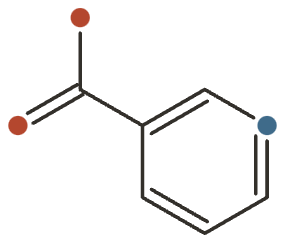

Sources · 5
Where Does It Come From?

Concentration
Content by Source
Reported concentrations across the plants that contain vitamin B3 (Niacin / niacinamide) — the bar marks the typical level, the line shows the reported range.
Literature figures for varying plant parts and preparations. Read them as a comparative guide, not exact assays.
Vitamin B3 (Niacin / Niacinamide) at a Glance
Vitamin B3 is really two molecules sold under one name, and almost every confusion about it comes from failing to separate them. Nicotinic acid (niacin proper) and nicotinamide (niacinamide) both satisfy the vitamin requirement identically — both feed into NAD+ — but at high doses they behave like completely different drugs. Nicotinic acid causes an intense flush and shifts blood lipids; nicotinamide does neither.
As a nutrient the story is settled and old. B3 is the precursor to NAD+ and NADP+, the electron-carrying coenzymes that hundreds of oxidation–reduction reactions depend on — glycolysis, the citric-acid cycle, fatty-acid oxidation, DNA repair. Without them, energy metabolism stops. Deficiency causes pellagra, a disease severe enough to have shaped public-health policy: the dermatitis, diarrhoea and dementia of the “three Ds,” which is why flour has been fortified for the better part of a century. Uniquely among the B vitamins, the body can also make some from the amino acid tryptophan, which is why intakes are quoted in “niacin equivalents” rather than milligrams of niacin.
The interesting part is not the nutrition — it is the cautionary tale. Nicotinic acid at gram doses does exactly what it is supposed to do to lipids: HDL up, triglycerides down. For decades that was assumed to translate into fewer heart attacks. When it was finally tested properly on top of statin therapy, it didn’t — and it caused harm along the way. It is one of the cleanest examples in medicine of a biomarker moving in the right direction while the patient does not.
What It’s Used For
- Correcting deficiency (pellagra) — the settled use. The RDA is 14–16 mg NE/day, comfortably met by an ordinary diet plus fortification.
- Lipid modification — pharmacologic nicotinic acid does raise HDL and lower triglycerides. The lipid effect is real; the outcome benefit is what failed.
- Skin-cancer chemoprevention (nicotinamide) — the one genuinely positive supra-nutritional finding, and it did not replicate in transplant recipients.
- Serum phosphate in dialysis — a niche clinical use with a real side-effect burden.
- NAD⁺ boosting (energy & longevity) — the marketing position, currently unsupported by functional outcomes.
Topical niacinamide is widely used in skincare — a distinct application from oral supplementation, and not covered by the evidence below.
The single most important fact here is a negative one. Adding niacin to a statin to prevent cardiovascular events is not supported: HPS2-THRIVE found no reduction in major vascular events and an increase in serious adverse events including new-onset diabetes 2Reference 2RCTEffects of extended-release niacin with laropiprant in high-risk patients — randomised controlled trialView study →. A textbook case of a biomarker moving while the patient does not.
How It Works
Both forms of B3 are salvaged into NAD+, and from there phosphorylated to NADP+. NAD+ shuttles electrons through catabolism — it is the acceptor in glycolysis and the citric-acid cycle, and the donor that drives ATP synthesis. NADP+ handles the reductive side: fatty-acid and cholesterol synthesis, and regenerating the antioxidant systems. Beyond redox chemistry, NAD+ is consumed as a substrate by the sirtuins and by PARP enzymes doing DNA repair, which is the biochemistry behind the current interest in NAD+ and aging.
The tryptophan route is a genuine quirk: roughly 60 mg of dietary tryptophan can be converted to about 1 mg of niacin, so protein intake partly covers the requirement. This is also why pellagra historically tracked maize-based diets — maize niacin is chemically bound and poorly available unless the grain is treated with alkali, as it is in traditional nixtamalisation.
The fork between the two forms happens at a receptor. Nicotinic acid is an agonist at GPR109A on adipocytes and skin immune cells. On fat cells that suppresses lipolysis and drives the lipid changes; on skin cells it triggers prostaglandin release, producing the famous flush — a hot, red, prickling wave across the face and upper body, harmless but genuinely unpleasant, and the reason the tolerable upper limit sits at just 35 mg/day. Nicotinamide does not bind that receptor at all: no flush, no lipid effect. Same vitamin, different pharmacology, and worth checking which one is in the bottle.
The full trial record is in Pharmacology & Research below.
Pharmacology & Research
Vitamin B3 is an essential water-soluble vitamin and the dietary precursor to NAD⁺ and NADP⁺, the redox coenzymes that hundreds of metabolic reactions depend on. It is sold as two distinct molecules — nicotinic acid (niacin proper) and nicotinamide (niacinamide) — which satisfy the vitamin requirement identically but behave like different drugs at pharmacologic doses: nicotinic acid flushes and shifts lipids through the GPR109A receptor, nicotinamide does neither. The nutritional story is settled and old — correcting a deficiency prevents pellagra, and ordinary diet plus fortification meets the requirement — so the decision-relevant questions are almost all about pharmacologic use above the vitamin dose. The single most important fact here is a negative one: nicotinic acid reliably moves lipid biomarkers in the “right” direction, yet the large outcome trials found no cardiovascular benefit and clear harm. Form matters throughout: the nicotinic-acid effects do not transfer to nicotinamide, and “no-flush” inositol hexanicotinate largely releases no active niacin at all.
Support is an experimental score I’m building — a composite weighted by study type (human > animal > in vitro > review) and study volume. It’s a beta: a fast way to rank strength of evidence at a glance, not a validated metric. Each application links down to its write-up.
Niacin is the precursor to NAD⁺ and NADP⁺; without adequate intake, energy metabolism fails and pellagra develops — the “three Ds” of dermatitis, diarrhoea and dementia. Reference intakes are set at 16 mg niacin equivalents (NE)/day for adult men and 14 mg NE/day for adult women, quoted in “equivalents” because roughly 60 mg of dietary tryptophan converts to about 1 mg of niacin 1Reference 1Niacin — Health Professional Fact SheetView study →.
Pellagra is now rare wherever diets are adequate and flour is fortified, and it responds rapidly to replacement 12Reference 12ReviewPathophysiology and clinical management of pellagra — reviewView study →.
This is deficiency-correction, not a benefit from extra on top of adequacy.
Gap: the benefit is entirely about reaching adequacy — there is no evidence that intakes above the RDA add anything for already-replete people.
Pharmacologic nicotinic acid (1–2 g/day) raises HDL cholesterol and lowers triglycerides, an effect mediated by GPR109A-driven suppression of adipocyte lipolysis 11Reference 11GPR109A (PUMA-G/HM74A) mediates nicotinic acid-induced flushing — mechanistic studyView study →.
The biomarker shift is real and consistent across trials, and for decades it was assumed to translate into fewer cardiovascular events 4Reference 4Meta-analysisAssessment of the role of niacin in managing cardiovascular disease outcomes — systematic review and meta-analysisView study →.
It does not: when tested rigorously on top of statin therapy, the lipid change did not produce clinical benefit 2,
Only nicotinic acid does this — nicotinamide has no lipid effect, and “no-flush” inositol hexanicotinate does not release enough active niacin to shift lipids either.
Gap: a favourable biomarker with no demonstrated outcome benefit; routine lipid use is not supported.
Oral nicotinamide at 500 mg twice daily reduced the rate of new non-melanoma skin cancers by roughly 23% over 12 months versus placebo in the ONTRAC phase-3 RCT of 386 immunocompetent patients with a history of skin cancer 5Reference 5RCTA phase 3 randomized trial of nicotinamide for skin-cancer chemoprevention (ONTRAC) — randomised controlled trialView study →.
The proposed mechanism is enhanced DNA repair and cellular energy under UV stress. The effect did not replicate in a later phase-3 RCT in organ-transplant recipients, where nicotinamide did not significantly reduce new keratinocyte cancers 6Reference 6RCTNicotinamide for skin-cancer chemoprevention in transplant recipients — randomised controlled trialView study →; a systematic review captures both the modest signal and its limits 7Reference 7Systematic reviewEffect of nicotinamide in skin cancer and actinic keratoses chemoprophylaxis, and adverse effects — systematic reviewView study →.
This is nicotinamide specifically, at a supra-nutritional but non-flushing dose.
Gap: benefit is limited to high-risk populations with prior skin cancer, is modest in size, and failed to hold in the immunosuppressed group where it was most hoped to help.
Nicotinic acid and nicotinamide inhibit intestinal phosphate transport, and small RCTs plus a systematic review and meta-analysis suggest they can lower serum phosphate in haemodialysis patients as an alternative or adjunct to conventional phosphate binders 8Reference 8Meta-analysisBenefits and harm of niacin and its analog for renal dialysis patients — systematic review and meta-analysisView study →.
The effect is modest and comes with adverse effects — flushing, gastrointestinal upset, and a notable drop in platelet count with nicotinamide 8Reference 8Meta-analysisBenefits and harm of niacin and its analog for renal dialysis patients — systematic review and meta-analysisView study →.
This is a niche clinical use in kidney failure, not a general supplement application.
Gap: small trials, inconsistent dosing and formulations, and a meaningful side-effect burden; not established against modern binders.
The interest in “NAD⁺ boosting” rests on NAD⁺ being consumed by sirtuins and PARP DNA-repair enzymes, and declining with age. NAD⁺ precursors such as nicotinamide riboside reliably raise blood NAD⁺ in humans and are well tolerated 9Reference 9RCTChronic nicotinamide riboside supplementation is well-tolerated and elevates NAD⁺ in healthy middle-aged and older adults — randomised controlled trialView study →.
But the functional payoff has not materialised: a randomised trial of nicotinamide riboside in older adults with mild cognitive impairment did not show meaningful cognitive benefit 10Reference 10RCTA randomized placebo-controlled trial of nicotinamide riboside in older adults with mild cognitive impairment — randomised controlled trialView study →, and healthy-population trials have shown biochemical changes without clear clinical outcomes 9Reference 9RCTChronic nicotinamide riboside supplementation is well-tolerated and elevates NAD⁺ in healthy middle-aged and older adults — randomised controlled trialView study →.
For plain niacin or niacinamide, no citable trial establishes an energy or anti-ageing benefit in replete people.
Gap: raising a blood marker is not the same as a health effect; the human outcome evidence is absent or null, and much of the enthusiasm is marketing.
Mechanisms
| Target / pathway | Effect | Relevant to |
|---|---|---|
| NAD⁺ / NADP⁺ synthesis (salvage from both forms) | Supplies redox coenzymes for glycolysis, the TCA cycle, β-oxidation and biosynthesis | Deficiency correctionenergy metabolism |
| Sirtuins and PARPs (NAD⁺-consuming) | NAD⁺ as substrate for DNA repair and signalling | NAD⁺-boosting and skin-cancer rationale |
| GPR109A on adipocytes (nicotinic acid) | ↓ lipolysis → HDL ↑, triglycerides ↓ | Lipid modification |
| GPR109A on skin immune cells (nicotinic acid) | Prostaglandin release → flushing | Safety (the flush)UL rationale |
| Intestinal phosphate transporters | ↓ phosphate absorption | Serum phosphate in dialysis |
Pharmacokinetics
Both nicotinic acid and nicotinamide are efficiently absorbed from the gut across the physiologic range and enter a common salvage pathway to NAD⁺, then to NADP⁺. Endogenous synthesis from tryptophan — roughly 60 mg of tryptophan yielding about 1 mg of niacin — partly covers the requirement, which is why intake is expressed in niacin equivalents and why adequate protein intake is protective. Excess water-soluble B3 is excreted in urine as N-methylnicotinamide and related metabolites, so the vitamin is not stored to a meaningful degree.
At pharmacologic nicotinic-acid doses the flush appears within about 30 minutes and attenuates with continued use; sustained-release formulations were associated with greater hepatic risk than immediate-release. “No-flush niacin” (inositol hexanicotinate) largely fails to liberate free nicotinic acid, so it produces neither the flush nor the lipid effect.
Clinical trials
B3 has been tested extensively, and the pivotal cardiovascular trials are decisive negatives.
AIM-HIGH (2011, ~3,400 patients) stopped early for futility when niacin was added to statin
therapy 3Reference 3RCTNiacin in patients with low HDL cholesterol levels receiving intensive statin therapy — randomised controlled trialView study →, and HPS2-THRIVE (2014, 25,673 high-risk patients) found no reduction in major
vascular events and an increase in serious adverse events including new-onset diabetes 2Reference 2RCTEffects of extended-release niacin with laropiprant in high-risk patients — randomised controlled trialView study →;
meta-analysis confirms no cardiovascular outcome benefit 4Reference 4Meta-analysisAssessment of the role of niacin in managing cardiovascular disease outcomes — systematic review and meta-analysisView study →. Nicotinamide has active chemoprevention
trials in skin cancer 5,
| Completed | Planned | Terminated | Preclinical |
|---|---|---|---|
| ~40+(lipid, skin, renal, NAD⁺) | Several(NAD⁺ precursors) | 1major (AIM-HIGH, early stop) | Hundreds |
Last checked: August 2026.
Dietary Sources
Niacin is widespread in protein-rich food and, in many countries, added to flour and cereal products — a fortification programme introduced specifically to end pellagra.
| Source | Notes |
|---|---|
| Meat, poultry, fish | The richest ordinary sources; tuna, turkey, chicken and liver are high |
| Fortified cereals and flour | A major contributor in fortified countries, by design |
| Peanuts, seeds, legumes | Good plant sources |
| Whole grains | Present but partly bound and less available; maize particularly so unless nixtamalised |
| Any adequate protein intake | Contributes indirectly via tryptophan conversion (~60 mg tryptophan → ~1 mg niacin) |
The tryptophan route means dietary adequacy is more forgiving than the raw niacin numbers suggest — someone eating enough complete protein is largely covered even before fortification is counted.
Herbal Sources
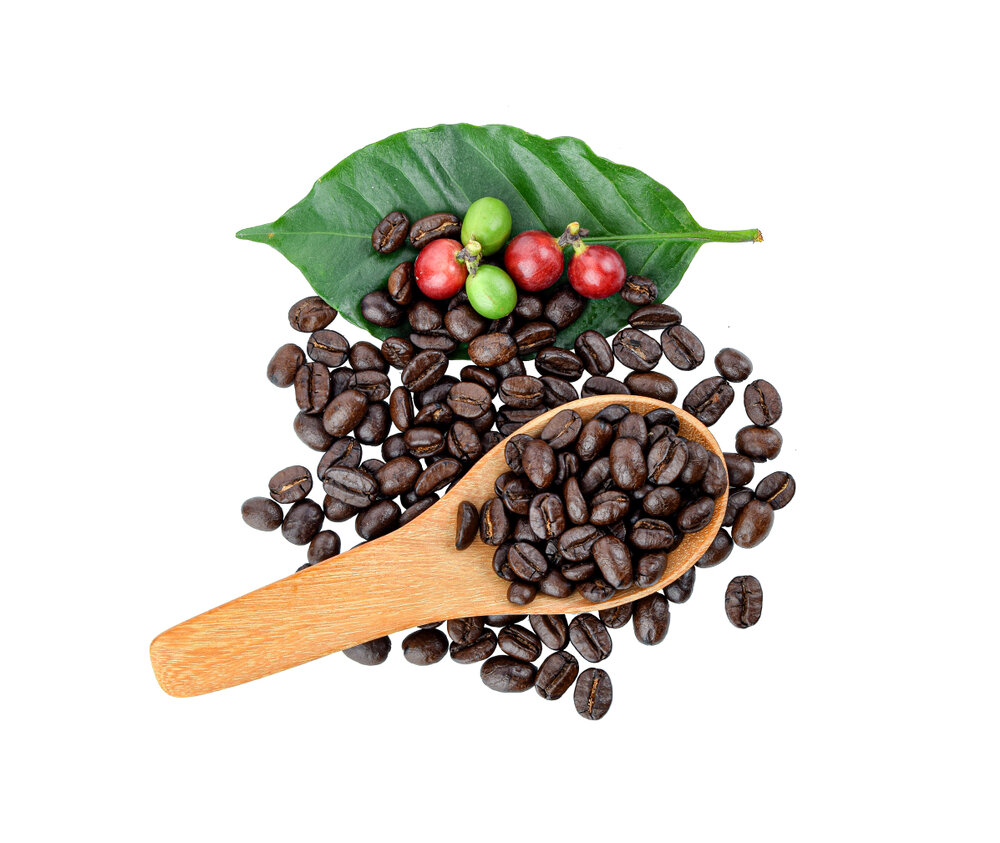
Coffee is the notable herbal source, and only because of what roasting does to it. Green beans contain very little nicotinic acid. What they contain is trigonelline, the N-methylated alkaloid behind part of coffee’s bitterness. Above about 200 °C trigonelline decomposes, and one of the products is nicotinic acid, so the vitamin content rises roughly ten- to twenty-five-fold through the roast. A dark roast carries more than a light one.
Roasted beans have been measured at 95–263 µg/g, about 9.5–26.3 mg per 100 g 13Reference 13Application of high performance liquid chromatography to the analysis of some non-volatile coffee components — [analytical study]View study →. That is enough to make regular coffee drinking a real contributor to B3 intake, which is unusual for a beverage plant. Camu-camu carries about 0.06 mg per 100 g 14Reference 14Tablas peruanas de composición de alimentos — camu-camu — [food-composition table] — present, and irrelevant.
Dosage
These are doses studied in research, not a personal recommendation.
- RDA: 16 mg NE/day for adult men, 14 mg NE/day for adult women; 18 mg NE/day in pregnancy and 17 mg NE/day during lactation 1Reference 1Niacin — Health Professional Fact SheetView study →.
- Tolerable Upper Intake Level: 35 mg/day for adults, applying to supplemental and fortificant niacin. It is set on flushing rather than organ toxicity, which is why it sits so far below the therapeutic doses 1Reference 1Niacin — Health Professional Fact SheetView study →.
- Pharmacologic lipid doses ran to roughly 1–2 g/day of nicotinic acid. These require medical supervision, cause flushing, and can raise liver enzymes and blood glucose 1,
2Reference 1Niacin — Health Professional Fact SheetView study →Reference 2RCTEffects of extended-release niacin with laropiprant in high-risk patients — randomised controlled trialView study → . Given the outcome data, this is history rather than current practice. - Check the form. Nicotinamide/niacinamide does not flush and does not move lipids; nicotinic acid does both. “No-flush niacin” (inositol hexanicotinate) also does not flush — because it largely does not release nicotinic acid, and so does not produce the lipid effect either.
Safety
At dietary intakes B3 is unremarkable. Nearly everything on this list belongs to the pharmacologic doses of nicotinic acid.
- Dietary amounts are safe, including at reference intakes in pregnancy and lactation.
- Flushing at supplemental doses. The 35 mg/day upper limit exists because of it — harmless but intense, and dose-related.
- Liver effects at gram doses. Raised transaminases and, rarely, hepatotoxicity, historically more associated with sustained-release nicotinic acid.
- Raises blood glucose. HPS2-THRIVE found increased new-onset diabetes; this matters for anyone with impaired glucose tolerance 2Reference 2RCTEffects of extended-release niacin with laropiprant in high-risk patients — randomised controlled trialView study →.
- Forms are not interchangeable at high doses. Nicotinic acid and nicotinamide behave differently — check which is in the product.
Full Safety & Interactions Detail
The tolerable upper intake level of 35 mg/day for adults applies to supplemental and fortificant niacin and is based on flushing 1Reference 1Niacin — Health Professional Fact SheetView study →. Below that, B3 is benign. Above it — and particularly at the gram-level nicotinic acid doses used for lipids — the profile changes materially.
- Flushing: prostaglandin-mediated via GPR109A, beginning within half an hour, affecting face, neck and upper trunk. Uncomfortable rather than dangerous, and it attenuates with continued use.
- Hepatic: raised liver enzymes and, uncommonly, more serious hepatotoxicity at pharmacologic doses. Historically the risk was greater with unregulated sustained-release preparations than with immediate-release nicotinic acid.
- Metabolic: worsened glycaemic control and increased new-onset diabetes, a finding that emerged clearly in HPS2-THRIVE 2Reference 2RCTEffects of extended-release niacin with laropiprant in high-risk patients — randomised controlled trialView study →. Also raised uric acid, relevant in gout.
- Interactions: specific interactions were not fully assessed in this pass 1Reference 1Niacin — Health Professional Fact SheetView study →. The ones with mechanistic support are additive myopathy risk with statins, additive hypotension with antihypertensives, and interference with glycaemic control in people on diabetes medication.
- Who should be cautious: anyone with liver disease, peptic ulcer disease, gout, or diabetes, and anyone on statins — pharmacologic niacin is a supervised clinical decision, not a self-selected supplement.
Safe at reference intakes. Niacin requirements rise modestly in pregnancy (18 mg NE/day) and lactation (17 mg NE/day), and intake at those levels is a standard part of prenatal nutrition 1Reference 1Niacin — Health Professional Fact SheetView study →. Pharmacologic doses are a different question entirely: gram-level nicotinic acid has not been established as safe in pregnancy, carries hepatic and glycaemic effects, and should not be self-selected.
References
- National Institutes of Health, Office of Dietary Supplements. Niacin — Health Professional Fact Sheet. https://ods.od.nih.gov/factsheets/Niacin-HealthProfessional/
- HPS2-THRIVE Collaborative Group (2014). Effects of extended-release niacin with laropiprant in high-risk patients — randomised controlled trial. New England Journal of Medicine. https://pubmed.ncbi.nlm.nih.gov/25014686/
- AIM-HIGH Investigators (2011). Niacin in patients with low HDL cholesterol levels receiving intensive statin therapy — randomised controlled trial. New England Journal of Medicine. https://pubmed.ncbi.nlm.nih.gov/22085343/
- D’Andrea E, Hey SP, Ramirez CL, et al. (2019). Assessment of the role of niacin in managing cardiovascular disease outcomes — systematic review and meta-analysis. JAMA Network Open. https://pubmed.ncbi.nlm.nih.gov/30977858/
- Chen AC, et al. (2015). A phase 3 randomized trial of nicotinamide for skin-cancer chemoprevention (ONTRAC) — randomised controlled trial. New England Journal of Medicine. https://pubmed.ncbi.nlm.nih.gov/26488693/
- Allen NC, et al. (2023). Nicotinamide for skin-cancer chemoprevention in transplant recipients — randomised controlled trial. New England Journal of Medicine. https://pubmed.ncbi.nlm.nih.gov/36856616/
- Mainville L, et al. (2022). Effect of nicotinamide in skin cancer and actinic keratoses chemoprophylaxis, and adverse effects — systematic review. Journal of Cutaneous Medicine and Surgery. https://pubmed.ncbi.nlm.nih.gov/35134311/
- He YM, Feng L, Huo DM, et al. (2014). Benefits and harm of niacin and its analog for renal dialysis patients — systematic review and meta-analysis. International Urology and Nephrology. https://pubmed.ncbi.nlm.nih.gov/24114284/
- Martens CR, et al. (2018). Chronic nicotinamide riboside supplementation is well-tolerated and elevates NAD⁺ in healthy middle-aged and older adults — randomised controlled trial. Nature Communications. https://pubmed.ncbi.nlm.nih.gov/29599478/
- Orr ME, et al. (2024). A randomized placebo-controlled trial of nicotinamide riboside in older adults with mild cognitive impairment — randomised controlled trial. GeroScience. https://pubmed.ncbi.nlm.nih.gov/37994989/
- Benyó Z, et al. (2005). GPR109A (PUMA-G/HM74A) mediates nicotinic acid-induced flushing — mechanistic study. Journal of Clinical Investigation. https://pubmed.ncbi.nlm.nih.gov/16322797/
- Hołubiec P, Leończyk M, Staszewski F, et al. (2021). Pathophysiology and clinical management of pellagra — review. Folia Medica Cracoviensia. https://pubmed.ncbi.nlm.nih.gov/34882669/
- Trugo LC, Macrae R (1989). Application of high performance liquid chromatography to the analysis of some non-volatile coffee components — [analytical study]. Archivos Latinoamericanos de Nutrición. https://pubmed.ncbi.nlm.nih.gov/2487024/
- Instituto Nacional de Salud (Peru), Centro Nacional de Alimentación y Nutrición. Tablas peruanas de composición de alimentos — camu-camu — [food-composition table].