
Lion's Mane
Hericium erinaceus
Plant Family
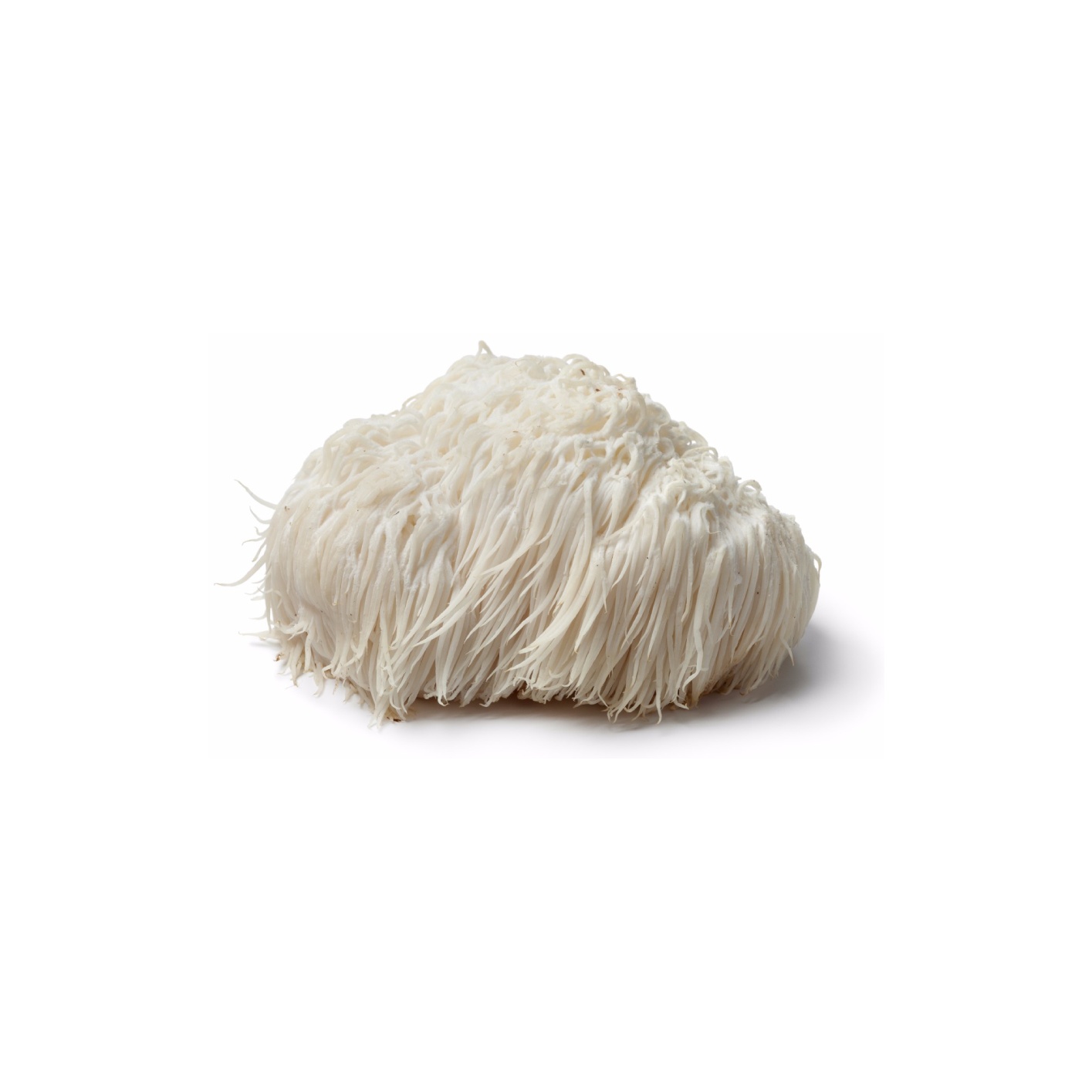
Pictured: Lion's Mane
Lion’s mane family
Toothed, icicle-like wood-decay fungi; the family’s medicinal member is lion’s mane, notable for diterpenes that induce nerve growth factor.
1 Herb // 10 Constituents // 4 Notable Members
Overview
A small family of wood-decaying fungi that abandoned gills altogether: instead of plates beneath a cap, Hericiaceae species produce spines or teeth — cascading icicle- like projections that carry the spore surface. They grow on dead and dying hardwood, particularly beech and oak, functioning as white-rot decomposers.
Shared Traits
In Practice
Lion’s mane (Hericium erinaceus) is the family’s medicinal representative and one of the few nootropic candidates with a mechanistic story that is specific rather than generic.
Most medicinal mushrooms act, insofar as they act at all, through beta-glucan immune modulation — a mechanism shared across the whole group. Lion’s mane has that too, but its distinctive interest lies elsewhere: it contains two families of small molecules, hericenones (in the fruiting body) and erinacines (in the mycelium), which stimulate the synthesis of nerve growth factor (NGF) in cell culture. Erinacines are cyathane diterpenoids small enough to plausibly cross the blood–brain barrier, which is the point of difference — NGF itself cannot.
The human evidence is early. A small Japanese randomised trial in older adults with mild cognitive impairment reported improved cognitive scores during supplementation, with the benefit fading after withdrawal. Subsequent small trials on mood, sleep and cognition have been mixed and generally underpowered. Preclinical work on nerve regeneration and myelination is more substantial than the clinical work, which is the usual pattern and should be read as promising rather than established.
A practical caution that matters for buying: hericenones and erinacines occur in different parts of the organism, and many commercial products are grown on grain and sold as mycelium-on-substrate, which can be largely starch by weight. Fruiting-body extracts and mycelial extracts are not interchangeable, and neither is a bag of colonised grain.
Safety is good — it is an edible mushroom with a long culinary record. Allergic and respiratory reactions are occasionally reported.
Materia Medica
The monograph in the database whose Hericiaceae membership is recorded on the herb itself — so this list keeps itself current as new herbs land.
Hericium erinaceus
Phytochemistry
Hericenones (aromatic meroterpenoids) and erinacines (cyathane diterpenoids) are the family markers. Alongside them: beta-glucan polysaccharides, ergosterol, and dietary fibre.
The compounds recorded for this family's single member, grouped by class.
Beyond the Database
Notable members without a monograph yet.
Keep Exploring