
Magic Mushrooms
Psilocybe cubensis
Plant Family
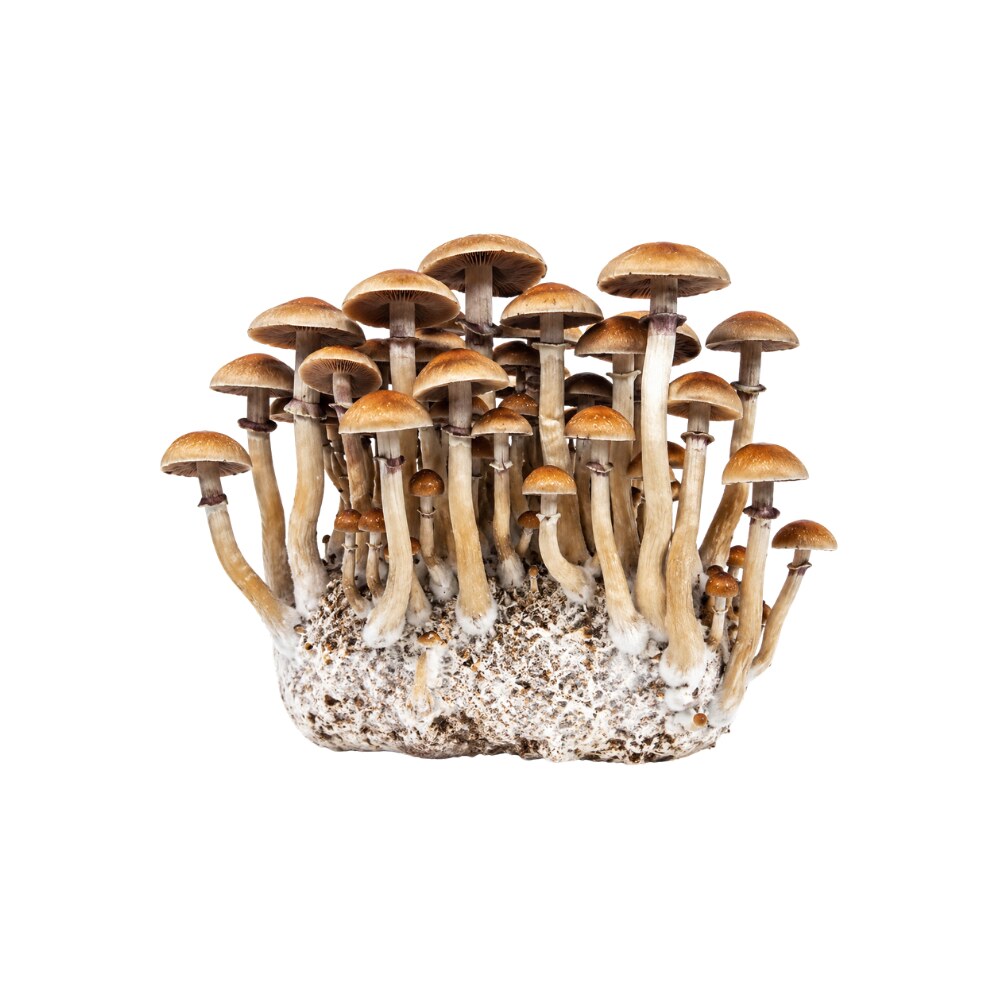
Pictured: Magic Mushrooms
Psilocybe family
A family of small brown-spored fungi that includes Psilocybe, whose psilocybin is the most intensively researched psychedelic in modern clinical trials.
1 Herb // 4 Constituents // 5 Notable Members
Overview
A family of small, mostly brown-spored agarics, many of them inconspicuous dung, wood or grassland fungi. Taxonomically it has been much revised, and the genus Psilocybe was itself split — the psilocybin-producing species were retained under Psilocybe while the non-active ones moved to Deconica. A useful field character across the active species is blue bruising: damaged tissue oxidises psilocin to blue-pigmented polymers.
A serious caveat sits inside this family: it also contains Galerina marginata, which carries the same amatoxins as the death cap and has killed people who mistook it for a Psilocybe. The two can grow on the same wood and superficially resemble each other.
Shared Traits
In Practice
Magic mushrooms (Psilocybe cubensis and relatives) contain psilocybin, a prodrug rapidly dephosphorylated to psilocin, which acts as a partial agonist at the 5-HT2A receptor. That single receptor interaction underlies the characteristic changes in perception, cognition and sense of self, and — on current evidence — the therapeutic effects too.
Psilocybin is now the most intensively investigated psychedelic in clinical medicine. Randomised controlled trials in treatment-resistant depression, major depressive disorder, and existential distress in life-threatening illness have reported rapid and, in several cases, durable improvements after only one or two supervised sessions — an effect profile unlike any conventional antidepressant. Work in alcohol and tobacco dependence is also encouraging. It has received Breakthrough Therapy designation from the FDA for depression, and phase 3 work is underway.
The honest qualifications matter as much as the results: trials are small, blinding is near- impossible, participants are screened and prepared, and every session is psychologically supported. The therapeutic effect appears inseparable from that context. Extrapolating from a supervised trial to unsupervised recreational use is not warranted.
Safety. Physiologically psilocybin has low toxicity and is not addictive. The real risks are psychological — acute anxiety reactions, and the precipitation or worsening of psychosis in those predisposed, which is why personal and family history of psychotic illness is an exclusion criterion in every trial. Serotonergic drug interactions apply. It remains controlled in most jurisdictions.
Materia Medica
The monograph in the database whose Hymenogastraceae membership is recorded on the herb itself — so this list keeps itself current as new herbs land.
Psilocybe cubensis
Phytochemistry
Tryptamine alkaloids — psilocybin, psilocin, baeocystin and norbaeocystin — are the marker in the active genus. Galerina in the same family carries amatoxins, a completely unrelated and lethal class.
The compounds recorded for this family's single member, grouped by class.
Beyond the Database
Notable members without a monograph yet.
Keep Exploring