
Blue Lotus Flower
Nymphaea caerulea
Plant Family
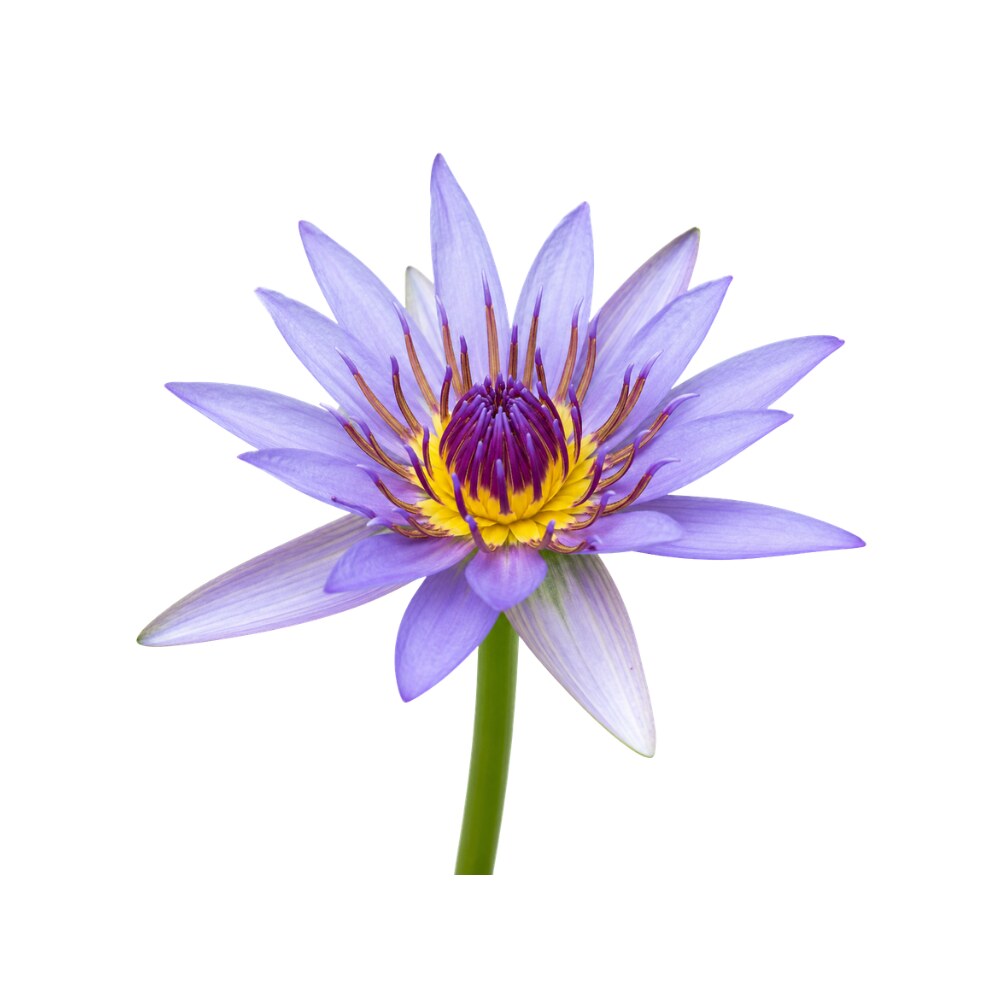
Pictured: Blue Lotus Flower
Water lily family
An early-diverging family of rooted aquatics; the medicinal member is blue lotus, an Egyptian ritual plant whose aporphine alkaloids are mildly sedative and dopaminergic.
1 Herb // 11 Constituents // 5 Notable Members
Overview
Around 5 genera and 70 species of rooted aquatic perennials, with floating or emergent leaves and flowers held at or above the water surface. The family is botanically important out of proportion to its size: Nymphaeales is one of the earliest-diverging lineages of flowering plants, branching close to the base of the angiosperm tree, which makes water lilies a window onto what early flowers may have looked like.
Shared Traits
In Practice
Blue lotus (Nymphaea caerulea) — properly the blue Egyptian water lily — is the family’s medicinal and ritual representative, and its record is unusually well documented for a psychoactive plant. It appears throughout ancient Egyptian art, tomb painting and funerary material, frequently in banqueting and ritual scenes, and residues have been recovered from Egyptian vessels. It was steeped in wine, which is chemically sensible: the alkaloids extract better into alcohol than water.
The reported effects are mild — gentle sedation, mood elevation, a dreamy or euphoric quality — and the chemistry offers a plausible account. The flower contains aporphine alkaloids, chiefly nuciferine and small amounts of apomorphine. Nuciferine behaves as a dopamine receptor antagonist with additional serotonergic activity and has sedative and antipsychotic-like effects in animal models; apomorphine is a dopamine agonist used clinically in Parkinson’s disease and erectile dysfunction. Having both a D2 antagonist and a D2 agonist in the same flower is an unusual combination, and the net effect in a dilute infusion is not well characterised.
The evidence base is thin. There are no controlled human trials, alkaloid content varies enormously with source and preparation, and much of the modern market is mislabelled — products sold as “blue lotus” are frequently Nymphaea of other species or unrelated plants entirely. Recent regulatory attention in several countries reflects concern about vaping products in particular, where the toxicology is completely unstudied.
Related Nuphar species contain sesquiterpene alkaloids and have a separate, mostly astringent folk record.
Materia Medica
The monograph in the database whose Nymphaeaceae membership is recorded on the herb itself — so this list keeps itself current as new herbs land.
Nymphaea caerulea
Phytochemistry
Aporphine alkaloids — nuciferine, apomorphine, nornuciferine — are the notable class in Nymphaea, alongside flavonoid glycosides (particularly kaempferol and quercetin conjugates), tannins, and the sesquiterpene alkaloids of Nuphar.
The compounds recorded for this family's single member, grouped by class.
Beyond the Database
Notable members without a monograph yet.
Keep Exploring