
Compound Monograph
Aporphine
Aporphine is the unsubstituted parent skeleton of the aporphine alkaloids — the tetracyclic core shared by nuciferine, boldine, glaucine, magnoflorine and hundreds of other plant alkaloids. The bare parent is a chemical reference structure, not a studied remedy, and it is not apomorphine, the Parkinson's drug it is constantly confused with.

Sources · 5
Where Does It Come From?
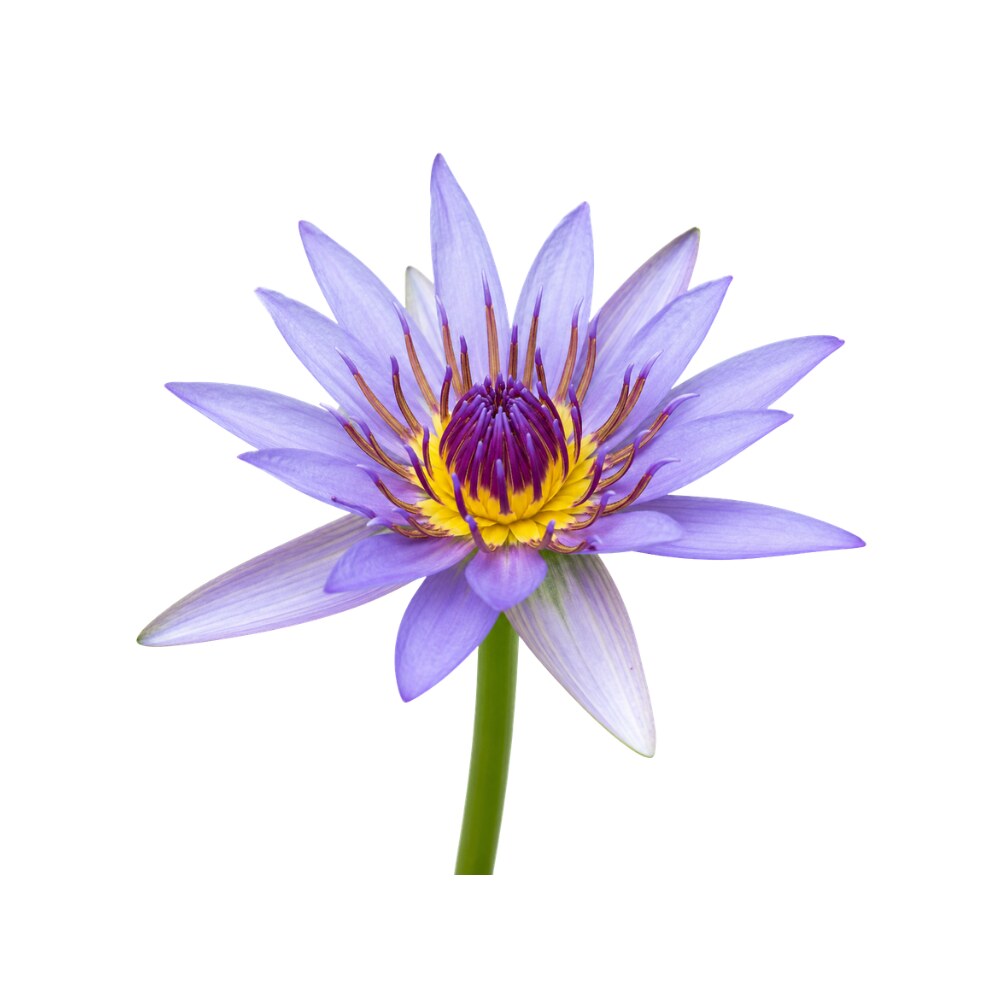
Aporphine is a naturally occurring aporphine alkaloid (tetracyclic isoquinoline — the parent skeleton), found in Blue lotus — class-level attribution only, never quantified and 4 other sources. It is flagged as moderately toxic.
Concentration
Content by Source
Concentrations not reported. No percent-dry-weight or mg/g figures have been published for this compound in its source plants.
Aporphine at a Glance
Aporphine is the parent skeleton of the aporphine alkaloids — a tetracyclic isoquinoline core (C₁₇H₁₇N, CAS 478-57-9) formally named 6-methyl-5,6,6a,7-tetrahydro-4H-dibenzo[de,g]quinoline 11Reference 11National Center for Biotechnology InformationView study →. It is the shape that hundreds of plant alkaloids are built on, among them nuciferine, boldine, glaucine and magnoflorine.
Two things are worth stating before anything else. First, aporphine is not apomorphine — a one-letter difference that separates an inert reference structure from a licensed dopamine-agonist drug, and that dominates the searchable literature (see below). Second, the bare parent molecule has essentially no pharmacology of its own. Natural aporphines all carry oxygen substituents on the ring system, and it is those substituents that do the pharmacological work; strip them off and you are left with a scaffold that medicinal chemists build from rather than a compound anyone has profiled 1,
That makes this a deliberately short page. It exists to hold the class orientation and to keep the parent molecule from silently inheriting claims that belong to apomorphine or to individual class members. Where the evidence stops, it is stated rather than padded.
Aporphine Is Not Apomorphine
Apomorphine is a semi-synthetic compound made by rearranging morphine under acid. It is a non-selective dopamine agonist with a real clinical record — subcutaneous rescue therapy for “off” episodes in Parkinson’s disease, and a sublingual formulation trialled for erectile dysfunction. It is a drug with a dose, a licence and a side-effect profile.
Aporphine is the unsubstituted skeleton apomorphine happens to be built on. It has no licence, no dose, no clinical record, and no meaningful body of isolate pharmacology.
The confusion is not merely lexical — it is built into how the literature is indexed. PubMed maps a plain search for aporphine onto the MeSH heading Aporphines, under which apomorphine is filed. As of 31 July 2026 that search returned 10,791 records; excluding apomorphine dropped it to 1,563 — roughly 86% of the apparent “aporphine” literature is apomorphine literature 12Reference 12https://pubmed.ncbi.nlm.nih.gov/?term=aporphineView study →. Anyone reading a compound page, a supplement label or a marketing claim about “aporphine” should assume the pharmacology being invoked is apomorphine’s until proven otherwise.
None of apomorphine’s clinical pharmacology transfers to the parent. Apomorphine’s dopaminergic potency depends on its catechol (10,11-dihydroxy) substitution; structure-activity work on the aporphine series shows that receptor affinity and the agonist-versus-antagonist switch are governed by exactly which hydroxyl groups sit where, and by whether the molecule is the R or the S enantiomer 4,
The Molecule vs. The Class
“Aporphine” is used in two different ways, and mixing them is the second-most-common error about this compound.
As a molecule it means the specific unsubstituted parent above — the subject here.
As a class name it means the whole aporphine alkaloid family: one of the largest subclasses of isoquinoline alkaloids, described in review as di-, tri-, tetra-, penta- and hexa-substituted variants bearing hydroxyl, methoxy and methylenedioxy groups around the four-ring core 1,
A class name is not a molecule, and findings reported for its members do not belong to it. Each of the results below belongs to the specific compound named, not to aporphine itself:
| Class member | What it actually is | Page |
|---|---|---|
| Nuciferine | Sacred-lotus / blue-lotus alkaloid with an atypical-antipsychotic-like receptor profile in vitro and in rodents 9Reference 9In vitroIn vitro and in vivo characterization of the alkaloid nuciferineView study → | nuciferine |
| Boldine | Boldo alkaloid; radical scavenger with preclinical hepatoprotective activity | boldine |
| Glaucine | Yellow-horned-poppy alkaloid marketed as a non-opioid antitussive in parts of Eastern Europe | glaucine |
| Magnoflorine | Quaternary aporphine of barberry, abuta and blue cohosh; poorly absorbed | magnoflorine |
| Taspine | Aporphine-derived dragon’s-blood alkaloid; embryotoxic in a rat-embryo screen | taspine |
| Menisperine, N-methyllaurotetanine | Minor aporphines of muira puama and California poppy | menisperine, N-methyllaurotetanine |
| Apomorphine | Semi-synthetic dopamine agonist drug — not a plant constituent in any meaningful quantity 8Reference 8Chemical composition, market survey, and safety assessment of blue lotus (Nymphaea caerulea Savigny) extractsView study → | no page |
Class-level findings are not the parent molecule’s findings. A review that reports “aporphine alkaloids show anticancer activity” 2Reference 2ReviewNatural aporphine alkaloids: a comprehensive review of phytochemistry, pharmacokinetics, anticancer activities, and clinical applicationView study → is reporting on a heterogeneous set of substituted molecules, most of which have never been compared head-to-head, and none of which is the bare parent.
What It's Used For
There is very little to rank here, and saying so is the point of this section.
Nothing here is scoreable. Ranking an application needs at least one study behind it, and unsubstituted aporphine has none. Scoring class-level findings and labelling them “aporphine” is precisely the error to avoid.
1. What a Literature Search for the Parent Actually Returns
Run on 31 July 2026 via NCBI E-utilities. aporphine returns 10,791 PubMed records but only 1,563 once apomorphine is excluded; aporphine[Title] returns 270, of which 238 survive the same exclusion; the phrase "aporphine alkaloids" returns 277 12Reference 12https://pubmed.ncbi.nlm.nih.gov/?term=aporphineView study →.
Spot-checking the title-level set finds reviews of the class 1,"unsubstituted aporphine" are med-chem SAR papers using the term structurally; none report a pharmacological profile of the bare molecule. This is an isolate question, not a plant question — the search was for the free compound, however sourced.
Gap: absence of indexed evidence is not proof of inactivity. A dedicated binding panel on unsubstituted aporphine may exist in unindexed med-chem supplementary data; if one surfaces, this section changes.
2. Its Real Role: a Medicinal-Chemistry Scaffold
Where the parent structure genuinely matters is as a synthetic core. Reviewers describe aporphine as a “privileged scaffold” for CNS drug discovery — a rigid tetracyclic framework whose four rings can be substituted to produce selective or multitarget ligands for dopamine D1/D2/D5, serotonin 5-HT1A/2A/2C and 5-HT7, adrenergic receptors and cholinesterases 1Reference 1ReviewAporphines: a privileged scaffold in CNS drug discoveryView study →.
That is a statement about what can be made from the skeleton, and it is isolate/synthetic chemistry, not plant pharmacology: the compounds tested are the substituted products, not the parent they share.
Gap: no published work treats the unsubstituted parent as a pharmacological control in those series, so there is no baseline showing what the bare scaffold does or does not do at those targets.
Mechanisms
Every row below is class-level and attributed to a named substituted member — none is a demonstrated action of unsubstituted aporphine.
| Target / pathway | Effect | Which molecule it was shown for |
|---|---|---|
| Dopamine D1 | agonist or antagonist depending on hydroxyl placement (a single C-11 OH can switch it) | synthetic substituted aporphines 5Reference 5Aporphines as antagonists of dopamine D-1 receptorsView study → |
| Dopamine D2 | R isomers bind more tightly than S; D2 > D1 selectivity in the series | apomorphine and N-propyl analogues 4Reference 4AnimalReceptor affinities of aporphine enantiomers in rat brain tissueView study → |
| α1 / α2 adrenoceptors | R isomers prefer α2, S isomers prefer α1 | apomorphine enantiomer series 4Reference 4AnimalReceptor affinities of aporphine enantiomers in rat brain tissueView study → |
| 5-HT2A / 5-HT2C / 5-HT7 | antagonist / inverse agonist components of an atypical-antipsychotic-like profile | nuciferine 9Reference 9In vitroIn vitro and in vivo characterization of the alkaloid nuciferineView study → |
| Broad CNS panel (D1/D2/D5, 5-HT1A/2A/2C/7, adrenergic, cholinesterase) | the scaffold is tunable onto all of these by substitution | substituted aporphine derivatives, reviewed 1Reference 1ReviewAporphines: a privileged scaffold in CNS drug discoveryView study → |
| (S)-Reticuline → intramolecular C–C phenol coupling | biosynthetic construction of the tetracyclic aporphine backbone (CYP80G2, en route to magnoflorine) | Coptis japonica enzymology 3Reference 3Molecular cloning and characterization of CYP80G2, a cytochrome P450 that catalyzes an intramolecular C-C phenol coupling of (S)-reticuline in magnoflorine biosynthesis, from cultured Coptis japonica cellsView study → |
The load-bearing point: the parent skeleton contributes the geometry; the substituents contribute the pharmacology. Reading down this table as “what aporphine does” is the error.
Pharmacokinetics
No pharmacokinetic data exist for unsubstituted aporphine — no absorption figure, no oral bioavailability, no metabolism map, no half-life. Nothing has been dosed, so nothing has been measured.
What can be said is structural. The parent is a small, lipophilic tertiary amine with no ionisable phenols, so it would be expected to behave differently from the class members people actually encounter: magnoflorine is a permanently charged quaternary alkaloid with poor absorption and minimal CNS entry, while nuciferine is lipophilic but has very low oral bioavailability. Those are the measured molecules — the parent’s profile is an inference, not a finding, and should not be quoted as data.
Clinical Trials
There are no clinical trials of aporphine. Trials retrieved under the term belong to apomorphine — the Parkinson’s and erectile-dysfunction programmes reviewed in 6Reference 6ReviewThe many faces of apomorphine: lessons from the past and challenges for the futureView study → — and to nothing else.
| Completed | Planned | Terminated | Preclinical |
|---|---|---|---|
| 0(all retrieved trials are apomorphine’s) | 0 | 0 | 0for the parent; extensive for substituted class members |
Last checked: July 2026.
Isolate vs. Plant Studies
For most compounds this section weighs isolate data against whole-plant data. Here both columns are empty for the parent molecule, which is itself the finding.
There is no isolate study of unsubstituted aporphine: the compound is a synthetic/reference structure, and the medicinal-chemistry literature that names it tests substituted analogues instead 1,aporphine AND Nymphaea are nuciferine pharmacology, blue-lotus product analytics and one ethnobotanical commentary, none of which measures the parent 7,
What exists instead is a third category: substituted class members that have been studied both ways — nuciferine as an isolate in receptor panels and rodent models 9Reference 9In vitroIn vitro and in vivo characterization of the alkaloid nuciferineView study → and as a marker quantified in blue-lotus products 7,
Prevalence in Nature
The aporphine class is abundant and widely distributed — one of the largest subclasses of isoquinoline alkaloids, spread across Lauraceae, Annonaceae, Menispermaceae, Magnoliaceae, Papaveraceae, Monimiaceae and Nymphaeaceae, with hundreds of members characterised 1,
The aporphine parent, by contrast, has no documented natural abundance. Reviews describe naturally occurring aporphines as di- through hexa-substituted structures bearing hydroxyl, methoxy or methylenedioxy groups on the ring system 2Reference 2ReviewNatural aporphine alkaloids: a comprehensive review of phytochemistry, pharmacokinetics, anticancer activities, and clinical applicationView study → — that is, the plant-made members are always oxygenated. No verified report of the unsubstituted base as a plant isolate was located in this pass, and no source_levels chart is published here because there is no figure anywhere to put in one.
Biosynthetically the skeleton is assembled from the benzylisoquinoline precursor (S)-reticuline by an intramolecular carbon–carbon phenol coupling; in Coptis japonica the cytochrome P450 CYP80G2 performs that coupling to give corytuberine en route to magnoflorine 3Reference 3Molecular cloning and characterization of CYP80G2, a cytochrome P450 that catalyzes an intramolecular C-C phenol coupling of (S)-reticuline in magnoflorine biosynthesis, from cultured Coptis japonica cellsView study →. Note what this implies: the pathway delivers an already-substituted aporphine, because the phenol coupling requires the phenolic groups. The bare parent is not a biosynthetic intermediate.
The Blue Lotus Attribution
This site lists aporphine as a constituent of blue lotus (Nymphaea caerulea), and that listing deserves a plain accounting.
The attribution traces to a 2004 commentary in the Journal of the Royal Society of Medicine on Nymphaea cults in Egypt and Mesoamerica, which states that studies from several different laboratories identified apomorphine and aporphine in the bulbs and roots of N. ampla 10Reference 10Nymphaea cults in ancient Egypt and the New World: a lesson in empirical pharmacologyView study →. Three caveats follow from reading that source directly: it names N. ampla, a different species from N. caerulea; it concerns bulbs and roots, not the flowers that are sold and brewed; and it is a short historical commentary that cites unnamed laboratories without reporting a method or a quantity.
Subsequent analytical work does not fill the hole. LC-MS/MS of a commercial blue-lotus resin quantified nuciferine at roughly 2,700–4,300 ng/g and apomorphine at around 130 ng/g 7Reference 7The blue lotus flower (Nymphea caerulea) resin used in a new type of electronic cigarette, the re-buildable dripping atomizerView study →; a later market survey of authentic and commercial extracts found that apomorphine and nuciferine — the alkaloids credited with blue lotus’s psychoactivity — were virtually absent from the authentic extract, with the bulk chemistry being aliphatic hydrocarbons, fatty acids, diterpenoids and sterols 8Reference 8Chemical composition, market survey, and safety assessment of blue lotus (Nymphaea caerulea Savigny) extractsView study →. Neither paper quantifies the parent aporphine at all.
The honest summary: blue lotus’s popular reputation rests on nuciferine and apomorphine attributions that are themselves thinly evidenced and highly product-dependent, and the parent aporphine’s presence in the flower is a class-level label carried forward from a 2004 commentary about a different species and a different plant part — not a measured constituent. Treat any product claiming an “aporphine” content figure with scepticism.
Discovery & Synthesis
The aporphine skeleton entered chemistry sideways, through morphine. The Finnish chemist Adolf Edvard Arppe obtained the first sample in 1845, as a sulfate, by heating morphine with a slight excess of sulphuric acid; the product was misclassified at the time and named sulfomorphide. Matthiessen and Wright re-made it with hydrochloric acid in 1869 and named it apomorphia — the apo- prefix marking both its origin in morphine and its difference from it 6Reference 6ReviewThe many faces of apomorphine: lessons from the past and challenges for the futureView study →. The rearranged tetracyclic core they had produced is what later took the name aporphine, and the alkaloid class was named after the rearrangement product rather than after any plant.
First isolation of the parent from a plant: none documented. The naturally occurring members were isolated individually — boldine, glaucine, magnoflorine, nuciferine and the rest — and the unsubstituted parent is best understood as a defined chemical structure rather than a natural product with a discovery date.
Today the parent is not manufactured at scale for use; it is prepared, when needed, as a synthetic reference material and as the starting geometry for medicinal-chemistry series, where the interest is in what substitution does to it 1,
Patents: not yet researched.
Toxicity & Safety
Aporphine carries a moderate flag, and it is important to read that badge correctly: it is not a measured hazard. It reflects an uncharacterised, CNS-active alkaloid scaffold with no toxicology dataset of its own — no acute toxicity study, no repeat-dose data, no genotoxicity package, no interaction work on the parent molecule. Nothing here should be read as a safety assurance, and nothing should be read as an alarm either; the honest position is that the compound has not been assessed.
Two class-level cautions are worth carrying, both explicitly not findings about the parent. First, the aporphine class contains genuinely potent CNS agents — apomorphine’s emetic and hypotensive effects, glaucine’s dissociative effects at high recreational doses — so “aporphine alkaloid” on a label tells you nothing reassuring about potency 1,
No reproductive, developmental or interaction data exist for unsubstituted aporphine. Pregnancy and lactation decisions belong to the herb or product page where intake is actually decided, not to a molecule page with no exposure data.
- No toxicology data at all. No acute, repeat-dose, genotoxicity or interaction study of the unsubstituted parent was located. The moderate badge is a placeholder for “uncharacterised”, not a measured risk level.
- Do not import apomorphine’s safety profile. Apomorphine’s nausea, hypotension and dopaminergic side effects belong to a different, substituted molecule with a clinical dose.
- Class-level potency is not reassuring. Aporphine alkaloids include emetic, hypotensive, dissociative and embryotoxic members; the class label carries no safety information.
- No documented human exposure to the isolate. The parent is not sold, dosed or consumed as a discrete compound, so there is no established route of exposure to manage.
Dosage
No dose has been studied — there is nothing to report. Unsubstituted aporphine has never been administered to humans or animals in any indexed study found in this pass, is not marketed as a supplement, and has no traditional preparation of its own.
Human exposure to aporphine chemistry happens only through substituted class members inside plants — nuciferine in lotus leaf or blue-lotus products, boldine in boldo, glaucine in antitussive preparations where those are licensed, magnoflorine in barberry and blue cohosh. Those doses belong on those pages, and none of them is a dose of aporphine.
Anyone offered a product with an “aporphine” dose on the label should ask which molecule is actually being quantified, and by what method.
References
- Zhu R, Jiang G, Tang W, Zhao X, Chen F, Zhang X, Ye N (2023). Aporphines: a privileged scaffold in CNS drug discovery. European Journal of Medicinal Chemistry — review. https://pubmed.ncbi.nlm.nih.gov/37172474/
- Sun J, Zhan X, Wang W, Yang X, Liu Y, Yang H, Deng J, Yang H (2024). Natural aporphine alkaloids: a comprehensive review of phytochemistry, pharmacokinetics, anticancer activities, and clinical application. Journal of Advanced Research — review. https://pubmed.ncbi.nlm.nih.gov/37935346/
- Ikezawa N, Iwasa K, Sato F (2008). Molecular cloning and characterization of CYP80G2, a cytochrome P450 that catalyzes an intramolecular C-C phenol coupling of (S)-reticuline in magnoflorine biosynthesis, from cultured Coptis japonica cells. The Journal of Biological Chemistry. https://pubmed.ncbi.nlm.nih.gov/18230623/
- Baldessarini RJ, Kula NS, Zong R, Neumeyer JL (1994). Receptor affinities of aporphine enantiomers in rat brain tissue. European Journal of Pharmacology. https://pubmed.ncbi.nlm.nih.gov/7911429/
- Schaus JM, Titus RD, Foreman MM, Mason NR, Truex LL (1990). Aporphines as antagonists of dopamine D-1 receptors. Journal of Medicinal Chemistry. https://pubmed.ncbi.nlm.nih.gov/2405158/
- Auffret M, Drapier S, Vérin M (2018). The many faces of apomorphine: lessons from the past and challenges for the future. Drugs in R&D — review. https://pubmed.ncbi.nlm.nih.gov/29546602/
- Poklis JL, Mulder HA, Halquist MS, Wolf CE, Poklis A, Peace MR (2017). The blue lotus flower (Nymphea caerulea) resin used in a new type of electronic cigarette, the re-buildable dripping atomizer. Journal of Psychoactive Drugs. https://pubmed.ncbi.nlm.nih.gov/28266899/
- Dosoky NS, Shah SA, Dawson JT, Banjara SS, Poudel A, Bascoul C, Satyal P (2023). Chemical composition, market survey, and safety assessment of blue lotus (Nymphaea caerulea Savigny) extracts. Molecules. https://pubmed.ncbi.nlm.nih.gov/37894493/
- Farrell MS, McCorvy JD, Huang XP, Urban DJ, White KL, Giguere PM, et al. (2016). In vitro and in vivo characterization of the alkaloid nuciferine. PLoS One. https://pubmed.ncbi.nlm.nih.gov/26963248/
- Bertol E, Fineschi V, Karch SB, Mari F, Riezzo I (2004). Nymphaea cults in ancient Egypt and the New World: a lesson in empirical pharmacology. Journal of the Royal Society of Medicine. https://pubmed.ncbi.nlm.nih.gov/14749409/
- PubChem Compound Summary, CID 114911: Aporphine (C₁₇H₁₇N; CAS 478-57-9). National Center for Biotechnology Information. https://pubchem.ncbi.nlm.nih.gov/compound/114911
- PubMed / NCBI E-utilities record counts for the MeSH heading Aporphines and related query strings, run 31 July 2026 (methods note, not a publication). https://pubmed.ncbi.nlm.nih.gov/?term=aporphine



