
Compound Monograph
6-Demethoxycapillarisin
6-Demethoxycapillarisin is a 2-phenoxychromone flavonoid (a capillarisin-type flavone lacking the 6-methoxy group) and one of the two polyphenols that bioactivity-guided fractionation flagged as antidiabetic principles of Russian tarragon (Artemisia dracunculus) extract PMI-5011. In hepatoma cells it suppresses PEPCK gene expression to curb glucose output, apparently by activating the PI3K/insulin-signalling pathway — but the evidence is entirely in-vitro, and every in-vivo or human antidiabetic result belongs to the whole PMI-5011 extract, not the isolated compound.

Sources · 1
Where Does It Come From?
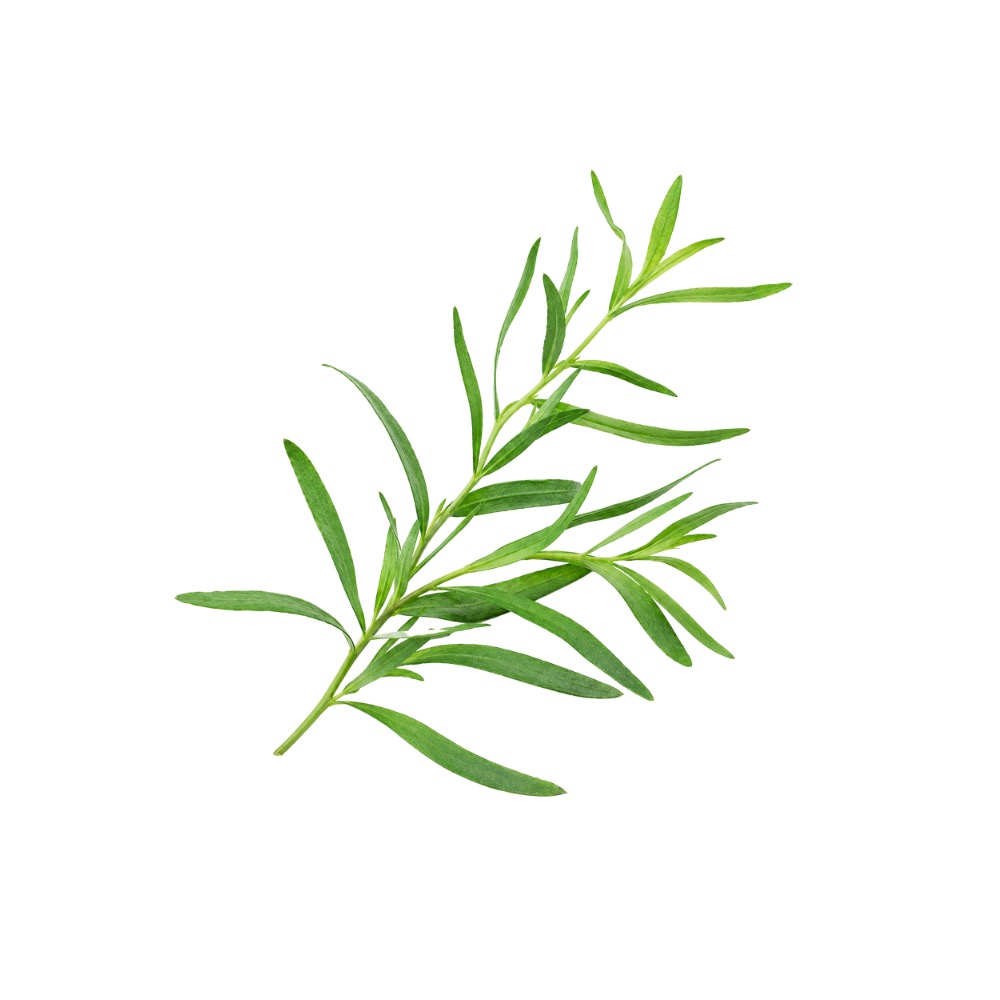
6-Demethoxycapillarisin is a naturally occurring flavonoid (2-phenoxychromone / capillarisin-type flavone), found in Tarragon. It is well tolerated orally (low toxicity).
Concentration
Content by Source
Concentrations not reported. No percent-dry-weight or mg/g figures have been published for this compound in its source plants.
6-Demethoxycapillarisin at a Glance
6-Demethoxycapillarisin is a 2-phenoxychromone flavonoid — a capillarisin-type flavone that carries an oxygen-linked phenyl (“phenoxy”) group on the chromone core and, as its name says, lacks the 6-methoxy group of the parent capillarisin (a compound of Artemisia capillaris). On its own it is an obscure molecule; it earns a page for one reason: it is one of the two polyphenols that bioactivity-guided fractionation identified as the antidiabetic principles of Russian tarragon (Artemisia dracunculus), specifically the standardised ethanolic extract PMI-5011 1,
Its partner in that story is the dihydrochalcone DMC-2 (2’,4’-dihydroxy-4-methoxydihydrochalcone, also called 4-O-methyldavidigenin). Together the two were pulled out of tarragon extract by tracking the fractions that lowered a diabetic readout, and characterised as the compounds most responsible for the extract’s blood-glucose-lowering activity 1,
Two honest caveats frame everything below. First, the isolated-compound evidence is entirely in-vitro — an H4IIE hepatoma PEPCK assay and cell-free/enzyme aldose-reductase screens 1,
The PMI-5011 Antidiabetic Story
To read this molecule correctly you have to read it as a fraction of an extract, not a drug. PMI-5011 is a standardised ethanolic extract of Russian tarragon developed as a botanical for type-2 diabetes / insulin resistance; in diabetic-animal and insulin-resistant-human-cell work the extract lowers blood glucose and improves insulin signalling 3Reference 3Bioactives from Artemisia dracunculus L. enhance insulin sensitivity via modulation of skeletal muscle protein phosphorylation — extract, human muscle cellsView study →. The compound-level program (Ribnicky, Logendra, Govorko, Poulev, Raskin, Cefalu and colleagues) then asked which molecules in the extract do that, and bioactivity-guided fractionation repeatedly returned 6-demethoxycapillarisin and DMC-2 as the polyphenolic hits 1,
Where the isolate has documented activity, it is hepatic: in H4IIE hepatoma cells it suppresses expression of PEPCK — the rate-committing gluconeogenic enzyme — and thereby lowers glucose output, with a potency (IC₅₀ ≈ 43 µM for the PEPCK effect) reported by the Govorko study 1Reference 1In vitroPolyphenolic compounds from Artemisia dracunculus L. inhibit PEPCK gene expression and gluconeogenesis in an H4IIE hepatoma cell line — in vitroView study →. The mechanism proposed is activation of the PI3K pathway, i.e. the compound mimics part of the insulin signal that normally shuts gluconeogenesis down 1Reference 1In vitroPolyphenolic compounds from Artemisia dracunculus L. inhibit PEPCK gene expression and gluconeogenesis in an H4IIE hepatoma cell line — in vitroView study →. Separately, in the earlier aldose-reductase screen it was one of four fractions that inhibited aldose reductase (ALR2) — the polyol-pathway enzyme implicated in diabetic complications — the first report of the compound from A. dracunculus at all 2Reference 2In vitroBioassay-guided isolation of aldose reductase inhibitors from Artemisia dracunculus — in vitroView study →.
The muscle / whole-body side of PMI-5011’s action — enhanced insulin-receptor and PI3K–Akt signalling in skeletal muscle, improved insulin sensitivity — is documented for the extract, and the mechanistic attribution to individual constituents is incomplete; the skeletal-muscle phospho-signalling work does not isolate 6-demethoxycapillarisin as the actor 3Reference 3Bioactives from Artemisia dracunculus L. enhance insulin sensitivity via modulation of skeletal muscle protein phosphorylation — extract, human muscle cellsView study →. So the fair summary is: hepatic PEPCK suppression is the compound’s own in-vitro signal; the muscle-insulin-sensitising effect is the extract’s.
What It's Used For
The compound-specific literature is small and preclinical — essentially the two bioactivity-guided isolation studies plus its appearance in the tarragon/PMI-5011 reviews. There is no pharmacology on the purified molecule beyond cell and enzyme assays.
Support is an experimental score — weighted by study type (human > animal > in vitro) and volume. A beta, not a validated metric. Every row rests on in-vitro isolate work (cell or enzyme assays); the only in-vivo/human evidence is for the whole PMI-5011 extract, so isolate scores stay low by design.
The compound’s clearest own effect. In H4IIE hepatoma cells, 6-demethoxycapillarisin — isolated from the antihyperglycaemic tarragon extract by tracking the fractions that suppressed PEPCK mRNA — inhibited PEPCK gene expression with an IC₅₀ of about 43 µM, and reduced glucose production, the authors attributing the effect to activation of the PI3K pathway (the same node insulin uses to switch off hepatic glucose output) 1Reference 1In vitroPolyphenolic compounds from Artemisia dracunculus L. inhibit PEPCK gene expression and gluconeogenesis in an H4IIE hepatoma cell line — in vitroView study →.
Its co-isolated partner DMC-2 did the same with an IC₅₀ near 61 µM 1Reference 1In vitroPolyphenolic compounds from Artemisia dracunculus L. inhibit PEPCK gene expression and gluconeogenesis in an H4IIE hepatoma cell line — in vitroView study →.
Gap: a single hepatoma-cell study; the effect is at micromolar concentrations, with no in-vivo confirmation that the isolated compound reaches the liver or lowers glucose in an animal 1Reference 1In vitroPolyphenolic compounds from Artemisia dracunculus L. inhibit PEPCK gene expression and gluconeogenesis in an H4IIE hepatoma cell line — in vitroView study →.
The finding that first put the molecule on the map. In a bioassay-guided isolation of aldose-reductase inhibitors from A. dracunculus, four compounds — 4,5-di-O-caffeoylquinic acid, davidigenin, 6-demethoxycapillarisin and DMC-2 — showed 58–77% inhibition of aldose reductase (ALR2) at 3.75 µg/mL 2Reference 2In vitroBioassay-guided isolation of aldose reductase inhibitors from Artemisia dracunculus — in vitroView study →.
ALR2 drives the polyol pathway linked to diabetic complications (neuropathy, retinopathy), so this is a complications target distinct from the glucose-lowering one. This was the first report of 6-demethoxycapillarisin from tarragon 2Reference 2In vitroBioassay-guided isolation of aldose reductase inhibitors from Artemisia dracunculus — in vitroView study →.
Gap: an in-vitro/enzyme screen only, on fractions from the extract; no cellular or in-vivo follow-up on the isolated compound 2Reference 2In vitroBioassay-guided isolation of aldose reductase inhibitors from Artemisia dracunculus — in vitroView study →.
Included for honesty about attribution. PMI-5011 enhances insulin sensitivity and PI3K–Akt / insulin-receptor signalling in skeletal muscle — shown in diabetic animals and in muscle cells from insulin-resistant humans 3Reference 3Bioactives from Artemisia dracunculus L. enhance insulin sensitivity via modulation of skeletal muscle protein phosphorylation — extract, human muscle cellsView study →.
But these effects are demonstrated for the whole extract; the skeletal-muscle phospho-signalling work does not isolate 6-demethoxycapillarisin as the responsible molecule, and later fractionation found DMC-2, not this compound, carrying much of the activity 4Reference 4The DESIGNER approach helps decipher the hypoglycemic bioactive principles of Artemisia dracunculus L. (Russian tarragon) — phytochemistryView study →.
So the muscle-insulin story is the extract’s, listed here only to keep the compound’s own claims separate from it.
Gap: no isolate-level muscle/insulin data; the compound’s presence in the active extract is variable 4,
Mechanisms
| Target / pathway | Effect | Relevant to |
|---|---|---|
| PEPCK (hepatic gluconeogenic enzyme) gene expression | ↓ expression → ↓ glucose production (IC₅₀ ≈ 43 µM, in vitro) | hepatic gluconeogenesis |
| PI3K / insulin-signalling pathway | activation (insulin-mimetic node upstream of PEPCK suppression) | hepatic gluconeogenesisinsulin signalling |
| Aldose reductase (ALR2, polyol pathway) | inhibition (fraction-level, ~58–77% at 3.75 µg/mL) | diabetic-complications target |
| Insulin-receptor / PI3K–Akt signalling in skeletal muscle | ↑ (documented for PMI-5011 extract, not the isolate) | insulin sensitisation |
The load-bearing, compound-specific thread is PEPCK suppression via PI3K activation in hepatoma cells — the one effect measured for the purified molecule 1Reference 1In vitroPolyphenolic compounds from Artemisia dracunculus L. inhibit PEPCK gene expression and gluconeogenesis in an H4IIE hepatoma cell line — in vitroView study →. The aldose-reductase activity is fraction-level 2Reference 2In vitroBioassay-guided isolation of aldose reductase inhibitors from Artemisia dracunculus — in vitroView study →, and the muscle insulin-sensitising action belongs to the whole tarragon extract, not the isolate 3,
Pharmacokinetics
There is no pharmacokinetic data on isolated 6-demethoxycapillarisin — no absorption, distribution, half-life or bioavailability figures for the pure compound in any species. What exists is at the extract level: PMI-5011 is an orally dosed standardised tarragon extract, and its constituents are assumed to undergo the usual phase-II conjugation (glucuronidation/sulfation) typical of dietary flavonoids, but this has not been characterised for this molecule specifically. The in-vitro potencies quoted above (µM in H4IIE cells, µg/mL in the ALR2 screen) are assay concentrations, not achievable plasma levels, and say nothing about what an oral dose would deliver. ADME work on the isolate is a clear, unfilled gap.
Clinical Trials
There are no clinical trials of isolated 6-demethoxycapillarisin. The compound has never been administered to humans as a purified substance. Human data exist only for the PMI-5011 tarragon extract in which it is one constituent — clinical work on the extract for insulin resistance / type-2 diabetes is tracked on the tarragon page, not here.
| Completed | Planned | Terminated | Preclinical |
|---|---|---|---|
| —(none of the isolate) | — | — | Hepatic PEPCK/gluconeogenesis, aldose-reductase inhibition (in vitro) |
Last checked: July 2026.
Isolate vs. Plant Studies
The split here is unusually clean. The isolate’s entire evidence base is two in-vitro studies — the PEPCK/gluconeogenesis assay in H4IIE hepatoma cells 1Reference 1In vitroPolyphenolic compounds from Artemisia dracunculus L. inhibit PEPCK gene expression and gluconeogenesis in an H4IIE hepatoma cell line — in vitroView study → and the aldose-reductase bioassay-guided isolation 2Reference 2In vitroBioassay-guided isolation of aldose reductase inhibitors from Artemisia dracunculus — in vitroView study →. Both were designed to find which molecule in the extract acts, so they are mechanism-probing studies on fractions and purified compound, not efficacy studies. As an isolate mechanism base that is modest; as human evidence it is silent.
Everything with clinical or whole-organism weight is the plant/extract — PMI-5011, the standardised ethanolic tarragon extract, whose glucose-lowering and insulin-sensitising effects are shown in diabetic animals and insulin-resistant human muscle cells 3Reference 3Bioactives from Artemisia dracunculus L. enhance insulin sensitivity via modulation of skeletal muscle protein phosphorylation — extract, human muscle cellsView study →. And crucially, the extract’s activity cannot be pinned on 6-demethoxycapillarisin alone: it co-occurs with DMC-2 and other actives, its levels vary by cultivar, and a later fractionation of PMI-5011 found no 6-demethoxycapillarisin at all, with the dihydrochalcone doing the work 4,
Its Role in Plants
In tarragon (Artemisia dracunculus), 6-demethoxycapillarisin is a minor polyphenol of the aerial parts, part of the broad flavonoid/phenolic pool that characterises the genus Artemisia 2,
Prevalence in Nature
6-Demethoxycapillarisin is narrowly distributed and minor. Within the database its only source is Russian tarragon (Artemisia dracunculus), where it occurs in the aerial parts and is concentrated by ethanolic extraction into PMI-5011 1,
Major Natural Sources
| Source | Plant part | Reported content |
|---|---|---|
| Tarragon (Artemisia dracunculus, Russian) | aerial parts / ethanolic (PMI-5011) extract | minor polyphenol; variable, cytotype-dependent, sometimes absent — not individually quantified here 1, |
Only the tarragon occurrence is documented; the content is qualitative and cultivar-dependent, and the missing quantitation is tracked for a later pass.
Discovery & Synthesis
6-Demethoxycapillarisin entered this literature as a bioactivity-guided isolate, not a classical natural-product discovery. It was first reported from Artemisia dracunculus in 2006, when Logendra and colleagues ran a bioassay-guided fractionation of the antidiabetic tarragon extract for aldose-reductase inhibitors and identified it as one of four active compounds — the first report of the molecule from this plant and of its ALR2 activity 2Reference 2In vitroBioassay-guided isolation of aldose reductase inhibitors from Artemisia dracunculus — in vitroView study →. The following year the Govorko study isolated it again by a different assay (PEPCK suppression) and characterised its antigluconeogenic effect 1Reference 1In vitroPolyphenolic compounds from Artemisia dracunculus L. inhibit PEPCK gene expression and gluconeogenesis in an H4IIE hepatoma cell line — in vitroView study →. The compound as a class (a capillarisin-type 2-phenoxychromone) was known earlier from Artemisia capillaris work on capillarisin.
There is no commercial isolation or dedicated synthesis industry for the pure compound; it is obtained as a research isolate from tarragon fractionation, and reference material is available only in analytical quantities. Total-synthesis and manufacturing routes are not documented here.
Patents: not yet researched.
Toxicity & Safety
6-Demethoxycapillarisin carries a low flag, held with the caution that its safety is inferred, not tested. It is a minor dietary polyphenol of a culinary herb — tarragon is a common food flavouring — and it occurs in the PMI-5011 extract, which in reviews of Artemisia dracunculus has no acute toxicity or mutagenicity reported at doses relevant to human consumption 5Reference 5ReviewArtemisia dracunculus L. (tarragon): a critical review of its traditional use, chemical composition, pharmacology, and safety — reviewView study →. The compound itself appears in the literature as a protective (antidiabetic) agent, not a toxicant 1,
The honest limits are those of a preclinical-only isolate: there are no dedicated toxicity, genotoxicity or repeat-dose studies on the pure compound, and no human data of any kind on it in isolation — the safety read-across comes from the whole tarragon extract, not the molecule 5Reference 5ReviewArtemisia dracunculus L. (tarragon): a critical review of its traditional use, chemical composition, pharmacology, and safety — reviewView study →. No drug-interaction studies exist for the isolate; any theoretical concern (e.g. additive glucose-lowering with antidiabetic drugs) applies to the extract in a medicinal context and is unquantified for this compound. At culinary tarragon exposure nothing suggests concern.
- A minor polyphenol of an edible herb. Occurs in tarragon and its PMI-5011 extract, which shows no acute toxicity or mutagenicity at consumption-relevant doses.
- Appears as a protectant, not a toxicant. The isolate’s only studied effects are antidiabetic (PEPCK suppression, aldose-reductase inhibition) in vitro.
- Safety is inferred from the extract, not the isolate. No dedicated toxicity, genotoxicity or repeat-dose data on the pure compound, and no human data on it alone.
- Interactions untested. Any additive glucose-lowering concern belongs to medicinal tarragon-extract use, not culinary exposure, and is unquantified for this molecule.
Dosage
There is no established or recommended human dose for isolated 6-demethoxycapillarisin. It has never been given to a person, or an animal, as a purified compound. Its antidiabetic evidence is in-vitro assay concentrations, which are not convertible to human self-dosing:
| Application | Form / route (research) | Level studied |
|---|---|---|
| Hepatic PEPCK / gluconeogenesis | Isolated compound, H4IIE hepatoma cells | IC₅₀ ≈ 43 µM (assay concentration) 1Reference 1In vitroPolyphenolic compounds from Artemisia dracunculus L. inhibit PEPCK gene expression and gluconeogenesis in an H4IIE hepatoma cell line — in vitroView study → |
| Aldose-reductase inhibition | Isolated compound / fraction, enzyme assay | ~58–77% inhibition at 3.75 µg/mL 2Reference 2In vitroBioassay-guided isolation of aldose reductase inhibitors from Artemisia dracunculus — in vitroView study → |
| Insulin sensitisation | Whole PMI-5011 extract, oral (animal / human cell) | extract dosing — see tarragon 3Reference 3Bioactives from Artemisia dracunculus L. enhance insulin sensitivity via modulation of skeletal muscle protein phosphorylation — extract, human muscle cellsView study → |
Where a human-relevant dose exists it is for the PMI-5011 tarragon extract, not this constituent — refer to the tarragon monograph. The figures above are research concentrations, not a personal recommendation.
References
- Govorko D, Logendra S, Wang Y, et al. (2007). Polyphenolic compounds from Artemisia dracunculus L. inhibit PEPCK gene expression and gluconeogenesis in an H4IIE hepatoma cell line — in vitro. American Journal of Physiology - Endocrinology and Metabolism. https://pubmed.ncbi.nlm.nih.gov/17848630/
- Logendra S, Ribnicky DM, Yang H, et al. (2006). Bioassay-guided isolation of aldose reductase inhibitors from Artemisia dracunculus — in vitro. Phytochemistry. https://pubmed.ncbi.nlm.nih.gov/16806328/
- Kheterpal I, Scherp P, Kelley L, et al. (2014). Bioactives from Artemisia dracunculus L. enhance insulin sensitivity via modulation of skeletal muscle protein phosphorylation — extract, human muscle cells. Nutrition. https://pubmed.ncbi.nlm.nih.gov/24985106/
- Yu Y, Simmler C, Kuhn P, et al. (2019). The DESIGNER approach helps decipher the hypoglycemic bioactive principles of Artemisia dracunculus L. (Russian tarragon) — phytochemistry. Journal of Natural Products. https://pubmed.ncbi.nlm.nih.gov/31815461/
- Obolskiy D, Pischel I, Feistel B, et al. (2011). Artemisia dracunculus L. (tarragon): a critical review of its traditional use, chemical composition, pharmacology, and safety — review. Journal of Agricultural and Food Chemistry. https://pubmed.ncbi.nlm.nih.gov/21942448/



