Materia Medica
Tarragon
Artemisia dracunculus
Tarragon is an aromatic perennial of the daisy family whose narrow, anise-scented leaves are a classic culinary herb and a traditional digestive. Its flavour comes mainly from estragole in the essential oil.
What Is Tarragon?
Tarragon is an aromatic perennial of the daisy family, grown for its narrow, anise-scented leaves. It is a classic herb of French cooking and a traditional digestive, used fresh or dried in food, vinegars and teas.
Artemisia dracunculus grows wild across much of Eurasia and North America, on steppes, dry slopes, meadows and roadsides 37,
The leaf’s flavour comes from its essential oil, which is often dominated by estragole 2,
Two main cultivars are grown. French tarragon is the flavourful kitchen herb, and Russian tarragon is coarser, more bitter and lacks the anise note 3Reference 3ReviewArtemisia dracunculus (tarragon): a review of its traditional uses, phytochemistry and pharmacology — reviewView study →.
How Is Tarragon Used?
Tarragon is used mostly as a kitchen herb. The fresh or dried leaves and flowering tops season sauces, fish, salads and vinegars 3Reference 3ReviewArtemisia dracunculus (tarragon): a review of its traditional uses, phytochemistry and pharmacology — reviewView study →.
- Tea — about 1 teaspoon of dried leaf per cup, taken after meals as a digestive.
- Tincture (1:5) — about 1–4 mL up to three times daily.
- Tarragon vinegar — fresh herb steeped in wine vinegar, a traditional preparation that appears in old pharmacopoeias 3Reference 3ReviewArtemisia dracunculus (tarragon): a review of its traditional uses, phytochemistry and pharmacology — reviewView study →.
- Standardized extract — an ethanolic extract of Russian tarragon (PMI-5011, sold as Tarralin), taken in capsules in research 1,
4Reference 1RCTEffect of Artemisia dracunculus administration on glycemic control, insulin sensitivity, and insulin secretion in patients with impaired glucose tolerance — randomised, double-blind, placebo-controlled trial (RCT)View study →Reference 4AnimalAntihyperglycemic activity of Tarralin, an ethanolic extract of Artemisia dracunculus L. — animal model (mouse)View study → .
Traditional Uses
European Herbal Medicine
Renaissance herbalists described tarragon as sharp-tasting and warming. Matthiolus in the sixteenth century recorded it as an appetite stimulant, and as a leaf paste with honey applied to bruises 3Reference 3ReviewArtemisia dracunculus (tarragon): a review of its traditional uses, phytochemistry and pharmacology — reviewView study →.
In 1613 the Polish herbal of Syrennius described it as drying, warming and stimulating: it relieved toothache, cleared mucus from the head, stimulated digestion and acted as a diuretic 3Reference 3ReviewArtemisia dracunculus (tarragon): a review of its traditional uses, phytochemistry and pharmacology — reviewView study →.
By the eighteenth and nineteenth centuries it was used in Europe more in the kitchen than in medicine 3Reference 3ReviewArtemisia dracunculus (tarragon): a review of its traditional uses, phytochemistry and pharmacology — reviewView study →. Folk uses in Europe included constipation, intestinal cramps and ulcers 3Reference 3ReviewArtemisia dracunculus (tarragon): a review of its traditional uses, phytochemistry and pharmacology — reviewView study →.
Central Asian & Russian Folk Medicine
In Central Asia, including Russia, tarragon has been used for gastritis, indigestion (dyspepsia), skin irritation, allergic rashes and dermatitis, and to aid digestion and improve appetite 3Reference 3ReviewArtemisia dracunculus (tarragon): a review of its traditional uses, phytochemistry and pharmacology — reviewView study →.
Persian, Azerbaijani & Arabic Traditional Medicine
In Iranian and Azerbaijani folk medicine, tarragon is taken by mouth as a remedy for epilepsy 3,
In Arabic traditional medicine it has been used for insomnia and gum inflammation (gingivitis), and to mask the taste of other medicines 3Reference 3ReviewArtemisia dracunculus (tarragon): a review of its traditional uses, phytochemistry and pharmacology — reviewView study →.
Ayurveda & Himalayan Folk Medicine
In Ayurveda, tarragon is used for intestinal worms, intestinal spasm and fever, as a tonic, and to regulate the menstrual cycle 3Reference 3ReviewArtemisia dracunculus (tarragon): a review of its traditional uses, phytochemistry and pharmacology — reviewView study →.
In Himachal Pradesh and Kashmir, a leaf paste is applied to wounds on the legs of yaks and donkeys, and the extract is taken for toothache, fever, dysentery, intestinal worms and stomach ache 3Reference 3ReviewArtemisia dracunculus (tarragon): a review of its traditional uses, phytochemistry and pharmacology — reviewView study →.
Native American Medicine
Native Americans used the leaves as a herb and a tea, and ate the leaves and seeds as food. The leaves, stems, roots and flowers were used widely as medicine, and the plant was used to repel insects 39Reference 39Artemisia dracunculus (Tarragon) — species description, cultivars, native range, growing conditions and toxicity — plant databaseView study →.
Indications
- Indigestion, bloating and poor appetite [leaf; European and Central Asian folk medicine]
- Gastritis [herb; Central Asian folk medicine]
- Intestinal cramps and constipation [herb; European folk medicine, Ayurveda]
- Toothache [leaf; European and Himalayan folk medicine]
- Insomnia [herb; Arabic traditional medicine]
- Epilepsy [herb; Iranian and Azerbaijani folk medicine]
- Intestinal worms [herb; Ayurveda, Himalayan folk medicine]
- Fever [herb; Ayurveda]
- Irregular menstruation [herb; Ayurveda]
- Skin rashes and wounds [leaf; Central Asian and Himalayan folk medicine]
- High blood sugar and insulin resistance [ethanolic extract of Russian tarragon] Caution: The supporting research used a concentrated ethanolic extract. A plain water extract barely inhibited the starch-digesting enzyme α-amylase in vitro 35.
Botany
Tarragon is a perennial herb or low subshrub in the daisy family (Asteraceae), growing 50–120 cm tall from coarse, creeping rhizomes 37Reference 37Shultz, L. M. (n.d.). Artemisia dracunculus Linnaeus — species description, habitat and distribution — flora. In Flora of North America Editorial Committee (eds.), Flora of North America North of Mexico, Vol. 19. http://www.efloras.org/florataxon.aspx?flora_id=1&taxon_id=200023201View study →. It belongs to Artemisia, the genus of the wormwoods and sagebrushes.
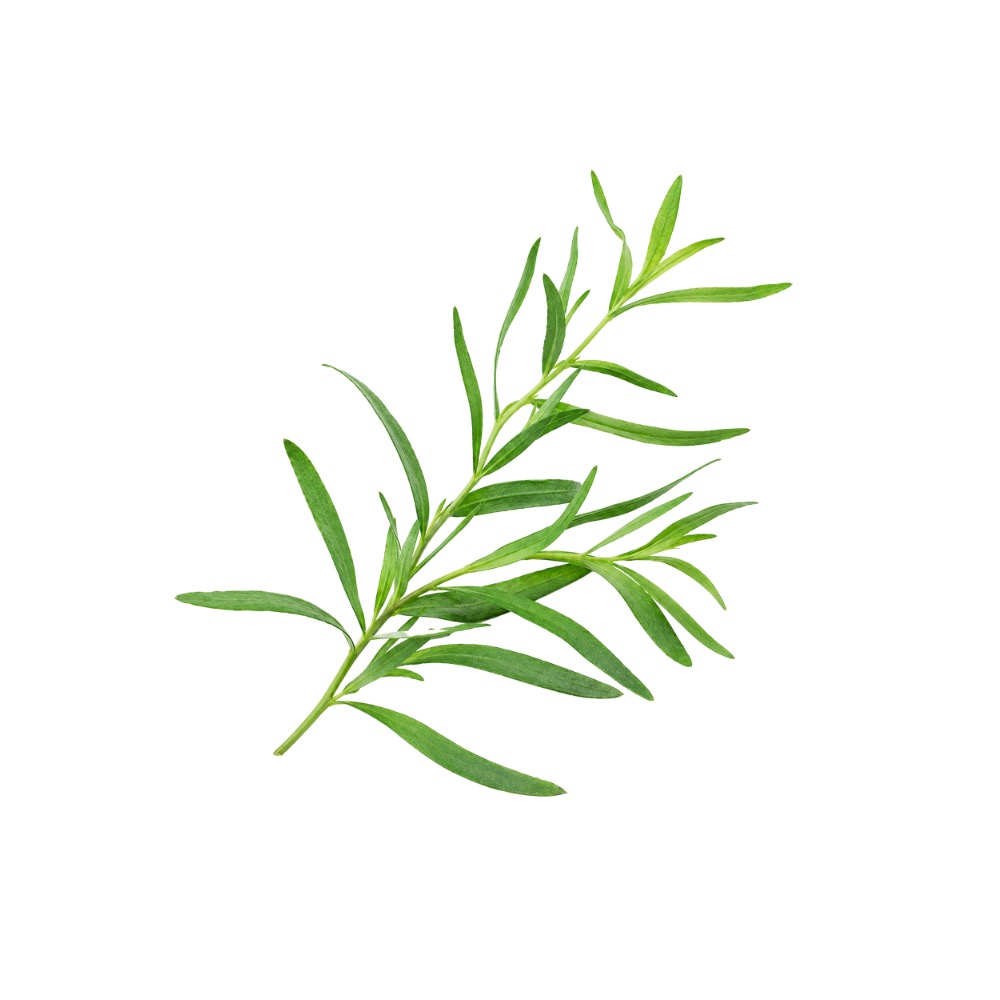
Its stems are numerous, erect and somewhat woody, green to reddish brown 37Reference 37Shultz, L. M. (n.d.). Artemisia dracunculus Linnaeus — species description, habitat and distribution — flora. In Flora of North America Editorial Committee (eds.), Flora of North America North of Mexico, Vol. 19. http://www.efloras.org/florataxon.aspx?flora_id=1&taxon_id=200023201View study →. Unlike most wormwoods, its leaves are narrow and mostly undivided. They are linear to lance-shaped, 1–7 cm long, bright green and usually hairless 37Reference 37Shultz, L. M. (n.d.). Artemisia dracunculus Linnaeus — species description, habitat and distribution — flora. In Flora of North America Editorial Committee (eds.), Flora of North America North of Mexico, Vol. 19. http://www.efloras.org/florataxon.aspx?flora_id=1&taxon_id=200023201View study →.
The flower heads are small, globe-shaped and 2–3 mm across, often nodding on slender stalks. They hold pale yellow florets and are borne in leafy, branching clusters from midsummer to late autumn 37Reference 37Shultz, L. M. (n.d.). Artemisia dracunculus Linnaeus — species description, habitat and distribution — flora. In Flora of North America Editorial Committee (eds.), Flora of North America North of Mexico, Vol. 19. http://www.efloras.org/florataxon.aspx?flora_id=1&taxon_id=200023201View study →. The fruits are tiny achenes, 0.5–0.8 mm long 37Reference 37Shultz, L. M. (n.d.). Artemisia dracunculus Linnaeus — species description, habitat and distribution — flora. In Flora of North America Editorial Committee (eds.), Flora of North America North of Mexico, Vol. 19. http://www.efloras.org/florataxon.aspx?flora_id=1&taxon_id=200023201View study →.
Wild plants range from strongly tarragon-scented to not aromatic at all 37Reference 37Shultz, L. M. (n.d.). Artemisia dracunculus Linnaeus — species description, habitat and distribution — flora. In Flora of North America Editorial Committee (eds.), Flora of North America North of Mexico, Vol. 19. http://www.efloras.org/florataxon.aspx?flora_id=1&taxon_id=200023201View study →. The name dracunculus means “little dragon”; Pliny linked it to the plant’s snaking rhizomes 3Reference 3ReviewArtemisia dracunculus (tarragon): a review of its traditional uses, phytochemistry and pharmacology — reviewView study →.
French tarragon (A. dracunculus ‘Sativa’) has the stronger anise flavour and rarely flowers, so it is grown only from cuttings or division of the rhizome 3,
Distribution
Tarragon grows wild across much of Eurasia and North America 37,
In Asia it ranges through northern and western China, Mongolia, Russia, Kazakhstan, Tajikistan, Afghanistan, Pakistan and northern India, and it also grows in central, eastern and western Europe 38Reference 38Artemisia dracunculus Linnaeus — species description, habitat and distribution — floraView study →. In China it grows on dry slopes, steppes, semidesert, forest margins, meadows and roadsides, and on saline soils, at 500–3,800 m 38Reference 38Artemisia dracunculus Linnaeus — species description, habitat and distribution — floraView study →.
In North America it grows from Alaska and the Yukon south to California, Arizona and Texas, and east to Ontario, Wisconsin and Illinois 37Reference 37Shultz, L. M. (n.d.). Artemisia dracunculus Linnaeus — species description, habitat and distribution — flora. In Flora of North America Editorial Committee (eds.), Flora of North America North of Mexico, Vol. 19. http://www.efloras.org/florataxon.aspx?flora_id=1&taxon_id=200023201View study →. There it is found in open meadows and fields, desert scrub, moist drainages and roadsides at 500–3,000 m 37Reference 37Shultz, L. M. (n.d.). Artemisia dracunculus Linnaeus — species description, habitat and distribution — flora. In Flora of North America Editorial Committee (eds.), Flora of North America North of Mexico, Vol. 19. http://www.efloras.org/florataxon.aspx?flora_id=1&taxon_id=200023201View study →.
Tarragon is widely cultivated as a culinary herb in Europe, Asia and the Americas 3,
Sourcing: Wild tarragon may suffer from over-collecting in North America. Its scarcity in Missouri, Iowa and Illinois may come from collecting as well as habitat loss 37Reference 37Shultz, L. M. (n.d.). Artemisia dracunculus Linnaeus — species description, habitat and distribution — flora. In Flora of North America Editorial Committee (eds.), Flora of North America North of Mexico, Vol. 19. http://www.efloras.org/florataxon.aspx?flora_id=1&taxon_id=200023201View study →. The culinary herb is widely cultivated and grows easily from rootstocks 37Reference 37Shultz, L. M. (n.d.). Artemisia dracunculus Linnaeus — species description, habitat and distribution — flora. In Flora of North America Editorial Committee (eds.), Flora of North America North of Mexico, Vol. 19. http://www.efloras.org/florataxon.aspx?flora_id=1&taxon_id=200023201View study →.
Growing Conditions
Cultivation snapshot for Tarragon
- Wants full sun and light, well-drained soil; it rots in wet, poorly drained ground 39Reference 39Artemisia dracunculus (Tarragon) — species description, cultivars, native range, growing conditions and toxicity — plant databaseView study →.
- Grow French tarragon from cuttings or division only; Russian tarragon grows from seed 3Reference 3ReviewArtemisia dracunculus (tarragon): a review of its traditional uses, phytochemistry and pharmacology — reviewView study →.
- A hardy perennial (USDA zones 3–8) that dies back to its rhizomes over winter 39Reference 39Artemisia dracunculus (Tarragon) — species description, cultivars, native range, growing conditions and toxicity — plant databaseView study →.
- Divide the clumps every two to four years, and cut back to the ground in early spring 39Reference 39Artemisia dracunculus (Tarragon) — species description, cultivars, native range, growing conditions and toxicity — plant databaseView study →.
Grow it yourself
Farm Wiki is our cultivation-focused sister site, also run by Justin Cooke.
Phytochemistry
The herb contains 0.15–3.1% essential oil 2Reference 2ReviewArtemisia dracunculus L. (tarragon): a critical review of its traditional use, chemical composition, pharmacology, and safety — reviewView study →. The oil is dominated by phenylpropanoids: estragole (methyl chavicol) at roughly 40–85%, methyleugenol at up to 39% and elemicin at up to 57%, along with the monoterpene sabinene 2,
Some oils contain little estragole. One Iranian oil was led by trans-anethole (21%), ocimene (21%) and limonene (12%) 22Reference 22AnimalAnticonvulsant activity and chemical composition of Artemisia dracunculus L. essential oil — animal modelView study →.
The herb contains more than 1% coumarins, mainly herniarin, together with capillarin and scopoletin 3Reference 3ReviewArtemisia dracunculus (tarragon): a review of its traditional uses, phytochemistry and pharmacology — reviewView study →. Its infusion is rich in flavonoids and caffeoylquinic acids 14Reference 14In vitroInhibition of neutrophil functions and antibacterial effects of tarragon (Artemisia dracunculus L.) infusion — in vitroView study →. A water-ethanol extract is high in dicaffeoylquinic acids, which track its antioxidant activity 30Reference 30In vitroStudy of antioxidant activity of some medicinal plants having high content of caffeic acid derivatives — in vitroView study →.
The standardized Russian tarragon extract studied for blood sugar contains the dihydrochalcone DMC-2 and the flavonoid 6-demethoxycapillarisin 8,
A water extract of the herb contained no detectable estragole or methyleugenol 15Reference 15AnimalEstragole and methyl-eugenol-free extract of Artemisia dracunculus possesses immunomodulatory effects — animal model (mouse)View study →.
Constituent Summary
Oil figures are shares of the distilled essential oil. Other compounds are reported qualitatively.
Phenylpropanoid4 compounds4 with data
Monoterpene5 compounds4 with data
Phenolic Acid3 compoundsno data
Flavonoid3 compounds1 with data
Dihydrochalcone2 compounds2 with data
Coumarin1 compound1 with data
Pharmacology & Research
Most of the controlled research on tarragon concerns PMI-5011 (Tarralin), a standardized ethanolic extract of Russian tarragon studied for blood sugar and insulin sensitivity 4,
Other research covers anti-inflammatory, liver-protective, antioxidant, pain-relieving, antimicrobial and anticonvulsant effects, all in animals and cell studies 2,
Tarragon is not a pharmacopoeial herb, and its medicinal use rests on tradition 3Reference 3ReviewArtemisia dracunculus (tarragon): a review of its traditional uses, phytochemistry and pharmacology — reviewView study →.
-
Best-supported: insulin-sensitizing and glucose-lowering activity of the standardized PMI-5011 extract, from animals down to specific molecules, with one small supportive human RCT 1,
4, ; anti-inflammatory activity across several models 6,6Reference 1RCTEffect of Artemisia dracunculus administration on glycemic control, insulin sensitivity, and insulin secretion in patients with impaired glucose tolerance — randomised, double-blind, placebo-controlled trial (RCT)View study →Reference 4AnimalAntihyperglycemic activity of Tarralin, an ethanolic extract of Artemisia dracunculus L. — animal model (mouse)View study →Reference 6In vitroArtemisia dracunculus L. extract ameliorates insulin sensitivity by attenuating inflammatory signalling in human skeletal muscle culture — in vitroView study → 14, .32Reference 6In vitroArtemisia dracunculus L. extract ameliorates insulin sensitivity by attenuating inflammatory signalling in human skeletal muscle culture — in vitroView study →Reference 14In vitroInhibition of neutrophil functions and antibacterial effects of tarragon (Artemisia dracunculus L.) infusion — in vitroView study →Reference 32In vitroArtemisia dracunculus L. ethanolic extract and an isolated component, DMC2, ameliorate inflammatory signaling in pancreatic β-cells via inhibition of p38 MAPK — in vitroView study → -
Emerging, worth watching: liver-protective and lipid-lowering effects 10,
16Reference 10AnimalAn extract of Russian tarragon prevents obesity-related ectopic lipid accumulation — animal model (mouse)View study →Reference 16AnimalAntioxidant and hepatoprotective effects of Artemisia dracunculus against CCl₄-induced hepatotoxicity in rats — animal modelView study → ; protection against doxorubicin heart damage in rats 34Reference 34AnimalEvaluation of the protective effects of Artemisia dracunculus L. against doxorubicin-induced chronic cardiotoxicity in rat — animal modelView study →; effects on bone-forming cells in vitro 33Reference 33In vitroExtract of Artemisia dracunculus L. modulates osteoblast proliferation and mineralization — in vitroView study →. -
Mechanistically thin: antimicrobial and anticonvulsant findings, which come mostly from the essential oil rather than the tea or tincture 20,
22Reference 20In vitroEssential oil of tarragon (Artemisia dracunculus) antibacterial activity on Staphylococcus aureus and Escherichia coli — in vitroView study →Reference 22AnimalAnticonvulsant activity and chemical composition of Artemisia dracunculus L. essential oil — animal modelView study → . - The caveat: outside the PMI-5011 blood-sugar work there is no human data, and the chemistry varies widely between cultivars.
Results depend on the preparation. The essential oil, a water infusion and the ethanolic PMI-5011 extract have very different chemistry. Water extracts contain very little estragole or methyleugenol 2,
1. Antidiabetic & Insulin Sensitivity
Most of this work concerns PMI-5011, a standardized ethanolic extract of Russian tarragon. In diabetic KK-Aᵧ mice, 500 mg/kg daily for 7 days lowered blood glucose by 24% and insulin by 33%; metformin and troglitazone lowered glucose by 41% and 28%. In streptozotocin-diabetic mice the extract lowered glucose by 20%. It had no effect on glucose or insulin in non-diabetic animals 4Reference 4AnimalAntihyperglycemic activity of Tarralin, an ethanolic extract of Artemisia dracunculus L. — animal model (mouse)View study →.
The extract enhances insulin-receptor signalling (IRS/PI3-kinase/Akt) in skeletal muscle 5Reference 5AnimalAn extract of Artemisia dracunculus L. enhances insulin receptor signaling and modulates gene expression in skeletal muscle in KK-Aᵧ mice — animal modelView study → and reduces ceramide- and inflammation-driven insulin resistance in muscle cells 6,
Fractionation traced the activity to specific polyphenols, chiefly DMC-2 and 6-demethoxycapillarisin 8,
In female high-fat-fed mice, PMI-5011 increased body weight, fat mass and liver glucose production, though it reduced fat in muscle 29Reference 29AnimalPotential adverse effects of botanical supplementation in high-fat-fed female mice — animal modelView study →.
In a randomized, double-blind, placebo-controlled trial in 24 adults with impaired glucose tolerance, A. dracunculus 1,000 mg before breakfast and dinner for 90 days lowered HbA1c (5.8% to 5.6%), insulin output and systolic blood pressure (120 to 113 mmHg), and raised HDL cholesterol. Placebo produced no changes 1Reference 1RCTEffect of Artemisia dracunculus administration on glycemic control, insulin sensitivity, and insulin secretion in patients with impaired glucose tolerance — randomised, double-blind, placebo-controlled trial (RCT)View study →.
Gap: The human evidence is one small trial. A 2024 study found that a plain water extract barely inhibited α-amylase in vitro 35Reference 35In vitroTotal phenolic contents, cytotoxic, free radical, porcine pancreatic α-amylase, and lipase suppressant activities of Artemisia dracunculus from Palestine — in vitroView study →, so these results do not describe culinary tarragon, tea or a generic tincture.
2. Anti-Inflammatory
Anti-inflammatory activity appears across several models. An ethanolic aerial-part extract, injected into mice at 50–100 mg/kg, reduced xylene-induced ear swelling 17Reference 17AnimalAntinociceptive and anti-inflammatory effects of the aerial parts of Artemisia dracunculus in mice — animal modelView study →. An oral aqueous leaf extract (100 mg/kg for four weeks) lowered IL-6 and TNF in fructose-fed rats 19Reference 19AnimalThe nociceptive and anti-inflammatory effects of Artemisia dracunculus L. aqueous extract on fructose-fed male rats — animal modelView study →.
A tarragon infusion inhibited the release of reactive oxygen species, IL-8 and TNF-α from human neutrophils in vitro 14Reference 14In vitroInhibition of neutrophil functions and antibacterial effects of tarragon (Artemisia dracunculus L.) infusion — in vitroView study →. In human muscle cells, PMI-5011 reduced NF-κB signalling and lowered MCP-1 and TNF-α 6Reference 6In vitroArtemisia dracunculus L. extract ameliorates insulin sensitivity by attenuating inflammatory signalling in human skeletal muscle culture — in vitroView study →. The isolated dihydrochalcone DMC-2 had a similar effect in pancreatic β-cells through p38 MAPK 32Reference 32In vitroArtemisia dracunculus L. ethanolic extract and an isolated component, DMC2, ameliorate inflammatory signaling in pancreatic β-cells via inhibition of p38 MAPK — in vitroView study →.
A water extract free of estragole and methyleugenol, given to mice at 100 mg/kg for 21 days, lowered the inflammatory signals IL-17 and IFN-γ, raised antibody levels and reduced cell-mediated immunity 15Reference 15AnimalEstragole and methyl-eugenol-free extract of Artemisia dracunculus possesses immunomodulatory effects — animal model (mouse)View study →. This shows the activity does not depend on the oil’s volatile phenylpropanoids.
There is no human anti-inflammatory trial.
3. Hepatoprotective
A hydro-alcoholic extract of the aerial parts, given to rats at 50–200 mg/kg for 15 days before a dose of carbon tetrachloride, lowered ALT, AST, alkaline phosphatase and bilirubin and reduced liver damage. Silymarin was the comparator, and the extract’s LD₅₀ was above 5,000 mg/kg 16Reference 16AnimalAntioxidant and hepatoprotective effects of Artemisia dracunculus against CCl₄-induced hepatotoxicity in rats — animal modelView study →.
In high-fat-fed mice, PMI-5011 reduced fat accumulation in the liver and improved liver insulin signalling 10Reference 10AnimalAn extract of Russian tarragon prevents obesity-related ectopic lipid accumulation — animal model (mouse)View study →. It also suppresses the glucose-producing enzyme PEPCK in liver cells 8Reference 8In vitroPolyphenolic compounds from Artemisia dracunculus L. inhibit PEPCK gene expression and gluconeogenesis in an H4IIE hepatoma cell line — in vitroView study →.
The carbon tetrachloride model is a toxicological screen rather than a model of a common human liver disease. There is no clinical liver data.
4. Antioxidant
Aerial-part extracts show strong radical-scavenging and reducing activity in DPPH, ABTS and FRAP assays. One hydro-alcoholic extract had a total phenolic content of about 197 mg gallic-acid equivalent per gram 16Reference 16AnimalAntioxidant and hepatoprotective effects of Artemisia dracunculus against CCl₄-induced hepatotoxicity in rats — animal modelView study →.
A 2024 aqueous extract had a DPPH IC₅₀ of about 11 µg/mL, against 5.7 µg/mL for the Trolox reference 35Reference 35In vitroTotal phenolic contents, cytotoxic, free radical, porcine pancreatic α-amylase, and lipase suppressant activities of Artemisia dracunculus from Palestine — in vitroView study →.
In a comparison of six medicinal plants, the antioxidant activity of the extracts tracked their caffeic acid derivatives; tarragon’s water-ethanol extract was high in dicaffeoylquinic acids 30Reference 30In vitroStudy of antioxidant activity of some medicinal plants having high content of caffeic acid derivatives — in vitroView study →.
These are test-tube measurements, with no human data.
5. Analgesic
Pain relief appears with both the extract and the essential oil. An injected ethanolic aerial-part extract (50–100 mg/kg) reduced both phases of the formalin test, raised the hot-plate threshold and reduced writhing in mice. Naloxone partly blocked the effect, suggesting opioid involvement 17Reference 17AnimalAntinociceptive and anti-inflammatory effects of the aerial parts of Artemisia dracunculus in mice — animal modelView study →.
The injected essential oil (10–300 mg/kg) reduced pain in formalin, acetic-acid and hot-plate tests in rats and mice. Naloxone did not block it, and the estimated LD₅₀ was 1,250 mg/kg 18Reference 18AnimalAntinociceptive effect of the essential oil of tarragon (Artemisia dracunculus) — animal model (rat/mouse)View study →.
An oral aqueous leaf extract reduced the formalin pain response in fructose-fed rats 19Reference 19AnimalThe nociceptive and anti-inflammatory effects of Artemisia dracunculus L. aqueous extract on fructose-fed male rats — animal modelView study →.
The data are all from acute rodent models. There is no human pain trial.
6. Antimicrobial
Tarragon essential oil inhibited Staphylococcus aureus and Escherichia coli in culture, at minimum inhibitory concentrations of 1,250 and 2,500 µg/mL, and reduced both in a white cheese 20Reference 20In vitroEssential oil of tarragon (Artemisia dracunculus) antibacterial activity on Staphylococcus aureus and Escherichia coli — in vitroView study →. Tarragon oil was also active against Candida albicans, though an oil from A. abrotanum was stronger 21Reference 21In vitroChemical characterization by GC-MS and in vitro activity against Candida albicans of volatile oils including Artemisia dracunculus — in vitroView study →.
A tarragon infusion was most active against S. aureus, including MRSA, and S. epidermidis 14Reference 14In vitroInhibition of neutrophil functions and antibacterial effects of tarragon (Artemisia dracunculus L.) infusion — in vitroView study →.
Gap: In vitro only. The data do not show an effect from tarragon taken by mouth.
7. Neuroprotective & Anticonvulsant
Tarragon essential oil had dose-dependent anti-seizure activity in rodents in both the maximal-electroshock and pentylenetetrazole models, with ED₅₀ values of 0.84 and 0.26 mL/kg. Some effective doses also caused sedation and impaired coordination 22Reference 22AnimalAnticonvulsant activity and chemical composition of Artemisia dracunculus L. essential oil — animal modelView study →.
Sterile tarragon cell cultures grown in the laboratory produced trace amounts of the benzodiazepines delorazepam and temazepam, about 100–200 ng/g, and their extract bound the human benzodiazepine receptor 23Reference 23In vitroIdentification of benzodiazepines in Artemisia dracunculus and Solanum tuberosum — in vitroView study →.
In mice, oral PMI-5011 promoted resilience to depression-like behaviour after repeated social stress, and reduced stress-induced inflammation in the blood 24Reference 24AnimalAn extract of Artemisia dracunculus L. promotes psychological resilience in a mouse model of depression — animal modelView study →.
Gap: The anticonvulsant data are from the essential oil at sedating doses. The benzodiazepine finding comes from cell cultures, not from the harvested herb.
8. Cardioprotective
A 2026 rat study gave an oral aerial-part extract (50, 100 and 200 mg/kg/day) for 20 days, starting four days before doxorubicin. All three doses improved heart function on echocardiography, lowered markers of heart injury (troponin, CK-MB, LDH), and reduced oxidative, inflammatory and fibrotic damage. Vitamin E was the comparator 34Reference 34AnimalEvaluation of the protective effects of Artemisia dracunculus L. against doxorubicin-induced chronic cardiotoxicity in rat — animal modelView study →.
Gap: A single animal study in a chemotherapy-toxicity model, with no human data.
Mechanisms
The polyphenols of the ethanolic extract, chiefly DMC-2 and 6-demethoxycapillarisin, have been studied for their effects on insulin-receptor signalling, AMPK, the glucose-producing enzyme PEPCK and NF-κB inflammatory signalling 5,
The essential oil is a separate chemistry. It carries the anticonvulsant and antimicrobial findings, and it holds the estragole and methyleugenol. The leaf alkamides inhibit CYP3A4 in vitro 28Reference 28In vitroEffective cytochrome P450 (CYP) inhibitors isolated from tarragon (Artemisia dracunculus) — in vitroView study →.
| Mechanism | Drives | Key compounds |
|---|---|---|
| Insulin-receptor / PI3K–Akt signalling ↑ | antidiabeticinsulin sensitivity | 6-demethoxycapillarisin, DMC-2 |
| AMPK activation, ectopic lipid ↓ | antidiabetichepatoprotective | polyphenol fraction |
| PEPCK ↓, gluconeogenesis ↓ | antidiabetic | 6-demethoxycapillarisin |
| NF-κB ↓, p38 MAPK ↓, TNF-α / IL-6 / IL-17 ↓ | anti-inflammatoryinsulin sensitivitycardioprotective | DMC-2, caffeic-acid derivatives |
| Free-radical scavenging (DPPH/ABTS/FRAP) | antioxidant | caffeic acid, chlorogenic acid |
| CYP3A4 mechanism-based inhibition 28Reference 28In vitroEffective cytochrome P450 (CYP) inhibitors isolated from tarragon (Artemisia dracunculus) — in vitroView study → | drug-interaction risk | alkamides (undeca-dienediynoic acid amides) |
Clinical Trials
Four completed human trials are registered, all on glucose and insulin sensitivity (NCT01057576, NCT02330341, NCT02088203, NCT05130593); one published RCT is described above 1Reference 1RCTEffect of Artemisia dracunculus administration on glycemic control, insulin sensitivity, and insulin secretion in patients with impaired glucose tolerance — randomised, double-blind, placebo-controlled trial (RCT)View study →. A fifth is recruiting (NCT07546929): a dose-ranging study of HP-211, which combines A. dracunculus with Cichorium endivia and Lactuca sativa.
| Completed | Planned | Terminated | Preclinical |
|---|---|---|---|
| 4 | 1(recruiting; combination product) | 0 | ~100+ |
Last checked: August 2026.
Dosage
In research, tarragon is given as a standardized ethanolic extract of Russian tarragon in capsules, not as the culinary herb, tea or a generic tincture. These are research doses, not recommendations.
| Indication | Preparation | Dose | Est. dried-herb equivalent | Source |
|---|---|---|---|---|
| Impaired glucose tolerance | A. dracunculus capsules | 1,000 mg twice daily, 90 days | — | 1Reference 1RCTEffect of Artemisia dracunculus administration on glycemic control, insulin sensitivity, and insulin secretion in patients with impaired glucose tolerance — randomised, double-blind, placebo-controlled trial (RCT)View study → |
| Antidiabetic (animal) | PMI-5011 ethanolic extract | 500 mg/kg (mouse) or 1% of diet | — | 4, |
Traditional Dosage
| System | Preparation | Dose |
|---|---|---|
| Western herbal | Dried aerial parts as infusion | ~1–3 g dried herb per cup, up to 2–3×/day |
| Western herbal | Tincture (1:5, 25% ethanol) | ~1–4 mL up to 3×/day |
Safety & Pregnancy
Tarragon is safe as a culinary herb, and the US FDA lists it as safe for food use 3Reference 3ReviewArtemisia dracunculus (tarragon): a review of its traditional uses, phytochemistry and pharmacology — reviewView study →. The main concern is the essential oil, which can be rich in estragole and methyleugenol. Water-based teas contain very little of either 2Reference 2ReviewArtemisia dracunculus L. (tarragon): a critical review of its traditional use, chemical composition, pharmacology, and safety — reviewView study →.
- Estragole-rich essential oil. The oil can be very high in estragole, which causes liver tumours in mice, and methyleugenol; not for sustained internal use.
- Medicinal doses in pregnancy and breastfeeding. Not studied; culinary amounts are fine.
- CYP3A4 interaction. Contains CYP3A4 inhibitors in vitro; not shown in people.
- Daisy-family allergy. May cross-react in people allergic to ragweed, mugwort or other composites.
- Culinary amounts safe. The standardized extract was non-mutagenic and well tolerated in rat toxicity studies.
Full Safety & Interactions Detail
The standardized extract. PMI-5011 (Tarralin) showed no mutagenic activity in the Ames test. It caused no signs of toxicity in an acute test at 5,000 mg/kg, and no adverse effects in rats at up to 1,000 mg/kg/day for 90 days 27Reference 27AnimalToxicological evaluation of the ethanolic extract of Artemisia dracunculus L. for use as a dietary supplement and in functional foods — animal modelView study →.
Estragole and methyleugenol. Depending on the cultivar, the essential oil can hold up to 82% estragole and 39% methyleugenol 2Reference 2ReviewArtemisia dracunculus L. (tarragon): a critical review of its traditional use, chemical composition, pharmacology, and safety — reviewView study →. Estragole given to mice by mouth or injection induced liver tumours, through its metabolite 1′-hydroxyestragole 3Reference 3ReviewArtemisia dracunculus (tarragon): a review of its traditional uses, phytochemistry and pharmacology — reviewView study →. Tarragon oil damaged DNA in a bacterial test, an effect traced to its estragole 25Reference 25In vitroStudies on the genotoxic properties of essential oils with Bacillus subtilis rec-assay and Salmonella/microsome reversion assay — in vitroView study →. No acute toxicity or mutagenic activity has been reported at doses relevant to human consumption, and water extracts contain very little of either compound 2Reference 2ReviewArtemisia dracunculus L. (tarragon): a critical review of its traditional use, chemical composition, pharmacology, and safety — reviewView study →.
Other toxicity findings. One tarragon extract caused dose-related DNA damage in human blood cells in vitro, and dose-related rises in liver enzymes and liver changes in mice given it by mouth 26Reference 26In vitroToxicological and mutagenic analysis of Artemisia dracunculus (tarragon) extract — in vitro / animalView study →.
Drug interactions. Two alkamides from the leaf inhibit CYP3A4 in vitro, with IC₅₀ values of 3–10 µM 28Reference 28In vitroEffective cytochrome P450 (CYP) inhibitors isolated from tarragon (Artemisia dracunculus) — in vitroView study →. A clinical interaction has not been shown.
Immune effects. In mice, 14 days of a hydroalcoholic extract at 250–500 mg/kg raised white-cell counts and IFN-γ and lowered IL-4, an immune-stimulating effect 36Reference 36AnimalImmunomodulation induced in BALB/c mice after subacute exposure to hydroalcoholic extract of Artemisia dracunculus — animal modelView study →.
Allergy and skin. As a member of the daisy family, tarragon may cross-react in people allergic to ragweed, mugwort or other composites. Its essential oils, particularly in the roots, can cause contact dermatitis 39Reference 39Artemisia dracunculus (Tarragon) — species description, cultivars, native range, growing conditions and toxicity — plant databaseView study →.
Animals. Tarragon is poisonous to dogs, cats and horses if eaten in large enough amounts 39Reference 39Artemisia dracunculus (Tarragon) — species description, cultivars, native range, growing conditions and toxicity — plant databaseView study →.
Culinary amounts are fine; avoid medicinal doses. Tarragon has not been studied in human pregnancy. Its essential oil is rich in estragole and methyleugenol, so medicinal doses, extracts and the oil are best avoided 2,
Use while breastfeeding has not been studied either, and the same applies.
References
- Méndez-Del Villar M, Puebla-Pérez AM, Sánchez-Peña MJ, et al. (2016). Effect of Artemisia dracunculus administration on glycemic control, insulin sensitivity, and insulin secretion in patients with impaired glucose tolerance — randomised, double-blind, placebo-controlled trial (RCT). Journal of Medicinal Food. https://pubmed.ncbi.nlm.nih.gov/27097076/
- Obolskiy D, Pischel I, Feistel B, et al. (2011). Artemisia dracunculus L. (tarragon): a critical review of its traditional use, chemical composition, pharmacology, and safety — review. Journal of Agricultural and Food Chemistry. https://pubmed.ncbi.nlm.nih.gov/21942448/
- Ekiert H, Świątkowska J, Knut E, et al. (2021). Artemisia dracunculus (tarragon): a review of its traditional uses, phytochemistry and pharmacology — review. Frontiers in Pharmacology. https://pubmed.ncbi.nlm.nih.gov/33927629/
- Ribnicky DM, Poulev A, Watford M, et al. (2006). Antihyperglycemic activity of Tarralin, an ethanolic extract of Artemisia dracunculus L. — animal model (mouse). Phytomedicine. https://pubmed.ncbi.nlm.nih.gov/16920509/
- Wang ZQ, Ribnicky D, Zhang XH, et al. (2011). An extract of Artemisia dracunculus L. enhances insulin receptor signaling and modulates gene expression in skeletal muscle in KK-Aᵧ mice — animal model. Journal of Nutritional Biochemistry. https://pubmed.ncbi.nlm.nih.gov/20447816/
- Vandanmagsar B, Haynie KR, Wicks SE, et al. (2014). Artemisia dracunculus L. extract ameliorates insulin sensitivity by attenuating inflammatory signalling in human skeletal muscle culture — in vitro. Diabetes, Obesity & Metabolism. https://pubmed.ncbi.nlm.nih.gov/24521217/
- Aggarwal S, Shailendra G, Ribnicky DM, et al. (2015). An extract of Artemisia dracunculus L. stimulates insulin secretion from β cells, activates AMPK and suppresses inflammation — in vitro / animal. Journal of Ethnopharmacology. https://pubmed.ncbi.nlm.nih.gov/25980421/
- Govorko D, Logendra S, Wang Y, et al. (2007). Polyphenolic compounds from Artemisia dracunculus L. inhibit PEPCK gene expression and gluconeogenesis in an H4IIE hepatoma cell line — in vitro. American Journal of Physiology — Endocrinology and Metabolism. https://pubmed.ncbi.nlm.nih.gov/17848630/
- Obanda DN, Hernandez A, Ribnicky D, et al. (2012). Bioactives of Artemisia dracunculus L. mitigate the role of ceramides in attenuating insulin signaling in rat skeletal muscle cells — in vitro. Diabetes. https://pubmed.ncbi.nlm.nih.gov/22315320/
- Yu Y, Mendoza TM, Ribnicky DM, et al. (2018). An extract of Russian tarragon prevents obesity-related ectopic lipid accumulation — animal model (mouse). Molecular Nutrition & Food Research. https://pubmed.ncbi.nlm.nih.gov/29476602/
- Allerton TD, Kowalski GM, Stampley J, et al. (2021). An ethanolic extract of Artemisia dracunculus L. enhances the metabolic benefits of exercise in diet-induced obese mice — animal model. Medicine & Science in Sports & Exercise. https://pubmed.ncbi.nlm.nih.gov/33105388/
- Vandanmagsar B, Yu Y, Simmler C, et al. (2021). Bioactive compounds from Artemisia dracunculus L. activate AMPK signaling in skeletal muscle — in vitro / animal. Biomedicine & Pharmacotherapy. https://pubmed.ncbi.nlm.nih.gov/34563947/
- Yu Y, Simmler C, Kuhn P, et al. (2019). The DESIGNER approach helps decipher the hypoglycemic bioactive principles of Artemisia dracunculus L. — in vitro. Journal of Natural Products. https://pubmed.ncbi.nlm.nih.gov/31815461/
- Majdan M, Kiss AK, Hałasa R, et al. (2020). Inhibition of neutrophil functions and antibacterial effects of tarragon (Artemisia dracunculus L.) infusion — in vitro. Frontiers in Pharmacology. https://pubmed.ncbi.nlm.nih.gov/32903580/
- Abtahi Froushani SM, Zarei L, Esmaeili Gouvarchin Ghaleh H, et al. (2016). Estragole and methyl-eugenol-free extract of Artemisia dracunculus possesses immunomodulatory effects — animal model (mouse). Avicenna Journal of Phytomedicine. https://pubmed.ncbi.nlm.nih.gov/27761422/
- Zarezade V, Moludi J, Mostafazadeh M, et al. (2018). Antioxidant and hepatoprotective effects of Artemisia dracunculus against CCl₄-induced hepatotoxicity in rats — animal model. Avicenna Journal of Phytomedicine. https://pubmed.ncbi.nlm.nih.gov/29387574/
- Eidi A, Oryan S, Zaringhalam J, et al. (2016). Antinociceptive and anti-inflammatory effects of the aerial parts of Artemisia dracunculus in mice — animal model. Pharmaceutical Biology. https://pubmed.ncbi.nlm.nih.gov/26079854/
- Maham M, Moslemzadeh H, Jalilzadeh-Amin G. (2014). Antinociceptive effect of the essential oil of tarragon (Artemisia dracunculus) — animal model (rat/mouse). Pharmaceutical Biology. https://pubmed.ncbi.nlm.nih.gov/24074293/
- Mohammad Reza S, Hamideh M, Zahra S. (2015). The nociceptive and anti-inflammatory effects of Artemisia dracunculus L. aqueous extract on fructose-fed male rats — animal model. Evidence-Based Complementary and Alternative Medicine. https://pubmed.ncbi.nlm.nih.gov/26170888/
- Raeisi M, Tajik H, Razavi RS, et al. (2012). Essential oil of tarragon (Artemisia dracunculus) antibacterial activity on Staphylococcus aureus and Escherichia coli — in vitro. Iranian Journal of Microbiology. https://pubmed.ncbi.nlm.nih.gov/22783458/
- Obistioiu D, Cristina RT, Schmerold I, et al. (2014). Chemical characterization by GC-MS and in vitro activity against Candida albicans of volatile oils including Artemisia dracunculus — in vitro. Chemistry Central Journal. https://pubmed.ncbi.nlm.nih.gov/24475951/
- Sayyah M, Nadjafnia L, Kamalinejad M. (2004). Anticonvulsant activity and chemical composition of Artemisia dracunculus L. essential oil — animal model. Journal of Ethnopharmacology. https://pubmed.ncbi.nlm.nih.gov/15325732/
- Kavvadias D, Abou-Mandour AA, Czygan FC, et al. (2000). Identification of benzodiazepines in Artemisia dracunculus and Solanum tuberosum — in vitro. Biochemical and Biophysical Research Communications. https://pubmed.ncbi.nlm.nih.gov/10694515/
- Wang J, Fernández AE, Tiano S, et al. (2018). An extract of Artemisia dracunculus L. promotes psychological resilience in a mouse model of depression — animal model. Oxidative Medicine and Cellular Longevity. https://pubmed.ncbi.nlm.nih.gov/29861834/
- Zani F, Massimo G, Benvenuti S, et al. (1991). Studies on the genotoxic properties of essential oils with Bacillus subtilis rec-assay and Salmonella/microsome reversion assay — in vitro. Planta Medica. https://pubmed.ncbi.nlm.nih.gov/1910178/
- Kalantari H, Galehdari H, Zaree Z, et al. (2013). Toxicological and mutagenic analysis of Artemisia dracunculus (tarragon) extract — in vitro / animal. Food and Chemical Toxicology. https://pubmed.ncbi.nlm.nih.gov/23010670/
- Ribnicky DM, Poulev A, O’Neal J, et al. (2004). Toxicological evaluation of the ethanolic extract of Artemisia dracunculus L. for use as a dietary supplement and in functional foods — animal model. Food and Chemical Toxicology. https://pubmed.ncbi.nlm.nih.gov/15019182/
- Brahmi Z, Katho T, Hatsumata R, et al. (2012). Effective cytochrome P450 (CYP) inhibitors isolated from tarragon (Artemisia dracunculus) — in vitro. Bioscience, Biotechnology, and Biochemistry. https://pubmed.ncbi.nlm.nih.gov/22738981/
- Fuller S, Yu Y, Mendoza T, et al. (2018). Potential adverse effects of botanical supplementation in high-fat-fed female mice — animal model. Biology of Sex Differences. https://pubmed.ncbi.nlm.nih.gov/30208938/
- Tajner-Czopek A, Gertchen M, Rytel E, et al. (2020). Study of antioxidant activity of some medicinal plants having high content of caffeic acid derivatives — in vitro. Antioxidants. https://pubmed.ncbi.nlm.nih.gov/32408518/
- Yamada M, Nakamura K, Watabe T, et al. (2011). Melanin biosynthesis inhibitors from tarragon Artemisia dracunculus — in vitro. Bioscience, Biotechnology, and Biochemistry. https://pubmed.ncbi.nlm.nih.gov/21821921/
- Smoak P, Burke SJ, Martin TM, et al. (2022). Artemisia dracunculus L. ethanolic extract and an isolated component, DMC2, ameliorate inflammatory signaling in pancreatic β-cells via inhibition of p38 MAPK — in vitro. Biomolecules. https://pubmed.ncbi.nlm.nih.gov/35625635/
- Scott MC, Bourgeois A, Yu Y, et al. (2023). Extract of Artemisia dracunculus L. modulates osteoblast proliferation and mineralization — in vitro. International Journal of Molecular Sciences. https://pubmed.ncbi.nlm.nih.gov/37686232/
- Toumari L, Heidari-Bakavoli A, Askari VR, et al. (2026). Evaluation of the protective effects of Artemisia dracunculus L. against doxorubicin-induced chronic cardiotoxicity in rat — animal model. Fitoterapia. https://pubmed.ncbi.nlm.nih.gov/42468643/
- Jaradat N, Dwikat M, Amer J, et al. (2024). Total phenolic contents, cytotoxic, free radical, porcine pancreatic α-amylase, and lipase suppressant activities of Artemisia dracunculus from Palestine — in vitro. Frontiers in Pharmacology. https://pubmed.ncbi.nlm.nih.gov/38515857/
- Forouzanfar F, Moshirian Farahi SM, Rakhshandeh H, et al. (2024). Immunomodulation induced in BALB/c mice after subacute exposure to hydroalcoholic extract of Artemisia dracunculus — animal model. Current Drug Discovery Technologies. https://pubmed.ncbi.nlm.nih.gov/38279720/
- Shultz, L. M. (n.d.). Artemisia dracunculus Linnaeus — species description, habitat and distribution — flora. In Flora of North America Editorial Committee (eds.), Flora of North America North of Mexico, Vol. 19. http://www.efloras.org/florataxon.aspx?flora_id=1&taxon_id=200023201
- Lin, Y. R., Humphries, C. J., & Gilbert, M. G. (2011). Artemisia dracunculus Linnaeus — species description, habitat and distribution — flora. In Wu, Z. Y., Raven, P. H., & Hong, D. Y. (eds.), Flora of China, Vol. 20–21. http://www.efloras.org/florataxon.aspx?flora_id=2&taxon_id=200023201
- North Carolina State Extension (n.d.). Artemisia dracunculus (Tarragon) — species description, cultivars, native range, growing conditions and toxicity — plant database. NC State Extension Gardener Plant Toolbox. https://plants.ces.ncsu.edu/plants/artemisia-dracunculus/