
Compound Monograph
6-Methoxynaringenin
6-Methoxynaringenin is the 6-methoxy derivative of naringenin — a minor plant flavanone known almost entirely from isolation and phytochemical-profiling studies of yerba santa, sage relatives and Scutellaria. It has essentially no dedicated pharmacology, pharmacokinetics or clinical data of its own; any activity attributed to it is inferred from the flavanone class or from whole-fraction work in which it was one component among many.

Sources · 4
Where Does It Come From?
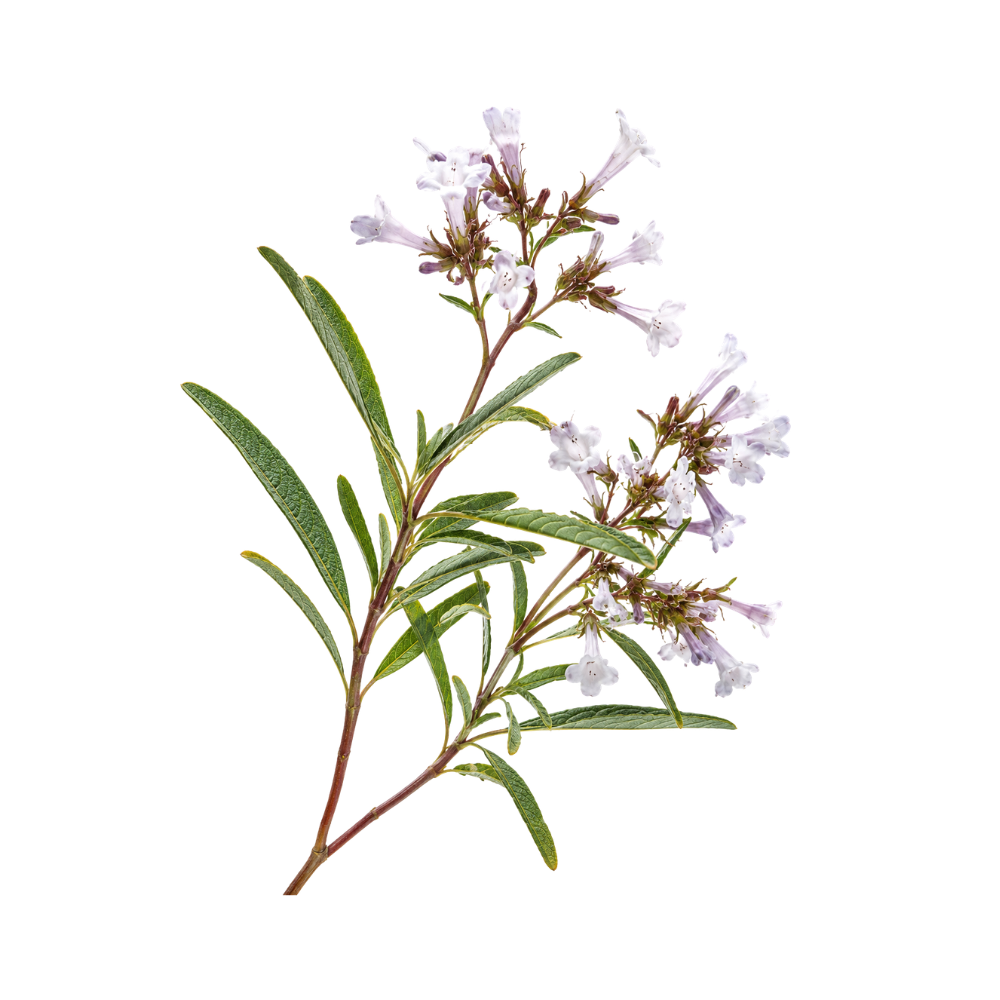
6-Methoxynaringenin is a naturally occurring flavanone (methylated), found in Yerba Santa, Common sage relative, Scutellaria luzonica and 1 other source. It is well tolerated orally (low toxicity).
Concentration
Content by Source
Concentrations not reported. No percent-dry-weight or mg/g figures have been published for this compound in its source plants.
6-Methoxynaringenin at a Glance
6-Methoxynaringenin is a methylated flavanone — the 6-methoxy derivative of naringenin, the central citrus flavanone. Structurally it keeps naringenin’s three hydroxyls (at the 5, 7 and 4’ positions) and adds a methoxy group at the 6 position of the A-ring (molecular formula C₁₆H₁₄O₆) 5Reference 5Compound summary: 6-Methoxynaringenin (CID 46893290)View study →.
It is a genuinely minor, thinly studied molecule. It turns up in phytochemical inventories of yerba santa (Eriodictyon californicum) and a handful of Lamiaceae — Salvia and Scutellaria — but almost always as one flavanone among many in an activity-guided fraction or an analytical profile, not as an isolate with a pharmacology of its own 1,
Honesty is the point: there are no dedicated efficacy, pharmacokinetic or clinical studies of 6-methoxynaringenin. The antioxidant and antimicrobial properties sometimes attributed to it are class-level expectations for flavanones, or belong to whole extracts in which it was a co-occurring compound — not measured effects of the pure molecule. Its safety flag is low, but that reflects the low toxicity of dietary flavanones generally rather than a toxicology package for this specific compound.
Structure & Relationship To Naringenin
The parent, naringenin, is 4’,5,7-trihydroxyflavanone. 6-Methoxynaringenin adds a single methoxy substituent at C-6 of the A-ring, giving 4’,5,7-trihydroxy-6-methoxyflavanone (PubChem CID 46893290; CAS 94942-49-1) 5Reference 5Compound summary: 6-Methoxynaringenin (CID 46893290)View study →.
Two points of clarification matter here, because the naming is easy to confuse:
- It is not an O-methyl ether of one of naringenin’s hydroxyls. That family is a separate set of molecules — sakuranetin is 7-O-methylnaringenin, and isosakuranetin is 4’-O-methylnaringenin. 6-Methoxynaringenin instead carries an extra oxygenation at a ring carbon (C-6) that is unsubstituted in naringenin.
- The corresponding 6-methoxy-7-O-methyl compound, sakuranetin’s relative 6-methoxysakuranetin, and the co-occurring hesperetin and 6-methoxyhesperetin are the near neighbours it is most often isolated alongside in yerba santa 1,
2Reference 1Isolation of potential cancer chemopreventive agents from Eriodictyon californicumView study →Reference 2In vitroIn vitro evaluation of flavonoids from Eriodictyon californicum for antagonist activity against the bitterness receptor hTAS2R31View study → .
The compound is chiral at C-2; PubChem’s named record is the (2S) enantiomer, while the CAS 94942-49-1 registration (CID 5322074) covers the same constitution without a fixed configuration 5Reference 5Compound summary: 6-Methoxynaringenin (CID 46893290)View study →. Natural isolates are not always assigned a firm stereochemistry.
What It's Used For
There is no application-level evidence base for 6-methoxynaringenin as an isolate — no ranked evidence table is warranted, because no use has been tested on the pure molecule. What exists is a short list of studies in which the compound was isolated and identified, plus class-level expectations for flavanones.
The two best-documented appearances are both whole-fraction, activity-guided isolations from yerba santa rather than tests of the purified compound:
- In an anticancer chemoprevention screen, activity-guided fractionation of Eriodictyon californicum isolated twelve flavonoids that inhibited metabolic activation of the carcinogen benzo[a]pyrene in hamster embryo cells; 6-methoxynaringenin was among the flavanones characterised, but the fractions of most interest were driven by other constituents (cirsimaritin, chrysoeriol) 1Reference 1Isolation of potential cancer chemopreventive agents from Eriodictyon californicumView study →.
- In bitterness-masking research, ten flavonoids were isolated from yerba santa (a plant historically used to mask pharmaceutical bitterness) and screened against the human bitter-taste receptor hTAS2R31; the three antagonists identified were sakuranetin, 6-methoxysakuranetin and jaceosidin — 6-methoxynaringenin was isolated but was not among the actives 2Reference 2In vitroIn vitro evaluation of flavonoids from Eriodictyon californicum for antagonist activity against the bitterness receptor hTAS2R31View study →.
Gap: every functional readout here belongs to a mixture or to a different flavonoid in the same plant. There is no study in which purified 6-methoxynaringenin was dosed and an effect measured, so its own activity — antioxidant potency, any receptor or enzyme target, any in-vivo effect — is unquantified.
Mechanisms
No mechanistic studies of the isolated molecule exist. As a flavanone bearing the 5,7,4’-trihydroxy motif of naringenin, radical-scavenging antioxidant behaviour is chemically plausible, and the added 6-methoxy group would be expected to modestly shift lipophilicity and metabolism relative to naringenin — but neither has been measured for this compound. No target, pathway or enzyme interaction has been demonstrated for 6-methoxynaringenin specifically.
Pharmacokinetics
No pharmacokinetic data. Absorption, oral bioavailability, metabolism, conjugation and half-life have not been reported for 6-methoxynaringenin. By analogy with other dietary flavanones (naringenin, sakuranetin), extensive first-pass glucuronidation/sulfation and low oral bioavailability would be expected — but this is an expectation, not a measurement, and should not be read as data.
Clinical Trials
There are no clinical trials of 6-methoxynaringenin, and no preclinical efficacy studies of the isolate either. The only human-relevant work is the in-vitro bitter-receptor assay above, in which it was a screened (inactive) compound rather than a therapeutic candidate 2Reference 2In vitroIn vitro evaluation of flavonoids from Eriodictyon californicum for antagonist activity against the bitterness receptor hTAS2R31View study →.
| Completed | Planned | Terminated | Preclinical |
|---|---|---|---|
| None | None | None | None on the isolate (only whole-fraction isolation work) |
Last checked: July 2026.
Isolate vs. Plant Studies
This molecule sits firmly on the plant/extract side of the divide, and almost entirely as a bystander. Every study that mentions it did so while fractionating a whole plant — yerba santa leaf 1,
Prevalence in Nature
6-Methoxynaringenin is a minor, sporadically reported flavanone with no quantified abundance in the literature. Its documented occurrences are:
- Yerba santa (Eriodictyon californicum) — reported among the characteristic flavanones of the sticky leaf, alongside sterubin, eriodictyol, homoeriodictyol, hesperetin and sakuranetin 1,
2Reference 1Isolation of potential cancer chemopreventive agents from Eriodictyon californicumView study →Reference 2In vitroIn vitro evaluation of flavonoids from Eriodictyon californicum for antagonist activity against the bitterness receptor hTAS2R31View study → . - Salvia plebeia (a common sage relative, Lamiaceae) — reported in phenolic profiling of the herb, including as the 7-O-glucoside, named naasalvinin A 3Reference 3Phenolic profiling and quantitative determination of common sage (Salvia plebeia RView study →.
- Scutellaria luzonica (Lamiaceae) — reported among flavonoid derivatives isolated from the genus 4Reference 4Bioactive flavonoid derivatives from Scutellaria luzonicaView study →.
No source has published a concentration figure for it, so a comparative “content by source” chart is not possible; the holes (which plant part, what percent dry weight, whether it is ever a major rather than trace flavanone) are logged in the compound’s gaps tracker.
Discovery & Synthesis
6-Methoxynaringenin was not the subject of a landmark isolation paper — it entered the literature as one of several flavanones catalogued during phytochemical work on Eriodictyon californicum and, later, Lamiaceae genera 1,
Patents: not yet researched.
Toxicity & Safety
6-Methoxynaringenin carries a low flag, consistent with dietary flavanones of the naringenin family. This reflects the absence of any signal of concern and the low toxicity of the class, not a dedicated toxicology dataset — none exists for this compound.
- Dietary flavanone class. Structurally a close relative of naringenin and other food flavanones, which are generally well tolerated at dietary intakes.
- No compound-specific safety data. No genotoxicity, repeat-dose, reproductive or interaction studies have been performed on the isolate; “low” is a class inference, not a measured profile.
- Interactions not assessed. Related flavanones can affect drug-metabolising enzymes and transporters in vitro; whether 6-methoxynaringenin does so has not been tested, so no interaction claim — reassuring or cautionary — can be made.
Reproductive and developmental safety have not been studied for this molecule; as with any concentrated plant constituent, decisions about intake during pregnancy or lactation belong to the specific herb or product, not to this phytochemistry page.
Dosage
There is no established dose for 6-methoxynaringenin. It is not sold or studied as a stand-alone supplement, and exposure occurs only incidentally, as a minor flavanone in yerba santa and a few Lamiaceae. No dosing figures can be given; any milligram numbers found on related pages belong to other flavanones (naringenin, sakuranetin), not to this compound. These notes describe the state of the research, not a personal recommendation.
References
- Liu YL, Ho DK, Cassady JM, Cook VM, Baird WM (1992). Isolation of potential cancer chemopreventive agents from Eriodictyon californicum. Journal of Natural Products. https://pubmed.ncbi.nlm.nih.gov/1593282/
- Fletcher JN, Kinghorn AD, Slack JP, McCluskey TS, Odley A, Jia Z (2011). In vitro evaluation of flavonoids from Eriodictyon californicum for antagonist activity against the bitterness receptor hTAS2R31. Journal of Agricultural and Food Chemistry. https://pubmed.ncbi.nlm.nih.gov/22059530/
- Lee SH, Kim HW, Lee MK, et al. (2018). Phenolic profiling and quantitative determination of common sage (Salvia plebeia R. Br.) by UPLC-DAD-QTOF/MS. European Food Research and Technology. https://doi.org/10.1007/s00217-018-3076-6
- Bai M, Zheng CJ, Wu LJ, et al. (2018). Bioactive flavonoid derivatives from Scutellaria luzonica. Chemistry of Natural Compounds. https://doi.org/10.1007/s10600-018-2342-y
- PubChem (National Library of Medicine). Compound summary: 6-Methoxynaringenin (CID 46893290). https://pubchem.ncbi.nlm.nih.gov/compound/46893290



