
Compound Monograph
Eriodictyol
Eriodictyol is the namesake flavanone of yerba santa (Eriodictyon californicum) — literally named after the genus — and a minor flavanone of citrus peel and many other plants. It is best characterised as a cytoprotective antioxidant that activates the Nrf2/HO-1 pathway, and it is the parent molecule of two of yerba santa's better-known relatives, sterubin and homoeriodictyol. Its evidence is almost entirely preclinical, with no trials of the isolate.

Sources · 6
Where Does It Come From?
Eriodictyol is a naturally occurring flavonoid (flavanone), found in Yerba Santa, Citrus fruits and 4 other sources. It is well tolerated orally (low toxicity).
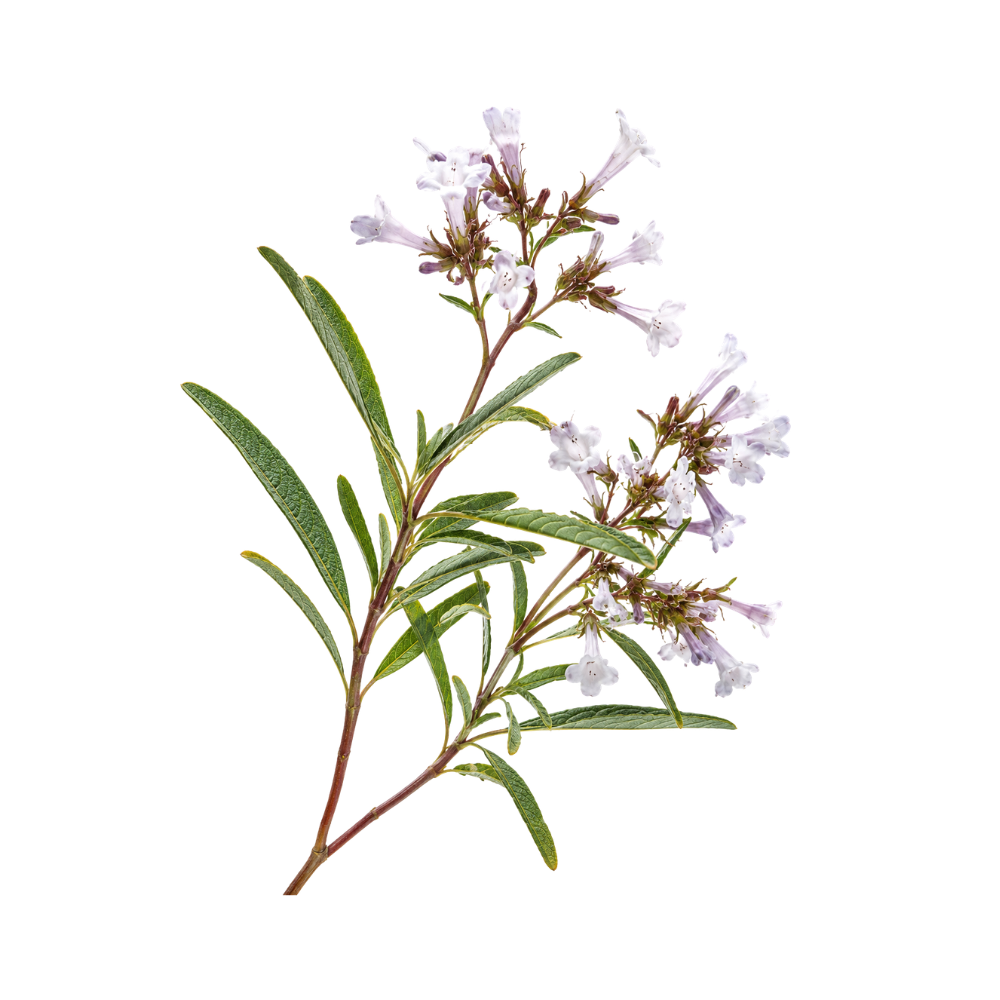 Principal source Yerba Santa Eriodictyon californicum Herb monograph →
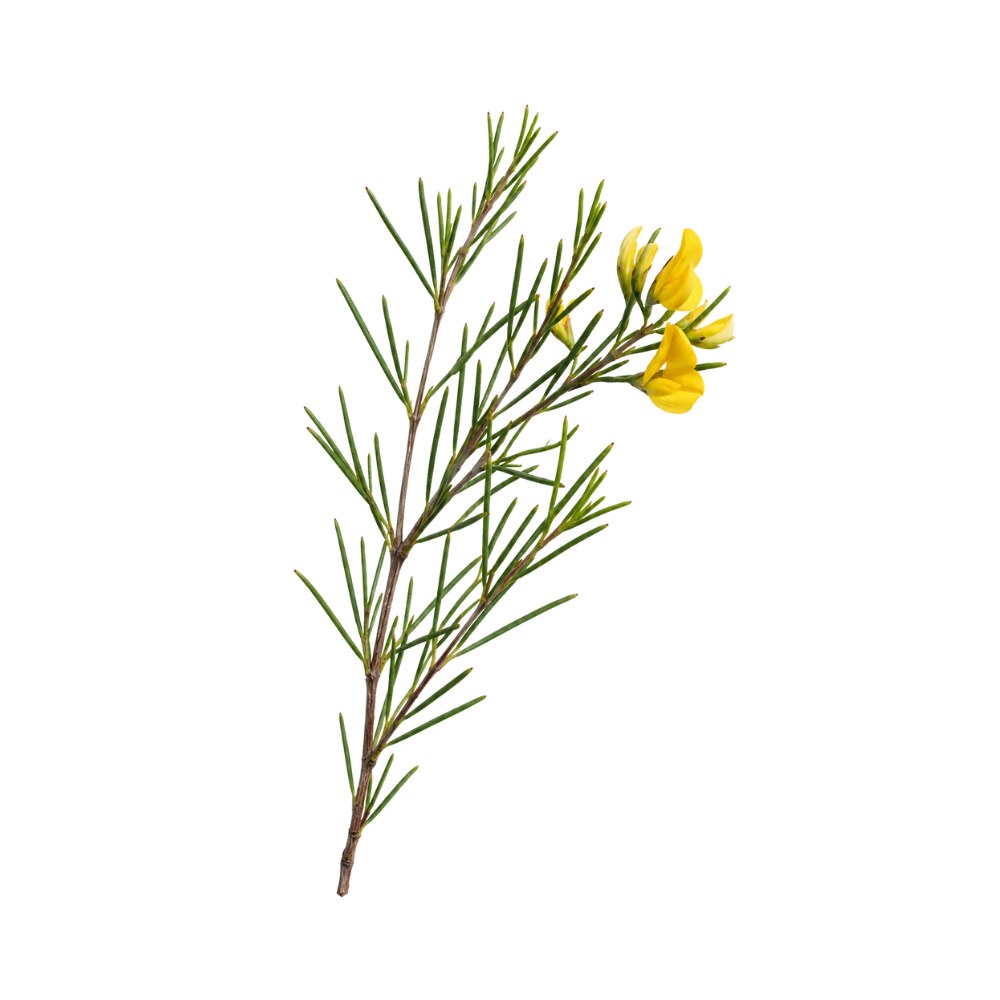 Source Rooibos Aspalathus linearis Herb monograph →
Concentration
Content by Source
Concentrations not reported. No percent-dry-weight or mg/g figures have been published for this compound in its source plants.
Eriodictyol at a Glance
Eriodictyol is a flavanone — 5,7,3’,4’-tetrahydroxyflavanone — first characterised from and named after yerba santa (Eriodictyon californicum), whose genus gives the molecule its name. It also occurs as a minor flavanone in citrus peel (the aglycone of the glycoside eriocitrin) and, at low levels, across many other plants 1Reference 1Pharmacological activity of eriodictyol: the major natural polyphenolic flavanoneView study →.
Its clearest identity in the research literature is as a cytoprotective antioxidant: eriodictyol is a well-documented activator of the Nrf2/HO-1 antioxidant pathway, and most of its preclinical pharmacology — anti-inflammatory, anti-allergic and chemopreventive signals — traces back to that redox and inflammatory modulation 1,
The honest headline is that eriodictyol’s evidence is almost entirely preclinical — cell and rodent models of the isolated molecule, with no human trials of eriodictyol itself. As a minor dietary flavanone it carries a low intrinsic-risk profile, but that reflects class chemistry and food exposure rather than a dedicated safety dossier.
Eriodictyol, Sterubin & Homoeriodictyol
Eriodictyol is the parent flavanone of the yerba-santa flavanone family, and the relationship is the tidiest way to understand why its methylated relatives behave differently. Both siblings are monomethyl ethers of eriodictyol — they differ only in which hydroxyl is capped:
- Sterubin is (2S)-7-O-methyleriodictyol — methylated on the A-ring 7-hydroxyl, so it retains the intact 3’,4’-catechol B-ring. That preserved catechol is why sterubin, not the other two, carries the potent Nrf2/antioxidant/iron-chelating neuroprotective activity identified in Salk Institute Alzheimer’s screening 1Reference 1Pharmacological activity of eriodictyol: the major natural polyphenolic flavanoneView study →.
- Homoeriodictyol is the 3’-O-methyl ether — methylated on the B-ring, which breaks the catechol. Its fame is not therapeutic but sensory: as its sodium salt it is a commercial bitter-masking flavour ingredient 9Reference 9Evaluation of bitter-masking flavanones from Herba Santa (Eriodictyon californicum)View study →.
Eriodictyol itself sits at the head of this series with a free, intact catechol B-ring — the structural feature associated with strong radical scavenging and Nrf2 induction. It is also one of the taste-active flavanones evaluated in yerba santa’s bitter-masking chemistry, though the commercial masker is the methylated homoeriodictyol, not eriodictyol 9Reference 9Evaluation of bitter-masking flavanones from Herba Santa (Eriodictyon californicum)View study →. Reading the three pages together closes the yerba-santa flavanone family: one parent catechol flavanone (eriodictyol), one A-ring methyl ether that keeps the catechol and the potent neuro-activity (sterubin), and one B-ring methyl ether that trades it for taste-masking (homoeriodictyol).
Eriodictyol vs. Luteolin
Eriodictyol shares its exact hydroxylation pattern (5,7,3’,4’) with the flavone luteolin — the two are the flavanone and flavone versions of the same substitution. The only difference is the C-ring: eriodictyol is a flavanone (a saturated, chiral C2–C3 single bond with a stereocentre at C2), whereas luteolin is a flavone (a flat, planar C2=C3 double bond).
That one bond matters. The planar flavone geometry of luteolin generally makes it a more potent, more rigid ligand at many protein targets and a stronger literature presence, while eriodictyol’s saturated, non-planar flavanone ring makes it a softer, chiral molecule (it exists as R and S enantiomers, both antioxidant-active). In practice the two are studied for overlapping antioxidant and anti-inflammatory effects, but they are not interchangeable: luteolin is the flavone, eriodictyol its reduced flavanone relative, and each should be read on its own evidence.
Nrf2 Cytoprotection
If eriodictyol has a signature mechanism, it is activation of the Nrf2/ARE antioxidant response. Nrf2 (nuclear factor erythroid 2–related factor 2) is a master transcription factor that, once released and translocated to the nucleus, switches on a battery of cytoprotective genes — most notably heme oxygenase-1 (HO-1) and γ-glutamylcysteine synthetase (γ-GCS), the rate-limiting enzyme for glutathione synthesis.
In neuron-like PC12 cells, eriodictyol induced Nrf2 nuclear translocation, up-regulated HO-1 and γ-GCS, raised intracellular glutathione, and protected against hydrogen-peroxide-induced death — an effect abolished when HO-1 was inhibited or knocked down, pinning the protection to that axis 3Reference 3Eriodictyol protects against H₂O₂-induced neuron-like PC12 cell death through activation of Nrf2/ARE signaling pathwayView study →. The same cascade recurs across models: eriodictyol protected against arsenic-trioxide liver injury in mice by activating Nrf2 4Reference 4Eriodictyol attenuates arsenic trioxide-induced liver injury by activation of Nrf2View study →, and reduced high-glucose oxidative stress and inflammation in retinal ganglion cells through Nrf2/HO-1 5Reference 5Eriodictyol inhibits high glucose-induced oxidative stress and inflammation in retinal ganglial cellsView study →. This is the through-line beneath most of eriodictyol’s downstream anti-inflammatory and chemopreventive signals: it is fundamentally a redox-modulating, cytoprotective flavanone, with the intact catechol B-ring doing the chemical work.
What It's Used For
Beyond the Nrf2 mechanism, eriodictyol’s evidence splits into three preclinical threads — antioxidant/cytoprotective, anti-inflammatory/anti-allergic, and chemopreventive — all tested on the isolated molecule in cell or rodent models.
Support is an experimental score — weighted by study type (human > animal > in vitro) and volume. A beta, not a validated metric. No human data exists for eriodictyol, so scores stay low by design despite the mechanistic depth.
The best-supported application and the mechanistic core of the page. As a catechol flavanone, eriodictyol is a direct radical scavenger, but its distinctive activity is inducing the Nrf2/ARE cytoprotective program: it drives Nrf2 nuclear translocation and up-regulates HO-1 and γ-GCS, raising glutathione and protecting PC12 neurons from H₂O₂ — with the protection lost when HO-1 is blocked 3Reference 3Eriodictyol protects against H₂O₂-induced neuron-like PC12 cell death through activation of Nrf2/ARE signaling pathwayView study →.
The same axis protects mouse liver from arsenic-trioxide toxicity 4Reference 4Eriodictyol attenuates arsenic trioxide-induced liver injury by activation of Nrf2View study → and rat retinal ganglion cells from high-glucose stress 5Reference 5Eriodictyol inhibits high glucose-induced oxidative stress and inflammation in retinal ganglial cellsView study →, and enantioselective work shows both R- and S-eriodictyol are comparably protective against oxidative stress in endothelial cells 1Reference 1Pharmacological activity of eriodictyol: the major natural polyphenolic flavanoneView study →.
Gap: entirely isolate-in-cell / isolate-in-rodent — no human antioxidant outcome rests on eriodictyol, and its poor oral bioavailability (see Pharmacokinetics) undercuts the in-vitro potency when translated to a swallowed dose 11Reference 11AnimalPharmacokinetics of selected chiral flavonoids: hesperetin, naringenin and eriodictyol in rats and their content in fruit juicesView study →.
Eriodictyol suppresses allergic and inflammatory signalling in preclinical models. In an IgE/antigen type-I hypersensitivity model it inhibited mast-cell degranulation through inhibition of ceramide kinase (CERK), reducing the allergic response in mice as well as in cultured mast cells 6Reference 6Inhibitory effect of eriodictyol on IgE/Ag-induced type I hypersensitivityView study →; and in an amyloid-β(25–35) mouse model, eriodictyol (with homoeriodictyol) improved memory impairment by inhibiting the NLRP3 inflammasome 7Reference 7AnimalEriodictyol and homoeriodictyol improve memory impairment in Aβ(25–35)-induced mice by inhibiting the NLRP3 inflammasomeView study →.
These sit downstream of the same redox/Nrf2 modulation described above.
Gap: cell and short-term rodent only, at investigator-chosen doses, with no replication in humans; the anti-allergic and neuro-inflammatory signals are single-model findings, not an established indication 6,
The oldest thread in eriodictyol’s file. It was one of the flavonoids isolated from Eriodictyon californicum in a cancer-chemoprevention screen, characterised by its inhibition of benzo[a]pyrene (carcinogen) metabolism in cell culture 10Reference 10Isolation of potential cancer-chemopreventive agents from Eriodictyon californicumView study →; and as an isolate it reduced preneoplastic lesions, oxidative stress and bacterial enzyme activity in a 1,2-dimethylhydrazine rat colon-carcinogenesis model, where the authors concluded it acted as an effective chemopreventive agent 8Reference 8Effect of eriodictyol on preneoplastic lesions, oxidative stress and bacterial enzymes in 1,2-dimethylhydrazine-induced colon carcinogenesisView study →.
Gap: a single rodent chemoprevention study plus in-vitro carcinogen-metabolism data — mechanistically plausible via the antioxidant/Nrf2 route, but no clinical or even tumour-model efficacy for the isolate 8,
Mechanisms
| Target / pathway | Effect | Relevant to |
|---|---|---|
| Nrf2 / ARE (with HO-1, γ-GCS, glutathione) | nuclear translocation → induces cytoprotective antioxidant genes (HO-1-dependent) | antioxidant / cytoprotection (the signature mechanism) |
| Catechol B-ring radical scavenging | direct reactive-oxygen-species quenching | antioxidant |
| Ceramide kinase (CERK) / mast-cell degranulation | inhibition → reduced IgE/Ag-driven allergic response | anti-allergic |
| NLRP3 inflammasome | inhibition (Aβ mouse model) | anti-inflammatory / neuroprotective |
| Benzo[a]pyrene / carcinogen metabolism | inhibition of metabolic activation in vitro | chemoprevention |
Only the Nrf2/HO-1 axis is established across several independent models; the CERK, NLRP3 and carcinogen-metabolism findings are each single-context results.
Pharmacokinetics
Eriodictyol is a flavanone aglycone with poor oral bioavailability. In a stereoselective rat pharmacokinetic study it underwent rapid and extensive phase-II metabolism (glucuronidation/sulfation) with predominantly non-renal elimination and short serum half-lives, the classic profile of a citrus-type flavanone 11Reference 11AnimalPharmacokinetics of selected chiral flavonoids: hesperetin, naringenin and eriodictyol in rats and their content in fruit juicesView study →. As a chiral molecule it exists as R and S enantiomers, both of which are antioxidant-active 1Reference 1Pharmacological activity of eriodictyol: the major natural polyphenolic flavanoneView study →. No dedicated human pharmacokinetic study of eriodictyol exists; in food it is largely present as the glycoside eriocitrin, which must be deglycosylated before the aglycone is absorbed. The practical consequence is a large gap between in-vitro potency and achievable plasma levels, which should be held against every cell-based claim above.
Clinical Trials
There are no clinical trials of isolated eriodictyol — none completed, ongoing, planned or terminated. All efficacy evidence is cell-based or rodent (mast-cell/hypersensitivity 6Reference 6Inhibitory effect of eriodictyol on IgE/Ag-induced type I hypersensitivityView study →, Aβ memory 7Reference 7AnimalEriodictyol and homoeriodictyol improve memory impairment in Aβ(25–35)-induced mice by inhibiting the NLRP3 inflammasomeView study →, colon carcinogenesis 8Reference 8Effect of eriodictyol on preneoplastic lesions, oxidative stress and bacterial enzymes in 1,2-dimethylhydrazine-induced colon carcinogenesisView study →, and the Nrf2 cytoprotection models 3,
| Completed | Planned | Terminated | Preclinical |
|---|---|---|---|
| —(none, isolate) | — | — | Cell + rodent (antioxidant/Nrf2, anti-inflammatory, chemopreventive) |
Last checked: July 2026.
Isolate vs. Plant Studies
Eriodictyol’s evidence base is unusually isolate-heavy — which cuts both ways. The Nrf2/HO-1, mast-cell and chemoprevention studies all use the purified molecule, so they genuinely test eriodictyol rather than a mixed extract 3,
Prevalence in Nature
Eriodictyol is a widespread minor flavanone. Its defining source is yerba santa (Eriodictyon californicum), the plant it is named after, where it occurs alongside its methyl ethers homoeriodictyol and sterubin and the taste-active prenylated benzoic acids 9,
It turns up as a constituent of other medicinal plants too: it is one of the phenolics identified (with epicatechin) in the polyphenol-rich (~82%) resin of epena (Virola oleifera), where the whole resin is gastroprotective 13Reference 13Gastroprotective activity of the resin from Virola oleiferaView study →. Quantified concentrations for eriodictyol specifically are sparse — the detailed yerba-santa chemotype work quantifies sterubin, homoeriodictyol and the eriolic acids rather than the parent eriodictyol 12Reference 12Chemical composition of Eriodictyon californicum (California yerba santa) cultivated in Ontario, Oregon, USAView study → — so its abundance is best described qualitatively as minor but widespread.
Discovery & Synthesis
Eriodictyol takes its name directly from yerba santa’s genus, Eriodictyon, from which the flavanone was characterised — the etymology is the clearest fact in its history. The precise primary-isolation report is not documented in the sources reviewed here, and should be treated as a gap to confirm on a later pass rather than stated with false confidence. Its structure — 5,7,3’,4’-tetrahydroxyflavanone, the flavanone counterpart of the flavone luteolin — is well established, and it is a chiral molecule obtained in nature and in synthesis as a mix or single enantiomers 1Reference 1Pharmacological activity of eriodictyol: the major natural polyphenolic flavanoneView study →.
Manufacture today is chiefly by extraction/semi-synthesis from citrus-derived flavanone precursors (eriocitrin/hesperidin chemistry) rather than large-scale total synthesis; it is available as a research-grade fine chemical. A full production and enantioselective-synthesis account was not resolved here.
Patents: not yet researched.
Toxicity & Safety
Eriodictyol carries a low flag, consistent with its sibling yerba-santa flavanones. It is a minor dietary flavanone of citrus and edible plants with no isolate toxicity signal reported in the preclinical studies above — but that low flag reflects class chemistry and food-level exposure, not a dedicated safety dossier.
- Minor dietary flavanone. Consumed as a natural constituent of citrus peel and yerba-santa preparations, with no overt toxicity reported in preclinical studies.
- No human safety data for the isolate. No chronic-toxicity, genotoxicity or clinical dataset exists for eriodictyol as a supplement.
- Poor oral bioavailability and unassessed interactions. Extensive phase-II metabolism; drug-interaction and pregnancy/lactation risks are not characterised for the isolate.
Full Safety & Interactions Detail
Eriodictyol’s low flag rests on class-chemistry and dietary-exposure grounds: it is a minor flavanone of citrus and edible plants, and the rodent efficacy studies dosed the isolate without reporting overt toxicity 4,
There is no dedicated chronic-toxicity, genotoxicity or human safety dataset for isolated eriodictyol, so the low flag reflects short-term animal exposure and food-level intake rather than a full dossier. As a catechol flavanone it is subject to the usual phase-II conjugation (glucuronidation/sulfation) 11Reference 11AnimalPharmacokinetics of selected chiral flavonoids: hesperetin, naringenin and eriodictyol in rats and their content in fruit juicesView study →; specific cytochrome-P450 or transporter interactions have not been characterised, so herb-drug interaction risk is unassessed rather than ruled out.
Reproductive note (prose only). No reproductive or developmental-toxicity dataset exists for isolated eriodictyol. Pregnancy and lactation decisions belong to the herb or product page where intake is decided, not to this molecule page — incidental dietary/flavour-level exposure is presumably low-concern, but isolated or supplemental use is uncharacterised.
Dosage
There is no established therapeutic dose for eriodictyol — there is nothing validated to dose for. All efficacy data are preclinical (cell and rodent) 3,
References
- Deng Z, et al. (2020). Pharmacological activity of eriodictyol: the major natural polyphenolic flavanone. Evidence-Based Complementary and Alternative Medicine. https://pubmed.ncbi.nlm.nih.gov/33414838/
- Habtemariam S (2019). The Nrf2/HO-1 axis as targets for flavanones: neuroprotection by pinocembrin, naringenin, and eriodictyol. Oxidative Medicine and Cellular Longevity. https://pubmed.ncbi.nlm.nih.gov/31814878/
- Lou H, et al. (2012). Eriodictyol protects against H₂O₂-induced neuron-like PC12 cell death through activation of Nrf2/ARE signaling pathway. Neurochemistry International. https://pubmed.ncbi.nlm.nih.gov/22609376/
- Xie G, et al. (2017). Eriodictyol attenuates arsenic trioxide-induced liver injury by activation of Nrf2. Oncotarget. https://pubmed.ncbi.nlm.nih.gov/28978146/
- Lv P, et al. (2019). Eriodictyol inhibits high glucose-induced oxidative stress and inflammation in retinal ganglial cells. Journal of Cellular Biochemistry. https://pubmed.ncbi.nlm.nih.gov/30317656/
- Yoo JM, et al. (2012). Inhibitory effect of eriodictyol on IgE/Ag-induced type I hypersensitivity. Bioscience, Biotechnology, and Biochemistry. https://pubmed.ncbi.nlm.nih.gov/22785465/
- Guo P, et al. (2022). Eriodictyol and homoeriodictyol improve memory impairment in Aβ(25–35)-induced mice by inhibiting the NLRP3 inflammasome. Molecules. https://pubmed.ncbi.nlm.nih.gov/35458684/
- Mariyappan P, et al. (2017). Effect of eriodictyol on preneoplastic lesions, oxidative stress and bacterial enzymes in 1,2-dimethylhydrazine-induced colon carcinogenesis. Toxicology Research. https://pubmed.ncbi.nlm.nih.gov/30090535/
- Ley JP, et al. (2005). Evaluation of bitter-masking flavanones from Herba Santa (Eriodictyon californicum). Journal of Agricultural and Food Chemistry. https://pubmed.ncbi.nlm.nih.gov/16028996/
- Liu YL, et al. (1992). Isolation of potential cancer-chemopreventive agents from Eriodictyon californicum. Journal of Natural Products. https://pubmed.ncbi.nlm.nih.gov/1593282/
- Yáñez JA, et al. (2008). Pharmacokinetics of selected chiral flavonoids: hesperetin, naringenin and eriodictyol in rats and their content in fruit juices. Biopharmaceutics & Drug Disposition. https://pubmed.ncbi.nlm.nih.gov/18058792/
- Shock CC, et al. (2026). Chemical composition of Eriodictyon californicum (California yerba santa) cultivated in Ontario, Oregon, USA. Molecules. https://pubmed.ncbi.nlm.nih.gov/42076034/
- Pereira ACH, et al. (2017). Gastroprotective activity of the resin from Virola oleifera. Pharmaceutical Biology. https://pubmed.ncbi.nlm.nih.gov/27937036/



