
Compound Monograph
alpha-Turmerone
alpha-Turmerone (α-turmerone) is a non-aromatic bisabolane sesquiterpene ketone of turmeric essential oil — distinct from curcumin and from its aromatic sibling ar-turmerone. Isolate data are thin: one in-vitro anti-proliferative/apoptosis study and a P-glycoprotein/curcumin-transport finding, with most other activity reported for the whole turmerone fraction rather than the pure compound.

Sources · 4
Where Does It Come From?
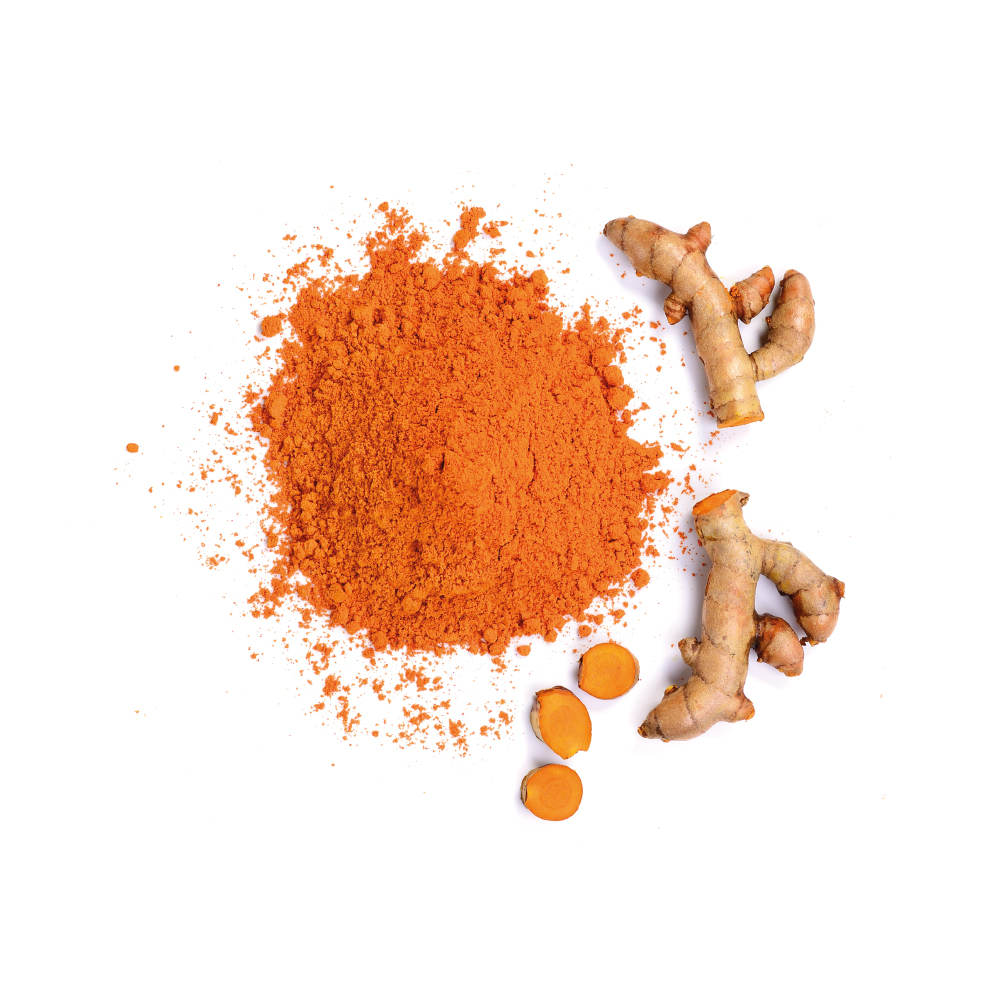
alpha-Turmerone is a naturally occurring bisabolane sesquiterpene, found in Turmeric and 3 other sources. It is well tolerated orally (low toxicity).
Concentration
Content by Source
Concentrations not reported. No percent-dry-weight or mg/g figures have been published for this compound in its source plants.
alpha-Turmerone at a Glance
alpha-Turmerone (α-turmerone) is one of the three “turmerones” that dominate the steam-distilled essential oil of turmeric (Curcuma longa) — the aromatic, non-curcuminoid fraction of the spice. Chemically it is a bisabolane sesquiterpene ketone with a non-aromatic six-membered ring, which is what separates it from its better-studied aromatic sibling ar-turmerone.
It is emphatically not a curcuminoid. Turmeric’s headline human evidence belongs to curcumin and the curcuminoid extracts — a completely different class of molecule (a diarylheptanoid pigment) — and none of that data may be read onto α-turmerone.
The honest state of the isolate is thin. Most published “turmerone” bioactivity is reported for the whole turmerone/essential-oil fraction or resolves to ar-turmerone; only a handful of studies test purified α-turmerone. Where it is resolved, the two most specific findings are an in-vitro anti-proliferative/pro-apoptotic effect on cancer cells 1Reference 1In vitroEvaluation of in vitro anti-proliferative and immunomodulatory activities of compounds isolated from Curcuma longaView study → and an unusual role as a native curcumin-absorption enhancer that inhibits intestinal P-glycoprotein 2Reference 2The role of turmerones on curcumin transportation and P-glycoprotein activities in intestinal Caco-2 cellsView study →.
alpha-Turmerone vs. ar-Turmerone & beta-Turmerone
The turmerones are close chemical relatives, and keeping them apart is the whole point — the literature routinely reports “turmerone” without saying which one, and their names invite confusion.
- ar-Turmerone (“aromatic turmerone”) has a fully aromatic benzene ring (a para-tolyl group). It carries turmeric oil’s most distinctive signal — the promotion of neural stem cell proliferation and anti-neuroinflammatory activity — and has its own full page. That neurogenesis story is ar-turmerone’s, not α-turmerone’s, and is deliberately kept out.
- alpha-Turmerone replaces that aromatic ring with a non-aromatic 1,4-cyclohexadiene ring — a bisabolane sesquiterpene ketone rather than an aryl one.
- beta-Turmerone (also called curlone) is the co-occurring double-bond isomer, differing in the position of unsaturation.
Because α- and β-turmerone are non-aromatic and structurally very similar, many analytical and bioactivity papers group them together or report them as a mixture. Where a study does not resolve the individual compound, the finding is attributed to “turmerones” rather than to α-turmerone specifically.
Turmerone as a Curcumin Absorption Enhancer
One of the few genuinely α-turmerone-specific findings is also its most interesting: in a Caco-2 intestinal-cell model, α-turmerone (alongside ar-turmerone) significantly increased the transport of curcumin and inhibited P-glycoprotein (P-gp) efflux activity 2Reference 2The role of turmerones on curcumin transportation and P-glycoprotein activities in intestinal Caco-2 cellsView study →. In other words, a molecule that naturally co-occurs with curcumin in the rhizome may help the poorly-absorbed curcuminoid cross the gut wall — an endogenous, turmeric-native parallel to the well-known piperine enhancement effect, though on a different transporter.
Gap: this is a single in-vitro cell-model finding, not a human pharmacokinetic study, and it does not establish that eating turmeric oil meaningfully raises curcumin exposure in people 2Reference 2The role of turmerones on curcumin transportation and P-glycoprotein activities in intestinal Caco-2 cellsView study →.
What It's Used For
Beyond the absorption-enhancer finding above, α-turmerone’s pharmacology is mostly whole-fraction or mixture data, with one resolved anticancer study and a computational anti-inflammatory signal. Read each row for whether the isolated compound was actually tested.
Support is an experimental score — weighted by study type (human > animal > in vitro) and volume. A beta, not a validated metric. No human isolate data, so scores stay low by design.
The most cleanly isolate-resolved activity. Purified α-turmerone — one of several compounds fractionated from Curcuma longa — showed dose-dependent anti-proliferative activity against MDA-MB-231 breast-cancer cells (IC50 in the ~11–41.8 µg/mL range across the tested compounds) and induced apoptosis, with a significant decrease in procaspases-3, -8 and -9 indicating caspase-cascade activation; the turmerones also stimulated cytokine production in peripheral-blood mononuclear cells (an immunomodulatory signal) 1Reference 1In vitroEvaluation of in vitro anti-proliferative and immunomodulatory activities of compounds isolated from Curcuma longaView study →.
Gap: a single in-vitro study on one cell line at micromolar-to-high concentrations, with no animal tumour model and no human oncology data for the isolate 1Reference 1In vitroEvaluation of in vitro anti-proliferative and immunomodulatory activities of compounds isolated from Curcuma longaView study →.
A plausible but under-resolved signal. In a molecular-docking study, α-turmerone (with β-turmerone) showed among the best binding affinities for 5-lipoxygenase (5-LOX), suggesting an anti-inflammatory drug-target interaction 3Reference 3Mechanistic insights into 5-lipoxygenase inhibition by active principles derived from essential oils of Curcuma species: molecular docking, ADMET analysis and molecular dynamic simulation studyView study →.
A turmeric-containing traditional preparation in which α-turmerone was a major component showed anti-inflammatory activity in a cell assay (IC50 ~102 µg/mL) 4Reference 4Anti-inflammatory activity and chemical constituents of red limestone traditionally used in Thai medicineView study →.
inhaled turmerones attenuated nicotine-induced aortic degeneration through anti-inflammatory mechanisms in mice, though the effect was attributed chiefly to ar-turmerone 5Reference 5Inhaled turmerone can attenuate nicotine-induced degeneration of the aortaView study →.
Gap: the 5-LOX finding is computational (docking, no wet-lab enzyme or cell confirmation for the pure compound), the formulation assay is a mixture, and the in-vivo work resolves mainly to ar-turmerone — no isolate anti-inflammatory efficacy is established 3,
Turmeric essential oils in which α-turmerone is a major component (~23.5% in one antifungal study; ~35.6% in another) inhibited Aspergillus flavus growth more strongly than curcumin 7Reference 7The inhibitory effects of Curcuma longa L. essential oil and curcumin on Aspergillus flavus Link growth and morphologyView study → and suppressed Streptococcus mutans growth, acid production and biofilm formation at ≥0.5 mg/mL 8Reference 8Essential oil of Curcuma longa inhibits Streptococcus mutans biofilm formationView study →.
Gap: these are whole-essential-oil effects, not isolate-specific — α-turmerone is the dominant component but was not tested purified, so its individual contribution is unknown 7,
Long-term (~50-day) inhalation of a turmerone mixture (α-, β- and ar-turmerone) suppressed body-weight gain and adipocyte hypertrophy in high-fat-diet mice, with the inhaled compounds detectable in lung, olfactory bulb and brain — a delivery route distinct from oral dosing 6Reference 6AnimalInhaled turmerones can be incorporated in the organs via pathways different from oral administration and can affect weight gain in mice on a high-fat dietView study →.
Gap: the tested material was a turmerone mixture, not isolated α-turmerone, delivered by an unusual inhalation route; no isolate metabolic data in humans exist 6Reference 6AnimalInhaled turmerones can be incorporated in the organs via pathways different from oral administration and can affect weight gain in mice on a high-fat dietView study →.
By bioautography, α-turmerone, β-turmerone and β-sesquiphellandrene were identified as the major radical-scavenging sesquiterpenoids across four Curcuma species 9Reference 9Free radical scavenging activity and characterization of sesquiterpenoids in four species of Curcuma using a TLC bioautography assay and GC-MS analysisView study →.
Gap: a semi-quantitative in-vitro (TLC-bioautography) assay of extract constituents, with no isolate dose-response or in-vivo antioxidant outcome 9Reference 9Free radical scavenging activity and characterization of sesquiterpenoids in four species of Curcuma using a TLC bioautography assay and GC-MS analysisView study →.
Mechanisms
| Target / pathway | Effect | Relevant to |
|---|---|---|
| Caspase-3 / -8 / -9 (procaspase depletion) | activated → apoptosis of cancer cells in vitro | anticancer / anti-proliferative |
| P-glycoprotein (intestinal efflux) | inhibited → ↑ curcumin transport across Caco-2 | curcumin absorption enhancement |
| 5-Lipoxygenase (5-LOX) | high computational binding affinity (docking) | anti-inflammatory (unconfirmed) |
| Pro-inflammatory signalling (inhaled turmerones) | ↓ nicotine-induced aortic inflammation (mainly ar-turmerone) | anti-inflammatory |
| Cytokine production (PBMCs) | stimulated → immunomodulation | immune activation |
| Radical scavenging | antioxidant activity of the sesquiterpenoid fraction | antioxidant |
Pharmacokinetics
α-Turmerone is a small, volatile, lipophilic bisabolane sesquiterpene ketone, and behaves like a typical essential-oil terpenoid: poor and erratic oral bioavailability, high first-pass susceptibility and rapid metabolism. No dedicated human or isolate pharmacokinetic study exists — quantitative absorption, distribution and half-life for purified α-turmerone in people are unknown. Two distinctive wrinkles are worth noting: the molecule itself inhibits intestinal P-glycoprotein and can raise co-administered curcumin transport in cell models 2Reference 2The role of turmerones on curcumin transportation and P-glycoprotein activities in intestinal Caco-2 cellsView study →, and inhaled turmerones reach the lung, olfactory bulb and brain by a route that bypasses first-pass metabolism 6Reference 6AnimalInhaled turmerones can be incorporated in the organs via pathways different from oral administration and can affect weight gain in mice on a high-fat dietView study →. The honest bottom line: no validated human PK, and low oral exposure should be assumed for the free compound absent a delivery formulation.
Clinical Trials
There are no human clinical trials of isolated α-turmerone. All human turmeric evidence pertains to curcumin/curcuminoid extracts or whole spice — a different molecule and fraction — and is deliberately excluded here; the isolate evidence base is entirely in-vitro and rodent.
| Completed | Planned | Terminated | Preclinical |
|---|---|---|---|
| —(none, isolate) | — | — | Limited(in-vitro-led) |
Last checked: July 2026.
Isolate vs. Plant Studies
The evidence for α-turmerone is dominated by whole-oil and mixture work, with only a thin isolate layer. The isolate was genuinely tested in just two useful reports — the breast-cancer anti-proliferative/apoptosis study 1Reference 1In vitroEvaluation of in vitro anti-proliferative and immunomodulatory activities of compounds isolated from Curcuma longaView study → and the Caco-2 P-gp/curcumin-transport study 2Reference 2The role of turmerones on curcumin transportation and P-glycoprotein activities in intestinal Caco-2 cellsView study →. Everything else — antifungal 7Reference 7The inhibitory effects of Curcuma longa L. essential oil and curcumin on Aspergillus flavus Link growth and morphologyView study →, anti-biofilm 8Reference 8Essential oil of Curcuma longa inhibits Streptococcus mutans biofilm formationView study →, anti-obesity 6Reference 6AnimalInhaled turmerones can be incorporated in the organs via pathways different from oral administration and can affect weight gain in mice on a high-fat dietView study → and antioxidant 9Reference 9Free radical scavenging activity and characterization of sesquiterpenoids in four species of Curcuma using a TLC bioautography assay and GC-MS analysisView study → — is whole essential oil or a turmerone mixture in which α-turmerone is merely the (often dominant) marker component, so its individual contribution is unresolved. Crucially, the compound is also frequently confused with ar-turmerone, whose neuro-regeneration and anti-neuroinflammatory record must not be transferred here. When reading any “turmerone” claim, check whether the pure α-isomer, the mixture, or ar-turmerone was actually the thing studied.
Its Role in Plants
α-Turmerone is a sesquiterpene of the turmeric oil fraction, biosynthesised in the rhizome (and, transiently, the leaf) from the sesquiterpene precursor pool. Comparative work on ginger and turmeric tissues showed that suites of terpene synthases generate the bisabolane skeleton, which is then elaborated to the turmerones by oxidation and dehydrogenation; α- and β-turmerone arise from a common precursor via these downstream steps 10Reference 10Suites of terpene synthases explain differential terpenoid production in ginger and turmeric tissuesView study →. As a volatile, lipophilic essential-oil terpenoid, its ecological role is the usual one for such compounds — contributing to the antifungal/antimicrobial and insect-deterrent chemistry of the rhizome oil 7,
Prevalence in Nature
α-Turmerone is one of the principal sesquiterpenes of steam-distilled turmeric (Curcuma longa) essential oil. Across five North-Alabama-grown varieties it ran 13.6–31.5% of the oil, alongside ar-turmerone (6.8–32.5%) and β-turmerone (4.8–18.4%) 11Reference 11Variation in the chemical composition of five varieties of Curcuma longa rhizome essential oils cultivated in North AlabamaView study →; a Nepalese C. longa oil reported ar-turmerone 25.5%, α-turmerone 24.4% and β-turmerone 14.0% 12Reference 12Analysis of volatile constituents in Curcuma species, vizView study →. Broader Curcuma surveys likewise place α-turmerone (with curlone/β-turmerone and ar-turmerone) among the dominant volatiles 15Reference 15Variations in the volatile compositions of Curcuma speciesView study →, and it serves as a routine quality-control marker for turmeric oil and oleoresin 14Reference 14Quantitative determination of eight components in rhizome (Jianghuang) and tuberous root (Yujin) of Curcuma longa using pressurized liquid extraction and gas chromatography-mass spectrometryView study →.
A notable detail for this molecule: α-turmerone is a major component of fresh rhizome oil but only a minor one in dried rhizome — drying and storage shift the volatile profile substantially 13Reference 13Comparative study of chemical composition and antioxidant activity of fresh and dry rhizomes of turmeric (Curcuma longa Linn.)View study →. It also occurs in related species such as wild turmeric (C. aromatica), zedoary (C. zedoaria) and Java turmeric (C. xanthorrhiza). Because the free-compound content depends on cultivar, plant part, freshness and distillation, no single ”% dry weight” figure is meaningful — the reliable numbers are proportions of the essential oil.
Discovery & Synthesis
α-Turmerone was characterised as one of the principal sesquiterpenes of turmeric essential oil during twentieth-century phytochemical study of Curcuma volatiles, where the three turmerones were distinguished from one another — ar-turmerone carrying a fully aromatic ring, α- and β-turmerone carrying non-aromatic cyclohexadiene rings that differ in double-bond position (β-turmerone is also known as curlone). Modern analytical methods routinely resolve and quantify all three by GC-MS and validated HPLC/pressurised-liquid extraction 14Reference 14Quantitative determination of eight components in rhizome (Jianghuang) and tuberous root (Yujin) of Curcuma longa using pressurized liquid extraction and gas chromatography-mass spectrometryView study →. A dedicated, well-documented total synthesis of α-turmerone is not prominent in the literature; in practice the compound is obtained by fractional distillation and chromatographic separation of turmeric essential oil rather than manufactured synthetically, and it is not sold as a standalone dosed isolate.
Patents: not yet researched.
Toxicity & Safety
As part of the turmeric people eat and of turmeric essential oil, α-turmerone raises no particular flags — but there is essentially no isolate toxicology, so nothing here vouches for concentrated turmeric essential oil taken in quantity.
- A normal dietary constituent of turmeric. Low apparent toxicity as part of the food spice and its essential oil.
- No isolate-specific toxicology. No genotoxicity, reproductive or repeat-dose human safety data exist for the pure compound.
- Concentrated oil is irritant and uncharacterised. Undiluted turmeric essential oil can irritate skin and mucous membranes, and ingesting it is not characterised for safety.
- A P-glycoprotein inhibitor in vitro. By inhibiting intestinal P-gp it could in principle raise absorption of co-taken P-gp-substrate drugs — untested in humans, but worth noting for anyone using concentrated turmeric-oil products.
Full Safety & Interactions Detail
α-Turmerone has low apparent toxicity as a normal dietary/essential-oil constituent of turmeric, but no isolate-specific toxicology, genotoxicity, reproductive or repeat-dose human safety data exist for the purified compound. As a concentrated essential-oil sesquiterpene, undiluted turmeric oil can irritate skin and mucous membranes, and ingestion of concentrated oil is not characterised for safety. The one mechanistic interaction worth flagging is its in-vitro inhibition of intestinal P-glycoprotein 2Reference 2The role of turmerones on curcumin transportation and P-glycoprotein activities in intestinal Caco-2 cellsView study →: a P-gp inhibitor can raise plasma levels of P-gp-substrate drugs, so concentrated turmeric-oil use alongside such medications is a theoretical (untested) interaction. Reproductive/developmental safety of the isolate has not been studied; as with any concentrated Curcuma essential-oil preparation, culinary amounts and concentrated products are different exposures, and pregnancy/lactation decisions belong to the herb or product page where intake is decided.
Dosage
There is no established or validated human dose — no α-turmerone isolate is sold or dosed clinically. In-vitro studies use micromolar-to-µg/mL exposures on cells 1,
References
- Yue GG, et al. (2010). Evaluation of in vitro anti-proliferative and immunomodulatory activities of compounds isolated from Curcuma longa. Food and Chemical Toxicology. https://pubmed.ncbi.nlm.nih.gov/20438793/
- Yue GG, et al. (2012). The role of turmerones on curcumin transportation and P-glycoprotein activities in intestinal Caco-2 cells. Journal of Medicinal Food. https://pubmed.ncbi.nlm.nih.gov/22181075/
- Gadnayak A, et al. (2022). Mechanistic insights into 5-lipoxygenase inhibition by active principles derived from essential oils of Curcuma species: molecular docking, ADMET analysis and molecular dynamic simulation study. PLoS One. https://pubmed.ncbi.nlm.nih.gov/35867724/
- Duangyod T, et al. (2021). Anti-inflammatory activity and chemical constituents of red limestone traditionally used in Thai medicine. Journal of Advanced Pharmaceutical Technology & Research. https://pubmed.ncbi.nlm.nih.gov/34159152/
- Higashihara M, et al. (2025). Inhaled turmerone can attenuate nicotine-induced degeneration of the aorta. Fitoterapia. https://pubmed.ncbi.nlm.nih.gov/40058658/
- Takemoto Y, et al. (2022). Inhaled turmerones can be incorporated in the organs via pathways different from oral administration and can affect weight gain in mice on a high-fat diet. Scientific Reports. https://pubmed.ncbi.nlm.nih.gov/35773461/
- Dias Ferreira F, et al. (2013). The inhibitory effects of Curcuma longa L. essential oil and curcumin on Aspergillus flavus Link growth and morphology. The Scientific World Journal. https://pubmed.ncbi.nlm.nih.gov/24367241/
- Lee KH, et al. (2011). Essential oil of Curcuma longa inhibits Streptococcus mutans biofilm formation. Journal of Food Science. https://pubmed.ncbi.nlm.nih.gov/22416707/
- Zhao J, et al. (2010). Free radical scavenging activity and characterization of sesquiterpenoids in four species of Curcuma using a TLC bioautography assay and GC-MS analysis. Molecules. https://pubmed.ncbi.nlm.nih.gov/21030908/
- Koo HJ, Gang DR (2012). Suites of terpene synthases explain differential terpenoid production in ginger and turmeric tissues. PLoS One. https://pubmed.ncbi.nlm.nih.gov/23272109/
- Setzer WN, et al. (2021). Variation in the chemical composition of five varieties of Curcuma longa rhizome essential oils cultivated in North Alabama. Foods. https://pubmed.ncbi.nlm.nih.gov/33494170/
- Poudel DK, et al. (2022). Analysis of volatile constituents in Curcuma species, viz. C. aeruginosa, C. zedoaria, and C. longa, from Nepal. Plants. https://pubmed.ncbi.nlm.nih.gov/35893636/
- Singh G, et al. (2010). Comparative study of chemical composition and antioxidant activity of fresh and dry rhizomes of turmeric (Curcuma longa Linn.). Food and Chemical Toxicology. https://pubmed.ncbi.nlm.nih.gov/20096323/
- Qin NY, et al. (2007). Quantitative determination of eight components in rhizome (Jianghuang) and tuberous root (Yujin) of Curcuma longa using pressurized liquid extraction and gas chromatography-mass spectrometry. Journal of Pharmaceutical and Biomedical Analysis. https://pubmed.ncbi.nlm.nih.gov/16930909/
- Dosoky NS, et al. (2019). Variations in the volatile compositions of Curcuma species. Foods. https://pubmed.ncbi.nlm.nih.gov/30717336/



