
Compound Monograph
Amentoflavone
Amentoflavone is the archetypal biflavone — a dimer of two apigenin units — found in Ginkgo, St John's wort and Selaginella spikemoss. It has a broad but almost entirely preclinical profile (anti-inflammatory, anticancer, antiviral, neuroprotective) and a benzodiazepine-site affinity that is, unusually, a negative modulator. Its most consequential real-world property is potent inhibition of several CYP and UGT enzymes.

Sources · 8
Where Does It Come From?
Amentoflavone is a naturally occurring biflavone (apigenin dimer), found in Ginkgo, St John's Wort, Spikemoss and 5 other sources. It is well tolerated orally (low toxicity).
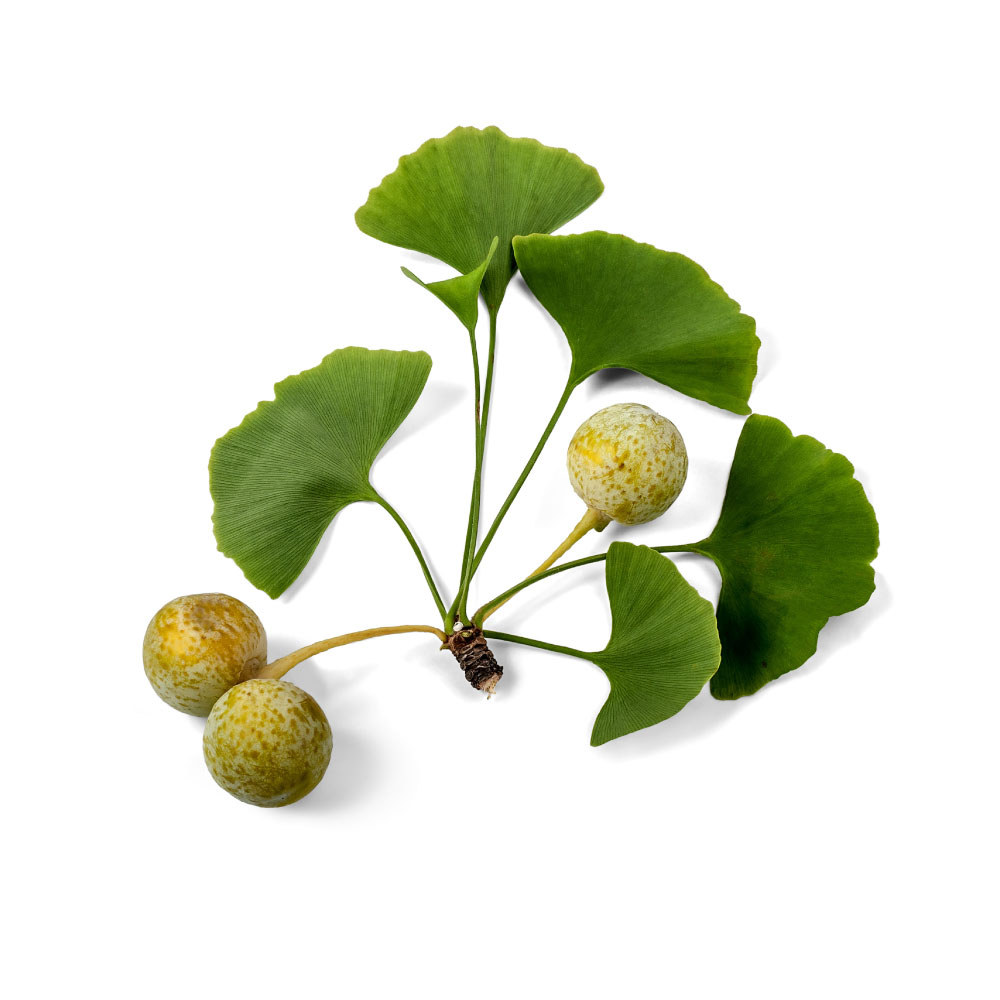 Principal source Ginkgo Ginkgo biloba Herb monograph →
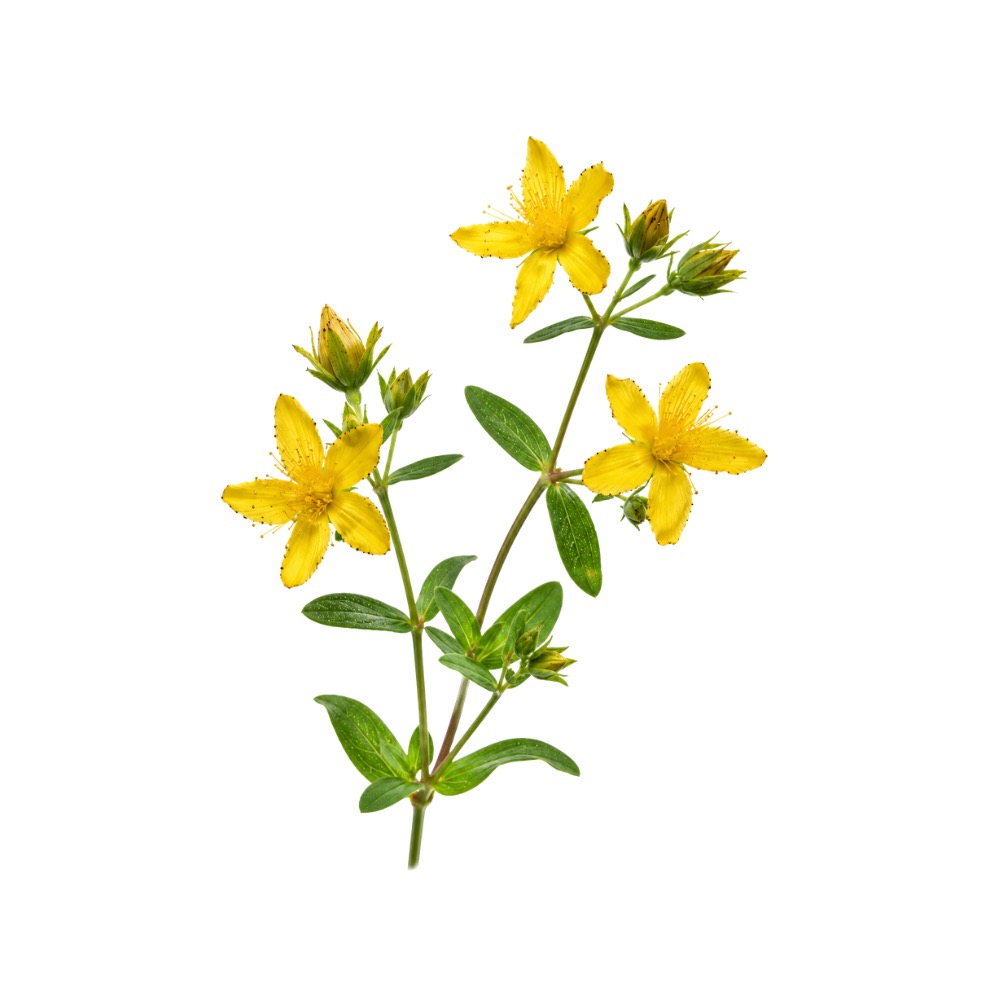 Source St. John's Wort Hypericum perforatum Herb monograph →
Concentration
Content by Source
Concentrations not reported. No percent-dry-weight or mg/g figures have been published for this compound in its source plants.
Amentoflavone at a Glance
Amentoflavone is the best-known biflavone — a molecule built from two apigenin units joined together by a single carbon–carbon bond between the 3’ position of one flavone and the 8” position of the other, giving its formal name 3’,8”-biapigenin 1Reference 1Insights Into Amentoflavone: A Natural Multifunctional BiflavonoidView study →. Where most dietary flavones are single flat rings, amentoflavone is a bulky, twisted dimer, and that doubled structure underlies both its wide receptor promiscuity and its poor solubility.
It occurs across ferns, spikemosses and gymnosperms, and reaches people mainly as a minor constituent of three well-known botanicals — Ginkgo, St John’s wort and Selaginella spikemoss 1,
The two properties that make amentoflavone genuinely distinctive are narrower and better defined. First, it binds the benzodiazepine site of the GABA-A receptor with high affinity — but acts, unusually, as a negative modulator, the opposite direction to a classical anxiolytic 3,
The Apigenin Dimer
The single fact that organises this whole page is structural: amentoflavone is two apigenins bolted together. Apigenin (4’,5,7-trihydroxyflavone) is one of the commonest dietary flavones; couple two of its molecules through a C3’–C8” biaryl bond and you get amentoflavone, C30H18O10, carrying six phenolic hydroxyls across the doubled scaffold 1Reference 1Insights Into Amentoflavone: A Natural Multifunctional BiflavonoidView study →.
That dimerisation changes the molecule’s behaviour in three ways that recur throughout its pharmacology:
- Size and rigidity. The linked, non-coplanar two-flavone frame presents a much larger surface than a monomeric flavone, letting amentoflavone occupy the deep, roomy active sites of enzymes such as CYP3A4 and viral proteases far more snugly than apigenin does — a plausible reason a “double apigenin” is a far stronger CYP inhibitor than apigenin itself 7,
12Reference 7Potent Inhibition of Human Cytochrome P450 3A4 by Biflavone Components from Ginkgo Biloba and Selaginella TamariscinaView study →Reference 12Biflavonoids from Torreya nucifera displaying SARS-CoV 3CL(pro) inhibitionView study → . - Poor solubility. The extra aromatic mass makes amentoflavone markedly less water-soluble than apigenin, and that low solubility is the rate-limiting step in its oral absorption 9Reference 9AnimalEvaluation on absorption risks of amentoflavone after oral administration in ratsView study →.
- A shared family. Methylating amentoflavone’s hydroxyls gives the ginkgetin series of biflavones (ginkgetin, isoginkgetin, bilobetin) — hence amentoflavone’s synonym didemethyl-ginkgetin — while the closely related St John’s wort biflavone biapigenin is the I3’,II8-isomer. These relatives share amentoflavone’s enzyme-inhibiting profile 7Reference 7Potent Inhibition of Human Cytochrome P450 3A4 by Biflavone Components from Ginkgo Biloba and Selaginella TamariscinaView study →.
Because it is literally a dimer of apigenin, comparisons to the monomer are the most useful frame: amentoflavone tends to be more potent but less bioavailable, and reaches targets (GABA-A negative modulation, submicromolar CYP inhibition) that apigenin touches only weakly.
What It's Used For
Amentoflavone’s reported activities are broad, but the evidence is shallow: it is a preclinical, isolate-driven profile, largely cell-culture and rodent work, with no human efficacy data and a poor-bioavailability caveat over every systemic claim 2,
Support is an experimental score — weighted by study type (human > animal > in vitro) and volume. A beta, not a validated metric. Every row here is preclinical isolate data, so all scores stay low by design.
The most developed rodent story. Isolated amentoflavone dampens microglial neuroinflammation: in LPS-stimulated BV2 microglia it blocks the TLR4/MyD88/NF-κB axis (reducing NO, iNOS and inflammatory cytokines) while activating the antioxidant Nrf2/HO-1 pathway 13Reference 13Amentoflavone Exerts Anti-Neuroinflammatory Effects by Inhibiting TLR4/MyD88/NF-κB and Activating Nrf2/HO-1 Pathway in Lipopolysaccharide-Induced BV2 MicrogliaView study →.
In rodent epilepsy models it reduces seizure susceptibility and neuronal loss by suppressing the NLRP3 inflammasome 14Reference 14Amentoflavone Affects Epileptogenesis and Exerts Neuroprotective Effects by Inhibiting NLRP3 InflammasomeView study →, and reviews compile analogous anti-inflammatory, antioxidant and neuroprotective effects across ischaemia and neurodegeneration models 2Reference 2Amentoflavone for treating cardiocerebrovascular diseases and neurological disordersView study →.
Gap: all isolated-molecule work in cell lines and rodents, frequently by injection to bypass poor oral uptake; no human data, and no head-to-head against the parent apigenin 2,
A recurring in-vitro theme with an unusual mechanism. Amentoflavone inhibits fatty-acid synthase (FASN), a lipogenic enzyme over-expressed in many tumours: in SK-BR-3 breast-cancer cells it cut FASN activity and lipid synthesis and, above ~75 µM, triggered caspase-3/PARP-cleavage apoptosis 10Reference 10Fatty acid synthase inhibition by amentoflavone induces apoptosis and antiproliferation in human breast cancer cellsView study →, and FASN inhibition down-regulated the HER2/neu oncogene with reduced AKT/mTOR signalling 11Reference 11Fatty acid synthase inhibition by amentoflavone suppresses HER2/neu (erbB2) oncogene in SKBR3 human breast cancer cellsView study →.
Broader reviews add antiproliferative, anti-angiogenic and NF-κB-suppressing effects across several cancer cell types 2Reference 2Amentoflavone for treating cardiocerebrovascular diseases and neurological disordersView study →.
Gap: effective concentrations are high (tens of micromolar) and the work is entirely cell-line/xenograft isolate data — well above what the molecule’s poor bioavailability could plausibly deliver systemically in a person 9,
A breadth-not-depth signal. Amentoflavone was the most potent SARS-CoV 3C-like-protease inhibitor among biflavonoids isolated from Torreya nucifera (IC50 8.3 µM), the “double apigenin” markedly out-performing monomeric flavones 12Reference 12Biflavonoids from Torreya nucifera displaying SARS-CoV 3CL(pro) inhibitionView study →, and it recurs as an in-silico/in-vitro hit against SARS-CoV-2 Mpro. Review-level compilations list additional in-vitro activity against HSV-1, dengue, coxsackievirus B3, RSV and HIV targets 1,
Gap: much of the antiviral literature is enzyme-assay or molecular-docking work, not infection outcomes; where whole-virus assays exist they are cell-culture only, and the reviews themselves flag poor solubility/bioavailability as the barrier to any clinical read 1,
The compound-unique CNS finding, and a cautionary tale in over-reading a binding number. Amentoflavone — first flagged as a Hypericum constituent that displaces flumazenil from the benzodiazepine site with very high affinity (IC50 ≈ 14.9 nM) 3Reference 3In vitroInhibition of benzodiazepine binding in vitro by amentoflavone, a constituent of various species of HypericumView study → — looks, on binding data alone, like a candidate anxiolytic. But a functional study on recombinant GABA-A α1β2γ2L receptors found it acts as a negative modulator of GABA, an effect that appears independent of the flumazenil-sensitive benzodiazepine site — i.e. the opposite functional direction to a sedative benzodiazepine 4Reference 4Semisynthetic preparation of amentoflavone: A negative modulator at GABA(A) receptorsView study →.
Gap: in-vitro binding and oocyte electrophysiology only; no behavioural or human CNS data for the isolate, and the negative-modulator result argues against attributing St John’s wort’s calming reputation to amentoflavone 3,
Mechanisms
| Target / pathway | Effect | Relevant to |
|---|---|---|
| TLR4 / MyD88 / NF-κB | suppresses microglial NF-κB activation → ↓ NO, iNOS, inflammatory cytokines | anti-inflammatory / neuroprotective |
| NLRP3 inflammasome | inhibits assembly → reduced seizure susceptibility and neuronal loss | neuroprotective / anti-epileptic |
| Nrf2 / HO-1 | activation → antioxidant, cytoprotective response | neuroprotection |
| Fatty-acid synthase (FASN) | enzyme inhibition → ↓ lipogenesis, apoptosis, HER2 down-regulation | anticancer |
| Viral 3C-like / main protease (3CLpro / Mpro) | active-site inhibition (the bulky dimer fits deep pockets) | antiviral |
| GABA-A benzodiazepine site | high-affinity binding (IC50 ≈ 15 nM) but negative functional modulation | CNS (and the key nuance) |
| CYP2C9 / CYP2C8 / CYP3A4 | potent, often submicromolar inhibition | drug interactions (see below) |
| UGT1A / broad UGT isoforms | broad-spectrum glucuronidation inhibitor — and its own clearance route | drug interactions & pharmacokinetics |
The through-line is size: a dimer of apigenin fills large enzyme and receptor pockets that the monomer only grazes, which is why the strongest, most reproducible amentoflavone findings are potent enzyme inhibition rather than any single therapeutic effect.
Pharmacokinetics
Amentoflavone’s pharmacokinetics are the reason to treat its in-vitro potency cautiously. It is poorly water-soluble, and that low solubility — not membrane permeability — is the rate-limiting step in its oral absorption; solubilising formulations (e.g. PVP-K30 solid dispersions) roughly double its relative bioavailability, confirming dissolution as the bottleneck 9Reference 9AnimalEvaluation on absorption risks of amentoflavone after oral administration in ratsView study →. What is absorbed is extensively glucuronidated by UDP-glucuronosyltransferases (notably UGT1A1/UGT1A3), so glucuronide conjugates dominate in plasma and free aglycone levels stay low 9Reference 9AnimalEvaluation on absorption risks of amentoflavone after oral administration in ratsView study →. After oral dosing in rats the molecule concentrates in the gut, stomach and liver with little distribution elsewhere 9Reference 9AnimalEvaluation on absorption risks of amentoflavone after oral administration in ratsView study →. The practical upshot: systemic exposure to free amentoflavone is modest, which undercuts systemic efficacy claims — but its highest concentrations are exactly at the gut wall and first-pass liver, where CYP/UGT inhibition (below) is most relevant.
Clinical Trials
There are no controlled human efficacy trials of isolated amentoflavone. Its entire evidence base is in-vitro and animal work; human exposure is incidental, via Ginkgo, St John’s wort and Selaginella preparations, where it is a minor biflavone.
| Completed | Planned | Terminated | Preclinical |
|---|---|---|---|
| None(isolate) | — | — | Anti-inflammatory / anticancer / antiviral / CNS + enzyme-inhibition mechanistic |
Last checked: July 2026.
Enzyme Inhibition & Herb-Drug Interactions
This is amentoflavone’s most consequential, best-verified property — and the reason its toxicity flag, though low, carries an interaction caveat. As a bulky dimer it is a potent inhibitor of several drug-metabolising enzymes:
- CYP2C9 — a competitive inhibitor with IC50 ≈ 0.035 µM (as a Ginkgo flavone aglycone), i.e. submicromolar potency against the enzyme that clears warfarin, phenytoin, many NSAIDs and sulfonylureas 5Reference 5Inhibition of human cytochromes P450 by components of Ginkgo bilobaView study →.
- CYP2C8 — noncompetitive inhibition, Ki ≈ 0.083 µM in human liver microsomes 6Reference 6Strong and Selective Inhibitory Effects of the Biflavonoid Selamariscina A against CYP2C8 and CYP2C9 Enzyme Activities in Human Liver MicrosomesView study →.
- CYP3A4 — among the strongest CYP3A4 inhibitors of the Ginkgo/Selaginella biflavone series (with ginkgetin, isoginkgetin, bilobetin), the enzyme responsible for metabolising a large share of all prescription drugs 7Reference 7Potent Inhibition of Human Cytochrome P450 3A4 by Biflavone Components from Ginkgo Biloba and Selaginella TamariscinaView study →.
- UGTs — a potent broad-spectrum inhibitor of human UDP-glucuronosyltransferases, with inhibition constants down to ~0.3 µM across multiple isoforms 8Reference 8Amentoflavone is a potent broad-spectrum inhibitor of human UDP-glucuronosyltransferasesView study →.
Because these enzymes sit at the gut wall and in first-pass liver metabolism — precisely where amentoflavone concentrates 9Reference 9AnimalEvaluation on absorption risks of amentoflavone after oral administration in ratsView study → — this profile is a plausible mechanistic contributor to the herb-drug-interaction reputation of Ginkgo and St John’s wort, alongside the far larger, better-documented effect of St John’s wort’s hyperforin as a pregnane-X-receptor inducer of CYP3A4. The honest framing: amentoflavone’s in-vitro inhibition is potent and reproducible, but its poor systemic bioavailability tempers how much of that translates to a whole-body interaction; the caution is real but not established at the level of documented clinical events for the isolate.
Isolate vs. Plant Studies
Amentoflavone’s evidence is almost entirely the isolated molecule — cell lines and rodents dosed with purified compound, often parenterally to sidestep its poor oral uptake 10,
Prevalence in Nature
Amentoflavone is taxonomically widespread but individually minor, reported from more than 120 plant species and especially characteristic of “lower” vascular plants and gymnosperms 1,
Reliable quantitative content figures are scarce and poorly standardised across sources, so a comparative concentration chart would overstate the certainty of the numbers; Selaginella tamariscina is generally cited as among the richer sources. The occurrence of biflavones like amentoflavone in ferns, cycads and conifers but rarely in advanced flowering plants has long made them of chemotaxonomic interest.
Major Natural Sources
| Source | Plant part | Notes |
|---|---|---|
| Spikemoss (Selaginella tamariscina) | whole plant | A signature, comparatively rich biflavone source 1Reference 1Insights Into Amentoflavone: A Natural Multifunctional BiflavonoidView study → |
| Ginkgo (Ginkgo biloba) | leaf | Present with methylated relatives (ginkgetin series) 7Reference 7Potent Inhibition of Human Cytochrome P450 3A4 by Biflavone Components from Ginkgo Biloba and Selaginella TamariscinaView study → |
| St John’s Wort (Hypericum perforatum) | flowering tops | Minor biflavone alongside biapigenin 3Reference 3In vitroInhibition of benzodiazepine binding in vitro by amentoflavone, a constituent of various species of HypericumView study → |
| Hinoki cypress (Chamaecyparis obtusa) | leaf/wood | Conifer biflavone source |
| Japanese torreya (Torreya nucifera) | leaf | Source in the SARS-CoV protease study 12Reference 12Biflavonoids from Torreya nucifera displaying SARS-CoV 3CL(pro) inhibitionView study → |
Quantitative content is not well standardised across these sources; figures in the literature vary widely with species, part and method.
Discovery & Synthesis
Amentoflavone was isolated and structurally characterised as an apigenin biflavone around 1971 by Okigawa and colleagues, from Selaginella and related plants, resolving it as the 3’,8”-linked dimer of apigenin 1Reference 1Insights Into Amentoflavone: A Natural Multifunctional BiflavonoidView study →. Its name reflects the catkin-bearing (Latin amentum, “catkin”) gymnosperms in which such biflavones are typical; the synonym didemethyl-ginkgetin records its relationship to the methylated Ginkgo biflavones (ginkgetin = a dimethyl amentoflavone) 7Reference 7Potent Inhibition of Human Cytochrome P450 3A4 by Biflavone Components from Ginkgo Biloba and Selaginella TamariscinaView study →. Structural revision and total-synthesis efforts on the biflavone class followed, the central challenge being the regioselective biaryl (C3’–C8”) coupling of two protected apigenin units. Today amentoflavone reaches the market almost entirely by extraction — chiefly from Selaginella tamariscina and Ginkgo biomass — rather than by total synthesis, because the natural sources are workable and the coupling chemistry is demanding; semisynthetic routes from Ginkgo biflavones have also been used to supply research material 4Reference 4Semisynthetic preparation of amentoflavone: A negative modulator at GABA(A) receptorsView study →.
Patents: not yet researched.
Toxicity & Safety
Amentoflavone’s intrinsic toxicity is low — it is a dietary-adjacent plant biflavone with no signal of acute organ toxicity at ordinary exposure, and it reaches people only as a minor, poorly-absorbed constituent of common botanicals. The flag worth carrying is not poisoning but enzyme-mediated drug interactions.
- Low intrinsic toxicity. A widespread plant biflavone with no acute-toxicity signal at realistic dietary/herbal exposure, and poor oral absorption that limits systemic levels 9Reference 9AnimalEvaluation on absorption risks of amentoflavone after oral administration in ratsView study →.
- Potent CYP inhibition in vitro. Submicromolar inhibition of CYP2C9 (IC50 ≈ 0.035 µM), plus CYP2C8 and CYP3A4 — enzymes that clear a large share of prescription drugs 5,
6, .7Reference 5Inhibition of human cytochromes P450 by components of Ginkgo bilobaView study →Reference 6Strong and Selective Inhibitory Effects of the Biflavonoid Selamariscina A against CYP2C8 and CYP2C9 Enzyme Activities in Human Liver MicrosomesView study →Reference 7Potent Inhibition of Human Cytochrome P450 3A4 by Biflavone Components from Ginkgo Biloba and Selaginella TamariscinaView study → - Broad UGT inhibition. A potent, broad-spectrum inhibitor of glucuronidation enzymes, adding a second interaction route 8Reference 8Amentoflavone is a potent broad-spectrum inhibitor of human UDP-glucuronosyltransferasesView study →.
- Contributes to Ginkgo / St John’s wort interaction concern. A plausible mechanistic contributor to those herbs’ documented interaction reputation, though its poor bioavailability tempers the systemic relevance and no isolate-specific clinical events are established 2,
9Reference 2Amentoflavone for treating cardiocerebrovascular diseases and neurological disordersView study →Reference 9AnimalEvaluation on absorption risks of amentoflavone after oral administration in ratsView study → . - Concentrated Selaginella / biflavone extracts are a different exposure from a whole-herb dose — the interaction caution scales with the amount actually delivered.
Reproductive and developmental toxicity have not been characterised for the isolated molecule; pregnancy and lactation decisions belong to the specific herb or product where intake is decided, not to this molecule page.
Dosage
There is no established or recommended human dose for isolated amentoflavone. The figures in the literature are in-vitro concentrations (e.g. FASN-inhibiting/apoptotic effects at tens of micromolar; protease IC50 8.3 µM) or rodent research doses, and they are not convertible to human self-dosing — especially given the molecule’s poor oral bioavailability, which means an oral dose delivers far less free compound to the bloodstream than the numbers imply 9,
Human exposure is indirect, as a minor biflavone within standardised Ginkgo, St John’s wort and Selaginella preparations, where the dose is set by the whole product, not by amentoflavone. These are research figures, not a personal recommendation.
References
- Xiong X, et al. (2021). Insights Into Amentoflavone: A Natural Multifunctional Biflavonoid. Frontiers in Pharmacology. https://pubmed.ncbi.nlm.nih.gov/35002708/
- Zhang H, et al. (2024). Amentoflavone for treating cardiocerebrovascular diseases and neurological disorders. Frontiers in Pharmacology. https://pubmed.ncbi.nlm.nih.gov/39624841/
- Baureithel KH, et al. (1997). Inhibition of benzodiazepine binding in vitro by amentoflavone, a constituent of various species of Hypericum. Pharmaceutica Acta Helvetiae. https://pubmed.ncbi.nlm.nih.gov/9204773/
- Hanrahan JR, et al. (2003). Semisynthetic preparation of amentoflavone: A negative modulator at GABA(A) receptors. Bioorganic & Medicinal Chemistry Letters. https://pubmed.ncbi.nlm.nih.gov/12824018/
- von Moltke LL, et al. (2004). Inhibition of human cytochromes P450 by components of Ginkgo biloba. Journal of Pharmacy and Pharmacology. https://pubmed.ncbi.nlm.nih.gov/15285849/
- Park SY, et al. (2020). Strong and Selective Inhibitory Effects of the Biflavonoid Selamariscina A against CYP2C8 and CYP2C9 Enzyme Activities in Human Liver Microsomes. Pharmaceutics. https://pubmed.ncbi.nlm.nih.gov/32290339/
- Wang B, et al. (2022). Potent Inhibition of Human Cytochrome P450 3A4 by Biflavone Components from Ginkgo Biloba and Selaginella Tamariscina. Frontiers in Pharmacology. https://pubmed.ncbi.nlm.nih.gov/35295338/
- Lv X, et al. (2018). Amentoflavone is a potent broad-spectrum inhibitor of human UDP-glucuronosyltransferases. Chemico-Biological Interactions. https://pubmed.ncbi.nlm.nih.gov/29470958/
- Qiu H, et al. (2021). Evaluation on absorption risks of amentoflavone after oral administration in rats. Biopharmaceutics & Drug Disposition. https://pubmed.ncbi.nlm.nih.gov/34655436/
- Lee JS, et al. (2009). Fatty acid synthase inhibition by amentoflavone induces apoptosis and antiproliferation in human breast cancer cells. Biological & Pharmaceutical Bulletin. https://pubmed.ncbi.nlm.nih.gov/19652385/
- Lee JS, et al. (2013). Fatty acid synthase inhibition by amentoflavone suppresses HER2/neu (erbB2) oncogene in SKBR3 human breast cancer cells. Phytotherapy Research. https://pubmed.ncbi.nlm.nih.gov/22767439/
- Ryu YB, et al. (2010). Biflavonoids from Torreya nucifera displaying SARS-CoV 3CL(pro) inhibition. Bioorganic & Medicinal Chemistry. https://pubmed.ncbi.nlm.nih.gov/20934345/
- Rong S, et al. (2022). Amentoflavone Exerts Anti-Neuroinflammatory Effects by Inhibiting TLR4/MyD88/NF-κB and Activating Nrf2/HO-1 Pathway in Lipopolysaccharide-Induced BV2 Microglia. Mediators of Inflammation. https://pubmed.ncbi.nlm.nih.gov/36523959/
- Rong S, et al. (2019). Amentoflavone Affects Epileptogenesis and Exerts Neuroprotective Effects by Inhibiting NLRP3 Inflammasome. Frontiers in Pharmacology. https://pubmed.ncbi.nlm.nih.gov/31417409/



