
Compound Monograph
Andrographiside
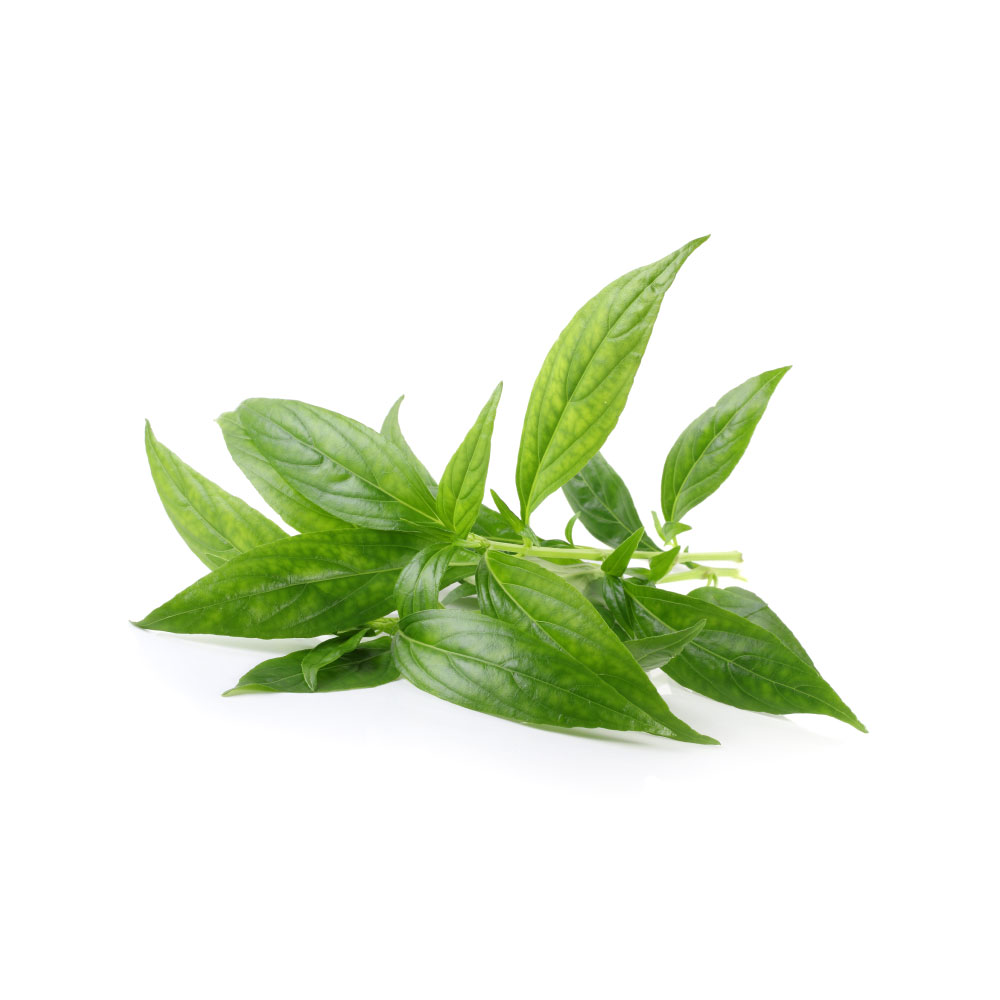
Andrographiside is a minor ent-labdane diterpenoid glucoside of andrographis (Andrographis paniculata) — the 19-O-glucoside of andrographolide — noted in isolated-compound work for hepatoprotective and antioxidant activity, though human data are absent.

Sources · 1
Where Does It Come From?
Andrographiside is a naturally occurring ent-labdane diterpenoid glucoside, found in Andrographis. It is well tolerated orally (low toxicity).
Concentration
Content by Source
Concentrations not reported. No percent-dry-weight or mg/g figures have been published for this compound in its source plants.
Andrographiside at a Glance
Andrographiside is a minor diterpenoid glucoside from andrographis (Andrographis paniculata), the intensely bitter “king of bitters” of Ayurvedic and Chinese herbal medicine. Structurally it is the 19-O-glucoside of andrographolide — the plant’s dominant labdane diterpene lactone — with a single glucose sugar attached at the C-19 position (molecular formula C₂₆H₄₀O₁₀).
It is one of several related diterpenoids that accompany andrographolide in the aerial parts, and it is not a compound the plant is standardized to. Its small claim to attention is a single line of isolated-compound research: in an animal model, purified andrographiside protected the liver against chemical injury about as effectively as the reference hepatoprotectant silymarin 1Reference 1Antihepatotoxic effects of major diterpenoid constituents of Andrographis paniculataView study →.
That signal is real but thin. There are no human studies of andrographiside, and nearly all of andrographis’s clinical evidence belongs to standardized extracts dominated by andrographolide, not to this minor glucoside. This page reports what the isolate work shows and is candid about where it stops.
Andrographiside, Andrographolide’s Glucoside
Andrographis owes its reputation to one molecule: andrographolide, a labdane diterpene lactone that is the bitter principle and the marker to which commercial extracts are titrated. Andrographiside is that same molecule carrying an extra sugar — a glucose unit joined at C-19, making it andrographolide 19-O-β-D-glucoside 1,
Chemically, that one change matters. Attaching a sugar (glycosylation) makes a molecule larger and more water-soluble, generally lowering its passive absorption across the gut wall while making the sugar itself a target for hydrolysis by gut enzymes and microbiota. Functionally, andrographiside sits among a small family of andrographis diterpenoids — alongside neoandrographolide, 14-deoxyandrographolide and 14-deoxy-11,12-didehydroandrographolide — that are present in the aerial parts at much lower levels than andrographolide and are not, individually, what the herb is dosed on 2,
Its one distinguishing research signal is hepatoprotection with an antioxidant flavour, and the sugar is thought to be part of the story: the investigators who tested it proposed that the glucoside group may itself act as a strong antioxidant, which would help explain why the glucosides performed comparably to silymarin in their model 1,
Major Natural Sources
| Source | Part | Notes |
|---|---|---|
| Andrographis (Andrographis paniculata) | Aerial parts (leaf/stem) | The documented source; a minor diterpenoid glucoside accompanying andrographolide, not separately quantified in most surveys 2, |
Andrographiside has not been reported as a meaningful constituent of any plant outside the Andrographis genus, and no reliable percent-dry-weight figure for it has been published — the gap is tracked in this compound’s notes.
What It's Used For
The entire pharmacology of isolated andrographiside rests on one line of preclinical work: a hepatoprotective/antioxidant signal in a chemically-injured mouse liver 1Reference 1Antihepatotoxic effects of major diterpenoid constituents of Andrographis paniculataView study →. Everything else here is either read-across from the parent aglycone andrographolide or an honest statement of absence.
Support is an experimental score — weighted by study type (human > animal > in vitro) and volume. A beta, not a validated metric. Here it reflects a single animal isolate study with no human data, so read it as “promising but preliminary,” not “established.”
The single genuine data point for this molecule, and it is an isolated-compound, whole-animal study — a step above in-vitro work. Pre-treating mice with andrographiside (100 mg/kg for three consecutive days) before carbon tetrachloride or tert-butylhydroperoxide significantly reduced malondialdehyde formation (a lipid-peroxidation marker), limited depletion of reduced glutathione (GSH), and lowered the leakage of the liver enzymes GPT and alkaline phosphatase from damaged hepatocytes 1Reference 1Antihepatotoxic effects of major diterpenoid constituents of Andrographis paniculataView study →.
On the lipid-peroxidation and enzyme-release measures, andrographiside was about as effective as silymarin, the milk-thistle reference standard; notably, full restoration of GSH status was achieved by neoandrographolide rather than andrographiside, so the glucosides were not identical in effect 1Reference 1Antihepatotoxic effects of major diterpenoid constituents of Andrographis paniculataView study →.
Gap: this is one study, in mice, on hepatic chemical injury — there is no dose-response, no independent replication, no human trial, and no test of the intact glucoside’s absorption. It establishes a plausible isolate signal, not a clinical use.
Mechanisms
| Target / pathway | Effect | Relevant to |
|---|---|---|
| Lipid peroxidation (malondialdehyde) | reduces MDA formation after CCl₄ / tBHP challenge | hepatoprotective / antioxidant |
| Reduced glutathione (GSH) | limits GSH depletion (partial — full restoration was neoandrographolide’s, not andrographiside’s) | antioxidant |
| Serum transaminase / alkaline phosphatase (GPT, AP) | reduces enzyme leakage from injured hepatocytes | hepatoprotective |
| C-19 glucoside moiety | the sugar group proposed to contribute radical-scavenging / antioxidant capacity | structure–activity hypothesis |
| Nrf2 / NF-κB antioxidant–inflammatory axis | documented for the aglycone andrographolide, not demonstrated for the glucoside — read-across only | mechanistic context |
The load-bearing claim is narrow: reduced lipid peroxidation and enzyme leakage in one animal model 1Reference 1Antihepatotoxic effects of major diterpenoid constituents of Andrographis paniculataView study →. The Nrf2/NF-κB machinery belongs to andrographolide’s much larger literature 4,
Pharmacokinetics
There is essentially no pharmacokinetic data for andrographiside. What can be said is inferential. Its parent aglycone, andrographolide, is repeatedly flagged for poor oral bioavailability, which is the central limitation on translating its preclinical potency 4Reference 4Clinical trialAndrographolide: a review of its pharmacology, pharmacokinetics, toxicity and clinical trials and pharmaceutical researchesView study →. Andrographiside is a glycoside — larger, more polar, and carrying a sugar that gut enzymes and microbiota can cleave — so intact oral absorption would, if anything, be expected to be lower than the aglycone’s, with any systemic activity plausibly running through andrographolide liberated by hydrolysis. None of this has been measured for andrographiside specifically: absorption, oral bioavailability, metabolism, active metabolites and half-life are all undocumented for this compound. This unknown PK is the strongest caveat on the animal hepatoprotection signal.
Clinical Trials
There are no clinical trials of isolated andrographiside — the compound has never been administered to humans as an isolate. Human andrographis trials test standardized whole-plant extracts titrated to andrographolide, within which andrographiside is only a minor accompanying constituent.
| Completed | Planned | Terminated | Preclinical |
|---|---|---|---|
| — | — | — | Hepatoprotective / antioxidant (one mouse isolate study) 1Reference 1Antihepatotoxic effects of major diterpenoid constituents of Andrographis paniculataView study → |
Last checked: July 2026.
Isolate vs. Plant Studies
Andrographiside sits at the thin end of the isolate-vs-plant spectrum. Its one supporting study used the purified isolate 1Reference 1Antihepatotoxic effects of major diterpenoid constituents of Andrographis paniculataView study → — which, in principle, is the cleaner kind of evidence — but there is only the one, in animals, and it has never been carried into humans. On the other side, andrographis’s substantial human evidence base is for standardized extracts (often combination products) titrated to andrographolide, the dominant diterpene lactone, not to andrographiside 2,
Discovery & Synthesis
Andrographiside entered the literature as one of the minor ent-labdane diterpenoids characterized during the twentieth-century work on the chemistry of Andrographis paniculata, the same body of research that mapped andrographolide and its relatives; a clean first-isolation record for the compound is not well documented, and it is best understood as one of the many diterpenoid glycosides catalogued as the plant’s phytochemistry was worked out 2,
Patents: not yet researched.
Toxicity & Safety
Andrographiside carries a low flag, but this reflects the absence of any dedicated toxicology as much as any positive safety finding — no isolate toxicity, genotoxicity or repeat-dose dataset has been characterized for the pure compound. What reassurance exists is indirect: it is a minor constituent of a widely-consumed medicinal herb, and in the one animal study it was hepatoprotective rather than hepatotoxic at 100 mg/kg 1Reference 1Antihepatotoxic effects of major diterpenoid constituents of Andrographis paniculataView study →.
The relevant cautions belong to the whole herb and its aglycone, and are noted here in prose only. Andrographis and andrographolide carry a traditional and animal-model reputation for reproductive/anti-fertility effects, which is why andrographis products are generally cautioned against in pregnancy and when trying to conceive; this is a herb- and product-level decision made where intake is decided, not a property established for isolated andrographiside. No isolate reproductive-, developmental- or drug-interaction data exist for this molecule specifically.
- Minor constituent of a widely-used herb. Present in the aerial parts of andrographis, and hepatoprotective (not hepatotoxic) in the one animal study, at 100 mg/kg 1Reference 1Antihepatotoxic effects of major diterpenoid constituents of Andrographis paniculataView study →.
- No isolate safety data. No genotoxicity, repeat-dose, reproductive or interaction dataset exists for pure andrographiside — a low flag reflects absence of findings, not a clean bill of health.
- Pregnancy / fertility caution carries at the herb level. Andrographis and andrographolide have a reproductive/anti-fertility signal; pregnancy and preconception caution is decided on the herb/product, not this molecule.
- Do not read whole-extract results onto this molecule. Andrographis’s human evidence is for standardized andrographolide extracts; it does not transfer to the isolated glucoside.
Dosage
There is no established dose for isolated andrographiside, and no basis for one — it has never been administered to humans. The only figure in the literature is experimental: 100 mg/kg in mice for three consecutive days as hepatoprotective pre-treatment 1Reference 1Antihepatotoxic effects of major diterpenoid constituents of Andrographis paniculataView study →, an animal research dose that does not translate to a human amount.
In practice, exposure to andrographiside comes only from consuming andrographis itself, where it is a minor component of the diterpenoid fraction. Andrographis products are standardized to andrographolide (research doses of the herb commonly deliver defined andrographolide amounts), not to andrographiside, so the glucoside is never dosed on its own. This is a research figure, not a personal recommendation.
References
- Kapil A, Koul IB, Banerjee SK, Gupta BD (1993). Antihepatotoxic effects of major diterpenoid constituents of Andrographis paniculata. Biochemical Pharmacology. https://pubmed.ncbi.nlm.nih.gov/8347130/
- Chao WW, Lin BF (2010). Isolation and identification of bioactive compounds in Andrographis paniculata (Chuanxinlian). Chinese Medicine. https://pubmed.ncbi.nlm.nih.gov/20465823/
- Hossain MS, Urbi Z, Sule A, Rahman KMH (2014). Andrographis paniculata (Burm. f.) Wall. ex Nees: a review of ethnobotany, phytochemistry, and pharmacology. The Scientific World Journal. https://pubmed.ncbi.nlm.nih.gov/25950015/
- Zeng B, et al. (2022). Andrographolide: a review of its pharmacology, pharmacokinetics, toxicity and clinical trials and pharmaceutical researches. Phytotherapy Research. https://pubmed.ncbi.nlm.nih.gov/34818697/
- Mussard E, et al. (2019). Andrographolide, a natural antioxidant: an update. Antioxidants. https://pubmed.ncbi.nlm.nih.gov/31756965/
- Nagalekshmi R, Menon A, Chandrasekharan DK, Nair CKK (2011). Hepatoprotective activity of Andrographis paniculata and Swertia chirayita. Food and Chemical Toxicology. https://pubmed.ncbi.nlm.nih.gov/21983487/



