Beta-Alanine
Beta-alanine is a non-essential amino acid that raises muscle carnosine to buffer acidity, studied for high-intensity muscular endurance.

Beta-Alanine at a Glance
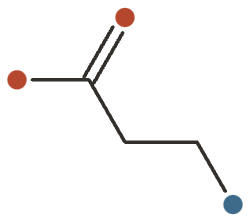
Beta-alanine is one of the few sports supplements with a mechanism specific enough to make a testable prediction — and the prediction holds up. It is a non-essential amino acid, structurally odd in that its amino group sits on the beta carbon rather than the alpha, which is why it is never built into proteins. Its only real job in the body is to combine with histidine to form carnosine, a dipeptide that accumulates inside muscle fibres and works as a pH buffer.
That matters because hard exercise makes muscle acidic. Sustained high-intensity work generates hydrogen ions faster than they can be cleared, pH falls, and contractile machinery starts to fail — a substantial part of what fatigue is in that setting. Carnosine soaks up those hydrogen ions. And of the two amino acids needed to make it, histidine is plentiful while beta-alanine is scarce, so beta-alanine availability sets the ceiling on muscle carnosine. Supply more and carnosine rises, reliably and dose-dependently.
The prediction that follows is narrow, and this is what makes the supplement interesting: it should help specifically where acid accumulation is the limiter — efforts roughly one to four minutes long, hard enough to hurt. Not a one-rep max, where acidity has no time to build. Not a marathon, where the limiter is fuel and thermoregulation. And that is almost exactly the pattern the trials show.
What It’s Used For
- High-intensity exercise (1–4 min) — the target window and the one with the clearest support. Rowing pieces, 400–1500 m running, sustained combat-sport rounds, the back end of a hard interval.
- Training capacity / work volume — buffering more work per session compounds into more total training, which may matter more than any single performance number.
- Repeated-sprint & mixed-modal — where partial recovery between efforts leaves acid accumulating across the session.
- Elderly neuromuscular function — muscle carnosine is lower with age, and small trials show a raised fatigue threshold.
- Tactical / combat performance — one military trial, with a useful null attached.
The average effect size is modest, not transformative — a small edge, most reliable inside its window. It is much less consistent outside it: very short maximal efforts, pure strength work and long endurance events don’t share the same limiter, so there is no mechanistic reason to expect much and the data agree. Note also that this is a loading supplement: carnosine accrues over weeks, so a dose taken before a session does nothing on the day.
One claim to set aside: the combat-soldier trial that found a tactical benefit explicitly found no cognitive improvement on the same protocol. Beta-alanine is not a nootropic.
How It Works
Carnosine synthase joins beta-alanine and histidine to make carnosine, and it does so inside the muscle fibre. Because muscle histidine is abundant and beta-alanine is not, the enzyme runs at whatever rate beta-alanine arrives — the classic rate-limiting-substrate situation, and the reason supplementing it works while supplementing carnosine itself largely doesn’t (ingested carnosine is broken down by circulating carnosinase before it reaches muscle).
Once in place, carnosine acts as an intracellular buffer. Its imidazole ring has a pKa close to the pH range muscle actually operates in during hard work, which makes it unusually well matched to the job — it accepts hydrogen ions precisely where and when they accumulate. Higher muscle carnosine means the pH drop for a given amount of work is smaller, and the point at which contraction starts failing arrives later.
Two practical consequences fall out. First, this is a cumulative protocol, not an acute one. Muscle carnosine rises over weeks of daily dosing and washes out slowly over months; total dose consumed matters far more than the timing of any individual dose. Second, the paraesthesia — the tingling across the face, neck and hands that beta-alanine is notorious for — comes from beta-alanine acting on a specific sensory-neuron receptor, is dose-related to the size of a single dose, and is harmless. Splitting the daily total into smaller portions or using a sustained-release format avoids it without changing the result.
The full trial record is in Pharmacology & Research below.
Pharmacology & Research
Beta-alanine is a non-proteinogenic amino acid whose only meaningful role in the body is as the rate-limiting substrate for muscle carnosine, an intracellular pH buffer. The evidence posture is unusually clean for a sports supplement: the mechanism is settled — daily loading reliably and dose-dependently raises muscle carnosine — and the ergogenic effect is real but narrow, concentrated in high-intensity efforts of roughly one to four minutes where acid accumulation is the limiter. Crucially, this is not a deficiency-correction story: there is no beta-alanine requirement and no deficiency state, so the benefit is an effect layered on top of adequacy, and its average size is modest rather than transformative. The main practical caveats are that it is a loading supplement (carnosine accrues over weeks, so acute pre-workout dosing does nothing) and that effects fall off sharply outside the target window.
Support is an experimental score I’m building — a composite weighted by study type (human > animal > in vitro > review) and study volume. It’s a beta: a fast way to rank strength of evidence at a glance, not a validated metric. Each application links down to its write-up.
The core, best-evidenced use. A 2012 meta-analysis (15 studies) found beta-alanine (typically 3.2–6.4 g/day for 4–10 weeks) significantly improved exercise capacity and performance, with the benefit concentrated in efforts lasting roughly 60–240 seconds and negligible at 60 seconds or less 1Reference 1Meta-analysisEffects of β-alanine supplementation on exercise performance: a meta-analysis — meta-analysisView study →.
A larger 2017 systematic review and meta-analysis (40 studies, around 70 comparisons) reached the same conclusion — a small but genuine ergogenic effect, a median improvement on the order of a few percent, most reliable in the 0.5–10 minute range and clearest around the 1–4 minute mark 2Reference 2Meta-analysisSaunders B, Elliott-Sale K, Artioli GG, et al. (2017). β-alanine supplementation to improve exercise capacity and performance: a systematic review and meta-analysis — meta-analysis. British Journal of Sports Medicine. https://pubmed.ncbi.nlm.nih.gov/27797728/View study →.
The effect is dose- and duration-dependent because it tracks the rise in muscle carnosine, not the plasma level on the day 5Reference 5Clinical trialInfluence of β-alanine supplementation on skeletal muscle carnosine concentrations and high intensity cycling capacity — clinical trialView study →.
Gap: the average effect size is small and the confidence intervals for many individual endpoints overlap zero; it is an edge, not a step-change, and only inside its metabolic window.
Because carnosine lets a muscle do more work before pH-driven failure, a plausible and partly-evidenced mechanism is that beta-alanine increases the total training an athlete can absorb, which then compounds into adaptation. A sprint-interval-training RCT found beta-alanine (6.4 g/day, 4 weeks) produced additive improvements in performance beyond training alone 10Reference 10RCTAdditive benefits of β-alanine supplementation and sprint-interval training — randomised controlled trialView study →, a high-intensity interval trial reported gains in endurance performance and body composition in men 11Reference 11RCTEffects of β-alanine supplementation and high-intensity interval training on endurance performance and body composition in men — double-blind trialView study →, and the ISSN position stand frames enhanced training volume as one of the more defensible downstream benefits 3Reference 3ReviewInternational Society of Sports Nutrition position stand: beta-alanine — reviewView study →.
This is a “buffering more work per session” argument rather than a single acute-performance number.
Gap: most trials measure a performance test, not longitudinal training load, so the “compounding” benefit is largely inferred; direct evidence for extra adaptation over a full macrocycle is thin.
Efforts with partial recovery — repeated sprints, combat-sport rounds, team-sport bursts — let acid accumulate across a session, which is where buffering should help. RCTs in this space are mixed but net-positive: additive benefit with sprint-interval training 10Reference 10RCTAdditive benefits of β-alanine supplementation and sprint-interval training — randomised controlled trialView study →, and improved throwing velocity and 200 m swim performance in young water polo players 13Reference 13RCTBeta-alanine supplementation improves throwing velocities in repeated sprint ability and 200-m swimming performance in young water polo players — randomised controlled trialView study →. Effect sizes are heterogeneous and the populations vary widely.
Gap: high between-study heterogeneity and many small, sport-specific samples; some repeated-sprint protocols show no benefit, so the signal is real but noisy.
In older adults, muscle carnosine is lower and physical working capacity is a meaningful outcome. A double-blind RCT in adults aged 60–80 (3.2 g/day for 12 weeks) raised muscle carnosine and improved physical working capacity at the fatigue threshold 9Reference 9RCTBeta-alanine (Carnosyn) supplementation in elderly subjects (60–80 years): effects on muscle carnosine content and physical capacity — randomised controlled trialView study →, and earlier double-blind work in 55–92-year-olds found beta-alanine delayed neuromuscular fatigue 3Reference 3ReviewInternational Society of Sports Nutrition position stand: beta-alanine — reviewView study →. These are small trials in a population where any low-risk functional gain has value.
Gap: only a handful of small RCTs, short duration, and surrogate or threshold endpoints rather than falls or independence — not yet a robust clinical claim.
A controlled trial in combat soldiers reported improved tactical and marksmanship performance after about 4 weeks of beta-alanine, but found no improvement in cognitive function on the same protocol 12Reference 12Hoffman JR, Landau G, Stout JR, et al. (2014). β-alanine supplementation improves tactical performance but not cognitive function in combat soldiers — controlled trial. Journal of the International Society of Sports Nutrition. https://pubmed.ncbi.nlm.nih.gov/24716994/View study →. It is a task- and population-specific result that fits the buffering mechanism — physically demanding, intermittent-intensity work — without supporting broader “focus” or cognition claims.
Gap: a single occupational trial with no placebo-controlled replication at scale, and the cognitive endpoint was explicitly null — the tactical benefit should not be read as a nootropic effect.
Mechanisms
| Target / pathway | Effect | Relevant to |
|---|---|---|
| Carnosine synthase (muscle) | ↑ carnosine synthesis — beta-alanine is the rate-limiting substrate | All applications |
| TauT / β-amino-acid membrane transporter | Muscle uptake of beta-alanine (shared with taurine) | Loading kinetics; theoretical taurine competition |
| Intracellular H⁺ buffering (carnosine imidazole, pKa ~6.8) | ↓ pH drop per unit work; delays contractile failure | High-intensity 1–4 minrepeated-sprint |
| MrgprD sensory-neuron receptor | Activation → transient paraesthesia | Tolerability and dosing format |
Pharmacokinetics
Oral beta-alanine is absorbed rapidly, with plasma concentrations peaking roughly 30–40 minutes after ingestion and a short plasma half-life on the order of 25 minutes 4Reference 4Clinical trialThe absorption of orally supplied β-alanine and its effect on muscle carnosine synthesis in human vastus lateralis — clinical trialView study →. Fractional muscle uptake per dose is modest and falls as single-dose size rises, so total daily intake, not timing, governs the outcome — and larger single doses waste substrate while triggering paraesthesia.
Muscle carnosine rises progressively over about 4–10 weeks of daily loading and then plateaus; it
washes out slowly over roughly 6–15 weeks, so short interruptions matter little 6Reference 6RCTEffect of two β-alanine dosing protocols on muscle carnosine synthesis and washout — randomised trialView study →. Sustained-release
formulations blunt the plasma peak, which reduces paraesthesia without reducing carnosine loading
3,
Ingested carnosine itself is largely ineffective because circulating carnosinase degrades it before it reaches muscle — which is why supplementing the precursor works and supplementing the product does not 4Reference 4Clinical trialThe absorption of orally supplied β-alanine and its effect on muscle carnosine synthesis in human vastus lateralis — clinical trialView study →.
Clinical trials
Beta-alanine is a cheap, off-patent supplement with an active sports-science trial literature but little pharmaceutical-industry involvement; most trials are small academic RCTs.
| Completed | Planned | Terminated | Preclinical |
|---|---|---|---|
| 32 | 16 | 5 | Dozens(rodent buffering/toxicity models) |
Last checked: August 2026. Trial counts from ClinicalTrials.gov (“beta-alanine supplementation”).
Dietary Sources
Beta-alanine has no dietary requirement and no deficiency state — the liver synthesises some, and the rest of the body’s supply comes from carnosine and related dipeptides such as anserine in food, which are digested to release beta-alanine. Because carnosine is a muscle molecule, the dietary sources are meat and fish: beef, pork, poultry and fish all supply it, while plant foods contain essentially none 8Reference 8ObservationalVegetarianism, female gender and increasing age, but not CNDP1 genotype, are associated with reduced muscle carnosine levels in humans — cohortView study →.
| Source | Beta-alanine equivalent (approx., via carnosine/anserine) |
|---|---|
| Beef, pork, poultry | Highest dietary contributors; a typical omnivorous diet supplies well under 1 g/day |
| Fish | Meaningful, varies by species |
| Eggs, dairy | Trace |
| Plant foods (all) | Essentially none |
The measurable consequence: vegetarians and vegans have lower muscle carnosine than omnivores 8Reference 8ObservationalVegetarianism, female gender and increasing age, but not CNDP1 genotype, are associated with reduced muscle carnosine levels in humans — cohortView study →. But even a heavy meat-eating diet supplies far less than the 3.2–6.4 g/day used in trials — this is a supplement-scale effect that ordinary diet cannot reproduce.
Dosage
These are doses studied in research, not a personal recommendation.
- No RDA/AI and no UL — beta-alanine is not an essential nutrient, so there are no dietary reference values and no established Tolerable Upper Intake Level.
- Studied supplemental range: 3.2–6.4 g/day, taken daily across 4–10 weeks of loading
1,
2, .3Reference 1Meta-analysisEffects of β-alanine supplementation on exercise performance: a meta-analysis — meta-analysisView study →Reference 2Meta-analysisSaunders B, Elliott-Sale K, Artioli GG, et al. (2017). β-alanine supplementation to improve exercise capacity and performance: a systematic review and meta-analysis — meta-analysis. British Journal of Sports Medicine. https://pubmed.ncbi.nlm.nih.gov/27797728/View study →Reference 3ReviewInternational Society of Sports Nutrition position stand: beta-alanine — reviewView study → - Cumulative total is what matters, not timing. There is no meaningful pre-workout use — carnosine has to be built first, over weeks 6Reference 6RCTEffect of two β-alanine dosing protocols on muscle carnosine synthesis and washout — randomised trialView study →.
- Split the dose: divide the daily total into roughly 0.8–1.6 g portions, or use a
sustained-release format, to avoid paraesthesia without changing the result 3,
6Reference 3ReviewInternational Society of Sports Nutrition position stand: beta-alanine — reviewView study →Reference 6RCTEffect of two β-alanine dosing protocols on muscle carnosine synthesis and washout — randomised trialView study → . - Time course: muscle carnosine climbs over about 4–10 weeks and plateaus, then washes out slowly over 6–15 weeks — so brief interruptions matter little 6Reference 6RCTEffect of two β-alanine dosing protocols on muscle carnosine synthesis and washout — randomised trialView study →.
- Stacks: pairs mechanistically with sodium bicarbonate (an extracellular buffer) and is commonly combined with creatine 3Reference 3ReviewInternational Society of Sports Nutrition position stand: beta-alanine — reviewView study →.
Safety
Beta-alanine has an unremarkable safety profile at studied doses, and its most famous effect is a harmless side effect that alarms people unnecessarily. A formal systematic risk assessment found no evidence of harm at the doses and durations studied 7Reference 7Meta-analysisA systematic risk assessment and meta-analysis on the use of oral β-alanine supplementation — systematic review / meta-analysisView study →.
- No harm signal in a formal risk assessment. A systematic risk assessment and meta-analysis found no evidence of harm at studied doses and durations 7Reference 7Meta-analysisA systematic risk assessment and meta-analysis on the use of oral β-alanine supplementation — systematic review / meta-analysisView study →.
- The tingling is harmless. Paraesthesia comes from beta-alanine activating a sensory-neuron receptor (MrgprD); it is dose-related to the single dose, not the daily total, and fades within an hour 3,
7Reference 3ReviewInternational Society of Sports Nutrition position stand: beta-alanine — reviewView study →Reference 7Meta-analysisA systematic risk assessment and meta-analysis on the use of oral β-alanine supplementation — systematic review / meta-analysisView study → . - Theoretical taurine competition. Beta-alanine and taurine share a membrane transporter — seen in rodent work, with no human evidence of a meaningful effect 3Reference 3ReviewInternational Society of Sports Nutrition position stand: beta-alanine — reviewView study →.
- Long-term use beyond a few months is not well characterised.
- No upper limit is set, and interactions were not formally assessed.
- Not established in pregnancy or lactation — see the box below.
Full Safety & Interactions Detail
- Paraesthesia (the tingling): a prickling or flushing sensation across the face, neck, scalp and
hands, beginning roughly 10–20 minutes after a larger single dose and fading within an hour. It is
caused by beta-alanine activating the MrgprD sensory-neuron receptor, carries no known harm, and is
dose-related to the single dose rather than the daily total — hence split dosing and
sustained-release products 3,
7Reference 3ReviewInternational Society of Sports Nutrition position stand: beta-alanine — reviewView study →Reference 7Meta-analysisA systematic risk assessment and meta-analysis on the use of oral β-alanine supplementation — systematic review / meta-analysisView study → . - Theoretical taurine competition: beta-alanine and taurine share a membrane transporter, raising a theoretical concern about depleting muscle taurine with long-term high-dose use. This has been observed in rodent work; human evidence of a meaningful effect is lacking 3Reference 3ReviewInternational Society of Sports Nutrition position stand: beta-alanine — reviewView study →.
- Interactions: no formal drug-interaction assessment was performed in this pass, and no clinically established interactions are documented in the trial base.
- Who should be cautious: anyone for whom paraesthesia is disruptive should simply split the dose. There is no established contraindication, but long-term use beyond a few months is not well characterised.
Scope disclosure. Interactions were not formally assessed in this pass, and no established interactions are documented. Pregnancy and lactation were not assessed — no adequate human data exist, so treat them as not established. No Upper Limit has been set; trials have run for months at 3.2–6.4 g/day without a safety signal, but that is not a licence for unlimited intake. Where something was not studied, it is marked “not assessed,” not “safe.”
Not established — avoid absent a clinical reason. No adequate human data exist for supplemental beta-alanine in pregnancy or lactation. Loading doses are far above anything obtainable from food, and the supplement’s only purpose — an ergogenic edge in high-intensity exercise — offers no benefit that would justify an unstudied exposure. Pregnant or breastfeeding people should discuss it with a qualified practitioner before use.
References
- Hobson RM, Saunders B, Ball G, Harris RC, Sale C (2012). Effects of β-alanine supplementation on exercise performance: a meta-analysis — meta-analysis. Amino Acids. https://pubmed.ncbi.nlm.nih.gov/22270875/
- Saunders B, Elliott-Sale K, Artioli GG, et al. (2017). β-alanine supplementation to improve exercise capacity and performance: a systematic review and meta-analysis — meta-analysis. British Journal of Sports Medicine. https://pubmed.ncbi.nlm.nih.gov/27797728/
- Trexler ET, Smith-Ryan AE, Stout JR, et al. (2015). International Society of Sports Nutrition position stand: beta-alanine — review. Journal of the International Society of Sports Nutrition. https://pubmed.ncbi.nlm.nih.gov/26175657/
- Harris RC, Tallon MJ, Dunnett M, et al. (2006). The absorption of orally supplied β-alanine and its effect on muscle carnosine synthesis in human vastus lateralis — clinical trial. Amino Acids. https://pubmed.ncbi.nlm.nih.gov/16554972/
- Hill CA, Harris RC, Kim HJ, et al. (2007). Influence of β-alanine supplementation on skeletal muscle carnosine concentrations and high intensity cycling capacity — clinical trial. Amino Acids. https://pubmed.ncbi.nlm.nih.gov/16868650/
- Stellingwerff T, Anwander H, Egger A, et al. (2012). Effect of two β-alanine dosing protocols on muscle carnosine synthesis and washout — randomised trial. Amino Acids. https://pubmed.ncbi.nlm.nih.gov/21847611/
- Dolan E, Swinton PA, Painelli VS, et al. (2019). A systematic risk assessment and meta-analysis on the use of oral β-alanine supplementation — systematic review / meta-analysis. Advances in Nutrition. https://pubmed.ncbi.nlm.nih.gov/30980076/
- Everaert I, Mooyaart A, Baguet A, et al. (2011). Vegetarianism, female gender and increasing age, but not CNDP1 genotype, are associated with reduced muscle carnosine levels in humans — cohort. Amino Acids. https://pubmed.ncbi.nlm.nih.gov/20865290/
- del Favero S, Roschel H, Solis MY, et al. (2012). Beta-alanine (Carnosyn) supplementation in elderly subjects (60–80 years): effects on muscle carnosine content and physical capacity — randomised controlled trial. Amino Acids. https://pubmed.ncbi.nlm.nih.gov/22143432/
- Bellinger PM, Minahan CL (2016). Additive benefits of β-alanine supplementation and sprint-interval training — randomised controlled trial. Medicine & Science in Sports & Exercise. https://pubmed.ncbi.nlm.nih.gov/27434084/
- Smith AE, Walter AA, Graef JL, et al. (2009). Effects of β-alanine supplementation and high-intensity interval training on endurance performance and body composition in men — double-blind trial. Journal of the International Society of Sports Nutrition. https://pubmed.ncbi.nlm.nih.gov/19210788/
- Hoffman JR, Landau G, Stout JR, et al. (2014). β-alanine supplementation improves tactical performance but not cognitive function in combat soldiers — controlled trial. Journal of the International Society of Sports Nutrition. https://pubmed.ncbi.nlm.nih.gov/24716994/
- Claus GM, Redkva PE, Brisola GMP, et al. (2017). Beta-alanine supplementation improves throwing velocities in repeated sprint ability and 200-m swimming performance in young water polo players — randomised controlled trial. Pediatric Exercise Science. https://pubmed.ncbi.nlm.nih.gov/28121265/