
Compound Monograph
Bisdemethoxycurcumin
Bisdemethoxycurcumin (BDMC) is the third, minor curcuminoid of turmeric — the fully demethoxylated relative of curcumin. It is the most chemically stable of the three, a weaker direct antioxidant but often the strongest at suppressing NF-κB-driven inflammation, with a distinctive preclinical signal for boosting immune clearance of amyloid-beta. The human evidence is thin and preclinical.

Sources · 3
Where Does It Come From?
Bisdemethoxycurcumin is a naturally occurring diarylheptanoid (curcuminoid), found in Turmeric and 2 other sources. It is well tolerated orally (low toxicity).
Concentration
Content by Source
Reported concentrations across the plants that contain bisdemethoxycurcumin — the bar marks the typical level, the line shows the reported range.
Literature figures for varying plant parts and preparations. Read them as a comparative guide, not exact assays.
Bisdemethoxycurcumin at a Glance
Bisdemethoxycurcumin (BDMC) is the third and least abundant of turmeric’s three curcuminoids, the curcumin relatives that give the rhizome its orange pigment. Structurally it is curcumin with both methoxy groups removed — where curcumin carries two methoxy substituents on its aromatic rings and demethoxycurcumin carries one, BDMC carries none, leaving two simple para-hydroxyphenyl rings 4Reference 4Stability studies of pure and mixture form of curcuminoids by reverse phase-HPLC method under various experimental stress conditionsView study →.
That small structural difference has an outsized effect. Losing the methoxy groups makes BDMC the most chemically stable of the three curcuminoids and changes how it behaves in the body: it is a weaker direct radical scavenger than curcumin, yet in several assays it is the strongest at damping NF-κB-driven inflammation 1,
The honest headline is that the evidence base is modest and almost entirely preclinical. BDMC is a minor constituent that is rarely isolated for human trials; nearly everything below is in-vitro or rodent work on the isolated molecule, and the clinical curcuminoid record belongs overwhelmingly to curcumin. Like curcumin, it is poorly absorbed by mouth, and its toxicity is low.
The Most Stable Curcuminoid
The point of a BDMC page is what the missing methoxy groups do — and the story cuts two ways.
Stability. Under acidic, alkaline and oxidative stress, the three curcuminoids degrade in a consistent order: BDMC > DMC > curcumin, with BDMC the most resistant to breakdown 4Reference 4Stability studies of pure and mixture form of curcuminoids by reverse phase-HPLC method under various experimental stress conditionsView study →. Curcumin’s notorious instability — rapid degradation at neutral-to-alkaline pH — is milder in BDMC, which is one reason it survives longer in physiological media and is sometimes described as the more robust curcuminoid to work with 4Reference 4Stability studies of pure and mixture form of curcuminoids by reverse phase-HPLC method under various experimental stress conditionsView study →.
Antioxidant strength. The same methoxy groups that curcumin uses to stabilise a scavenged radical are absent in BDMC, so as a direct antioxidant it is the weakest of the three: comparative radical-scavenging assays rank curcumin > demethoxycurcumin > BDMC 1Reference 1Comparative antioxidant activities of curcumin and its demethoxy and hydrogenated derivativesView study →. “Most stable” and “strongest antioxidant” are therefore not the same thing — BDMC is chemically durable precisely because it is less reactive.
Anti-inflammatory potency. Counterintuitively, in cellular anti-inflammatory readouts BDMC is frequently the most active curcuminoid at suppressing NF-κB signalling, and its lack of an electron-donating methoxy group appears to route it through different inhibitory chemistry than curcumin 1,
What It's Used For
BDMC’s pharmacology overlaps curcumin’s — anti-inflammatory, antioxidant, immunomodulatory and antiproliferative — but the load-bearing caveat is stark: almost all of it is in-vitro or rodent work on the isolated molecule, with no controlled human efficacy trials of BDMC itself.
Support is an experimental score — weighted by study type (human > animal > in vitro) and volume. A beta, not a validated metric. Every row here is preclinical isolate work, so scores stay modest by design.
BDMC’s most-replicated signal, all in rodents and all the isolate. In adjuvant-induced arthritis it lowered pro-inflammatory cytokines and inhibited macrophage migration, and was reported more anti-arthritic than curcumin in the same model 10Reference 10Bisdemethoxycurcumin, a curcumin derivative, ameliorates adjuvant-induced arthritis by suppressing inflammatory reactions and macrophage migrationView study →.
In ovalbumin-induced food allergy it rebalanced Th1/Th2 immunity and blocked MAPK and NF-κB signalling 5Reference 5Bisdemethoxycurcumin attenuates OVA-induced food allergy by inhibiting the MAPK and NF-κB signaling pathwaysView study →; in DNCB-induced atopic dermatitis it improved skin lesions through the same anti-inflammatory pathways 6Reference 6AnimalInhibitory effect of bisdemethoxycurcumin on DNCB-induced atopic dermatitis in miceView study →; it protected osteoarthritic chondrocytes via the NRF2/HO-1/NLRP3 axis 7Reference 7Bisdemethoxycurcumin, a curcumin, protects chondrocytes and reduces cartilage inflammation via the NRF2/HO-1/NLRP3 pathwayView study →; and it eased experimental inflammatory bowel disease by preserving intestinal-epithelial integrity and modulating gut microbiota, with BDMC showing strong effects at low concentrations 11Reference 11AnimalBisdemethoxycurcumin and curcumin alleviate inflammatory bowel disease by maintaining intestinal epithelial integrity and regulating gut microbiota in miceView study →.
Gap: every study is a rodent disease model dosing the isolate (often intraperitoneally or at high oral loads); there are no human anti-inflammatory trials of BDMC, and oral bioavailability is a real barrier to translating them 4,
The compound-unique, most-cited BDMC finding — and unusually, it uses human patient cells. In macrophages isolated from Alzheimer’s-disease patients, curcuminoids shifted amyloid-beta from surface binding to intracellular uptake and improved clearance in a subset of patients 9Reference 9Curcuminoids enhance amyloid-beta uptake by macrophages of Alzheimer’s disease patientsView study →; BDMC specifically was a potent stimulator of amyloid-beta phagocytosis (optimal near 100 nM, cooperating with 1α,25-dihydroxyvitamin D3) and up-regulated transcription of MGAT-III and Toll-like receptors in patient cells 8Reference 8Innate immunity and transcription of MGAT-III and Toll-like receptors in Alzheimer’s disease patients are improved by bisdemethoxycurcuminView study →.
The mechanism is immune-stimulating — helping the innate immune system clear the peptide — rather than dissolving plaques directly.
Gap: this is ex-vivo/in-vitro work on patient-derived cells and cell lines, effective only in a subset of donors, with no controlled clinical outcome; the profound oral-bioavailability and blood-brain-barrier hurdles are unresolved for the isolate 8,
As a curcuminoid, BDMC has antioxidant activity, but its fully demethoxylated structure makes it the weakest direct radical scavenger of the three: comparative assays rank curcumin > demethoxycurcumin > BDMC for DPPH and related scavenging 1Reference 1Comparative antioxidant activities of curcumin and its demethoxy and hydrogenated derivativesView study →. In cellular settings it can still raise glutathione and superoxide-dismutase activity and drive NRF2/HO-1 antioxidant signalling 7Reference 7Bisdemethoxycurcumin, a curcumin, protects chondrocytes and reduces cartilage inflammation via the NRF2/HO-1/NLRP3 pathwayView study →, so its “antioxidant” contribution is more about turning on cellular defences than being a strong stoichiometric scavenger itself.
Gap: the ranking data are cell-free chemistry and the cellular data are in-vitro/rodent; no human antioxidant outcome rests on isolated BDMC, and it is usually one contributor within the whole curcuminoid mixture 1,
An in-vitro-only signal, but a coherent one. BDMC inhibited ovarian cancer cell invasion and metastasis-associated MMP expression by reducing oxidative stress and NF-κB activity 2Reference 2Bisdemethoxycurcumin inhibits ovarian cancer via reducing oxidative stress mediated MMPs expressionsView study →, and in EGFR-inhibitor-resistant non-small-cell lung cancer it enhanced sensitivity to icotinib through dual induction of autophagy and apoptosis and ROS accumulation 3Reference 3Bisdemethoxycurcumin enhances the sensitivity of non-small cell lung cancer cells to icotinib via dual induction of autophagy and apoptosisView study →.
BDMC is often noted to be more chemically stable than curcumin in these systems, which is part of its appeal as a scaffold.
Gap: cancer-cell-line and combination work only — no in-vivo tumour or human data for isolated BDMC, and the concentrations used exceed anything plausibly reached orally 2,
Mechanisms
| Target / pathway | Effect | Relevant to |
|---|---|---|
| NF-κB signalling | suppression (often the strongest of the three curcuminoids; routed differently for lack of a methoxy group) | anti-inflammatory / anticancer |
| MAPK signalling | inhibition of the ERK/JNK/p38 cascade in allergic and inflammatory models | anti-inflammatory / immunomodulatory |
| Macrophage phagocytosis / MGAT-III & Toll-like receptors | up-regulated transcription; enhanced amyloid-beta uptake and clearance (~100 nM optimum) | innate immunity / anti-amyloid |
| NRF2 / HO-1 / NLRP3 | activates antioxidant response, restrains inflammasome activation | antioxidant / chondroprotective |
| Direct radical scavenging | present but weakest of the curcuminoids (no methoxy to stabilise the radical) | antioxidant |
| MMP-2 / MMP-9 | inhibition, reducing cancer-cell invasion/metastasis | anticancer |
| Autophagy & apoptosis | dual induction with ROS accumulation, sensitising resistant tumour cells | anticancer |
The load-bearing contrast: removing curcumin’s methoxy groups makes BDMC a poorer direct antioxidant but a potent, differently-routed NF-κB inhibitor, and buys chemical stability 1,
Pharmacokinetics
BDMC’s human pharmacokinetics are poorly characterised in isolation, and what is known tracks the curcuminoid family: poor oral absorption, extensive first-pass conjugation and rapid elimination limit systemic exposure 4Reference 4Stability studies of pure and mixture form of curcuminoids by reverse phase-HPLC method under various experimental stress conditionsView study →. The two BDMC-specific nuances worth stating: (1) BDMC is more chemically stable than curcumin, so it degrades less in solution and physiological media 4Reference 4Stability studies of pure and mixture form of curcuminoids by reverse phase-HPLC method under various experimental stress conditionsView study →; and (2) in some human formulation studies it appears among the higher-plasma curcuminoids relative to its small dietary share, but these are formulation-dependent and do not establish a reliable bioavailability figure for the isolate. No dependable human Cmax, half-life or absolute oral bioavailability exists for pure BDMC, and its poor absorption is the chief obstacle to translating the preclinical work.
Clinical Trials
There are no controlled efficacy trials of isolated bisdemethoxycurcumin. Human curcuminoid trials use total-curcuminoid or curcumin-standardised extracts, within which BDMC is a minor component; the AD immune work used patient-derived cells ex vivo, not a clinical trial 8,
| Completed | Planned | Terminated | Preclinical |
|---|---|---|---|
| None for the isolate (BDMC appears only within whole-curcuminoid extract trials) | — | — | Extensive: anti-inflammatory, immunomodulatory, anti-amyloid, antioxidant, anticancer (in-vitro/rodent) |
Last checked: July 2026.
Isolate vs. Whole-Curcuminoid Studies
The isolate-vs-plant line here is really an isolate-vs-mixture line. The mechanistic and animal work is genuinely on isolated BDMC — the arthritis, food-allergy, atopic-dermatitis, colitis and cancer-cell studies all test the pure compound 2,
The human side, by contrast, is always the mixture. Clinical curcuminoid trials dose ~95% total-curcuminoid or curcumin-standardised extracts and rarely quantify BDMC’s individual contribution, so BDMC’s own human efficacy is essentially unstudied. The correct framing: strong isolate preclinical mechanism, no isolate human data, and a clinical record that belongs to the curcuminoid mixture and to curcumin in particular.
Prevalence in Nature
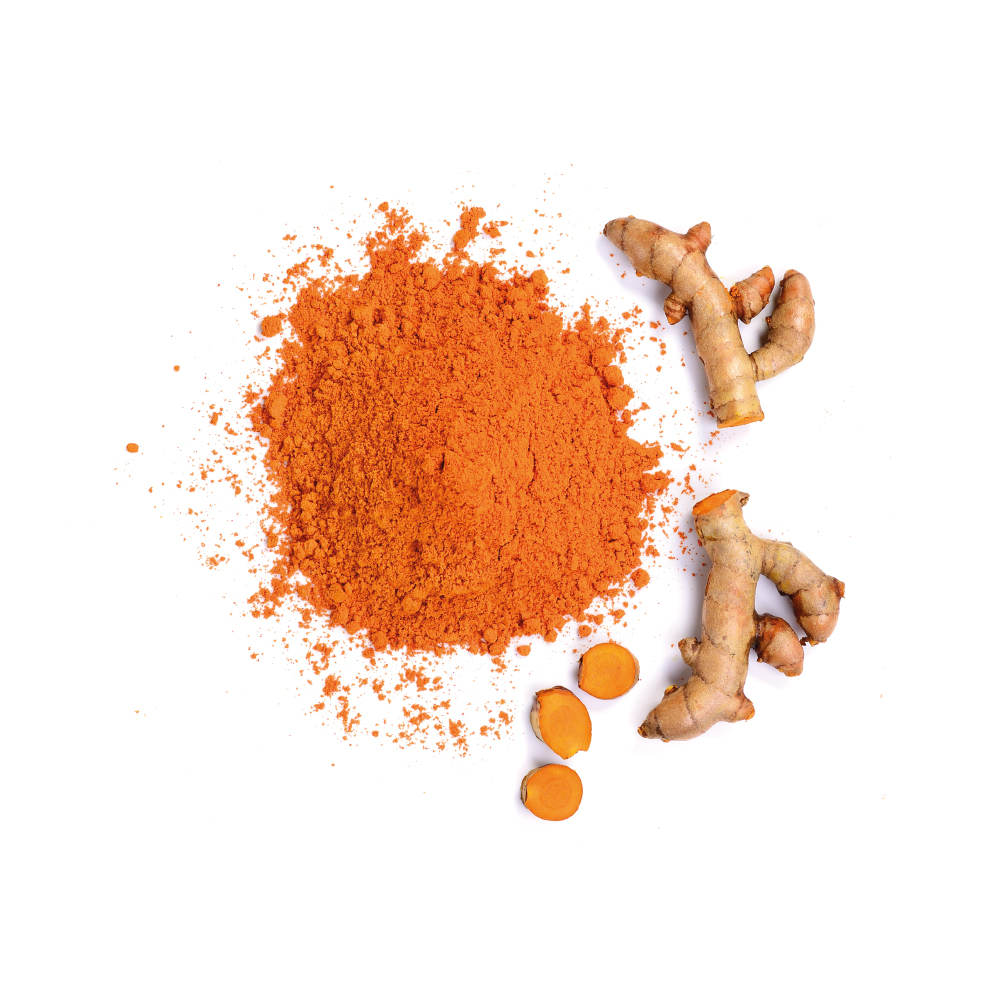
BDMC is essentially confined to Curcuma species, principally the rhizome of turmeric (Curcuma longa), where it occurs as the minor third curcuminoid. Of turmeric’s curcuminoid fraction — itself about 2–9% of the dried rhizome — curcumin makes up roughly 70–77%, demethoxycurcumin about 17%, and BDMC only about 3–8% 4Reference 4Stability studies of pure and mixture form of curcuminoids by reverse phase-HPLC method under various experimental stress conditionsView study →. It is also reported from related species such as Java turmeric (Curcuma zanthorrhiza) and wild turmeric (Curcuma aromatica). Exact proportions vary widely with cultivar, provenance, season and extraction method, and standardised supplement extracts concentrate the whole curcuminoid fraction (to ~95%) rather than BDMC alone. Because it co-occurs with the other curcuminoids, BDMC is rarely encountered — or consumed — on its own.
Discovery & Synthesis
BDMC was characterised as the third curcuminoid of turmeric, isolated from the curcuminoid fraction once analytical separation distinguished it from curcumin and demethoxycurcumin by the number of methoxy groups on the aromatic rings 4Reference 4Stability studies of pure and mixture form of curcuminoids by reverse phase-HPLC method under various experimental stress conditionsView study →. Its defining structural feature — two unsubstituted para-hydroxyphenyl rings — makes it the symmetric, fully demethoxylated member of the series.
Manufacture today is chiefly by isolation from turmeric curcuminoid extracts (chromatographic separation of the three curcuminoids) and by total synthesis via the same aldol-type condensation route used for curcumin — an acetylacetone-derived central unit condensed with two equivalents of 4-hydroxybenzaldehyde (rather than vanillin, which supplies curcumin’s methoxy groups). Synthetic BDMC and BDMC-based analogues are of interest partly because the molecule is more chemically stable than curcumin 4Reference 4Stability studies of pure and mixture form of curcuminoids by reverse phase-HPLC method under various experimental stress conditionsView study →.
Patents: not yet researched.
Toxicity & Safety
BDMC carries a low toxicity flag. It is a natural minor constituent of turmeric — a food with a long dietary history — and shares curcumin’s generally benign safety profile; no isolate-specific toxicity signal of concern has been reported in the preclinical literature.
- Low-toxicity dietary curcuminoid. A minor natural component of turmeric with a long food history and no isolate-specific toxicity signal reported 4Reference 4Stability studies of pure and mixture form of curcuminoids by reverse phase-HPLC method under various experimental stress conditionsView study →.
- Human safety data are for the mixture, not the isolate. BDMC has not been through dedicated human safety trials on its own; what is known is inferred from whole-curcuminoid extracts and from curcumin.
- Curcuminoid-class cautions carry over. High-dose curcuminoid extracts can cause GI upset and may interact with drug-metabolising enzymes; poor oral absorption limits systemic exposure but also undercuts the preclinical effects.
- Preclinical only. Efficacy figures come from cell and rodent studies at concentrations not achievable from diet or ordinary supplements.
Pregnancy/lactation is a per-herb / per-supplement decision and is not adjudicated on this molecule page; dedicated human reproductive data for isolated BDMC are lacking, and no isolate-specific verdict is issued here.
Dosage
There is no established or recommended human dose for isolated bisdemethoxycurcumin. In practice BDMC is consumed only as the smallest share of turmeric’s curcuminoid fraction — in culinary turmeric and in standardised curcuminoid extracts (typically ~95% total curcuminoids, dominated by curcumin). Cited research figures are preclinical cell and rodent doses that do not convert to human self-dosing, and — as with curcumin — the free compound is poorly absorbed orally, so ingested amounts substantially overstate systemic exposure. Co-administration with piperine raises curcuminoid absorption in general, and hydrogenated relatives such as tetrahydrocurcumin are pursued for better stability and antioxidant behaviour. These are research doses, not a personal recommendation.
References
- Somparn P, Phisalaphong C, Nakornchai S, Unchern S, Morales NP. (2007). Comparative antioxidant activities of curcumin and its demethoxy and hydrogenated derivatives. Biological & Pharmaceutical Bulletin. https://pubmed.ncbi.nlm.nih.gov/17202663/
- Pei H, Yang Y, Cui L, et al. (2016). Bisdemethoxycurcumin inhibits ovarian cancer via reducing oxidative stress mediated MMPs expressions. Scientific Reports. https://pubmed.ncbi.nlm.nih.gov/27349797/
- Xiang M, Jiang HG, Shu Y, et al. (2020). Bisdemethoxycurcumin enhances the sensitivity of non-small cell lung cancer cells to icotinib via dual induction of autophagy and apoptosis. International Journal of Biological Sciences. https://pubmed.ncbi.nlm.nih.gov/32226300/
- Peram MR, Jalalpure SS, Palkar MB, Diwan PV (2017). Stability studies of pure and mixture form of curcuminoids by reverse phase-HPLC method under various experimental stress conditions. Food Science and Biotechnology. https://pubmed.ncbi.nlm.nih.gov/30263583/
- Wang Y, Zhang P, Zhang J, et al. (2022). Bisdemethoxycurcumin attenuates OVA-induced food allergy by inhibiting the MAPK and NF-κB signaling pathways. Experimental and Therapeutic Medicine. https://pubmed.ncbi.nlm.nih.gov/35619631/
- Wang Y, Zhang P, Zhang J, Hong T. (2022). Inhibitory effect of bisdemethoxycurcumin on DNCB-induced atopic dermatitis in mice. Molecules. https://pubmed.ncbi.nlm.nih.gov/36615486/
- Jin G, et al. (2024). Bisdemethoxycurcumin, a curcumin, protects chondrocytes and reduces cartilage inflammation via the NRF2/HO-1/NLRP3 pathway. Immunity, Inflammation and Disease. https://pubmed.ncbi.nlm.nih.gov/38411358/
- Fiala M, Liu PT, Espinosa-Jeffrey A, et al. (2007). Innate immunity and transcription of MGAT-III and Toll-like receptors in Alzheimer’s disease patients are improved by bisdemethoxycurcumin. Proceedings of the National Academy of Sciences USA. https://pubmed.ncbi.nlm.nih.gov/17652175/
- Zhang L, Fiala M, Cashman J, et al. (2006). Curcuminoids enhance amyloid-beta uptake by macrophages of Alzheimer’s disease patients. Journal of Alzheimer’s Disease. https://pubmed.ncbi.nlm.nih.gov/16988474/
- Sun X, Liang Y, Wang Y, Sun C, Wang X. (2024). Bisdemethoxycurcumin, a curcumin derivative, ameliorates adjuvant-induced arthritis by suppressing inflammatory reactions and macrophage migration. Chemico-Biological Interactions. https://pubmed.ncbi.nlm.nih.gov/38056805/
- Hsu KY, Ho CT, Pan MH. (2025). Bisdemethoxycurcumin and curcumin alleviate inflammatory bowel disease by maintaining intestinal epithelial integrity and regulating gut microbiota in mice. Journal of Agricultural and Food Chemistry. https://pubmed.ncbi.nlm.nih.gov/39873626/



